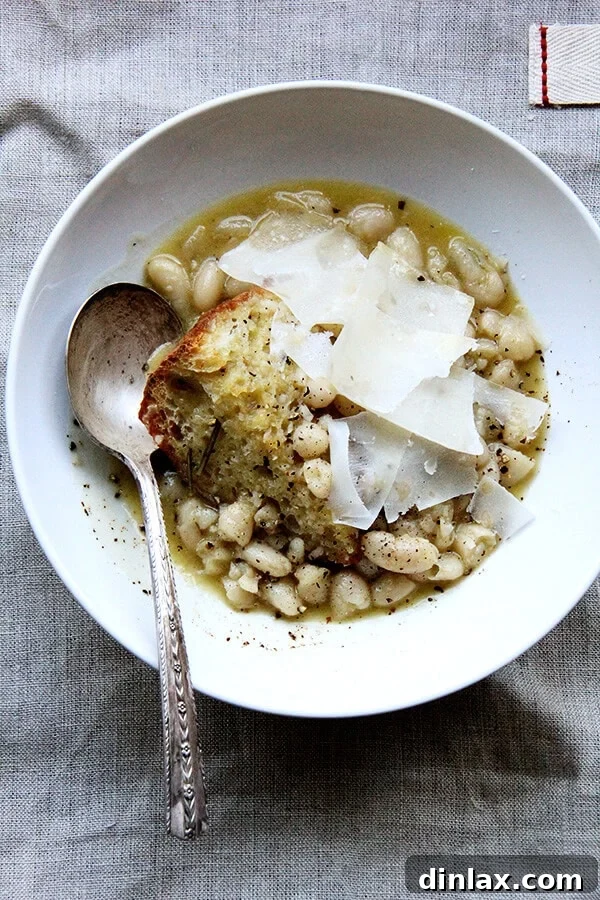
Unlock Creamy, Flavorful Beans: The Brining Secret You Need to Know (No More Soaking!)
For generations, the conventional wisdom for cooking dried beans has been a simple, unwavering mantra: soak them overnight. This tradition, passed down from grandmothers and revered cookbooks alike, has been an unquestioned first step for countless recipes. However, what if I told you there’s a revolutionary technique that not only skips the lengthy overnight soak but also yields beans with an unparalleled creamy texture and perfectly tender skins? Prepare to have your bean-cooking world transformed, thanks to a scientifically-backed method championed by culinary experts.
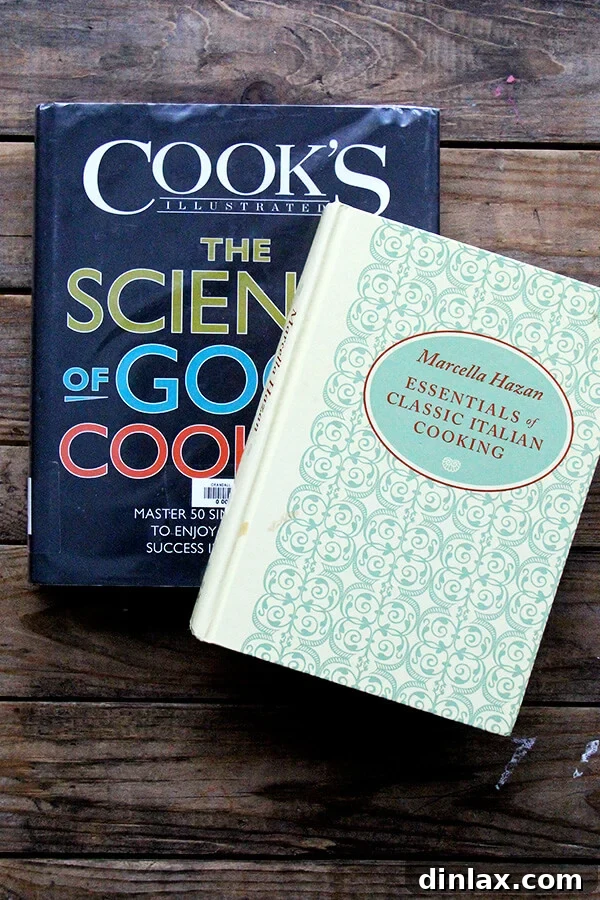
My culinary journey recently led me to Cook’s Illustrated’s *The Science of Good Cooking*, a fascinating exploration of culinary concepts. Among its 50 insightful chapters, one particular revelation brought my page-turning to an abrupt halt: “Don’t Soak Beans—Brine ‘Em.” This wasn’t merely a suggestion; it was a directive to challenge centuries of culinary practice. Cook’s Illustrated proposes a method where beans are not only soaked in salted water but also cooked in salted water, right from the very beginning. This approach fundamentally changes how the beans cook, leading to superior results.
The Science Behind Perfectly Tender Beans: Why Brining Works Wonders
The concept of brining dried beans might seem counterintuitive at first. Many home cooks have been warned against adding salt to beans too early, fearing it would toughen their skins. However, modern culinary science, as explained by Cook’s Illustrated, reveals the opposite is true. The key lies in the interaction of sodium ions from the salt with the bean’s structure.
Here’s the breakdown: Bean skins contain pectin molecules, which are linked together by calcium and magnesium ions. These ions create strong, tightly bound cells, contributing to the firm texture of raw or improperly cooked beans. When beans are brined – soaked in a solution of salted water – the sodium ions in the brine begin to replace some of these calcium and magnesium ions within the bean skins. As the sodium ions take their place, the pectin structure weakens. This weakening is crucial because it leads to a softer, more pliable texture in the bean skins, allowing them to cook more tenderly.
Moreover, while the sodium ions primarily affect the outermost part of the beans during soaking, continuing to cook them in lightly salted water ensures that this tenderizing process continues throughout the entire cooking duration. The result? Beans that cook up beautifully creamy on the inside, with skins that are perfectly tender and never tough, all in a significantly reduced cooking time – often around just 45 minutes for many varieties.
From Skeptic to Believer: My Brining Journey and Delicious Results
Admittedly, I was initially skeptical. Overcoming years of ingrained cooking habits can be challenging. However, the promise of perfectly cooked beans in less time, without the hassle of a traditional soak, was too tempting to resist. I decided to put Cook’s Illustrated’s brining method to the test, first with cannellini beans and then with black beans. The results were nothing short of astonishing.
The beans consistently cooked up beautifully: creamy in texture, fully cooked through, yet remarkably intact. The previously long and often unpredictable cooking times were drastically cut, with both types of beans achieving ideal tenderness in approximately 45 minutes. This method not only delivers on its promise of superior texture but also saves considerable time, transforming the humble dried bean into a more accessible and enjoyable ingredient.
While I haven’t conducted a rigorous side-by-side comparison (I’m happy to leave that to the dedicated team at America’s Test Kitchen), my experience has been compelling enough to declare myself a convert. From now on, my dried beans will always be brined and cooked with salt from the very start. This simple change has elevated my bean cookery to new heights, delivering consistently excellent results every time.
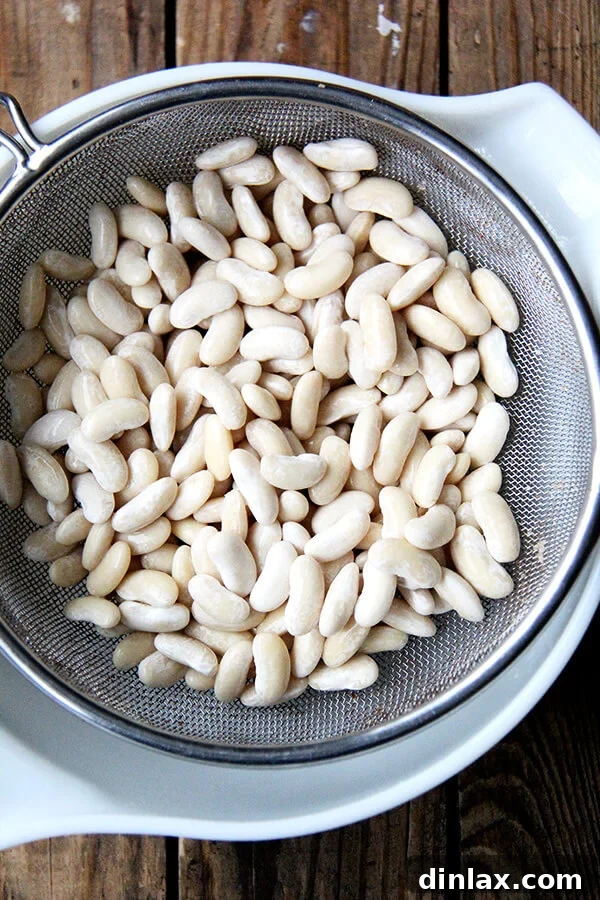
Introducing a Timeless Classic: Marcella Hazan’s White Beans with Garlic and Sage
With my newfound confidence in brined beans, I turned to a beloved classic: Marcella Hazan’s white bean soup from her essential cookbook, *Essentials of Classic Italian Cooking*. This recipe, a testament to simplicity and flavor, is a far more suitable choice for your favorite nonna than a scientific treatise on ion exchange! I’ve been making a pound of brined cannellini beans at a time, transforming them into this incredibly satisfying dish.
Marcella Hazan’s approach to beans is wonderfully straightforward yet deeply flavorful. The preparation begins with sautéing minced garlic in good quality olive oil. A small bundle of sage can be added at this stage for an extra layer of aromatic complexity, although Marcella’s original recipe typically calls for parsley added at the end. After the garlic turns a delicate golden, the cooked, drained beans are added to the pot along with a pinch of salt and pepper. The mixture simmers gently, covered, for a few minutes, allowing the beans to absorb the rich flavors of the garlic and olive oil.
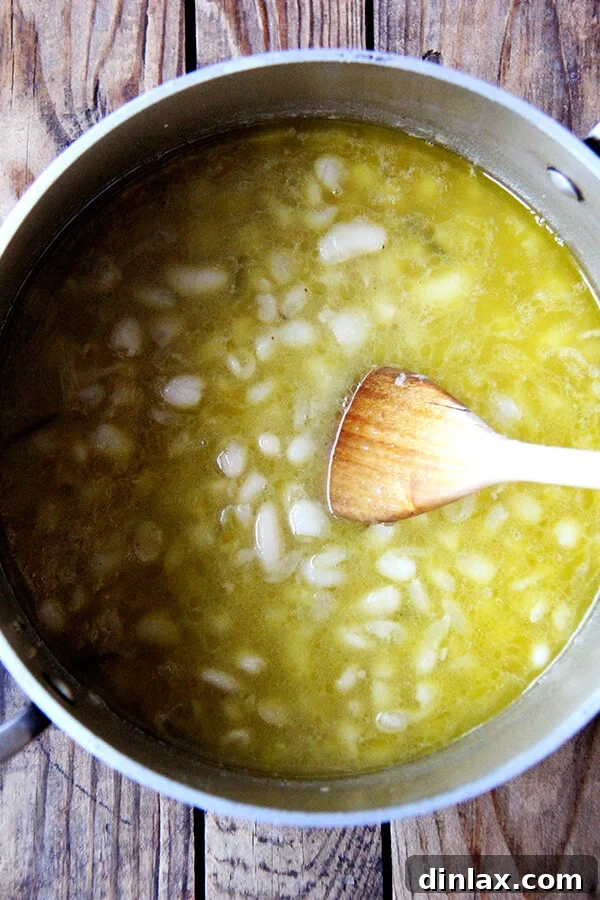
Then, a modest amount of water or stock is introduced, and the beans continue to simmer. What happens next is pure magic: some of the tender beans naturally break down, releasing their starches and thickening the liquid into a wonderfully creamy, almost stew-like broth. This isn’t a thin, watery soup; it’s a celebration of the beans themselves.
The Philosophy of Marcella Hazan: “If One Really Loves Beans…”
Marcella Hazan, with her characteristic wisdom, explains the minimal liquid in her recipe: “If one really loves beans, all one really wants in a bean soup is beans.” Her genius lies in adding just enough liquid, olive oil, and garlic “to help the cannellini express the best of themselves.” This philosophy results in a dish that highlights the pure, earthy goodness of the white beans, allowing their natural flavor and creamy texture to truly shine. It’s a testament to the power of quality ingredients and simple, elegant technique.
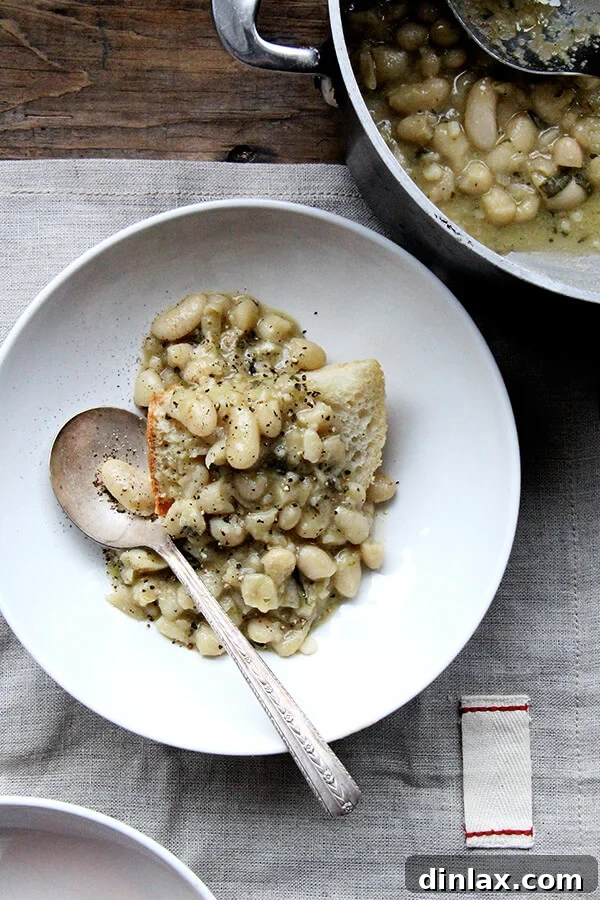
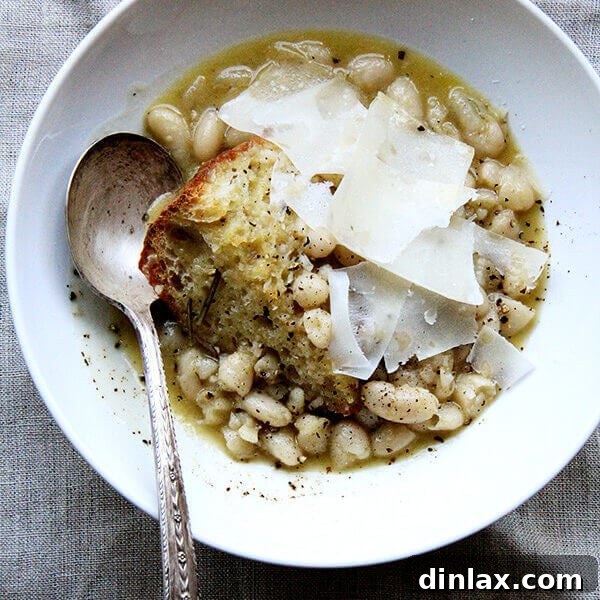
This bean creation is so hearty and rich that it can easily be thickened further and served as a substantial side dish. My preferred way to enjoy it is by toasting thick, crusty hunks of bread, generously smothering them with the warm, stewy beans, and then finishing with a generous shaving of Parmigiano Reggiano cheese over the top. The combination of the crisp bread, the luscious beans, and the salty, umami kick of the cheese is truly divine. While the initial brining and cooking of the beans takes a little time upfront, having a batch of these perfectly cooked legumes on hand makes this delicious meal materialize in a flash.
Oh, and speaking of Marcella, you might be interested to know that Rancho Gordo even named a bean after her! I immediately had to order some to try for myself.
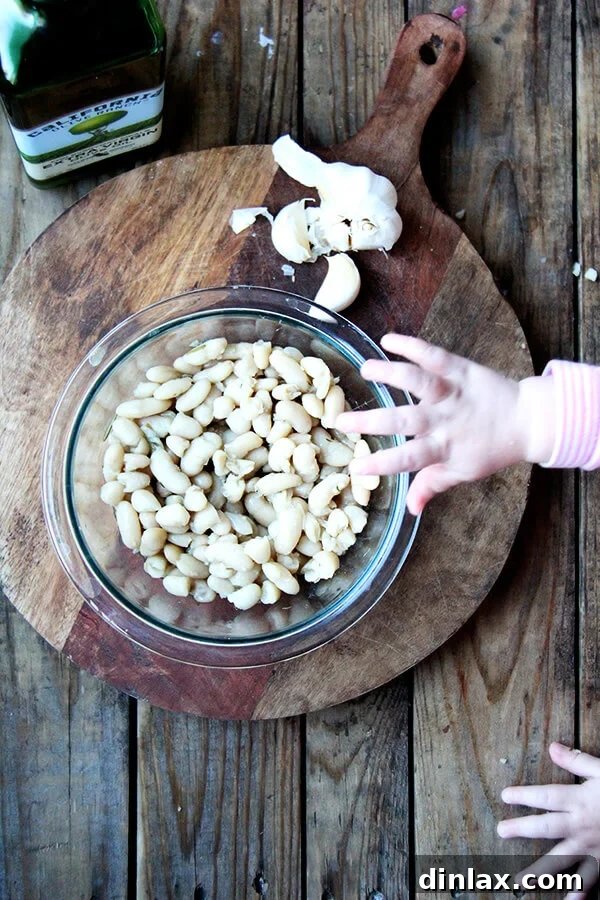
Sauté garlic and sage (if you’d like):

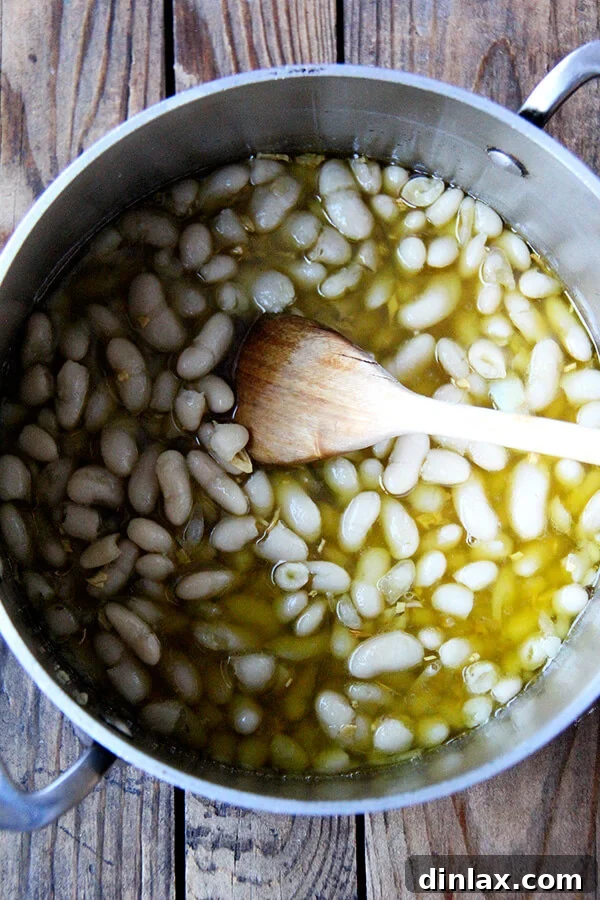
Add beans:
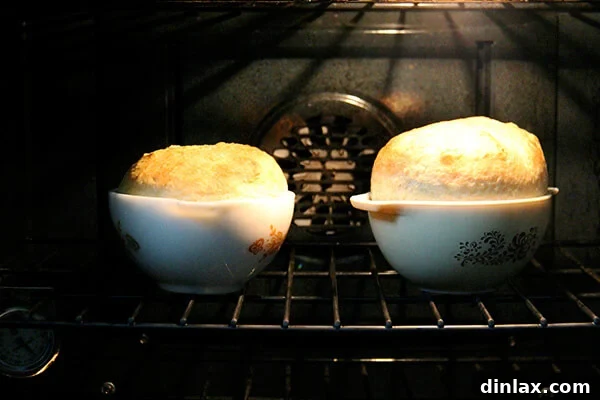
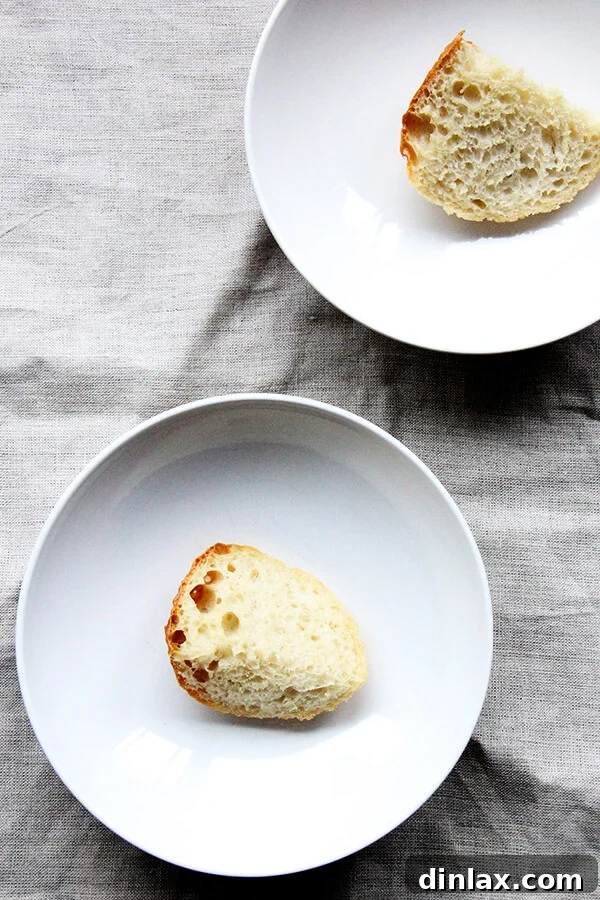
Bake bread:
Serve:

Beyond the Bowl: The Versatility of Brined White Beans
The beauty of having a batch of perfectly brined and cooked white beans extends far beyond a simple stew. These creamy, tender legumes are incredibly versatile and can be incorporated into a myriad of dishes, making them an excellent staple to prepare in advance. Think about them as a foundation for quick and healthy meals throughout the week.
For a refreshing change, transform them into a vibrant bean salad. Toss the cooked cannellini beans with chopped fresh vegetables like bell peppers, cherry tomatoes, red onion, and cucumber. Dress with a light vinaigrette featuring lemon juice, olive oil, and fresh herbs like parsley or dill. This makes for a fantastic side dish or a light lunch. They can also be gently mashed with a fork, combined with a touch of olive oil, lemon zest, and a sprinkle of chili flakes to create a rustic, flavorful spread for toast or crackers.
Consider adding them to pasta dishes for a boost of protein and fiber. A simple aglio e olio with a handful of these tender beans transforms into a more substantial and satisfying meal. Or, use them as a base for a vegetarian main course, simmering them with robust vegetables, diced tomatoes, and a splash of red wine. Their creamy texture also makes them ideal for blending into a smooth, savory dip, perfect with pita bread or vegetable sticks. The possibilities are truly endless once you master the art of brining.
A Nod to Culinary Heroes: Cookbooks That Inspire
It’s an unlikely but wonderful pairing: the scientific rigor of Cook’s Illustrated’s *The Science of Good Cooking* and the timeless, soulful Italian cuisine found in Marcella Hazan’s *Essentials of Classic Italian Cooking*. Together, they offer a holistic approach to cooking beans – one providing the technical understanding, the other the artistic application. These two books represent different, yet equally valuable, facets of culinary knowledge, each inspiring confidence and creativity in the kitchen.
The Final Word: Embrace the Brine for Superior Beans
The journey from traditional overnight soaking to the scientific marvel of brining has been a revelation. This simple yet profound shift in preparation promises not just a shortcut but a genuinely superior product: beans that are consistently tender, creamy, and full of flavor. Whether you’re preparing a rustic stew, a refreshing salad, or a hearty side dish, the brining method ensures your beans are always at their best.
I encourage you to try this technique for yourself. Experience the difference that thoughtful preparation can make, and enjoy the delicious rewards. Happy cooking!
Marcella Hazan’s White Beans with Garlic and Sage
Author: Alexandra Stafford
Total Time: 25 hours (includes soaking)
Yield: 4 servings
Description
This recipe combines the innovative bean soaking method from Cook’s Illustrated The Science of Good Cooking with a delicious white bean dish adapted from Marcella Hazan’s Essentials of Classic Italian Cooking. (In the book, the recipe is called “White Bean Soup with Garlic and Parsley”). This is a half recipe, so if you wish to make more, double the quantities while keeping the cup of water/stock for the stewing step the same for consistency. Marcella adds parsley (no sage) to her beans; if that sounds appealing, add it at the very end. She also purées half a cup of the beans through a food mill, a step I find unnecessary as the beans naturally break down to create a creamy texture.
Ingredients
For soaking and cooking the beans:
- 3 tablespoons + 1 teaspoon salt
- 4 quarts water
- 1 lb. dried white beans, such as cannellini or great northern
- 1 onion, peeled and halved through the core
- A few sprigs fresh thyme
- 1 clove garlic, smashed
- 1 bay leaf
For the stewy beans:
- ¼ cup olive oil
- 3 cloves garlic, minced
- 1 small bundle fresh sage, optional
- 3 cups cooked white beans, drained
- Salt and pepper to taste
- 1 cup water, chicken stock, or vegetable stock, plus more as needed
- Crusty bread for serving
- Grated Parmigiano Reggiano for serving
Instructions
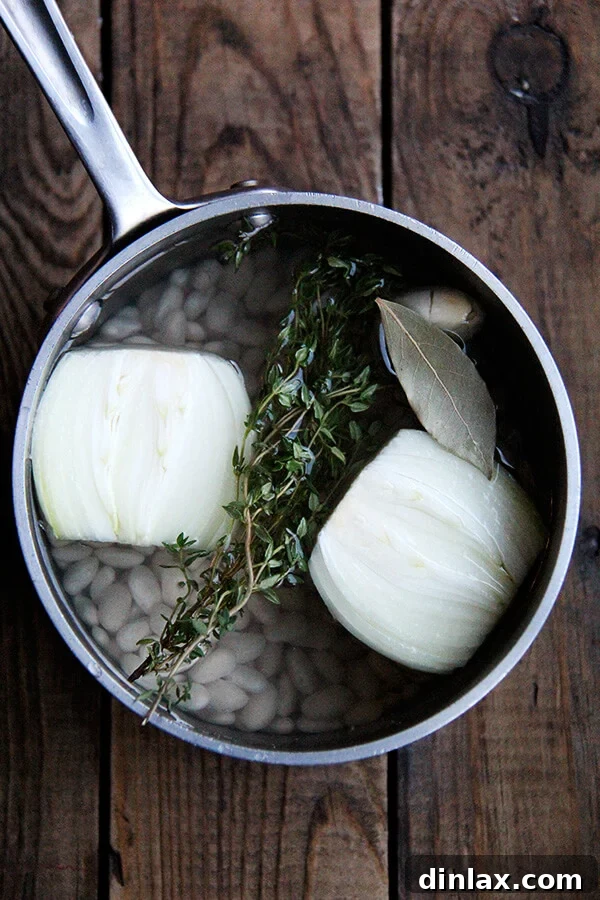
- Soaking and cooking the beans: Dissolve the 3 tablespoons of salt into the 4 quarts of water. Add the dried beans and soak for 8 to 24 hours. After soaking, drain and rinse the beans thoroughly. Place them in a large pot with the halved onion, thyme sprigs, smashed garlic clove, bay leaf, and the remaining 1 teaspoon of salt. Cover with fresh water by three inches. Bring the pot to a rolling boil, then immediately reduce the heat to the gentlest simmer. Cook for approximately 45 minutes, or until the beans are completely cooked through and tender. Let the beans cool in their cooking liquid. Discard the thyme sprigs, bay leaf, and onion. Store the cooked beans in their cooking liquid in the refrigerator until ready to use.
- Making the stewed beans: In a separate soup pot or Dutch oven, add the ¼ cup olive oil and the minced garlic (and the sage bundle, if using). Turn the heat to medium. Cook the garlic, stirring frequently, until it turns a very pale golden color, being careful not to brown or burn it.
- Add the cooked and drained white beans to the pot. Add a pinch of salt (I typically add about ½ teaspoon kosher salt, but adjust to your preference) and a few grindings of fresh black pepper. Reduce the heat to low, cover the pot, and let the beans simmer gently for 5 to 6 minutes. This step allows the beans to absorb the flavors from the garlic and olive oil.
- Uncover the pot, then add the 1 cup of water or stock. Continue to simmer for another 6 to 8 minutes, or until some of the beans have naturally broken down, turning the broth creamy and slightly thickened. Taste the stew and adjust the seasoning with additional salt and pepper as needed. Turn off the heat. Note: If the bean liquid becomes too thick, add more water or stock to achieve your desired consistency. If preparing this dish ahead of time and planning to reheat, you will most likely need to thin it out with extra water or stock before serving. Always taste and correct seasonings after reheating.
- To serve, place toasted crusty bread into individual soup bowls. Ladle the hot, stewy beans generously over the top of the bread. Finish with a liberal shaving of fresh Parmigiano Reggiano cheese. Serve immediately and enjoy!
Prep Time: 24 hours (for brining)
Cook Time: 1 hour (45 mins for beans + 15 mins for stew)
Category: Beans
Method: Stovetop
Cuisine: Italian
Did you make this recipe?
Tag @alexandracooks on Instagram and hashtag it #alexandracooks