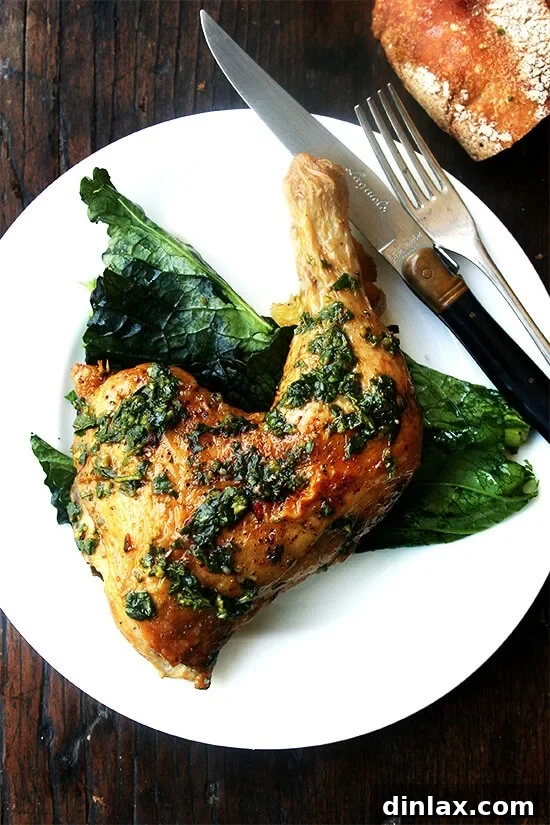
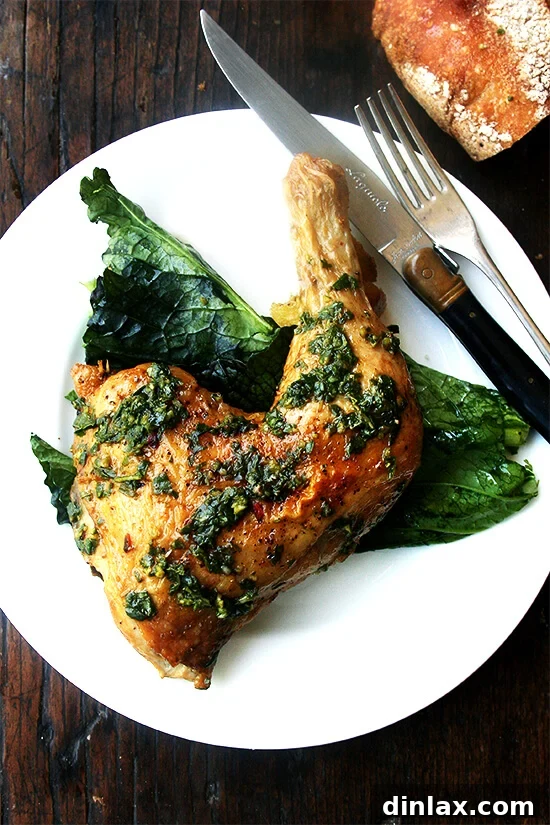
The Crispiest Spring Chicken: Master the Art of Golden Perfection with a Zesty Herb Sauce
There are few culinary delights as satisfying as a perfectly roasted chicken. The aroma alone can transport you to a cozy kitchen, and the promise of succulent meat enveloped in impossibly crispy skin is pure bliss. This recipe for “The Crispiest Spring Chicken” goes beyond mere satisfaction; it delivers a truly divine experience, transforming a simple bird into a show-stopping centerpiece that’s both elegant and comforting. What makes this recipe truly stand out isn’t just the consistently crispy, golden-brown skin or the incredibly juicy meat throughout—even the often-dry breast meat remains tender. It’s the harmonious pairing with an astonishingly simple, yet profoundly flavorful, herb sauce that elevates every bite.
Crafted to be both straightforward and utterly delicious, this spring chicken recipe is a testament to the power of thoughtful preparation and fresh ingredients. Whether you’re a seasoned home cook or new to roasting, you’ll find the steps easy to follow, leading to consistently impressive results. The secret lies in a few key techniques that guarantee that sought-after crispy skin, complemented by an herb-infused pan sauce that requires minimal effort but delivers maximum taste. We’ve been serving this chicken alongside lightly dressed mustard greens and crusty fresh bread, and trust us, this meal – especially this vibrant sauce – truly demands such perfect companions.
Unlock the Secret to Perfectly Crispy Roast Chicken
Achieving that coveted crackling skin on a roasted chicken is often seen as a challenge, but with two simple yet crucial tips, you can ensure your chicken emerges from the oven with an irresistible golden-brown crispness every single time. These techniques are rooted in basic culinary science and are easy to integrate into your cooking routine:
1. Bring the Chicken to Room Temperature: Before it ever sees the inside of your oven, allow the quartered chicken to stand uncovered at room temperature for a full hour. This step is vital for several reasons. Firstly, bringing the chicken to room temperature ensures more even cooking. If you put cold chicken directly into a hot oven, the exterior cooks much faster than the interior, leading to unevenly done meat. Secondly, allowing it to sit uncovered helps the skin to dry out naturally. This pre-drying process is the initial stage in developing that fantastic crisp texture. The drier the skin, the crispier it will become as it roasts, without steaming itself in the oven.
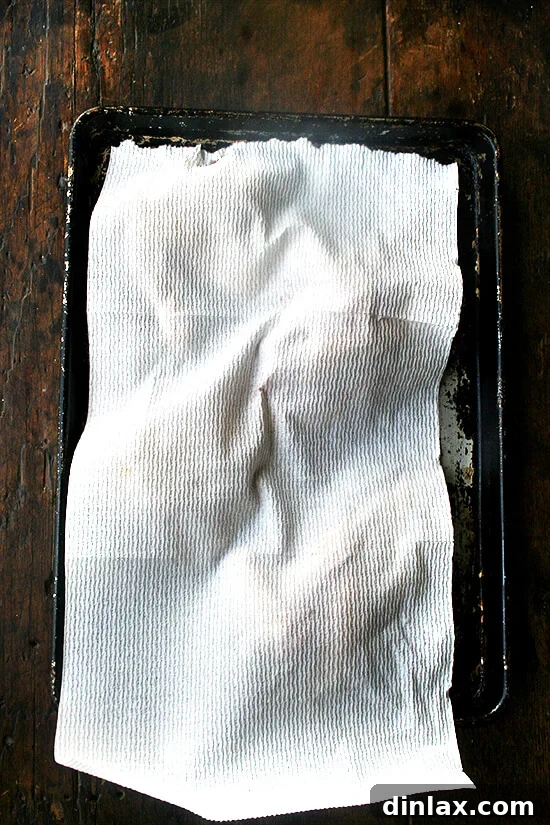
2. Thoroughly Pat Chicken Dry with Paper Towels: This might seem like a minor detail, but it is arguably the most critical step for achieving truly crispy skin. Before seasoning and placing the chicken in the oven, take the time to meticulously pat every surface of the chicken dry with paper towels. Any residual moisture on the skin will turn into steam in the hot oven, effectively poaching the skin instead of allowing it to crisp up. By removing this moisture, you ensure that the skin can render its fat and crisp up beautifully, transforming into that delightful, golden-brown, crunchy layer we all crave.
By diligently following these two steps, in addition to letting the meat rest for a crucial 10 minutes before carving (a technique that ensures all those precious juices redistribute back into the meat), your roast chicken will consistently be nothing short of divine. Expect skin that crackles with every bite, a stunning golden-brown exterior all around, and exceptionally juicy, tender meat that falls off the bone. These simple efforts elevate a humble chicken to a gourmet experience, making it a staple in your culinary repertoire.
The Signature Herb Sauce: Flavor That Elevates Every Bite
While the crispy chicken itself is a triumph, the accompanying herb sauce is the true unsung hero of this dish. Its simplicity belies its profound impact on the overall flavor profile. After the chicken has roasted to perfection for its initial 30 minutes, you’ll temporarily remove it from the baking sheet. This sets the stage for the magical transformation of the pan into a flavor powerhouse. You then pour a vibrant mixture of fresh basil, aromatic garlic, a pinch of red pepper flakes for a subtle kick, and tangy red wine vinegar directly over the hot sheet pan.
This pour initiates a process called deglazing, where the liquid works its wonders, lifting all those precious, caramelized, crispy bits that have adhered to the bottom of the pan during roasting. These “fond” bits are packed with concentrated flavor, and by incorporating them into the sauce, you create an incredibly rich and complex base. The chicken then gracefully returns to this infused pan, where it rests for another 10 minutes. During this crucial resting period, not only do the chicken’s natural juices redistribute, making the meat even more tender and succulent, but they also mingle beautifully with the herby, vinegary mixture on the pan, deepening the sauce’s character. The result is a savory, aromatic concoction that boasts just the right amount of acidity and herbaceous freshness to cut through the richness of the chicken.
That’s truly it – while the bird is resting and becoming even juicier, this sensational sauce materializes almost effortlessly. The beauty of this method is that the sauce leverages the flavors already created in the pan, ensuring no deliciousness goes to waste. It’s herby, garlicky, and has just the right amount of bright acidity and a subtle warmth from the red pepper flakes. This sauce is not merely an accompaniment; it’s an integral part of the meal, demanding to be poured generously over every piece of chicken and even sopped up with fresh bread. Its robust yet fresh profile perfectly complements the rich chicken, making every mouthful an exquisite balance of textures and tastes.
Serving Suggestions: Completing Your Crispy Chicken Meal
A dish as flavorful and well-balanced as this Crispiest Spring Chicken deserves thoughtful companions. Our go-to serving method perfectly complements the rich chicken and zesty sauce, creating a harmonious and utterly satisfying meal that feels both wholesome and indulgent.
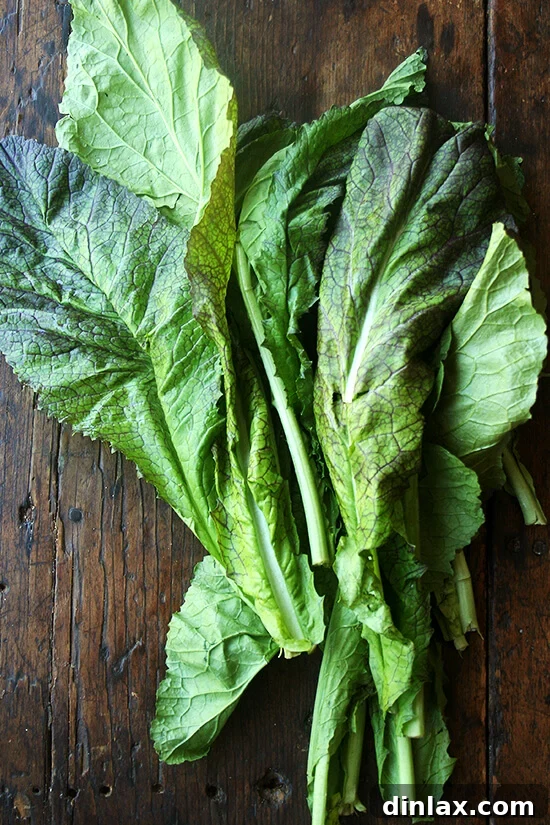
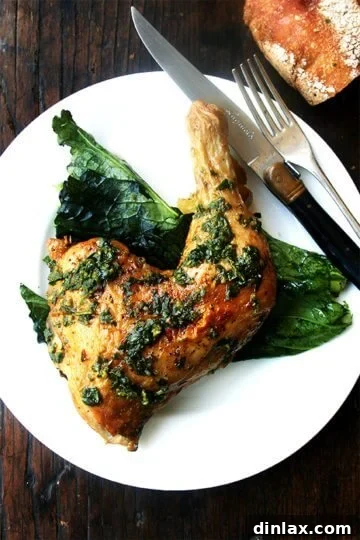
We highly recommend pairing this chicken with lightly dressed mustard greens and fresh, crusty bread. The vibrant, slightly peppery flavor of mustard greens provides a wonderful contrast to the savory chicken. We particularly adore the tender mustard greens available at the Niskayuna Co-Op, which are so delicate they barely require any dressing. For a truly simple yet elegant presentation, arrange the fresh mustard greens on a serving platter, then lay the warm, sauce-drenched pieces of chicken directly overtop. Finally, pour all the accumulated pan juices and the luscious herb sauce generously over everything. The residual heat from the chicken will gently wilt the greens ever so slightly, softening them just enough to absorb the incredible flavors of the sauce, making them utterly delicious without overpowering the star of the dish.
The fresh bread is essential for soaking up every last drop of that incredible pan sauce – it’s a flavor experience you won’t want to miss! Beyond mustard greens, this versatile chicken also pairs beautifully with other seasonal vegetables. Consider roasted asparagus, steamed green beans, or even a simple side of roasted potatoes to absorb the delicious juices. For a lighter touch, a crisp garden salad with a simple vinaigrette would also be a fantastic choice. No matter your accompaniment, the Crispiest Spring Chicken, with its irresistible golden skin and juicy meat, bathed in its vibrant herb sauce, promises a memorable meal that embodies the fresh flavors and comforting warmth of spring.
A Passage from The Dirty Life: Finding Satisfaction in Effort
Beyond the culinary adventures, sometimes a book truly resonates, offering a perspective that extends into how we approach life, including our relationship with food and work. A few weeks ago, I found myself immersed in Kristin Kimball’s remarkable memoir, The Dirty Life. Can we pause our chicken talk for a moment and pretend we’re in a book club? I’m eager to share a passage that truly captured my attention and offered a powerful reflection on effort, purpose, and contentment.
For those unfamiliar, the book chronicles an extraordinary journey. Author Kristin Kimball, originally a writer in New York City, ventures upstate to interview a young farmer named Mark. What begins as a professional assignment quickly blossoms into a whirlwind romance and, shortly thereafter, a profound life change. Kristin leaves her urban existence behind to join Mark on his burgeoning farm near Lake Champlain. The Dirty Life vividly recounts their challenging yet rewarding first year at Essex Farm, a pioneering operation that provides fresh, year-round food for over 200 families through a CSA model. It’s a story of embracing hard work, facing uncertainty, and finding profound meaning in a life deeply connected to the land and community.
It’s within this context of immense physical labor, financial precariousness, and the unyielding demands of farm life that a particularly poignant conversation unfolds between Kristin and Mark:
“When we would talk about our future in private, I would ask Mark if he really thought we had a chance. Of course we had a chance, he’d say, and anyway, it didn’t matter if this venture failed. In his view, we were already a success, because we were doing something hard, and it was something that mattered to us. You don’t measure things like that with words like success or failure, he said. Satisfaction comes from trying hard things and then going on to the next hard thing, regardless of the outcome. What mattered was whether or not you were moving in a direction you thought was right. This sounded fishy to me.
This conversation played out many times, with me anxious, Mark calm, until once, as we sat together reviewing our expenses, I was almost in tears. I felt like we were teetering over an abyss. I wasn’t asking him to guarantee that we’d be rich. I just wanted him to assure me that we’d be solvent, that we’d be, as I put it, okay. Mark laughed. “What is the worst thing that could happen?” he asked. “We’re smart capable people. We live in the richest country in the world. There is food and shelter and kindness to spare. What in the world is there to be afraid of?”
I absolutely loved this passage. Isn’t Mark’s perspective incredibly inspiring? His philosophy challenges the conventional metrics of “success” and “failure,” redirecting focus to the intrinsic value of effort and alignment with one’s core values. It’s a powerful reminder that true satisfaction often stems not from guaranteed outcomes, but from the courageous act of pursuing what feels right, even when the path is difficult and uncertain. This resonates deeply, not just in the grand scheme of life choices, but even in simpler pursuits like cooking. The satisfaction of mastering a new recipe, of bringing a delicious meal to the table after careful preparation, echoes this sentiment. It’s the effort, the intention, and the process that often bring the greatest joy, regardless of whether every single dish is “perfect.” This philosophy encourages us to embrace the journey, to find joy in the “dirty life” of creation, whether it’s on a farm or in our kitchens. Discuss!
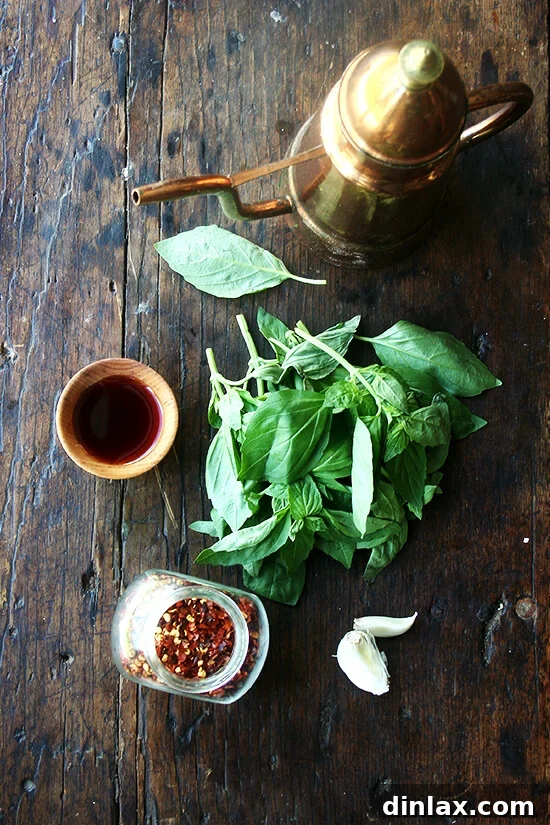
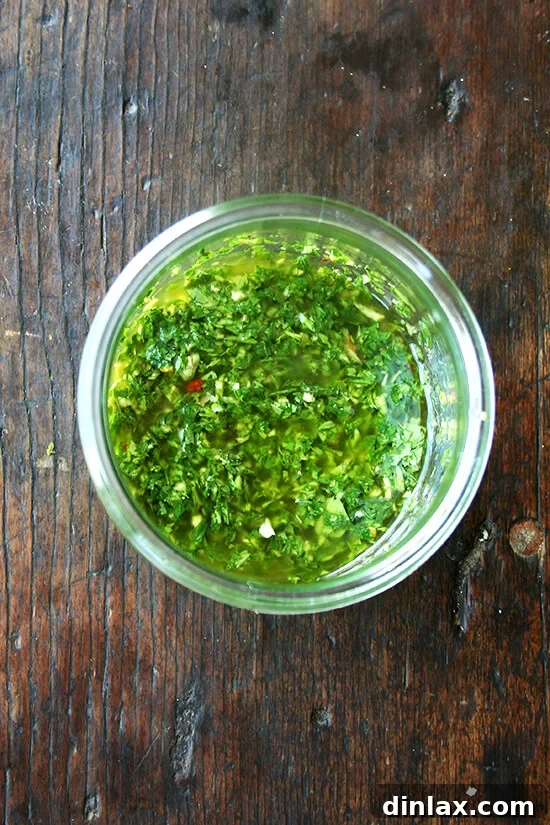
These are the essential ingredients for our aromatic herb sauce: premium extra-virgin olive oil, tangy red wine vinegar, fresh basil (or your preferred herb like parsley or tarragon), fragrant minced garlic, and a hint of crushed red pepper flakes for a subtle kick:
To ensure that coveted crisp skin and an even, beautiful golden color, it’s absolutely crucial to thoroughly pat dry each piece of chicken with paper towels before roasting:
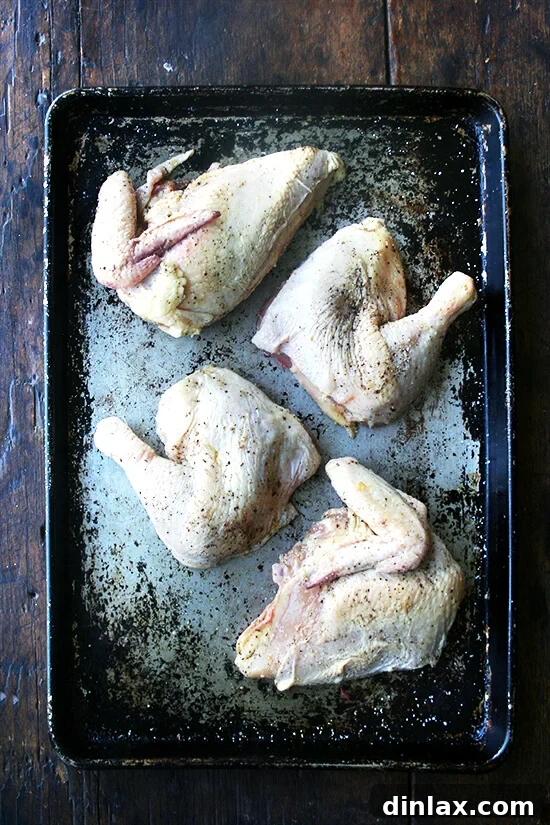
The prepared chicken, seasoned simply with salt, pepper, and a touch of olive oil, is now ready for its hot oven journey, destined for crispy perfection at 450ºF for 30 minutes:
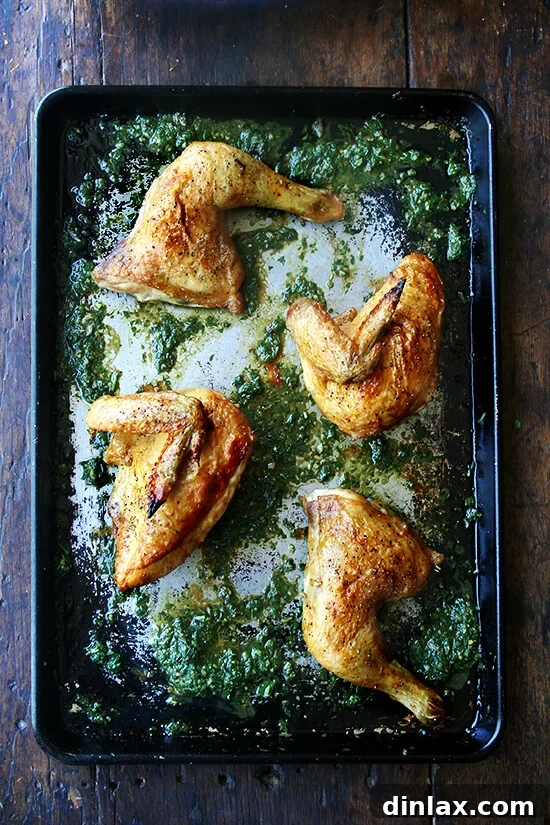
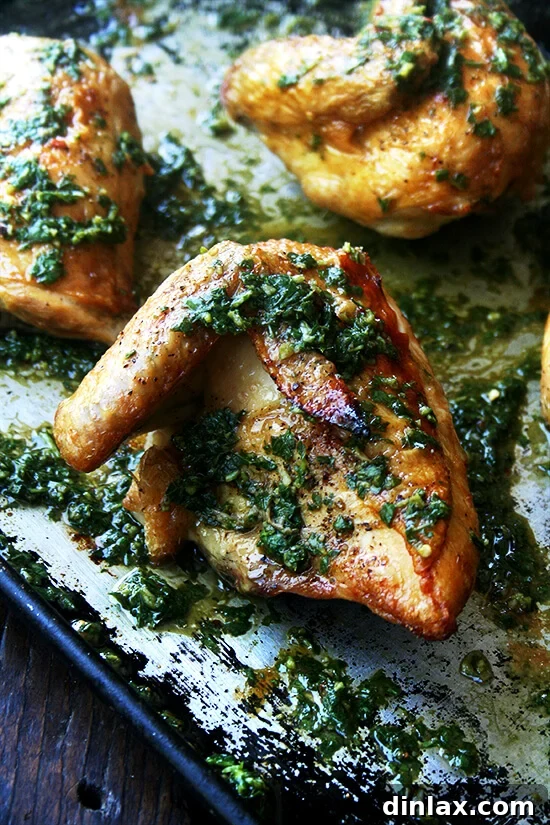
Even the breast meat, often prone to dryness, remains incredibly juicy and tender in this preparation, showcasing the perfect balance of crispy skin and succulent interior:
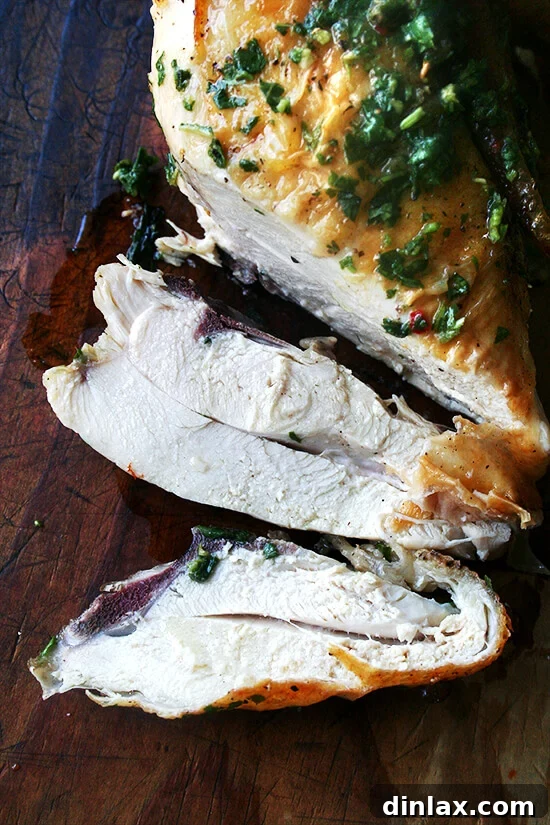
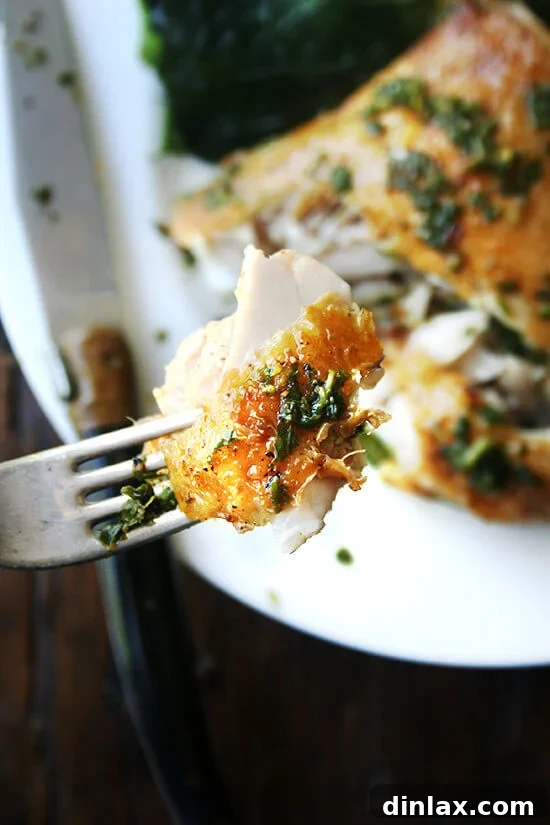
Mastering Chicken Butchery: A Step-by-Step Guide to Quartering a Whole Chicken
Quartering a whole chicken yourself can seem daunting, but it’s a valuable skill that ensures even cooking and perfect portion sizes for roasting. Here’s a simple, visual guide on how to prepare your chicken, making it ideal for this crispy roast chicken recipe:
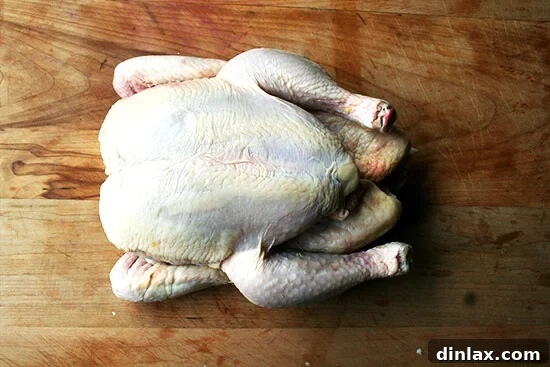
First, begin by carefully cutting the chicken precisely in half along its backbone, yielding two substantial pieces. Use sturdy kitchen shears or a sharp chef’s knife for this step.
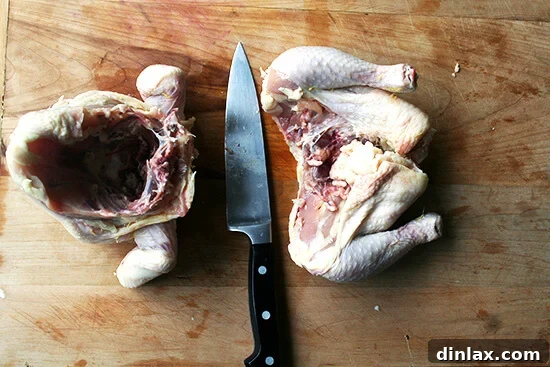
Next, remove the backbone section entirely from the breastbone. This step helps in flattening the chicken, which promotes more even cooking and allows for maximum skin exposure to the heat.
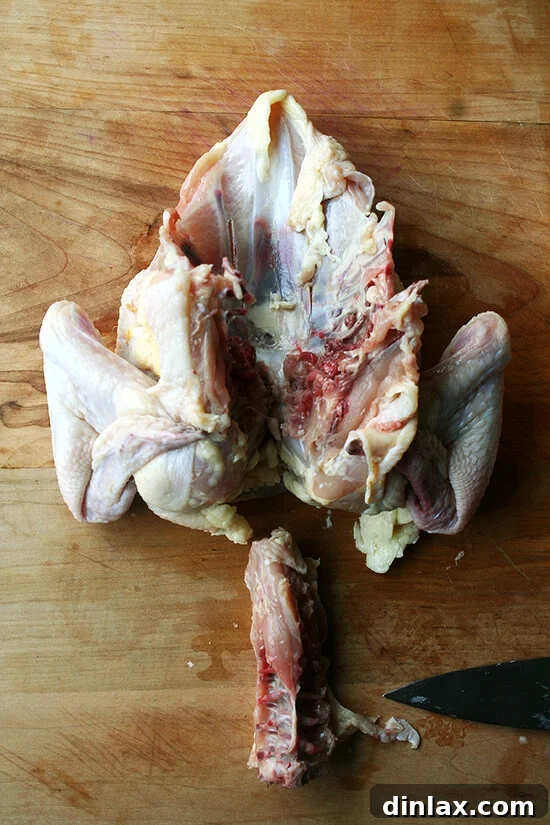
Then, proceed to split the breast in half. You’ll now have two distinct breast portions, each with a wing attached, and two leg quarters.
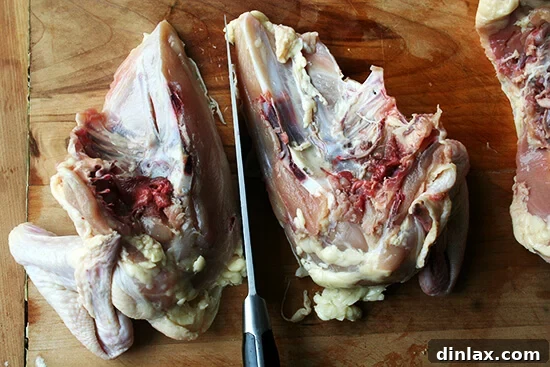
Finally, separate the leg quarters (which include both the thigh and drumstick combined) from the remaining breast portions. This completes the quartering process, leaving you with four primary pieces of chicken.
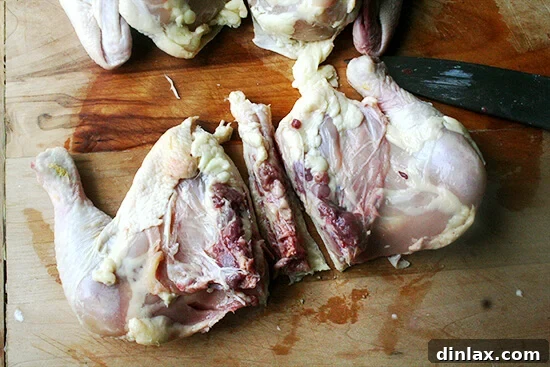
For those who prefer a visual demonstration, this video guide offers further assistance on breaking down a chicken. Please note that for this specific recipe, you don’t have to separate the drumstick from the thigh, and you don’t need to remove the breast meat from the bone. The goal is quartering for simple, effective roasting.
Our preferred accompaniment, the incredibly tender mustard greens from the Niskayuna Co-Op, are so delicate they hardly need a dressing. For this meal, if I don’t feel like making a dressing, I just arrange the mustard greens on a serving platter, lay the pieces of chicken overtop, and pour all of the juices over everything. The heat of the chicken wilts the greens ever so slightly, and they are just delicious:
The Crispiest Spring Chicken Recipe
Rated: 5 out of 5 stars from 3 reviews
- Author: Alexandra Stafford
- Total Time: 40 minutes
- Yield: 4 servings
Description
This Crispy Spring Chicken recipe, slightly adapted from Martha Stewart, promises an unforgettable culinary experience. Imagine succulent, juicy chicken beneath a perfectly golden-brown, irresistibly crispy skin, all brought together with a vibrant, herbaceous pan sauce that demands to be savored. It’s the ideal dish for a spring gathering or any time you crave a deeply satisfying, yet surprisingly simple, meal.
Essential Tips for Crispy Roast Chicken:
1. Room Temperature Rest: For optimal crispness, allow your quartered chicken to stand uncovered at room temperature for a full hour before cooking. This ensures even cooking and promotes skin dehydration.
2. Pat Dry Thoroughly: Before it hits the oven, meticulously pat the chicken dry with paper towels. Removing excess moisture is crucial; it prevents the skin from steaming and ensures it crisps up beautifully.
By diligently following these two simple steps, and allowing the meat to rest for 10 minutes post-roasting, you’ll consistently achieve a truly divine roast chicken: skin that crackles with every bite, a stunning golden-brown exterior, and exceptionally juicy, tender meat.
Ingredients
- 1 whole chicken (about 4 pounds), quartered with backbone removed, at room temperature (refer to the detailed photos and video above for butchering guidance).
- 1 tablespoon, plus an optional 1/4 cup, extra-virgin olive oil (see notes below regarding sauce preparation).
- Kosher salt and freshly ground black pepper, to taste.
- 2 tablespoons red-wine vinegar.
- 1 cup packed fresh parsley, basil, or tarragon (or a mix of your favorite herbs), finely chopped (or pulsed in a food processor for ease).
- 1/2 teaspoon minced garlic (equivalent to a couple of cloves, easily minced with the herbs in a food processor).
- 1/2 teaspoon red-pepper flakes, adjust according to your preferred level of heat.
Instructions
- Prepare the Chicken for Roasting: One hour before you plan to bake, remove the chicken from the refrigerator. If not already done, quarter it and allow it to rest, uncovered, on a cutting board or directly on the rimmed sheet pan you intend to use for roasting. Meanwhile, preheat your oven to a high 450 degrees F (232 degrees C). For the most even golden-brown crispness, I recommend roasting on the highest rack, though be aware this can create a smokier oven environment due to the high heat.
- Season and Roast: With clean paper towels, thoroughly pat the chicken pieces dry, then transfer them to the rimmed baking sheet (if they aren’t already there). Drizzle the chicken with 1 tablespoon of olive oil, then season generously all over with kosher salt and freshly ground pepper. Arrange the chicken skin-side up on the pan and roast in the preheated oven for approximately 30 minutes, or until the skin is beautifully golden and crispy, and an instant-read thermometer inserted into the thickest part of the breast (avoiding the bone) registers 160 degrees F (71 degrees C).
- Craft the Herb Sauce and Rest the Chicken: While the chicken roasts, prepare your simple yet potent herb sauce. I prefer using a food processor for convenience; pulse together the fresh basil (or your chosen herb), minced garlic, red pepper flakes, and red wine vinegar. Note that in this method, we omit the optional 1/4 cup olive oil from the original recipe, as we’ll be incorporating the rich pan juices instead. Once the chicken is done roasting, carefully remove it from the pan and temporarily place it on a clean plate. Immediately pour the prepared herb mixture over the hot sheet pan, using a spatula or wooden spoon to scrape up all those flavorful, crispy bits stuck to the bottom – this is where the magic happens, deglazing the pan and infusing the sauce with incredible depth. Return the chicken to the pan, nestling it into the sauce, and let it rest for a full 10 minutes. This crucial resting period allows the juices to redistribute, ensuring tender meat, and allows them to further meld with the herb-vinegar mixture, creating an even richer sauce. Just before serving, spoon the flavorful pan sauce generously over each chicken piece. I find that this method of adding the sauce post-roasting helps maintain the chicken’s desirable crispy skin.
Notes
- Original Sauce Method (Optional): The original recipe suggests an alternative sauce preparation: After roasting, transfer the chicken to a plate. Pour off and discard any excess fat from the baking sheet. In a separate bowl, whisk together the remaining 1/4 cup olive oil, vinegar, chopped herbs, garlic, and red pepper flakes. Season this mixture with salt. Return the chicken to the pan, spoon the prepared sauce over it, and let it stand for 10 minutes before serving with the accumulated pan juices and sauce. While delicious, our adapted method (using pan juices instead of additional olive oil) adds an extra layer of flavor and ensures the skin remains crispier longer.
- Herb Variations: Don’t feel limited to basil! Fresh parsley, tarragon, oregano, chives, or a combination of these can all work wonderfully in this sauce, allowing you to adapt the flavor profile to your preference or what you have on hand seasonally.
- Spice Level: The 1/2 teaspoon of red pepper flakes provides a subtle warmth. Adjust this amount to suit your personal taste. For a milder flavor, use less; for a spicier kick, feel free to add a bit more.
- Serving Suggestions: While mustard greens and fresh bread are highly recommended and complement this dish beautifully, this crispy chicken also pairs wonderfully with roasted root vegetables, creamy polenta, a light quinoa salad, or simply steamed green beans or asparagus for a complete and satisfying meal.
- Prep Time: 10 minutes
- Cook Time: 30 minutes