Unveiling the Magic: Sticky Pecan Caramel Rolls from “Artisan Bread in Five Minutes a Day”
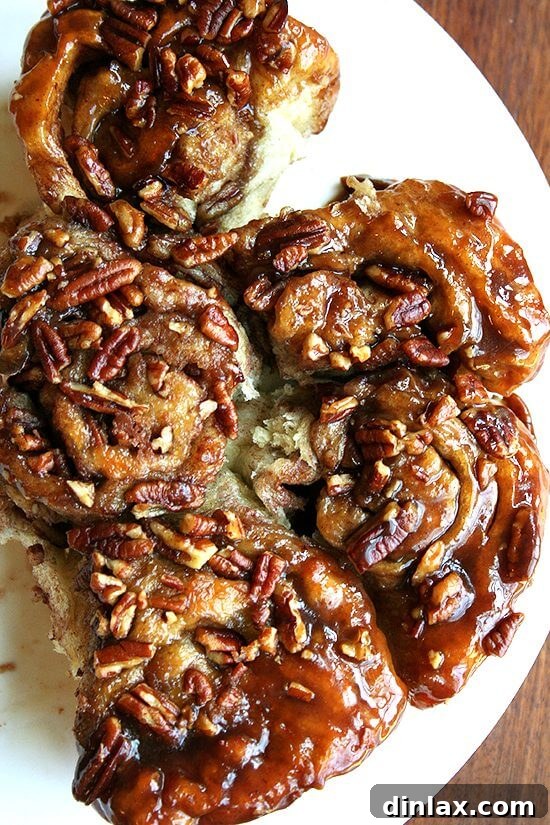
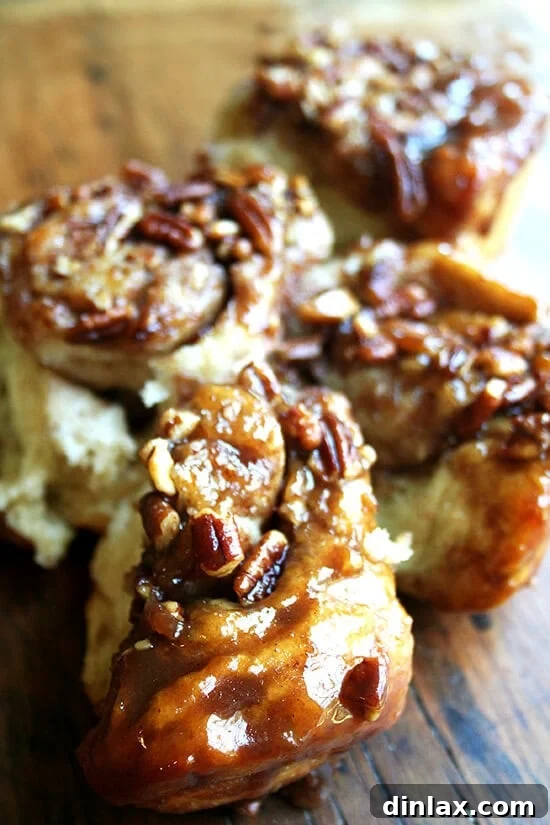
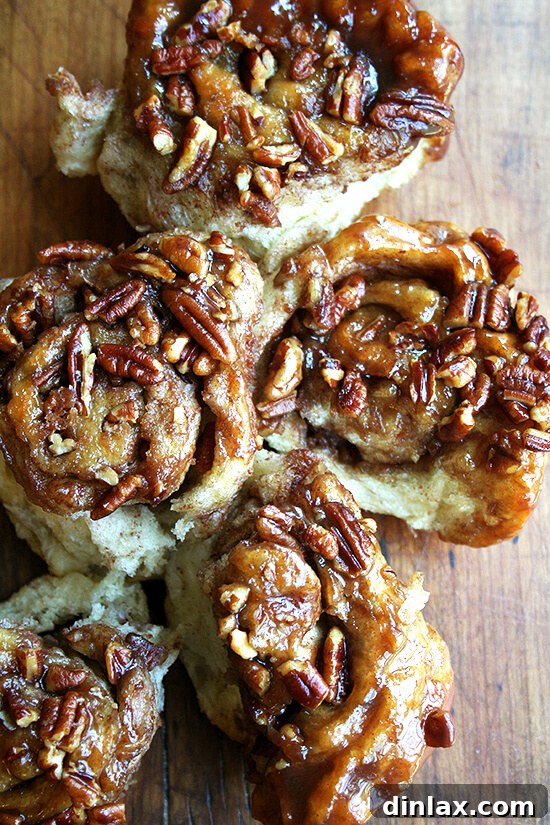
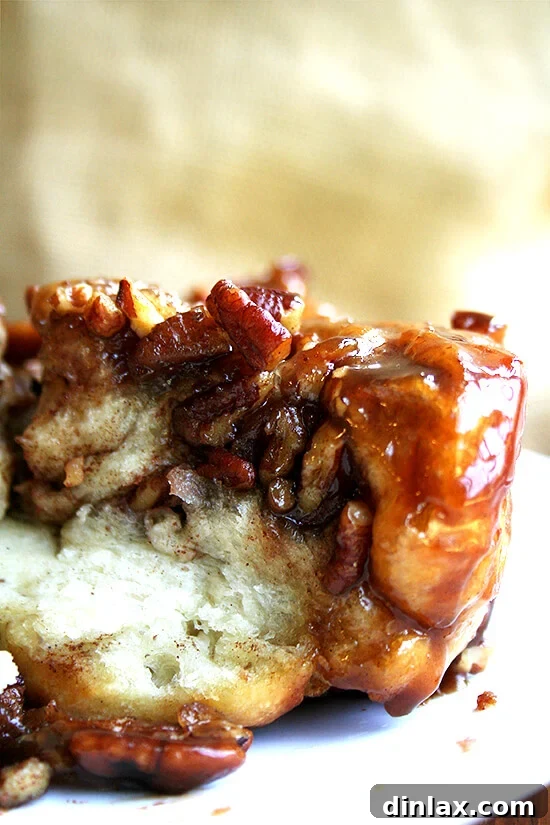
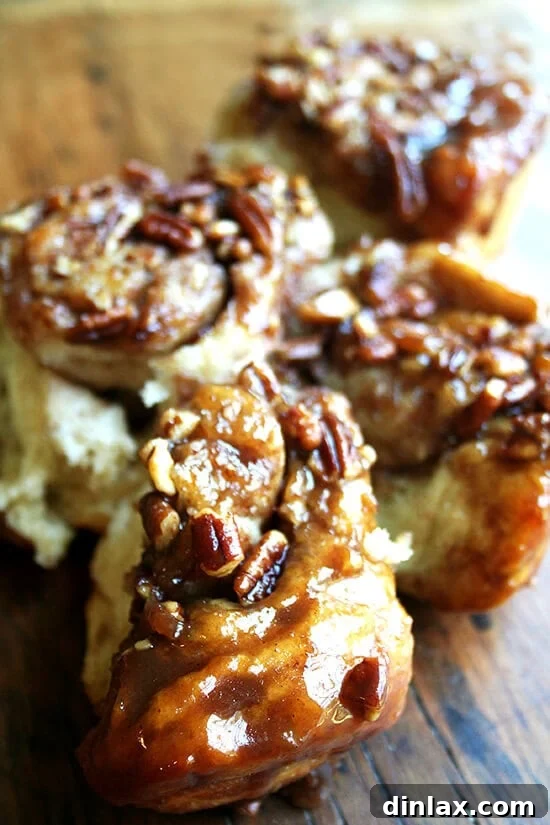
Prepare for a culinary revelation! Before attempting these sticky pecan caramel rolls, my expectations were modest, almost non-existent. Yet, the outcome was nothing short of astonishingly delicious. I was left in complete disbelief at how a simple, standard bread dough—comprised solely of water, flour, yeast, and salt—could transform into such a rich, brioche-like confection. How is it possible for a dough without butter, sugar, eggs, or milk to yield a cinnamon roll that is nearly, if not perfectly, divine? This question still puzzles me, a seasoned home baker. I am utterly stumped, yet utterly content with the results.
My journey to these delightful rolls began on a whim. Having already baked three small loaves from my batch of Artisan Bread in Five Minutes a Day (ABin5) dough—the master recipe typically yields four loaves—I felt inspired to explore new possibilities. The authors of the renowned ABin5 cookbook confidently state in the preface to their Sticky Pecan Caramel Roll recipe that it works, and works *exceptionally well*, with their basic boule dough. Intrigued by this claim, I decided to give it a try. And oh, am I profoundly glad I did! These rolls were an absolute triumph. The texture was incredibly tender, the caramel perfectly gooey, and the pecans added a delightful crunch.
The secret lies in the revolutionary “Artisan Bread in Five Minutes a Day” method, which champions minimal effort for maximum flavor. This no-knead approach leverages a long, slow fermentation process to develop complex flavors and an enviable texture that rivals more traditional, labor-intensive doughs. This fermentation process is key to achieving that rich, almost brioche-like taste and airy structure, even with the most basic ingredients. It’s truly a game-changer for anyone who loves fresh baked goods but is short on time or intimidated by complex bread-making techniques.
The Unexpected Delight: A Simple Dough, Extraordinary Flavor
It’s natural to be skeptical when a recipe promises gourmet results with such simplicity. Many assume that the unparalleled richness of a brioche or a classic cinnamon roll comes exclusively from ingredients like copious amounts of butter, eggs, and sugar in the dough itself. However, the ABin5 method proves that a high-hydration, well-fermented dough can mimic these desirable qualities. The master dough acts as a blank canvas, readily absorbing the decadent flavors of brown sugar, butter, and pecans that become the heart of these caramel rolls. The contrast between the seemingly humble dough and the luxurious topping creates a harmonious symphony of taste and texture that is utterly captivating.
Beyond the taste, the convenience factor cannot be overstated. With the ABin5 dough prepped and stored in your refrigerator, fresh, homemade sticky buns are mere minutes away from assembly. This makes them an ideal choice for a leisurely weekend breakfast, a special holiday brunch, or an impressive dessert for unexpected guests. Imagine waking up to the irresistible aroma of warm caramel and toasted pecans filling your home, all with minimal effort on your part. This recipe is particularly perfect as a Labor Day Weekend morning treat, offering comfort and indulgence without the usual stress of elaborate baking.
Mastering Your Sticky Pecan Caramel Rolls: Tips for Success
While the ABin5 method simplifies much of the bread-making process, a few key tips can elevate your sticky pecan caramel rolls from great to truly unforgettable:
- Preventing Spillage: My initial attempt resulted in some caramel overflow and a burnt oven floor. To avoid this sticky situation, opt for a cake pan with higher sides, ideally 2 inches or more. Alternatively, place a baking sheet (disposable or not) on the rack directly below your cake pan to catch any delectable drips. This not only keeps your oven clean but also salvages any escaped caramel for a delicious bonus.
- Dough Handling: The ABin5 dough is inherently wet. When shaping and rolling, a light dusting of flour on your work surface and rolling pin is essential. However, avoid using excessive flour, as this can dry out the dough and compromise its tender texture. If the dough resists rolling, let it rest for 10-20 minutes. This allows the gluten to relax, making it much more pliable.
- Chilling for Cleaner Cuts: If your dough is particularly soft after filling and rolling, a brief chill in the refrigerator (around 20 minutes) can make slicing the log into individual rolls much easier and result in cleaner, more uniform shapes. While I confess to sometimes being too impatient to chill my dough, a little patience here goes a long way.
- The Rise: Although the original recipe suggests an hour of resting and rising, keep an eye on your rolls. They are ready to bake as soon as they have visibly plumped up and started to fill the pan. Over-proofing can sometimes lead to a less desirable texture.
- The Inversion is Key: The most crucial step! As soon as the rolls come out of the oven, while still piping hot, run a knife around the edges of the pan and immediately invert them onto a serving dish. Waiting too long will cause the caramel to solidify and stick to the pan, making removal a difficult, messy affair.
Looking ahead, I am curious to see if an enriched brioche dough from ABin5 could further enhance the flavor and texture of these rolls. As soon as I recover from my current sticky bun indulgence – which might take a few weeks – I plan to give the ABin5 brioche dough a try. I’m already anticipating that happy morning!
Explore the World of “Artisan Bread in Five Minutes a Day”
These sticky pecan caramel rolls are just one incredible example of the versatility and genius of the “Artisan Bread in Five Minutes a Day” method. If you’re captivated by the idea of fresh, homemade bread and pastries with minimal effort, I highly recommend exploring the broader collection of recipes available. The possibilities are truly endless, from savory loaves to sweet delights.
You can discover a wealth of inspiration on the ABin5 blog. For instance, this monkey bread, also made with ABin5 brioche dough, looks absolutely fabulous and is next on my list!
Here are some other fantastic ABin5 loaves I have personally tried and highly recommend:
- Traditional Boule: The foundational recipe that started it all, perfect for everyday enjoyment.
- Cinnamon Swirl Bread: An absolute favorite, perfect for toast or sandwiches.
- Partially Whole Wheat Boule: A heartier version of the classic, offering a lovely nutty flavor.
- Broa — Portuguese Corn Bread: A unique and delicious bread with cornmeal, distinctly savory rather than sweet.
The Master Recipe: Boule
5 Stars
4 Stars
3 Stars
2 Stars
1 Star
No reviews
Yield: 4 1-pound loaves 1x
Description
Adapted From Artisan Bread in Five Minutes A Day by Jeff Hertzberg and Zoë François
Ingredients
- 3 cups lukewarm water
- 1½ T. active dry or instant yeast (1½ packets)
- 1½ T. kosher or other coarse salt
- 6½ cups (29.25 oz.) unsifted, unbleached, all-purpose white flour, measured with the scoop-and-sweep method
Instructions
Mixing and Storing the Dough
- Warm the water slightly: It should feel just a little warmer than body temperature, about 100ºF.
- Add yeast and salt to the water in a five-quart bowl, or preferably, in a resealable, lidded (not airtight) plastic food container or food-grade bucket. Don’t worry about getting it all to dissolve. (Adding the yeast, then the flour and then the salt on top of the flour is an alternative approach, though not strictly necessary for this method.)
- Mix in the flour: Add all of the flour at once, measuring it with dry-ingredient measuring cups by gently scooping the flour, then sweeping the top level with a knife or spatula. Avoid pressing down into the flour as you scoop, as this can compress it and throw off the measurement. Mix with a wooden spoon until everything is uniformly moist, without dry patches. The dough should be wet and loose enough to conform to the shape of the container. Do not knead; it is not necessary.
- Allow to rise: Cover with a lid (not airtight) that fits well to the container you’re using. Allow the mixture to rise at room temperature until it begins to collapse (or at least flattens on the top), approximately two hours. You can use a portion of the dough any time after this period, but fully refrigerated dough is less sticky and easier to work with. Therefore, for your first attempt with this method, it’s highly recommended to refrigerate the dough overnight before shaping a loaf.
If you want to make standard boules, continue with step 5 here.
Sticky Pecan Caramel Rolls
5 Stars 4 Stars 3 Stars 2 Stars 1 Star
No reviews
Yield: 8 rolls 1x
Ingredients
- 1 1/2 lbs. of pre-mixed dough (recipe above)
Note: The recipe is quite flexible regarding dough weight. If your dough portion is slightly larger, you may need to adjust the filling quantities accordingly to ensure even coverage.
The Caramel Topping
- 6 T. unsalted butter, softened
- 1/2 tsp. salt
- 1/2 cup brown sugar
- 30 pecan halves (You can leave them whole for a bolder pecan flavor or crush them for easier eating, as preferred.)
The Filling
- 4 T. salted butter, softened (Unsoftened butter can be used, but softened butter will cream more easily for a smoother spread.)
- 1/4 cup sugar
- 1 teaspoon ground cinnamon
- 1/4 tsp. freshly grated nutmeg (Optional, adds a warm, spicy depth.)
- 1/2 cup chopped and toasted pecans (Toasting the pecans enhances their flavor, but they can be used untoasted.)
- Pinch of ground black pepper (Optional, a surprising addition that complements the spices.)
Instructions
- On baking day, cream together the softened butter, salt, and brown sugar until well combined. Spread this mixture evenly over the bottom of a 9-inch cake pan. Scatter the pecan halves over the butter-sugar mixture and set the pan aside. (Tip: To prevent potential spillage, especially with generous caramel, consider using a high-sided pan or placing a larger baking sheet on the rack below to catch any drips.)
- Lightly dust your work surface with flour. Cut off a 1.5 lb piece of the refrigerated dough. Dust the dough piece with additional flour and quickly shape it into a ball. You can do this by gently stretching the surface of the dough around to the bottom on all four sides, rotating the ball a quarter-turn each time. (Alternatively, simply place the dough on your floured surface and gently stretch it into a rectangle of desired size.)
- Using a rolling pin, roll out the dough to an approximate 1/8-inch thick rectangle. Ensure you use just enough flour to prevent sticking without making the dough dry. If the dough resists rolling and springs back, let it rest for about 20 minutes to allow the gluten to relax, then resume rolling.
- In a small bowl, cream together the softened butter, sugar, and any chosen spices (cinnamon, nutmeg, pepper). Spread this filling evenly over the rolled-out dough rectangle. Sprinkle with the chopped nuts. If your dough is larger, you might need to prepare a little more filling to ensure full coverage. Starting with one of the long sides, carefully roll the dough into a tight log. If the dough feels too soft to cut cleanly, chill it in the refrigerator for about 20 minutes to firm it up slightly.
- Preheat your oven to 350ºF (175ºC). With a sharp serrated knife, cut the dough log into 8 equal pieces. Arrange these pieces, swirl-side up, over the pecans in the prepared cake pan. Cover the pan loosely with plastic wrap and allow the rolls to rest and rise for about 1 hour, or until they have noticeably expanded and begun to fill the pan. (You can also proceed after a shorter rise, like 20 minutes, if the buns already look sufficiently puffy.)
- Bake the rolls for approximately 40 minutes, or until they are golden brown on top and feel set in the center. While the rolls are still hot from the oven, immediately run a knife around the inside edge of the pan to loosen any caramel. Promptly invert the entire pan onto a serving dish. It is crucial to do this while they are hot, as the caramel will harden and stick to the pan if allowed to cool. Serve warm and enjoy!