

Are you passionate about food? Do you love creating delicious recipes, sharing culinary tips, or exploring gastronomic adventures? If so, starting a food blog might be your perfect next step. For nearly two decades, I’ve navigated the evolving landscape of online food publishing, and while the journey is continuous, the fundamentals remain crucial. This comprehensive guide is designed to empower aspiring food bloggers like you, providing a clear roadmap to launch your culinary space on the web. We’ll cover everything from conceptualization to execution, ensuring you have the knowledge to build a successful and engaging food blog using trusted platforms like WordPress and Bluehost.
How to Start a Food Blog: Your Comprehensive Guide to Culinary Blogging Success
Embarking on the journey of food blogging is incredibly rewarding, allowing you to connect with a global audience over a shared love for food. Whether you dream of sharing family recipes, reviewing restaurants, or documenting your cooking experiments, a well-structured blog is your canvas. This guide breaks down the essential steps to get your food blog up and running, focusing on practical advice and effective strategies that have stood the test of time in the digital culinary world.
Step 1: Laying the Foundation – Naming Your Food Blog and Crafting Your Identity
The very first ingredient for your food blog recipe is its name. This isn’t just a label; it’s the cornerstone of your brand identity, influencing how readers perceive you and remember your content. Take ample time for this crucial step – a well-chosen name can prevent years of brand confusion and help you stand out in the crowded culinary space. My own experience with “Alexandra’s Kitchen” versus “alexandracooks.com” taught me the importance of this alignment early on.
Choosing a Memorable Blog Name: Key Considerations
- Match Name to URL: This is paramount. For seamless branding and ease of recall, your chosen blog name should perfectly align with its corresponding domain name. This enhances brand recognition and makes it effortlessly simple for readers to find and remember your site.
- Keep it Short and Snappy: Longer names can be cumbersome to remember, type, and share across various platforms. Aim for conciseness without sacrificing the essence of your blog’s focus.
- Make it Memorable: A good name sticks in people’s minds. It should be easy to pronounce, spell, and recall, encouraging repeat visits.
- Reflect Your Niche: Does your blog focus on healthy eating, gourmet baking, international cuisine, or perhaps budget-friendly meals? Your name can subtly hint at your specialty, immediately attracting your target audience who are searching for specific content.
- Be Clever, But Not Overly Complex: While creativity is highly encouraged, avoid names that are overly abstract, obscure, or rely on complex wordplay. They might sound unique but could also confuse potential readers about your blog’s content or purpose. Clarity often trumps excessive cleverness.
- Brainstorming Techniques: Start by listing keywords related to your cooking style, favorite ingredients, personal philosophy around food, or unique approach to recipes. Experiment with combining words, using alliteration, or playing with culinary puns that are easy to understand.
- Seek Feedback: Before making a final decision, share your top name ideas with trusted friends, family, or potential readers. Their fresh perspectives can reveal unforeseen issues, clarify ambiguities, or confirm a truly winning choice that resonates broadly.
- Check Availability: This is a critical step before you become too attached to a name. Verify if the domain name (a .com extension is generally preferred for its professionalism and familiarity), social media handles (for platforms like Instagram, Pinterest, Facebook, and Twitter), and even potential trademark availability are open. Online domain registrars provide instant checks for domain availability.
Step 2: Choosing Your Platform and Finding a Reliable Host
Once you have a compelling name, you need the digital infrastructure to bring your blog to life. This involves selecting a robust publishing platform and securing a reliable web host. For many years, and for excellent reasons, I have exclusively used WordPress. It’s a powerful, flexible, and widely supported Content Management System (CMS) that forms the backbone of millions of websites, including countless successful food blogs worldwide.
Understanding WordPress: .com vs. .org
WordPress offers two distinct paths, and understanding their differences is vital for making the right choice for your food blog’s long-term success and growth:
- WordPress.com (Free, Managed Hosting): This is an excellent starting point for beginners who want to test the waters of blogging without significant upfront financial commitment or technical setup.
- Pros: It’s free to start, requires no technical setup (WordPress manages hosting, security, and maintenance), and offers a user-friendly interface that lets you focus primarily on content creation.
- Cons: Comes with significant limitations on customization options, restrictions on the use of plugins and custom themes, potential for ads on your site (unless you upgrade to a paid plan), and ultimately less control over your site’s long-term growth, branding, and monetization strategies.
- WordPress.org (Self-Hosted, Maximum Control): This is the professional standard for bloggers seeking maximum flexibility, complete control, and extensive monetization potential.
- Pros: Grants you full control over your site’s design, functionality (via an ecosystem of thousands of plugins), custom themes, and diverse monetization strategies. You retain complete ownership of all your content and data. It’s highly scalable, perfect for significant traffic growth, and offers robust, granular SEO capabilities essential for food blogs.
- Cons: Requires you to secure a web host (which comes with a nominal monthly fee) and take on a bit more technical responsibility for the initial setup and ongoing maintenance, though many hosts simplify this process significantly with one-click installations.
If you’re serious about building a professional food blog with long-term growth and income generation in mind, WordPress.org is the unequivocally recommended route. The ability to customize every aspect, optimize thoroughly for search engines, and integrate powerful tools will prove invaluable as your blog evolves.
Securing Your Web Host: Your Blog’s Home on the Internet
If you opt for the highly recommended WordPress.org route, you’ll need a web host – essentially, a company that provides the server space where your website’s files are stored, making it continuously accessible to anyone on the internet. Choosing the right host is crucial for your site’s speed, reliability, security, and overall performance.
- Bluehost: Ideal for Beginners and Budget-Conscious Bloggers
When I first embarked on my blogging journey, Bluehost was my go-to choice, and it remains an excellent recommendation for new bloggers today. Its primary appeal lies in its affordability and user-friendliness. Initial monthly fees for shared hosting are typically nominal, often starting around $3.95/month, which is incredibly budget-friendly for launching a new website. Bluehost offers a streamlined one-click WordPress installation, making the technical setup straightforward even for those without prior experience. They also frequently include a free domain name registration for the first year, further reducing your initial startup costs. - WP Engine: Scaling for Enhanced Performance and Support
As your food blog gains traction, experiences significant traffic growth, and becomes a serious online business, you might find yourself needing more robust support and specialized performance optimization. This is where premium managed WordPress hosts like WP Engine become an excellent option. Managed hosting means they proactively handle many of the complex technical aspects for you, including security, daily backups, and advanced performance optimization, allowing you to focus purely on content creation and audience engagement. WP Engine is renowned for its exceptional speed, reliability, advanced security features, and dedicated customer support, making it a worthy investment for growing blogs with increasing traffic demands and business needs. - Don’t Be Afraid to Ask for Help!
Regardless of whether you choose Bluehost, WP Engine, or another reputable host like SiteGround, Liquid Web, or Flywheel, remember that their customer support teams are specifically there to assist you. If you encounter any difficulties installing WordPress, configuring your domain, or navigating initial setup steps, do not hesitate to get on the phone or use their live chat feature. Allowing a support specialist to walk you through the process can save you countless hours of frustration and ensure a smooth start.

Step 3: Designing Your Food Blog – Aesthetics, User Experience, and Functionality
With your platform and host securely in place, it’s time to focus on the visual appeal and seamless functionality of your site. This is where your food blog truly comes to life, engaging visitors with its design as much as its delicious content. WordPress’s greatest asset in this regard is its vast and diverse library of themes. A theme acts as the fundamental framework or layout of your website, defining its appearance, structural elements, and often includes specific built-in features that can be highly beneficial for a food blog.
Choosing the Right WordPress Theme for Your Food Blog
There are thousands of themes available, ranging from free options to premium, feature-rich designs. While basic elements like colors and fonts can often be customized within a theme’s settings, the core layout, overall aesthetic, and underlying functionality are determined by your chosen theme. Here are the most important requirements to consider when making your selection:
- Responsiveness is Non-Negotiable for Modern Blogging: In today’s mobile-first digital landscape, your website MUST be fully responsive. This means its layout automatically adjusts and displays optimally on any device, whether a large desktop monitor, a tablet, or a compact smartphone. Google actively prioritizes responsive sites in its search rankings, and users universally expect a seamless, intuitive experience across all their devices. A non-responsive site will not only deter visitors but also significantly harm your SEO performance.
- Speed Optimization: A Critical Factor for User Retention and SEO: A slow-loading website is a frustrating website for visitors, and search engines penalize it. Choose a theme that is lightweight, cleanly coded, and specifically optimized for speed. Fast loading times are absolutely crucial for user retention, engagement, and achieving higher rankings in Google search results.
- Gutenberg Compatibility: Harnessing the Power of the Block Editor: WordPress introduced Gutenberg, its innovative block editor, to revolutionize content creation and layout design. Ensure your chosen theme is “Gutenberg ready” or fully compatible, allowing you to leverage the full power of the modern WordPress editing experience for creating beautiful, flexible, and visually rich layouts for your recipes and articles.
- Visual Appeal and Clean Layout: Paramount for Food Blogs: For a food blog, visuals are everything. Select a theme that offers clean lines, ample white space, and elegantly showcases your high-quality photography. The design should complement and enhance your delicious dishes, not distract from them with clutter or garish elements.
- Recipe Card Integration or Compatibility: Many specialized food blog themes either come with integrated recipe card functionalities or are designed to integrate seamlessly with popular third-party recipe card plugins. This feature is essential for displaying recipes clearly, attractively, and in an SEO-friendly format (using schema markup), which helps Google understand your recipe content.
- Customization Options: Matching Your Brand Identity: Look for themes that provide straightforward and intuitive options to easily customize colors, fonts, header styles, widget areas, and various layout elements. This flexibility allows you to perfectly match the theme to your unique brand identity and personal aesthetic without needing to delve into complex coding.
- Developer Support and Regular Updates: Ensuring Longevity: A reputable, well-supported theme ensures you receive regular updates for security patches, compatibility with new WordPress versions, and ongoing feature enhancements. Dedicated support from the theme developers is invaluable if you encounter any issues or have questions.
For my latest branding efforts, including the distinctive Alexandra’s Kitchen logo and refined site aesthetics, I’ve relied on the exceptional expertise of Feast Design Co., known for creating specialized, high-performing themes tailored specifically for food bloggers that prioritize both stunning aesthetics and robust functionality.
Four Essentials for an Optimal Food Blog Design and User Experience:
Beyond the selection of a great theme, several crucial elements must be integrated and prioritized during your design process to significantly enhance user experience, boost engagement, and improve overall site performance:
- Speed: The Foundation of Good User Experience: This point cannot be overstressed. A fast-loading site is not merely a convenience; it’s a fundamental requirement for keeping visitors engaged and satisfying search engine algorithms. Implement strategies to improve speed, such as optimizing all images (compressing them without losing quality), utilizing a robust caching plugin, and considering a Content Delivery Network (CDN) to serve your content quickly to users worldwide.
- Robust Search Functionality: Essential for Recipe Discovery: For a food blog, a powerful and easily accessible search bar is absolutely paramount. Readers will frequently visit your site specifically to look for particular recipes, ingredients, or cooking techniques. This function should be clearly located, ideally prominently at the top of every page, and perform flawlessly across all devices, particularly on mobile. Consider implementing advanced plugins like Swift Type Search for enhanced search capabilities if your chosen theme’s default search isn’t robust or user-friendly enough.
- Effective Organization (Categories & Tags): Navigating Your Culinary Archive: WordPress excels at content organization, and leveraging categories and tags is a game-changer for food blogs. Assigning relevant categories and descriptive tags to each post creates a logical and browsable structure for your extensive archives, making it incredibly user-friendly. For example, you can create broad categories like Breakfast, Salads, CSAs, Desserts, or Bread, and link them directly from your main menu for easy navigation. This strategic organization not only helps readers explore your content effortlessly but also significantly aids in SEO by creating a clear, hierarchical site structure that search engines can easily crawl and understand. Recently, I discovered an effective way to display categories with appealing, good-sized thumbnail images, further enhancing visual browsing, particularly noticeable in sections like the Vegetarian category.
- Printer-Friendly Options: A Highly Appreciated Convenience: This is a feature highly valued by readers of food blogs, and one that I regrettably overlooked for several years. Providing an easy, clean, and dedicated way for visitors to print recipes directly from your site is a huge convenience and significantly enhances the user experience. Plugins like the WP Tasty Recipe plugin, for instance, offer an excellent, clean, and highly functional printer-friendly display that my readers consistently appreciate and utilize.
Step 4: Capturing Your Creations – Essential Equipment and Food Photography Mastery
Food blogging is inherently visual. High-quality, appetizing photography isn’t just a bonus; it’s an absolutely essential component for enticing readers, making your recipes irresistible, and driving engagement. While professional-grade camera equipment can certainly elevate your work, remember that stunning food photography is ultimately more about skill, understanding light, and thoughtful composition than just the camera body itself.
Your Essential Photography Tools:
- Camera Choice: From Smartphone to Professional DSLR
While many seasoned food bloggers eventually invest in advanced DSLRs or mirrorless cameras, you absolutely don’t need the most expensive gear to start capturing beautiful food photos.- DSLR/Mirrorless Cameras: For professional quality, unparalleled control over settings (aperture for depth of field, shutter speed for motion, ISO for sensitivity), and the flexibility of interchangeable lenses, a dedicated camera like the Canon 5D Mark III (or newer, more accessible models from Canon, Nikon, Sony) is popular among professionals. These cameras offer superior image quality and creative control. You can find more of my detailed photography tips here.
- Smartphones: Modern smartphones boast incredible, ever-improving camera capabilities. They are perfect for starting out, especially for quick shots, behind-the-scenes content, and creating engaging visuals for social media platforms like Instagram and Instagram Stories. Don’t underestimate the power and convenience of the device in your pocket!
- Lighting: Natural Light is Your Best Friend
Natural light is almost always the superior choice for food photography, offering a soft, diffused quality that enhances textures and colors. Position your food near a large window, ideally with indirect light, to create inviting shadows and highlights. Avoid harsh, direct sunlight, which can create unflattering, strong contrasts. Investing in a simple white or black foam board can help you bounce light or create shadows for more dynamic shots. - Props and Styling: Enhancing, Not Overpowering
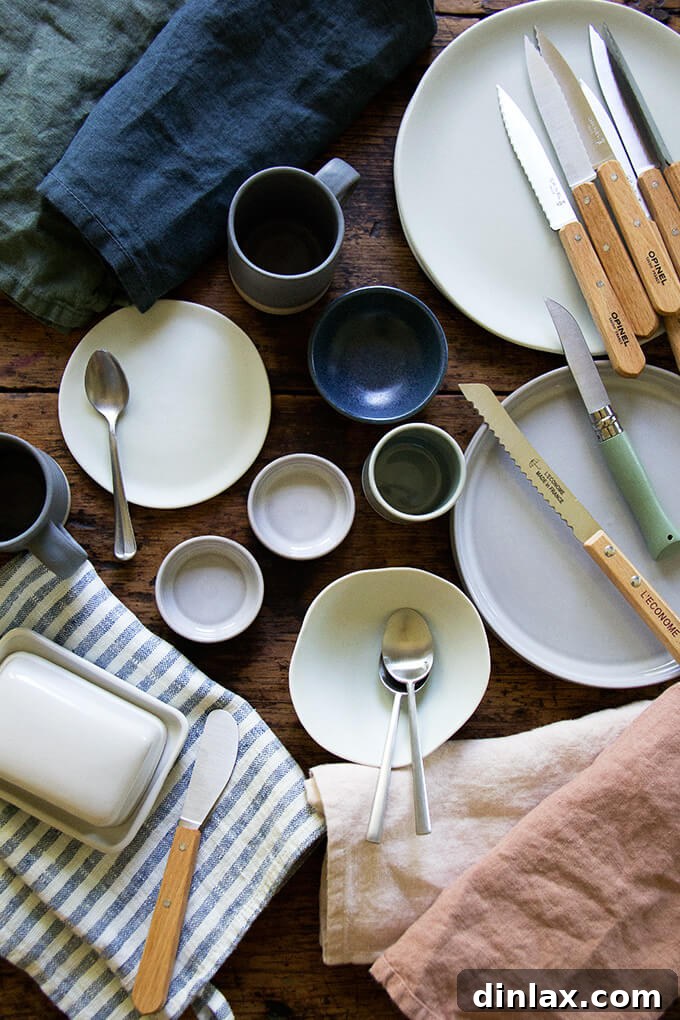
While “props such as cloths, bowls, and vintage silverware aren’t going to make the image” on their own, they can certainly enhance it when used thoughtfully and strategically. Think about how texture, color, and size of your props complement the dish without overpowering it or distracting from the star – the food itself. Often, less is more; a few carefully chosen elements can elevate your photo significantly.
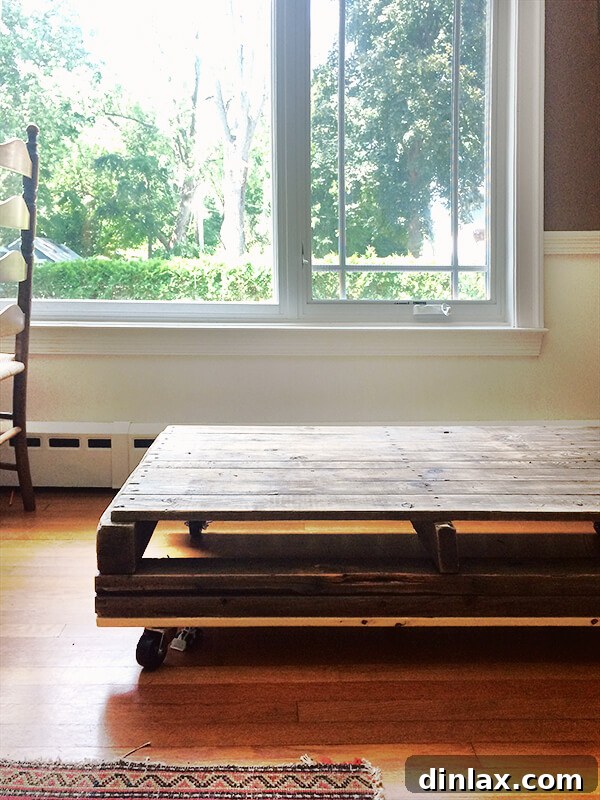
My workspace where culinary magic happens and is then beautifully captured:
A curated selection of culinary props and styling elements for diverse food photography:
Mastering Food Photography: Essential Tips and Photo-Editing Tools
The web abounds with countless resources for improving your food photography skills. I’ve even curated a dedicated Pinterest board showcasing inspiring images from some of my favorite food photographers. The key to success is to embrace continuous learning, start practicing consistently, and consciously develop your unique visual style.
- Don’t Get Overwhelmed by Perfection: It’s incredibly easy to feel intimidated by the seemingly flawless, hyper-styled photography prevalent online today. While the overall quality of online photography has indeed soared, remember that sometimes “too perfect” or overly staged can feel inauthentic or unapproachable. Aim for appetizing, authentic, and evocative imagery that genuinely represents your food. Find a few photographers whose work deeply resonates with you, study their techniques, analyze their lighting and composition, and then thoughtfully apply those learnings to your own practice.
- Practice Makes Perfect: The Power of Repetition: There’s no substitute for hands-on practice. The more you shoot, the more comfortable you’ll become with your camera’s settings, understanding how light interacts with your food, and developing your unique styling and compositional eye. Experiment boldly with different angles, perspectives, and arrangements. Each session is a learning opportunity.
- Photo-Editing Software is Your Indispensable Ally: This is where good photos are transformed into truly great ones. Editing allows you to fine-tune exposure, adjust color balance to make food look vibrant, enhance sharpness, crop for optimal composition, and correct any minor imperfections.
- Adobe Photoshop & Lightroom: These are the undisputed industry standards and come highly recommended for professional results. Photoshop offers unparalleled pixel-level manipulation and compositing capabilities, while Lightroom is exceptionally powerful for organizing, processing, and batch-editing large volumes of photos. Both have a learning curve, so consider investing time in an online course or tutorial series to grasp their fundamental capabilities and workflow.
- Free Alternatives: If paid software isn’t currently within your budget, powerful open-source alternatives like GIMP (GNU Image Manipulation Program) offer extensive editing functionalities. Additionally, many user-friendly online tools and free mobile apps provide excellent basic editing capabilities for quick enhancements.
- Vertical vs. Horizontal Images for Maximum Reach and Engagement: When considering image orientation, it’s crucial to think strategically about where your photos will be shared and consumed. Pinterest, a massive traffic driver and visual search engine for food blogs, heavily favors vertical images, which command more visual real estate and stand out significantly more in users’ feeds. Furthermore, as an increasing number of people consume content on vertically oriented smartphones and tablets, vertical images often provide a more immersive and engaging viewing experience. While a thoughtful mix of both horizontal and vertical images offers variety and flexibility, prioritizing vertical compositions, especially for your key recipe hero shots and Pinterest-bound visuals, is generally a wise and highly effective strategy.
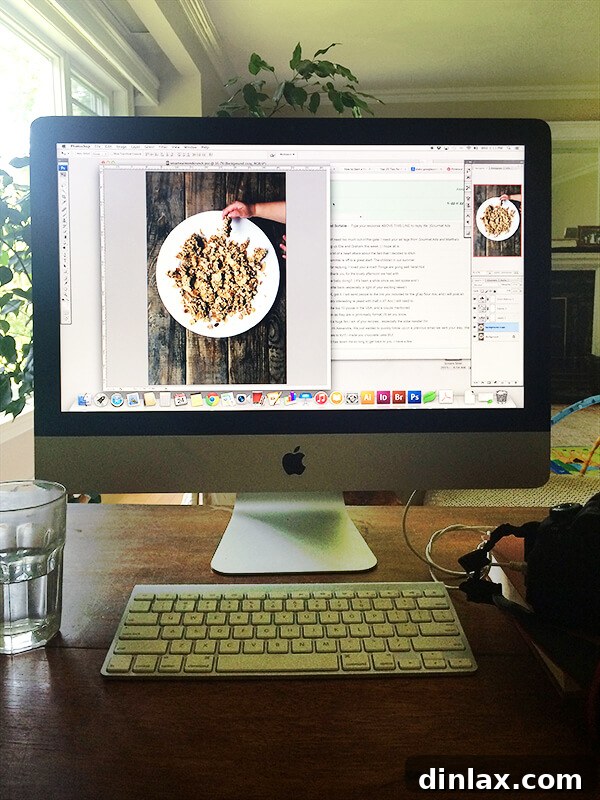
A glimpse into the intricate photo editing process in Adobe Photoshop, optimizing visuals for a food blog:
Step 5: Powering Your Blog with Essential WordPress Plugins for Food Bloggers
Plugins are like specialized apps for your WordPress site, extending its functionality and adding crucial features that are particularly beneficial for a food blog. Choosing and configuring the right plugins can significantly enhance the user experience, boost your search engine optimization (SEO), improve site security, and streamline your daily content creation workflow.
Recommended and Essential Plugins for Food Bloggers:
- SEO Plugin (Yoast SEO or Rank Math): An absolute must-have for any serious blogger. Plugins like Yoast SEO or Rank Math provide a comprehensive suite of tools to guide you through optimizing your content for search engines. They help you craft compelling meta descriptions, analyze keyword usage for better rankings, generate essential XML sitemaps, and manage various technical SEO aspects. This is vital for increasing your blog’s visibility and attracting organic traffic from search results.
- Recipe Card Plugin (WP Tasty Recipes or Recipe Card Blocks): This is truly essential for any food blog. A plugin like WP Tasty Recipes allows you to create beautifully formatted, printer-friendly recipe cards that clearly display ingredients, instructions, cook times, and often nutritional information. Crucially, these plugins also automatically embed schema markup, which is a special code that helps Google understand the structure and content of your recipes. This enables your recipes to appear as “rich snippets” in search results (e.g., with star ratings, images, and cook times), significantly boosting click-through rates.
- Spam Protection (Akismet): As your blog gains popularity, you will inevitably attract a significant amount of spam comments. Akismet is a powerful and widely trusted plugin that automatically filters out spam, saving you countless hours of manual moderation and keeping your comment section clean and welcoming.
- Image Optimization Plugin (Smush or Optimole): High-resolution food photography, while beautiful, can result in very large image files that significantly slow down your site’s loading speed. Plugins like Smush or Optimole automatically compress and optimize your images without compromising their visual quality, leading to dramatically faster page load times and better SEO performance.
- Security Plugin (Wordfence Security or Sucuri Security): Protecting your valuable content, user data, and hard work from malware, hacking attempts, and other cyber threats is paramount. A robust security plugin like Wordfence or Sucuri actively monitors your site for suspicious activity, scans for vulnerabilities, provides a firewall to block malicious traffic, and offers tools for site cleanup if an attack occurs.
- Backup Plugin (UpdraftPlus or BackWPup): Regular and reliable backups are non-negotiable for any website. In the unfortunate event of a technical issue, a hacking incident, server failure, or accidental deletion, a trusted backup plugin like UpdraftPlus allows you to quickly and easily restore your entire site to a previous state, preventing catastrophic data loss and minimizing downtime.
- Caching Plugin (WP Super Cache or LiteSpeed Cache): Caching plugins significantly improve your site’s speed by creating static versions of your pages. When a visitor returns to your site, these pre-rendered, static pages load much faster than dynamic ones, dramatically enhancing site speed, reducing server load, and improving overall user experience.
- Social Sharing Plugin: Make it effortlessly easy for your readers to share your delicious recipes, stunning photos, and insightful articles on their favorite social media platforms. Look for plugins that offer customizable buttons, flexible placement options (e.g., floating sidebar, above/below content), and accurate share counts.
- Pinterest Optimization (WP Tasty Pins): Specifically designed with food bloggers in mind, WP Tasty Pins helps you optimize your images for maximum impact on Pinterest. It allows you to add hidden, keyword-rich Pin descriptions, control which images are pinnable, and prevent unwanted images from being shared, thereby maximizing your reach and traffic generation from this key platform.
- Enhanced Search Function: As highlighted earlier in the design section, a superior site search box can transform the user experience, especially for a content-rich food blog. While some themes offer great built-in search capabilities, others fall short. If your theme’s default search isn’t cutting it, consider advanced solutions like Swift Type Search, or even hiring a specialized designer to implement a custom search solution that perfectly aligns with your site’s aesthetics and functionality, ensuring readers can always find what they’re looking for.
Step 6: Building Your Community – Leveraging Social Media for Your Food Blog
In today’s interconnected digital landscape, blogging and social media are inseparable partners. Social platforms are powerful, indispensable tools for distributing your delicious content, engaging directly with your audience, fostering a loyal community, and driving significant traffic back to your food blog. Establishing a thoughtful and active presence on key social channels is absolutely essential for expanding your reach and growing your brand.
Key Social Media Platforms for Food Bloggers and Their Strategic Use:
- Facebook: Despite the rise of newer platforms, Facebook remains a robust platform for sharing recipes, engaging with followers in dedicated culinary groups, and building a strong, interactive community around your brand. A dedicated Facebook Page allows you to share updates, host live Q&A sessions, run polls, and consistently drive traffic to your latest blog posts.
- Pinterest: Often more accurately referred to as a visual search engine rather than just a social network, Pinterest is an absolute powerhouse for food bloggers. High-quality, vertical images (known as ‘pins’) of your recipes, presented beautifully, can drive significant, long-term, and highly targeted traffic to your site as users actively search for meal inspiration, cooking tips, and dietary solutions.
- Instagram: The quintessential visual platform for food, Instagram is perfect for showcasing stunning food photography, short, engaging recipe videos (Reels), behind-the-scenes glimpses of your cooking process, and engaging directly with your audience through Stories, polls, and direct messages. It’s a prime platform for building a strong visual brand identity.
- Twitter (now X): Useful for quick updates, sharing links to your latest posts, engaging in real-time culinary conversations with other food personalities and brands, and staying current with industry news and emerging food trends. It can be a great platform for driving quick, topical engagement.
- TikTok: An increasingly important and rapidly growing platform for food creators, especially for short, highly engaging vertical video recipes, cooking hacks, and quick culinary tutorials. If video content is part of your strategic vision, TikTok offers immense viral potential and reach, particularly with younger demographics.
It’s important to understand that you don’t need to be equally active and dominant on every single platform. Identify where your target audience spends most of their time, where your content performs best, and then strategically focus your efforts there. Consistency in posting, genuine engagement with your followers, and adapting your content to each platform’s nuances are far more impactful than a widespread, thinly spread presence across too many channels.
Step 7: Cultivating Connections – Building a Thriving Blogging Community and Network
While the act of writing and cooking for a blog can sometimes feel like a solitary endeavor, it certainly doesn’t have to be. The food blogging community is incredibly vibrant, supportive, and full of opportunities. Actively engaging with fellow bloggers and industry professionals can provide invaluable learning opportunities, open doors for exciting collaborations, and lead to genuine, lasting friendships that enrich your blogging journey.
Networking, Collaboration, and Community Building Strategies:
- Reach Out to Bloggers You Admire: Don’t be shy! A thoughtful, genuine email or a well-crafted comment on their blog or social media post can go a long way. Express your sincere appreciation for their work, mention specific content that inspired you, and share how they’ve influenced your own blogging path.
- Find Your Niche Community: The food world is vast and diverse. Whether you’re deeply interested in vegan cooking, gluten-free recipes, passionate about baking, fascinated by culinary gadgets, invested in food policy, enjoy reviewing cookbooks, or are considering starting a podcast, there is a dedicated community for you. Actively engaging with like-minded individuals can provide invaluable support, constructive feedback, and myriad collaboration opportunities.
- Practice “Link Love” and Genuine Support: Be generous with your appreciation. Share content from other bloggers you genuinely enjoy and respect. Mentioning them in your blog posts, linking to their recipes or articles, or sharing their social media content is a fantastic way to foster goodwill, build authentic relationships, and often leads to reciprocal support. This isn’t just good karma; it’s a fundamental and highly effective part of building an interconnected web presence and a thriving network.
- Learn from the Best: Closely observe how successful bloggers interact with their audience, manage their content calendar, maintain a consistent brand voice, and keep their online presence fresh, engaging, and fun. There’s a wealth of knowledge to be gained from observing industry leaders.
- Seek Collaboration Opportunities: As your blog grows and you establish your niche, consider reaching out for joint projects, guest posting exchanges, or co-hosting online events with other bloggers. These collaborations can be incredibly effective at introducing your content to new audiences, diversifying your readership, and significantly strengthening your professional network within the food blogging sphere.
Recap: Your Path to a Successful Food Blog Launch
Launching a food blog is an incredibly exciting and fulfilling venture that beautifully combines your passion for food with the dynamic, creative world of digital content creation. It’s a journey of continuous learning, adaptation, and growth, but by diligently following these foundational steps, you’ll be exceptionally well-equipped to build a thriving, engaging, and impactful online culinary presence.
Here’s a concise review of the essential steps we’ve covered to help you get started:
- Pick a Unique and Memorable Name: Ensure it is distinctive, aligns perfectly with your blog’s URL, and truly reflects your unique brand identity.
- Choose WordPress (.org) and a Reliable Host (e.g., Bluehost): Establish a flexible, scalable, and fully controlled foundation for your blog that can grow with your ambitions.
- Design Your Site with a Responsive, SEO-Friendly Theme: Prioritize themes that offer speed, robust search functionality, clear content organization, and convenient printer-friendly options for recipes.
- Invest in Quality Photography and Hone Your Editing Skills: Master the art of using natural light, practice consistently, and leverage powerful editing software to make your delicious food creations truly shine.
- Integrate Essential WordPress Plugins: Equip your blog with plugins that enhance SEO, optimize recipe display, bolster security, and significantly improve overall site performance and user experience.
- Create Strategic Profiles on Key Social Channels: Leverage platforms like Pinterest, Instagram, and Facebook to effectively drive traffic back to your blog and actively engage with your growing audience.
- Actively Engage with the Blogging Community: Nurture relationships by learning from, sharing with, and collaborating with fellow bloggers to foster mutual growth and support.
The world of food blogging is incredibly vibrant, welcoming, and full of opportunities for those passionate about sharing their culinary journey. You now have the passion, and this guide provides the roadmap. Take the leap, start creating, and confidently share your unique culinary voice and delicious recipes with the world. I’m genuinely excited to see what amazing content you bring to the table!
Do you have specific questions or thoughts on any of these steps? What aspects of food blogging have you found most challenging or, conversely, most rewarding in your experience or aspirations? Please share your insights and good luck on your incredible blogging journey!