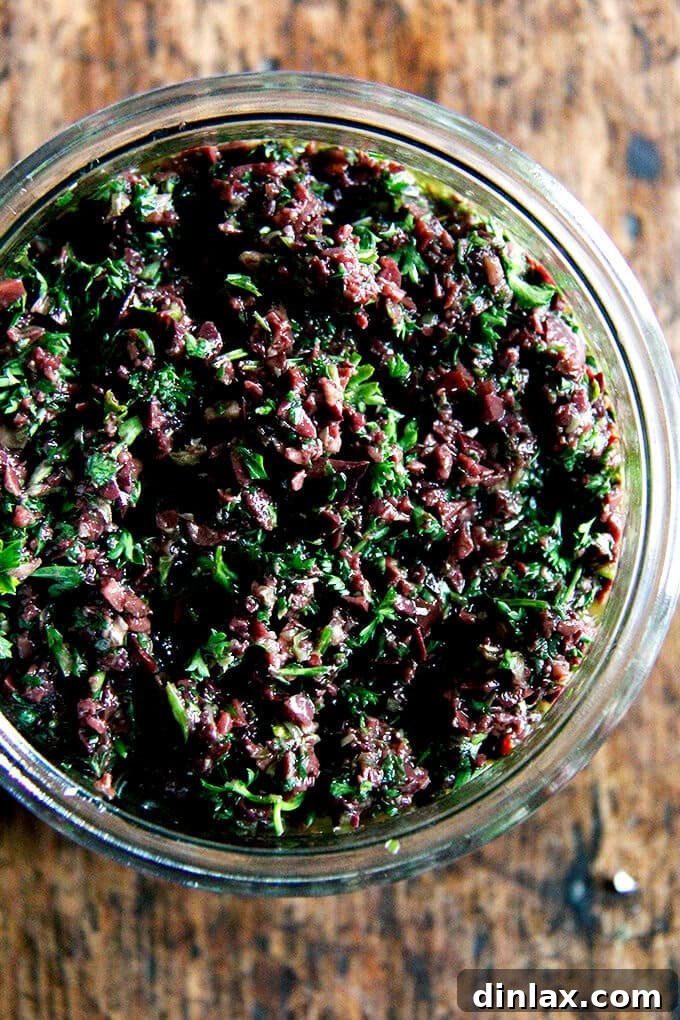
The Ultimate Guide to Easy Homemade Black Olive Tapenade: A Taste of Provence
Transform your kitchen into a Mediterranean haven with this incredibly simple and intensely flavorful black olive tapenade. Whether you’re hosting a gathering or simply craving a gourmet snack, this recipe promises delicious results with minimal effort. The secret to its ease? Your trusty food processor handles most of the heavy lifting, making homemade tapenade accessible to everyone. But don’t let the simplicity fool you; this vibrant spread delivers a complex symphony of salty, briny, and fresh flavors that will impress even the most discerning palate.
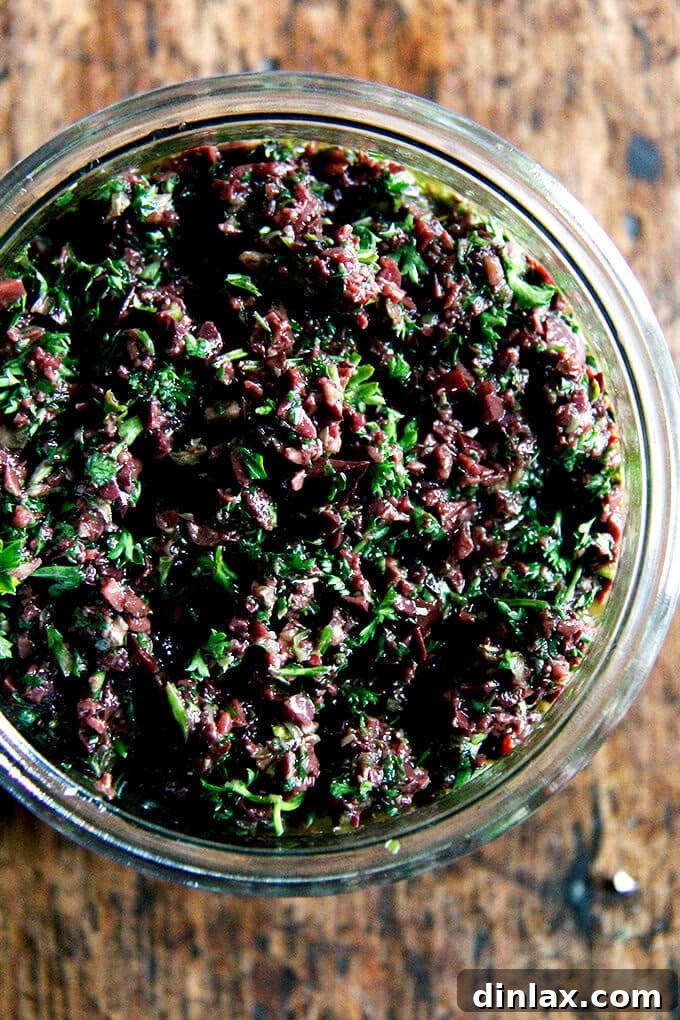
I first whipped up this black olive tapenade for an intimate get-together and it was an instant hit. Since then, it has become my go-to appetizer for countless occasions, primarily because of its undeniable deliciousness and effortless preparation. Indeed, the food processor performs approximately 95% of the task: with just 20 to 30 quick pulses, the tapenade is nearly ready to serve. This efficiency allows you to focus on the finer details that truly elevate a good tapenade to a great one.
However, the real magic, in my opinion, lies in the meticulous attention given to the remaining 5% of the process: specifically, the hand-chopping of a generous amount of fresh parsley. This small step makes a significant difference, transforming the tapenade from merely tasty to visually stunning and incredibly appetizing.
Why is this final touch so crucial? While relying solely on the food processor to chop all the parsley will still result in a flavorful tapenade, it will lack the vibrant color contrast and textural variation that truly make it shine. Those beautiful pops of bright green parsley punctuating the deep, purplish-black purée are not just aesthetically pleasing; they enhance the overall culinary experience. The visual appeal signals freshness and attention to detail, inviting guests to dive in.
Furthermore, stirring in the olive oil by hand, rather than incorporating it while the food processor blade is whirring, is equally important. This technique prevents the tapenade from becoming an over-processed, unappealing mush. Hand-mixing ensures a superior texture, allowing the ingredients to coalesce beautifully without losing their individual character. In summary, to achieve excellent olive tapenade every single time, remember these three golden rules:
- **Pulse, don’t purée:** Aim for a coarse, chunky texture, not a smooth paste.
- **Chop half of the parsley by hand and stir it in manually:** This preserves its vibrant color and adds desirable texture.
- **Add the olive oil by hand, not to the food processor:** This prevents over-processing and ensures the perfect consistency.
- Capers: These small, pickled flower buds from the caper bush introduce a distinct briny, salty, and slightly floral note. They are indispensable for achieving the authentic tapenade flavor. Ensure they are well-drained before adding them to avoid excess moisture.
- Garlic: Fresh garlic provides a pungent kick that cuts through the richness of the olives. This recipe calls for raw, peeled garlic cloves. If you prefer a milder, sweeter garlic flavor, you could lightly roast the garlic beforehand, which adds a layer of complexity without the sharp bite of raw garlic. For a truly subtle hint, you might even consider using garlic confit.
- Lemon Zest and Juice: Lemon is a crucial element, providing acidity and freshness that brighten the entire spread. The zest offers aromatic oils, while the juice adds a tangy counterpoint to the olives’ saltiness, balancing the flavors and preventing the tapenade from tasting flat. I almost always use the zest and juice of a whole lemon, adjusting to taste.
- White Balsamic Vinegar: A tablespoon of white balsamic vinegar adds another layer of subtle sweetness and tang. Unlike its darker counterpart, white balsamic maintains a lighter color, which helps preserve the visual integrity of the tapenade without staining it. A good quality red wine vinegar can also be used for a more classic approach.
- Crushed Red Pepper Flakes: A pinch (or more, to taste) adds a subtle warmth and gentle heat, enhancing the overall flavor profile.
- Anchovies: Traditionally, tapenade often includes anchovy fillets for an extra layer of umami and saltiness. If you love that distinct savory depth, add 1-2 fillets to the food processor with the other ingredients.
- Fresh Herbs: A sprig of fresh thyme or oregano pulsed with the olives can introduce an additional aromatic dimension, typical of Mediterranean flavors.
- Sun-dried Tomatoes: A few oil-packed, sun-dried tomatoes can add a concentrated sweet-tart flavor and a chewy texture, creating a delightful twist.
- Crostini and Bread: The quintessential pairing! Serve tapenade generously spread on toasted baguette slices, crusty peasant bread, or even artisan crackers.
- Crudités: For a lighter, gluten-free option, offer a platter of fresh vegetable sticks like cucumber, carrots, bell peppers, and celery for dipping.
- Mediterranean Mezze Platter: Incorporate tapenade into a larger spread alongside hummus, baba ghanoush, feta cheese, marinated artichoke hearts, and warm pita bread.
- Grilled Lamb or Chicken: A dollop of tapenade makes an incredible accompaniment to grilled or roasted meats. Its savory depth perfectly complements rich flavors.
- Fish: Spread tapenade over baked or grilled white fish (like cod or halibut) before cooking, or serve it alongside pan-seared salmon for a burst of Mediterranean flavor.
- Pasta Sauce: Stir a few tablespoons into warm pasta with a splash of pasta water for a quick, flavorful sauce. It’s particularly good with orecchiette or spaghetti.
- Pizza Topping: Use it as a savory base instead of traditional tomato sauce, or dollop it onto a white pizza with fresh mozzarella and herbs.
- Deviled Eggs: Mix a teaspoon of tapenade into your deviled egg filling for a surprising and savory twist.
- Salad Dressing Base: Whisk a tablespoon of tapenade with extra olive oil, a touch more lemon juice, and a dash of Dijon mustard for a vibrant vinaigrette.
- Stuffed Chicken Breast: Spread tapenade inside chicken breasts before rolling and baking for a flavorful main course.
- Author: Alexandra Stafford
- Total Time: 15 minutes
- Yield: 2 cups
- 2 cups pitted black olives, such as Kalamata, see notes above
- Grated zest and juice of ½ to 1 lemon
- Pinch crushed red pepper flakes, optional
- 2 cloves garlic, peeled
- 2 tablespoons capers, drained
- 1 tablespoon white balsamic vinegar
- 2 cups (about) parsley, divided roughly into two 1-cup portions
- 1/3 cup olive oil, plus more to taste
- Pulse the olives, zest, juice of half a lemon, pepper flakes, garlic, capers, vinegar, and half of the parsley in the food processor until a coarse paste is formed—be sure to pulse to avoid turning the purée into complete mush. It may take 20 to 30 quick pulses.
- Transfer the mixture to a bowl. Finely chop the remaining parsley, and stir it in. Stir in the olive oil. Taste; then adjust seasoning as necessary with more lemon, pepper flakes, or olive oil. I almost always end up using the remaining half lemon, and I always stir in more olive oil by the tablespoon until the mixture both looks and tastes right.
- Store olive tapenade in the refrigerator for 1 week. Bring to room temperature before serving. If the parsley looks dull after the tapenade has spent a few days in the fridge, spruce it up by adding freshly chopped parsley.
- Prep Time: 15 minutes
- Category: Condiment
- Method: Food Processor
- Cuisine: Greek
- Homemade “Ranch” Dip (made with Greek yogurt, a huge crowd pleaser!)
- Raw Beet Dip with Toasted Almonds (The hue of this dip is striking!)
- Smoky Eggplant Dip with Za’atar (Serve this with homemade pita!)
- Tzatziki (I could eat this with anything.)
- Spicy Cashew Dip (addictive!)
What is Tapenade? A Taste of Provence
Tapenade is a traditional Provençal spread or condiment made from puréed or finely chopped olives, capers, anchovies (though often omitted in modern versions), and olive oil. Its name derives from the Provençal word for capers, tapenas, highlighting the ingredient’s significance in the original recipe. Originating in the south of France, tapenade has become a beloved staple of Mediterranean cuisine, prized for its robust flavor and incredible versatility.
Historically, tapenade was a simple, rustic dish created to utilize abundant local ingredients. Today, it remains a testament to the power of fresh, high-quality components coming together to create something extraordinary. While many variations exist, a good tapenade always strikes a balance between saltiness, brininess, and a touch of acidity, making it an ideal companion for a wide range of foods.
Why This Black Olive Tapenade Recipe is a Must-Try
This particular black olive tapenade recipe stands out for its straightforward approach without compromising on flavor or authenticity. It’s perfect for busy hosts, impromptu gatherings, or anyone looking to add a touch of gourmet flair to their everyday meals. The combination of briny olives, tangy capers, aromatic garlic, and fresh parsley creates a harmonious blend that is both comforting and exciting.
Beyond its incredible taste, the tapenade offers several benefits. It’s naturally dairy-free, often vegan (if you omit anchovies, as this recipe does), and packed with healthy fats from the olives and olive oil. It’s a fantastic way to incorporate more wholesome ingredients into your diet, providing a flavorful alternative to heavier dips and spreads. Plus, its vibrant appearance makes it a beautiful addition to any spread, signaling quality and care.
Decoding the Ingredients: What Makes a Great Tapenade?
Understanding the role of each ingredient is key to appreciating and mastering this tapenade recipe. Each component contributes uniquely to the overall flavor and texture, creating a balanced and memorable spread.
The Star: Black Olives
The foundation of any good tapenade is, of course, the olives. For this black olive tapenade, Kalamata olives are my preferred choice. Hailing from Greece, Kalamata olives are distinctive for their rich, fruity flavor, soft texture, and deep purplish-black hue. They bring a robust brininess and a slight sweetness that elevates the tapenade beautifully. However, other good quality black olives can certainly be used.
When selecting olives, always opt for pitted varieties to save yourself considerable time and effort. Pitting olives by hand can be a messy and laborious task, so pre-pitted olives are a convenient shortcut that doesn’t compromise on flavor. For a different profile, consider oil-cured black olives, which offer a more intense, wrinkly, and savory character.
Can green olives be used in place of black olives? Yes, absolutely! While the flavor profile will differ slightly, green olives like the vibrant, buttery Castelvetrano olives from Sicily make an equally delicious tapenade. Castelvetrano olives are less briny and have a milder, sweeter flavor, resulting in a lighter-colored and perhaps more approachable tapenade for those who prefer less intensity. Experimentation is encouraged to find your favorite olive base!
Flavor Boosters: Capers, Garlic, Lemon, and Vinegar
These ingredients work in concert to provide the essential tang, pungency, and brightness that define tapenade.
The Freshness Factor: Parsley
While often seen as a garnish, parsley plays a vital role in this tapenade. It’s not just for decoration; it adds a fresh, herbaceous counterpoint to the rich, salty olives and capers. The recipe specifically calls for dividing the parsley and hand-chopping half of it. This isn’t just an aesthetic choice; it significantly impacts the texture and overall freshness of the tapenade.
Hand-chopping ensures that the parsley retains its vibrant green color and structural integrity, preventing it from becoming bruised or pulpy, which can happen in a food processor. These distinct flecks of green create a beautiful contrast against the dark tapenade, signaling freshness and vitality. It also provides a slight textural chewiness that complements the smoother olive base, making each spoonful more dynamic and appealing.
The Finishing Touch: Quality Olive Oil
Extra virgin olive oil is more than just a binding agent; it’s a critical flavor component. A high-quality extra virgin olive oil imparts a smooth, slightly peppery, and fruity finish that ties all the ingredients together. The instruction to stir it in by hand is not arbitrary. Adding olive oil too aggressively or over-processing it in a food processor can lead to a bitter taste or an emulsified, overly smooth texture that lacks character. Hand-mixing gently incorporates the oil, preserving its delicate flavor and allowing you to control the final consistency of the tapenade, ensuring it remains coarse and luscious.
Optional Enhancements for Your Tapenade
While the basic recipe is fantastic, a few optional additions can further customize your tapenade:
How to Make the Perfect Black Olive Tapenade: A Step-by-Step Visual Guide
Making this tapenade is a truly satisfying experience, and the visual journey makes it even easier to follow. Here’s a detailed play-by-play to guide you:
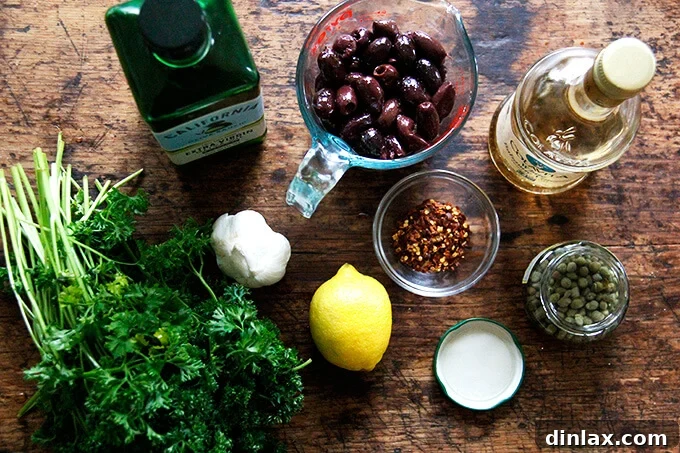
First, gather all your ingredients. This mise en place ensures a smooth and efficient preparation process. Have your pitted black olives (Kalamata are excellent), fresh lemon, garlic cloves, capers, white balsamic vinegar, fresh parsley, and quality olive oil ready to go.
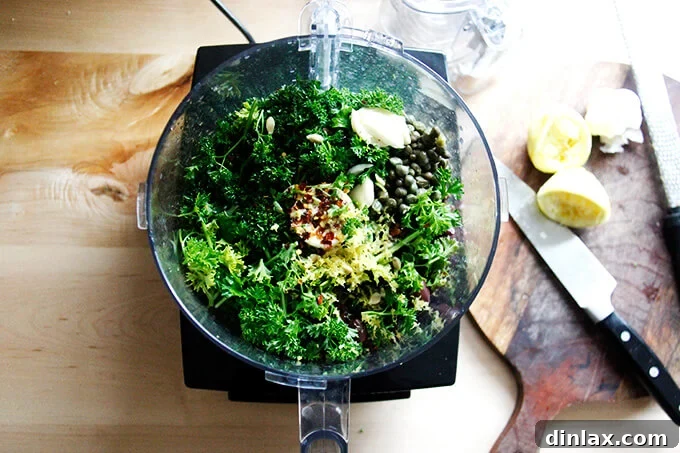
Place the olives, grated lemon zest, the juice of about half a lemon, a pinch of crushed red pepper flakes (if using), peeled garlic cloves, drained capers, white balsamic vinegar, and half of the parsley into the food processor bowl. Reserve the remaining half of the parsley and all of the olive oil for later.
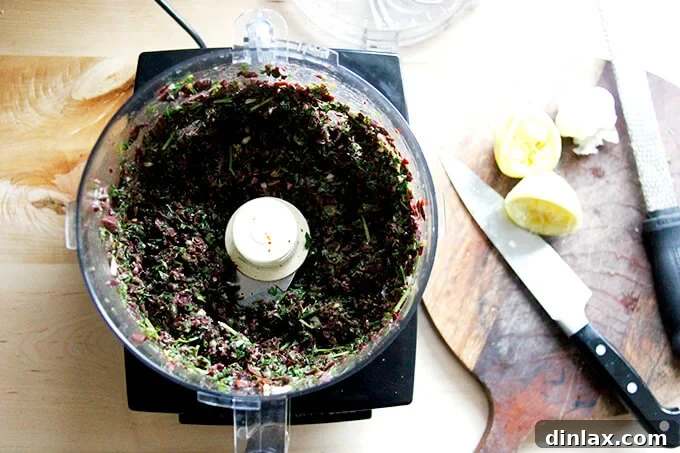
Pulse the mixture until it forms a coarse paste. Remember, the goal is to finely chop the ingredients, not to create a smooth, homogenous purée. This will likely take 20 to 30 quick pulses. Avoid over-processing to maintain a desirable texture.
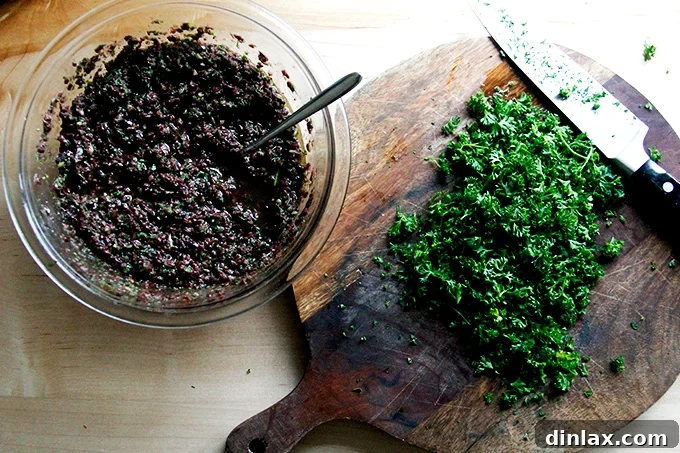
Once pulsed, transfer the mixture from the food processor to a mixing bowl. Now, finely chop the remaining half of the parsley by hand. This preserves its vibrant color and adds a lovely textural element.
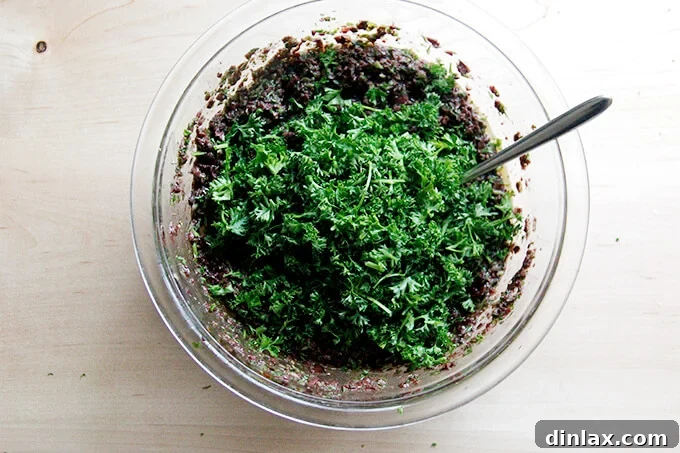
Add the freshly hand-chopped parsley and the olive oil to the bowl with the tapenade mixture. Stir everything gently by hand to combine. This careful mixing ensures the oil is perfectly incorporated without emulsifying the tapenade too much and keeps the parsley bright and distinct.
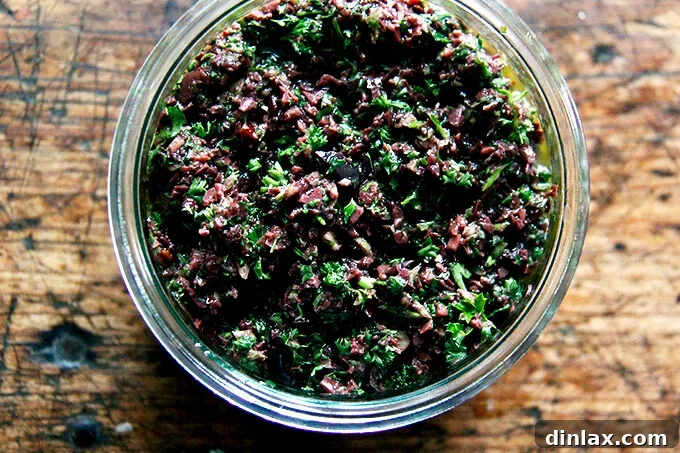
Serve immediately, or transfer the tapenade to an airtight container and refrigerate. Before serving, always allow it to come to room temperature for the best flavor and consistency. If the parsley looks a bit dull after a few days in the fridge, simply stir in a spoonful of freshly chopped parsley to rejuvenate its appearance.
Serving Suggestions: More Than Just a Dip!
One of the most appealing aspects of black olive tapenade is its incredible versatility. While it shines as a simple dip, its robust flavor profile allows it to enhance a myriad of dishes, transforming everyday meals into gourmet experiences.
Classic Appetizers
Elevated Main Courses
Incredible Sandwiches & Wraps
Tapenade is a game-changer for sandwiches, bringing a punch of flavor that goes beyond mustard or mayonnaise. I particularly love making a “slab sandwich” using my overnight focaccia. Imagine this delicious combination: a generous layer of this black olive tapenade, creamy whipped honey goat cheese, tender roasted red peppers, and crisp greens, all nestled within a soft, airy focaccia. It’s a truly irresistible sandwich experience. Beyond focaccia, it’s excellent on crusty rolls, in pita bread, or even as a spread for gourmet wraps with turkey or grilled vegetables.
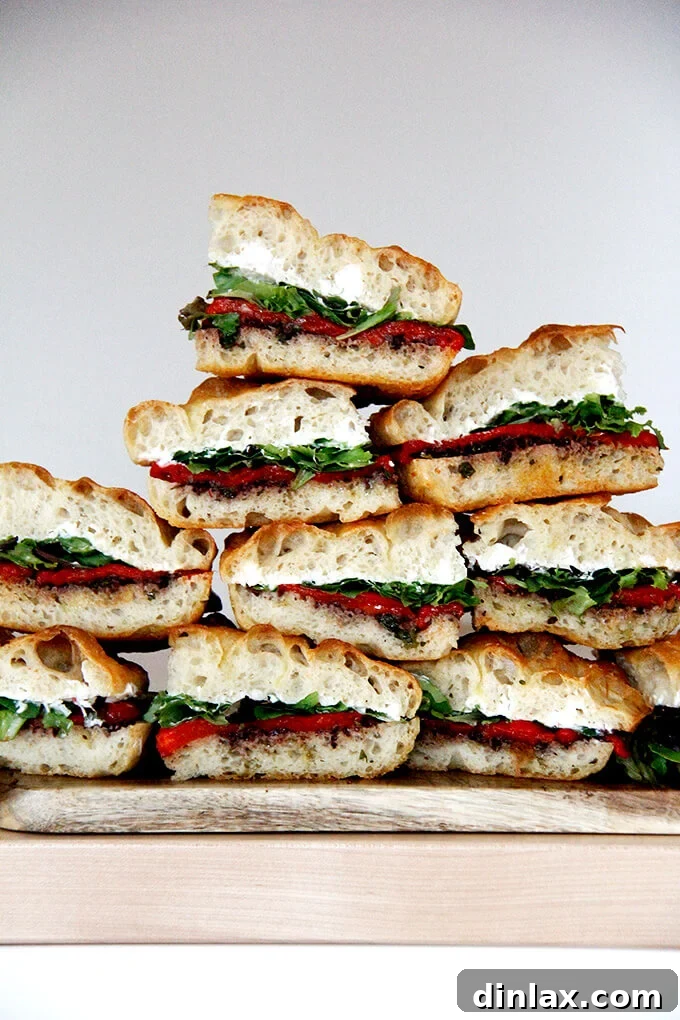
Creative Uses
Storing Your Homemade Tapenade for Maximum Freshness
Proper storage ensures your delicious black olive tapenade remains fresh and flavorful for as long as possible. Store tapenade in an airtight container in the refrigerator for up to one week. The olive oil acts as a natural preservative, but it’s essential to keep it chilled.
Before serving, always remember to bring the tapenade to room temperature. This allows the olive oil to soften and the flavors to fully meld and bloom, offering the best taste and texture. If, after a few days in the fridge, the parsley loses some of its vibrant green color, simply stir in a small amount of freshly chopped parsley to instantly refresh its appearance and flavor. This simple trick makes it look and taste freshly made, even if it’s been in the refrigerator for a few days.
Print Recipe
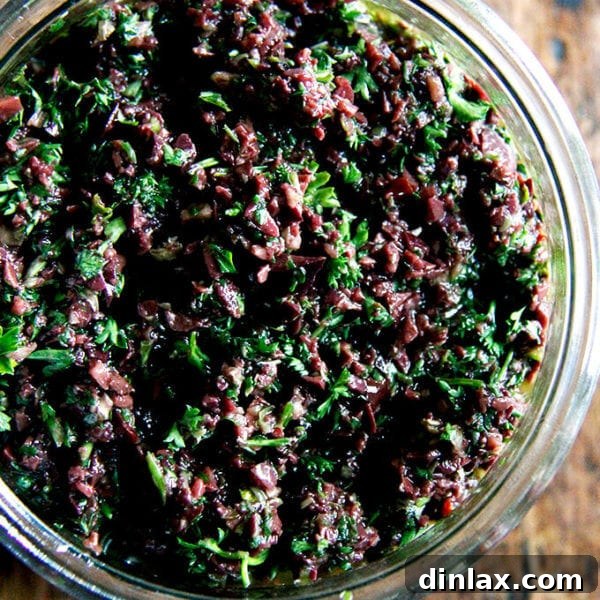
Olive Tapenade with Capers & Parsley
Rated 5 out of 5 stars by 10 reviews
Description
A favorite spread to put out for guests, to smear over sandwich bread, and to eat straight up with a spoon, this tapenade is loaded with parsley, lemon and olive oil. You can tailor the heat to your liking by increasing or decreasing the pepper flakes as you please.
Olives: I typically use Kalamata olives here, but you can absolutely use green olives, such as Castelvetrano, in their place.
Roasted red peppers pair nicely with this tapenade as does whipped honey goat cheese. Serve with toasty bread or make a sandwich. Irresistible.
Ingredients
Instructions
Explore More Delicious Dips and Spreads
If you’ve enjoyed this black olive tapenade, you’ll love exploring other fresh and flavorful dips and spreads. They’re perfect for entertaining, healthy snacking, or simply adding a burst of flavor to your meals:
Frequently Asked Questions About Tapenade
Q: What kind of olives are best for black olive tapenade?
A: Kalamata olives are highly recommended for their rich, fruity flavor and soft texture. However, other good quality black olives like Niçoise or even oil-cured black olives can also be used, offering slightly different but equally delicious flavor profiles. Always choose pitted olives to simplify preparation.
Q: Can I make tapenade without a food processor?
A: Yes, you can! While a food processor makes the process much quicker and easier, you can achieve tapenade by finely chopping all the ingredients by hand with a sharp knife. This will take more time and effort, but the resulting texture will be slightly coarser and can be quite enjoyable.
Q: How long does homemade tapenade last in the refrigerator?
A: Homemade black olive tapenade can be stored in an airtight container in the refrigerator for up to one week. Ensure it is covered well to maintain freshness. Always bring it to room temperature before serving to allow the flavors to fully develop.
Q: Is tapenade healthy?
A: Yes, tapenade is generally considered a very healthy spread! It’s packed with heart-healthy monounsaturated fats from olives and olive oil, rich in antioxidants, and low in carbohydrates. It’s a great alternative to many processed dips and spreads, especially when made with fresh, wholesome ingredients as in this recipe.
This easy black olive tapenade recipe is a gateway to the delicious and vibrant flavors of the Mediterranean. With just a few simple steps and a commitment to fresh ingredients, you can create a truly exceptional spread that will become a staple in your kitchen. So, gather your ingredients, fire up your food processor, and get ready to enjoy a taste of Provence!