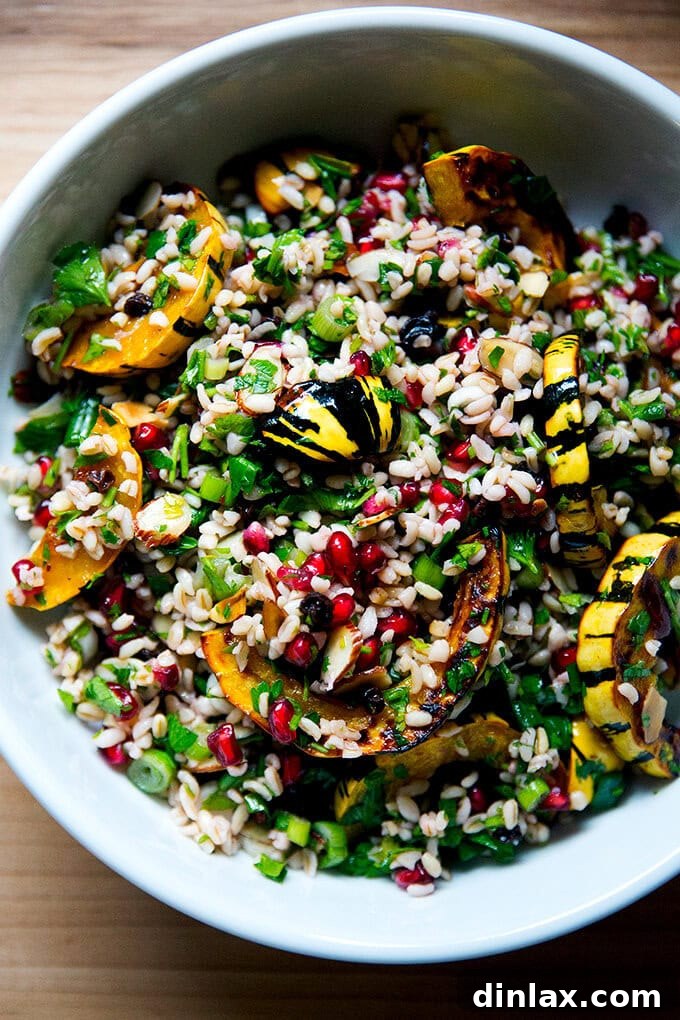
Thanksgiving, a time-honored tradition overflowing with rich flavors and cherished family recipes, often presents a delightful challenge: achieving balance. Last week, during a casual chat about our holiday menus, a friend brought up a fascinating observation from Samin Nosrat in her acclaimed series, Salt Fat Acid Heat. Nosrat astutely points out the notable absence of acid on the typical Thanksgiving table, with the solitary exception of cranberry sauce. This culinary oversight, she recounts, once led her to spoon cranberry sauce over “EVERYTHING” in a desperate quest for that much-needed bright, cutting sensation.
Her anecdote struck a chord. I realized that my own family’s Thanksgiving spread, while undeniably delicious and steeped in tradition, often leans heavily into the comforting, rich, and savory, often neglecting the crucial element of acidity. Cranberry sauce certainly offers a welcome zing, and when my in-laws host, their braised red cabbage, infused with a generous splash of vinegar and red currant jelly, truly provides that vital acidic counterpoint. However, these are often isolated instances.
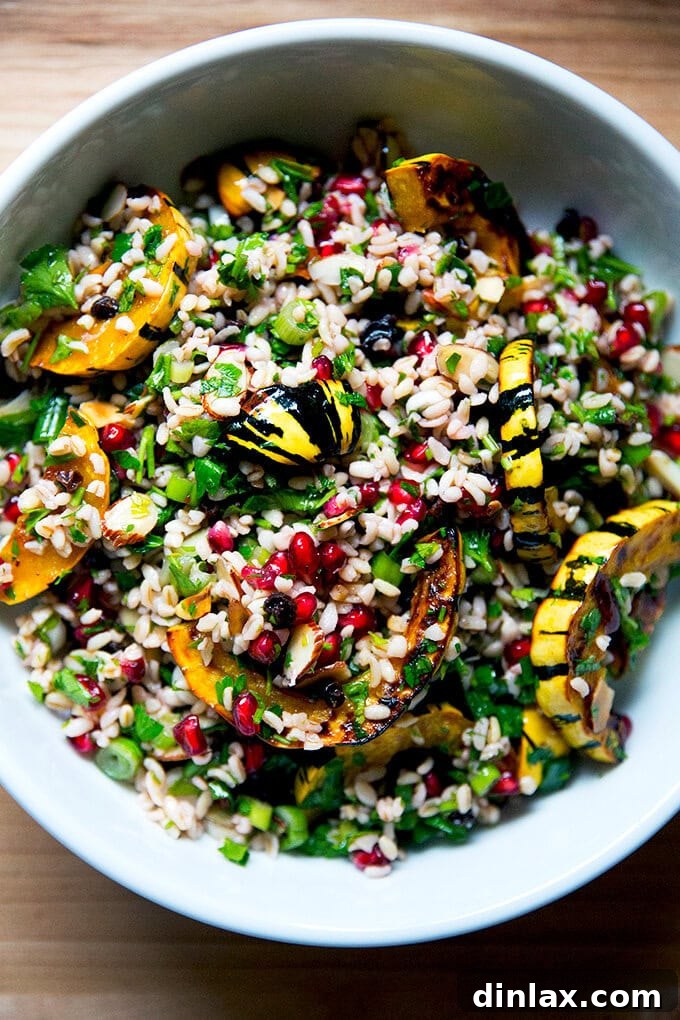
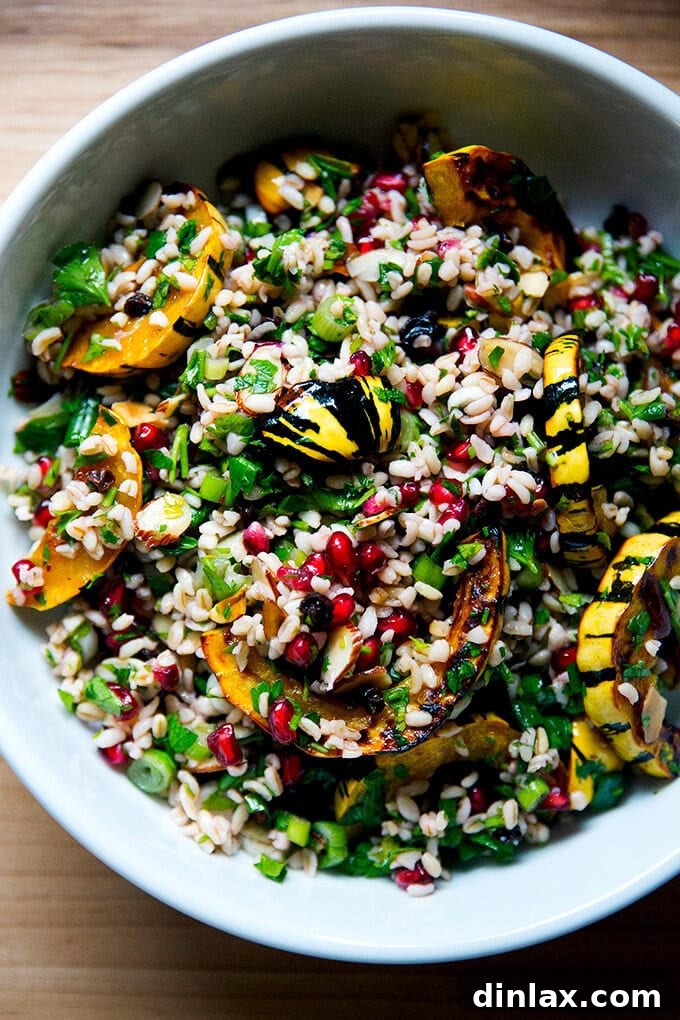
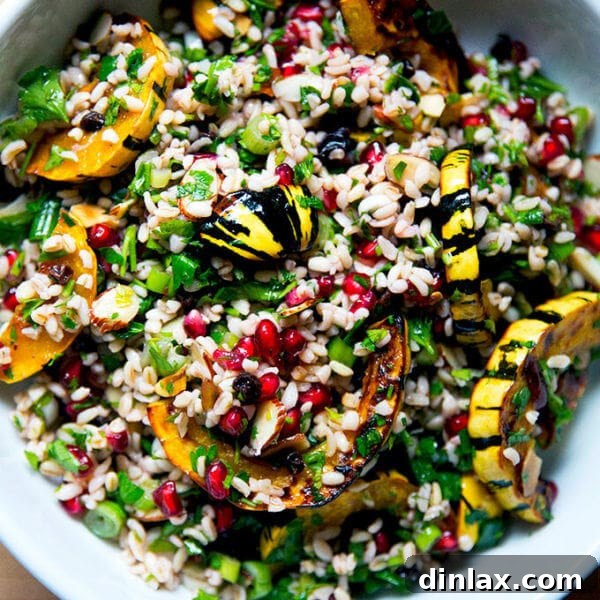
Samin’s insight lingered after I hung up the phone: Perhaps it’s time to re-evaluate and inject some much-needed vibrancy into our Thanksgiving repertoire? This thought inspired a new direction, leading to the creation of a dish that promises to elevate any holiday feast: a refreshing Winter Tabbouleh with Roasted Delicata Squash. This salad is a vibrant tapestry of fresh herbs, juicy pomegranate arils, sweet currants, and crunchy toasted almonds, all harmoniously bound by a bright, sharply acidic dressing. It’s not just a side; it’s a palate cleanser, a flavor enhancer, and a beautiful addition to your festive table.
For those mindful of their holiday starch intake, the roasted delicata squash is an optional, albeit highly recommended, inclusion. Its sweet, tender texture and festive appearance transform this tabbouleh into an especially elegant and photogenic dish, making it a true showstopper. Whether served as a crucial acidic counterpoint or simply as a refreshing healthy alternative, this winter tabbouleh is destined to become a new holiday favorite.
Why Acid is Your Thanksgiving Hero
In the culinary world, acid is often referred to as the “secret ingredient” that awakens flavors and provides balance. On a holiday table laden with rich gravies, creamy casseroles, and savory stuffings, acid plays a vital role in preventing the meal from feeling heavy or one-dimensional. It cuts through the richness, brightens the palate, and makes each bite feel fresh and exciting. Think of a squeeze of lemon on fish, or a splash of vinegar in a stew—it’s that same principle applied to your entire Thanksgiving spread. This Winter Tabbouleh is designed to provide exactly that: a vibrant, zesty burst that will make every other dish on your table shine even brighter.
Unlocking Tabbouleh Perfection: 3 Essential Tips
Crafting an outstanding tabbouleh requires attention to detail, especially when aiming for a dish that is both refreshing and texturally complex. Here are three key tips to ensure your winter tabbouleh reaches its full potential:
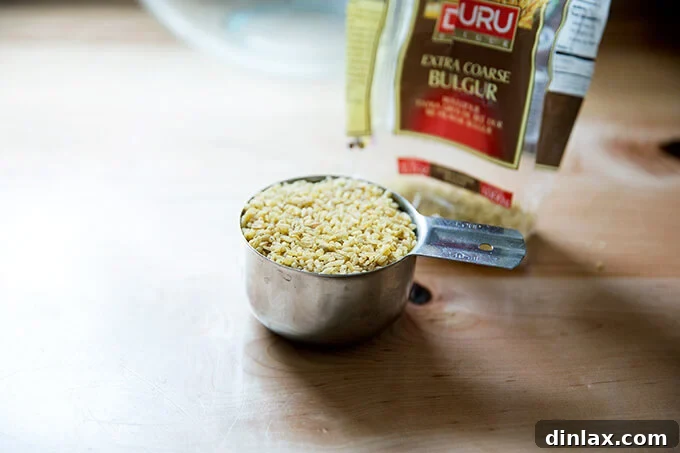
- It is truly worth seeking out extra-coarse bulgur to make this tabbouleh. While finer bulgur varieties are more common, the larger grain offers a superior texture—light, yet delightfully chewy—that stands up beautifully to the dressing and other ingredients. This robust texture also ensures the tabbouleh maintains its integrity even after a day or two in the fridge, making it an excellent make-ahead option. You can typically find extra-coarse bulgur at Greek, Middle Eastern, or other international markets. For convenience, it’s also readily available online through retailers like Amazon (Duru brand is a reliable choice).
- Embrace the power of a balanced dressing, specifically a 2:1 ratio of acid-to-fat. For this recipe, we achieve this harmony with ¼ cup fresh lemon juice and ¼ cup white balsamic vinegar to ¼ cup extra-virgin olive oil. The combination of both fresh citrus and vinegar provides a layered acidity that is both bright and nuanced. While this specific blend is recommended, feel free to adapt it based on what you have on hand. The most important thing is to taste as you go and adjust to your preference, ensuring the dressing truly sings with sharp, invigorating flavor.
- For optimal flavor development and texture, it’s best to dress the salad without the roasted squash initially. Allow the dressed bulgur, herbs, and other ingredients to sit for at least 10 to 15 minutes. This crucial resting period allows the flavors to meld and the bulgur to fully absorb the vibrant dressing, enhancing its taste and ensuring a perfectly hydrated grain. After this melding time, taste and adjust the seasonings, adding more salt, lemon, olive oil, or vinegar as needed until the flavors are perfectly balanced to your liking. Only then, gently fold in the cooled roasted delicata squash just before serving to maintain its delicate texture and prevent it from becoming mushy.
A Culinary Journey: Winter Tabbouleh Step-by-Step
Creating this stunning Winter Tabbouleh is a delightful process, beginning with the heart of the dish: the bulgur. Let’s walk through the preparation with visual guidance.
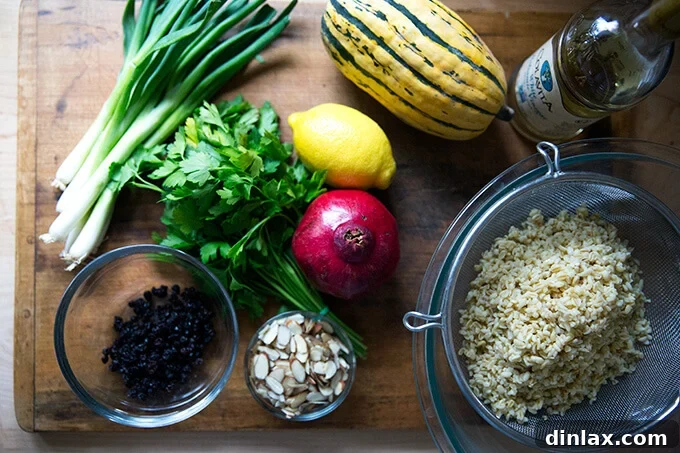
First, you’ll need one cup of high-quality bulgur. As mentioned, extra-coarse bulgur is highly recommended for its superior texture and ability to hold up beautifully in the salad.
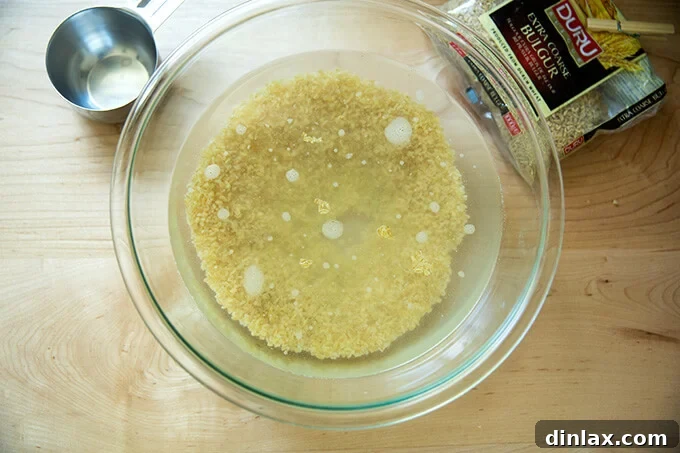
Next, place the bulgur in a large bowl and cover it generously with cold water. Allow it to soak for approximately one hour. This gentle soaking method rehydrates the bulgur without cooking, maintaining its distinct chewiness and preparing it to absorb the dressing’s vibrant flavors.
While the bulgur soaks, gather your remaining ingredients and begin the preparatory steps. This includes soaking the currants in white balsamic vinegar to plump them up and infuse them with a delightful tang, and slowly toasting the almonds over low heat. Toasting brings out their nutty aroma and adds a crucial textural element to the final dish. Take your time with the almonds to prevent burning.
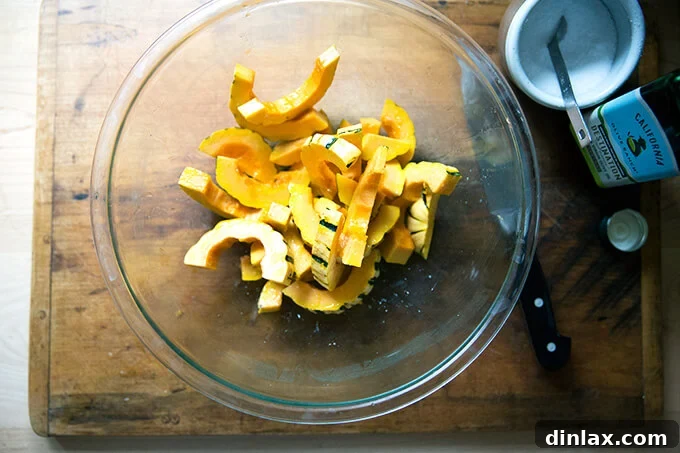
Now, prepare the delicata squash. Halve it, scoop out the seeds, and slice it into ½-inch thick pieces. In a large bowl, toss the squash slices with a generous drizzle of olive oil and a sprinkle of kosher salt. This simple seasoning will enhance its natural sweetness as it roasts.
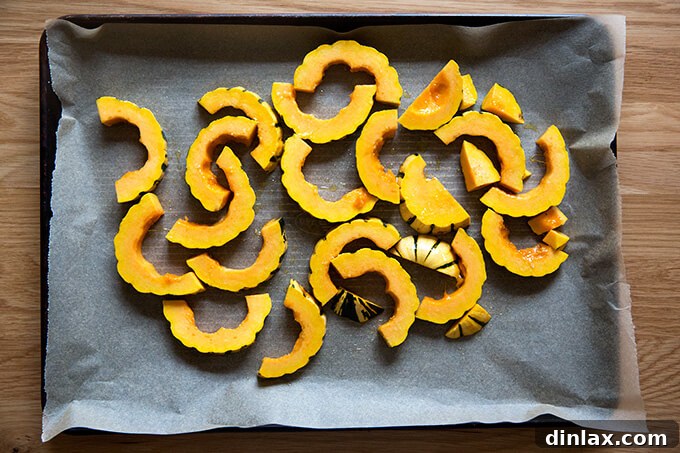
Once seasoned, transfer the delicata squash slices to a rimmed baking sheet, ideally lined with parchment paper for easy cleanup. Arrange them in a single layer to ensure even roasting and beautiful caramelization. Place the sheet pan into a preheated oven.
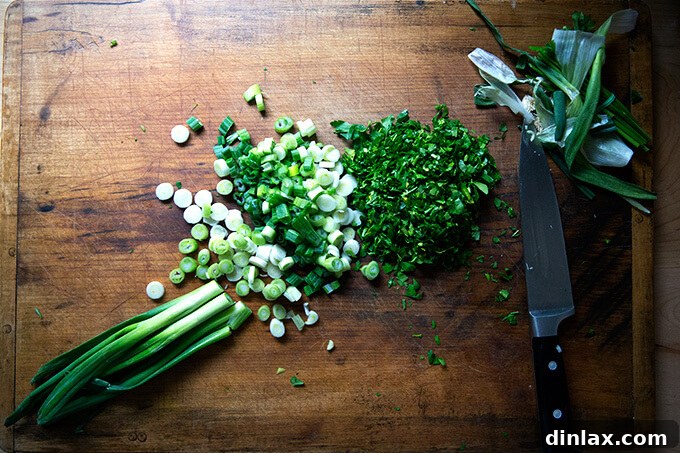
While the squash roasts, continue with the herb preparation. Finely chop a bunch of fresh parsley, aiming for a heaping cup, and thinly slice the white and light green parts of three to six scallions. These fresh herbs are crucial to tabbouleh’s signature vibrant flavor and aroma.
Next, prepare the pomegranate. A simple trick to release the arils is to cut the pomegranate in half, hold it cut-side down over a bowl, and whack the back of it firmly with a spoon. The vibrant, juicy arils will cascade into the bowl, adding a burst of sweet-tart flavor and striking color to your salad.
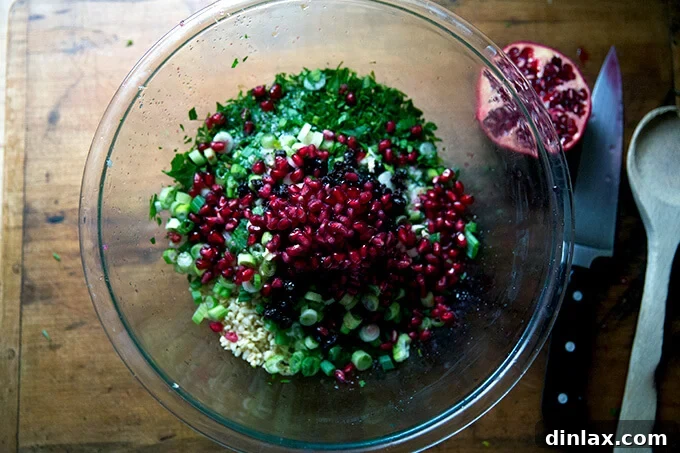
Once the bulgur is drained and transferred to a clean bowl, combine it with the chopped scallions and parsley. Drizzle with the ¼ cup fresh lemon juice and ¼ cup olive oil, then add the pomegranate seeds, toasted almonds, and the currants (along with their soaking vinegar). Season with the remaining teaspoon of kosher salt and toss everything gently to combine. At this stage, the salad is already incredibly delicious and could be served as a lighter version of tabbouleh.
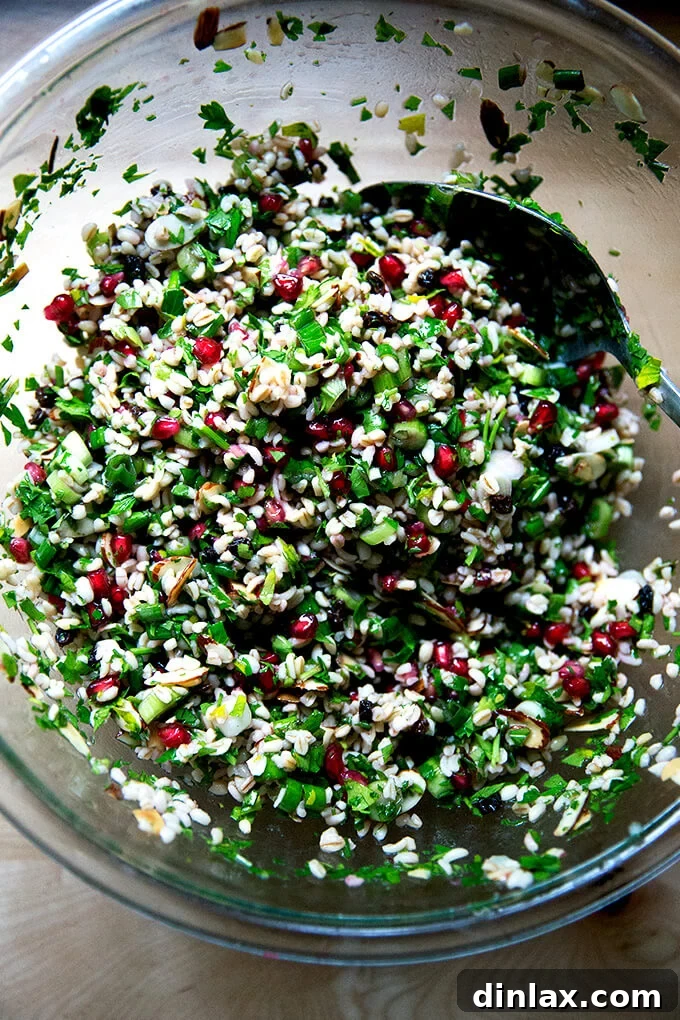
However, the addition of the roasted delicata squash truly elevates this dish, providing a wonderful sweetness and tender texture that beautifully complements the bright, fresh flavors of the tabbouleh. It’s a touch that adds both visual appeal and depth of flavor.
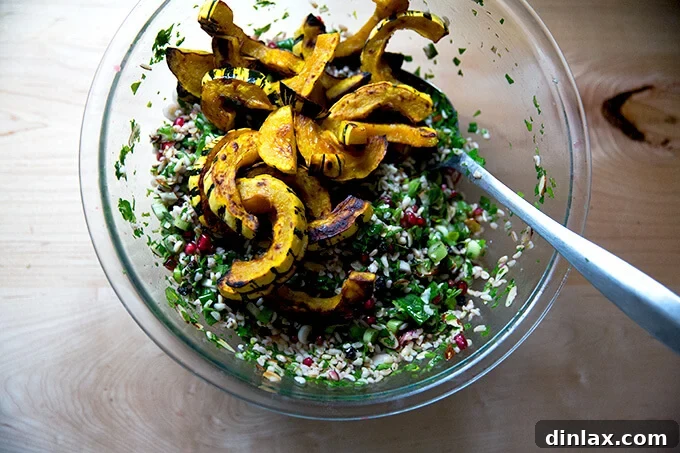
Once the squash has cooled slightly, add it to the bulgur mixture. Toss gently to incorporate, being careful not to break up the delicate squash pieces. The aim is to evenly distribute all the delicious components without overworking the salad.
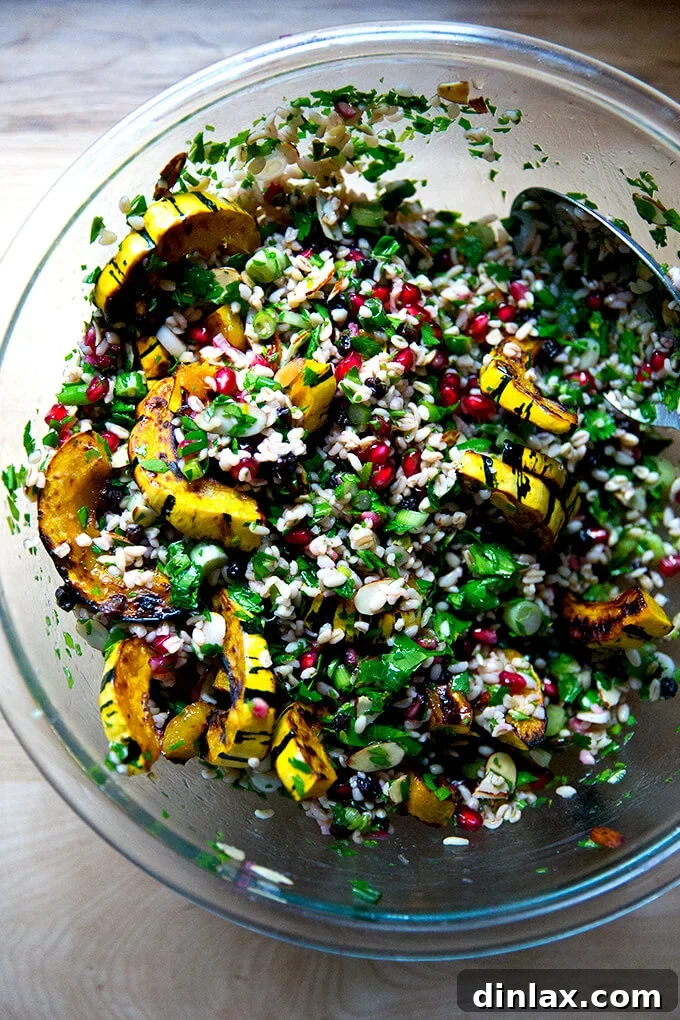
Finally, transfer your gorgeous Winter Tabbouleh with Roasted Delicata Squash to a beautiful serving bowl. Serve immediately or allow it to chill for a short while for flavors to further meld. Revel in the refreshing, acidic balance it brings to your Thanksgiving spread, and enjoy your new favorite festive side dish!
Winter Tabbouleh with Roasted Squash
5 from 9 reviews
- Author: Alexandra Stafford
- Total Time: 1 hour 25 minutes
- Yield: Serves 8 as a side dish 1x
Description
This Winter Tabbouleh is a vibrant and refreshing side dish perfect for balancing the rich flavors of your holiday table. Packed with fresh herbs, juicy pomegranate, sweet currants, and crunchy toasted almonds, all tied together with a sharp, bright dressing. The addition of roasted delicata squash adds a touch of seasonal sweetness and a beautiful presentation. It’s naturally dairy-free and vegan, making it an inclusive option for all your guests.
Bulgur Choice: For the best texture, seek out extra-coarse bulgur. Its light yet chewy bite holds up exceptionally well and offers a delightful mouthfeel. If you struggle to find it locally, specialty international markets or online retailers (such as Duru Extra-Coarse Bulgur) often carry it.
Flexibility in Ingredients: Consider this recipe a guide. Feel free to experiment with substitutions based on your preferences or what you have available. Other grains like farro, barley, or Israeli couscous would work wonderfully in place of bulgur, offering different textural dimensions. For a gluten-free alternative, cooked quinoa can be a great option.
Make-Ahead Versatility: This tabbouleh is an excellent make-ahead dish, often tasting even better on subsequent days as the flavors deepen. If preparing it in advance for entertaining, I recommend holding off on folding in the fresh parsley and pomegranate arils until the day of serving, as they can lose some of their vibrant color and texture overnight. The delicata squash can also be roasted ahead of time, cooled, and stored in the fridge, then gently folded into the salad just before serving. While delicious cold, for guests, bringing the salad to room temperature before serving can enhance its complex flavors.
Ingredients
- 1 cup bulgur, extra-coarse if possible
- ¼ cup currants
- ¼ cup white balsamic vinegar
- 1 large delicata squash, halved, seeds removed, and sliced into 1/2-inch thick pieces
- 2 teaspoons kosher salt, plus more to taste
- 3 to 6 scallions, thinly sliced, white and light green parts
- 1 bunch parsley, finely minced to yield a heaping cup
- ¼ cup fresh lemon juice
- 1/4 cup extra-virgin olive oil, plus 2 tablespoons for the squash
- 1 pomegranate, seeded
- ½ cup almonds, toasted
Instructions
- Preheat your oven to 400ºF (200ºC). Place the bulgur in a large bowl and cover it completely with cold water. Let it stand for one to two hours, allowing it to soften and rehydrate.
- While the bulgur soaks, place the currants in a small bowl and cover them with the white balsamic vinegar. Set aside for at least 15 minutes to allow the currants to plump up and absorb the tangy flavor of the vinegar.
- Prepare the delicata squash: place the ½-inch thick squash pieces in a large bowl and toss them with 2 tablespoons of olive oil and 1 teaspoon of kosher salt until evenly coated. Spread the squash out in a single layer on a large baking sheet (lining it with parchment paper is recommended for easier cleanup). Reserve the bowl for later. Roast in the preheated oven for 15 to 20 minutes, or until the underside is golden brown and tender. For extra caramelization, transfer the baking sheet to the broiler for 2 to 3 minutes, watching carefully to prevent burning. Remove and set aside to cool to room temperature.
- Once the bulgur has soaked, drain it thoroughly through a fine-meshed sieve, pressing out any excess water. Transfer the drained bulgur to the reserved large bowl. Add the thinly sliced scallions and finely minced parsley. Pour in the ¼ cup fresh lemon juice, ¼ cup extra-virgin olive oil, the pomegranate seeds, toasted almonds, and the currants along with their soaking vinegar. Add the remaining 1 teaspoon of kosher salt. Toss all ingredients gently to combine everything evenly.
- Allow the tabbouleh to sit for at least 10 minutes, giving the flavors time to meld and deepen. After resting, taste the salad and adjust the seasoning as necessary. You may wish to add more salt, olive oil, lemon juice, or vinegar to achieve your desired balance of flavors. Finally, add the cooled roasted delicata squash pieces and toss very gently to incorporate them without mashing. Serve immediately and enjoy!
- Prep Time: 1 hour
- Cook Time: 25 minutes
- Category: Side Dish
- Method: no-cook
- Cuisine: Greek