Mastering the Art of Charred Eggplant: From Smoky Mash to Za’atar Flatbread Perfection
There’s an undeniable magic that happens when eggplant meets intense heat, transforming its humble texture into something extraordinarily creamy and deeply flavorful. This culinary alchemy, particularly through charring, unlocks a richness and smoky essence that elevates the eggplant to new heights, often without the need for excessive oil. Over recent years, my journey with this versatile vegetable has evolved, leading me from a delightful discovery of simple oven-roasted “eggplant caviar” to a profound appreciation for the robust complexity achieved by direct grilling.
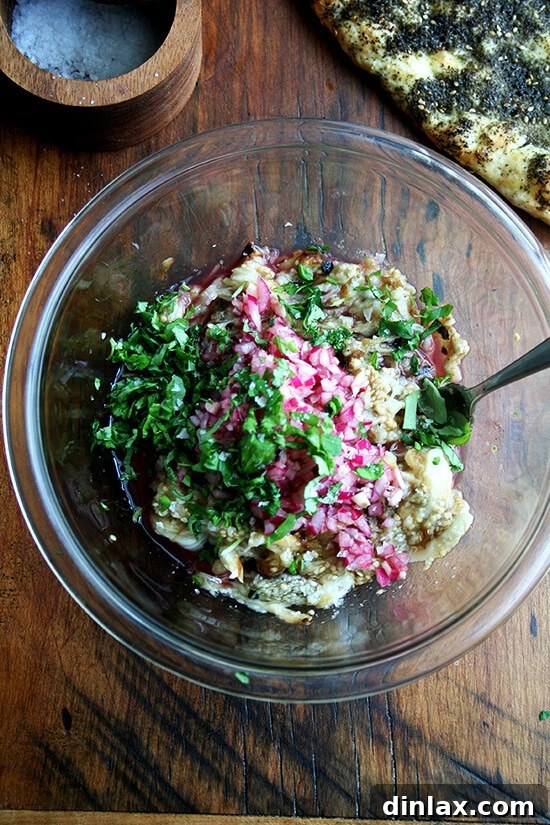
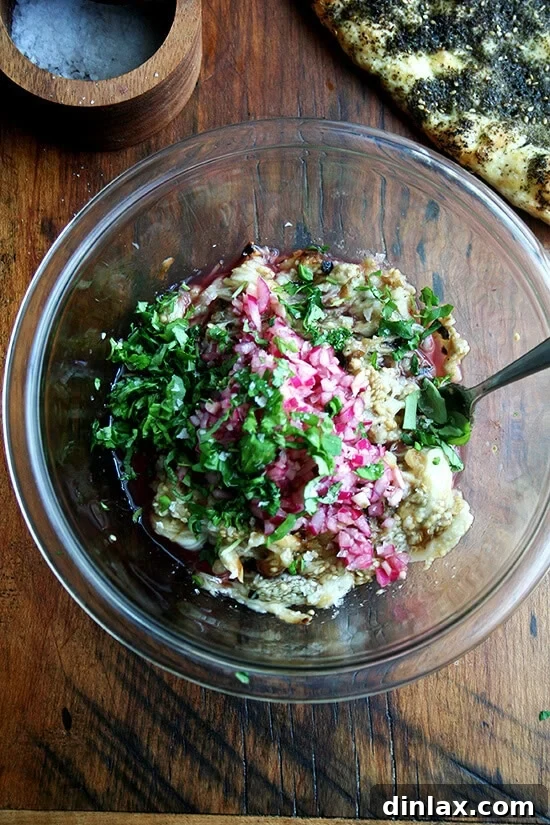
Initially, I found joy in preparing eggplant caviar, a dish where peeled eggplant, gently roasted in a foil-covered pan with minimal oil, yields an incredibly light and velvety flesh. Seasoned with vibrant fresh herbs and pungent macerated shallots, then spooned generously over crisp grilled bread, this mashup was a staple summer hors d’oeuvre – light, refreshing, and utterly delicious. Its simplicity and ability to create such a luxurious texture with so little effort made it an instant favorite in my kitchen.
The Evolution of Flavor: Embracing the Char
However, my culinary curiosity soon steered me toward an even more captivating technique: charring whole, unseasoned eggplants directly over an open flame or in a fiercely hot oven. This method wasn’t a secret kept within the pages of a single cookbook; it appeared almost everywhere I looked. Culinary giants like Mark Bittman, in his insightful Flexitarian column, extolled its virtues. Yotam Ottolenghi and Sami Tamimi championed it in their groundbreaking cookbook Jerusalem, showcasing its power in Middle Eastern cuisine. And Alice Waters, whose timeless Chez Panisse Vegetables remains a constant source of inspiration, also highlighted this transformative technique. With such resounding endorsements, I knew I had to experience this method firsthand, particularly on my trusty grill.
And what a revelation it was! Charred eggplant, much like its pepper counterpart, undergoes a remarkable metamorphosis. As the exterior blisters and blackens, the internal structure softens and collapses, releasing an astonishing amount of moisture. This process leaves behind an incredibly tender flesh that effortlessly separates from its smoky, slightly burnt skin. The peeling, surprisingly, is no more challenging than peeling a charred bell pepper – requiring only a touch of patience during the blackening and cooling stages. The result is a uniquely creamy texture, achieved without any significant added oil, imbued with a captivating smoky depth that oven roasting simply cannot replicate. This charring method not only simplifies the cooking process but also concentrates the eggplant’s natural sweetness and adds an alluring, complex aroma to any dish.
A Bounty of Eggplant: Exploring Culinary Horizons
This week, my kitchen has been brimming with eggplants of all shapes and sizes – from large, dark globes to elegantly speckled Sicilians and charming baby zebras. Each one has found its way onto the hot grill, yielding consistently fantastic results. This newfound passion for burnt eggplant has ignited an eagerness to explore a diverse array of dishes that celebrate its smoky character.
I envision recreating Mark Bittman’s hearty Baingan Bharta, a flavorful Indian stew where charred eggplant is simmered with tomatoes, onions, and aromatic garam masala, creating a comforting and deeply spiced meal. Another exciting prospect is Yotam Ottolenghi and Sami Tamimi’s vibrant preparation, where the smoky eggplant is whipped into a light and fluffy dip, brightened with fresh lemon, cooling mint, and the jewel-like burst of pomegranate seeds – a perfect balance of smoky, zesty, and sweet. And of course, there’s Alice Waters’ elegantly simple approach: leaving the charred eggplant whole, then tossing it with rich olive oil, fresh cilantro, and a squeeze of lemon, allowing the pure flavors to shine through.
No matter the preparation, a crucial accompaniment for these delightful eggplant creations is some form of flatbread or grilled bread. Its soft yet sturdy texture provides the ideal vehicle for scooping up the creamy, flavorful eggplant. And if your pantry holds the treasure that is za’atar, the aromatic Middle Eastern spice blend, do not hesitate to incorporate it. Its earthy, tangy, and subtly herbal notes complement the smoky eggplant beautifully, creating a harmonious and utterly addictive combination. This week has been a celebration of eggplant’s incredible versatility and the transformative power of charring. Have a truly wonderful weekend, everyone!
Preparing the Perfect Eggplant Mash
Whether you’re using small or large eggplants, the charring method yields exquisite results. Here’s a visual guide to the process:
…or large eggplant for a more substantial spread:
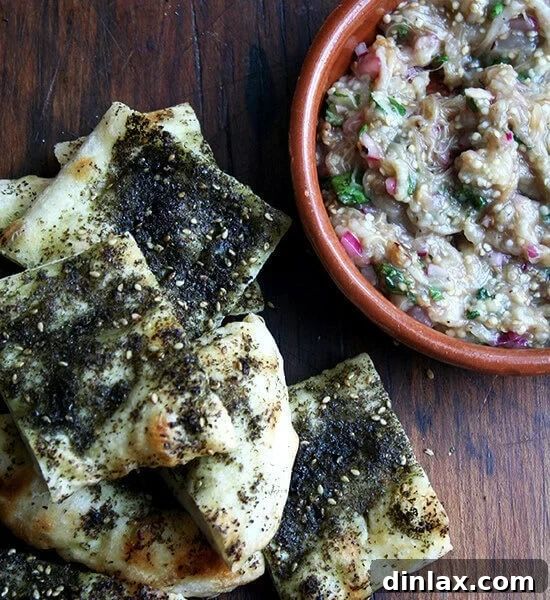
Smoky Charred Eggplant Mash with Fresh Herbs
5 Stars 4 Stars 3 Stars 2 Stars 1 Star
No reviews
- Author: Alexandra Stafford
Total Time: 35 minutes
Yield: 4 servings 1x
Description
This simple yet elegant recipe for smoky charred eggplant mash is a fantastic appetizer or side dish, perfect for summer entertaining. Inspired by the classic “eggplant caviar” but elevated by the smoky notes of grilling, it’s creamy, light, and bursting with fresh flavors. Adapted from the insightful Chez Panisse Vegetables.
Ingredients
- 1 large globe eggplant (approximately 9 to 10 oz) or about 1 pound of smaller, mini eggplants (such as Japanese or Italian varieties)
- 2 medium shallots or 1 small red onion, very finely chopped
- 1 clove garlic, freshly minced
- 2-3 tablespoons high-quality balsamic or red wine vinegar (white balsamic offers a lovely, lighter flavor profile)
- 1/4 cup fresh herbs, finely chopped (a mix of basil, parsley, and cilantro works wonderfully; adjust to your taste)
- Kosher salt or a flaky sea salt like Maldon, and freshly ground black pepper, to taste
- Extra-virgin olive oil, a drizzle to taste (approximately 1 tablespoon)
Instructions
- Prepare your Heat Source: Heat a grill to high heat. For an alternative oven method, place a cast iron skillet into your oven and preheat the oven to its highest setting (typically 500ºF or 260ºC). Allow the skillet to heat for at least 15-20 minutes to ensure it’s scorching hot.
- Char the Eggplant: Carefully place the whole, un-oiled, and unseasoned eggplant(s) directly onto the hot grill grates. If using the oven, place them directly into the preheated cast iron skillet. Large globe eggplants will generally take about 20 minutes to cook through, requiring a flip after 10 minutes to char evenly on both sides. Smaller eggplants will cook faster, usually around 10 minutes total, turning them after 5 minutes. The key here is patience: allow the skin to blacken and blister thoroughly. This intense charring is what makes the peeling process incredibly easy and imparts that desirable smoky flavor. Once cooked, remove the eggplants from the heat and let them cool completely. If you notice a lot of liquid, especially from larger eggplants, allow them to drain in a colander for 10 to 15 minutes before proceeding.
- Macerate Aromatics: While the eggplant is cooking and cooling, combine the finely chopped shallots (or red onion) and minced garlic in a small bowl. Pour about 2 tablespoons of your chosen vinegar over them and let them macerate for at least 10 minutes. This process softens the aromatics and mellows their raw bite, infusing them with a delicate tang. You can let them macerate for the entire duration the eggplant cooks and cools.
- Assemble the Mash: Once the eggplant is cooled and peeled, transfer its tender flesh to a clean bowl. Season generously with salt and freshly ground pepper, then use a fork to mash it thoroughly to your desired consistency – some prefer it smooth, others slightly chunky. Add about half of the macerated shallot and garlic mixture to the eggplant mash, along with the chopped fresh herbs and a light drizzle of extra-virgin olive oil (approximately 1 tablespoon). Mix everything together well, then taste. Adjust the seasoning as needed with more salt, pepper, or the remaining macerated shallots to achieve a perfect balance of smoky, savory, and tangy flavors. I often find myself using all the macerated shallots for maximum flavor. Serve immediately with warm grilled bread or crispy flatbread.
- Prep Time: 15 minutes
- Cook Time: 20 minutes
- Category: Appetizer
- Method: Grill
- Cuisine: Middle Eastern
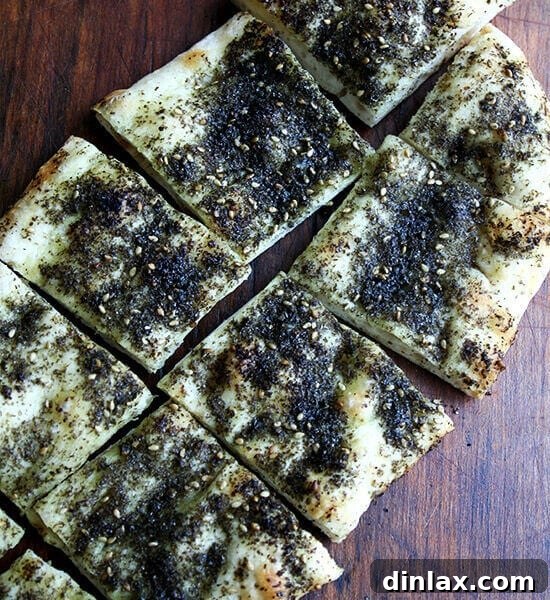
Homemade Za’atar Flatbread
5 Stars 4 Stars 3 Stars 2 Stars 1 Star
No reviews
- Author: Alexandra
Total Time: 50 minutes
Yield: 2 flatbreads 1x
Ingredients
- 1 round pizza dough (homemade or store-bought; I particularly love Lahey’s no-knead dough for its excellent texture)
- All-purpose flour, for dusting and shaping the dough
- Extra-virgin olive oil, for drizzling
- 2-3 tablespoons high-quality za’atar spice blend (ensure it’s fresh for optimal aroma)
- Flaky sea salt (like Maldon), to taste – be mindful as some za’atar blends already contain salt
- Parchment paper (optional, but highly recommended for ease)
Instructions
- Preheat Oven and Baking Surface: If you possess a Baking Steel or a pizza stone, place it in your oven and preheat the oven to its highest temperature, typically 550ºF (290ºC). Allow the steel or stone to heat thoroughly for at least 45 minutes to an hour. If you don’t have a specialized baking surface, simply preheat your oven to its highest setting and line a regular baking sheet with parchment paper.
- Prepare the Dough: Approximately 20 minutes before you plan to bake, remove your pizza dough from the refrigerator. Place it on a lightly floured surface and let it rest at room temperature. This allows the gluten to relax, making the dough much easier to stretch and shape.
- Shape and Season the Flatbread: Lay a piece of parchment paper on your pizza peel. If you prefer not to use parchment, lightly sprinkle your peel with cornmeal or flour to prevent sticking. (While using parchment paper might seem like a shortcut, it’s incredibly effective in preventing dough from sticking to the peel, eliminating the need for excessive flour or cornmeal which can burn on your baking steel or stone.) With lightly oiled hands, gently stretch the dough into an oval shape. You can do this by hand in the air or directly on the prepared peel/baking sheet – choose the method you find most comfortable. Once shaped, place it on the peel (or sheet pan if not using a steel/stone) and drizzle generously with olive oil. Use your fingertips to create small indentations or dimples across the surface of the dough. Finally, sprinkle the flatbread liberally with za’atar spice and a light pinch of flaky sea salt. Remember to taste your za’atar first, as some blends already contain salt.
- Bake the Flatbread: If using a pizza peel and baking steel/stone, carefully slide the parchment paper with the flatbread onto the preheated surface in the oven. If using a baking sheet, simply place the pan directly into the hot oven. Keep a close eye on your flatbread; if using a steel or stone, it will bake rapidly, usually within 5 minutes. You can carefully slide the parchment paper out from under the flatbread after a minute or two, or leave it to char slightly if desired. Baking time can vary based on your oven’s temperature and the thickness of your flatbread, so start checking for doneness after 4-5 minutes. For flatbreads baked on a standard baking sheet, expect a slightly longer cooking time, typically 7 to 10 minutes, until golden brown and cooked through.
- Prep Time: 45 minutes
- Cook Time: 5 minutes
Incidentally, I have been absolutely loving my Baking Steel for achieving perfectly crispy flatbreads and pizzas. More on this invaluable kitchen tool shortly!