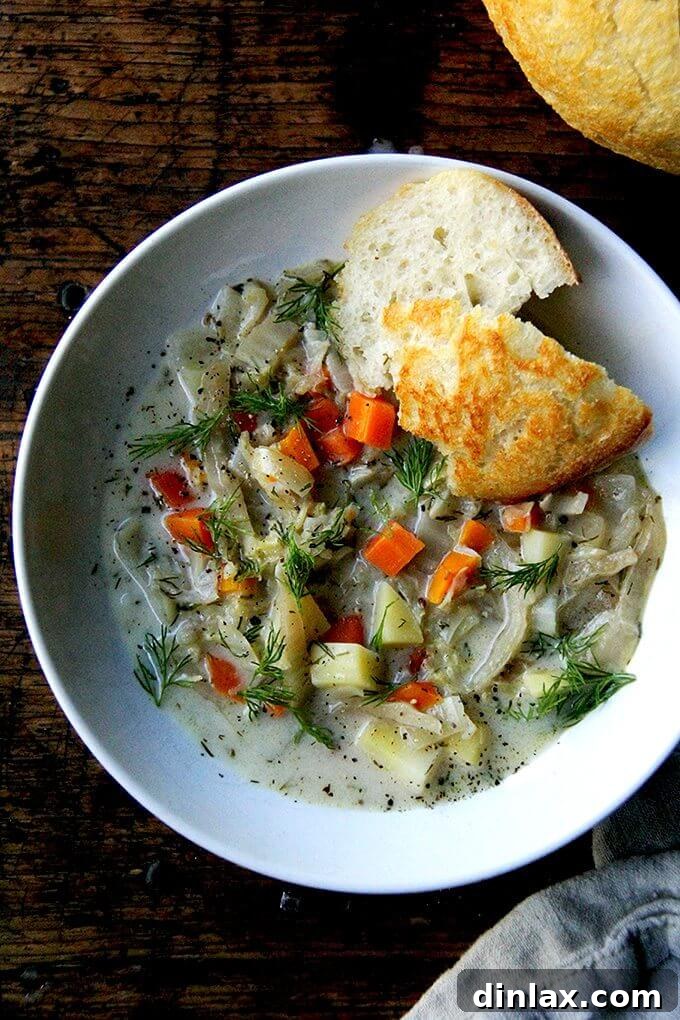
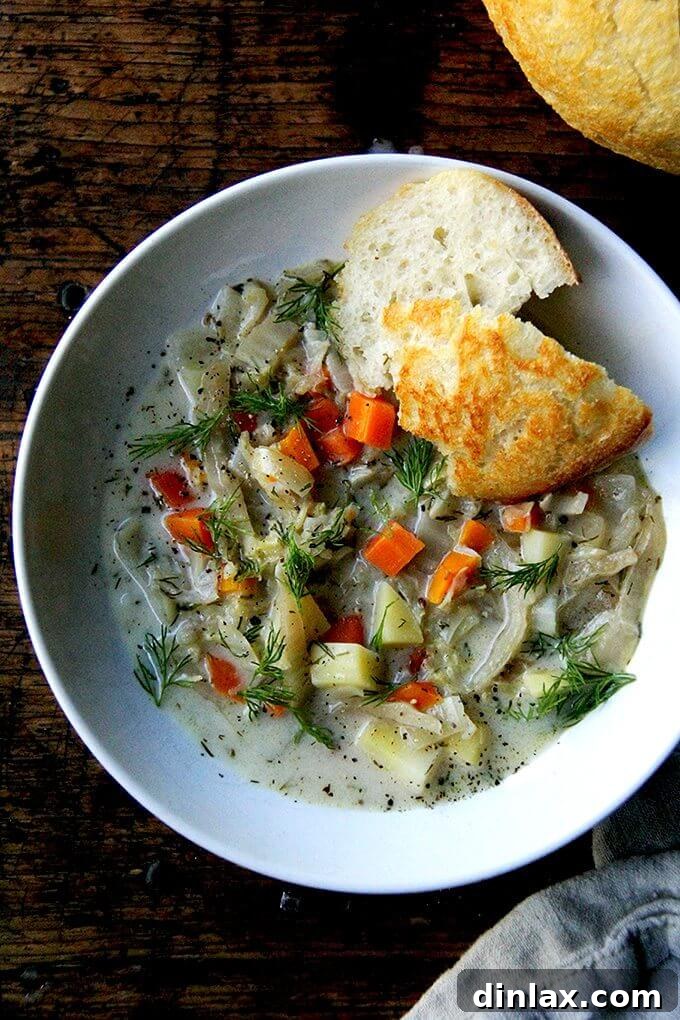
Hearty & Healthy Vegetarian Cabbage Soup: A Seasonal Delight
As the cooler months arrive, there’s nothing quite as comforting and nourishing as a steaming bowl of homemade soup. This vegetarian cabbage soup, a delightful adaptation of the classic Paul Steindler’s cabbage soup, stands out as a true seasonal favorite. It’s a recipe born from the simple abundance of garden-fresh cabbage and a desire for a truly satisfying, yet wholesome meal. Foremost among its many appeals are its remarkable texture and profound flavor profile: subtly creamy, generously laden with tender vegetables, and beautifully infused with the bright, citrusy notes of caraway and the zesty tang of vinegar. These elements perfectly complement the inherent sweetness of the cabbage, providing a much-needed acidic counterpoint that elevates every spoonful.
The addition of fresh dill, a herb I recently discovered shares a botanical kinship with caraway, provides a final flourish of freshness. Stirred in just before serving, it brightens the soup’s rich, stewy flavors, adding an aromatic lift that makes this dish truly unforgettable. This soup is not just a meal; it’s an experience, offering warmth, nourishment, and a taste of home in every delicious bite.
The Foundation of Flavor: Homemade Vegetable Stock
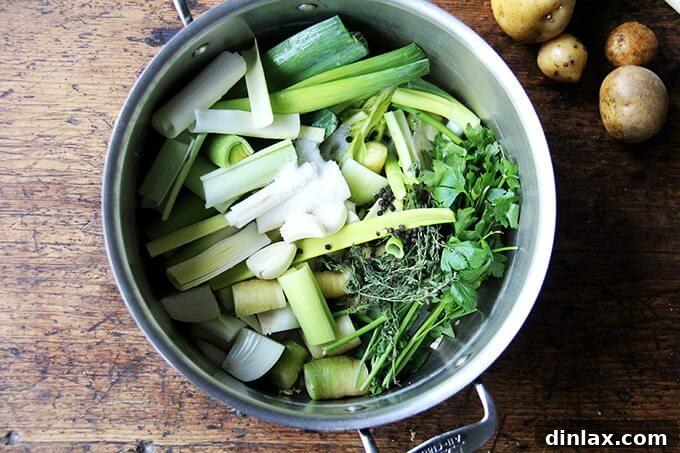
One of the secrets to this soup’s incredible depth of flavor lies in its foundation: a rich, homemade vegetable stock. While the idea of making stock from scratch might seem daunting, it’s surprisingly simple and deeply rewarding. The process is straightforward: gather an assortment of aromatic vegetables—leeks, onions, carrots, celery, garlic, bay leaf, thyme, and parsley—toss them into a large pot, cover them with water, and let them gently simmer. In approximately forty-five minutes, you’ll have a golden, flavorful broth that will transform your soup from good to extraordinary.
The beauty of this approach is its efficiency. During those forty-five minutes of simmering, while your kitchen fills with an enticing aroma, you can simultaneously prepare the rest of your soup ingredients. This parallel cooking method streamlines the process, making a seemingly complex dish entirely manageable, even on a busy weeknight. Opting for homemade stock ensures you have complete control over the ingredients, avoiding unwanted sodium or preservatives often found in store-bought alternatives, resulting in a cleaner, fresher taste for your finished soup.
Embracing the Chop: A Labor of Love and Delicious Reward
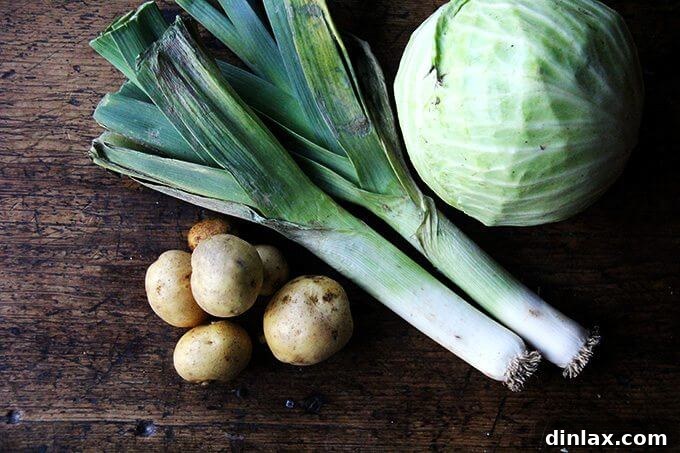
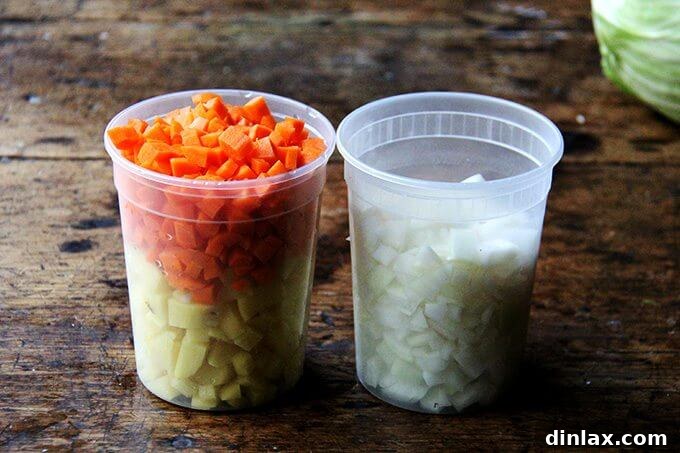
It’s true that this recipe requires a fair amount of chopping. From the initial stock vegetables to the bounty that fills the soup pot—carrots, onions, potatoes, and a substantial amount of cabbage—your knife will get a good workout. However, consider this an integral part of the cooking process, a mindful act that connects you more deeply with your food. The rhythmic chopping can be therapeutic, a moment to slow down and appreciate the raw ingredients that will soon become a hearty meal.
The reward for this effort is immense: a generous batch of delicious, wholesome cabbage soup that will last for days. Having a large pot of this ready-to-eat soup in your refrigerator is a true culinary blessing, perfect for quick lunches, easy dinners, or for welcoming unexpected guests. It’s an investment of time that pays dividends in both flavor and convenience, ensuring you have a healthy, homemade option readily available.
Beyond the Bowl: The Versatility of Cabbage
If you often find yourself “swimming in cabbage”—perhaps from a CSA share, a successful garden harvest, or a great deal at the market—this soup is an ideal solution. Cabbage is an incredibly versatile, cost-effective, and nutrient-dense vegetable that deserves a starring role in more kitchens. It stores exceptionally well, making it a reliable staple, and its mild flavor profile means it can adapt to a multitude of culinary styles.
Beyond this beloved soup, cabbage shines in many other dishes. For those looking to explore its full potential, consider these other fantastic cabbage recipes: Cabbage Pancakes (Okonomiyaki), a savory and satisfying treat; Cabbage Pad Thai-ish with Baked Tofu, a lighter, plant-based twist on a classic; Roasted Vegetables with Tahini, Lemon & Za’atar, where cabbage can be a delightful addition; or the refreshingly simple Simplest Cabbage Slaw. To delve into a treasure trove of cabbage-inspired creations, explore all the Cabbage Recipes here.
Step-by-Step Towards a Perfect Bowl: The Making of Cabbage Soup
The journey to a perfect bowl of this vegetarian cabbage soup involves several deliberate steps, each contributing to its rich texture and complex flavor.
Preparation: The Cabbage Treatment
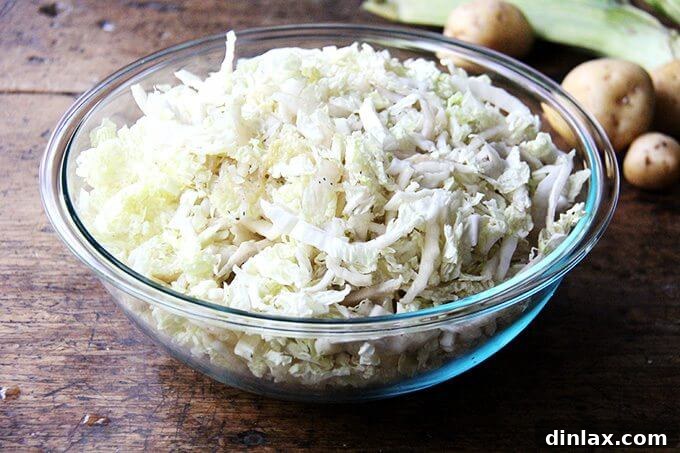
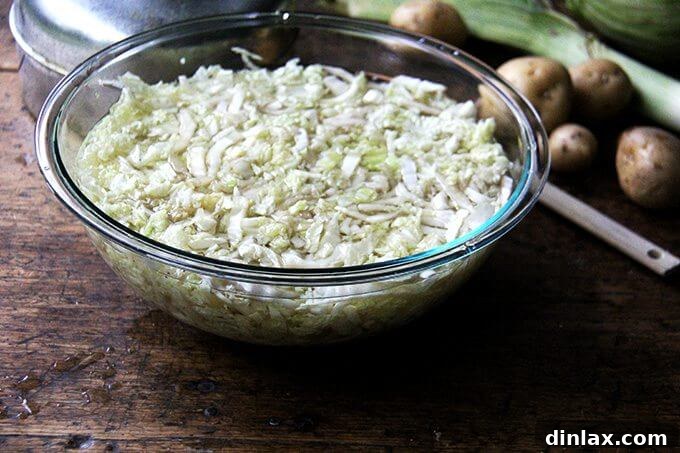
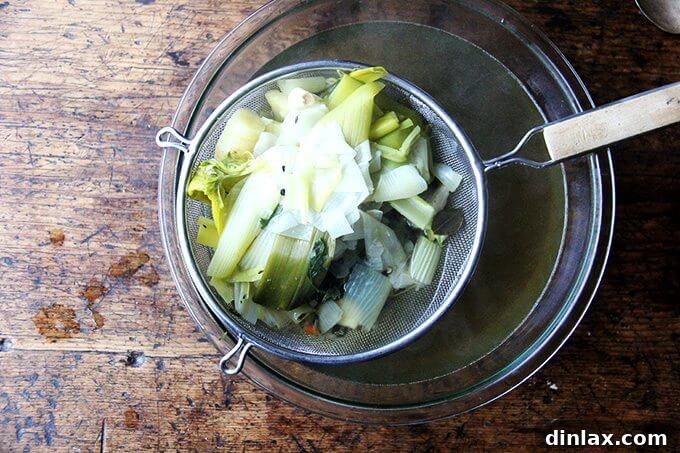
Begin by placing your shredded cabbage in a large, heatproof bowl. Bring a sufficient amount of water to a rolling boil—a tea kettle works wonderfully for this, or a large saucepan will do. Carefully pour the boiling water over the cabbage, ensuring it is fully submerged. Let it sit for just one minute, then promptly drain. This step, while seemingly minor, is thought to help remove some of the cabbage’s stronger, potentially “stinky” sulfur compounds, ensuring the broth’s flavor remains clean and bright rather than cloudy or overly assertive.
Building the Base: Sautéing and Thickening
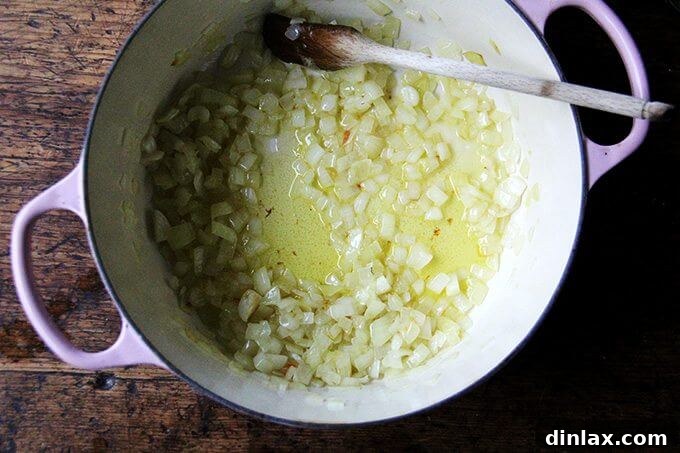
In a substantial pot, heat olive oil over high heat until it gently shimmers. Add the finely diced onions, then immediately reduce the heat to medium-low. Cook, stirring frequently, until the onions become beautifully soft and translucent, a process that takes about 15 minutes. This slow sautéing allows the onions to release their natural sugars, adding a foundational sweetness to the soup.
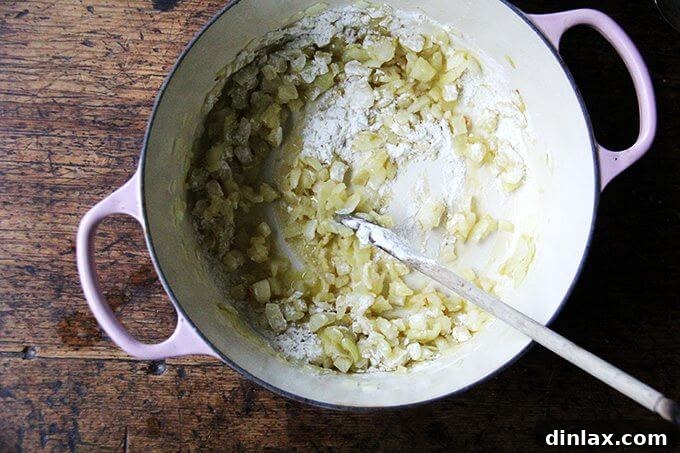
Next, sprinkle the flour over the softened onions and stir continuously for a minute or two to create a roux. This step is crucial for thickening the soup and providing a velvety texture. (For those who prefer a gluten-free option or an alternative thickening method, an excellent suggestion comes from Sara Moulton, shared on a Milk Street podcast. She recommends puréeing a portion of the soup with an immersion blender, or in a food processor/blender, to achieve thickness. This method works wonderfully and avoids flour entirely, maintaining a smooth consistency without affecting flavor.)
Combining Flavors: Stock and Vegetables
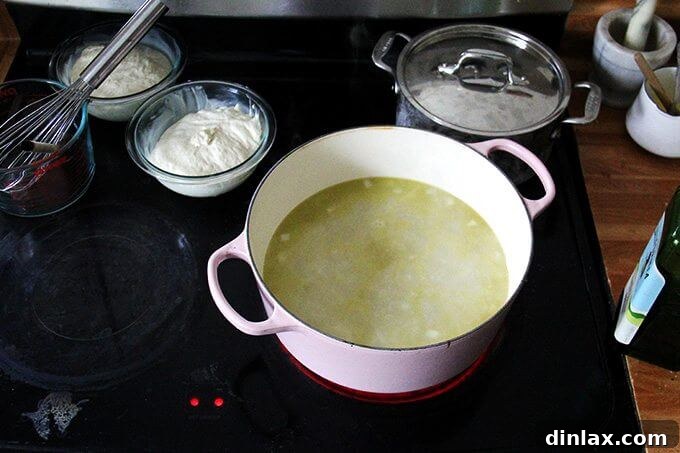
Gradually pour in the homemade vegetable stock (or a mix of stock and water, as noted in the recipe) while rapidly whisking to ensure a smooth, lump-free base. As the mixture begins to simmer, add the blanched cabbage, finely diced carrots, and potatoes, along with kosher salt, freshly ground black pepper, crushed caraway seeds, white balsamic vinegar, and a touch of sugar. The caraway adds a distinctive warmth and earthy spice, while the vinegar and sugar balance the flavors, enhancing the overall complexity.
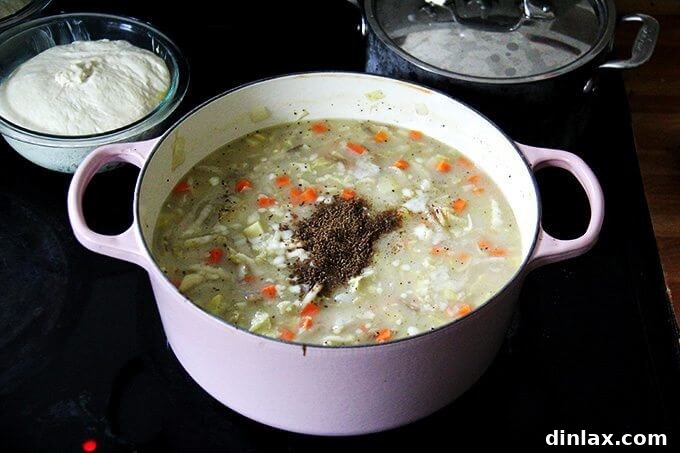
Simmering to Perfection and Finishing Touches
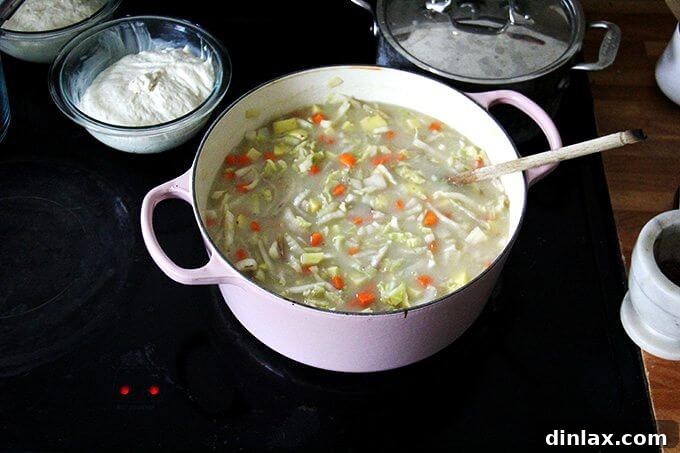
Allow the soup to simmer gently, stirring occasionally, for about 30 minutes, or until the vegetables are tender. This simmering time allows all the ingredients to meld beautifully, creating a harmonious and deeply flavorful broth. Finally, stir in the heavy cream and let it simmer for another five minutes, adding a luxurious richness to the soup. Off the heat, incorporate the finely chopped fresh dill. Taste and adjust the seasoning as needed; a little extra salt and pepper can make all the difference. I often find myself adding an extra teaspoon or two of salt, but always season to your personal preference. Serve warm, with an optional sprinkle of fresh dill in each bowl for extra brightness.
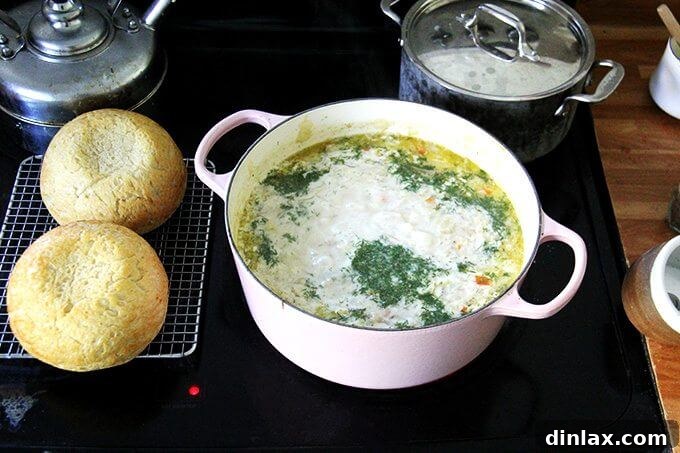
Dinner Time: The Ultimate Comfort Meal
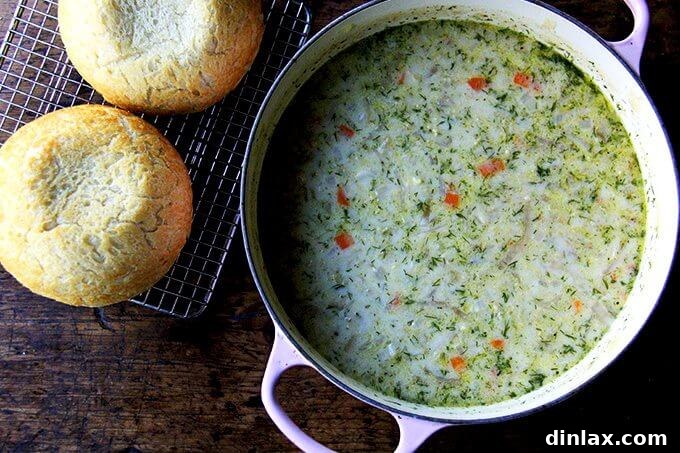
A generous serving of this rich, aromatic cabbage soup paired with a thick slice of freshly baked bread is, in my opinion, one of life’s greatest simple pleasures. Is there truly anything better? The warmth, the textures, the blend of savory and tangy flavors – it’s the epitome of comfort food, perfect for chilly evenings or a nourishing lunch.
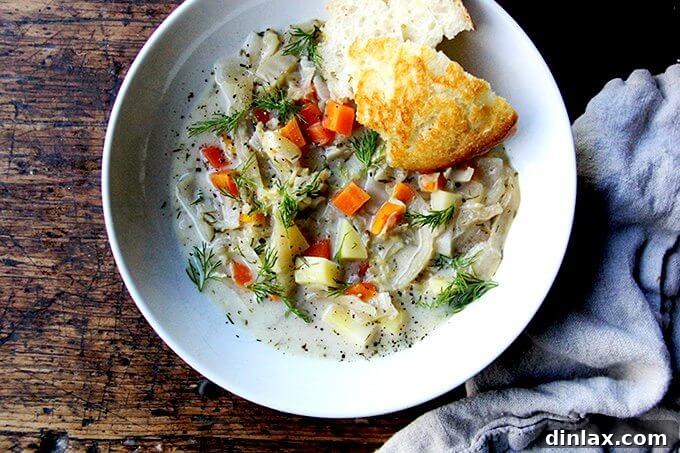
Vegetarian Cabbage Soup Recipe
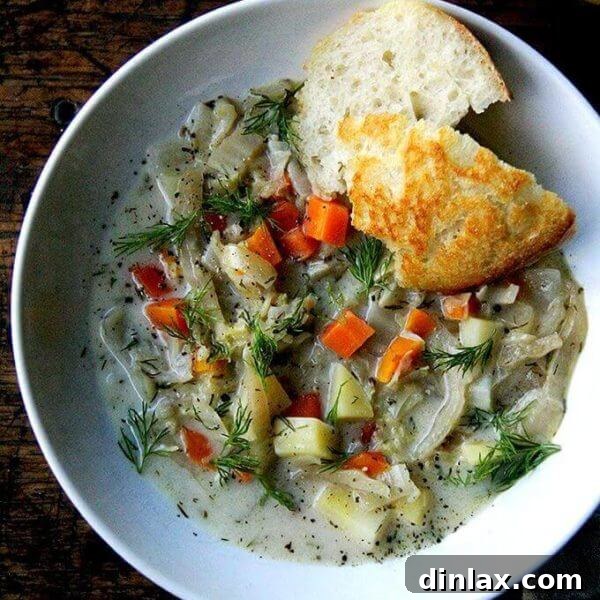
Vegetarian Cabbage Soup
Rating: 4.9 from 13 reviews
- Author: Alexandra Stafford
- Total Time: 1 hour 30 minutes
- Yield: 6 quarts (1x)
Description
This recipe is slightly adapted from a Craig Claiborne & Pierre Franey original. If you wish to make a version closer to the original, which traditionally includes bacon and chicken stock, you can refer to this recipe: Paul Steindler’s Cabbage Soup.
A note on thickening soups: I recently learned from a Milk Street podcast that renowned chef Sara Moulton prefers to thicken soups by puréeing a portion of the soup rather than using flour. If you own an immersion blender, this is incredibly easy. Alternatively, you can ladle a few cups of the soup into a food processor or blender to achieve the desired consistency. This method is especially beneficial for those with gluten sensitivities. While I personally don’t find flour alters the taste or texture negatively, I intend to try the puréeing technique next time.
Regarding the stock quantity: During my last preparation, the homemade stock yielded approximately 2 quarts. I used all of this, supplemented with an additional 2 cups of water. So, don’t worry if you don’t have a full 10 cups of vegetable stock; a combination of stock and water works perfectly fine.
The step of submerging cabbage in boiling water for one minute is included for a reason. I suspect it helps to reduce the cabbage’s natural water content and mitigate some of its stronger, sulfurous aromas, which might otherwise cloud the delicate flavor of the broth.
Note: This recipe is designed to yield a large quantity, producing roughly 6 quarts of soup. While it might seem like a lot, it’s wonderfully convenient to have on hand, particularly if you’re expecting company. Served with a hunk of fresh, crusty bread, it makes for a fantastic and filling lunch. With a simple side salad, it transforms into a perfect, light dinner. This hearty soup is a gift that keeps on giving!
Ingredients
- 12 cups shredded cabbage*
- 1/4 cup olive oil
- 2 to 3 cups finely diced onions
- 1/2 cup flour, see notes above for alternative thickening methods
- 10 cups homemade vegetable stock or water, see notes
- 2 cups finely diced carrots
- 2 to 3 cups finely diced potatoes
- 2 teaspoons kosher salt, plus more to taste
- Freshly ground black pepper to taste
- 2 teaspoons whole caraway seeds, crushed or pulverized
- 1/4 cup white balsamic vinegar
- 1 teaspoon sugar
- 1 cup heavy cream
- 1/4 cup finely chopped fresh dill (or more or less to taste)
*If your cabbage head is particularly large and yields around 14 cups when shredded, feel free to use it all.
Instructions
- **Prepare the Cabbage:** Place the shredded cabbage in a large bowl. Bring enough water to a rolling boil to fully submerge the cabbage (a tea kettle or large saucepan works well). Carefully pour the boiling water over the cabbage; let it sit for exactly one minute, then thoroughly drain the water.
- **Build the Soup Base:** Meanwhile, in a large, heavy-bottomed pot, heat the olive oil over high heat until it shimmers. Add the diced onions, immediately reduce the heat to medium-low, and cook, stirring frequently, until they are soft and translucent, which should take about 15 minutes. Sprinkle the flour over the softened onions and stir constantly for one to two minutes, creating a roux. (If you prefer not to use flour, refer to the description notes above for an alternative thickening method using a blender.) Gradually add the vegetable stock or water, whisking rapidly to ensure the mixture remains smooth. Once the liquid begins to simmer, add the blanched cabbage, diced carrots, diced potatoes, 2 teaspoons of kosher salt, freshly ground black pepper, crushed caraway seeds, white balsamic vinegar, and sugar.
- **Simmer and Finish:** Allow the soup to simmer gently, stirring every so often to prevent sticking, for approximately 30 minutes, or until all the vegetables are tender. Stir in the heavy cream and continue to simmer for another five minutes to allow the flavors to meld and the soup to become rich. Remove from heat and stir in the finely chopped fresh dill. Taste the soup and adjust the seasoning as needed with additional salt and pepper. I typically add 1 to 2 teaspoons more salt to my liking, so adjust according to your preference. Serve hot, adding more chopped dill to each bowl for garnish if desired.
- Prep Time: 30 minutes
- Cook Time: 1 hour
- Category: Soup
- Method: Stovetop
- Cuisine: American, Eastern European