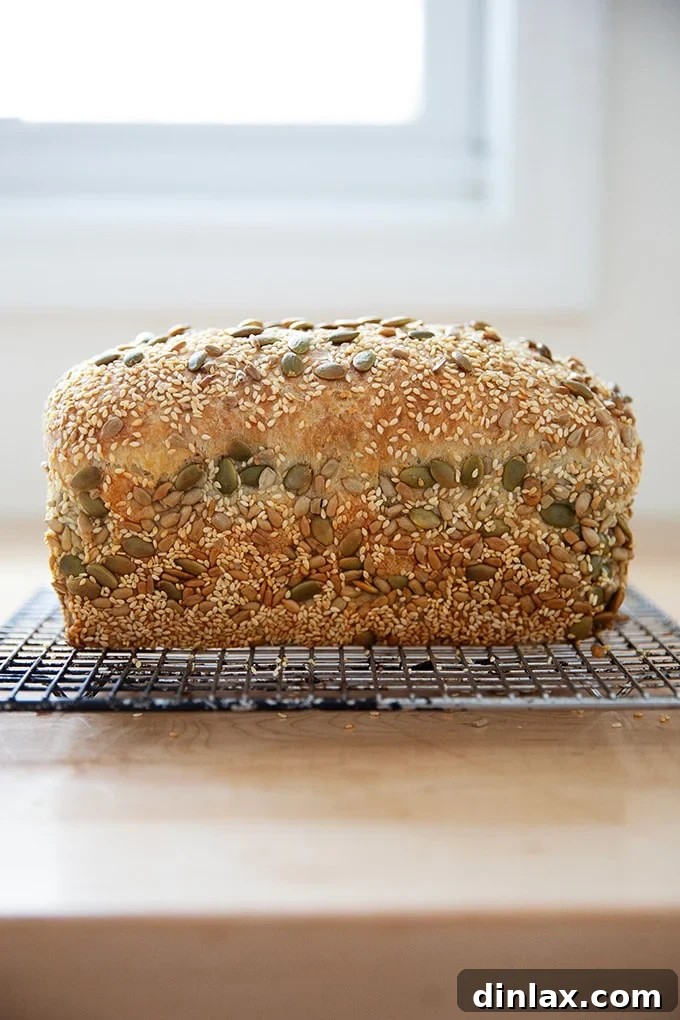
Crafted with a nutritious trio of sunflower, pumpkin, and sesame seeds, this no-knead three-seed bread is remarkably simple to prepare, yielding a robust and flavorful loaf that is perfect for hearty toast and equally delightful for light, satisfying sandwiches. Its rustic charm and wholesome ingredients make it a staple for any home baker seeking both ease and exceptional taste.
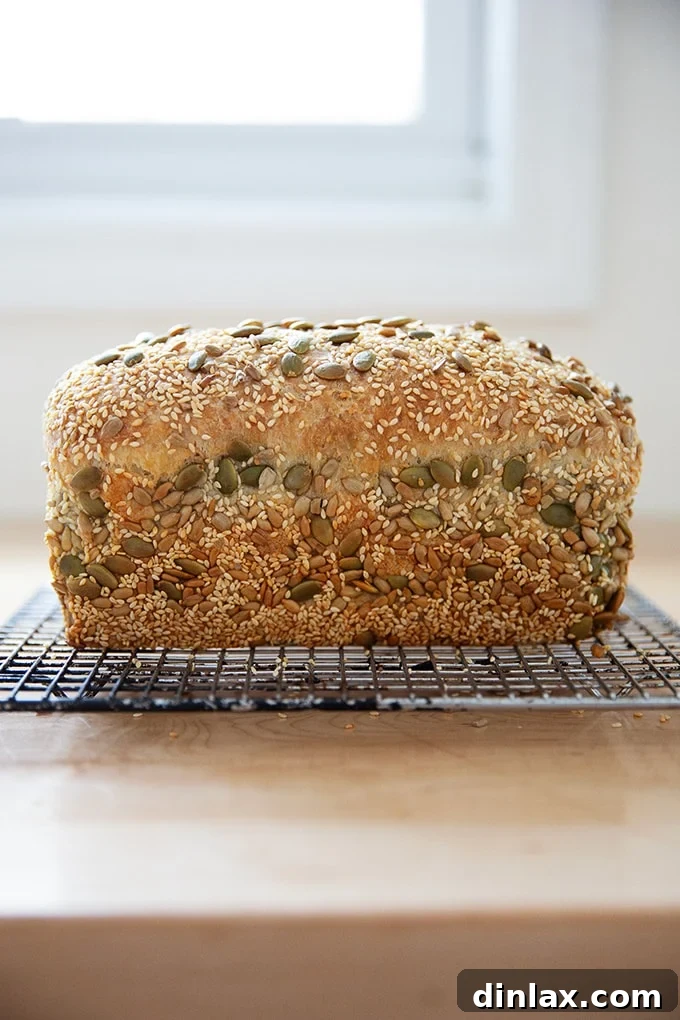
This beloved three-seed bread recipe, originally featured in my acclaimed cookbook, Bread Toast Crumbs, has been meticulously adapted for simplified home baking. While the original version called for two smaller vessels, I’ve rewritten and refined the instructions to work seamlessly in a single, standard loaf pan, making it even more accessible for everyday bakers without sacrificing any of its signature texture or rich flavor. This adaptation focuses on practicality, ensuring a consistent, beautiful loaf every time.
As the name suggests, this bread celebrates the earthy goodness of three distinct seeds: sesame, pumpkin, and sunflower. In my cookbook, I initially recommended toasting these seeds prior to incorporating them into the dough. However, through countless batches and extensive experimentation in recent years, I’ve discovered a wonderful shortcut: skipping the toasting step entirely has virtually no impact on the final product’s flavor or texture. Whether toasted or not, the seeds generously impart their characteristic nuttiness and a satisfying heartiness to the loaf, proving that sometimes, simpler is indeed better.
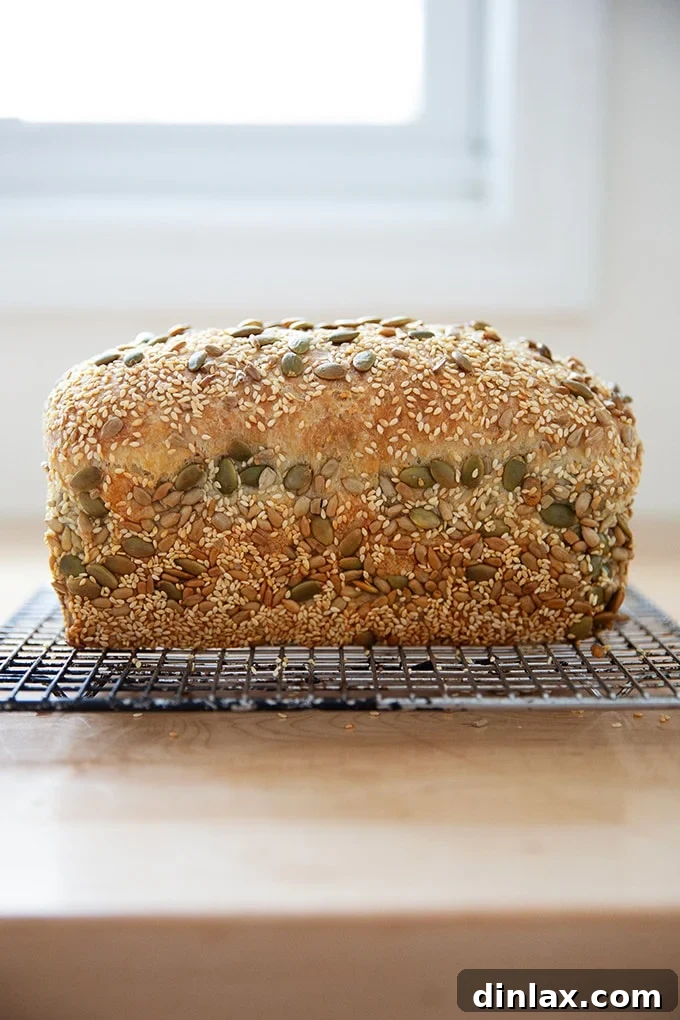
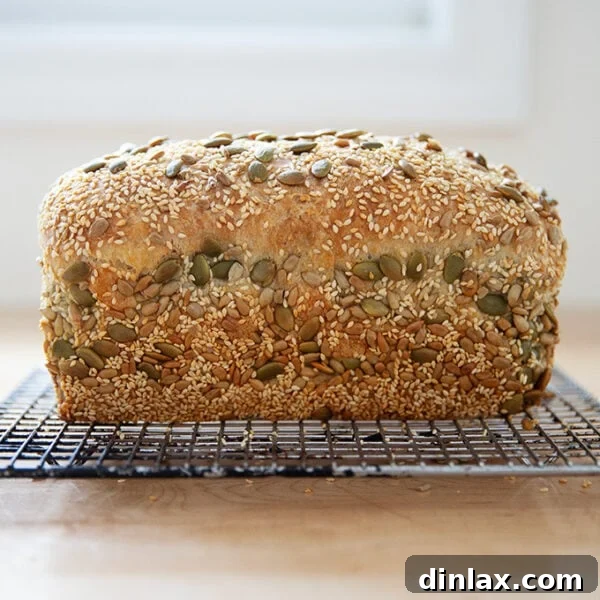
Much like the technique used for my popular No-Knead Oatmeal Maple Loaf, where the pan is coated with oats, here, the loaf pan is generously adorned with the very same mix of sunflower, pumpkin, and sesame seeds found within the bread. While this external seed coating is an optional step, it dramatically enhances the loaf’s visual appeal, creating a beautiful, textured crust. Beyond aesthetics, it also adds an extra layer of delightful crunch, elevating each slice into a truly sensory experience. This simple trick transforms a rustic loaf into an artisan masterpiece with minimal effort.
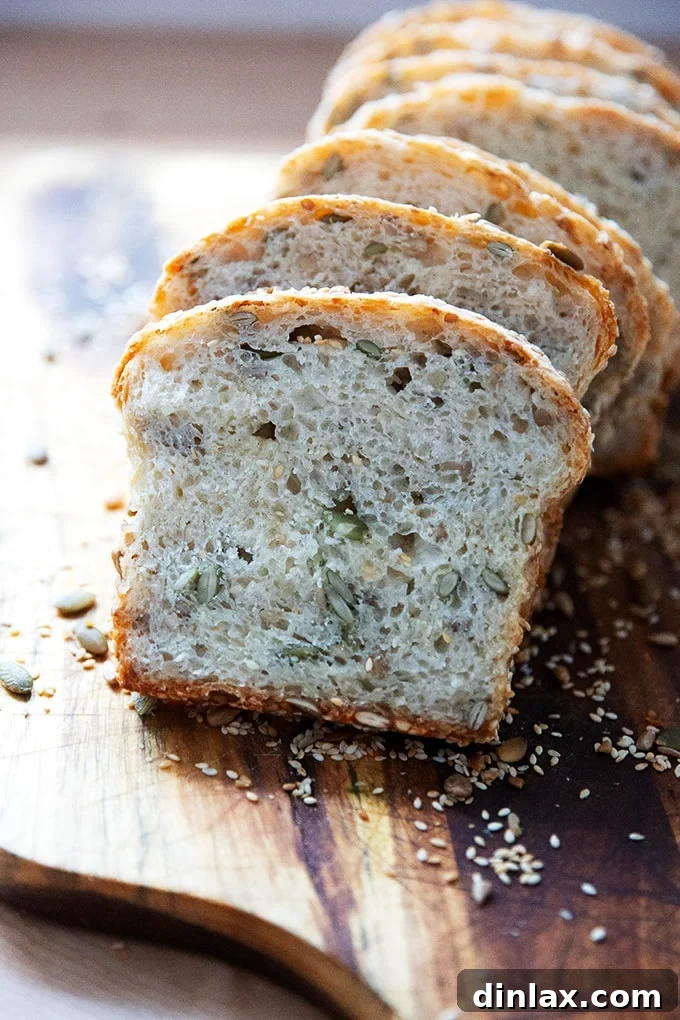
Just like its oatmeal-maple counterpart, this three-seed bread excels when toasted, offering a crisp exterior and a tender crumb. Yet, its light and airy texture also makes it an ideal foundation for a wide array of sandwiches. I particularly adore it for a vibrant chickpea “tuna” salad sandwich or paired with my all-time favorite egg salad. Its versatile nature means it can complement almost any filling, from savory deli meats to fresh vegetables and spreads. I sincerely hope you find as much joy and utility in this recipe as I do.
Baking the Perfect Loaf: A Step-by-Step Guide to No-Knead Three-Seed Bread
Embarking on the journey to bake your own homemade three-seed bread is a rewarding experience, made even easier with the no-knead method. This approach minimizes effort while maximizing flavor development, perfect for both novice and experienced bakers. The secret lies in a long, slow fermentation, which builds structure and complex flavors without the need for strenuous kneading. Follow these simple steps to achieve a perfectly golden, delightfully textured loaf every time.
Gathering Your Ingredients
Before you begin, ensure all your ingredients are measured and ready. You’ll need high-quality flour (either unbleached bread flour for a chewier crumb or all-purpose for a slightly softer texture), kosher salt for essential flavor, a touch of sugar to feed the yeast and aid in browning, and instant yeast for its efficiency. The stars of the show are, of course, the three seeds: sunflower, pumpkin, and sesame. Finally, lukewarm water and extra-virgin olive oil complete the ensemble, contributing to the dough’s hydration and richness.
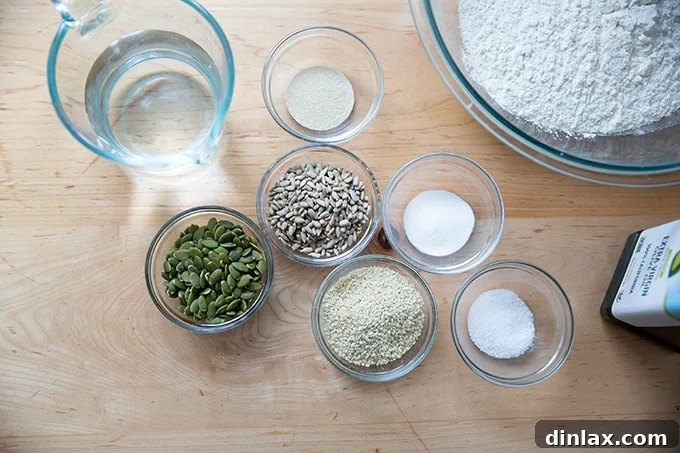
The Initial Mix: Dry Ingredients First
The first step in creating this incredible bread involves combining all the dry ingredients. In a large mixing bowl, whisk together the flour, salt, sugar, and instant yeast. This ensures an even distribution of leavening and seasoning throughout the dough. Once these foundational dry components are well-mixed, gently fold in your sunflower, pumpkin, and sesame seeds. A final whisk will evenly disperse the seeds, preparing the mixture for the wet ingredients.
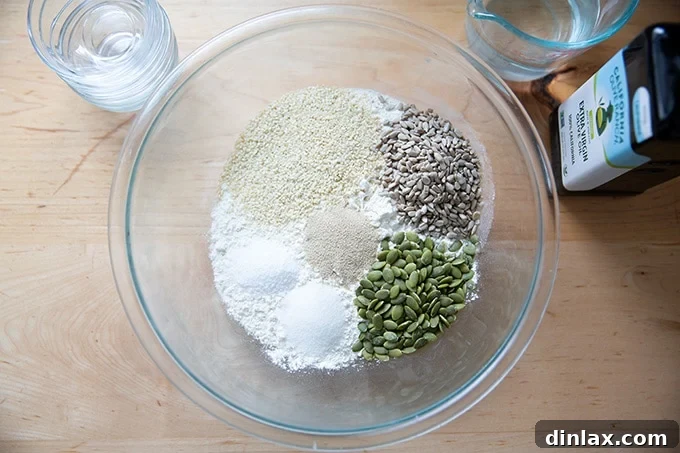
Whisking thoroughly at this stage is crucial. It prevents lumps and ensures that the yeast is ready to activate evenly when it comes into contact with the water. This seemingly small detail contributes significantly to the consistency and rise of your final loaf, creating a uniform texture and flavor distribution from crust to crumb.
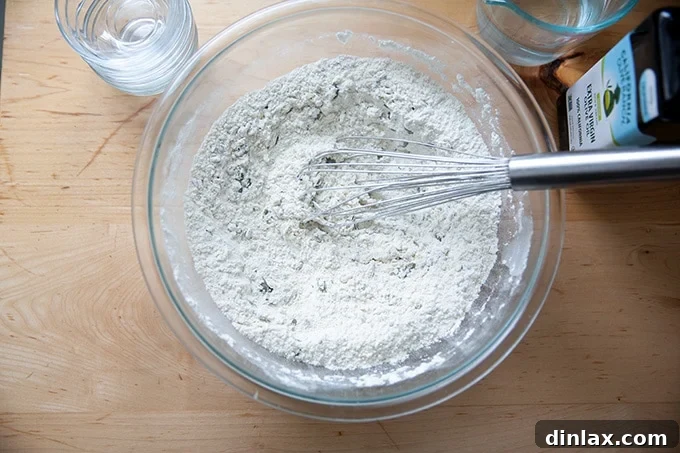
Introducing Wet Ingredients: Hydration and Flavor
Next, carefully add the lukewarm water to the dry mixture, followed by one tablespoon of extra-virgin olive oil. The water should be lukewarm (around 100-110°F or 38-43°C) to optimally activate the yeast without hindering its activity. The olive oil contributes tenderness and a subtle richness to the dough, enhancing its overall flavor profile and helping to keep the crumb moist.
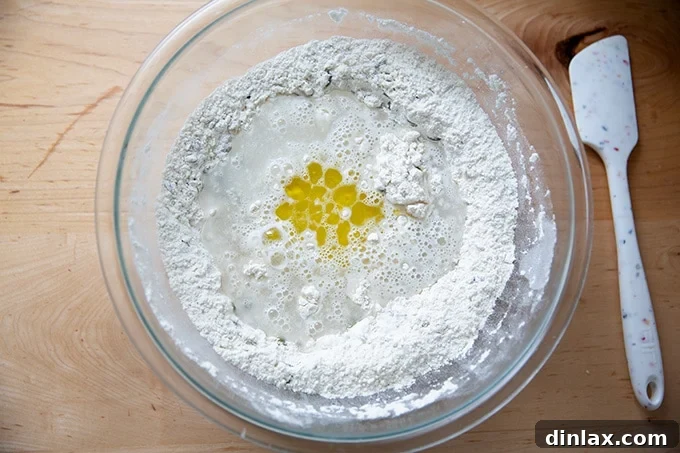
Using a sturdy rubber spatula, begin to mix the ingredients. Stir until the water is fully absorbed by the flour, and all components come together to form a cohesive, sticky dough ball. At this point, the dough will be shaggy and quite wet—this is perfectly normal for a no-knead recipe. You might find it helpful to briefly use your hands to bring the last bits of flour into the dough, ensuring everything is fully incorporated into one sticky mass. Avoid overmixing; just combine until no dry streaks of flour remain.
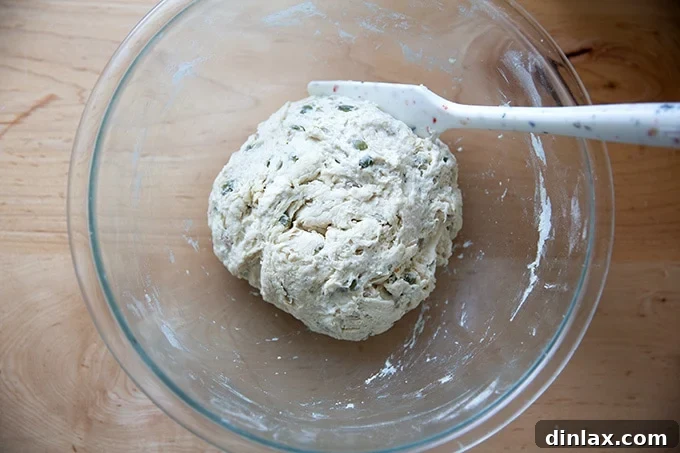
The First Rise: Developing Flavor and Texture
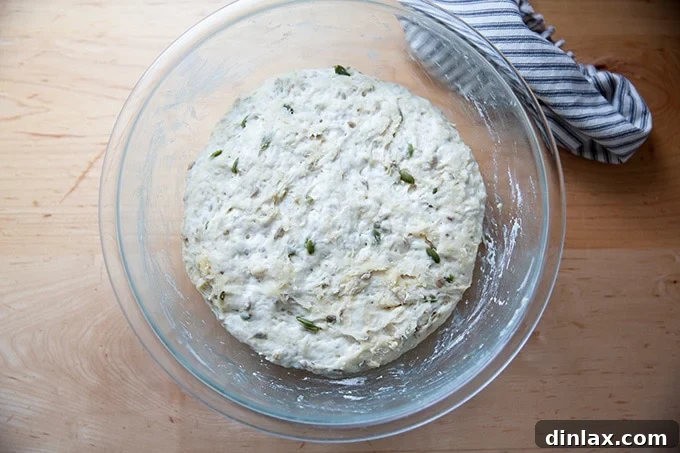
Once your dough ball is formed, cover the bowl. A damp tea towel, a reusable cloth bowl cover, or even plastic wrap will work effectively. Place the covered bowl in a warm, draft-free spot in your kitchen. This initial rise, or bulk fermentation, typically takes 2 to 3 hours, or until the dough has noticeably doubled in volume. During this time, the yeast will be hard at work, consuming sugars and producing carbon dioxide, which creates the airy pockets characteristic of well-risen bread. The longer, slower rise at room temperature also allows for the development of deeper, more complex flavors.
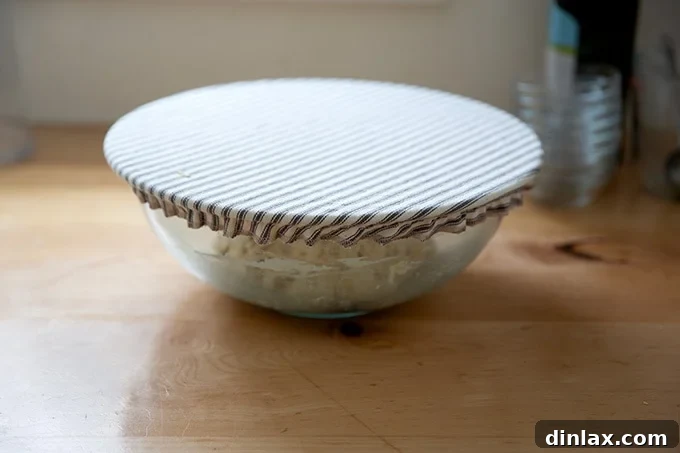
Observing the dough’s transformation after this first rise is one of the most satisfying parts of bread making. It should look significantly larger, often with visible bubbles on the surface, indicating active yeast. This vigorous rise is a testament to the healthy yeast and the excellent environment you’ve provided.
Preparing for the Second Rise: Oil, Shape, and Pan
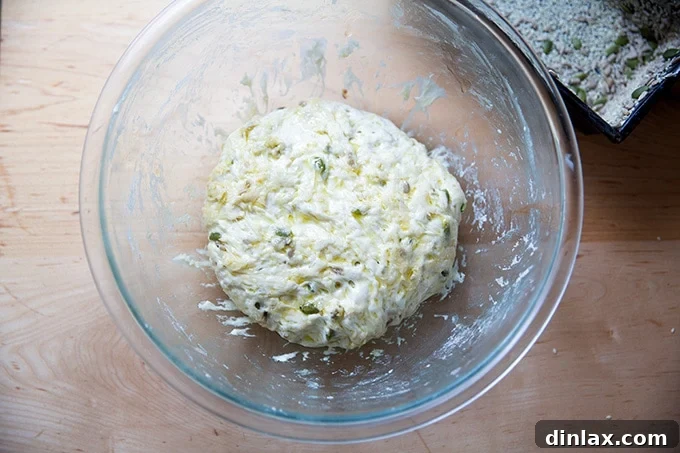
Once the dough has doubled, it’s time to prepare it for its final proof. Drizzle the remaining tablespoon of olive oil over the top surface of the risen dough. Use your hand to gently rub the oil over the entire surface. This oil not only adds flavor but also helps with handling the sticky dough and prevents it from drying out. Then, use your hand to carefully release the dough from the sides of the bowl. Flip the dough over so that the oiled side is now facing down. This creates a slightly tensioned surface on the top.
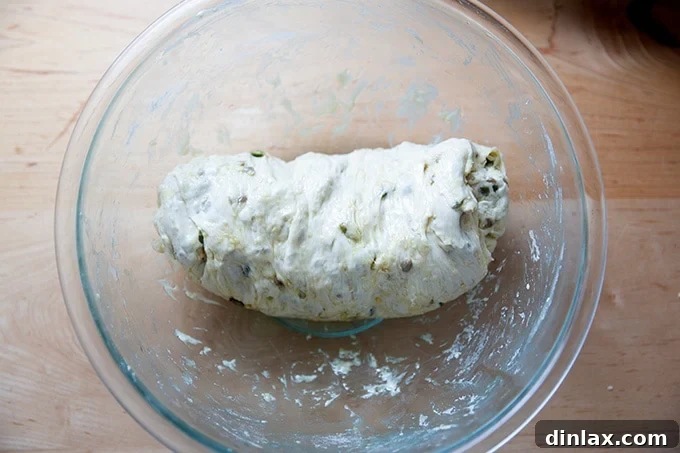
Gently roll the dough into a coil or a simple loaf shape that will fit neatly into your pan. The goal isn’t to be perfect, but to create a somewhat even log. Transfer the shaped dough into your prepared loaf pan, seam-side down. If you wish for an extra crunchy, visually appealing crust, sprinkle the reserved seeds generously over the top of the dough. You can use your hand to gently spread them or shake the pan slightly to distribute them evenly.
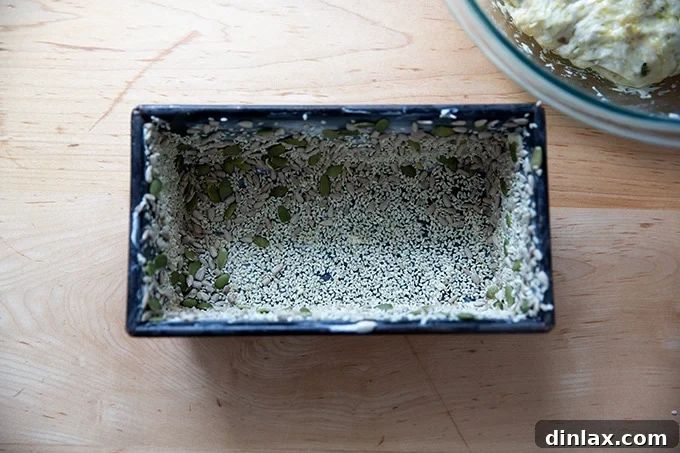
Before placing the dough, grease a standard loaf pan (either an 8.5×4.5-inch or 9×5-inch size) generously with softened unsalted butter. For that extra textural boost and visual flair, you can optionally coat the buttered pan with the same three-seed mix that’s incorporated into the dough. Simply pour about 1/2 to 3/4 cup of the seed mix into the pan, rotate it to ensure all sides are coated, then pour out any excess. This creates a stunning, seed-encrusted crust.
The Second Rise: Final Proofing
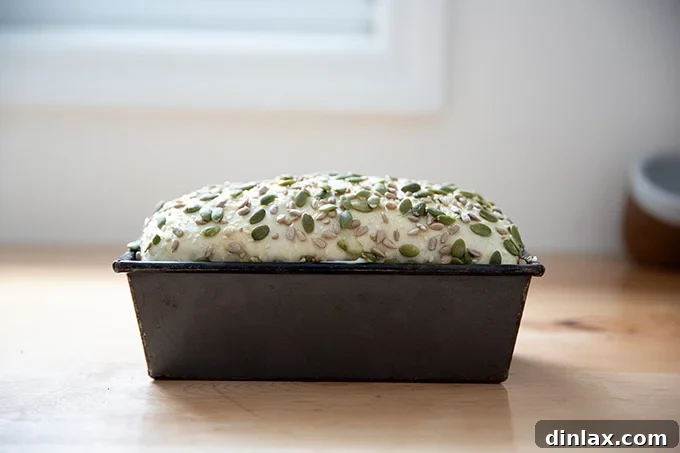
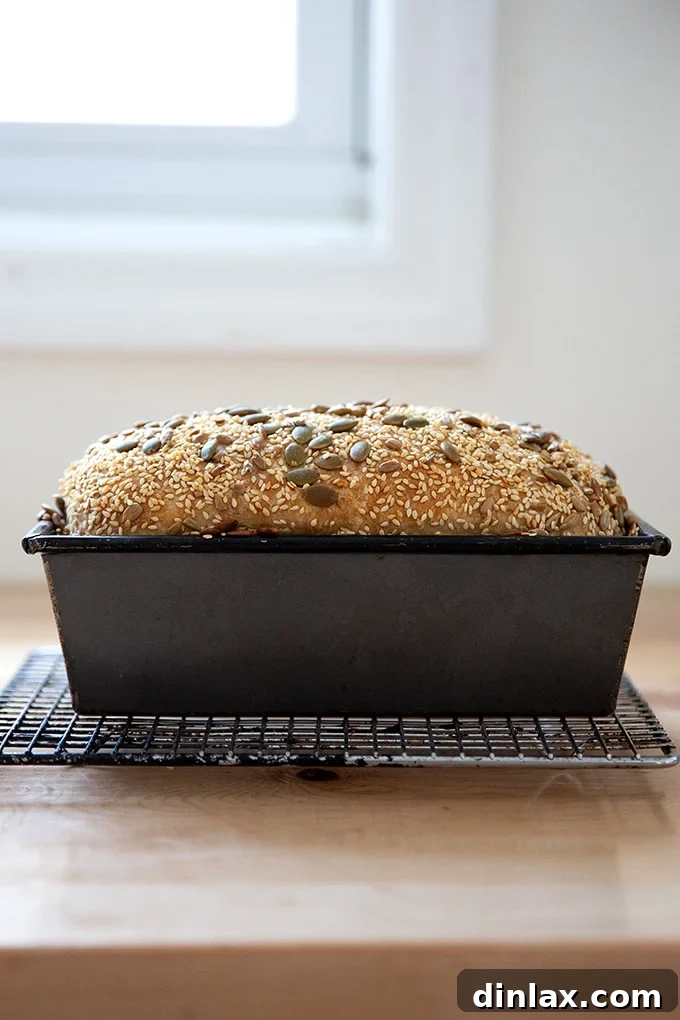
With the dough now nestled in its pan, let it rise again. This final proofing stage should last approximately 45 minutes to an hour, or until the dough has risen significantly and is doming above the rim of the pan by about an inch. A warm, draft-free environment is once again ideal for this process. This final rise is critical for achieving a light, airy texture and ensuring the bread has a beautiful, tall oven spring.
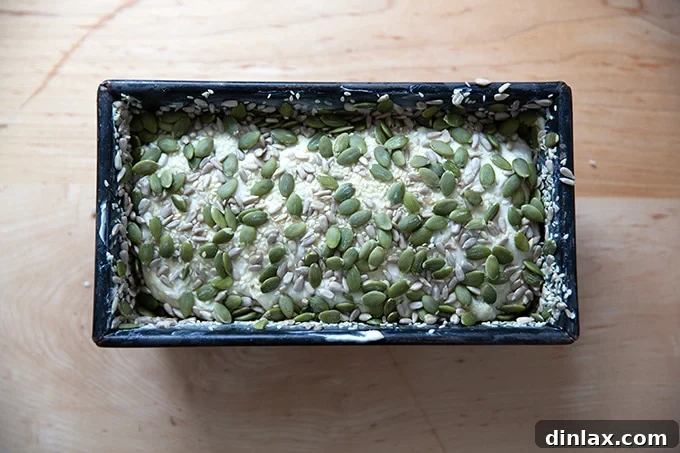
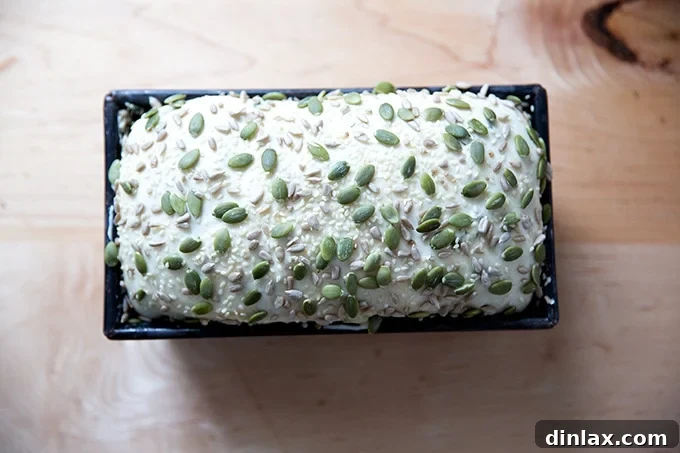
As illustrated in the accompanying photos, a well-risen loaf will fill its pan and expand upward. This visual cue is your best indicator that the bread is ready for the oven. Avoid rushing this step; patience here will be rewarded with an excellent crumb structure and an appealing appearance.
Choosing Your Loaf Pan
The choice of loaf pan can subtly influence the shape and height of your finished bread. This particular loaf was baked in an 8.5×4.5-inch pan. This slightly smaller dimension is my personal preference as it yields a taller, more compact loaf, which I find particularly appealing for both aesthetics and slicing. However, a standard 9×5-inch pan will work equally well, producing a slightly broader, less lofty loaf.
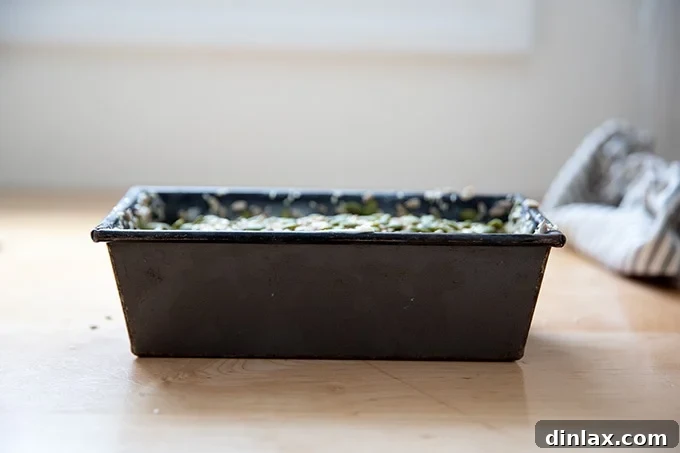
The pictures demonstrate how the dough fills the pan, highlighting the difference in volume and height when using the slightly smaller 8.5×4.5-inch pan. Regardless of the pan size, the key is to ensure it is adequately greased and, optionally, coated with seeds for that extra crunch.
Baking to Golden Perfection
With your oven preheated to 375°F, carefully transfer the loaf pan to the oven. Bake for approximately 45 minutes. The bread is done when the top is a beautiful, even golden-brown, and a wooden skewer inserted into the center comes out clean. An instant-read thermometer should register around 200-210°F (93-99°C) for optimal doneness. The aroma filling your kitchen will be an irresistible indicator that something truly wonderful is baking!
A little warning: while the seeds provide incredible flavor and texture, they might create a slight mess during the baking process. Not all of them will adhere perfectly to the dough, and some may fall into the oven. But trust me, the slight cleanup is a small price to pay for the sheer enjoyment these delightful little additions bring to your homemade loaf. Aren’t they worth it?
Cooling is Key: The Final Step
Once baked, immediately remove the pan from the oven and carefully turn the loaf out onto a wire cooling rack. This crucial step allows air to circulate around all sides of the bread, preventing the bottom from becoming soggy and ensuring a crisp crust. Resist the temptation to slice into your beautiful loaf right away! Allow it to cool for at least 30 to 60 minutes. This cooling period is vital; it allows the internal structure of the bread to set and for the starches to firm up, resulting in a perfectly textured crumb that’s easier and more satisfying to slice.
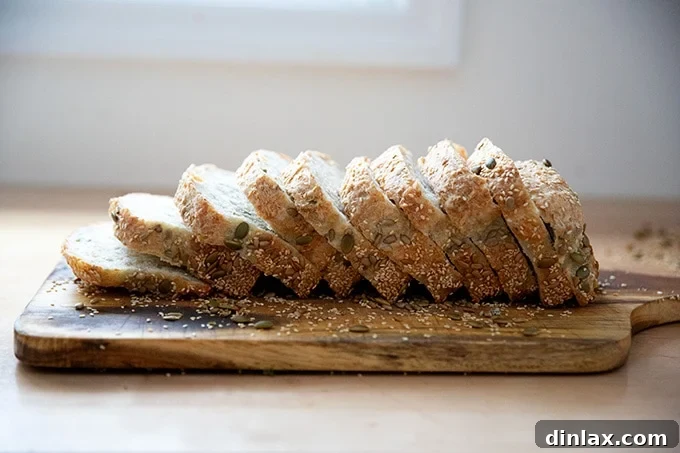
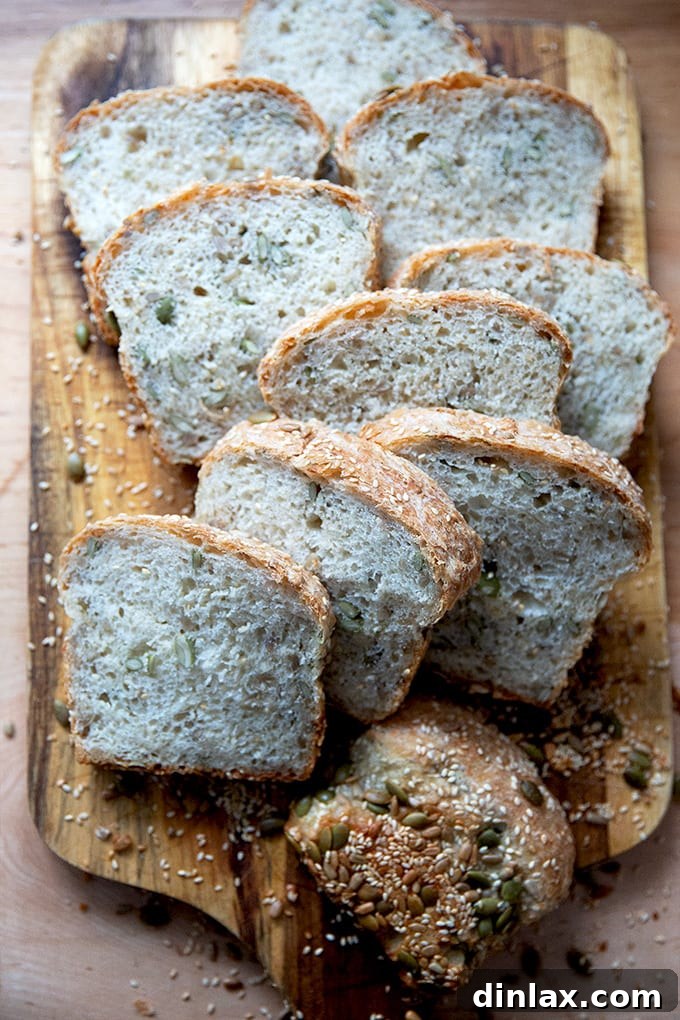
This versatile bread truly shines, whether you’re enjoying a simple slice of toast with butter and jam or building a gourmet sandwich. Its robust flavor and satisfying texture make it a perfect canvas for countless culinary creations. From a simple avocado toast with a sprinkle of flaky sea salt to a complex turkey and cranberry sandwich, this three-seed loaf elevates every meal. Enjoy the fruits of your labor!
Print
No-Knead Three-Seed Bread
5 Stars 4 Stars 3 Stars 2 Stars 1 Star
4.9 from 49 reviews
Author: Alexandra Stafford
Total Time: 5 hours 45 minutes
Yield: 1 loaf 1x
Diet: Vegan
Description
This recipe for No-Knead Three-Seed Bread is a simplified and enhanced adaptation from my popular cookbook, Bread Toast Crumbs. It maintains the original’s delightful flavor and texture while introducing several key modifications for increased ease and efficiency in a home kitchen. These changes aim to make the baking process more straightforward without compromising the exceptional quality of the finished loaf.
Key adjustments from the original recipe include:
- The Baking Vessel: The most significant change is the shift from baking in two 1-quart Pyrex bowls to a single, standard loaf pan. You have the flexibility to use either an 8.5×4.5-inch pan or a 9×5-inch pan. I personally favor the 8.5×4.5-inch pan for this recipe, as it consistently produces a slightly taller and more aesthetically pleasing loaf with a satisfying rise.
- Flour Quantity: To accommodate the single loaf pan and achieve a slightly loftier texture, I’ve increased the flour by a modest 1/4 cup. This small adjustment contributes to a better structure and rise within the loaf pan, without necessitating a corresponding adjustment in water. My testing has shown that this minor addition of flour does not negatively impact the bread’s delightful texture.
- Toasting the Seeds: A wonderful discovery has led to the complete omission of the seed-toasting step. Through extensive experimentation, I’ve found that pre-toasting the seeds is unnecessary; they impart the same depth of nutty flavor and hearty texture whether toasted or not, simplifying the preparation process considerably.
- Oil Reduction: The amount of olive oil used in the recipe has been streamlined. I now use just 1 tablespoon of extra-virgin olive oil directly in the dough, with an additional tablespoon reserved for coating the loaf after its first rise. This reduction ensures a moist and tender crumb without excess richness.
Notes on Yeast:
- Yeast Preference: My strong preference for this recipe is SAF Instant Yeast. I store it either in the refrigerator or freezer, where it retains its potency for an extended period, ensuring reliability in every bake. The primary advantage of instant yeast is that it requires no “proofing” – it can be added directly to the dry flour mixture, saving valuable time and an extra step in the process. Consequently, I no longer use active-dry yeast for my bread recipes.
- Using Active-Dry Yeast (if necessary): Should you only have active-dry yeast on hand, you can still make this bread. In a small separate bowl, dissolve the sugar into the lukewarm water. Then, sprinkle the active-dry yeast over the surface of the water. There’s no need to stir it. Allow this mixture to stand undisturbed for 10 to 15 minutes, or until it becomes noticeably foamy and/or bubbly. This indicates the yeast is active and ready. Once proofed, you can proceed with the recipe as directed, adding this yeast mixture where water is called for.
A final important note: As mentioned in the article above, the seeds used for external coating may not always adhere perfectly to the loaf, leading to a small amount of “mess” as some seeds fall off during baking and cooling. While I am always exploring better methods to ensure maximum adhesion, this minor inconvenience is a small price to pay for the incredible flavor and textural contrast the seeds provide. Rest assured, any stray seeds are still delicious! You can easily save these toasted seeds and repurpose them by tossing them into a fresh salad, sprinkling them over roasted vegetables, or incorporating them into a granola mix for a delightful crunch.
Ingredients
- 3.25 cups (416 g) unbleached bread or all-purpose flour
- 1.5 teaspoons (5 grams) kosher salt
- 1.5 teaspoons (7 grams) sugar
- 1.5 teaspoons (5 grams) instant yeast
- ¼ cup (40 g) sunflower seeds
- ¼ cup (40 g) pumpkin seeds
- ¼ cup (35 g) sesame seeds
- 1.5 cups (340 grams) lukewarm water
- 2 tablespoon extra-virgin olive oil, divided
- Softened unsalted butter, for greasing
- 1/2 to 3/4 cup seeds, optional, for coating the pan: I mix another 1/4 cup each of sunflower, pumpkin, and sesame seeds
Instructions
- In a large mixing bowl, combine the dry ingredients: whisk together the measured flour, kosher salt, sugar, and instant yeast until they are thoroughly blended. Then, add the sunflower, pumpkin, and sesame seeds to the bowl and whisk again to ensure they are evenly distributed throughout the dry mixture. Next, pour in the lukewarm water, followed by 1 tablespoon of the extra-virgin olive oil. Using a sturdy rubber spatula, begin to mix the ingredients from the edges of the bowl towards the center. Continue mixing until all the liquid has been absorbed and the ingredients come together to form a cohesive, sticky dough ball. The dough will be shaggy and moist; this is the desired consistency. If necessary, you may briefly use your hand to gather any loose bits and ensure all the flour is incorporated, forming a single, sticky mass. Avoid overmixing; stop once the dough is just combined.
- Cover the bowl containing the dough with either a damp tea towel, a reusable cloth bowl cover, or plastic wrap. Place the covered bowl in a warm, draft-free location in your kitchen. Allow the dough to rise for an initial period of 2 to 3 hours, or until it has visibly doubled in volume. This extended bulk fermentation is crucial for developing the complex flavors and airy texture characteristic of no-knead bread. Observe the dough; it should appear plump and often have small bubbles on its surface when fully risen.
- Before the dough’s first rise is complete, preheat your oven to 375ºF (190°C). Prepare your loaf pan by generously greasing an 8.5- x 4.5-inch (or 9×5-inch) pan with softened unsalted butter, ensuring all interior surfaces are well-coated. If you desire an extra crispy, seed-encrusted crust, pour the reserved 1/2 to 3/4 cup of the three-seed mix into the buttered pan. Gently tilt and rotate the pan to allow the seeds to adhere to all the buttered sides. Once coated, pour any excess seeds out of the pan and set them aside; these can be used for sprinkling on top of the loaf later. This step creates a beautiful, rustic exterior.
- Once the dough has doubled in volume after its first rise, gently drizzle the remaining 1 tablespoon of olive oil over the top surface of the dough. Using your hand, lightly rub the oil over the entire surface of the dough to coat it. Then, carefully use your hand to release the dough from the sides of the bowl. Flip the dough ball over so that the oiled side is now facing down. This creates a slightly taut surface on what will become the top of your loaf. Gently shape the dough into a tight coil or a neat loaf shape that will fit snugly into your prepared pan. Carefully transfer the shaped dough into the buttered and optionally seeded loaf pan, ensuring the seam side is facing down. If you set aside extra seeds from the pan coating step, or wish for more, sprinkle them generously over the top of the dough. You can use your hand to gently pat them down or shake the pan to help distribute them evenly.
- Allow the dough to undergo its second rise, or final proof, directly on your countertop. For best results, choose a warm, draft-free spot. This second rise should take approximately 45 minutes to 1 hour, or until the dough has risen significantly within the pan. It should be visibly doming above the rim of the pan by about one inch, indicating it’s nearly ready for baking. Refer to the provided photos for a visual guide on what a perfectly proofed loaf looks like before entering the oven. This final rise contributes to the bread’s light texture and good volume.
- Carefully transfer the loaf pan into your preheated 375ºF (190°C) oven. Bake for approximately 45 minutes, or until the top of the loaf is a beautiful, even golden-brown. To confirm doneness, you can gently tap the bottom of the loaf – it should sound hollow – or use an instant-read thermometer to check the internal temperature, which should register between 200-210°F (93-99°C). Once baked, promptly remove the pan from the oven and carefully turn the loaf out onto a wire cooling rack. It is crucial to let the loaf cool for at least 30 to 60 minutes before attempting to slice it. This cooling period allows the internal structure of the bread to set properly, preventing a gummy texture and ensuring clean, firm slices.
- Prep Time: 5 hours
- Cook Time: 45 minutes
- Category: Bread
- Method: Oven
- Cuisine: American