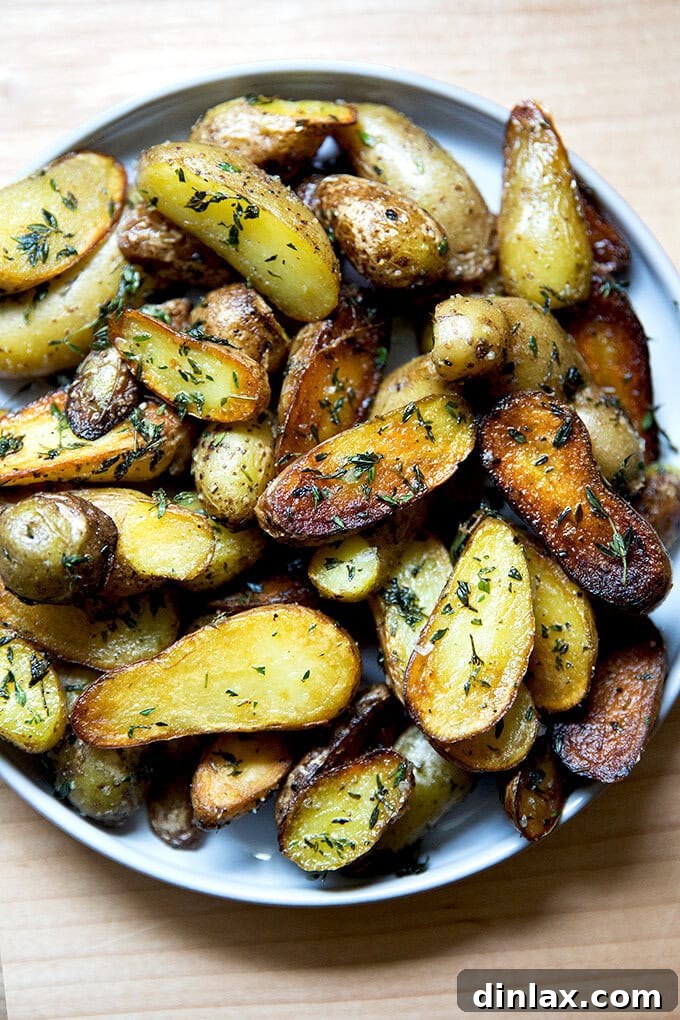
Mastering Crispy Fingerling Potatoes: A Chef’s Secret for Rosemary and Thyme Perfection
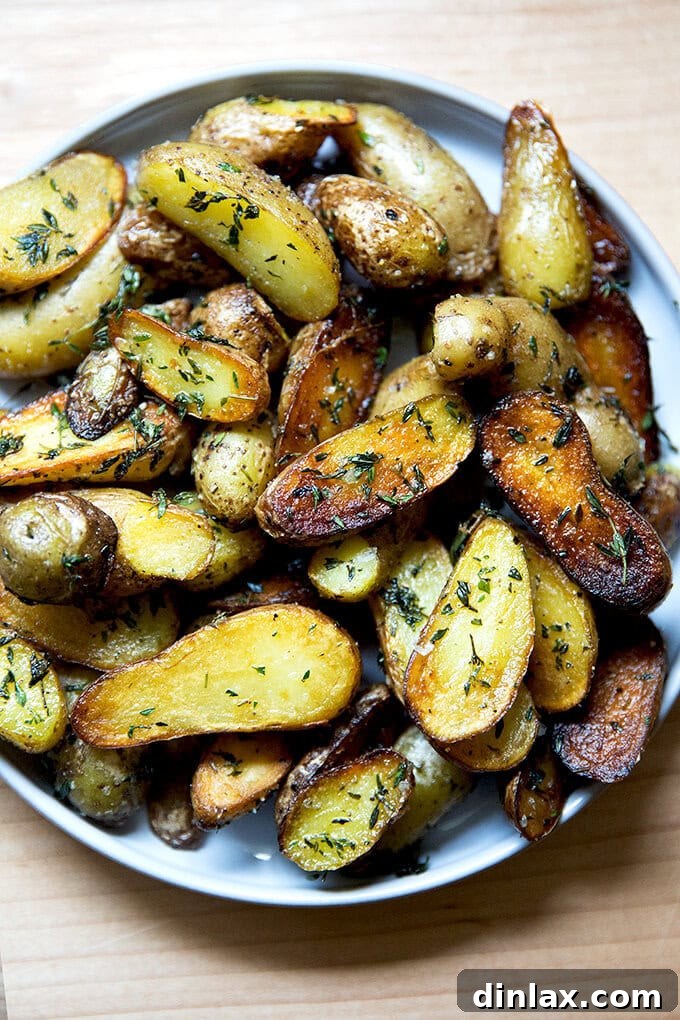
The secret to achieving perfectly cooked fingerling potatoes with an irresistible crispy exterior? It lies in a two-step method: first, a flavor-infusing boil, followed by a high-heat pan sear. This technique, once a professional kitchen secret, is now yours to master, promising potatoes that are tender within and gloriously crisp outside, imbued with aromatic herbs.
Potatoes, in all their glorious forms, hold a truly special place in the culinary world and, I must admit, in my heart. From the comforting warmth of creamy, fluffy mashed potatoes to the sophisticated layers of cheese-crusted hasselback gratin, their versatility is unmatched. Yet, among this beloved root vegetable’s many preparations, these exquisitely crispy, herb-flecked fingerling potatoes unequivocally stand out as my absolute favorite. There’s something uniquely satisfying about their perfect texture and vibrant flavor that makes them an irresistible addition to any meal.
My journey to mastering these delectable potatoes began years ago while working at Fork, a renowned restaurant in Philadelphia. It was there that I witnessed a cooking method that initially astonished me. The chef, with an almost audacious confidence, would unload an entire three-pound box of kosher salt into a massive pot. This colossal quantity of salt joined a generous batch of fingerling potatoes, ample water, numerous cloves of smashed garlic, and several bountiful bunches of fresh rosemary and thyme. The sheer volume of salt made me gasp, questioning if such an amount could possibly yield anything palatable.
“Bring the water to a boil,” he instructed, his voice calm amidst the kitchen’s bustle, “then immediately turn off the heat.” He assured us that the potatoes would continue to cook gently as they cooled in their seasoned liquid. This technique seemed counterintuitive to my previous understanding of potato preparation, which typically involved continuous boiling until tender. However, the results were nothing short of miraculous.
The chef was absolutely right. The potatoes emerged from the pot perfectly cooked—tender all the way through, yet holding their shape beautifully, without the slightest hint of being overdone or mushy. What truly set them apart, however, was their seasoning. Far from being excessively salty, they were perfectly balanced, subtly infused with the earthy aromas of rosemary, the delicate fragrance of thyme, and the pungent warmth of garlic. It was a revelation: the cooling process allowed the potatoes to absorb these flavors deeply, transforming them into something truly extraordinary. This experience fundamentally reshaped my approach to cooking potatoes.
Often, I find these potatoes so delightful straight from the pot that I eat them without any further adornment. Their inherent flavor, born from that initial infusion, is simply captivating. They are also fantastic when sliced and tossed into fresh salads, adding a burst of flavor and a satisfying texture. However, when I crave that ultimate crispness, a texture that elevates them from merely delicious to utterly divine, I follow the second part of the Fork method. I crisp them up in a hot skillet with a splash of olive oil, a sprinkle of fresh chopped rosemary and thyme, and a final pinch of salt. The transformation is pure culinary magic, a treat that I know you will cherish as much as I do.
PS: Explore more incredible potato recipes right this way.
The Two-Step Method for Unforgettable Fingerling Potatoes
Achieving perfectly cooked and wonderfully crispy fingerling potatoes is simpler than you might imagine, thanks to this two-phase technique. Each step plays a crucial role in developing both their internal tenderness and their outer crunch, ensuring a consistently delicious result every time.
Step 1: The Flavor Infusion Boil – Building the Foundation
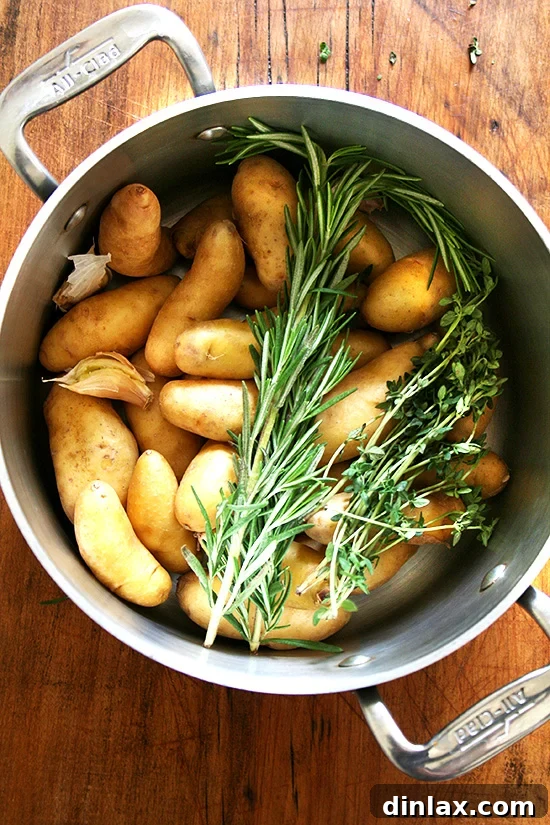
This initial step is paramount, as it not only cooks the potatoes but also imbues them with profound flavor. Begin by placing your fingerling potatoes in a large, heavy-bottomed pot. The choice of pot matters: a pot with a narrow opening will help retain heat, allowing the potatoes to cook more evenly as they cool. Add your chosen seasonings: several sprigs of fresh rosemary and thyme, two or three smashed cloves of garlic, and a generous amount of kosher salt. Don’t be shy with the salt; it’s essential not only for flavor but also for its osmotic effect, which helps the potatoes achieve their ideal texture.
Cover the potatoes and seasonings with cold water, ensuring they are submerged by approximately one inch. Bring the pot to a vigorous boil over high heat. The moment the water reaches a rolling boil, immediately turn off the burner. This is the crucial part of the “boil then shut off” technique. Allow the potatoes to cool completely in their cooking liquid. Depending on the size of your pot and the quantity of potatoes, this cooling process can take anywhere from an hour to two hours. As the potatoes gradually cool, they continue to cook gently from the residual heat, absorbing all the wonderful flavors of the salt, garlic, and herbs. This slow infusion is what makes them incredibly tender and deeply seasoned, preparing them perfectly for the next step. Resist the urge to drain them too soon; patience here is key to their exquisite taste and texture.
Step 2: The Perfect Crisp – Achieving Golden-Brown Perfection
Once the potatoes have completely cooled in their seasoned liquid, they are ready for their grand finale: the crisping stage. Drain the potatoes and, for optimal crispiness, halve them on the bias. This creates more surface area for browning. If your fingerlings are particularly small, you may choose to leave them whole.
Now, heat a sturdy pan – preferably cast iron, carbon steel, or high-quality stainless steel – over high heat. Allow the pan to get truly hot before adding any oil. This intense heat is crucial for achieving that coveted crispy crust. Add a thin, even layer of olive oil to the hot pan and swirl it around to coat the bottom. The oil should shimmer, indicating it’s ready for the potatoes. Carefully add the halved potatoes to the hot pan in a single layer. Resist the urge to overcrowd the pan, as this can steam the potatoes instead of crisping them. Work in batches if necessary.
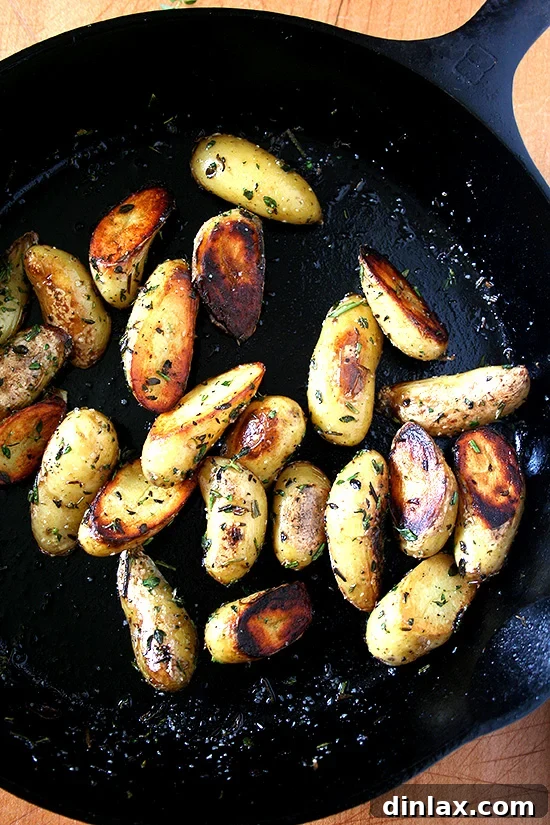
Once the potatoes are in the pan, shake the pan just once to ensure they are settled, then leave them undisturbed for a minute or two. This “don’t disturb” rule is vital; it allows a beautiful, golden-brown crust to form on the bottom. Check one potato after this initial period to ensure the desired crispness is developing before you attempt to move or stir them. You’re looking for that deep golden-brown edge.
When the fingerlings have achieved a lovely browning, give the pan a good shake to flip them or stir gently with a spatula. Toss in a few more sprigs of fresh rosemary and thyme (minced leaves work best here) and a final pinch of flaky sea salt or kosher salt to enhance their flavor. Continue to cook for another minute or two, allowing the herbs to become fragrant and the other sides of the potatoes to crisp up. The aroma filling your kitchen at this stage will be absolutely divine, a testament to the magic happening in the pan.
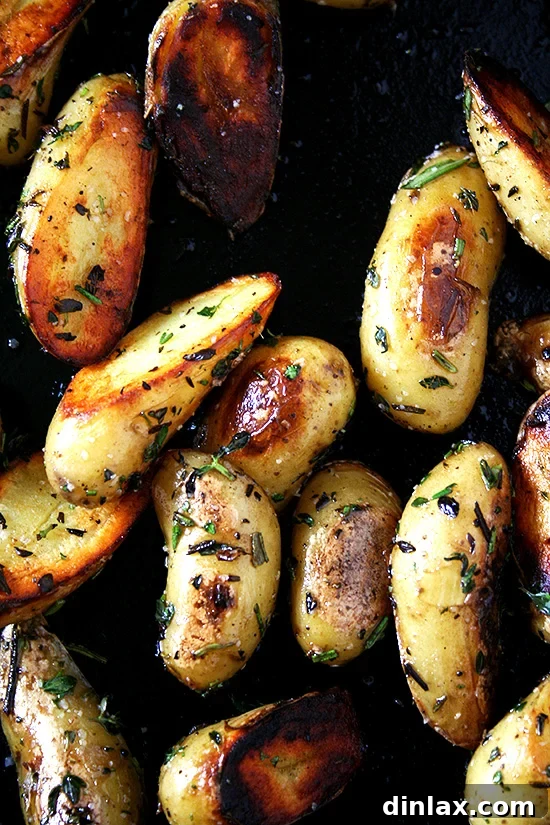
Once they’ve reached peak crispiness, transfer the glorious fingerlings to a serving platter and serve immediately. Their warmth and texture are best enjoyed fresh from the pan. For an extra kick, I often enjoy mine with a drizzle of Sriracha – it’s a surprising but delightful combination that truly brightens the flavors. Yum!
Beyond the Skillet: Versatility of Pre-Cooked Fingerling Potatoes
The beauty of this cooking method extends far beyond serving them straight from the pan. The initial boiling process renders the fingerlings perfectly tender and seasoned, making them incredibly versatile for various culinary applications. Having a batch of these pre-cooked potatoes on hand is a true game-changer for meal prep and spontaneous deliciousness.
One of my favorite ways to enjoy them, aside from crisping, is to slice them thinly and toss them into vibrant salads. Whether warm or cold, they add a substantial, earthy flavor and a pleasing texture. Imagine them in a warm spinach salad with bacon, or a refreshing green salad with a lemon-herb vinaigrette. They also make an excellent base for roasted vegetable medleys; simply add them to a sheet pan with other vegetables and a little extra olive oil for a quick roast.
For breakfast, these pre-cooked fingerlings are a revelation. Slice them and add them to your morning scramble or serve them alongside eggs and sausages for a gourmet touch. They transform humble breakfast potatoes into something truly special. As a side dish, they are incredibly adaptable. Pair them with roasted chicken, grilled fish, or a juicy steak. Their delicate flavor profile complements a wide range of main courses without overpowering them. They’re also fantastic simply seasoned with a little smoked paprika or a dash of chili powder for a different flavor profile.
For those interested in meal planning, preparing a larger batch of these potatoes at the beginning of the week allows for quick and easy meals throughout. Store the cooled, un-crisped potatoes in an airtight container in the refrigerator for up to 3-4 days. This way, you can pull them out and crisp up a portion whenever a craving strikes, or easily incorporate them into salads or other dishes. Their convenience, combined with their exceptional flavor, makes them an indispensable part of my kitchen repertoire.
Tips for Success and Variations
- Salt is Your Friend: Do not underestimate the amount of salt needed for the initial boil. It is crucial for seasoning the potatoes from the inside out and helps firm up their texture. The potatoes will only absorb what they need, so don’t fear a seemingly large quantity.
- Fresh Herbs Make a Difference: While dried herbs can work in a pinch, fresh rosemary and thyme offer a superior aroma and flavor that truly elevates this dish. Consider growing your own for an endless supply!
- The Right Pan: A heavy-bottomed pan, especially cast iron, retains heat exceptionally well, which is key for achieving that perfect crispy crust without burning.
- Don’t Overcrowd: When crisping the potatoes, give them space in the pan. Overcrowding lowers the pan’s temperature and steams the potatoes instead of browning them, preventing that desirable crispiness. Cook in batches if necessary.
- Personalize Your Herbs: While rosemary and thyme are classic, feel free to experiment with other hard herbs like sage or oregano during the boiling phase, or add fresh parsley or chives at the very end for a pop of color and freshness.
- Spice It Up: Before crisping, a sprinkle of smoked paprika, garlic powder, or even a pinch of cayenne pepper can add another layer of flavor and a subtle kick.
- Storage: Cooked and cooled fingerling potatoes (before crisping) can be stored in an airtight container in the refrigerator for up to 3-4 days. Crisp them up just before serving for the best texture.
Print Recipe
Crispy Pan-Seared Fingerling Potatoes
★★★★★ (4.6 from 7 reviews)
- Author: Alexandra Stafford
- Total Time: 2 hours
- Yield: 4 servings
- Diet: Vegan
Description
The key to perfectly cooked fingerlings? Boil first; then crisp them up over high heat.
I learned to cook potatoes this way while working at Fork in Philadelphia. The chef at the time cooked fingerlings as directed below, the keys being:
- Use a ton of salt.
- Bring the water to a boil, then shut it off. As the potatoes cool, they continue to cook, and they take on the seasonings of the herbs and salt. They are irresistible. Note: Best to use a pot with a narrow opening to ensure the cooking liquid does not cool down too quickly.
Ingredients
To cook the potatoes:
- 1 1/2 lbs. fingerling potatoes or other small potatoes
- 1/3 cup kosher salt
- several sprigs of rosemary and thyme
- 2 cloves garlic, smashed
To crisp the potatoes:
- olive oil
- kosher salt or flaky sea salt, such as Maldon
- a few more sprigs rosemary and thyme, leaves removed and minced
Instructions
- Place fingerlings in a pot. Cover with approximately one inch of water. Add the salt, herbs, and garlic. Bring the pot of water to a boil, then turn off the heat. Let the potatoes cool completely in their liquid before proceeding.
- Once cool, you can eat the potatoes as they are, or you can brown them. These potatoes are wonderful to have on hand — they are truly delicious cooked as they are, sliced and tossed into salads, or just eaten straight out of the refrigerator.
- If you want to crisp them up a bit, slice the potatoes in half on a bias (or leave them whole if they are really small). Then, heat a pan (preferably cast iron or carbon steel or stainless steel) over high heat. Add a thin layer of olive oil and swirl the pan to coat the bottom — the pan and oil should be very hot before adding the potatoes. Add the potatoes, shake the pan once, and then let them be. Do not disturb them for a minute or two. Check one before trying to shake the pan or stir them with a spoon — you want that edge to get crispy, and it won’t get crispy if you try to move them too quickly.
- Once the fingerlings are browning nicely, shake the pan, toss in the herbs, and give them a pinch more of kosher salt. Serve immediately. I like to eat mine with Sriracha. Yum!
Other Details
- Prep Time: 5 minutes
- Cook Time: 5 minutes
- Category: Side Dish
- Method: Stovetop
- Cuisine: American
By following this method, you’re not just cooking potatoes; you’re creating a memorable culinary experience. The simple yet profound technique ensures a depth of flavor and a texture that will make these crispy, herb-kissed fingerlings a cherished staple in your home. Give them a try, and prepare to fall in love with the humble potato all over again!