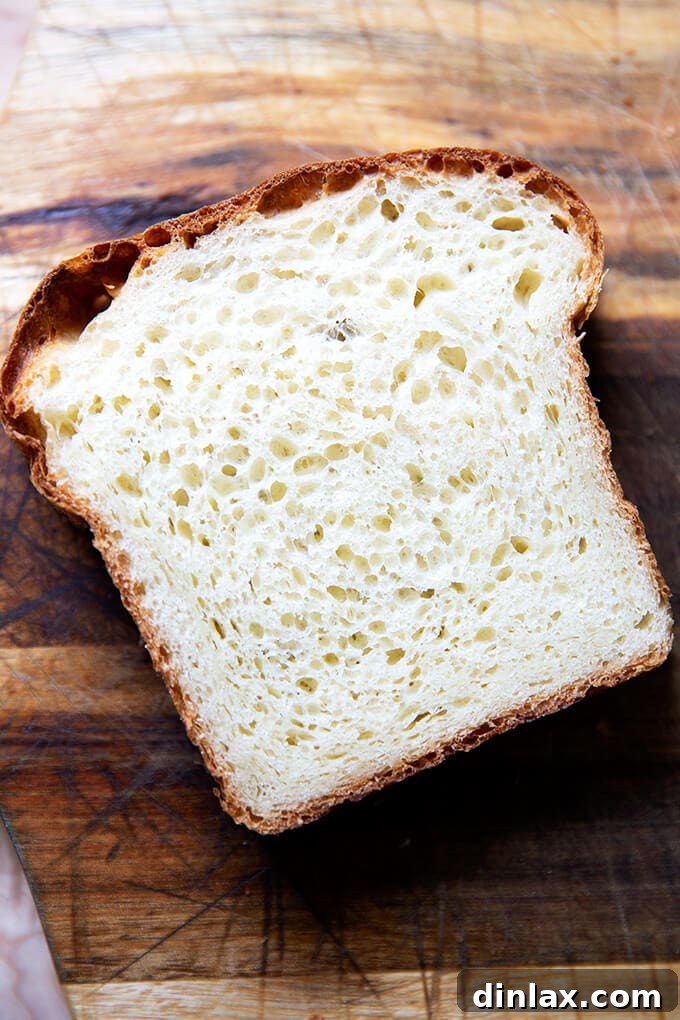
Unlock the secret to artisanal bread baking with this incredibly easy No-Knead Brioche Bread recipe. Designed for simplicity without compromising on flavor or texture, the dough comes together effortlessly in just 5 minutes, requiring nothing more than a bowl, whisk, and spatula. From start to finish, you can have two beautifully golden, soft brioche loaves ready in approximately 4 hours, with a mere 25 minutes of active preparation time. Perfect for beginner bakers and seasoned enthusiasts alike, this recipe demystifies the art of brioche, delivering a luxurious, slightly sweet bread that’s unbelievably light and airy. Dive into the detailed step-by-step instructions below to discover how you can create this culinary masterpiece in your own kitchen! 🍞🍞
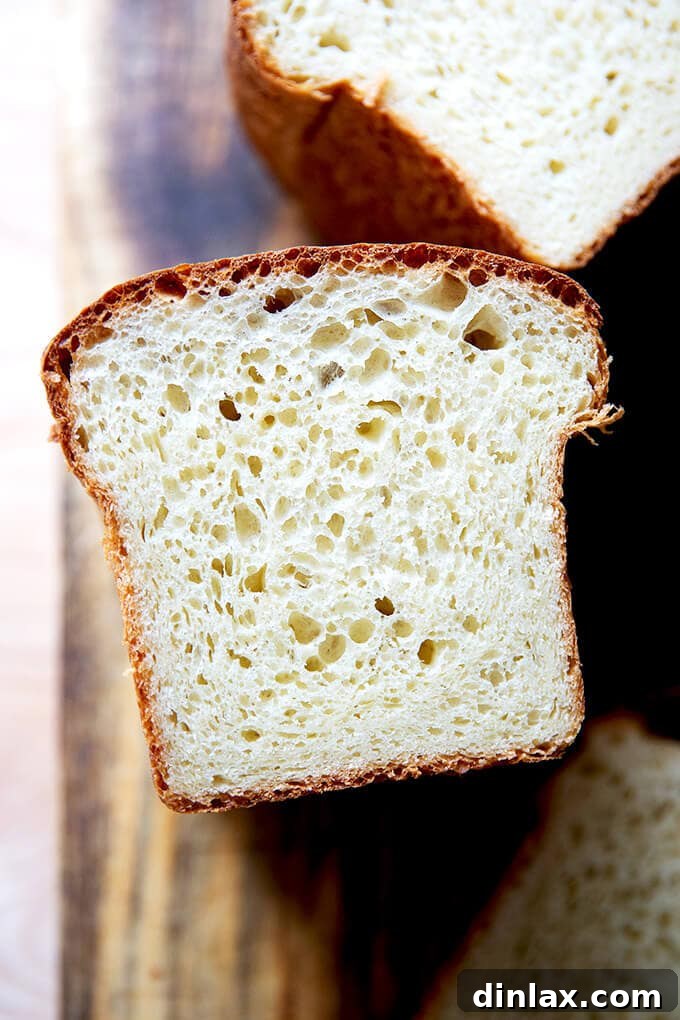
Brioche, a culinary jewel of French baking, is renowned for its incredibly soft texture, subtle sweetness, and rich, buttery flavor. Traditionally, this delightful bread is crafted with generous amounts of sugar, milk, and an abundance of eggs and butter, creating a decadent experience. However, the sheer quantities often called for in classic brioche recipes can be quite intimidating. I once encountered a recipe that demanded six eggs and a whopping 20 tablespoons of butter for just a single loaf – that’s two and a half sticks of butter!
While such a recipe might promise the ultimate brioche, the thought of using such an extravagant amount of ingredients for just one loaf is often a deterrent for home bakers. Especially when you realize that truly satisfying and delicious bread can be made from a much leaner dough, primarily relying on flour, water, and salt. The beauty of baking lies in discovering methods that balance indulgence with practicality, allowing for frequent enjoyment without excessive effort or cost.
As noted in the original Tartine cookbook, the composition of brioche dough often varies significantly “depending on how they will be used,” with the butter percentage being the primary differentiator. Tartine, for instance, opts for a less rich brioche when it’s intended for applications like bread pudding or bostock, where its role is to absorb other flavors and textures rather than dominate them with excessive richness.
This philosophy underpins the most compelling reason to embrace a “light” brioche: its incredible versatility. If you primarily envision brioche as the perfect foundation for creating exceptional bread pudding, luxurious French toast, or other delightful desserts and breakfasts, then a slightly less enriched version makes perfect sense. By moderating the eggs and butter, you create a bread that can shine brightly in these secondary preparations, allowing the accompanying ingredients to truly stand out. This approach provides a more balanced profile, ensuring the brioche enhances rather than overpowers, while still delivering that signature softness and delicate flavor that makes it so beloved.
Beyond its versatility in desserts, a lighter brioche offers a more approachable and perhaps healthier option for everyday enjoyment. It’s still rich enough to feel like a treat, but not so heavy that it feels overly indulgent. This makes it an ideal choice for breakfast toast with jam, elegant sandwiches, or simply enjoyed on its own with a cup of coffee. The no-knead method further simplifies the process, making this delightful bread accessible to anyone, regardless of their baking experience. You don’t need special equipment or advanced techniques; just a few basic tools and a bit of patience during the hands-off rising periods. This recipe is a testament to the fact that extraordinary results can be achieved through simplified methods, bringing the joy of homemade brioche to every kitchen. For those who love the idea of no-knead ease, be sure to also check out our recipe for No-Knead Brioche Rolls.
Crafting Your No-Knead Brioche: A Step-by-Step Guide
Baking brioche from scratch might sound daunting, but with this no-knead method, it transforms into an incredibly straightforward and rewarding process. The magic largely happens during the long, slow rise, which develops the dough’s structure and flavor without any heavy lifting on your part. Follow these simple steps to create two perfect loaves of light, airy brioche.
First, ensure all your ingredients are measured out and ready. This mise en place makes the initial mixing process quick and seamless.
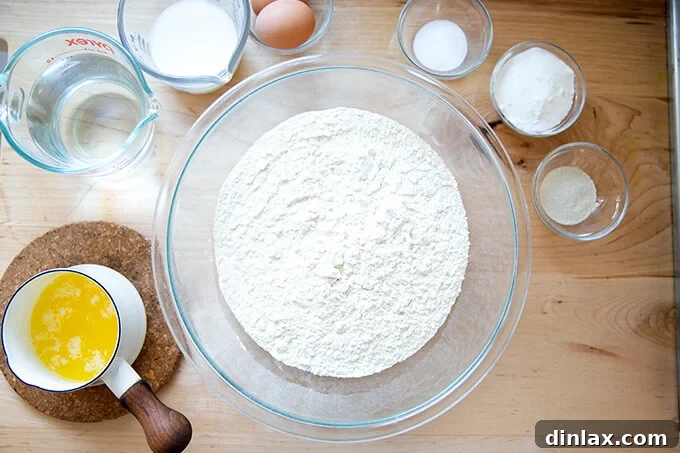
In one bowl, thoroughly whisk together all your dry ingredients, ensuring they are well combined. In a separate bowl, whisk together the wet ingredients until homogenous. This pre-mixing ensures even distribution and activates certain components like yeast more effectively.
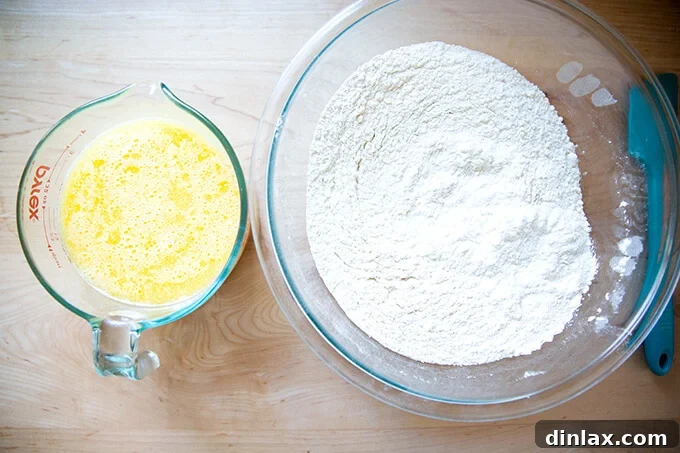
Gently pour the wet mixture into the dry ingredients. Using a sturdy spatula, stir everything together until you achieve a cohesive, sticky dough ball. The dough will be quite wet and shaggy, but resist the urge to add more flour; this high hydration is key to its light texture.
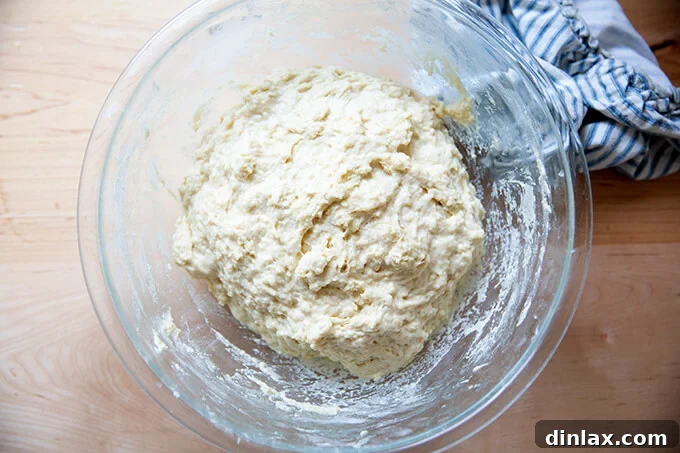
Cover the bowl tightly with plastic wrap and let it rise in a warm spot. This initial rise, lasting approximately two hours, allows the yeast to work its magic, transforming the sticky dough into a light, airy mass, roughly doubled in volume. A slightly warm environment, like an oven turned on for just a minute and then off, can create the perfect cozy spot.
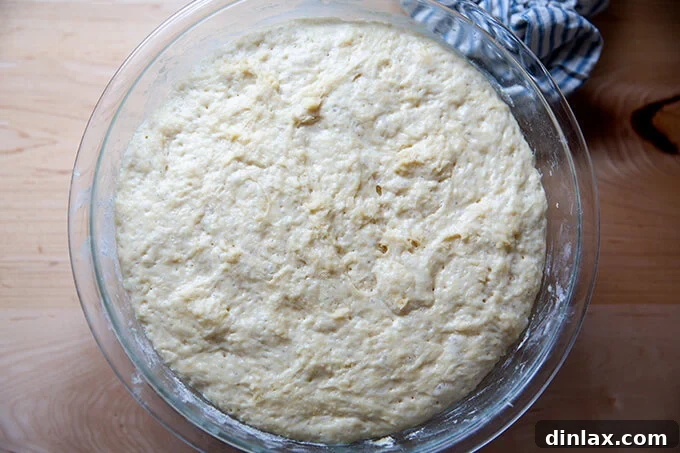
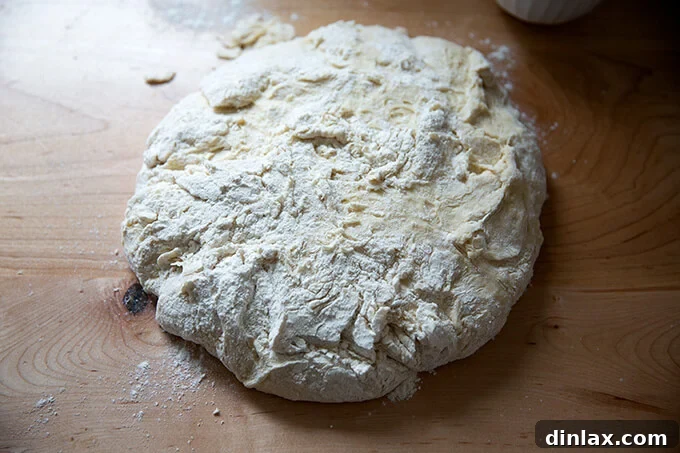
Once risen, gently turn the dough out onto a lightly floured work surface. Handle it carefully to avoid deflating too much of the precious air created during fermentation.
Using a bench scraper or a sharp knife, divide the dough into two equal portions. This ensures uniform loaves that bake evenly.
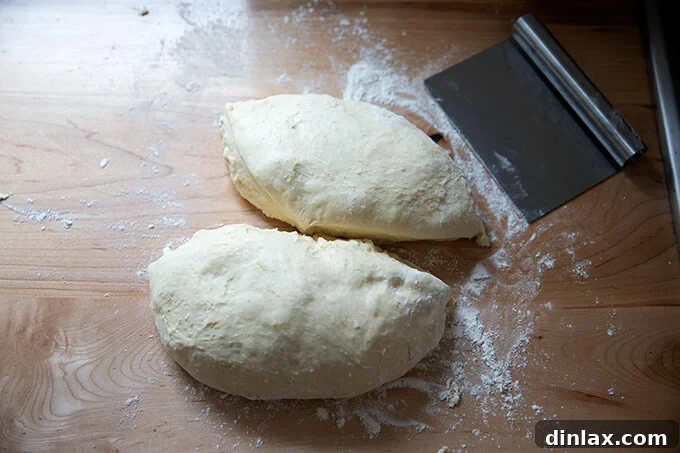
Gently shape each portion into an oblong loaf, often referred to as a “batard.” The goal is to create enough surface tension to give the loaves structure without overly compressing the dough. Lightly floured hands can help manage the stickiness. For a visual guide, refer to the video above.
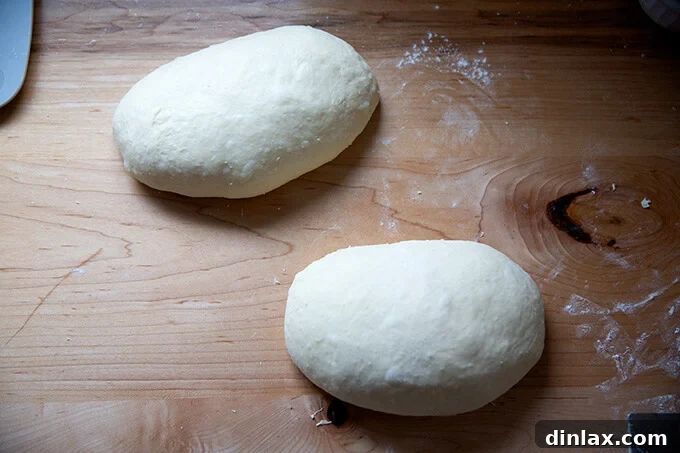
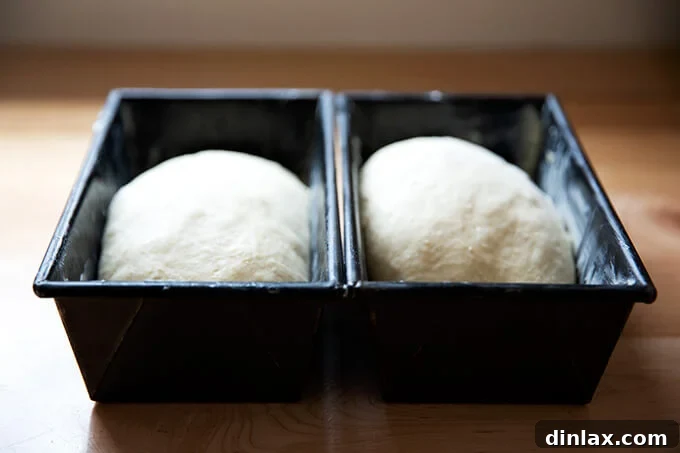
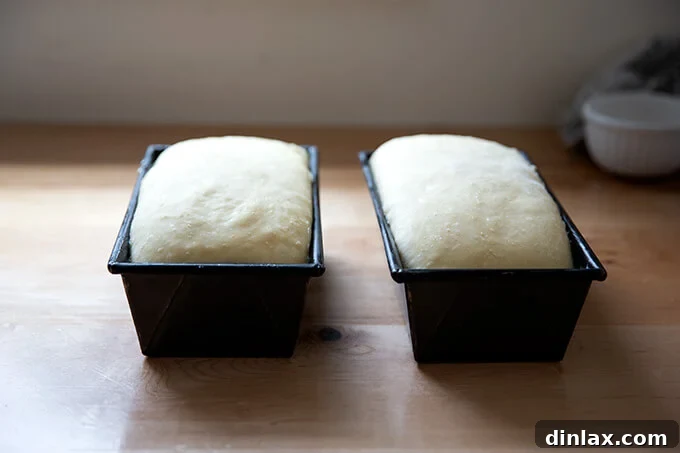
Carefully transfer the shaped dough into two buttered loaf pans. These 8.5 x 4.5 inch loaf pans are ideal for this recipe, and they also work wonderfully for other bakes, like a favorite banana bread. Let the dough undergo its final rise in the pans until it beautifully crowns over the rim, indicating it’s ready for the oven.
Preheat your oven to 375ºF (190ºC). Once the loaves have completed their final rise, transfer them to the hot oven.
Bake for approximately 45 minutes, or until the loaves are deeply golden brown and an internal thermometer inserted into the center registers at least 205ºF (96ºC).
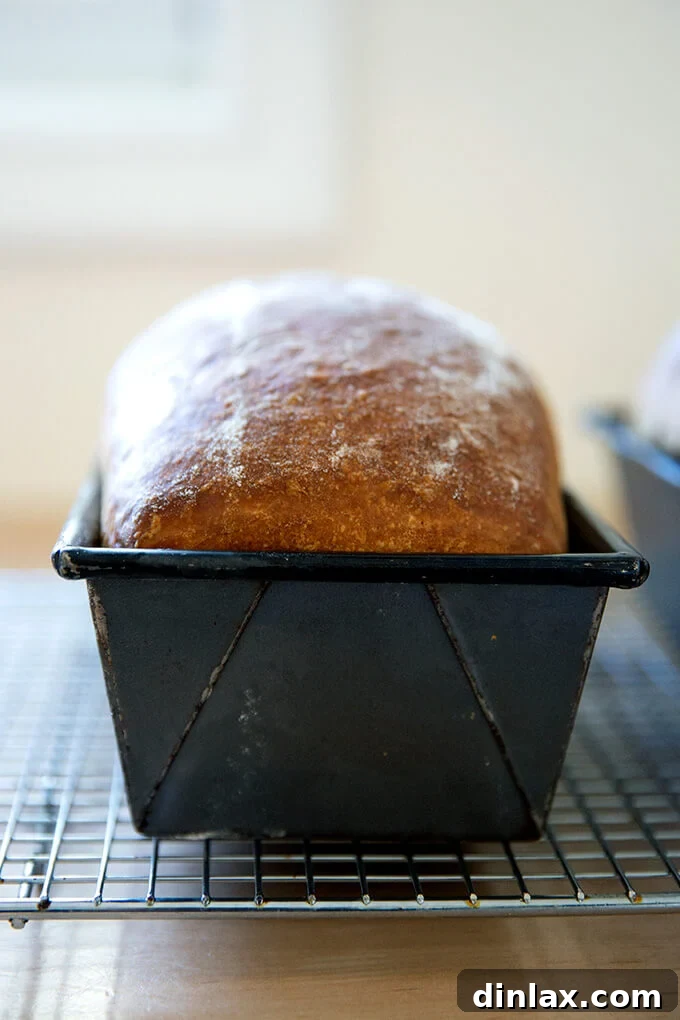
Once baked, immediately turn the loaves out onto a cooling rack. This allows air to circulate around them, preventing a soggy bottom. It’s crucial to let them cool for at least 30 minutes before slicing. Cutting into hot bread can compromise its delicate crumb structure and release steam too quickly, leading to a denser texture. Patience here is key for the best experience.
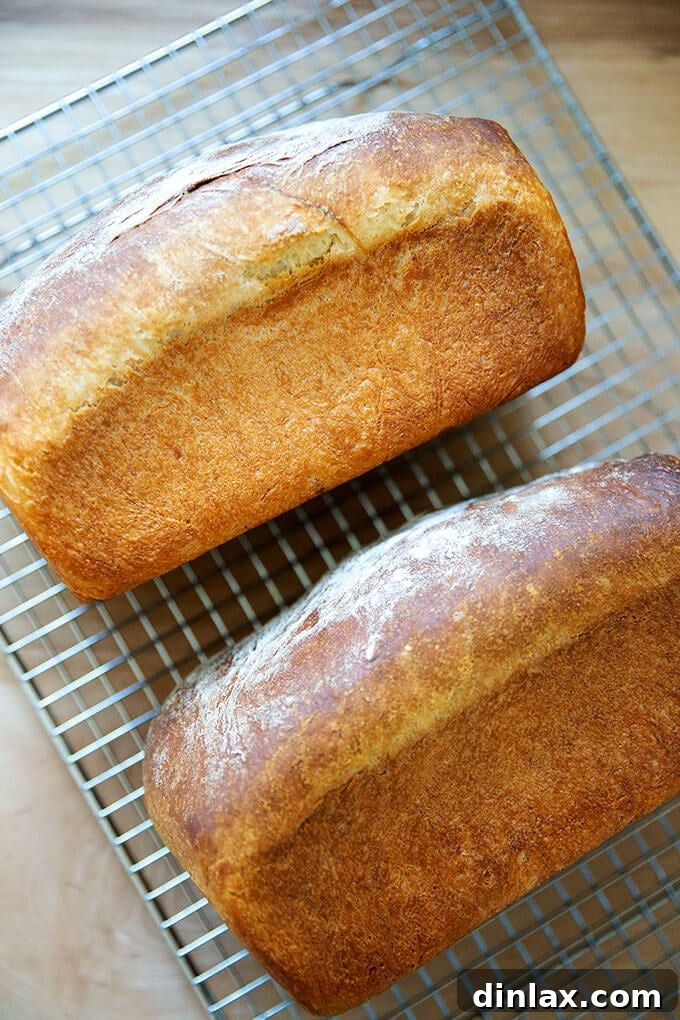
This light brioche is wonderfully versatile. It makes an exquisite piece of toast, especially when slathered with butter and your favorite jam, or used as a base for elegant open-faced sandwiches. However, its slightly less rich profile truly shines when transformed into other culinary delights. It’s particularly fantastic in this highly-rated brioche bread pudding recipe, where its tender crumb absorbs all the custardy goodness. It’s also superb for making the most luxurious French toast you’ve ever tasted. Beyond sweet applications, consider using stale brioche to make unique croutons for salads, adding a touch of elegance and subtle sweetness. For convenience, this brioche freezes beautifully, allowing you to enjoy homemade goodness whenever a craving strikes. Simply wrap cooled loaves tightly in an airtight bag or container and freeze for up to three months. When ready to enjoy, thaw at room temperature or gently warm in a low oven.
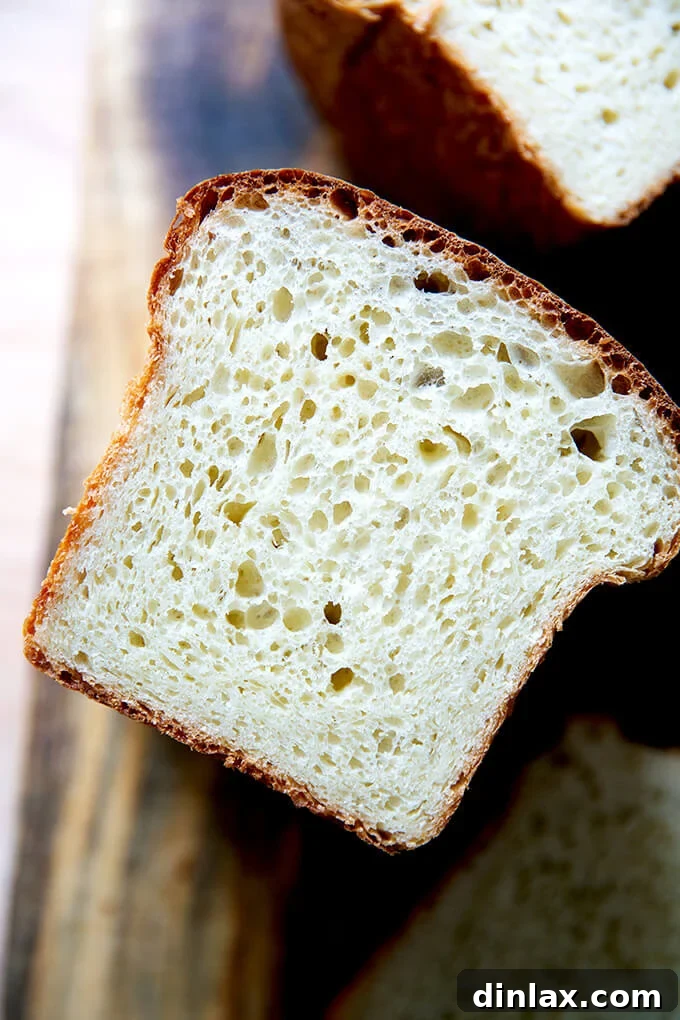
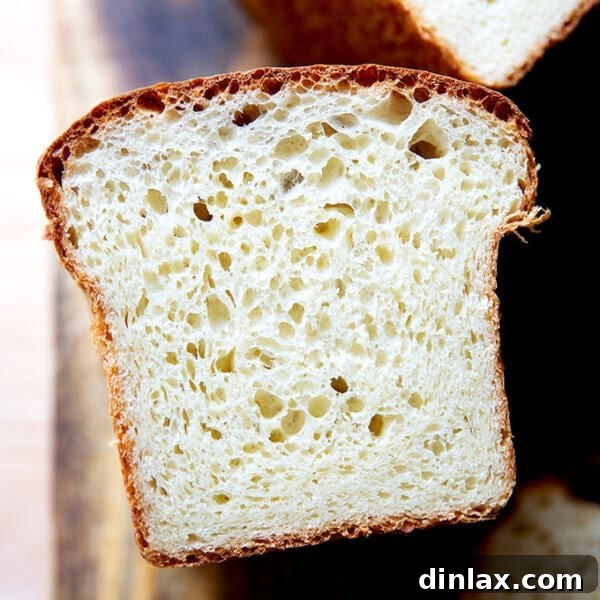
No-Knead Brioche Bread
5 Stars 4 Stars 3 Stars 2 Stars 1 Star
4.9 from 63 reviews
Author: Alexandra Stafford
Total Time: 4 hours
Yield: 2 loaves 1x
Description
Experience the joy of baking luxurious brioche with minimal effort! This no-knead brioche bread recipe is a game-changer for home bakers. The dough comes together in a remarkable 5 minutes using just a bowl, whisk, and spatula. In only 4 hours from start to finish, with a mere 25 minutes of active involvement, you’ll create two gorgeously soft, subtly sweet, and rich brioche loaves. Perfect for elegant breakfasts, decadent desserts like bread pudding, or simply sliced and toasted, this recipe delivers artisanal quality without the fuss. Enjoy the unparalleled satisfaction of homemade brioche without ever having to knead!
Notes and Expert Tips:
This recipe is a refined adaptation from my acclaimed cookbook, Bread Toast Crumbs. While staying true to the original’s ease, I’ve incorporated precise ingredient weights for consistent results and a more hands-on shaping approach. Instead of merely dividing and plopping the dough, we now advocate turning it onto a floured surface, dividing it evenly by weight, and shaping it into batards before transferring to buttered loaf pans. This extra step significantly improves the final structure and appearance of your loaves.
Creating an Ideal Warm Spot for Rising: Dough loves warmth! To create the perfect environment, simply turn your oven on for exactly one minute, then immediately turn it off. This brief burst of heat will create a cozy, slightly warm chamber where your brioche dough can rise beautifully and consistently.
Precision is Key – Use a Digital Scale: For truly professional and consistent baking results, I cannot stress enough the importance of using a digital kitchen scale to weigh all your ingredients, especially flour and water. Volume measurements (cups) can vary wildly, affecting the dough’s hydration and overall outcome.
Adjusting for a Half Recipe: Should you desire just one loaf, detailed quantities for a half recipe are thoughtfully provided in the notes section below the full recipe card. Always adjust the pan size accordingly if making a single loaf.
Understanding Water Content for Optimal Dough: This brioche recipe utilizes a very wet dough, which is fundamental to achieving its characteristic soft, open crumb. If you reside in a particularly humid climate or are new to handling sticky doughs, consider starting with 1.75 cups (425g) of lukewarm water. Reference the accompanying photos and the instructional video to visually gauge the correct sticky/wet consistency of the dough.
Using Active Dry Yeast: If your pantry holds active dry yeast instead of instant yeast, don’t worry! Simply sprinkle the active dry yeast over your lukewarm wet ingredients (ensure they are just warm to the touch, not hot). Allow this mixture to stand for 15 minutes, or until a noticeable foamy layer forms on the surface, indicating the yeast is active. After this step, proceed with the recipe as directed.
Freezing Your Brioche for Future Enjoyment: This brioche is perfect for make-ahead convenience! Once your loaves have completely cooled, transfer them into an airtight freezer bag or a sturdy freezer-safe container. They can be stored in the freezer for up to 3 months, and often even a bit longer, without significant loss of quality. To enjoy, simply thaw at room temperature or gently warm in a low oven for a “freshly baked” experience.
Ingredients
- 6 cups (768 g) all-purpose or bread flour
- 1 tablespoon (15 g) kosher salt
- 2.5 teaspoons (8 g) instant yeast, see notes above if using active dry yeast
- 1/3 cup (77 g) sugar
- 1.75 –2 cups (425-450 g) lukewarm water, see notes above
- 2 large eggs (100 g total)
- 1/2 cup (125 g) milk
- 6 tablespoons (80 g) unsalted butter, melted
Instructions
- In a large mixing bowl, combine the flour, kosher salt, instant yeast, and sugar. Whisk thoroughly until all dry ingredients are evenly distributed.
- In a separate medium bowl, whisk together the eggs, milk, lukewarm water, and melted butter until well combined. Ensure the butter is not too hot to avoid scrambling the eggs or killing the yeast.
- Pour the wet ingredient mixture into the bowl with the dry ingredients. Using a sturdy spatula or wooden spoon, stir vigorously until all the flour is hydrated and a sticky, shaggy dough ball forms. Do not knead; just mix until combined.
- Cover the bowl tightly with plastic wrap or a damp kitchen towel. Let the dough rise in a warm, draft-free area (refer to notes above for creating a warm spot) for 2 to 3 hours, or until it has visibly doubled in volume. Alternatively, for a longer, more flavorful fermentation and a more flexible schedule, place the covered bowl directly into the refrigerator immediately after mixing and let it rise overnight or for 12 to 18 hours.
- Once the first rise is complete, grease two 8.5 x 4.5 inch loaf pans thoroughly with butter. Preheat your oven to 375ºF (190ºC).
- There are two effective ways to handle the dough after the first rise:
- Simplified Method: Gently deflate the dough using a pair of forks to release it from the sides of the bowl. Visually divide the dough into two equal portions within the bowl. Using oiled hands (the dough is very wet and sticky, which is perfectly normal), transfer each portion directly into your prepared loaf pans.
- Shaping Method (Recommended for Better Structure): Lightly flour your work surface. Turn the risen dough out onto the floured surface and shape it into a rough ball, using just enough flour to manage the stickiness without incorporating too much into the dough. Using a bench scraper, divide the dough into two equal portions (each portion should weigh approximately 790-805 grams, depending on your initial water content). Gently shape each portion into an oblong loaf or “batard” (watch the video guidance here for technique) and carefully transfer them to the prepared loaf pans.
- Allow the shaped dough in the loaf pans to undergo a second rise. Place them in a warm spot and let them rise until the dough gracefully crowns over the rim of your pans. This can take anywhere from 45 minutes to an hour or more, depending on the ambient temperature of your kitchen. Look for visual cues of significant expansion rather than strict timing.
- Transfer the loaf pans to the preheated 375ºF (190ºC) oven. Bake for approximately 45 minutes, or until the brioche loaves are beautifully golden brown on top and an instant-read thermometer inserted into the center of a loaf registers 205ºF (96ºC) or higher. Once baked, immediately turn the hot loaves out onto cooling racks to prevent the bottoms from becoming soggy. Allow them to cool completely for at least 30 minutes before slicing. This cooling period is crucial for the crumb to set properly and for the flavors to fully develop.
Notes
Half Recipe Quantities (for one loaf):
- 3 cups (384 g) all-purpose or bread flour
- 1.5 teaspoons (7 g) kosher salt
- 1.5 teaspoons (5 g) instant yeast
- 3 tablespoons (38 g) sugar
- 0.75 – 1 cups (170-227 g) lukewarm water, refer to notes above regarding dough consistency
- 1 large egg (50 g)
- 1/4 cup (62 g) milk
- 3 tablespoons (40 g) unsalted butter, melted
- Prep Time: 3 hours 15 minutes
- Cook Time: 45 minutes
- Category: Bread
- Method: Oven
- Cuisine: French