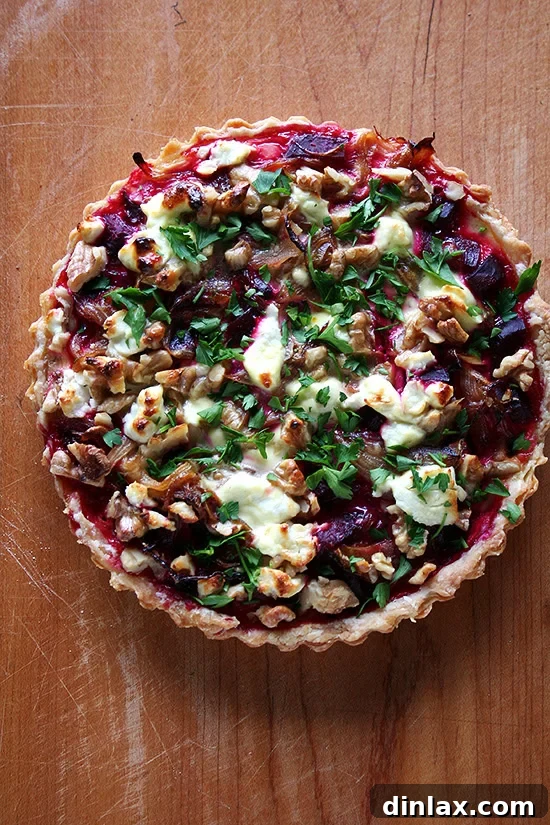
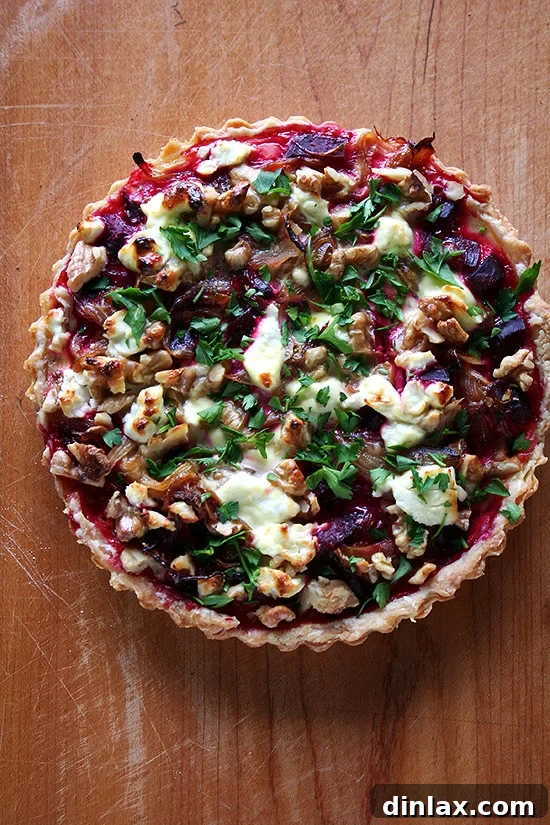
Savor the Flavor: Gordon Hamersley’s Exquisite Beet, Goat Cheese, and Walnut Tart
Embark on a delightful culinary journey with Gordon Hamersley’s Beet, Goat Cheese, and Walnut Tart – a dish that promises a truly unique and memorable dining experience. While it may not be your quickest weeknight meal, requiring the thoughtful preparation of roasting beets and baking a tart shell, the simple assembly and resulting flavors make every minute of effort profoundly worthwhile. This tart isn’t just a recipe; it’s an invitation to explore a harmonious blend of earthy, tangy, and nutty notes encased in a perfectly flaky, buttery crust.
The combination of sweet, roasted beets, the creamy tang of fresh goat cheese, and the satisfying crunch of walnuts creates a symphony of textures and tastes that is both sophisticated and deeply comforting. It’s a testament to the power of simple, high-quality ingredients coming together to form something truly extraordinary. Whether served as a stunning centerpiece for a dinner party, a hearty brunch item, or a delightful vegetarian main, this tart is guaranteed to impress with its vibrant colors and irresistible appeal.
A Culinary Adventure: Why This Tart Stands Out
In a world saturated with common recipes, this Beet, Goat Cheese, and Walnut Tart distinguishes itself with a captivating blend of flavors and an elegant presentation. It’s a dish that sparks conversation and delights the palate, offering a refreshing departure from the ordinary. The inherent sweetness of roasted beets provides a grounding base, beautifully complemented by the bright, acidic counterpoint of goat cheese. This interplay prevents the tart from being overly rich, ensuring a balanced and enjoyable bite every time.
Furthermore, the inclusion of walnuts introduces a crucial textural element, providing a satisfying crunch that contrasts with the tender beets and creamy cheese. Beyond its incredible taste, this tart boasts a stunning visual appeal. The deep crimson hues of the beets against the pale, creamy goat cheese and golden crust make it a feast for the eyes, perfectly suited for special occasions or when you simply want to make an ordinary meal feel extraordinary. Its versatility is also a major draw; it can be adapted to various meal settings, from a sophisticated appetizer to a robust main course when paired with a light salad.
The Story Behind the Recipe: From Cookstr to Your Kitchen
The inspiration for this magnificent tart traces back to a serendipitous discovery in a Cookstr newsletter, charmingly titled “10 Dishes Under $10.” The concept of a gourmet, budget-friendly dish immediately captured attention, proving that exceptional flavors don’t always come with a hefty price tag. Indeed, the cost-effectiveness was evident from the start; a fresh bunch of vibrant beets from the local farmers’ market set me back a mere $2, with their greens even reserved for another meal, highlighting the incredible value this recipe offers.
While staying true to the essence of Gordon Hamersley’s original creation, a minor yet impactful modification was made to the recipe: substituting buttermilk for heavy cream. This change maintained the desired richness and texture of the tart filling without compromising on flavor, and arguably, added a subtle tang that enhanced the overall profile. The result was nothing short of fabulous. The tart was so delightful that its leftovers vanished quickly, enjoyed for both breakfast and dinner, a true testament to its irresistible deliciousness and comforting appeal.
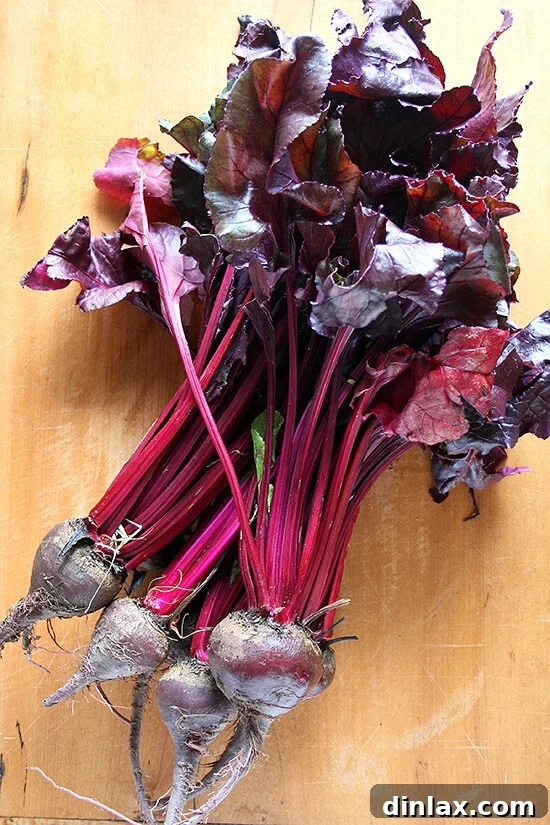
Above: These beautiful, earthy beets were sourced from Eli’s Ranch at the San Clemente Farmers’ Market. It’s always a joy to support local growers, and Eli’s Ranch is also known for their outstanding avocados!
Mastering the Art of the Tart: Essential Components
Crafting a truly exceptional savory tart like this one hinges on understanding and perfecting each of its core components. From the foundational crust to the star ingredients, every element plays a vital role in achieving the desired balance of flavors and textures.
The Flaky Foundation: Homemade Tart Dough
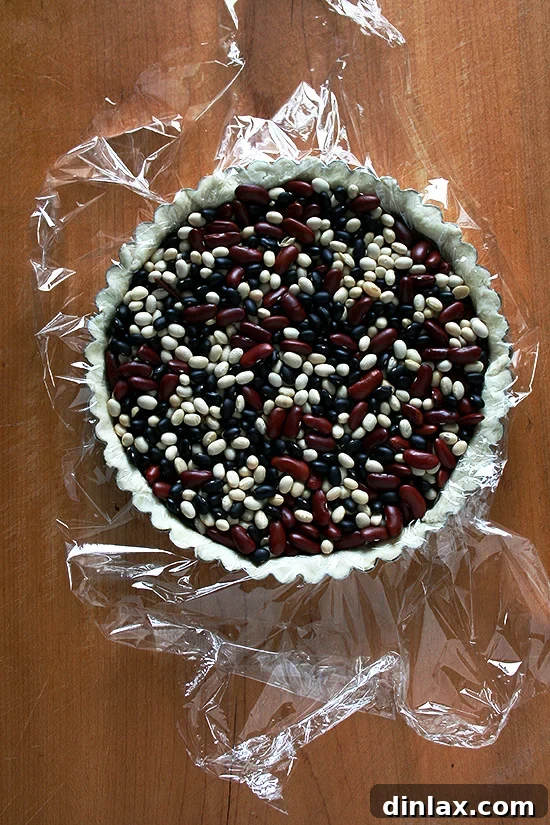
The journey to a perfect tart begins with its crust. A well-made tart dough provides a buttery, flaky base that beautifully cradles the savory filling. The secret lies in using very cold butter, cut into small pieces, and handling the dough minimally to prevent gluten development, which can lead to a tough crust. Blind baking is a non-negotiable step; it ensures the crust bakes through and becomes wonderfully crisp, preventing a soggy bottom once the moist filling is added. Lining the shell with plastic wrap and dried beans acts as a weight, keeping the dough from puffing up or shrinking during this crucial initial bake, setting the stage for a structurally sound and delicious tart.
Beets: The Earthy Jewel of the Tart
Beets are the undisputed stars of this tart, contributing not only their vibrant color but also a deep, earthy sweetness that transforms during the roasting process. Choosing fresh, firm beets, ideally from a local farmers’ market, ensures the best flavor. Roasting them slowly with a little water, covered tightly with foil, allows them to steam and tenderize beautifully, concentrating their natural sugars. This method also makes them incredibly easy to peel once cooled. A word of caution: beet juice is a powerful dye! It can easily stain cutting boards, towels, and even your hands. Consider using a dedicated plastic cutting board or wearing gloves during preparation to avoid any accidental crimson mishaps.
Goat Cheese & Walnuts: A Match Made in Heaven
The marriage of goat cheese and walnuts with beets is a classic culinary pairing, celebrated for its complementary flavors and textures. Fresh goat cheese, with its distinct tangy and slightly salty profile, provides a creamy counterpoint that cuts through the earthiness of the beets, adding a bright dimension to the tart. Its soft, spreadable texture melts into the filling, creating pockets of rich, savory goodness. Walnuts, on the other hand, bring a much-needed crunch and a subtle bitterness that balances the sweetness of the beets and the richness of the cheese. They also contribute a nutty aroma and a layer of complexity that elevates the tart from good to truly great. Together, these ingredients don’t just coexist; they enhance each other, creating a harmonious and utterly addictive flavor profile.
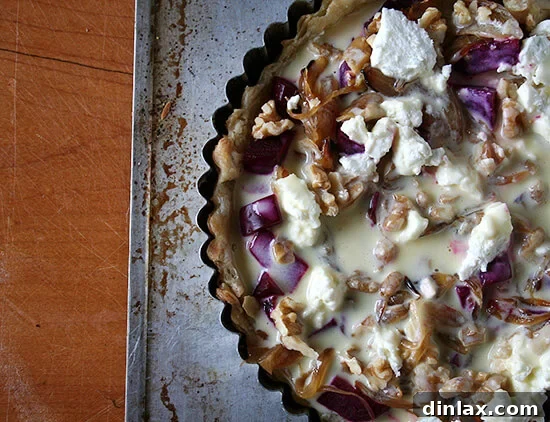
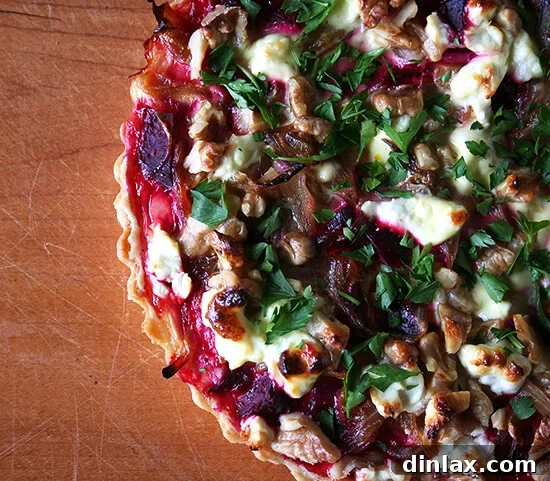
A Quick Warning: As highlighted earlier, beets can be quite messy! If you cherish your wooden cutting boards, remember to use a plastic alternative when dicing your roasted beets to prevent permanent stains. A lesson learned the hard way!

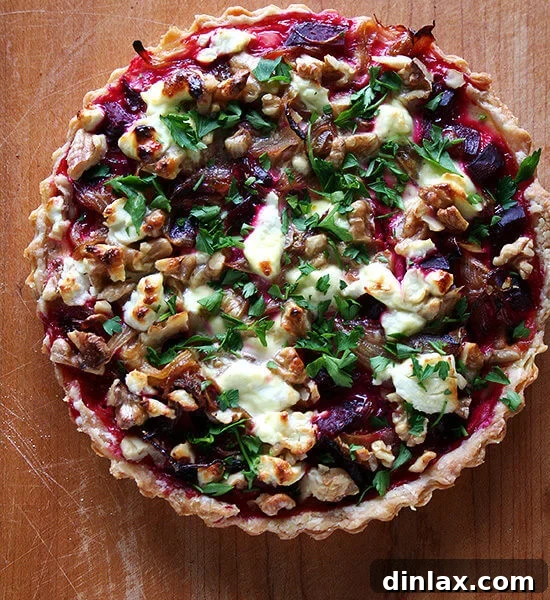
Beet, Goat Cheese and Walnut Tart
Description
Source: Gordon Hamersley via Cookstr
Note: Below is a simplified version of the recipe, incorporating personal modifications for an enhanced flavor profile.
Ingredients
For the Tart Dough:
- 1½ cups all-purpose flour
- ½ teaspoon kosher salt
- 10 tablespoons unsalted butter, cut into small cubes and well chilled
- 4 to 5 tablespoons ice water (you may need a few more drops)
For the Tart Filling:
- 2 to 3 small beets (approximately 2 heaping cups diced beets after roasting)
- Kosher salt and freshly ground black pepper, to taste
- 1 tablespoon unsalted butter or olive oil
- 1 medium onion, thinly sliced
- 2 tablespoons dry white wine (or Sherry or Madeira, based on availability)
- 1 recipe tart dough (prepared above)
- 3 large eggs
- ¾ cup buttermilk (or heavy cream, as preferred)
- 4 ounces fresh goat cheese (adjust amount to taste/preference)
- 1 cup chopped walnuts (adjust amount to taste/preference)
- 1 tablespoon walnut oil (Optional, for drizzling)
- About 2 tablespoons chopped fresh parsley, for garnish
Instructions
Preparing the Buttery Tart Dough:
- In a spacious mixing bowl, combine the all-purpose flour and kosher salt. Rapidly cut the well-chilled, cubed butter into the flour mixture. Utilize a pastry blender, two knives, or the back of a fork until the butter pieces are approximately the size of large peas. If using a food processor, pulse the ingredients 8 to 10 times, being careful not to overmix or overheat the butter, which can lead to a tough crust.
- Add 4 tablespoons of ice water to the flour and butter mixture. Using only your fingertips and working quickly to keep the butter cold, gently combine the ingredients just until the water is absorbed and the mixture begins to come together. The dough will appear shaggy but should hold when squeezed. If it feels too dry, sprinkle in a few more drops (or tablespoons) of ice water until the desired consistency is reached.
- Carefully gather the dough into a ball. Don’t worry if it doesn’t form a perfectly smooth sphere at this stage. Wrap the dough tightly in plastic wrap, flatten it slightly into a disc, and refrigerate for at least 30 minutes. This chilling period allows the butter to firm up and the gluten to relax, making the dough easier to roll. The dough can be stored in the refrigerator for up to 2 days or frozen for longer storage (defrost in the refrigerator overnight before use).
- Preheat your oven to 375ºF (190ºC). On a lightly floured surface, roll out the chilled dough into a large circle, ensuring it’s wide enough to comfortably fit your tart pan and slightly overlap the edges. Carefully transfer the rolled dough into the tart pan, pressing it gently into the corners and up the sides. Trim any excess dough from the edges. Line the dough with plastic wrap and fill it with dried beans or pie weights to prevent it from puffing up. Fold the plastic wrap over the edges to protect the crust. Bake for 20 minutes. After baking, remove the tart from the oven and carefully lift out the plastic wrap and beans. Set aside the blind-baked tart shell.
For the Tart Filling and Assembly:
- Increase the oven temperature to 450°F (230°C). Thoroughly wash the beets. Place them in a small ovenproof pan (such as a brownie pan or pie plate), adding enough water to cover about 1/8-inch of the bottom. Cover the pan tightly with aluminum foil. Roast the beets in the preheated oven until they are tender when pierced with a paring knife, which typically takes about 45 minutes, depending on their size.
- Once roasted, allow the beets to cool slightly until they are comfortable enough to handle. Using your fingers (and gloves, if you wish to avoid staining), gently rub off the skins. Dice the peeled beets into small, uniform cubes. Remember to be cautious as beet juice can easily stain kitchen surfaces, towels, and skin; a plastic cutting board is recommended for this step.
- In a sauté pan, melt the butter (or heat the olive oil) over medium heat. Add the thinly sliced onion and season with a pinch of salt. Cook, stirring occasionally every few minutes, until the onion becomes tender and translucent, about 7 minutes. For a deeper flavor, you can caramelize the onions slowly for about 25 minutes until golden brown. Pour in the dry white wine and cook for another minute, scraping up any browned bits from the bottom of the pan to incorporate all the delicious flavors.
- Reduce the oven temperature to 350°F (175°C). Evenly distribute the diced roasted beets and sautéed onions into the blind-baked tart shell. At this stage, you can also add a portion of the chopped walnuts if you prefer them to be slightly baked into the filling; otherwise, they can be sprinkled on later as per Hamersley’s original method.
- In a separate bowl, whisk together the large eggs and buttermilk (or heavy cream). Season this mixture with a pinch of salt and freshly ground black pepper. Carefully pour the egg mixture over the beets and onions in the tart shell, allowing it to seep evenly throughout the filling. Dot small pieces of fresh goat cheese all over the top of the tart. Place the tart on a baking sheet to catch any potential drips and bake for 20 minutes.
- After 20 minutes, remove the tart from the oven. If you haven’t already, sprinkle the remaining chopped walnuts generously over the top of the tart. If using, drizzle the walnut oil over the tart for an extra layer of nutty flavor. Return the tart to the oven and continue baking for an additional 15 to 20 minutes, or until the filling is just set and lightly golden.
- Once baked, remove the tart from the oven. Sprinkle with the freshly chopped parsley for a burst of color and freshness. Let the tart rest for at least 5 minutes before slicing and serving. This resting period allows the filling to set completely and makes for cleaner slices.
Notes
Final Notes: For streamlined preparation, consider roasting the beets and preparing the tart dough a day in advance. With these components ready, assembling this magnificent tart becomes a quick and effortless process, making it perfect for entertaining without last-minute stress. This tart is delightful served warm or at room temperature, and leftovers are truly a treat!