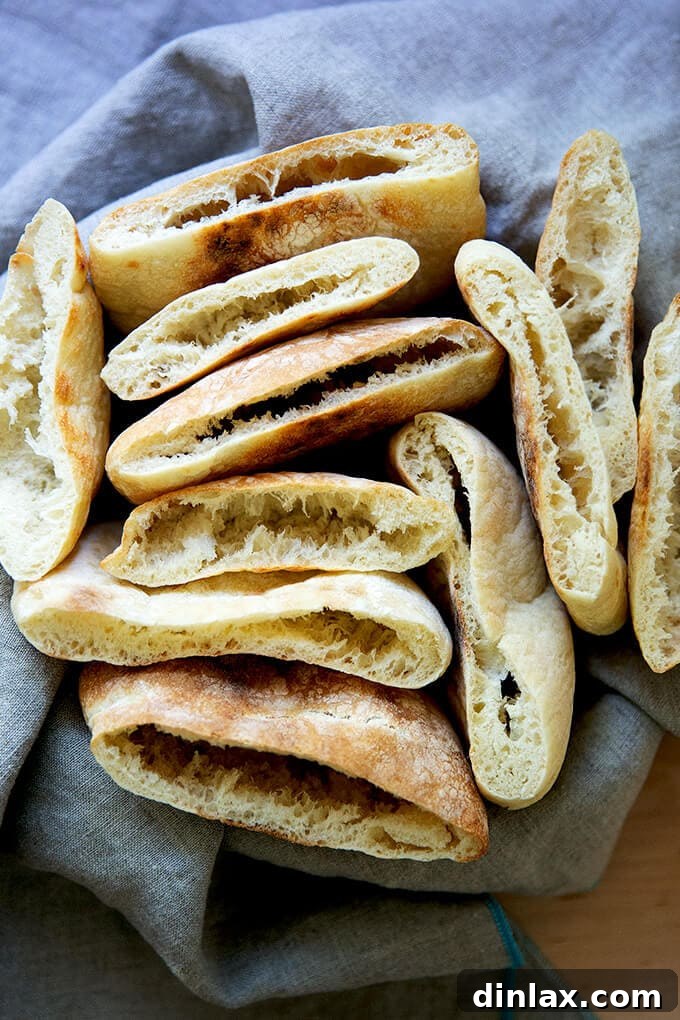
Effortless Homemade Pita Bread: A No-Knead Recipe for Perfect Pockets Every Time
Imagine warm, fluffy pita bread, fresh from your oven, ready to cradle your favorite fillings or scoop up delicious dips. What if we told you that making fresh pita at home is not only achievable but also incredibly easy? Forget complicated kneading techniques and tricky shaping methods. This recipe utilizes instant yeast and a simple, straightforward process that will have your pita rounds ballooning into perfect, airy pockets in just two minutes in the oven. Get ready to impress your family and friends with this surprisingly simple yet utterly satisfying homemade bread.
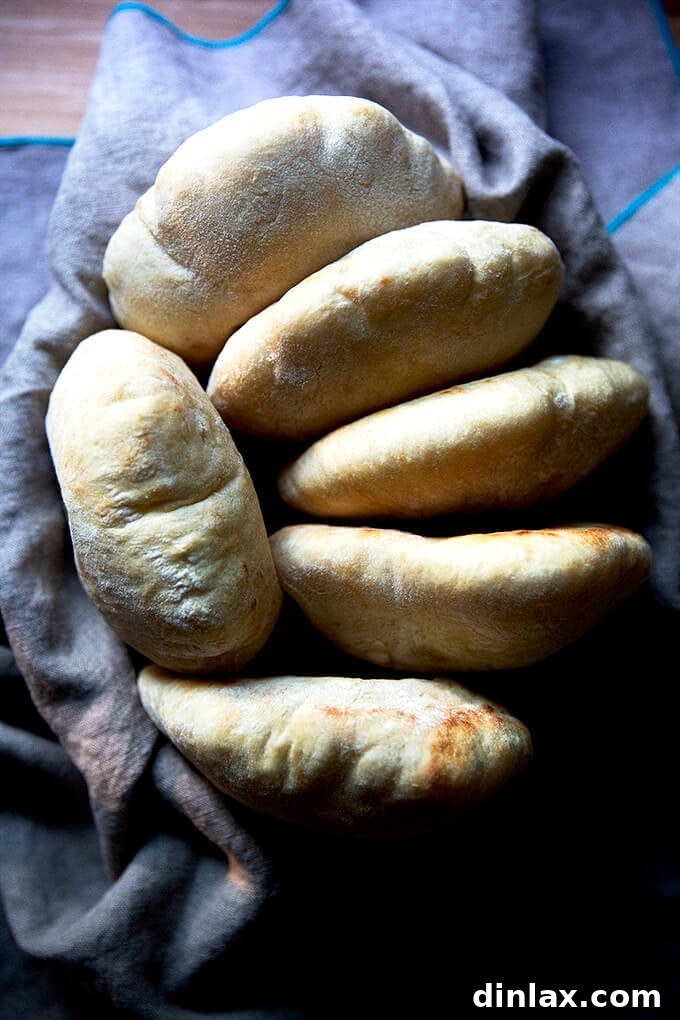
Why Bake Your Own Pita Bread?
There’s an undeniable magic in homemade bread, and pita is no exception. Beyond the sheer satisfaction of creating something delicious from scratch, baking your own pita offers numerous advantages:
- Unmatched Freshness and Flavor: Store-bought pita often lacks the soft texture and rich flavor of freshly baked bread. Homemade pita, warm from the oven, boasts an incredible aroma and a wonderfully soft, chewy interior that can’t be replicated.
- No Unwanted Additives: When you bake at home, you control the ingredients. This recipe uses simple, wholesome components without any preservatives or artificial flavors often found in commercial products.
- Cost-Effective: Making pita bread at home is significantly cheaper than purchasing it regularly, especially if you enjoy it often.
- Versatility: These perfect pita pockets are ideal for so many dishes. Fill them with falafel, hummus, grilled chicken, or fresh vegetables. Use them as a base for mini pizzas, or simply tear them and dip them into tzatziki or baba ghanoush.
- A Relaxing and Rewarding Process: Despite its impressive outcome, this no-knead recipe makes the baking process enjoyable and accessible, even for novice bakers.
This simple pita recipe is, in fact, one of the easiest bread recipes you could ever make, right up there with no-knead focaccia and homemade pizza dough. It’s largely inspired by a simplified version of my mother’s peasant bread recipe, adapted specifically for pita by omitting sugar, reducing hydration, and adding a touch of olive oil for tenderness.
The Secret to Getting Pita to Puff: Three Essential Tips
While the overall process for this homemade pita is incredibly simple, there are a few key techniques that guarantee those coveted, perfectly puffed pockets. Master these, and you’ll consistently achieve light, airy pita bread:
- Handle the Dough Gently During Rolling: The magical puff in pita bread comes from steam trapped within the dough. This steam builds pressure, separating the layers of gluten and creating the pocket. When you roll out the dough, use a light and gentle hand. Avoid pressing too hard or deflating all the precious air bubbles that were created during the initial rise. These bubbles are crucial for the internal structure that allows the pita to inflate dramatically in the oven. Think of it as gently coaxing the dough into shape, rather than forcing it.
- Allow the Dough Rounds to Rest: After you’ve rolled out your individual pita rounds, it’s vital to let them rest for at least 15 minutes before baking. This resting period serves two important purposes. First, it allows the gluten, which became tightened and resistant during the rolling process, to relax. Relaxed gluten is more pliable and less likely to spring back, making the dough easier to handle and contributing to a more tender final product. Second, this rest gives the dough a chance to recover and slightly puff up again, further enhancing its ability to balloon beautifully when introduced to high heat.
- Cook the Pita on a Very Hot Surface: This is arguably the most critical tip for achieving that signature pita pocket. The instant the pita dough hits a scorching hot surface, the intense heat quickly transfers to the dough, causing the moisture within to rapidly turn into steam. This sudden burst of steam is what forces the layers of dough apart, creating the characteristic pocket.
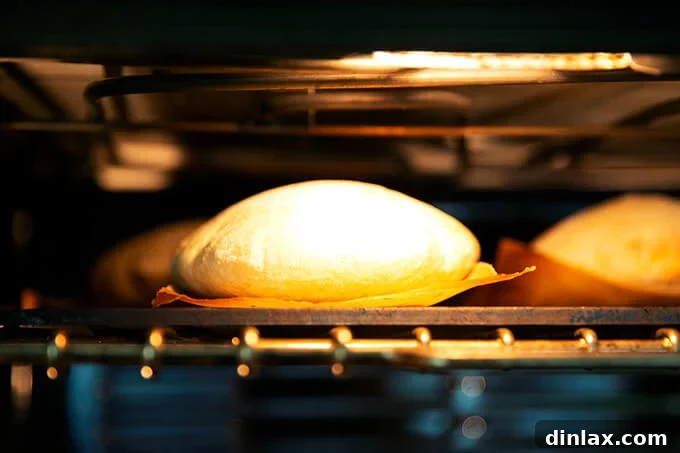
Choosing Your Hot Baking Surface:
If you have a Baking Steel or a pizza stone, these are ideal. They retain heat exceptionally well and provide the immediate, high heat transfer necessary for optimal puffing. Preheat your oven with the steel or stone inside to the highest possible temperature (usually 500-550°F or 260-290°C) for at least 30-60 minutes before baking.
No Baking Steel or pizza stone? No problem! You can still achieve excellent results with common kitchenware:
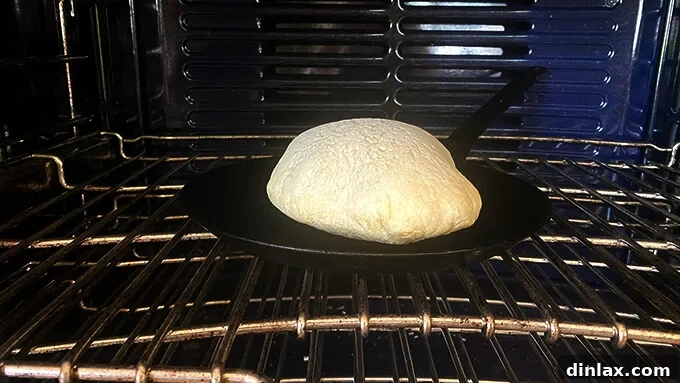
A preheated cast iron skillet or other heavy, oven-safe skillet can be used effectively. Simply place it in the oven while it preheats and allow it to get very hot before adding the pita.
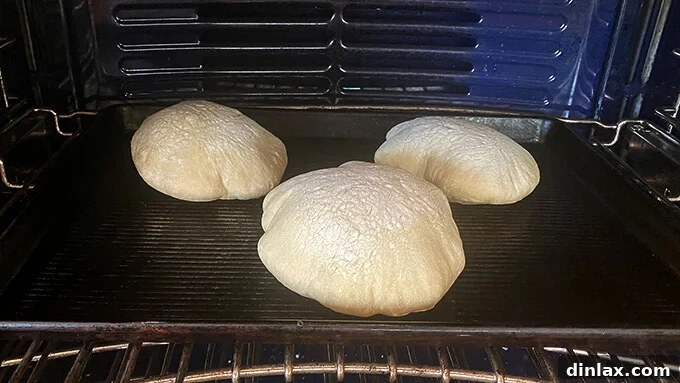
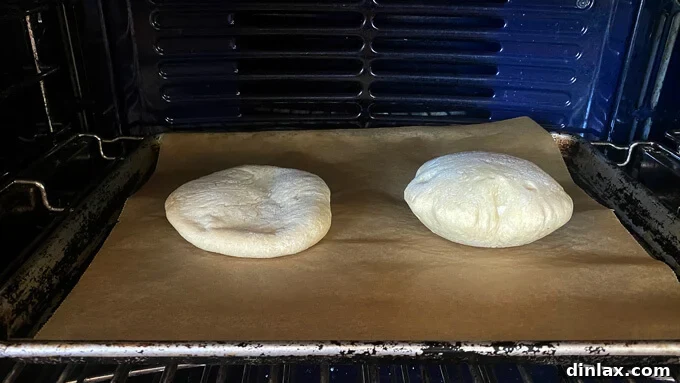
Even a sturdy, preheated baking sheet (sheet pan) will work. Again, the key is to ensure it’s piping hot before the pita touches it. A non-preheated surface will not provide the necessary thermal shock, resulting in flat pita, as shown below:
For another delicious bread recipe, check out our Simple Homemade Naan (5 Ingredients).
Homemade Pita Bread Recipe
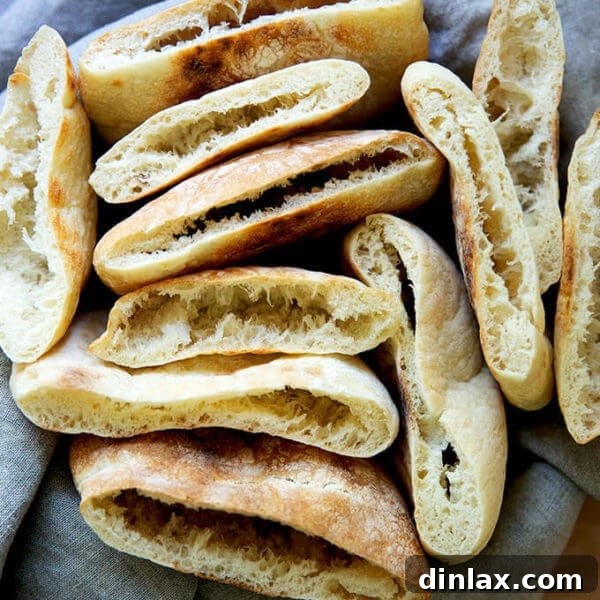
How to Make Fresh Homemade Pita Bread
Rating: 4.9 from 180 reviews
- Author: Alexandra Stafford
- Total Time: 3 hours 4 minutes
- Yield: 6 pita rounds
- Diet: Vegan
Description
Making fresh pita bread at home couldn’t be easier. This recipe uses instant yeast and requires no kneading or complicated shaping. The pita rounds balloon into perfect pockets in just 2 minutes in the oven, making them ideal for any meal.
Helpful Notes for Success:
- Creating a Warm Rising Spot: To ensure your dough rises properly, you can create a warm environment. Preheat your oven for exactly 1 minute, then immediately turn it off. This creates a cozy, draft-free space for your dough to proof.
- Parchment Paper Tip: If you use parchment paper that comes in large sheets, such as the If You Care brand, you can easily create 6 equal squares. Simply fold the sheet lengthwise, then into thirds widthwise, and cut along the creases.
- Using Active-Dry Yeast: If you don’t have instant yeast, you can substitute active-dry yeast. Simply sprinkle it over the lukewarm water in the recipe and let it stand for 5-10 minutes until it becomes foamy. This indicates the yeast is active. Then, proceed with the recipe as directed.
Frequently Asked Questions (FAQs):
- Can I use whole wheat flour?
We recommend using no more than 50% whole wheat flour (about 1 cup or 128g) in this recipe. Using too much whole wheat flour can prevent the pita from puffing into pockets in the oven. Whole wheat flour contains bran, which can cut through the gluten structure, hindering the dough’s ability to trap steam and inflate. You might also need to slightly increase the amount of water, as whole wheat flour tends to be “thirstier” than all-purpose flour. Observe the dough’s consistency (refer to the video for visual guidance) and add more water by the tablespoon if it feels too dry.
- What if I don’t have a Baking Steel or pizza stone?
Don’t worry! Here are two effective alternative methods for baking your pita:
- Cast Iron Skillet Method: Place a cast iron skillet (or another heavy, oven-safe skillet) in your oven while it preheats. Allow it to heat for at least 5-10 minutes at the highest temperature (500-550°F). Once hot, carefully transfer each pita round (one at a time) directly onto the preheated skillet and bake for 2-3 minutes total, or until puffed and lightly golden.
- Preheated Sheet Pan Method: Place a sturdy baking sheet (sheet pan) in your oven during the preheating phase. Let it heat for at least 5-10 minutes at the highest temperature (500-550°F). Once hot, you can bake three pita rounds at a time. Carefully transfer them onto the preheated sheet pan and bake for 2-3 minutes total, or until puffed.
Ingredients
Gathering your ingredients carefully is the first step to perfect pita. For best results, we always recommend using a digital scale for precise measurements.
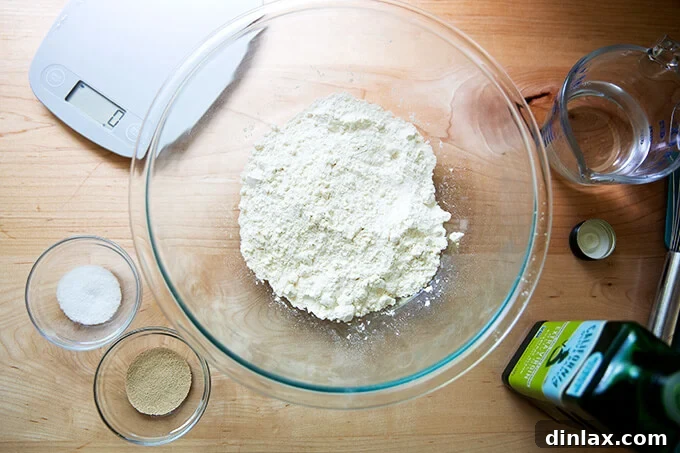
- 2 cups (256 grams) all-purpose flour, plus extra for dusting
- 1 teaspoon (5 grams) kosher salt
- 1 teaspoon (4 grams) instant yeast (see notes above for active-dry substitute)
- A scant ¾ cup (165 grams) lukewarm water (around 105-115°F or 40-46°C)
- 1 tablespoon (14 grams) olive oil, plus more for drizzling the bowl
Instructions
-
Mix the Dough:
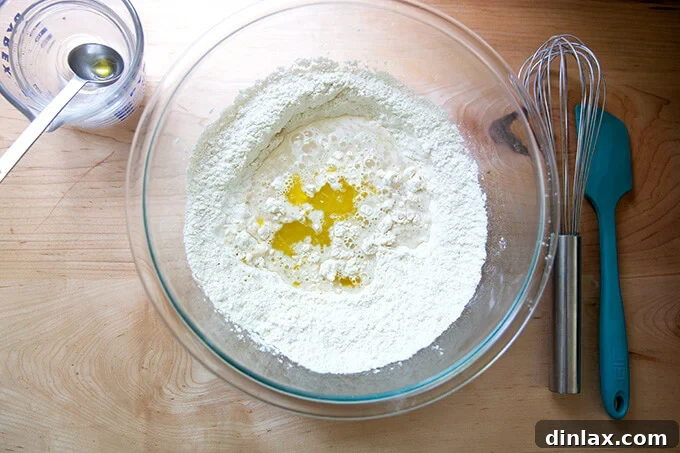
In a large mixing bowl, whisk together the all-purpose flour, kosher salt, and instant yeast until well combined. This ensures even distribution of the dry ingredients. Add the lukewarm water and olive oil to the dry mixture. Using a sturdy spatula, stir everything together until a shaggy, unevenly mixed dough forms. Don’t worry if it looks dry and not perfectly smooth at this stage.

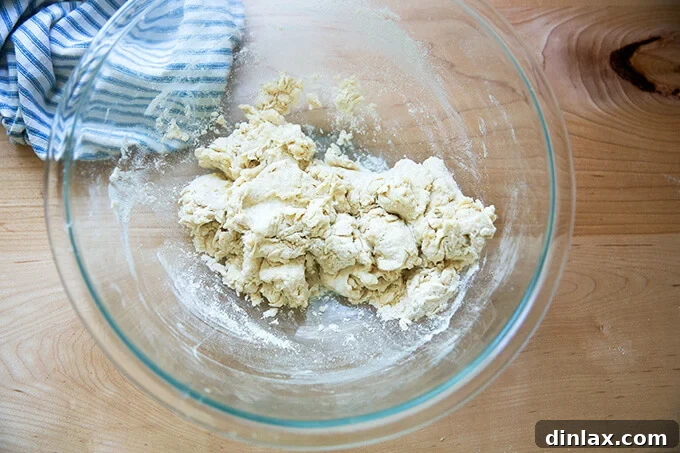
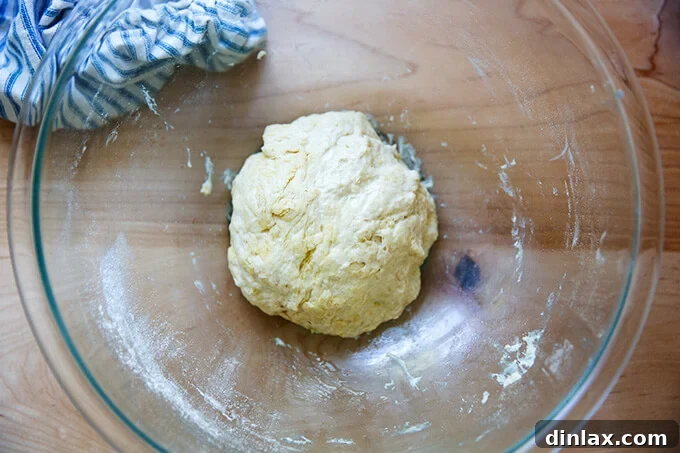
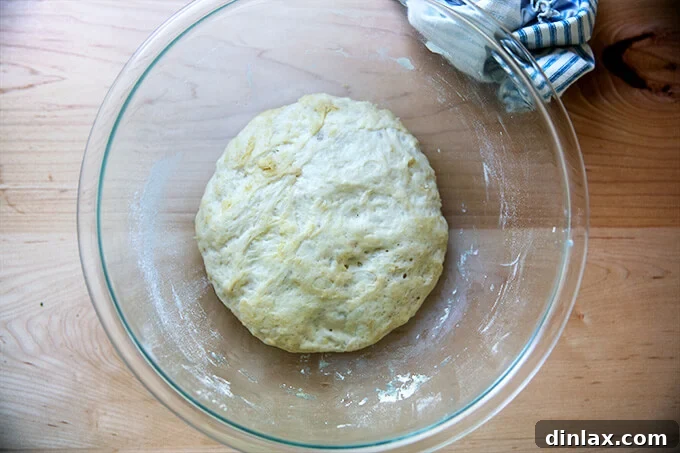
The initial shaggy dough – it will come together! Briefly use your hands to gently knead the mass in the bowl for about 30 seconds, just until all the dry flour is absorbed and you have a sticky, cohesive dough ball. Drizzle a small amount of olive oil over the top of the dough, then turn the ball to coat it evenly. Cover the bowl with a clean tea towel or plastic wrap, and transfer it to a warm spot (see “Notes” above for how to create one) to rise for approximately 1.5 hours, or until it looks visibly puffed and slightly increased in volume.
Dough coated with olive oil, ready for its first rise. The dough after a successful first rise. -
Prepare the Oven & Baking Surface:
While the dough is resting, prepare your oven for baking. Place your Baking Steel, pizza stone, cast iron skillet, or sturdy baking sheet inside the oven. Preheat the oven to its highest temperature, typically 500-550ºF (260-290°C). Allow it to preheat for at least 30-60 minutes to ensure the surface is thoroughly hot. (Refer to “Notes” above if you don’t have a Baking Steel or pizza stone.) If using parchment paper for easy transfer, cut a large sheet into 6 small pieces, approximately 6-inches square each (see “Notes” above for a folding trick).
-
Portion and Rest the Dough:
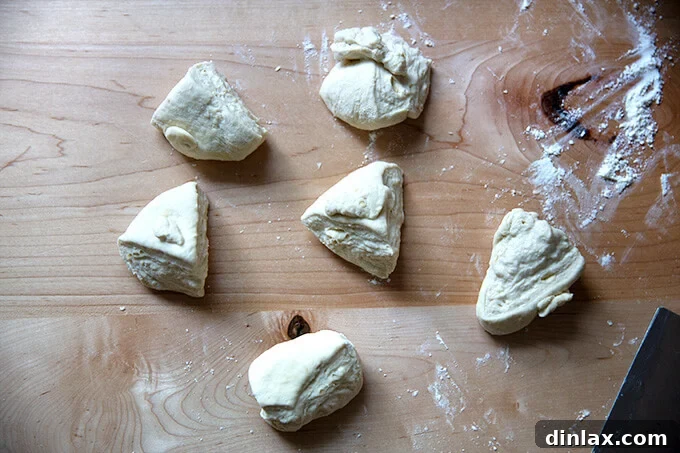
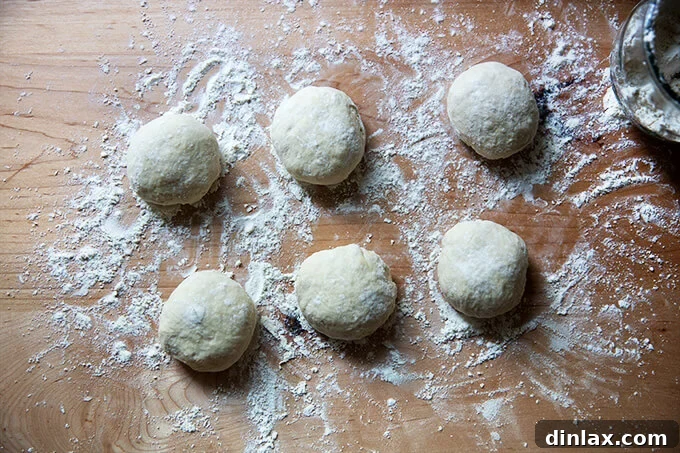
Turn the risen dough out onto a lightly floured work surface. Knead it briefly for a few seconds to gently deflate it and form it into a loose ball. Using a bench scraper or a knife, divide the dough mass into 6 roughly equal portions. For precision and consistent size, each portion should weigh approximately 73 grams. Lightly dust your hands with flour as needed to prevent sticking. Shape each portion into a smooth ball, using the pinky edges of your hands to create surface tension as you roll them against the counter (watch the video for a visual demonstration of this technique). Arrange the dough balls on your work surface and let them rest, uncovered, for another 30 minutes. This second rest is crucial for relaxing the gluten, making the balls much easier to roll out evenly without them snapping back.
Dividing the dough into equal portions for consistent pita. Dough balls resting to relax the gluten. -
Roll Out Each Ball:
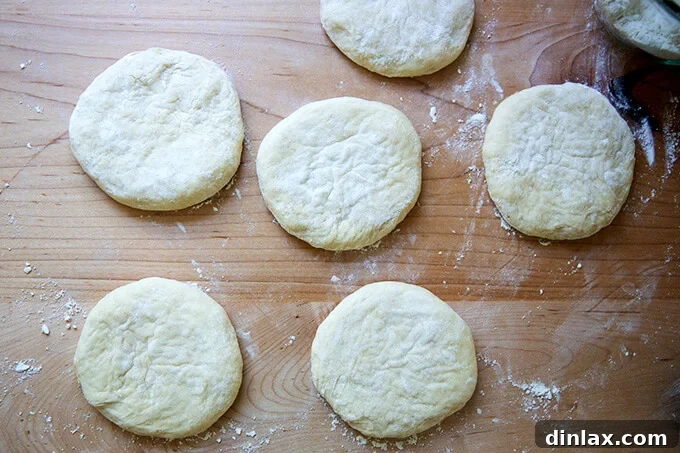
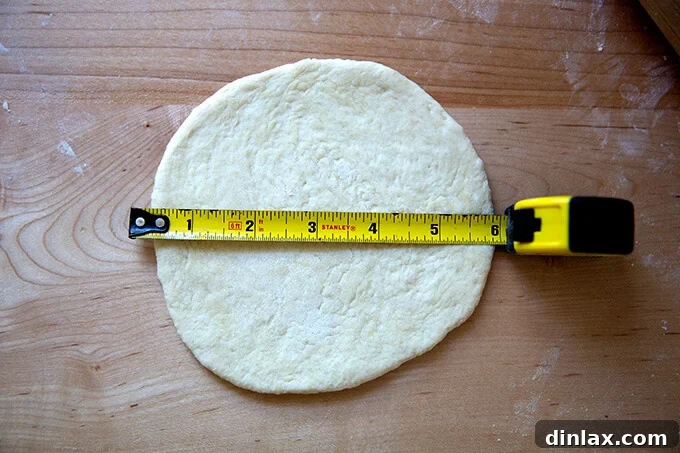
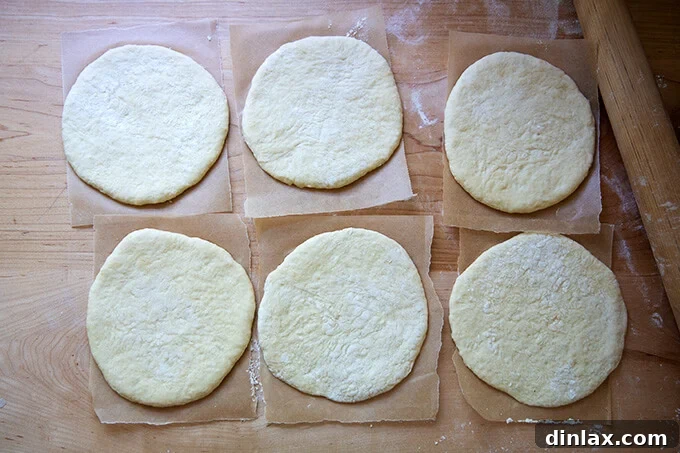
Take one rested dough ball and gently flatten it with your hands. Lightly flour your work surface and rolling pin as needed. Working with one round at a time, gently roll the dough out with your rolling pin into a 6-inch round. Remember to use a gentle hand and avoid rolling too aggressively, as the key is to prevent forcing out the air pockets that will create the puff. If a particular round resists rolling or springs back too much, set it aside for a few minutes and work on another one; the brief rest will allow its gluten to relax further. Once rolled, transfer each 6-inch round to a small sheet of parchment paper (if using). Let the rolled rounds rest for a final 15 minutes while your oven finishes preheating.
Flattening the dough balls before rolling. Rolling the dough gently into a 6-inch round. Rolled pita rounds resting on parchment paper. -
Bake the Pita:
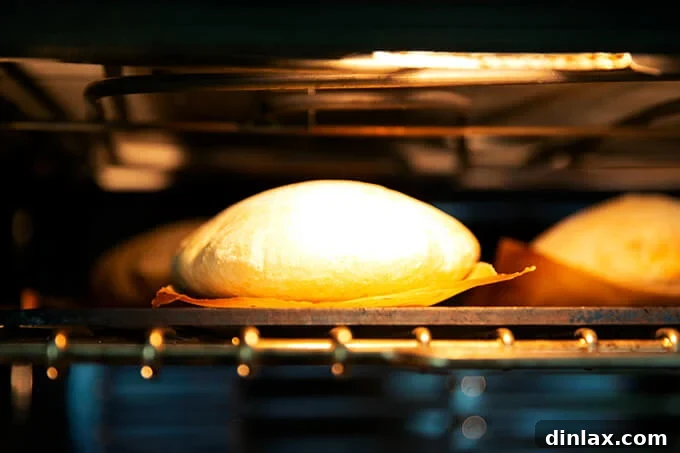
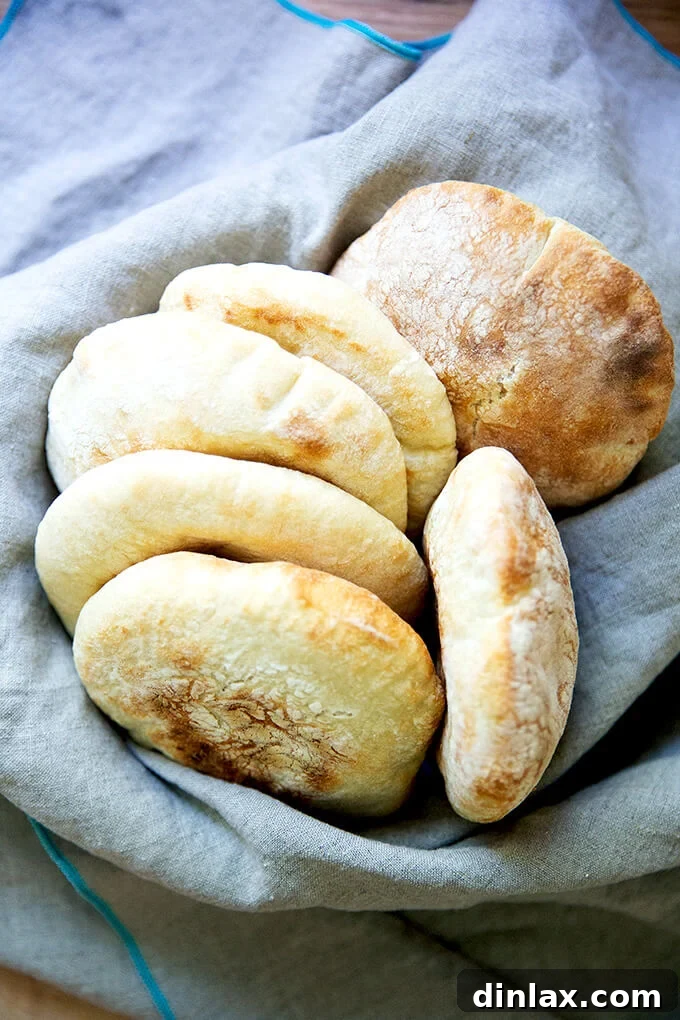
Once the oven and your baking surface are fully preheated, it’s time for the magic! Use a pizza peel or a large spatula to carefully slide one pita round (or up to three, depending on your surface size) onto the preheated Baking Steel, pizza stone, or sheet pan. If using parchment paper, you can slide it onto the hot surface with the paper underneath. Close the oven door quickly to retain heat. Set a timer for 2 minutes. The pita should puff up dramatically within the first minute and be lightly golden when done. Remove the baked pita with your peel or spatula, and immediately transfer it to a bowl lined with a clean tea towel. Wrap the towel around the hot pita to keep it warm and soft. Repeat this process with the remaining rounds of pita dough.
The pita magically puffs up in the hot oven. -
Store the Pita:
Freshly baked pita is best enjoyed immediately. If you have leftovers, store them at room temperature in an airtight bag or container for up to 3 days. For longer storage, pita bread freezes exceptionally well for up to 3 months. To reheat, simply warm them gently in a toaster oven, microwave, or a dry skillet until soft and pliable again.
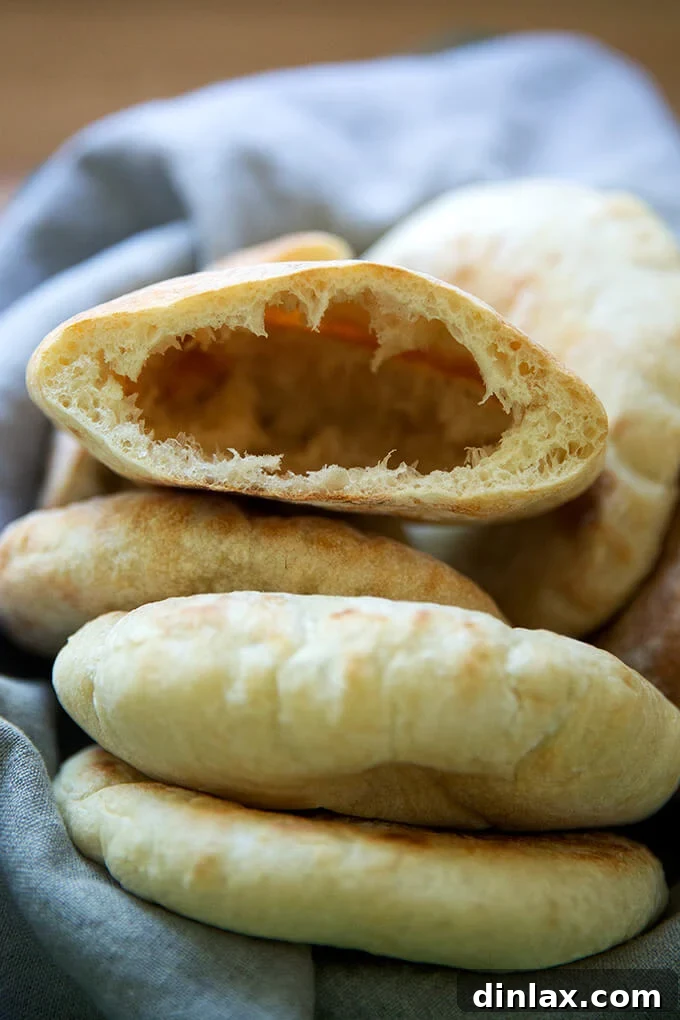
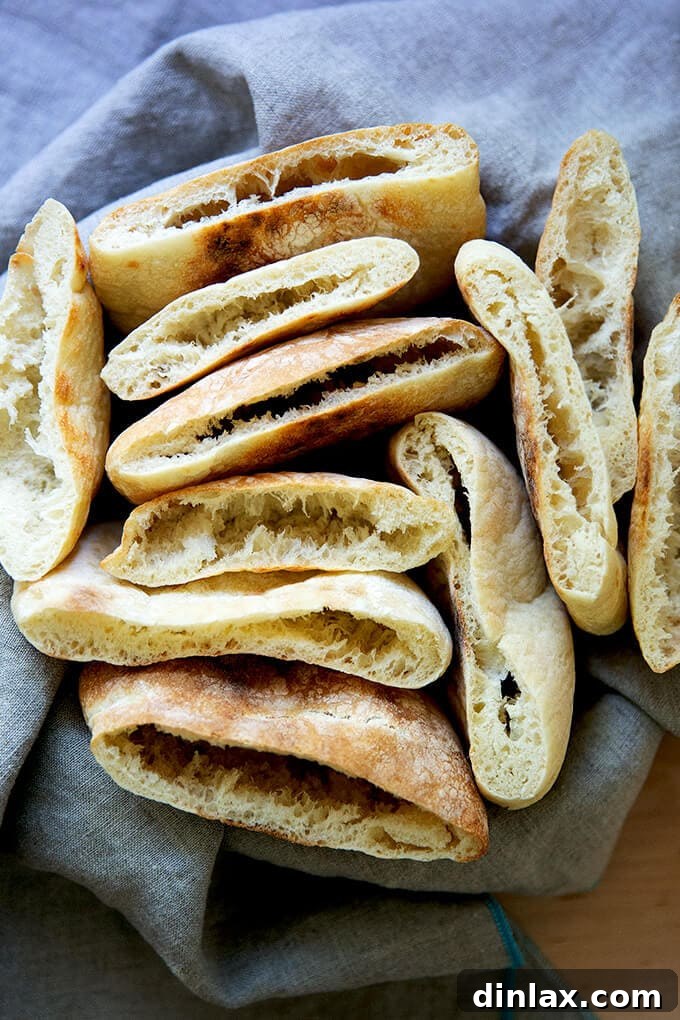
Keep your fresh pita warm and soft by wrapping it in a tea towel. The unmistakable pocket of a well-baked pita. Serve these delightful pockets with your favorite fillings or dips.
Watch the Recipe Video!
- Prep Time: 3 hours
- Cook Time: 4 minutes
- Category: Bread
- Method: Yeast
- Cuisine: Mediterranean
There you have it – a comprehensive guide to baking light, fluffy, and perfectly pocketed pita bread right in your own kitchen. With just a few simple ingredients and these essential tips, you’ll be enjoying the unparalleled taste of homemade pita in no time. So, roll up your sleeves, gather your ingredients, and prepare for the delightful experience of baking your new favorite bread!