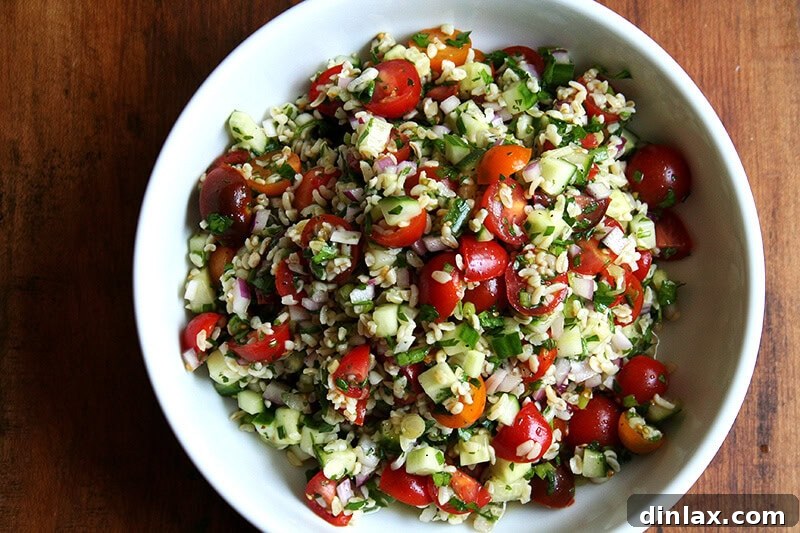
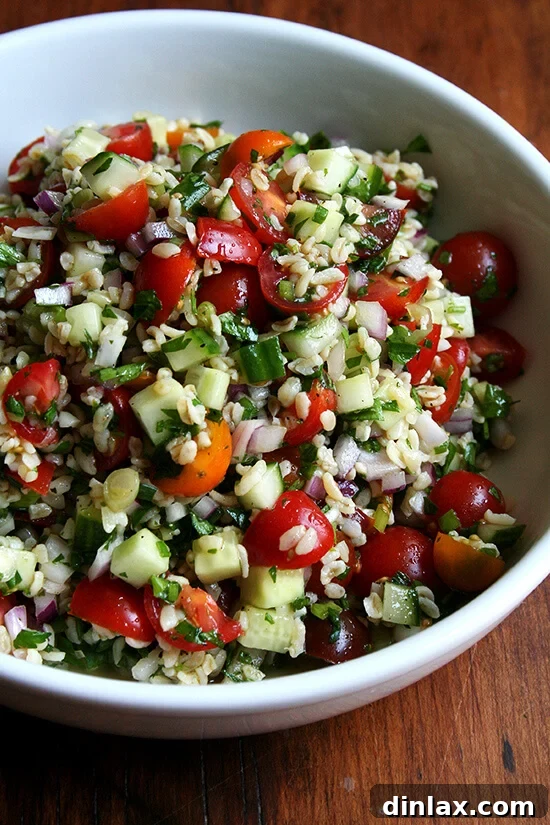
The Ultimate Guide to Effortless Tabbouleh: Your Perfect Summer Whole Grain Salad
There are moments in life when simplicity offers the greatest comfort and clarity. For me, navigating the complexities of preparing our house for sale has been one such time. With cookbooks tucked away, the stand mixer stashed, and most kitchen essentials boxed up, our home, while impeccably staged, feels strangely unlivable. It’s in these periods of upheaval that the act of creating something simple, fresh, and deeply familiar becomes a grounding ritual.
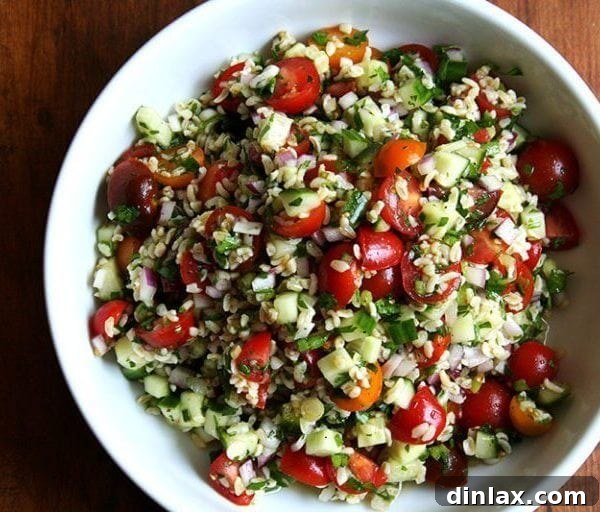
Today, driven by a desire for wholesome food after nights of takeout, I rediscovered the profound joy of a handful of basic tools: a knife, a cutting board, and a large bowl. From these, a beautiful whole grain salad materialized – a vibrant bowl of tabbouleh. This dish, a staple my mother prepared for us throughout every summer for as long as I can recall, is a culinary embrace. It’s a salad that manages to be simultaneously light, satisfying, and profoundly nourishing. Paired with warm pita bread and a generous block of creamy feta cheese, dinner was not just served, it was savored.
Unlocking the Magic of Bulgur: The No-Cook Grain
One of the most remarkable aspects of tabbouleh lies in its star ingredient: bulgur. Unlike many other grains that demand precise cooking ratios and watchful simmering, bulgur offers unparalleled ease. It requires nothing more than cold water – yes, genuinely cold water! – to transform from a hard, dry grain into a wonderfully fluffy, edible staple. There’s no room for error, no intricate grain-to-water ratios to commit to memory, and no strict cooking times to adhere to. After a mere hour of soaking, the cold water is simply drained away, leaving you with perfectly softened bulgur, ready to be dressed in golden olive oil, tangy freshly squeezed lemon juice, and a generous sprinkle of salt and pepper. This simple preparation method makes bulgur an ideal choice for quick meals, meal prep, and busy evenings, liberating you from the stovetop during warm summer months.
Bulgur, a staple in Middle Eastern cuisine for thousands of years, is a cracked wheat grain that has been parboiled, dried, and then cracked into various sizes. This pre-cooking process is what makes it so effortless to prepare at home, needing only rehydration. Nutritionally, bulgur is a powerhouse. As a whole grain, it’s an excellent source of dietary fiber, which aids digestion, promotes satiety, and contributes to heart health. It also provides essential minerals like manganese, magnesium, and iron, along with a good dose of plant-based protein. Its mild, nutty flavor makes it incredibly versatile, absorbing the tastes of whatever ingredients it’s paired with.
Crafting Your Perfect Tabbouleh: A Symphony of Fresh Flavors
While the essence of tabbouleh remains consistent, its interpretation can vary beautifully. It’s important to note that this particular recipe, while deeply inspired by tradition, is not a strictly traditional Lebanese tabbouleh, where fresh parsley typically takes center stage and bulgur serves as a subtle accent. In our rendition, bulgur holds its own, playing an equally significant role alongside the vibrant medley of cucumbers, ripe tomatoes, crisp red onion, tender scallions, and a fragrant blend of herbs, primarily parsley, chives, and mint. This balance ensures a more substantial and satisfying salad, perfect for a main course or a hearty side.
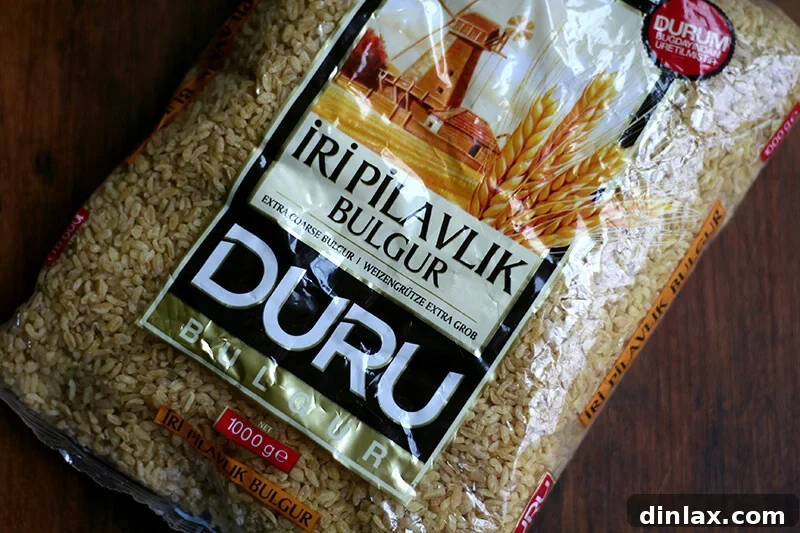
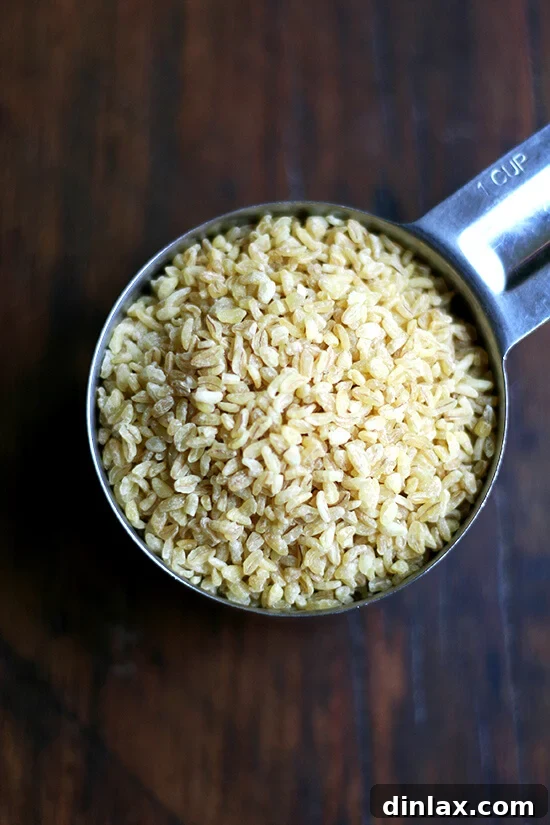
For this specific recipe, I often opt for extra-coarse bulgur. This variety, frequently found in well-stocked Greek, Middle Eastern, and whole food markets, offers a distinct, chewier texture compared to fine bulgur. It brings to mind the delightful bite of barley or farro rather than the softer consistency of couscous or quinoa. The robust texture of coarse bulgur helps it stand up beautifully to the other ingredients and maintains its integrity even after a day or two in the refrigerator, making it excellent for leftovers. Of course, the beauty of this recipe is its flexibility; any type of bulgur you have on hand will work wonderfully, simply adjusting the soaking time if using a finer grain.
Ingredients Spotlight: The Core of a Great Tabbouleh
Each ingredient in tabbouleh contributes significantly to its iconic flavor and texture profile. Understanding their roles and selecting the freshest produce elevates the entire dish.
- Bulgur: As discussed, the foundation of our salad. Whether coarse or fine, its ability to absorb flavors and provide a wholesome base is unmatched.
- Fresh Herbs (Parsley, Mint, Chives): This trio is non-negotiable for authentic flavor.
- Parsley: Far more than a garnish, fresh parsley provides a bright, herbaceous, slightly peppery backbone. Opt for flat-leaf (Italian) parsley for its robust flavor and ease of chopping. It’s rich in vitamins K, C, and A, and adds an undeniable freshness.
- Mint: Essential for that signature cooling sensation and vibrant aroma. Spearmint is generally preferred for its milder, sweeter flavor. Mint balances the richness of olive oil and the acidity of lemon, creating a refreshing palate cleanser.
- Chives: Offering a subtle, delicate oniony flavor, chives add another layer of aromatic complexity without overpowering the other herbs.
- Crisp Vegetables (Cucumber, Tomatoes, Red Onion, Scallions):
- Cucumber: Provides a refreshing crunch and high water content, contributing to the salad’s overall lightness. English cucumbers are excellent for their minimal seeds and thin skin.
- Tomatoes: Bursting with juiciness and natural sweetness, especially in summer. Cherry or grape tomatoes are ideal for their concentrated flavor and ease of preparation; simply halve or quarter them.
- Red Onion: Offers a sharp, pungent bite that is beautifully mellowed by the lemon juice. Finely dicing is key for even distribution.
- Scallions (Green Onions): A milder alternative to red onion, contributing a fresh, grassy note and a gentle onion flavor. Use both white and light green parts.
- The Zesty Dressing (Extra-Virgin Olive Oil, Lemon Juice): These two ingredients are the heart of the Mediterranean dressing, binding all the fresh components together.
- Extra-Virgin Olive Oil: Choose a high-quality, fruity olive oil. It adds richness, a silky texture, and healthy monounsaturated fats.
- Fresh Lemon Juice: The critical element for brightness and acidity. Always use freshly squeezed lemon juice – it makes an enormous difference in flavor compared to bottled varieties. It cuts through the richness of the oil and awakens the flavors of the vegetables and herbs.
- Seasoning (Kosher Salt, Freshly Cracked Black Pepper): Simple yet crucial for enhancing and balancing all the flavors.
Tabbouleh: The Unsung Hero of Summer Gatherings
As we delve into the season of backyard barbecues, lively picnics, and impromptu potlucks, side dishes are always welcomed with open arms, whether explicitly requested or not. This vibrant tabbouleh stands out as a true crowd-pleaser. Its light, lemony, and herbaceous profile effortlessly complements a wide array of summer fare, from sizzling hot dogs and juicy burgers to grilled chicken, succulent fish, or vibrant vegetable kabobs. Its appeal stretches across dietary preferences, making it a beloved choice for both meat-eaters and vegans alike. Moreover, this bright and colorful salad is every bit as delicious as it is visually appealing – a rare and wonderful combination. Its crisp textures and refreshing flavors provide a welcome contrast to heavier grilled items, offering a burst of freshness that can truly elevate any meal. As for our house, a quick sale would be wonderful; I truly miss my well-equipped kitchen. But until then, the simple pleasure of this tabbouleh is a delightful silver lining.
Beyond being a perfect side, tabbouleh can also serve as a light and satisfying lunch on its own, perhaps topped with some grilled halloumi, chickpeas, or a dollop of hummus for added protein. Its fresh ingredients make it a fantastic addition to any healthy eating plan, aligning perfectly with the principles of the Mediterranean diet. The fiber from the bulgur, combined with the vitamins and antioxidants from the abundance of fresh vegetables and herbs, makes this salad a nutritional powerhouse. It’s an ideal dish for meal prepping, as its flavors deepen and meld beautifully overnight, and the coarse bulgur holds its texture remarkably well.
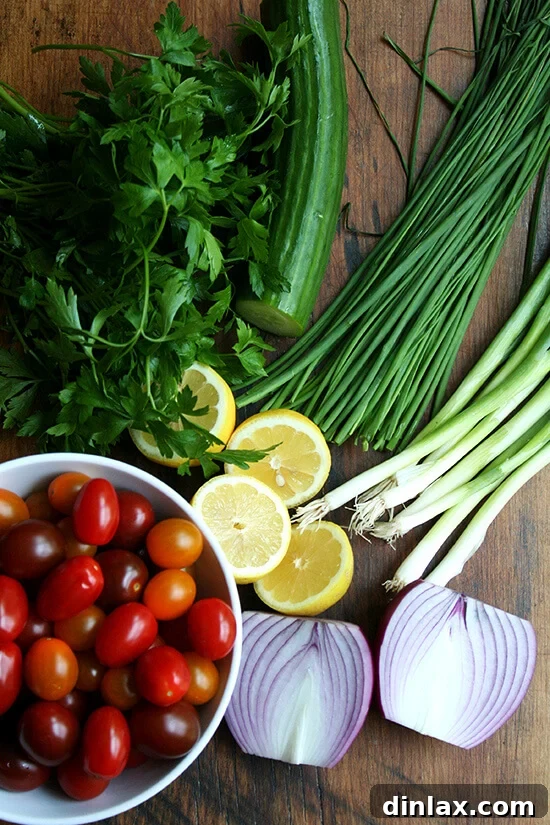
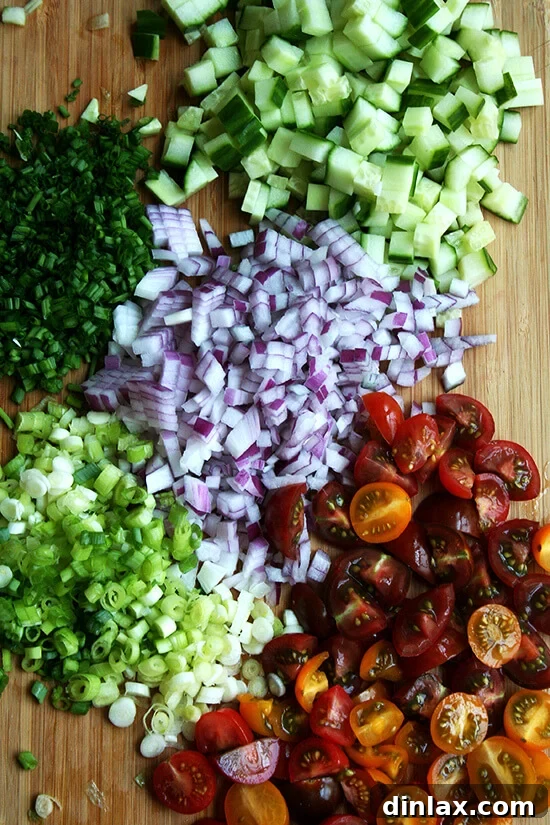
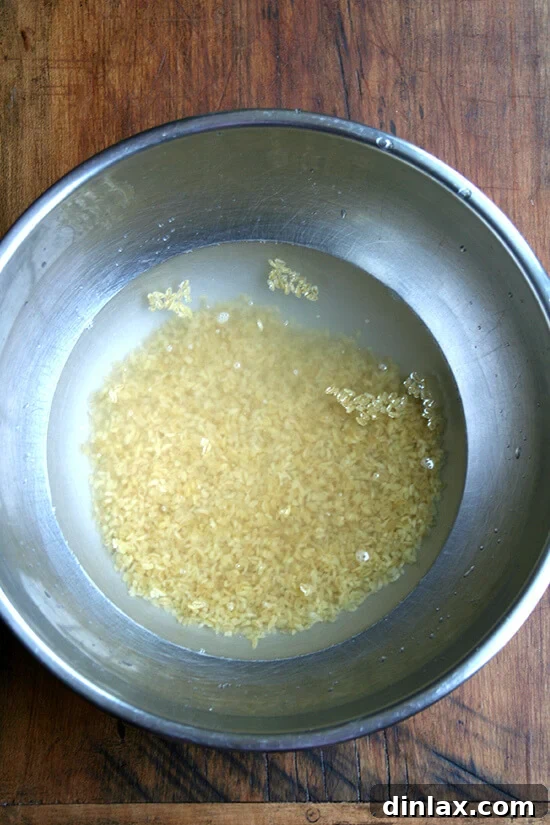
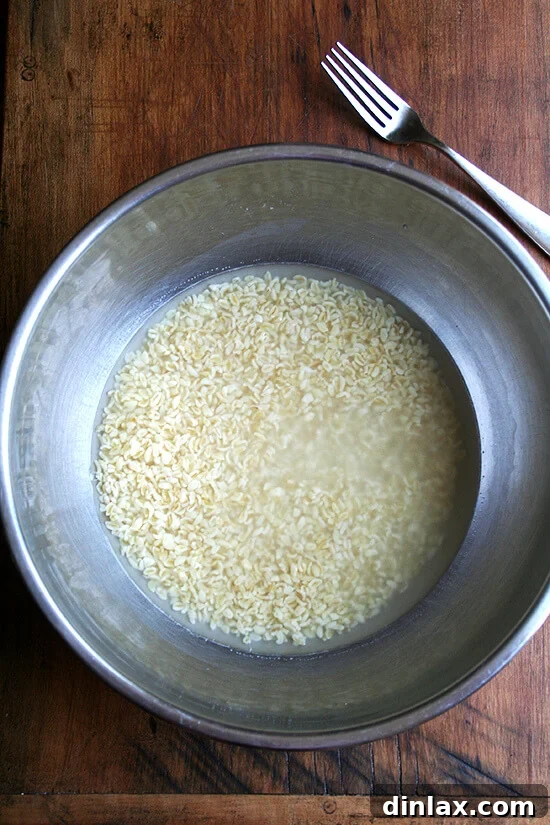
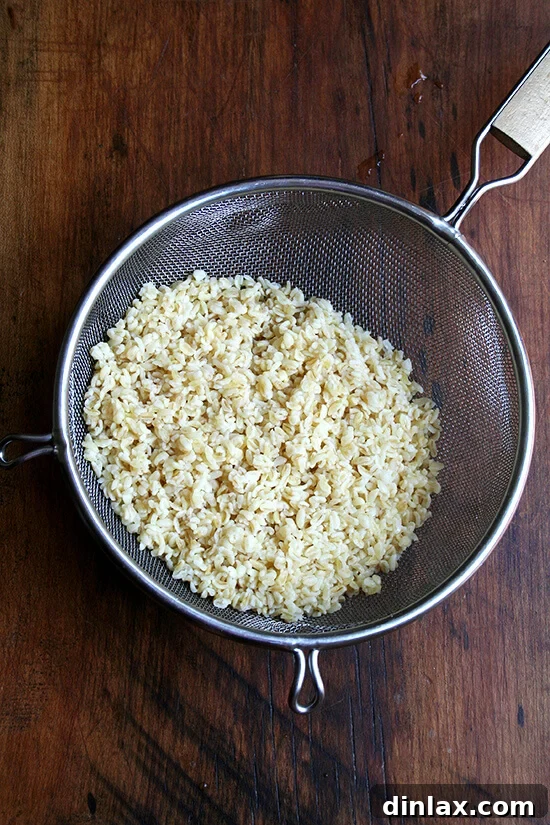
After a one-hour soak in cold water, the bulgur is ready to be drained:
If you love wholesome grain salads as much as we do, you might also enjoy this quinoa salad with walnuts, radishes, and spring onions, or explore the delightful versatility of farro with this farro salad with toasted pine nuts, currants, and mustard greens, or perhaps this one featuring roasted corn, red peppers, and red onions.
Print Recipe
Tabbouleh
★★★★★
5 from 3 reviews
- Author: Alexandra Stafford
- Total Time: 2 hours
- Yield: Serves 4 to 6 as a side dish
Description
As always, consider the amounts of vegetables and herbs as a flexible guide. I personally love a whole grain salad brimming with fresh produce and aromatic herbs, but feel free to adjust the quantities to suit your personal preference. Additionally, while not strictly necessary, a sprinkle of crumbled feta cheese can introduce another delightful dimension to this salad, enhancing its flavor profile without compromising its wonderful crunchy texture. Experiment and make it your own!
Ingredients
- 1 cup bulgur, extra-coarse* if possible
- 1 red onion (to yield about a cup when finely diced)
- 5 to 6 scallions
- 1 small bunch of chives
- 1 English cucumber
- 1 to 2 cups cherry tomatoes
- 1 bunch parsley (to yield a heaping cup once chopped)
- Mint (to yield about a quarter cup once minced)
- 1/4 cup extra-virgin olive oil
- 2 to 3 lemons, juiced to yield about 1/4 cup
- Kosher salt and freshly cracked black pepper
*You can use any type of bulgur you prefer. My mother sources extra-coarse bulgur from her local Greek market, which I particularly enjoy for its texture. However, this specific grind might be challenging to locate in a standard grocery store. Feel free to substitute with fine or medium bulgur, adjusting the soaking time as needed.
Instructions
- Prepare the Bulgur: Place the bulgur in a large bowl. Cover it completely with cold water. Allow it to stand and soak for one full hour. After soaking, carefully drain the bulgur in a fine-mesh sieve. If you don’t have a fine-mesh sieve, you can use a pot lid to hold back the bulgur while you slowly pour the water into the sink. Set the drained bulgur aside.
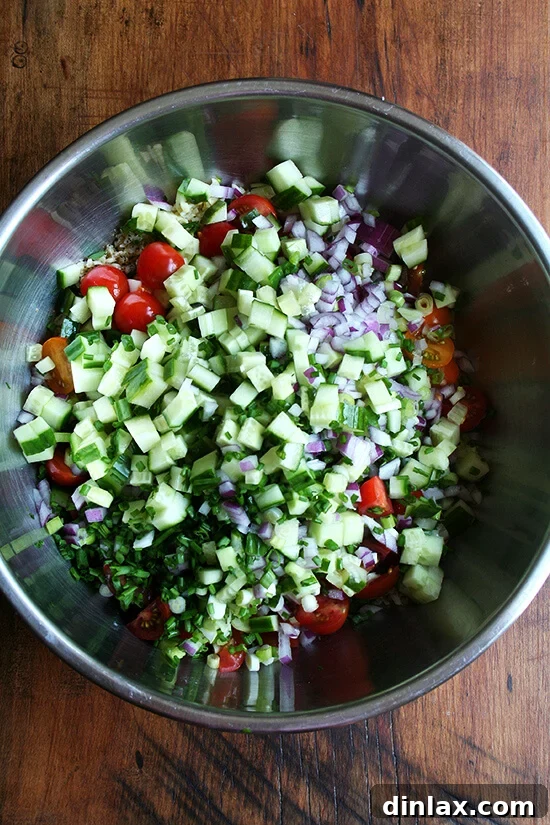
- Chop the Vegetables and Herbs: While the bulgur is soaking, prepare your fresh ingredients. Finely dice the red onion. Mince both the white and the light green portions of the scallions. Mince the chives. Small dice the English cucumber. Halve or quarter the cherry tomatoes, depending on their size, for bite-sized pieces. Roughly mince the entire bunch of parsley, aiming for a heaping cup. Mince the fresh mint leaves, yielding about a quarter cup.
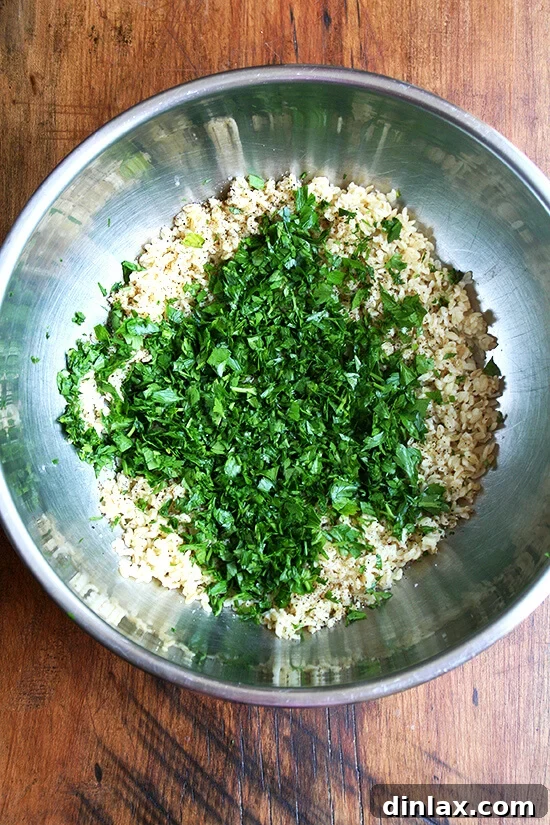
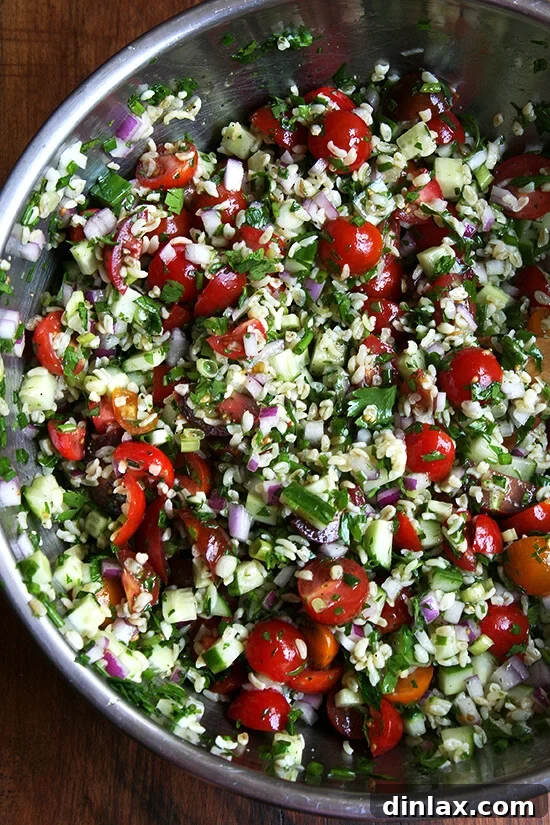
- Assemble and Dress the Salad: Spread the drained bulgur evenly across your large mixing bowl. Season it generously and evenly with kosher salt (approximately one teaspoon, or to taste) and freshly cracked black pepper. Add all of the finely chopped vegetables and minced herbs to the bowl with the bulgur. Pour in the extra-virgin olive oil and the fresh lemon juice. Toss all the ingredients together thoroughly until everything is well combined and coated with the dressing. Taste the salad and adjust the seasoning (salt, pepper, or lemon juice) as necessary to achieve your desired flavor balance. Serve immediately, or chill for an hour for flavors to meld further.
- Prep Time: 2 hours
- Category: Salad
- Method: Toss
- Cuisine: Greek