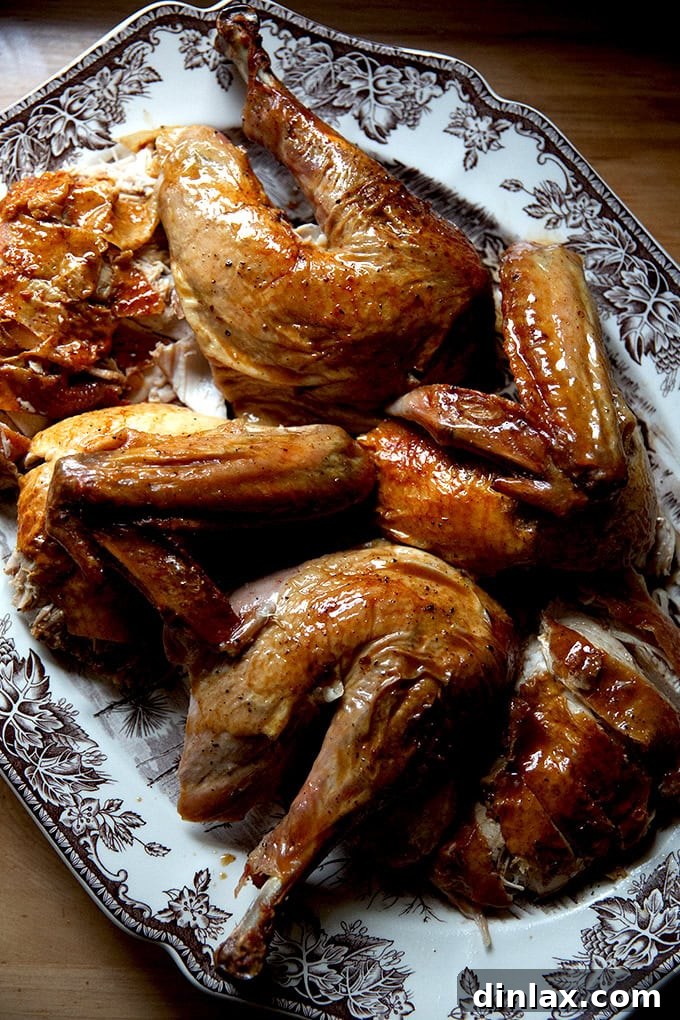
The quest for the ultimate holiday turkey—one that boasts succulent, flavorful meat and incredibly crispy, golden-brown skin—often feels like a daunting challenge. However, the secret to achieving this culinary masterpiece is surprisingly simple: a dry brine. This straightforward yet highly effective method transforms an ordinary bird into an extraordinary centerpiece, ensuring every bite is moist, perfectly seasoned, and bursting with flavor. Forget complicated marinades or messy wet brines; dry brining concentrates the turkey’s natural juices and creates an unparalleled texture. Below, you’ll discover a comprehensive, step-by-step guide to mastering the art of dry brining and roasting your holiday turkey, guaranteeing a memorable meal that will impress everyone at your table.
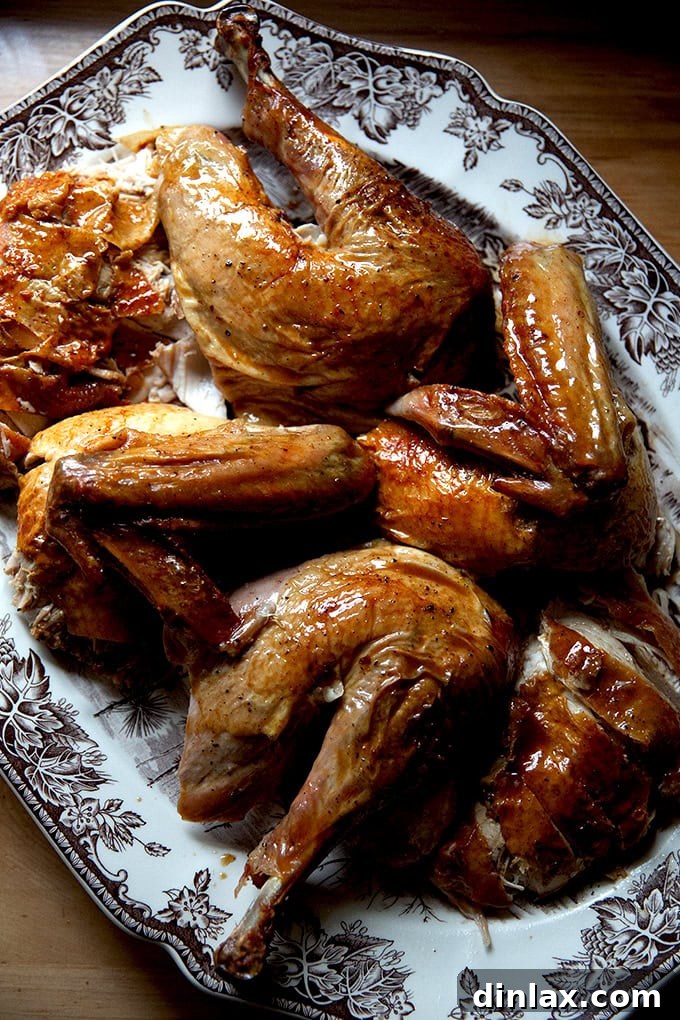
Let’s dive right into the details of this foolproof method for preparing a truly spectacular Thanksgiving or holiday turkey. Our approach simplifies both the brining and roasting processes, focusing on maximizing flavor and texture with minimal fuss. This technique relies primarily on salt for brining, ensuring deep seasoning without the need for additional sugars or spices that can sometimes complicate the process or interfere with a perfectly crisp skin. For roasting, a simple brush of melted butter, a light sprinkle of salt and pepper, and a carefully managed oven temperature are all it takes to achieve a turkey that is consistently juicy on the inside and irresistibly crunchy on the outside.
This method has been perfected over years to consistently deliver a turkey that is not only incredibly juicy and tender but also features that coveted burnished, crisp skin every home cook dreams of. Say goodbye to dry, bland turkey and hello to your most delicious holiday bird yet!
Understanding the Magic of Dry Brining for Your Turkey
Before we outline the step-by-step instructions, let’s briefly understand why dry brining is such a game-changer for your holiday turkey. Unlike wet brining, which submerges the turkey in a liquid solution, dry brining involves rubbing the turkey’s surface and cavity with salt. This simple act initiates a scientific process that profoundly impacts the final product.
First, the salt draws out moisture from the turkey’s cells through osmosis. This moisture then mixes with the salt, creating a concentrated brine. Over time (typically 24 to 48 hours), this seasoned liquid is reabsorbed into the meat, carrying the salt deep into the muscle fibers. This process not only seasons the meat from within but also denatures the proteins, causing them to unravel and then bind together more tightly. This structural change allows the muscle fibers to retain moisture more effectively during cooking, resulting in a significantly juicier turkey.
Another crucial benefit of dry brining is its effect on the skin. By drawing out moisture from the skin’s surface and allowing it to air-dry in the refrigerator, the process encourages the skin to become exceptionally crisp and golden during roasting. There’s no excess moisture to steam the skin, ensuring a crackling, delicious exterior that’s a hallmark of a perfectly roasted bird. This simple salt-only approach yields a turkey with superior flavor, tenderness, and an enviable crispy skin, making it the preferred method for many culinary experts.
Essential Equipment for Dry Brining Your Turkey
Preparing your turkey with a dry brine requires just a few key items, ensuring a hassle-free process. Gathering these materials in advance will streamline your preparation.
- Kosher Salt: This is the star of our dry brine. I highly recommend using Diamond Crystal brand kosher salt because its unique flake structure makes it less dense than other salts (like Morton’s kosher salt or table salt), which prevents over-salting and allows for more even distribution. If using a different brand, you may need to adjust quantities based on its density; however, for this recipe, the ratio of 1 teaspoon per pound of turkey is specifically calibrated for Diamond Crystal.
- A Giant Plastic Turkey Bag or Parchment Bag: While a parchment bag works, I strongly prefer the large plastic turkey bags. They offer superior protection against leaks and help maintain a consistent environment for the brine to work its magic. These bags are specifically designed to accommodate large birds and can be securely sealed to prevent contamination in your refrigerator. Alternatively, a large, clean brining bag or even a food-grade, unscented trash bag can work in a pinch, provided it’s leak-proof.
- Paper Towels: Essential for thoroughly drying the turkey before and after brining, which is crucial for achieving crispy skin.
In essence, the brining stage is incredibly straightforward: you’ll place your thawed turkey in the bag, apply the measured kosher salt evenly, seal the bag, and then allow it to rest in your refrigerator for a dedicated period of 48 hours. For a typical 12-pound turkey, this usually translates to about 1/4 cup of Diamond Crystal kosher salt, ensuring perfect seasoning from the inside out.
Key Tools and Ingredients for Roasting Your Turkey
Once your turkey is beautifully brined, the roasting process is equally streamlined, focusing on simple ingredients and the right tools to achieve that perfect golden finish and tender meat. Here’s what you’ll need:
- Roasting Pan with a Rack: A sturdy roasting pan is indispensable. The rack is critical as it elevates the turkey, allowing hot air to circulate evenly around all sides of the bird. This promotes uniform cooking and helps develop that desirable crispy skin all over. Ensure your pan is large enough to comfortably hold your turkey without touching the sides.
- Pastry Brush or Basting Brush: A good quality brush is essential for evenly applying melted butter to the turkey’s skin, which contributes to its rich flavor and golden-brown hue.
- Butter, Salt, and Pepper: Unsalted butter is preferred, as your turkey is already seasoned from the brine. This allows you to control the external seasoning. A light application of salt and freshly ground black pepper will enhance the crust and add an extra layer of flavor.
- White Wine: A cup of dry white wine (such as Sauvignon Blanc or Pinot Grigio) added to the roasting pan, along with water, creates a flavorful liquid base for pan drippings. This liquid will prevent the drippings from scorching and can be used to make an exceptional gravy.
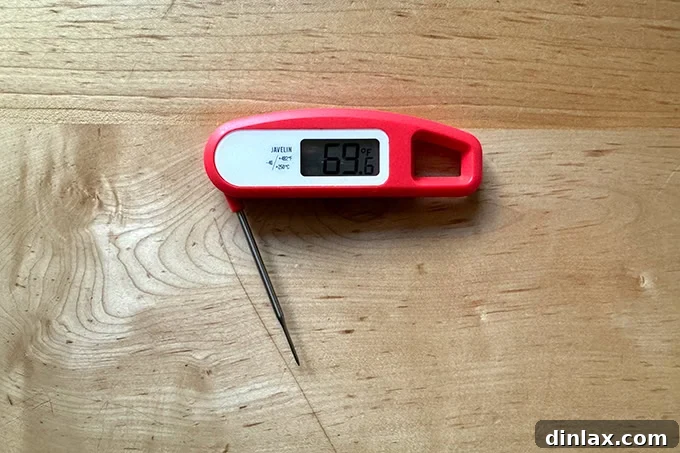
- Instant-Read Thermometer: This is arguably the most critical tool for roasting. An accurate instant-read thermometer ensures your turkey is cooked to a safe internal temperature without overcooking. Overcooking is the primary cause of dry turkey, so investing in a reliable thermometer, like the highly recommended Javelin Ultra Fast Digital Thermometer, is a wise choice for precise and consistent results.
On the morning you plan to roast your turkey, the final preparations are quick and simple. You’ll pat the turkey thoroughly dry, place it on the rack in your roasting pan, and brush it generously with melted butter. A light seasoning of salt and pepper will complete the preparation before it goes into the oven. The roasting process begins at a higher temperature to encourage browning and crisping, then lowers to ensure even cooking throughout. Through this method, a 12-pound turkey is consistently ready in under 2 hours, making for a less stressful holiday cooking experience.
Let’s delve into the detailed process below for a perfect turkey every time! 🦃🦃🦃🦃🦃
How to Dry Brine Your Turkey: A Step-by-Step Guide
Achieving a perfectly seasoned and juicy turkey begins with proper thawing and brining. Follow these steps meticulously for the best results.
1. Thaw Your Turkey Properly: For the past three years, I’ve had incredible success with organic turkeys, typically in the 12-14 lb range, purchased from Whole Foods. These usually come frozen. To ensure ample time for thawing and brining, I highly recommend removing your turkey from the freezer and transferring it to the refrigerator one full week before the day you plan to roast it (e.g., the Wednesday before Thanksgiving if you’re roasting on Thanksgiving Day). A general rule of thumb for refrigerator thawing is 24 hours for every 4-5 pounds of turkey. Therefore, a 12-14 lb turkey will need at least 3-4 days to thaw completely in the fridge. This slow, safe thawing is crucial.
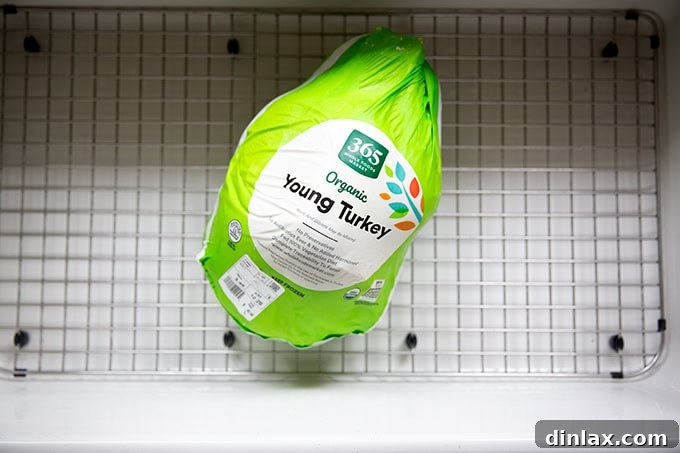
2. Prepare the Turkey: Once thawed, open the turkey’s packaging. Reach into the main body cavity and the neck cavity to remove the giblets (typically a small bag containing the heart, liver, and gizzard) and the neck itself.
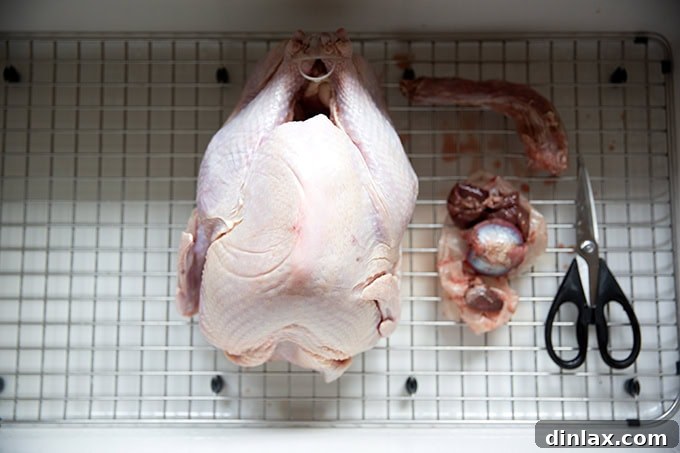
Place the liver in a separate bag or container and cook or freeze it for another use (some enjoy pan-fried liver; others discard it). Save the remaining giblets (heart, gizzard, neck) as they are perfect for making rich, flavorful turkey stock or gravy. You can freeze them for later use if you’re not making stock immediately.
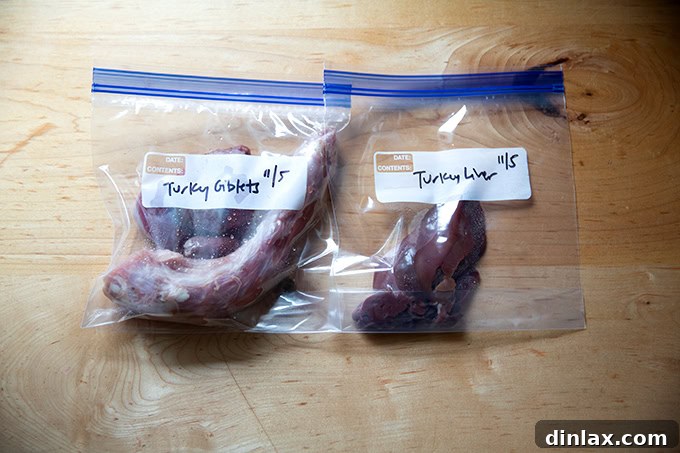
3. Place Turkey in Brining Bag: Carefully place the prepared turkey into a large plastic turkey bag. As mentioned, I prefer the sturdy large plastic turkey bags for their reliability and leak-proof nature, but a heavy-duty parchment bag designed for turkeys can also work effectively. Ensure the bag is large enough to comfortably hold the turkey and allow for easy sealing.
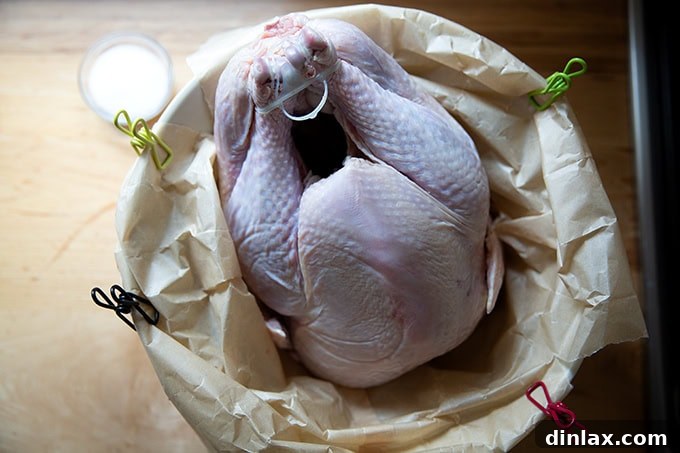
4. Apply the Dry Brine: Calculate the amount of kosher salt needed: use 1 teaspoon of Diamond Crystal kosher salt per pound of turkey. For example, a 12-lb bird will require approximately 12 teaspoons of salt, which is roughly 1/4 cup. A 14-lb bird would need about 14 teaspoons (just over 1/4 cup). Sprinkle the salt evenly all over the turkey, paying close attention to coating both the exterior skin and the interior cavity. Use your hands to gently rub the salt into the skin, ensuring good contact. Don’t be shy; the salt needs to penetrate for the brine to work effectively.
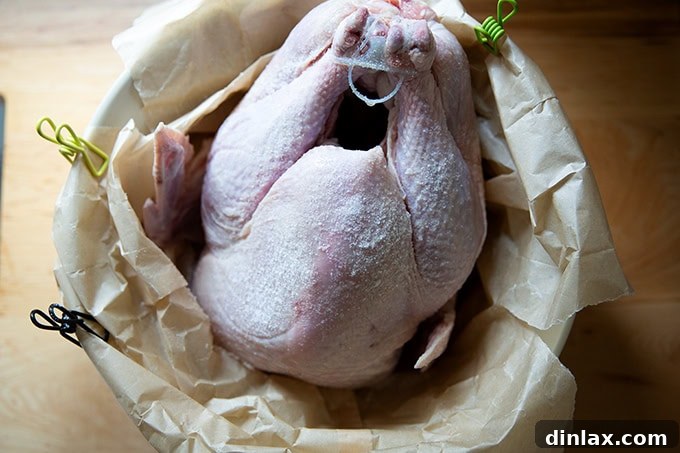
5. Brine in the Refrigerator: Once salted, securely tie or seal the turkey bag, removing as much air as possible without crushing the bird. Transfer the bagged turkey to the refrigerator for 48 hours. This duration allows the salt sufficient time to penetrate the meat, draw out moisture, create its own brine, and then be reabsorbed. Place it on a tray or in a large container to catch any potential leaks, although a good quality turkey bag should prevent this. The resting period is vital for both seasoning and tenderizing the meat, while also contributing to the skin’s eventual crispness.
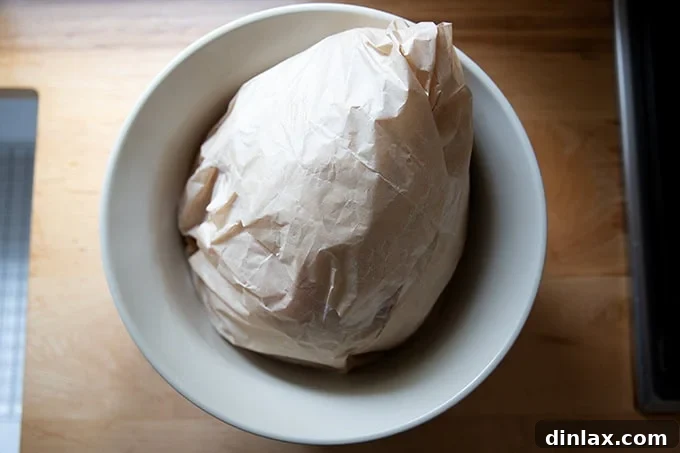
How to Roast Your Dry-Brined Turkey: A Detailed Guide
Once your turkey has successfully dry-brined, it’s ready for its transformation in the oven. Follow these steps for a perfectly roasted bird:
1. Bring to Room Temperature: On the morning you plan to roast, remove the turkey from the refrigerator a few hours before you intend to put it in the oven. This typically means 1-2 hours for a 12-14 lb bird. Allowing the turkey to sit at room temperature helps it cook more evenly, as the cold center won’t take as long to heat up, reducing overall roasting time and preventing the outer layers from drying out while the inside catches up.
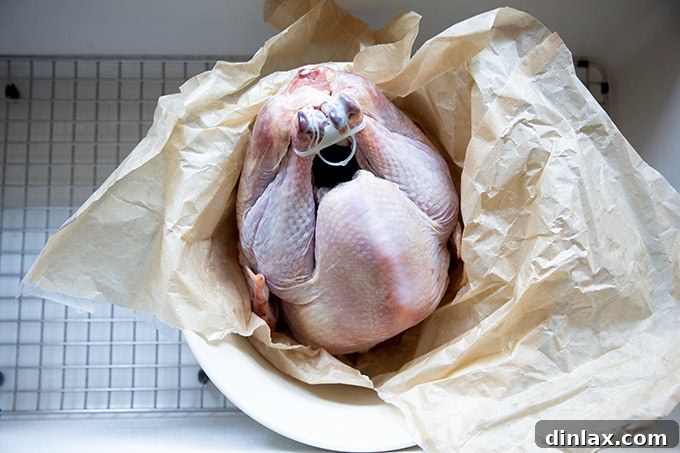
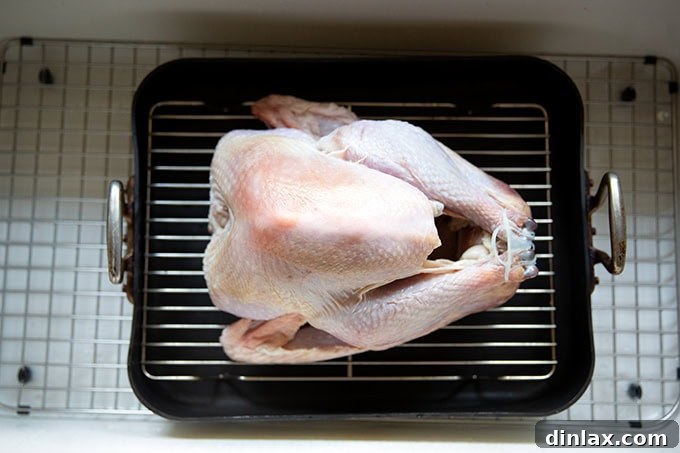
2. Pat Dry and Position: Remove the turkey from the brining bag and transfer it to a rack set in a large roasting pan. This rack is crucial for air circulation. Using paper towels, thoroughly pat the entire surface of the turkey dry—inside and out. This step is critical for achieving that coveted crispy skin. Any residual moisture will steam rather than crisp, so be diligent. Let it sit on the counter at room temperature, continuing to air dry, until you are ready to roast.
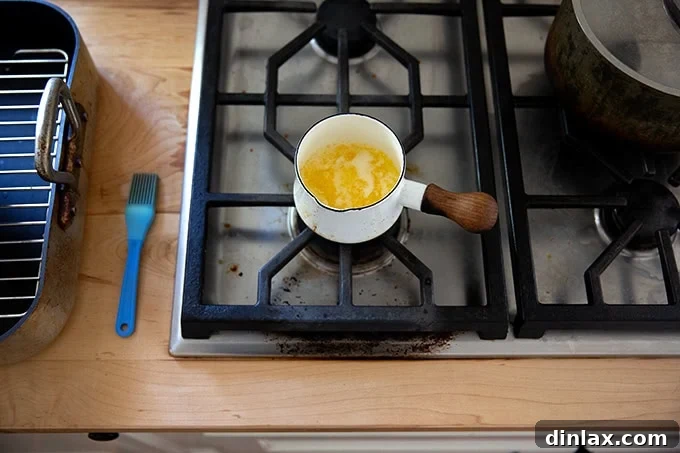
3. Prepare the Butter and Season: Melt 1 stick (8 tablespoons) of unsalted butter. While the turkey has been brined, the butter will help achieve a beautiful golden crust and add rich flavor. Prepare your salt and freshly ground black pepper.
4. Brush and Season: Using your pastry brush, generously brush the melted butter all over the turkey’s exterior, ensuring every part of the skin is coated. Then, lightly season the buttered skin with a final sprinkle of salt and freshly ground black pepper. Remember, the turkey is already seasoned from the brine, so this external seasoning is for enhancing the crust.
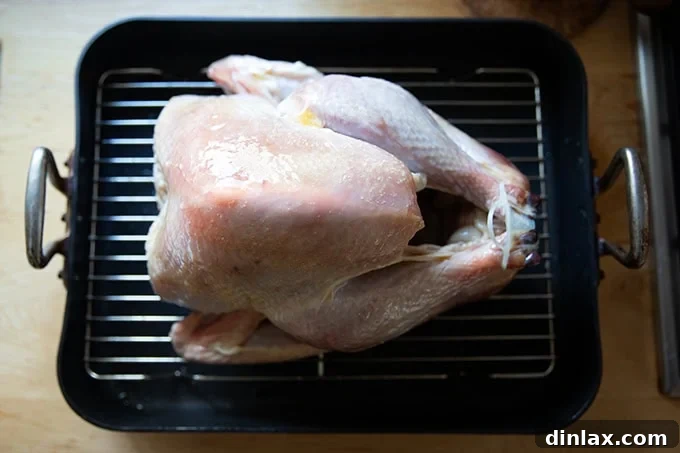
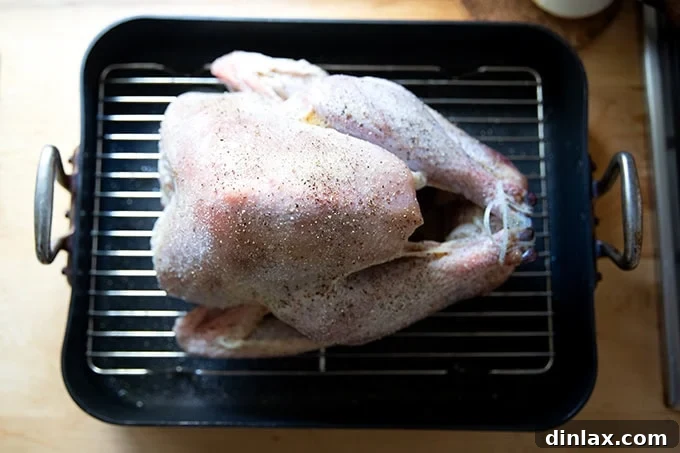
5. Initial High-Heat Roast: Preheat your oven to 450ºF (232ºC). Transfer the roasting pan with the turkey to the hot oven and roast for 30 minutes. This initial burst of high heat is crucial for developing that beautiful bronzed color and crisp texture on the skin. After 30 minutes, carefully open the oven, pour 1 cup of white wine and 1 cup of water into the bottom of the roasting pan (around the turkey, not over it). This liquid will prevent drippings from burning and create steam, contributing to a moist oven environment and a flavorful base for your gravy. Immediately close the oven door and **lower the oven temperature to 350ºF (177ºC).**
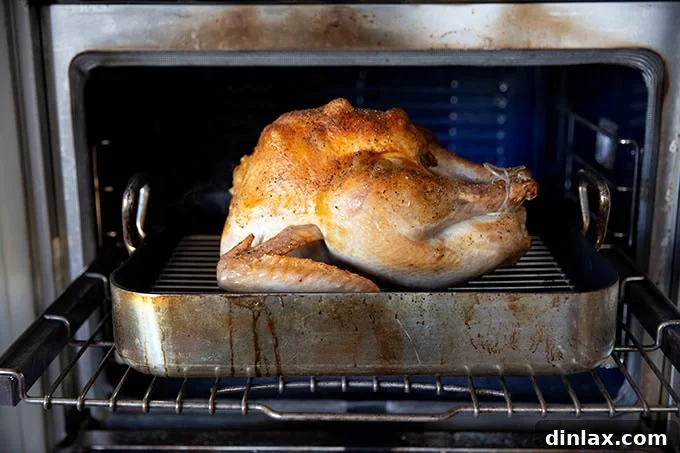
6. Continue Roasting to Doneness: Continue roasting at 350ºF until the turkey is fully cooked. Dry-brined turkeys tend to cook faster than unbrined or wet-brined birds, so it’s essential to start checking for doneness earlier than you might expect. For a 12-lb bird, start checking around 1 hour 30 minutes to 1 hour 45 minutes into the low-temperature roasting phase. While a general rule of thumb is 12 minutes per pound, dry-brined birds often finish quicker. Use an instant-read thermometer to check the internal temperature in the thickest part of the thigh (without touching the bone) and the thickest part of the breast. The turkey is done when the breast registers 160ºF (71ºC) and the thigh registers 170-175ºF (77-79ºC). Remember that the temperature will rise a few degrees after it’s removed from the oven (carryover cooking).
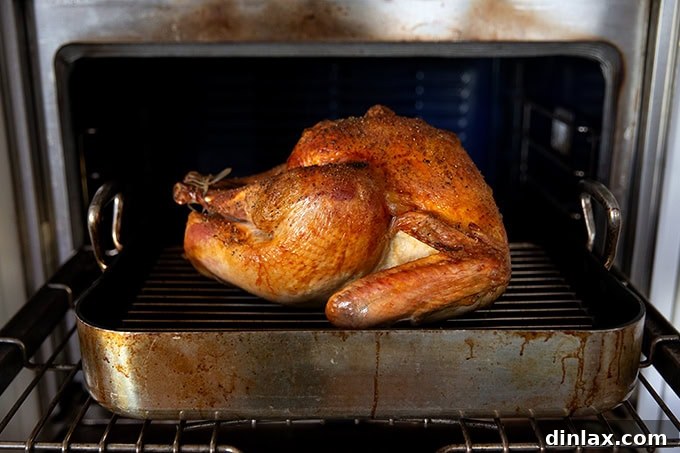
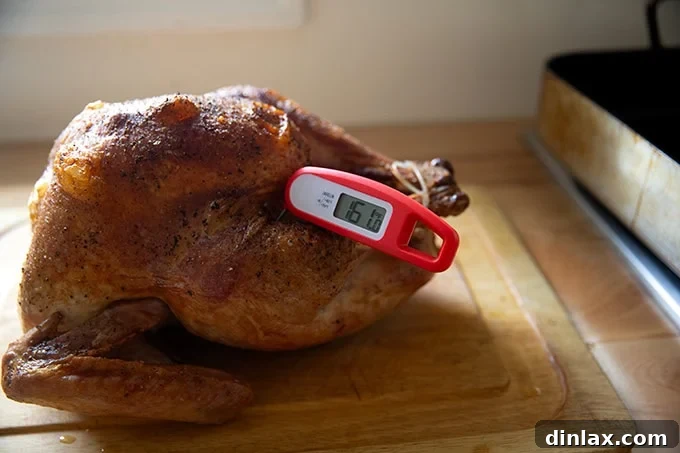
7. Rest the Turkey: Once cooked, carefully transfer the turkey to a large cutting board. Tent it loosely with foil and let it rest for at least 30 minutes, but ideally an hour, before carving. This resting period is critical! It allows the juices within the meat to redistribute, ensuring that every slice is incredibly juicy and tender. If you carve too soon, the juices will run out, leaving you with dry meat. While the turkey rests, you can proceed with making your gravy from the pan drippings.
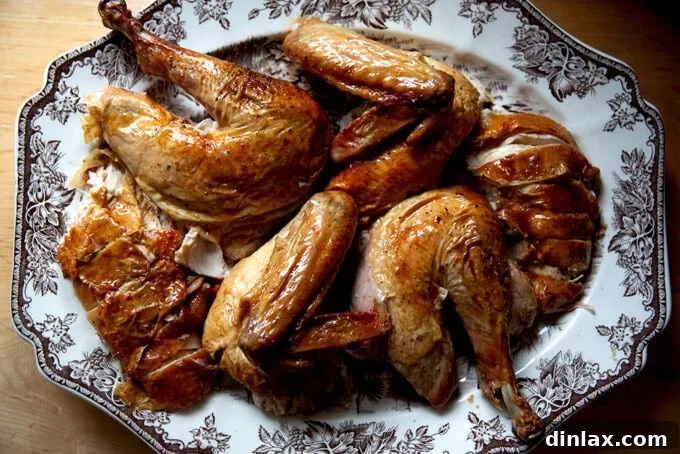
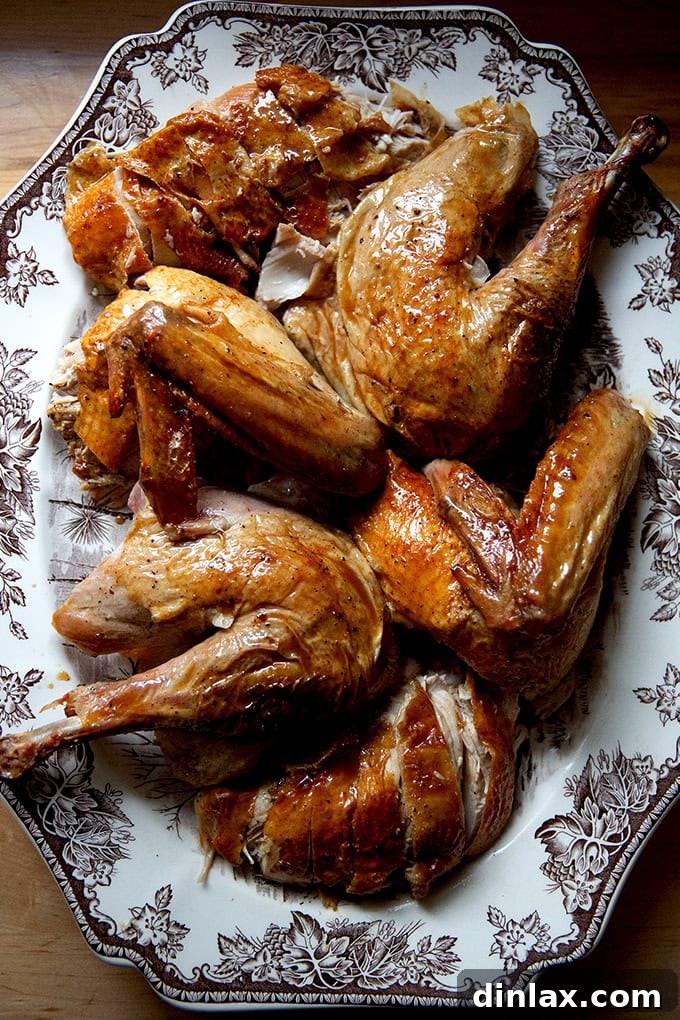
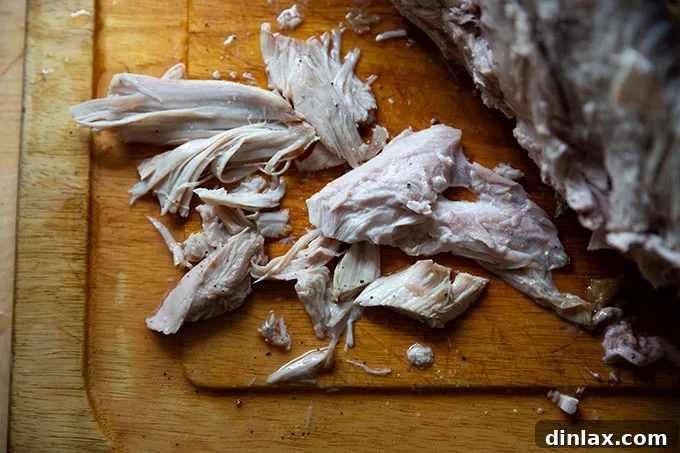
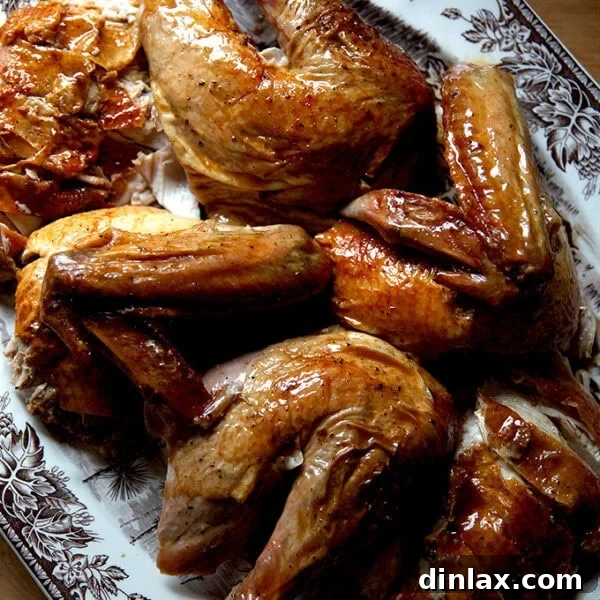
Look at that incredibly juicy meat! This is the payoff for careful brining and roasting.
Print
How to Dry-Brine and Roast a Turkey for a Perfect Holiday Meal
5 Stars
4 Stars
3 Stars
2 Stars
1 Star
5 from 3 reviews
- Author: Alexandra Stafford
- Total Time: 51 to 52 hours
- Yield: Serves 12 1x
Description
For this foolproof turkey recipe, you’ll need a few essential kitchen tools:
- A sturdy turkey bag (for brining) to ensure a mess-free process.
- A reliable pastry brush for evenly coating your bird with butter.
- A robust roasting pan with a rack — a crucial element for even cooking and crispy skin. My preferred pan is similar to this one, measuring 18×14 inches.
- An accurate instant-read thermometer — an absolute must-have investment for preventing overcooked turkey and guaranteeing food safety.
Notes:
- Timing is Everything: If you are starting with a frozen turkey, begin thawing it in the refrigerator one week before Thanksgiving (or your planned roasting day). This extended period ensures complete thawing before you commence the dry brining process on Tuesday.
- Turkey Selection: I’ve consistently achieved excellent results with frozen organic turkeys from Whole Foods, usually in the 12-14 pound range. Smaller birds cook more quickly and are easier to manage, making them ideal for this recipe.
Ingredients
For the dry brine:
- Kosher salt, preferably Diamond Crystal brand (1 tsp per pound of turkey)
- 1 large turkey bag
- 1 12 –14 lb. whole turkey, thawed and giblets removed
For roasting the turkey:
- 1 roasting pan with a rack
- Salt and freshly ground black pepper, to taste
- 1 stick (8 tablespoons) unsalted butter, melted
- 1 cup dry white wine (e.g., Sauvignon Blanc), plus more if needed for drippings
- 1 cup water
For finishing (optional):
- Make-ahead gravy
Instructions
- Dry Brine the Turkey: Calculate the precise amount of salt you need: for a 12-lb. bird, you’ll use approximately 1/4 cup of Diamond Crystal kosher salt (1 teaspoon per pound). Place the fully thawed and giblet-free turkey into the large plastic brining bag. Sprinkle the measured salt evenly over all surfaces of the bird, both inside the cavity and across the skin. Gently rub the salt into the skin to ensure good coverage. Securely tie the bag, expelling as much air as possible, then transfer it to the refrigerator. Allow the turkey to dry brine for a minimum of 24 hours, but ideally for 48 hours, for optimal flavor penetration and moisture retention.
- Prepare for Roasting: When you’re ready to roast, remove the turkey from the brining bag. Place it on a rack in a large roasting pan. Using paper towels, thoroughly pat the entire surface of the turkey dry. This is a critical step for achieving wonderfully crispy skin. Let the turkey sit at room temperature for 1 to 2 hours before roasting. This helps the turkey cook more evenly.
- Preheat Oven and Calculate Time: Preheat your oven to 450ºF (232ºC). While dry-brined birds often cook faster, a general guideline for roasting is about 12 minutes per pound. Therefore, for a 12-lb. turkey, you can estimate a total roasting time of approximately 2 hours and 25 minutes. However, be prepared to check for doneness earlier, especially for dry-brined birds.
- Butter and Season: Melt 1 stick (8 tablespoons) of unsalted butter. Using a pastry brush, generously brush the melted butter evenly over the entire exterior of the turkey. Lightly season the buttered skin with additional salt and freshly ground black pepper to taste.
- Initial High-Heat Roast: Carefully transfer the roasting pan with the turkey to the preheated 450ºF (232ºC) oven. Roast for 30 minutes. After 30 minutes, open the oven door, and pour 1 cup of white wine along with 1 cup of water into the bottom of the roasting pan, taking care not to pour it directly over the turkey. Immediately close the oven door. Lower the oven temperature to 350ºF (177ºC).
- Continue Roasting to Doneness: Continue roasting at the lower temperature until the turkey is fully cooked. In my experience, dry-brined turkeys cook more quickly, so I recommend starting to check for doneness as early as 1 hour and 30 minutes into the 350ºF roasting time, especially for smaller 12-lb birds. It may take another 30 minutes or even longer, but early checking is best to prevent overcooking. The turkey is done when an instant-read thermometer inserted into the thickest part of the breast (without touching bone) registers 160ºF (71ºC) and the thickest part of the thigh reads 170-175ºF (77-79ºC).
- Rest and Prepare Drippings: Once the turkey reaches the target internal temperature, transfer it to a large cutting board to rest. Tent it loosely with aluminum foil. If there is liquid (pan drippings) in the bottom of the roasting pan, carefully pour it into a quart container or a 4-cup liquid measuring cup. Allow the fat to separate and rise to the surface. If there is very little liquid, you can deglaze the pan: pour some white wine into the hot pan and use a wooden spoon to scrape up any browned bits (fond) from the bottom. Transfer these flavorful drippings to a bowl.
- Finish the Gravy (Optional): If using, bring your make-ahead gravy to a very gentle simmer. Skim the accumulated fat off the reserved turkey drippings and either discard it or save it for another use. To enhance your make-ahead gravy, gradually stir in as much of the fresh, defatted turkey drippings as you wish, tasting as you go to achieve your desired depth of flavor.
- Carve and Serve: After the turkey has rested for 30 to 60 minutes, it’s ready to be carved. This resting period is crucial for the juices to redistribute, ensuring moist and tender meat. Serve the freshly carved turkey alongside your delicious gravy.
- Prep Time: 48 hours
- Cook Time: 3 to 4 hours
- Category: Dinner, Holiday Main Course
- Method: Oven Roasting, Dry Brining
- Cuisine: American