The Enduring Tradition of Hot Cross Buns: History, Lore, and an Overnight Recipe for Your Easter Celebrations
Few baked goods carry as much history and cultural significance as the humble yet delicious hot cross bun. These spiced, sweet rolls, famously marked with a cross on top, have been a cherished part of spring celebrations for centuries, particularly associated with Good Friday. More than just a simple treat, each bun tells a story, weaving together threads of ancient pagan rites, medieval Christian traditions, and captivating folklore. This comprehensive guide will delve into the fascinating origins of these iconic buns, explore the superstitions that once surrounded them, and provide you with a foolproof overnight recipe to bring this beloved, time-honored tradition to your own kitchen.
A Journey Through Time: The Rich History of Hot Cross Buns
The origins of hot cross buns are steeped in delightful mystery, with several compelling theories tracing their lineage back through millennia. One popular theory suggests their roots lie in the ancient spring festivals of pagan Britain. During these celebrations, spiced bread, often marked with a cross, symbolized the four quarters of the moon, the four seasons of the year, or perhaps the four cardinal directions, offering a powerful representation of cyclical renewal and fertility. These early versions were likely offerings to goddesses like Eostre, from whom the very name “Easter” may have derived, thus connecting the buns to rites of spring and agricultural prosperity long before Christian influence.
As Christianity spread across Europe, these pagan customs often intertwined with new religious observances, transforming their meaning. Another significant theory attributes the modern hot cross bun to an Anglican monk in 12th-century Britain. Legend has it that this monk began baking small, spiced breads adorned with a cross on Good Friday, also known as the Day of the Cross, to honor the crucifixion of Jesus Christ. This poignant practice quickly gained popularity, transforming the seasonal bun into a potent symbol of Christian faith and remembrance, especially during the solemn period of Lent and the joyous celebration of Easter.
A more intimate and perhaps apocryphal tale, though no less cherished, describes an English widow who baked cross-topped buns every Good Friday. She would then hang one on her front door, a hopeful beacon and a vow to keep this tradition alive until her son, who was away on a perilous journey at sea, returned home safely. While this story may be more folklore than historical fact, it beautifully illustrates the deep personal and cultural significance these buns have held for generations, linking them to themes of hope, devotion, family, and the profound longing for reunion. These narratives collectively paint a picture of a food item deeply embedded in human tradition, adapting its meaning through changing eras.
Superstitions and Folklore: The Mystical Aura of Hot Cross Buns
Beyond their delicious taste and historical significance, hot cross buns were once imbued with a powerful sense of mysticism and superstition that captured the public imagination. In 17th-century Britain, a widespread belief held that buns baked specifically on Good Friday possessed protective and even miraculous qualities. It was thought that consuming these festive baked goodies would shield the baker and everyone who partook from misfortune, illness, and even house fires for the entire year. This belief was so strong that some families would save a bun from Good Friday, carefully preserving it throughout the year, convinced it would ward off evil and bring good luck.
Other fascinating superstitions also surrounded these special buns, highlighting their revered status. Sharing a hot cross bun with a friend was believed to cement the friendship for the coming year, promising enduring bonds. Sailors embarking on long voyages would sometimes take hot cross buns with them, convinced that the buns would protect their ship from shipwreck and ensure a safe return. There was even a belief that hot cross buns baked on Good Friday would never go stale and possessed medicinal properties, particularly useful for treating various ailments when grated and mixed into water. While these beliefs have largely faded into historical curiosities today, they profoundly highlight the cultural impact and reverence once accorded to these spiced treats, elevating them far beyond mere bread to objects of folklore and protection.
Embracing the Tradition: Baking Your Own Hot Cross Buns
This Easter weekend, you can easily partake in this ancient and heartwarming tradition by waking up to the comforting aroma of freshly baked, cinnamon-spiced hot cross buns. Our thoughtfully designed overnight recipe offers unparalleled convenience without compromising on flavor or texture, allowing you to prepare the dough the day before. The slow, cold rise in the refrigerator not only simplifies your morning preparations but also significantly deepens the flavor profile and improves the texture of the buns, making them incredibly soft, fragrant, and moist. Treat your family, friends, and most importantly, yourself, to these warm, delectable hot cross buns, and begin celebrating the Easter weekend with this cherished, ancient culinary custom that promises joy in every bite.
Overnight Hot Cross Buns: A Detailed Recipe for Holiday Baking
This recipe yields 16 perfectly spiced hot cross buns, an ideal quantity for sharing with loved ones or enjoying throughout the Easter weekend. Preparing the dough the night before ensures a stress-free and enjoyable baking experience on the day you wish to serve them, making your holiday morning more relaxed and fragrant.
Yield: 16 Buns
Ingredients
For the Sponge:
- ½ cup (120ml) milk
- 1 teaspoon granulated sugar
- 1 tablespoon instant yeast
- ½ cup (60g) whole wheat flour
For the Main Dough:
- 1 stick (113g) unsalted butter, softened to room temperature
- 1 cup (240ml) milk
- ⅓ cup (70g) packed light brown sugar
- 2 large eggs, lightly beaten
- 1 teaspoon ground cinnamon
- Freshly grated nutmeg to taste (approximately ½ teaspoon, or adjust to your preference)
- 3½ cups (420g) all-purpose flour, plus additional for dusting
- ¼ – ½ cup (40-80g) raisins or mixed dried fruit (optional, but highly recommended for traditional flavor)
For the Egg Wash:
- 1 large egg
- 2 teaspoons milk
For the Glaze (Optional, but traditional for the cross):
- 1½ cups (180g) confectioners’ sugar (also known as powdered sugar)
- 2 tablespoons milk
Instructions: Bringing Your Hot Cross Buns to Life
1. Prepare the Sponge:
In a medium microwave-safe bowl, gently warm ½ cup of milk on high for about 30 seconds, or until it reaches a lukewarm temperature (approximately 105-115°F / 40-46°C). It’s crucial not to overheat the milk, as excessively hot liquid can deactivate and kill the yeast. Stir in the granulated sugar and instant yeast until both are fully dissolved. Finally, add the ½ cup of whole wheat flour, stirring just enough to combine the ingredients without overmixing. Cover the bowl loosely with plastic wrap or a clean kitchen towel and let it sit at room temperature for 15 minutes. During this time, the mixture should become visibly bubbly and foamy, which is a clear indication that your yeast is active and thriving.
2. Mix the Main Dough:
While the sponge is activating, move on to preparing the main dough. In a large separate mixing bowl, using either a whisk or a stand mixer with a paddle attachment, cream the softened butter until it is fluffy and smooth. This step incorporates air, contributing to the buns’ light texture. Gradually add the 1 cup of milk, light brown sugar, lightly beaten eggs, ground cinnamon, and freshly grated nutmeg. Continue to whisk until all these ingredients are thoroughly combined and the mixture presents a smooth consistency. Now, gently fold in the bubbly sponge mixture from the first step, stirring until everything is fully incorporated into a unified, smooth batter. Gradually add the 3½ cups of all-purpose flour, mixing with a sturdy spoon or a dough hook on a stand mixer until a stiff, shaggy dough begins to form. Do not add all the flour at once; incorporate it slowly to gauge the dough’s consistency.
3. Knead the Dough:
Turn the dough out onto a lightly floured work surface. Begin kneading the dough for approximately 4 minutes. During the kneading process, add only enough extra flour to prevent the dough from sticking excessively to the surface or your hands. The primary goal of kneading is to develop the gluten strands within the flour, which will ultimately give the buns their characteristic chewiness, elasticity, and desired structure. Continue kneading until the dough becomes smooth, supple, and elastic. For the best results and a tender crumb, it’s important to avoid adding too much flour, as this can lead to dry, dense buns.
4. Incorporate Raisins (Optional but Recommended):
If you wish to enhance your hot cross buns with raisins or other dried fruits, now is the ideal moment to incorporate them. For the most even distribution, we recommend dividing the dough into two equal portions. Flatten one of the portions slightly and sprinkle approximately ¼ cup of raisins evenly over its surface. Fold the dough over to completely enclose the raisins, then knead this portion for an additional 4 minutes until the raisins are well dispersed throughout the dough. Place this raisin-filled dough into a separate, lightly greased bowl.
For the remaining portion of dough (either left plain or if you opted to add ½ cup of raisins to the entire dough earlier), knead it for a further 4 minutes to ensure full gluten development. If you chose to add ½ cup of raisins to the whole dough from the very beginning, you would knead the entire mass for a total of 8 minutes to ensure even distribution. Place this second dough ball into another lightly greased bowl.
5. First Rise (Warm Proof):
Cover both bowls containing the dough portions tightly with plastic wrap to prevent a skin from forming. Let the dough rise in a warm, draft-free place in your kitchen for about 1 hour, or until each portion has almost doubled in bulk. This initial warm rise, often referred to as bulk fermentation or proofing, allows the yeast to work its magic, creating essential air pockets and developing the deep, complex flavors that define good yeasted bread. Once adequately risen, you can either proceed directly to the shaping stage or place them in the refrigerator for the extended overnight rise, which adds both convenience and flavor depth.
6. Shape and Prepare for Overnight Rise:
Lightly grease two 8-inch square or round baking pans with butter or a non-stick spray. Gently punch down one of the risen dough balls to release the trapped air. Turn it out onto a lightly floured work surface. Roll the dough ball into a uniform log approximately 12 inches long. Using a very sharp knife or a dough cutter, carefully divide the log into 8 equal portions. Shape each portion into a smooth, tight ball by gently cupping it in your hand and rolling it against the work surface to create surface tension. Arrange these balls evenly spaced in one of the prepared baking pans, leaving sufficient room for them to expand. Repeat this exact process with the remaining dough ball for the second pan.
Cover each pan tightly with plastic wrap, ensuring the wrap doesn’t stick to the dough but prevents it from drying out. Place both pans in the refrigerator to slowly rise overnight (ideally 8-12 hours, but up to 24 hours). This cold fermentation process is key to developing a richer, more nuanced flavor in your buns and offers the immense convenience of a morning bake without the rush.
7. Bake the Buns:
The next morning, remove the pans from the refrigerator and allow them to sit at room temperature for about 30 minutes while you preheat your oven. Preheat your oven to 350°F (175°C). With a very sharp knife or a clean razor blade, carefully make a shallow cross incision on the top of each bun. This is a crucial step for achieving the iconic hot cross bun appearance. In a small bowl, beat the remaining 1 large egg with the 2 teaspoons of milk to create a lustrous egg wash. Lightly brush the tops of the buns with this mixture; the egg wash will give them a beautiful golden-brown shine and a slightly crisper crust. Place the pans in the preheated oven and bake for 25-30 minutes, or until the buns are deep golden brown and sound hollow when gently tapped on the bottom.
8. Prepare the Glaze and Serve:
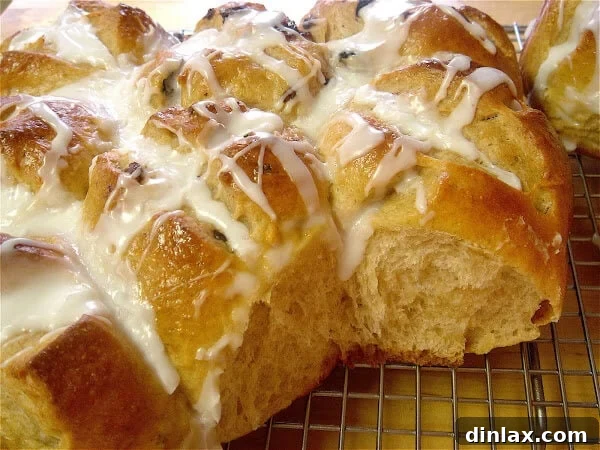
While the buns are baking, take the opportunity to prepare the optional but highly traditional glaze. In a small bowl, whisk together the 1½ cups of confectioners’ sugar and 2 tablespoons of milk until the mixture is completely smooth and free of any lumps. Adjust the milk quantity slightly if you desire a thicker or thinner consistency for your glaze. Once the buns are out of the oven, allow them to cool in their pans for about five minutes. This brief cooling period helps the glaze set beautifully without melting away completely.
Drizzle the prepared glaze generously over the tops of the warm buns, allowing it to gently cascade down the sides. For a truly authentic and visually striking touch, you can pipe a thicker glaze cross directly onto each bun after the initial drizzle has slightly set. Serve these delectable hot cross buns immediately while they are still warm and wonderfully fragrant. Note: The glaze is entirely optional; these buns are also incredibly delicious simply spread with softened butter, homemade jam, or a tangy marmalade, offering a less sweet but equally satisfying experience.
Tips for Baking Perfect Hot Cross Buns
- Don’t Overheat the Milk: When preparing the sponge, ensure the milk is lukewarm, not hot. Hot liquid will kill the yeast, preventing the dough from rising properly and resulting in dense buns.
- Kneading is Key: Proper kneading is fundamental. It develops the gluten, which gives the buns their soft, chewy, and elastic texture. A well-kneaded dough will be smooth and will spring back when gently poked.
- Embrace Cold Fermentation: The overnight rise in the refrigerator is not just for convenience. It significantly enhances the flavor depth and improves the overall texture of the buns, making them incredibly tender.
- Sharp Crosses Matter: Use a very sharp knife, a clean razor blade, or even kitchen shears for making the cross incisions. This creates a clean mark that expands beautifully and distinctively during baking.
- Ensure Evenly Sized Buns: For uniform baking and presentation, divide the dough carefully into equal portions. A kitchen scale can be incredibly helpful here to ensure consistency.
- Custom Spicing: Feel free to adjust the amounts of cinnamon and nutmeg to suit your personal preference, or experiment by adding other complementary spices like allspice, ground ginger, or a hint of cardamom for a different flavor profile.
- Alternate Cross Methods: If you prefer a baked cross rather than a glazed one, you can make a simple paste with flour and water (1 part flour to ~½ part water), pipe it onto the buns before baking, and then glaze them afterwards for an extra sweet layer.
Delicious Variations to Explore for Your Hot Cross Buns
While traditional hot cross buns are an absolute delight on their own, don’t hesitate to experiment with these exciting variations to suit your taste and creativity:
- Mixed Dried Fruits: Instead of relying solely on raisins, try incorporating a vibrant mix of currants, sultanas, chopped apricots, or candied citrus peel for a more complex and varied fruity flavor and texture.
- Citrus Zest Infusion: Add the finely grated zest of an orange or lemon to the dough. This simple addition imparts a bright, aromatic lift that beautifully complements the spices.
- Chocolate Chip Hot Cross Buns: For a modern and indulgent twist that’s popular with children and adults alike, fold in a generous handful of mini chocolate chips (dark, milk, or white) along with the dried fruits.
- Nutty Buns: Incorporate finely chopped pecans, walnuts, or almonds into the dough for added texture, a rich, nutty flavor, and an extra layer of complexity.
- Cream Cheese Glaze: For a richer and tangier topping, consider preparing a luscious cream cheese frosting instead of the simple confectioners’ sugar glaze. It adds a delightful creamy counterpoint to the spiced buns.
Conclusion: A Taste of Tradition, Made Easy and Delicious
Hot cross buns are truly more than just a seasonal baked treat; they are a delicious embodiment of history, faith, and a rich culinary heritage. From their enigmatic pagan roots to their profound Christian symbolism and the charming superstitions that once surrounded them, these spiced rolls have captivated palates and imaginations for centuries. Our detailed overnight recipe ensures that you can effortlessly bring this cherished tradition into your home, filling it with the irresistible aroma of freshly baked goodness and the joy of a shared meal. Whether enjoyed simply plain, generously spread with butter, or beautifully adorned with a sweet glaze, these homemade hot cross buns are the perfect, comforting way to celebrate Easter and create new, treasured memories with every spiced, tender bite.