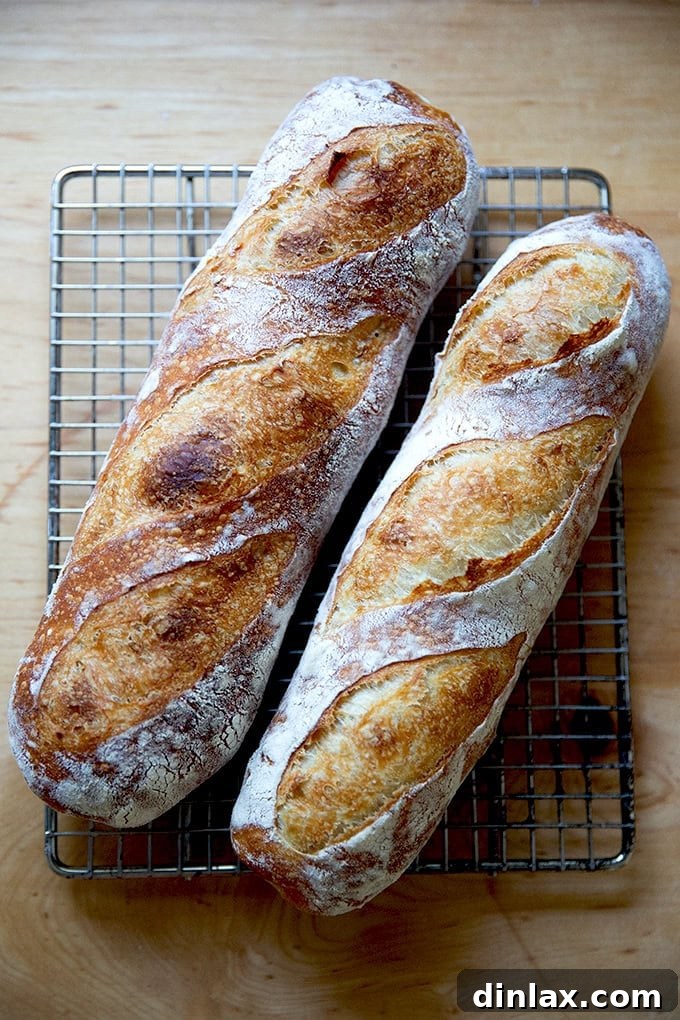
Welcome to the world of homemade baguettes, where bakery-quality bread is not just a dream but an achievable reality. This guide will walk you through crafting exquisite baguettes with an incredibly open crumb and a supremely crisp crust, all from a simple, no-knead, four-ingredient dough. The secret lies in mastering two fundamental principles: allowing your dough ample time to ferment, developing deep flavors and a robust structure, and baking in a perfectly steamy environment to achieve that signature crackling crust. Prepare to transform your home kitchen into a French boulangerie with our comprehensive, step-by-step instructions.
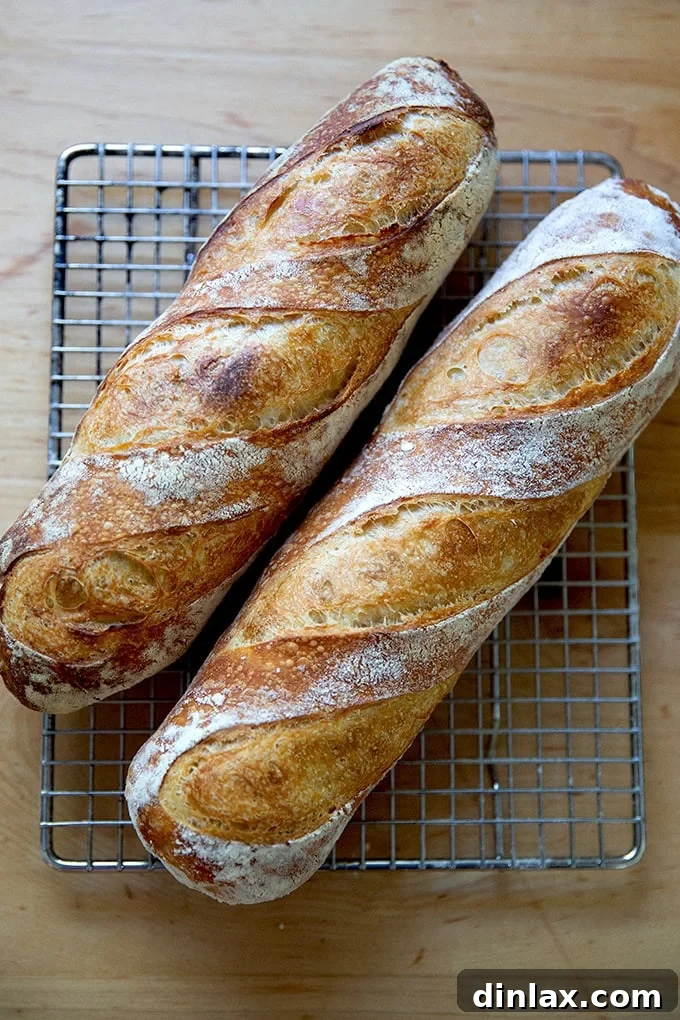
If your past attempts at baking baguettes at home have been met with frustration – whether it’s the challenging shaping techniques, the need for specialized equipment like couches, lames, or lava rocks, or the elusive quest for sufficient steam during baking – rest assured, you’re not alone. Baguettes are often considered one of the more demanding bread recipes for home bakers. However, through years of experimentation, I’ve distilled the process down to two critical, yet accessible, pillars of success: **extended dough fermentation** and **strategic steam baking.**
The Art and Science Behind Perfect Baguettes
The Magic of Long Fermentation: Flavor and Texture Unleashed
As with many beloved artisan breads, a prolonged fermentation period is paramount for developing superior flavor, texture, and browning in baguettes. But why is this so? When dough undergoes a slow rise, a symphony of beneficial enzymatic activities unfolds. Enzymes present in both the flour and the yeast diligently break down complex starches into simpler sugars. These simple sugars are not only crucial for feeding the yeast, allowing for a gentle, steady rise, but they also contribute significantly to the baguette’s depth of flavor and its ability to achieve that irresistible golden-brown crust during baking. By preparing your dough at least a full day before you intend to bake, you will notice a remarkable improvement in both the nuanced taste and the beautiful caramelization of your baguettes. This extended cold fermentation (often in the refrigerator) also allows the gluten structure to relax and strengthen, leading to a more extensible dough that is easier to shape and results in a more open, airy crumb.
Unlocking the Crispy Crust: The Indispensable Role of Steam
For any truly crusty bread, such as a simple sourdough loaf or Jim Lahey’s famous no-knead bread, steam during baking is non-negotiable. This steamy environment is the cornerstone of that deeply burnished, audibly crisp crust that defines a perfect baguette. Let’s delve deeper into how steam works its magic:
Maximizing Oven Spring for an Airy Crumb
Steam plays a dual role in promoting maximum oven spring – the rapid expansion of the dough upon entering the hot oven. First, the intense heat dramatically increases yeast activity, causing the rapid production of carbon dioxide gas. Second, as the water within the dough quickly evaporates, it converts into steam. Both this CO2 gas and the internal steam exert pressure against the dough’s developing gluten structure, prompting a significant rise.
A moist, steamy environment is critical because it keeps the dough surface soft and pliable during the initial baking phase. This softness allows the baguette to expand to its fullest potential without being restricted by a prematurely hardened crust. Without steam, the crust forms too quickly, rigidifying and inhibiting the dough’s ability to achieve that desirable light, airy, and open crumb structure.
Crafting the Golden, Shatteringly Crisp Crust
Beyond oven spring, steam is vital for achieving the baguette’s characteristic crust color and texture. In the early stages of baking, the rapid increase in temperature invigorates enzymatic activity on the dough’s surface. These enzymes break down starches into simple sugars, which are key precursors to the rich, caramelized color of the crust (the Maillard reaction). A steamy environment extends the active life of these enzymes, leading to a more vibrant and evenly browned crust.
Furthermore, steam contributes to the subtle sheen and incredible crispness. During those crucial initial minutes, the starches on the baguette’s surface gelatinize – they absorb water, swell, and form a thin, protective gel. When the steam is later released (by removing a lid or pan), this gel layer dries out under dry heat, transforming into a shiny, crackly, and delicate crust, distinct from a dull and hard one achieved without steam.
Observe the stark difference in the photos below. The first image displays a baguette baked with the benefit of steam:
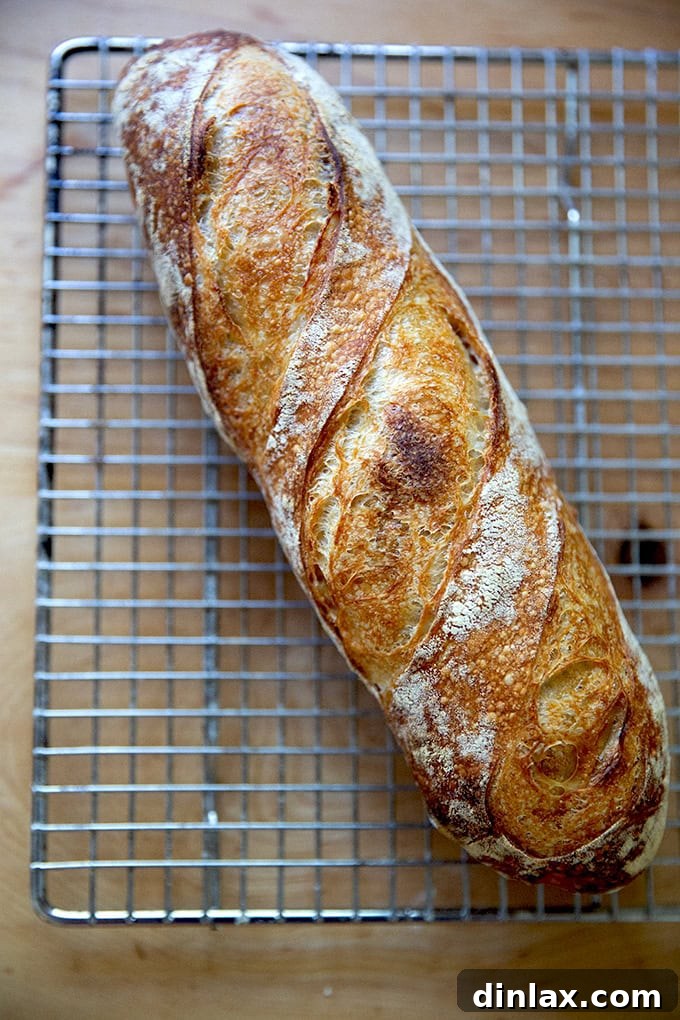
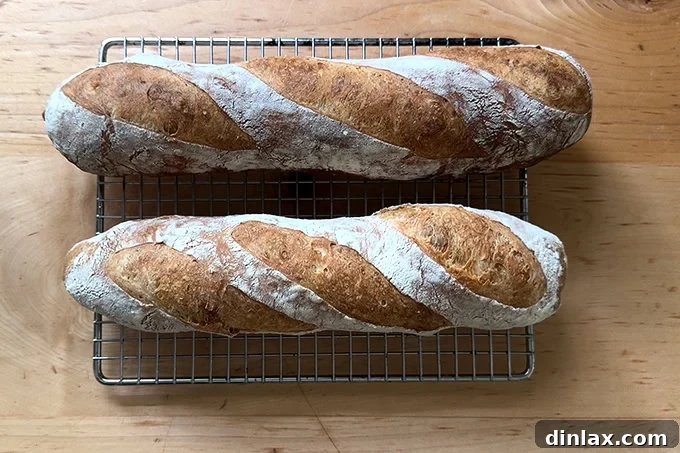
Compare this to the baguettes in the next photo, which were baked on a Baking Steel without steam. Notice the superior caramelization, clearer score differentiation, and slight sheen on the steam-baked loaf. The un-steamed baguettes below exhibit dry, lusterless crusts, lacking the desired visual and textural appeal.
Gathering Your Essentials: Ingredients for Success
Creating remarkable baguettes begins with high-quality ingredients. For this no-knead recipe, you’ll need just four staples: flour, salt, yeast, and water. While simplicity is key, understanding each ingredient’s role and choosing wisely will significantly impact your final product.
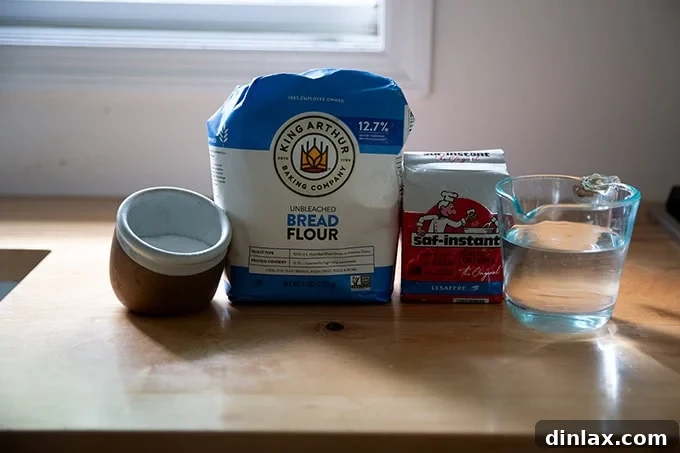
Flour Power: Choosing the Right Foundation
The type of flour you use will profoundly influence the baguette’s texture and crumb. Most of my experiments yielded excellent results with **King Arthur Bread Flour**. It’s widely available, consistent, and boasts a higher protein content than all-purpose flour, which is ideal for developing the strong gluten network needed for an open crumb. However, you can also use a good quality all-purpose flour for a slightly softer result.
For those seeking to explore different flavor profiles and textures, I also achieved outstanding results with Petra 0102 Flour. This unique flour is crafted from partially sprouted wheat, lending a distinctive depth of flavor and often an even more pronounced open crumb to both bread and pizza dough.
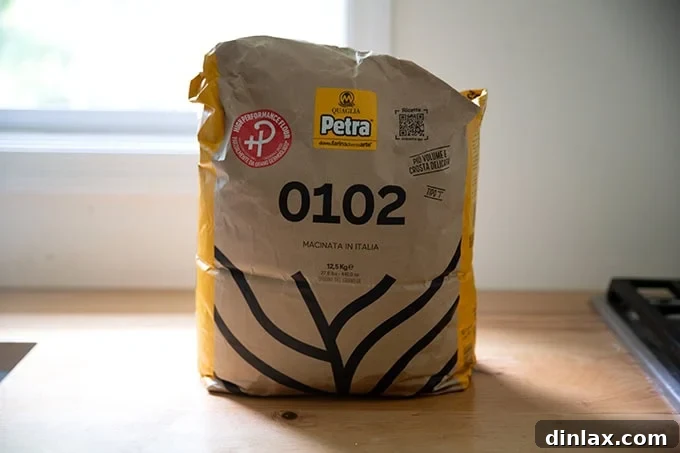
Salt, Yeast, and Water: The Supporting Cast
- Salt: Salt is more than just a seasoning; it plays a crucial role in controlling yeast activity and strengthening gluten. I recommend using **Diamond Crystal kosher salt**. If you opt for fine sea salt or Morton kosher salt, remember that their density differs, so adjust quantities accordingly. A general rule for bread dough is to use salt at 2% to 3% of the flour’s weight. Always measure with a digital scale for precision.
- Yeast: For this recipe, **SAF instant yeast** is my preferred choice due to its reliability and consistent performance. Instant yeast can be added directly to dry ingredients without prior proofing.
- Water: The hydration level is critical for a no-knead dough. Use cold water (around 60°F or 15°C). This helps to slow down initial fermentation, which is beneficial for flavor development.
Measure all ingredients precisely, ideally using a kitchen scale for the most accurate results:
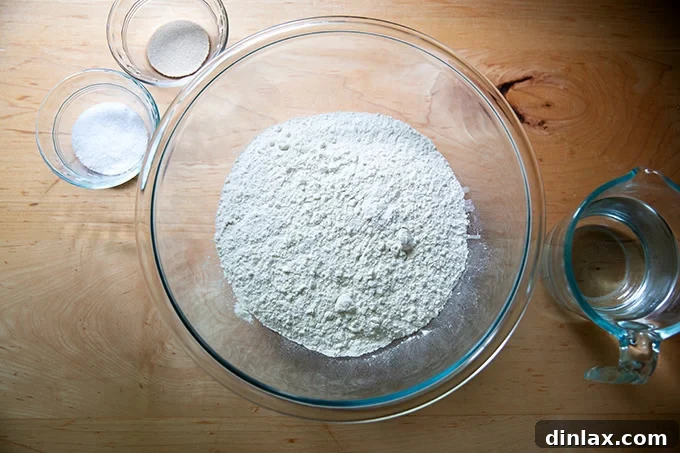
Step-by-Step Guide to Baking Homemade Baguettes 🥖🥖
Preparing Your Dough: Mixing and Folding
Start by combining the dry ingredients in a spacious bowl:
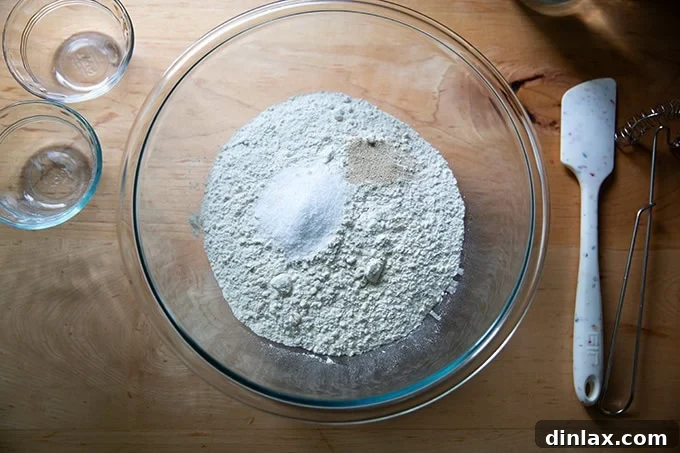
Whisk them thoroughly to ensure even distribution of the yeast and salt:
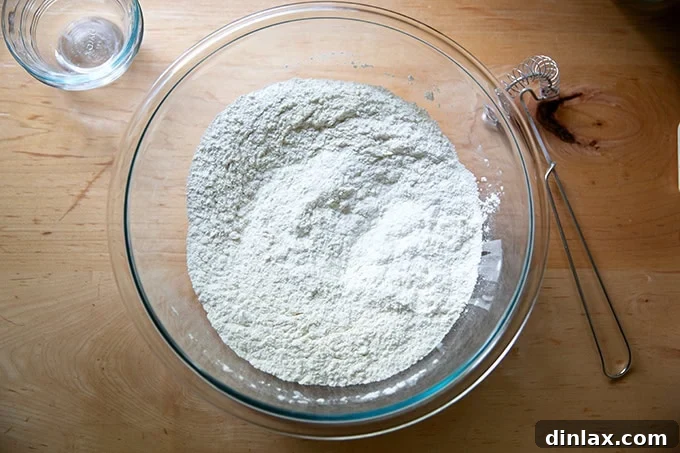
Next, introduce the water to the dry mixture:
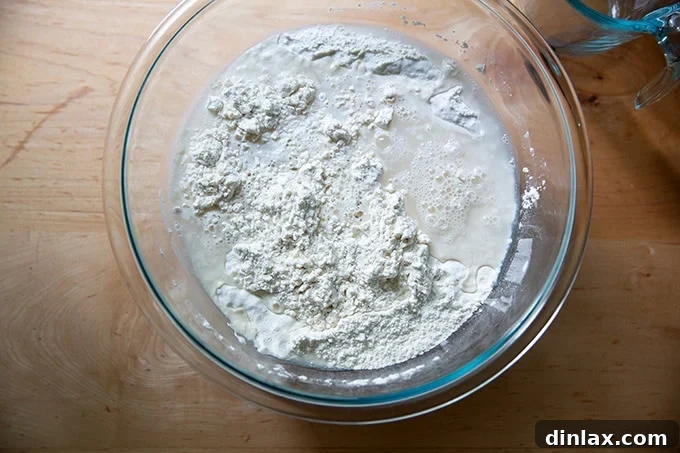
Mix until all the flour is hydrated and you have a cohesive, albeit shaggy, dough ball. It won’t be smooth yet, and that’s perfectly normal for a no-knead dough. Let it rest, covered, for about 30 minutes to allow the flour to fully hydrate.
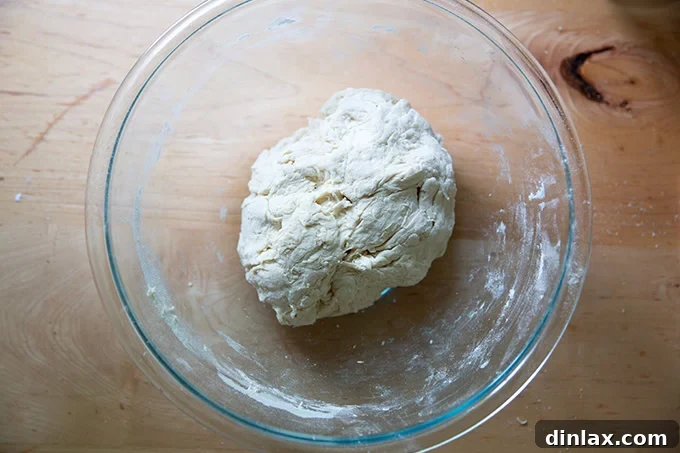
After the rest, perform a series of gentle stretch and folds. This technique develops gluten without traditional kneading, strengthening the dough. Dip your hand in water to prevent sticking, then grab an edge of the dough, gently stretch it upwards, and fold it towards the center. Rotate the bowl and repeat this motion 8-10 times. You’ll notice the dough becoming smoother and more elastic with each fold. (Refer to the first video in this article for visual guidance on this step).
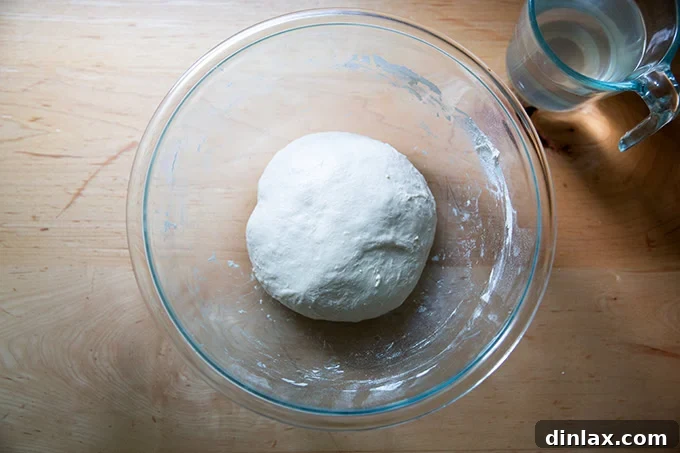
Cold Fermentation: A Master Dough Technique
Cover the bowl with an airtight lid and allow the dough to undergo its primary fermentation at room temperature until it has roughly doubled in volume and its surface is adorned with small bubbles, indicating active yeast. This usually takes 6-10 hours, depending on your kitchen’s temperature. For optimal flavor development and a more manageable dough, I highly recommend transitioning to cold fermentation.
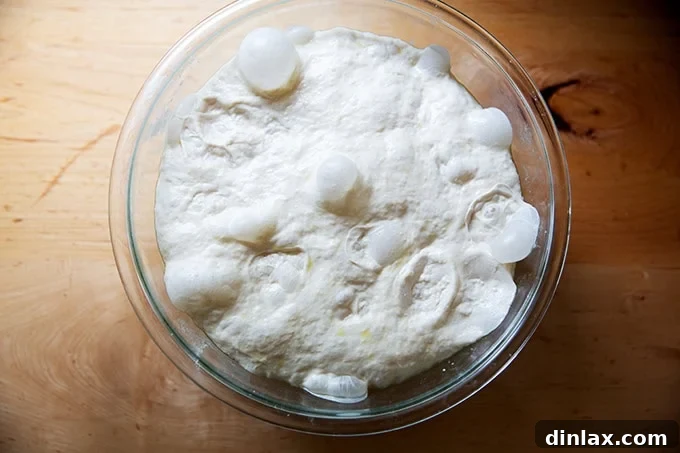
Gently deflate the dough using lightly floured hands. This releases some of the gas and makes the dough easier to handle.
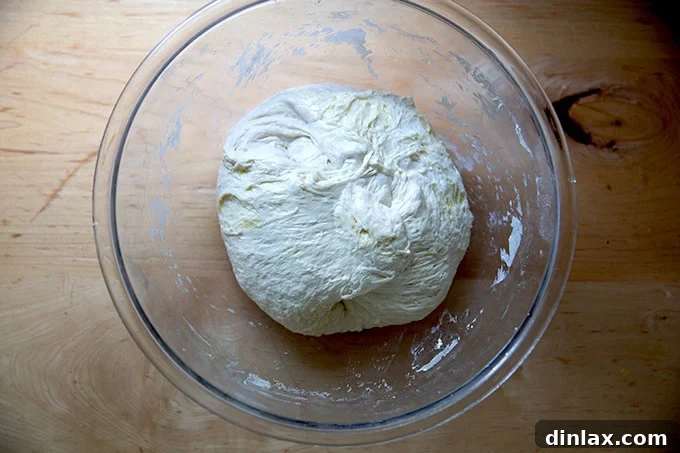
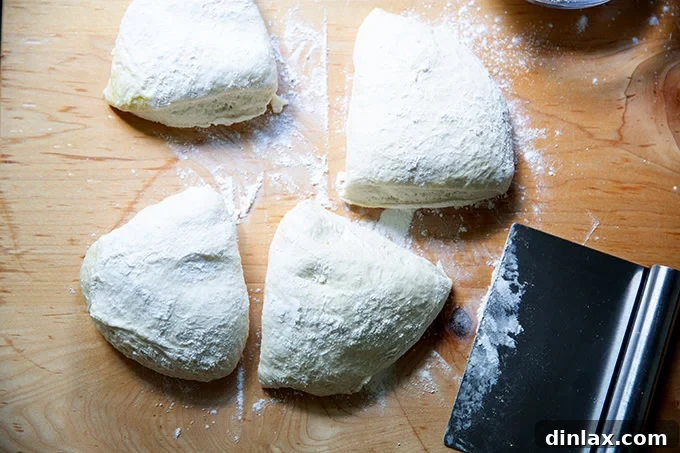
Turn the dough out onto a clean work surface (avoid excess flour initially) and divide it into four equal portions. For consistency, use a kitchen scale to ensure each portion weighs approximately 237 grams.
Gently shape each portion into a tight ball. This step creates surface tension, which is beneficial for the final structure of the baguette.
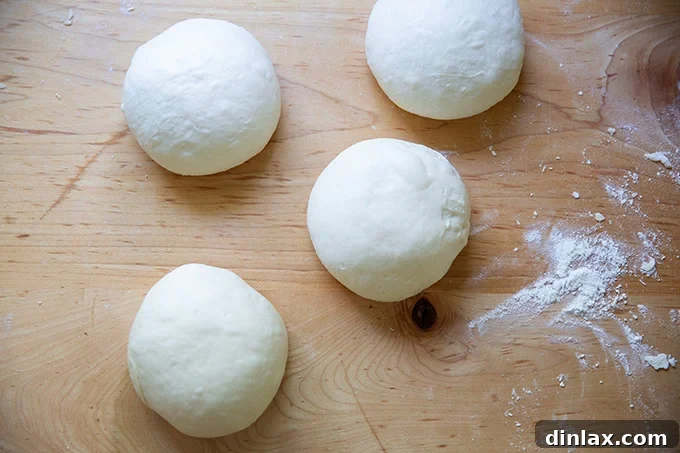
Transfer these dough balls to individual airtight storage vessels. They can then be refrigerated for at least one day and will remain viable for up to a week. Cold fermentation dramatically enhances flavor complexity and improves the dough’s handling properties.
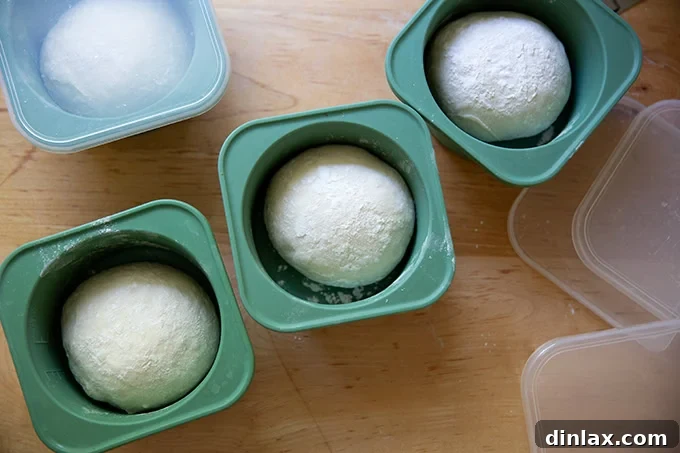
Expert Shaping: Crafting Your Baguettes
On baking day, gently remove a dough ball from its container and turn it out onto a clean work surface. I find using minimal to no flour at this stage helps maintain the dough’s texture, but if it’s overly sticky, a light dusting is acceptable.
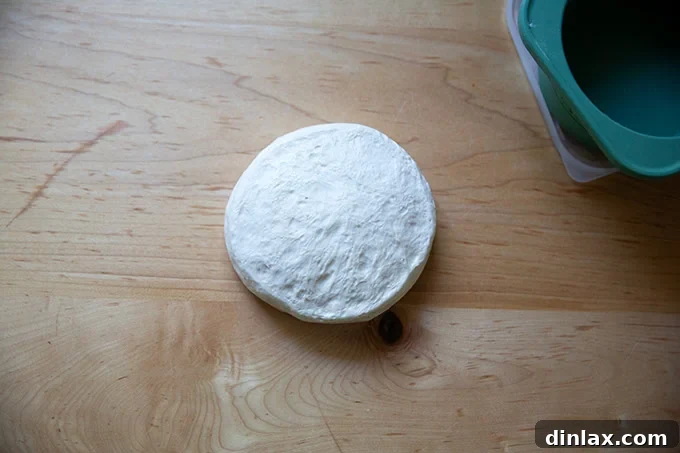
Pat the dough gently into a rectangle, roughly 6×7 inches in size.
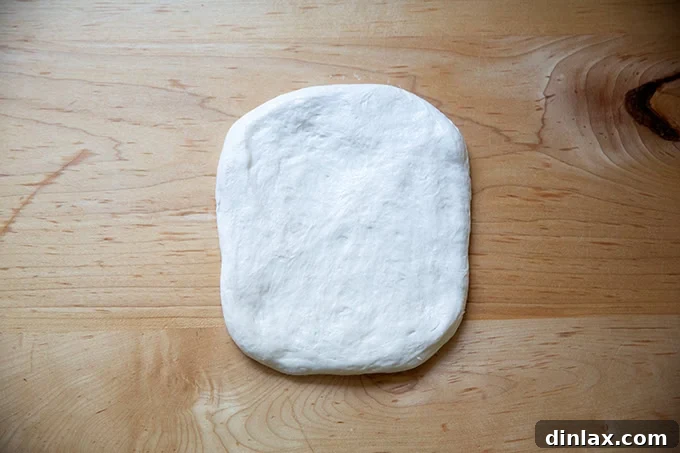
Begin shaping by folding the top edge of the dough down towards the center. This builds layers that contribute to the open crumb.
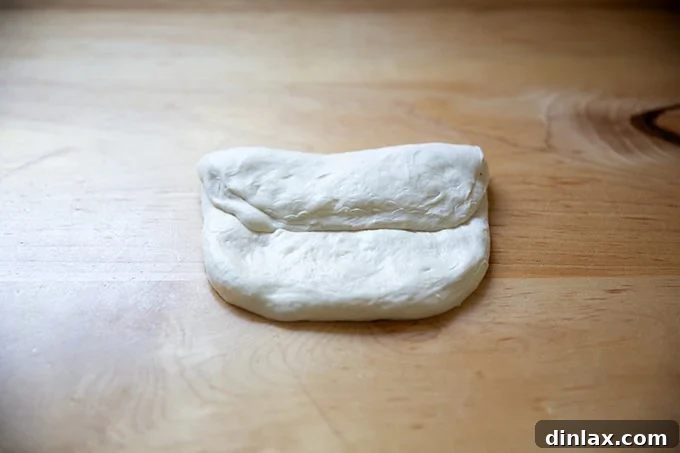
Rotate the dough 180 degrees, then repeat the fold, bringing the new top edge down to the center. This creates what’s often called an “envelope” fold, strengthening the dough’s structure.
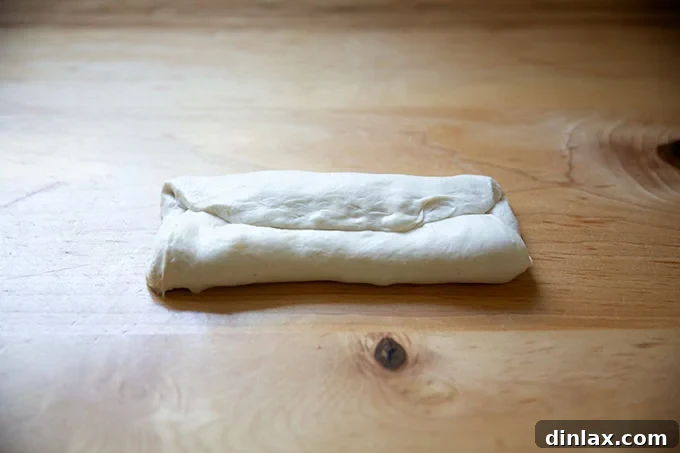
Fold the dough once more from the top down, essentially folding the envelope in half. This continues to build internal tension.
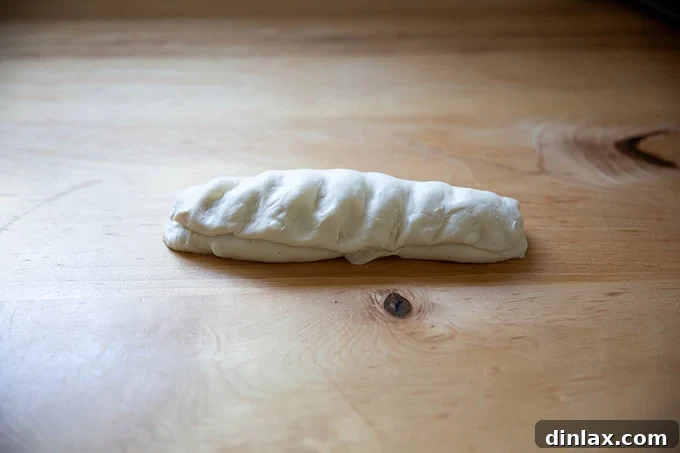
Repeat the folding process one last time, extending the fold all the way to the end, then firmly pinch the seam to seal it. (Watching the shaping video is highly recommended for clarity.)
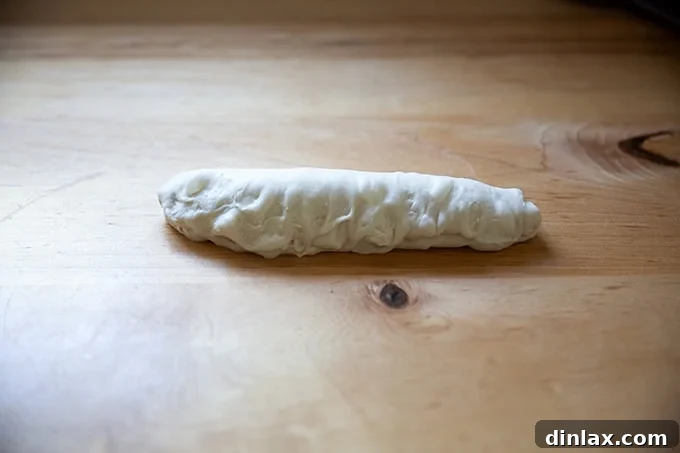
Once the seam is securely pinched, turn the dough over so the seam faces downwards and gently roll it to lengthen and even out the baguette shape.
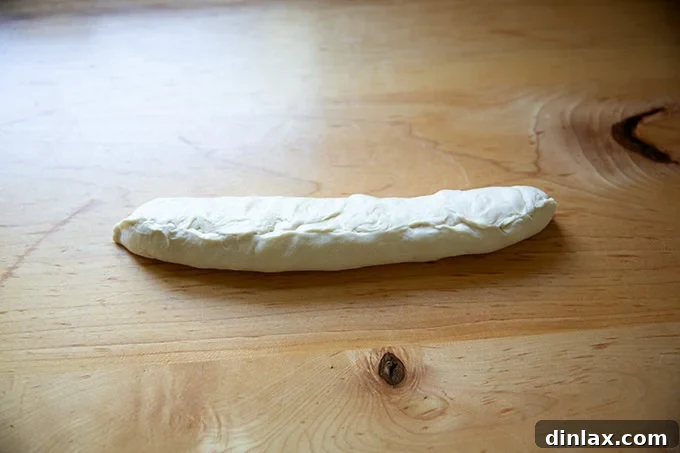
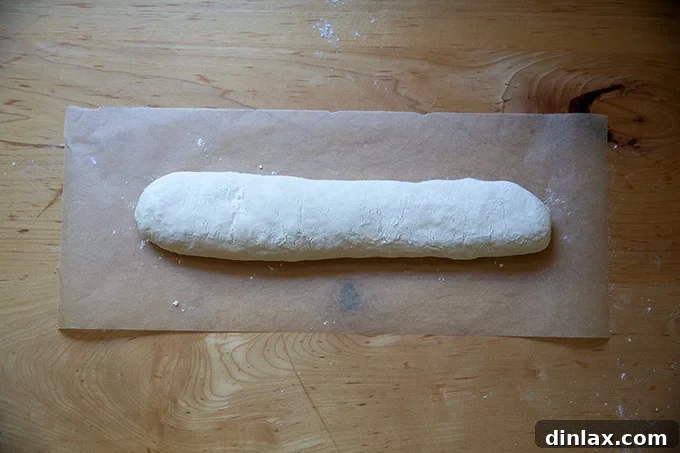
The finished, expertly shaped baguette should be smooth and taut, ready for its final proofing stage.
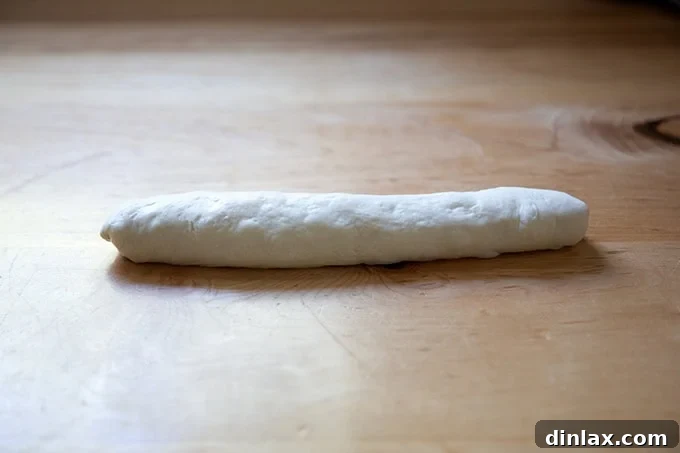
Here’s a video demonstrating the shaping technique in detail:
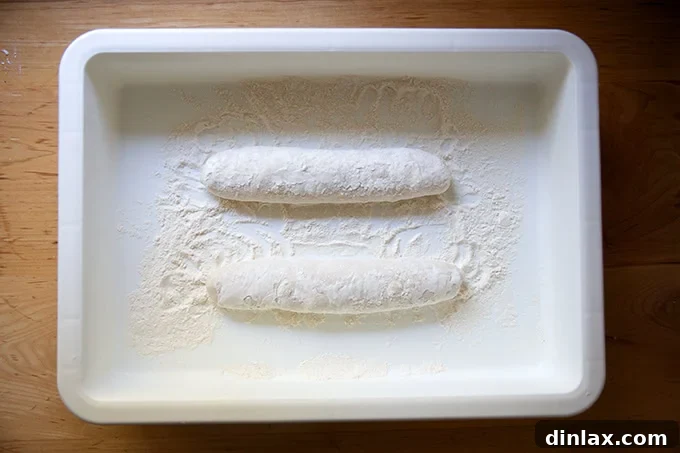
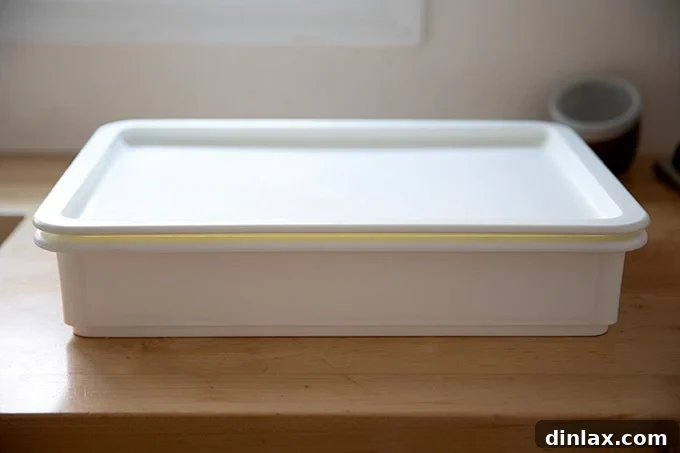
Transfer your shaped baguettes to a floured, lidded storage vessel for proofing. I highly recommend DoughMates for their ideal shape and airtight seal. Alternatively, a large Tupperware container or a 9×13-inch dish placed inside a 2-gallon ziptop bag will create a suitable environment.
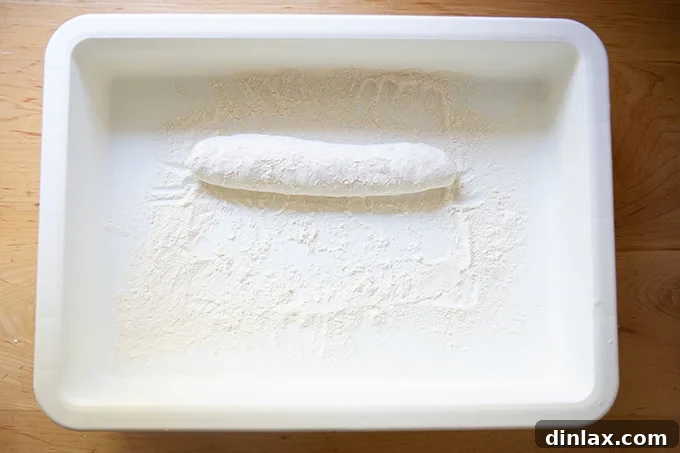
When proofing multiple baguettes, I often stagger their entry into the oven by about 30 minutes. This helps prevent overproofing one batch while the other is waiting, ensuring each baguette bakes at its peak.
Proofing Perfection: Knowing When Your Dough is Ready
Cover the proofing container and let the dough rest for approximately 2.5 to 3 hours at room temperature. This final proofing stage is crucial for developing the baguette’s light and airy texture.
The dough should feel very light and noticeably airy to the touch, almost like a puffed cloud. A common assessment tool is the “poke test”: lightly flour a finger and gently press it into the dough about 1/2-inch deep. If the indentation springs back immediately, the dough needs more time. If it springs back slowly but retains a partial indentation (meaning it doesn’t completely refill), your dough is likely ready for baking. If it doesn’t spring back at all, it’s probably overproofed, but don’t despair—bake it anyway, as it can still yield a delicious result! While the poke test can be a guide, I’ve found that my baguettes consistently achieve a lighter, airier crumb when I allow them the full 3 hours of proofing, even if they seem “ready” earlier. Trust your intuition and observe the dough’s overall volume and texture.
Scoring for Beauty and Structure
When your dough is perfectly proofed and ready to bake, carefully remove it from the DoughMate (or chosen vessel). Transfer it onto a sheet of parchment paper. I typically use full sheets of parchment, fold them lengthwise, and then cut them in half to get two suitable strips.
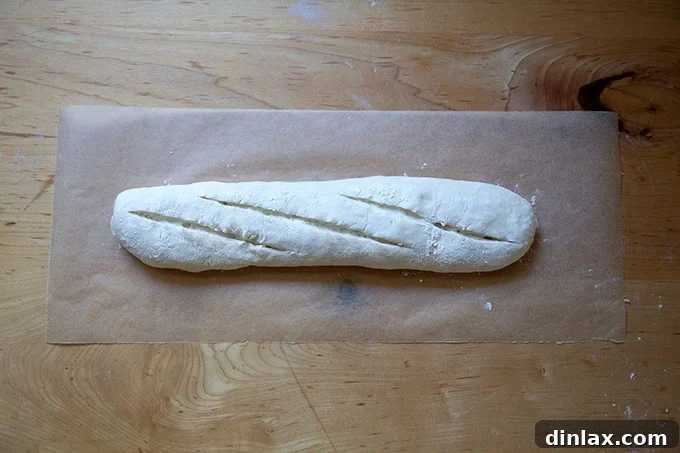
Using a sharp razor blade (a baker’s lame is ideal), make three to five evenly spaced diagonal slashes along the top surface of the baguette. These scores, or “grignes,” are not just for aesthetics; they guide the dough’s expansion during oven spring, allowing it to release steam and achieve a beautiful, controlled burst.
Baking Methods for a Professional Finish
Now, it’s time to bake your masterpiece and harness the power of steam.
Method 1: The Challenger Bread Pan Advantage
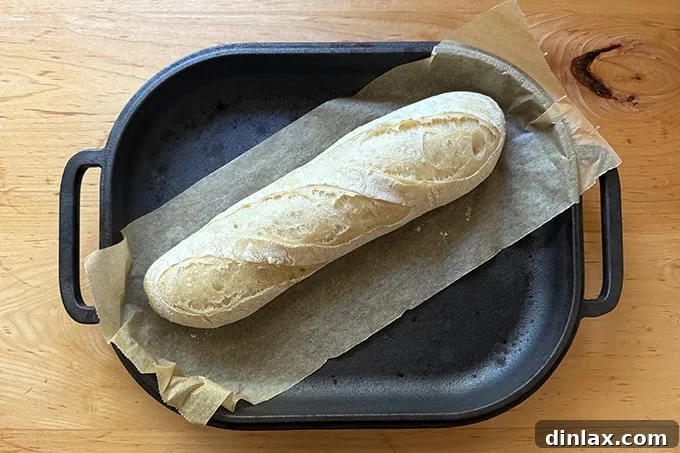
The Challenger Bread Pan (or a similar oblong Dutch oven) is a fantastic tool for baking baguettes as it effectively traps steam. Place your Challenger Bread Pan into a cold oven and preheat to 450ºF (232ºC). This typically takes around 30 minutes in most ovens, ensuring the pan is thoroughly heated. Carefully lower the scored baguette, still on its parchment paper, into the searing hot pan.
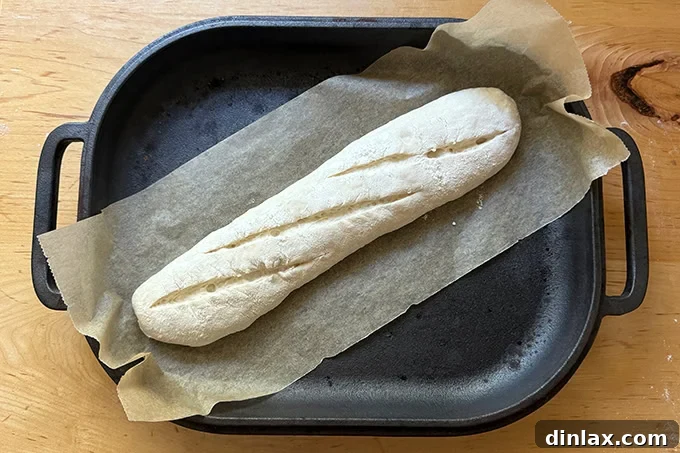
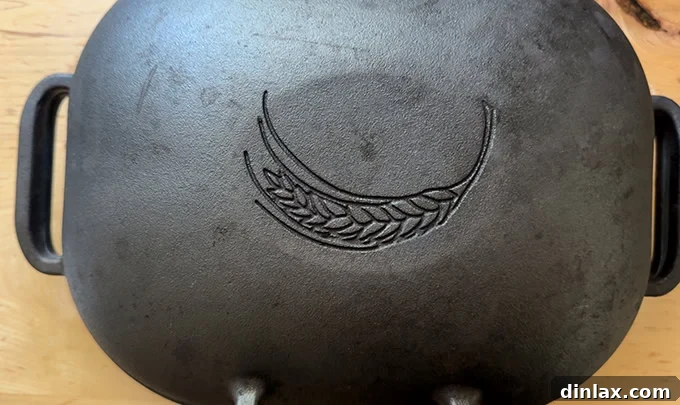
Cover the pan with its lid and return it to the oven for 10 minutes. This initial covered bake creates the crucial steamy environment.
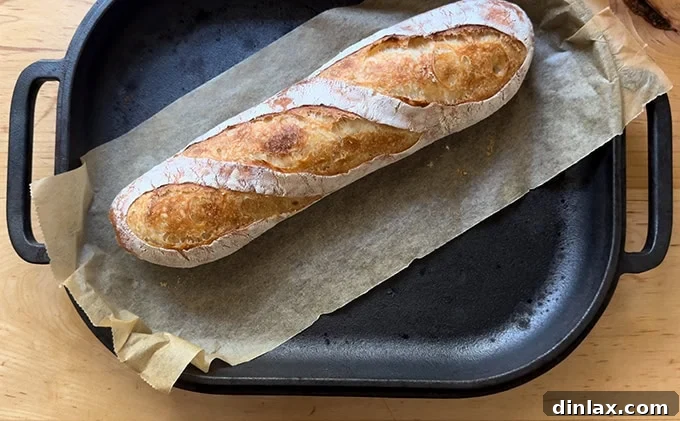
After 10 minutes, carefully remove the lid. The baguette will be partially baked and slightly pale. Return the uncovered baguette to the oven for another 10 minutes (or longer, if needed)…
…until it achieves a beautiful, deep golden-brown hue and its crust is shatteringly crisp. This final uncovered phase allows the crust to fully dry out and caramelize.
Carefully transfer the baked baguette to a cooling rack. Allow it to cool for at least 15 minutes before…
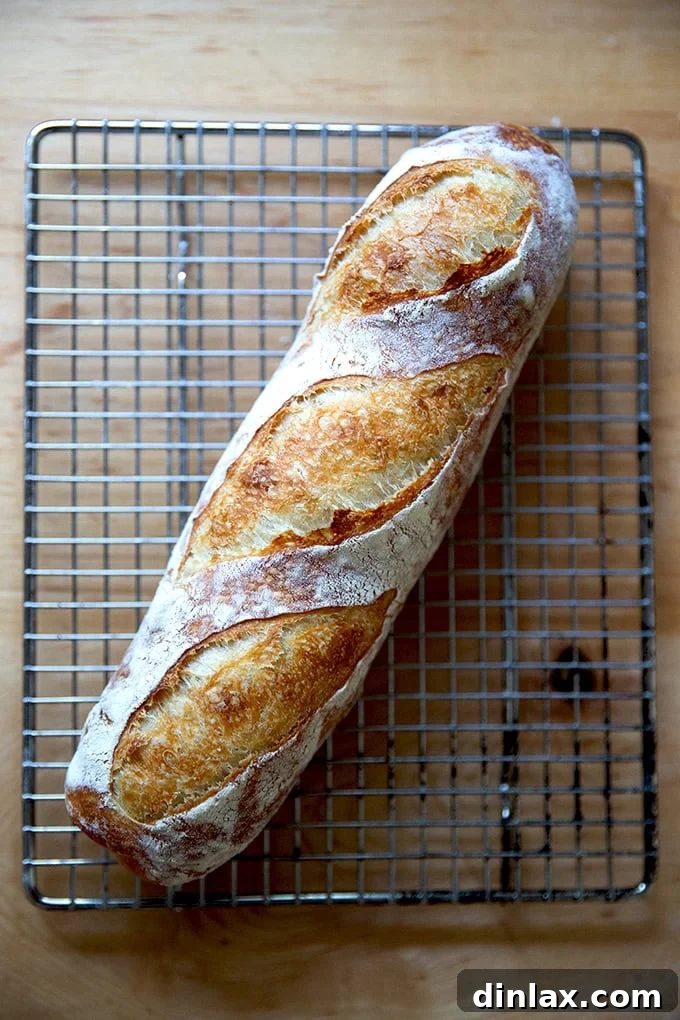
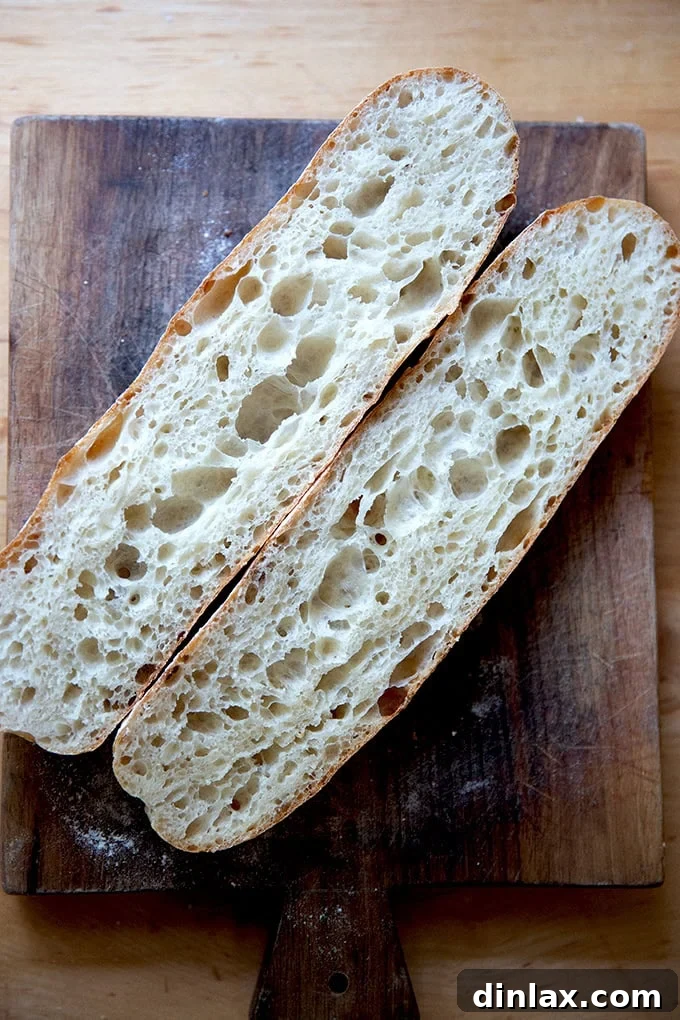
…slicing and serving. The waiting is the hardest part, but it’s crucial for the crumb to set and for the crust to achieve its ultimate crispness.
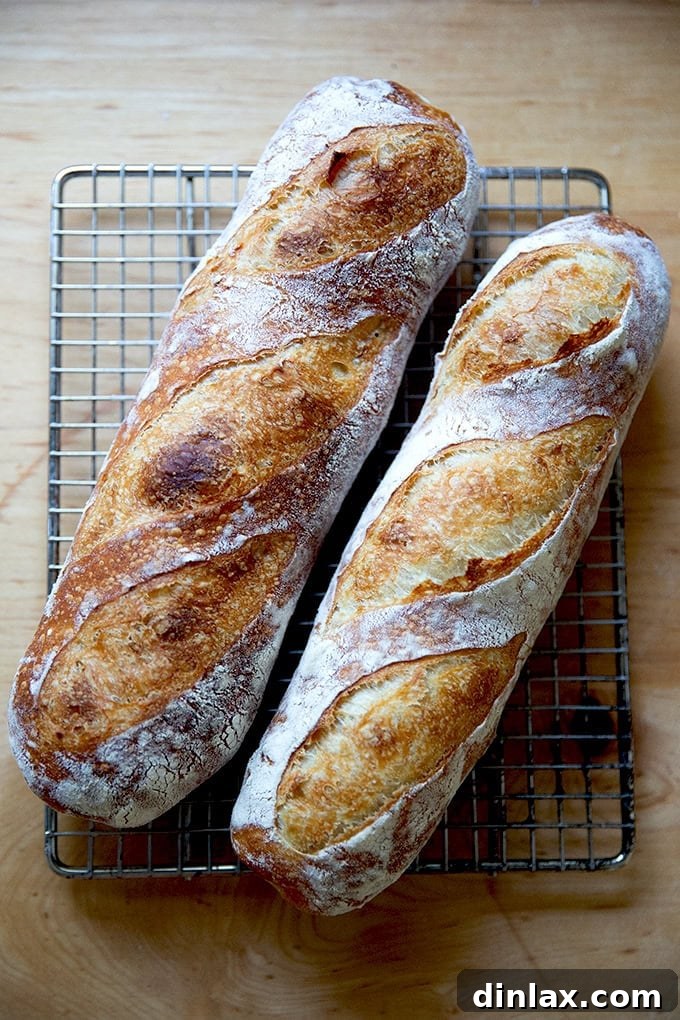
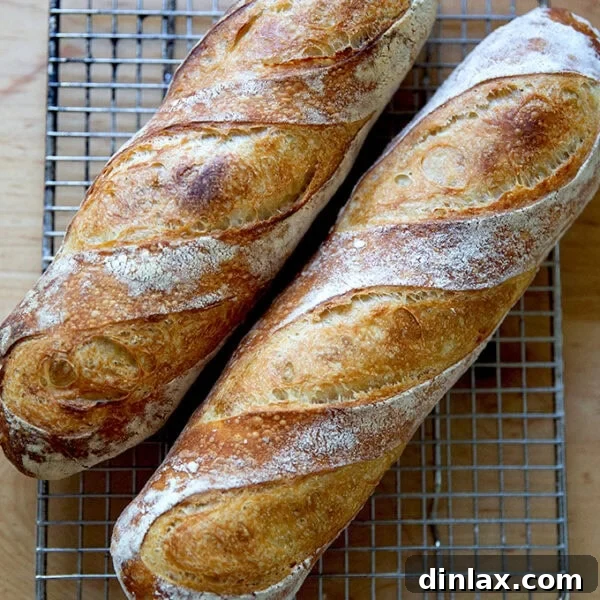
As mentioned earlier, I’ve experimented with various flours. The baguette on the left in the image below is made with Petra 0102 flour, while the one on the right uses King Arthur Bread Flour. Notice the subtle differences in crust color and texture that different flours can impart.
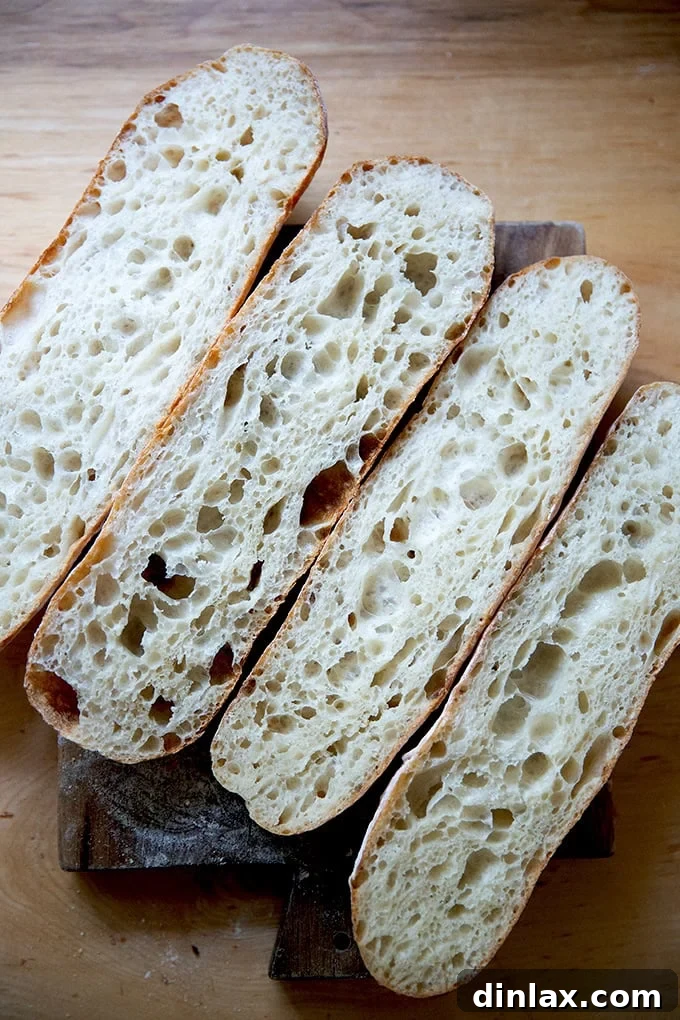
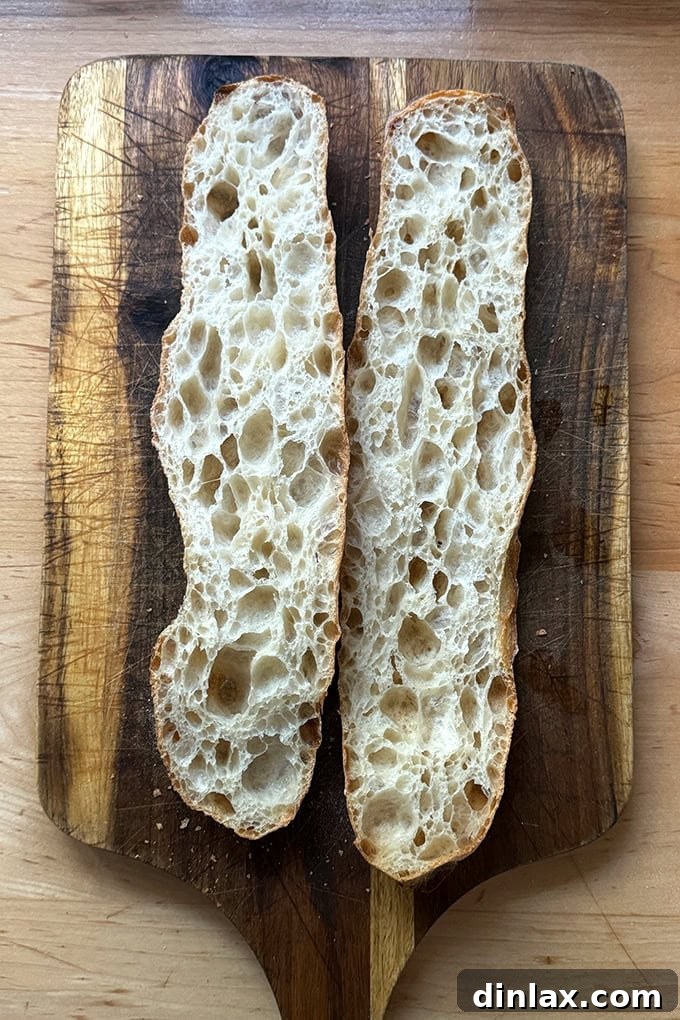
Here’s a comparison of their internal structures: Left, a baguette made with Petra flour; right, one made with King Arthur bread flour. The differences in crumb density and openness are often a direct result of flour type and fermentation.
Method 2: Achieving Steam with a Baking Steel or Stone
If you don’t own a Dutch oven or Challenger Bread Pan, a Baking Steel or a baking stone can still produce excellent results with a clever steam hack. Position your Baking Steel or stone on the middle rack of your oven and preheat it to 450ºF (232ºC) for at least 30 minutes to ensure it’s intensely hot. Use a pizza peel to deftly shimmy your scored baguette, parchment paper and all, onto the blazing hot surface.
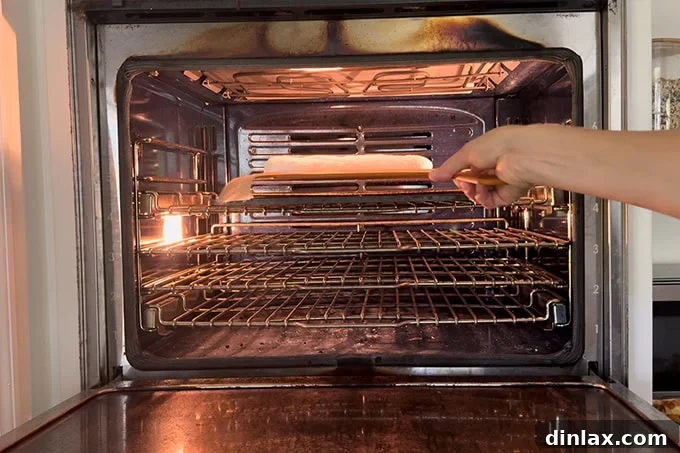
To create steam, cover the baguette with a disposable aluminum lasagna pan. Place a heavy, oven-safe object (like another small skillet or a ceramic dish) on top of the aluminum pan to weigh it down and create a tighter seal, effectively trapping the steam released from the bread.
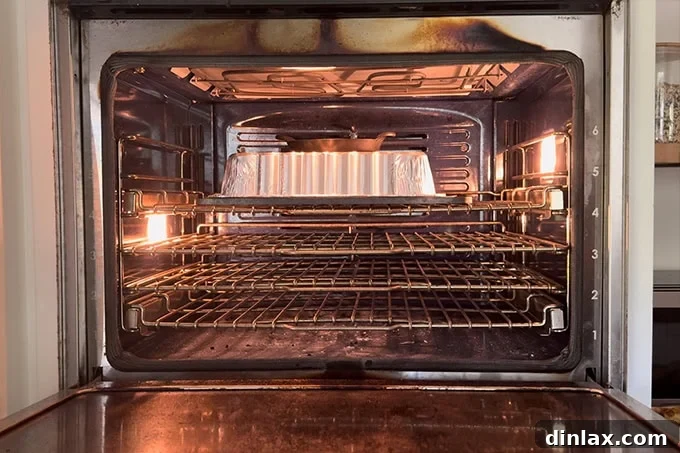
Bake for 10 minutes with the pan covered. Then, carefully remove the weight and the aluminum pan. Be cautious of the rush of hot steam!
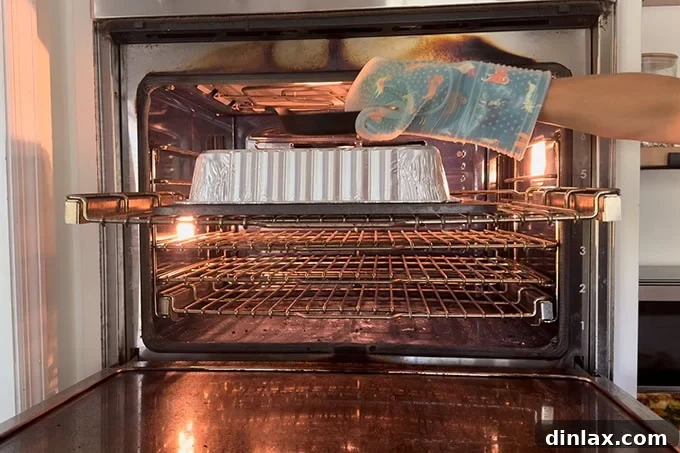
Continue baking the baguette, now uncovered, for an additional 10 minutes…
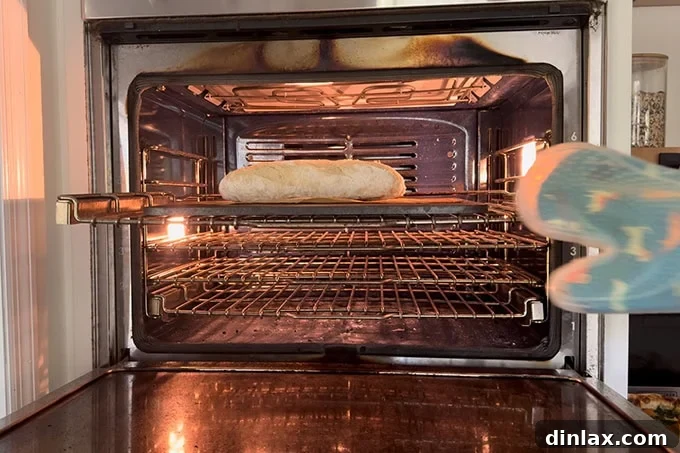
…until it reaches your desired level of golden-brown color and bronzy crispness. The direct heat from the steel will ensure a robust bottom crust.
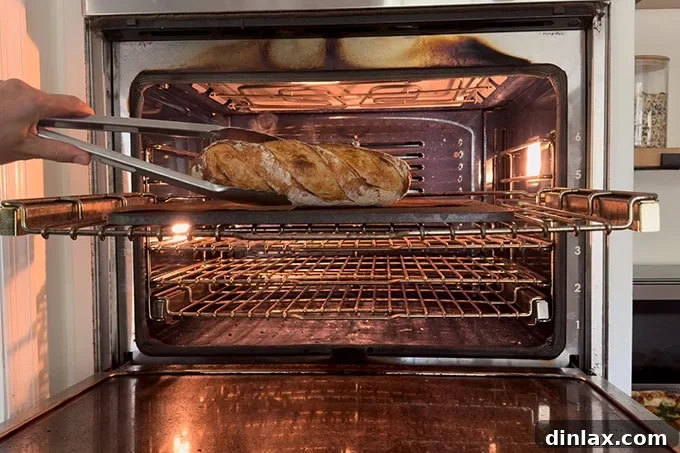
Again, transfer to a cooling rack and let cool for about 20 minutes before halving. This cooling period is crucial for the internal structure to stabilize and for the crust to maintain its crispness.
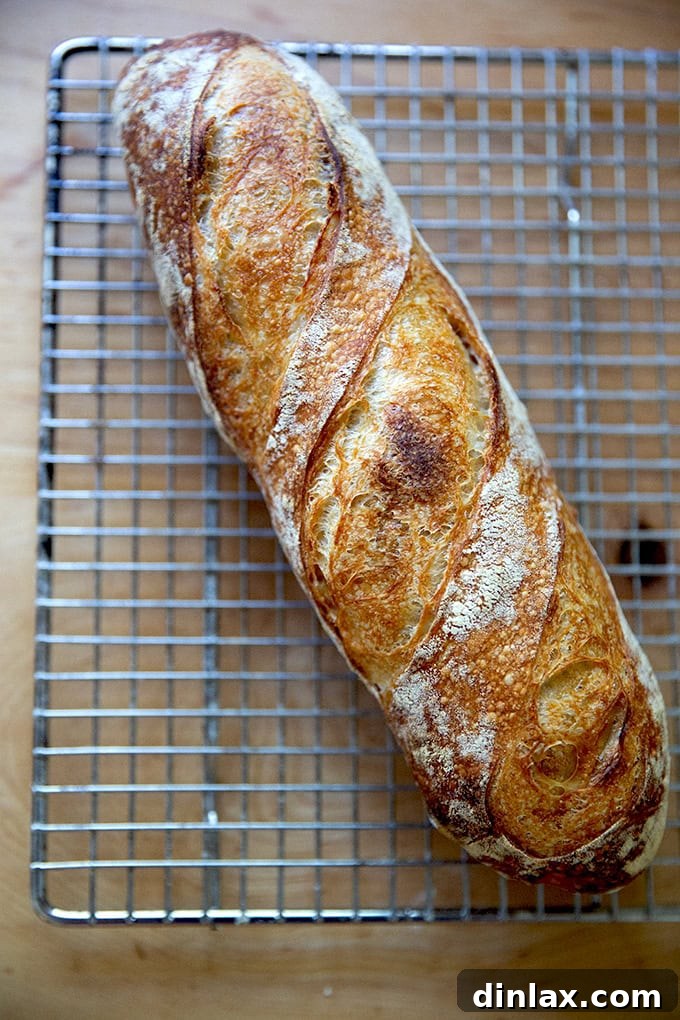
Serve immediately and enjoy the fruits of your labor!
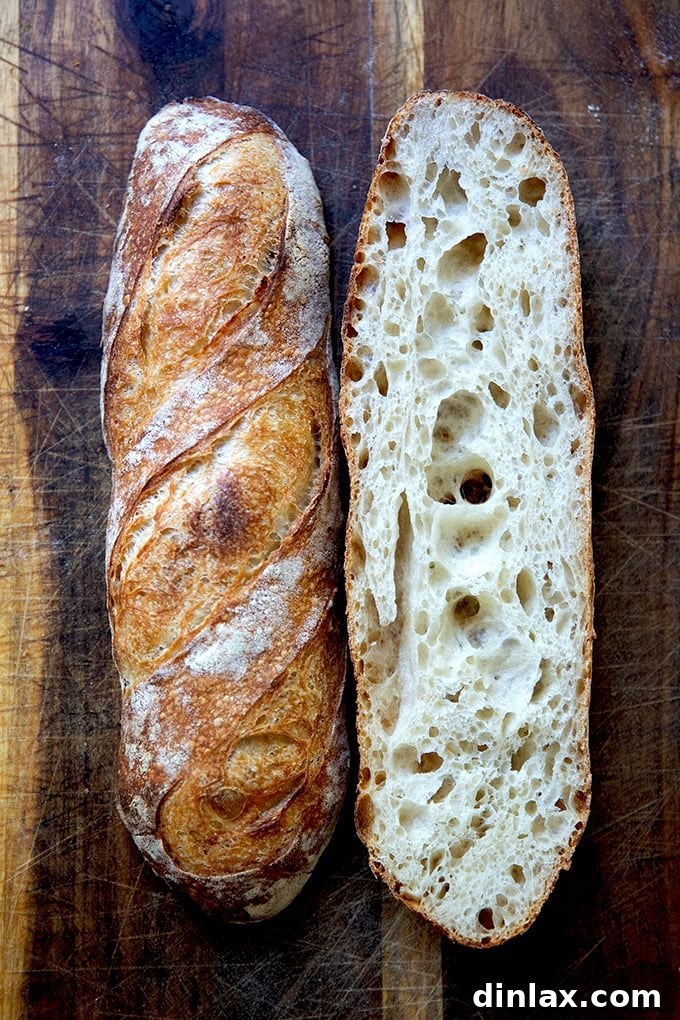
Enjoying Your Homemade Masterpiece
Nothing compares to the aroma and taste of a freshly baked baguette. Slice it horizontally for sandwiches, tear off chunks to dip in olive oil, or serve it alongside a hearty soup or a cheese board. These baguettes are a testament to the fact that artisan bread is within reach for any home baker.
The loaf pictured below was made with King Arthur Bread Flour, and impressively, it experienced no refrigeration. I mixed the dough on a Friday evening, portioned and balled it up Saturday morning, allowed the balls to rest in a DoughMate for about 2 hours, then shaped them into baguettes and let them proof for another 2 hours at room temperature before baking. This demonstrates that while cold fermentation is ideal, a shorter, warmer fermentation can still yield wonderful results, especially when time is a factor.
Troubleshooting Common Baguette Challenges
Even with the best instructions, baking can sometimes throw curveballs. Here are a few common issues and how to address them:
- Dense Crumb: If your baguette has a tight, dense interior instead of an open, airy one, it might be under-proofed. Allow more time for the final proofing stage, especially if your kitchen is cool. Alternatively, it could be a sign of insufficient gluten development; ensure your stretch-and-folds are effective.
- Pale Crust: A pale crust indicates a lack of proper browning, often due to insufficient steam during the initial bake or not enough time in the dry heat phase. Ensure your oven is fully preheated and your steaming method is effective. If using a Dutch oven, ensure the lid is tight.
- Crust Too Hard/No Crackle: This typically happens when there isn’t enough steam, causing the crust to form too quickly and become overly hard without the desired sheen and crispness. Double-check your steaming setup.
- Shaping Difficulties: If the dough is too sticky, a light dusting of flour is fine, but too much flour can make it stiff. If it’s tearing, the gluten might be underdeveloped, or you might be handling it too roughly. Review the shaping video and practice patience.
- Overproofed Dough: If your dough collapses when touched or scored, it’s likely overproofed. While it might still bake, the resulting crumb could be denser. Adjust proofing times, especially in warmer environments, or consider a shorter final proof.
Practice makes perfect, and every loaf is a learning experience. Don’t be discouraged by imperfections; embrace them as part of the artisan baking journey!
Print
Crusty, Open-Crumb Baguettes
5 Stars 4 Stars 3 Stars 2 Stars 1 Star
5 from 32 reviews
Author: Alexandra Stafford
Total Time: 48 hours 20 minutes
Yield: 4 baguettes 1x
Diet: Vegan
Description
Craft these exceptional baguettes with a simple, no-knead, four-ingredient dough, yielding an irresistibly open crumb and a shatteringly crisp crust. The key to success is two-fold: ensuring the dough has ample time for fermentation and baking in a perfectly steamy environment. Follow our detailed step-by-step instructions below to master this artisan bread at home.
This dough recipe is adapted from the outdoor variation of the Neapolitanish pizza dough recipe found in my cookbook, Pizza Night.
Notes
- For the most accurate and consistent results, always use a digital kitchen scale to measure all ingredients.
- Flour Selection: While most of my experiments relied on readily available King Arthur Bread Flour, I’ve also achieved excellent results, often with an even more open crumb, using Petra 0102 Flour, a specialty flour made from partially sprouted wheat known for enhancing flavor and texture.
- Salt Considerations: I prefer Diamond Crystal kosher salt for its flakey texture and moderate salinity. If substituting with fine sea salt or Morton kosher salt, remember they are denser. A good guideline for bread and pizza dough is 2% to 3% salt by flour weight. For 550 grams of flour, 16.5 grams is 3% and 11 grams is 2%. If using Diamond Crystal, approximately 5 teaspoons. If using Morton or fine sea salt, approximately 2.5 teaspoons. Always verify with a scale.
- Yeast Preference: SAF instant yeast is my top recommendation for its consistent and reliable performance.
Timing for Optimal Flavor and Texture
Plan ahead for this recipe, as it thrives on a long, slow initial rise (roughly 6-10 hours) followed, ideally, by extended cold fermentation in the refrigerator.
Example Timeline #1: Utilizing Fridge Time for Deep Flavor
- Wednesday Evening: Mix the dough.
- Thursday Morning: Ball up the dough portions and transfer them to the fridge for cold fermentation.
- Friday Afternoon (or any subsequent afternoon for up to a week): Remove a dough ball from the fridge approximately 3 hours prior to when you plan to bake.
- Friday Evening: Shape and bake your baguette.
Example Timeline #2: No Fridge Time (Faster Method)
- Thursday Evening: Mix the dough.
- Friday Morning: Ball up the dough portions, transfer them to a lidded vessel (like a DoughMate), and leave at room temperature for approximately two hours.
- Friday Midday: Shape the dough balls into baguettes and return them to the lidded vessel. Allow them to proof at room temperature for roughly two more hours.
- Friday Afternoon: Bake the baguettes.
Recommended Baking Tools for Baguettes:
- Challenger Bread Baker (an oblong Dutch oven designed for baguettes)
- Baking Steel (the original or the pro package) paired with a disposable aluminum lasagna pan for steaming
- Emile Henry Lidded Baguette Baker or similar dedicated baguette baker
Other Essential Equipment:
- Dough Storage Containers: This set of four airtight containers is excellent for cold fermentation.
- DoughMate proofing vessel (or a large lidded container)
- Parchment paper (pre-cut or roll)
- Razor blades or a baker’s lame for scoring
Ingredients
- 550 grams (approximately 4¼ cups) bread flour or high-quality all-purpose flour, plus additional for light dusting (refer to notes above for flour guidance)
- 15 to 16 grams salt (see detailed notes above regarding salt types and measurement)
- 2 grams (approximately ½ teaspoon) instant yeast (SAF instant yeast is highly recommended, see notes)
- 385 grams (approximately 1 2/3 cups) cold water (around 60°F or 15°C is ideal)
- A small amount of extra-virgin olive oil for coating the dough
Instructions
- Mix the Dough: In a large mixing bowl, thoroughly whisk together the measured flour, salt, and instant yeast until well combined. Pour in the cold water. Using a sturdy spatula or your hands, mix until all the flour is hydrated and the ingredients form a shaggy, cohesive dough ball. If the dough feels too dry, gently knead it in the bowl for a minute or two until it comes together. Cover the bowl loosely with a kitchen towel and let the dough rest for a minimum of 15 minutes, up to 30 minutes, allowing for initial hydration.
- Perform Stretch and Folds: Prepare a small bowl of water. Dip one hand into the water to prevent sticking. Using your wet hand, grab an edge of the dough, gently pull it upwards, and fold it over towards the center of the bowl. Rotate the bowl 90 degrees and repeat this stretching and folding motion approximately 8 to 10 times. By the end of this process, the dough should visibly transform from a shaggy mass to a smoother, more unified, and slightly elastic consistency. (For visual guidance, please refer to the first video embedded in the article above.)
- Drizzle about 1 teaspoon of extra-virgin olive oil over the surface of the dough. Use your hands to gently rub the oil evenly over the entire dough ball. Cover the bowl tightly with an airtight lid or plastic wrap. Allow the dough to undergo its first rise at room temperature until it has nearly doubled in volume and its surface is dotted with numerous small bubbles. This primary fermentation typically takes 6 to 10 hours, with the exact timing dependent on your kitchen’s ambient temperature.
- Portion the Dough: Once risen, turn the dough out onto a lightly floured work surface. Using a bench scraper or a sharp knife, divide the dough into 4 equal portions. For precision, aim for approximately 237 grams per portion using a kitchen scale. Using minimal flour as needed to prevent sticking, gently form each portion into a ball. Do this by grabbing the edges of the dough and pulling them under towards the center to create a rough sphere. Then, flip the ball over, cup both your hands around the dough, and drag it towards you across the surface to create surface tension, resulting in a tight, smooth ball.
- Store for Cold Fermentation: Place each perfectly balled dough portion into individual airtight storage containers (refer to the notes above for recommended containers). Transfer these containers to the refrigerator for a cold fermentation period of 1 to 3 days. This prolonged chill significantly develops the baguette’s flavor and texture. The dough balls can safely remain in the fridge for up to a week.
- Shape and Proof the Baguettes: On your designated baking day, remove the desired number of dough rounds from the refrigerator. Place each cold dough ball onto a clean work surface. While I generally prefer to use no flour for shaping, a very light dusting can be applied if the dough is excessively sticky. (Important: It is highly recommended to watch the baguette shaping video provided in the article above before attempting this step.) Gently pat the dough into a rough rectangle, approximately 6 inches by 7 inches. Fold the top edge of the dough down towards the center and gently pinch to secure it. Rotate the dough 180 degrees, then fold the new top edge down towards the center again, pinching gently (creating an “envelope” style fold). Fold the top edge down once more towards the center, pinching firmly. Repeat this final folding process, extending the fold all the way to the end, then firmly pinch the entire seam together to seal the two halves. Use both hands to gently roll the dough, lengthening it into a baguette shape. Flip the log over, seam-side up, and pinch the seam again to ensure it’s fully closed and tight. Flip the log one last time so the seam is down, roll gently for final shaping, then transfer it to a lightly floured DoughMate container. (As an alternative, a 9×13-inch baking pan tucked inside a 2-gallon ziptop bag can create a suitable airtight proofing environment.) Roll the dough log in the flour to lightly coat it, then let it rest seam-side down in the container. Cover the vessel tightly and allow the dough to proof at room temperature for 2.5 to 3 hours, or until it passes the “poke test”: when gently pressed with a floured finger (about 1/2-inch deep), the indentation springs back slowly and holds a partial impression, indicating it’s ready.
- Prepare Your Chosen Baking Vessel:
- For the Challenger Bread Baker (or similar oblong Dutch oven): Approximately 2 hours into the dough’s proofing time, place your Challenger bread pan (with its lid) into the cold oven on a middle rack. Preheat the oven to 450ºF (232ºC). Allow roughly 30 minutes for the oven and pan to fully preheat. Fold a standard sheet of parchment paper in half vertically, then tear or cut along the crease to create two strips suitable for baguettes.
- For a Baking Steel or Baking Stone: Also, about 2 hours into proofing, position your Baking Steel or stone on the middle rack of your oven. Preheat the oven to 450ºF (232ºC) for approximately 30 minutes to ensure the surface is scorching hot. Prepare a standard sheet of parchment paper by folding it vertically and cutting it in half. Have a disposable aluminum lasagna-sized pan and a small oven-safe, heavy object (like a cast-iron skillet) ready to weigh down the pan.
- For an Emile Henry Lidded Baguette Baker: Lightly butter the interior of your baguette baker and set it aside. Preheat your oven to 450ºF (232ºC); this vessel does not require preheating inside the oven.
- Score Your Dough: Once your baguette dough is fully proofed, gently open the lid of the DoughMate (or container) and carefully roll the log back and forth a few times to loosen it from the bottom. Use your hand to brush away any excess flour. If you are using the Challenger Bread Baker or Baking Steel method, carefully lift the dough and transfer it onto one of the prepared parchment paper strips. Using a very sharp razor blade or baker’s lame, make three to five evenly spaced, diagonal slashes along the top surface of the baguette. For the Emile Henry lidded baguette baker, simply transfer the proofed dough directly into the buttered baker, then make your three diagonal slashes.
- Bake Your Dough:
- Using the Challenger Bread Baker: Wearing reliable oven mitts, carefully remove the lid from the preheated baker. Gently lower the parchment paper strip with the scored baguette into the bottom of the pan, orienting it on the diagonal to maximize space. Quickly cover the vessel with its lid. Close the oven door and bake for 10 minutes. After 10 minutes, carefully remove the lid and continue baking for another 10 minutes, or until the baguette achieves a deep, even golden-brown color and a crisp crust to your liking.
- Using a Baking Steel or Stone: Place the parchment paper strip with the scored baguette onto a pizza peel. Swiftly and confidently shimmy the baguette, parchment paper and all, onto the blazing hot Baking Steel or stone in the oven. Immediately cover the baguette with the disposable aluminum pan. Place your small, oven-safe, heavy object on top of the aluminum pan to weigh it down, creating a steam-trapping seal. Bake for 10 minutes. After 10 minutes, carefully remove the weight and the aluminum pan (watch out for escaping steam!). Continue baking the uncovered baguette for an additional 10 minutes, or until it is beautifully golden-brown and crisp.
- Using an Emile Henry Baguette Baker: Your scored dough should already be nestled in the buttered baker (as per step 9). Cover the vessel with its lid and transfer it to your preheated 450ºF (232ºC) oven. Bake for 10 minutes. After 10 minutes, carefully remove the lid and continue baking for another 10 minutes, or until the baguette is golden-brown and crisp.
- Cool Before Serving: Once baked, carefully remove the baguette from the oven and transfer it to a wire cooling rack. Allow it to cool for at least 20 minutes before attempting to slice or serve. This cooling period is vital for the crumb to set and for the crust to develop its ultimate crispness.
- Storing Your Baguettes: Baguettes are truly at their best when enjoyed on the day they are baked. However, if you have leftovers, transfer them to a large ziplock bag or wrap them tightly in plastic wrap and store at room temperature for up to 3 days. For longer storage, freeze them for up to 3 months. Always reheat before serving to revive their crust and flavor: place in a 350ºF (175ºC) oven for approximately 10-15 minutes, or until warmed through and crusty again.
- Prep Time: 2 days
- Cook Time: 20 minutes
- Category: Bread
- Method: Oven
- Cuisine: American, French