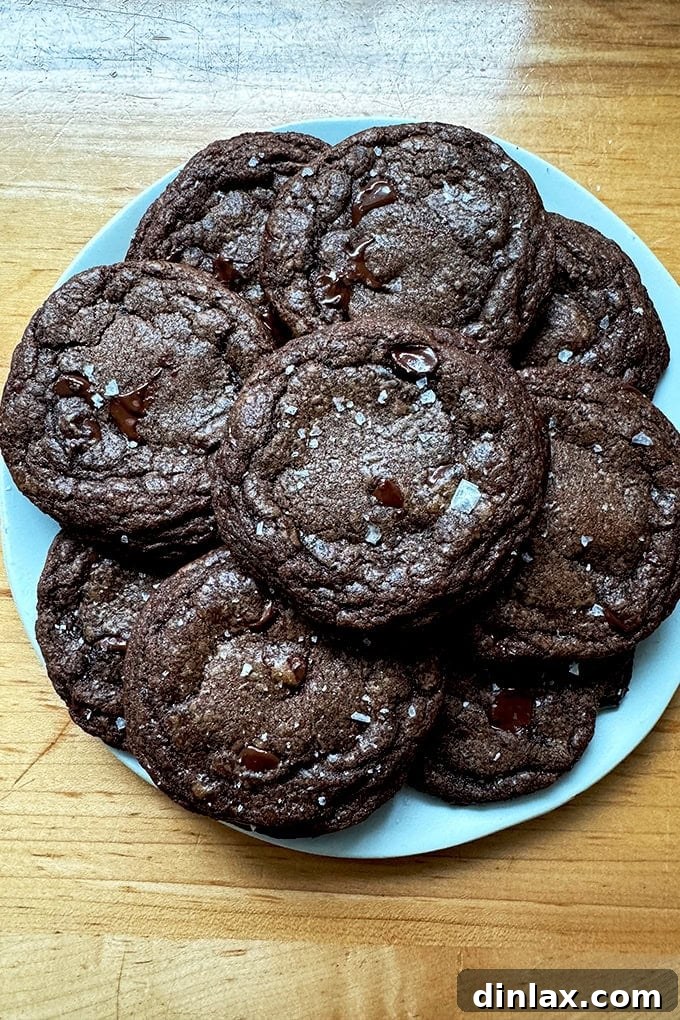
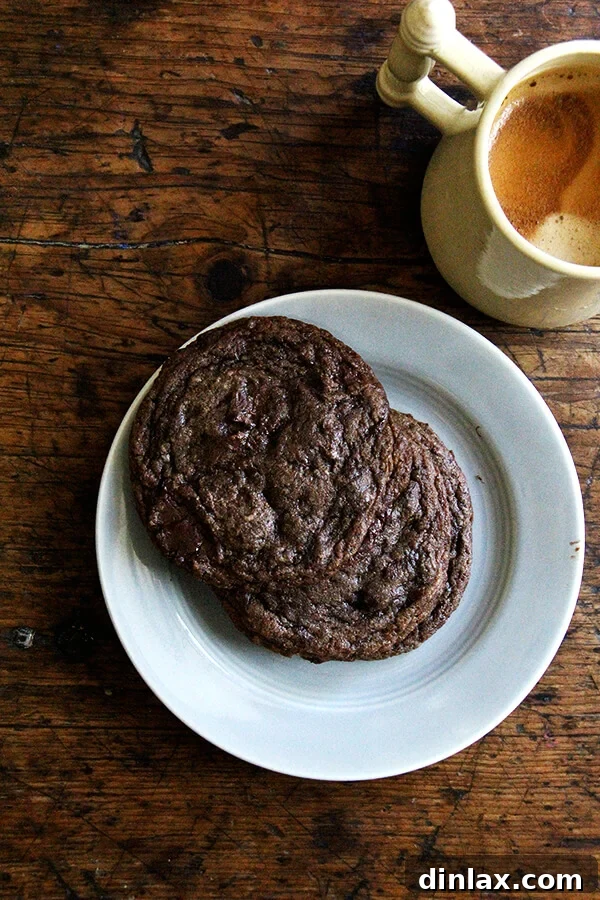
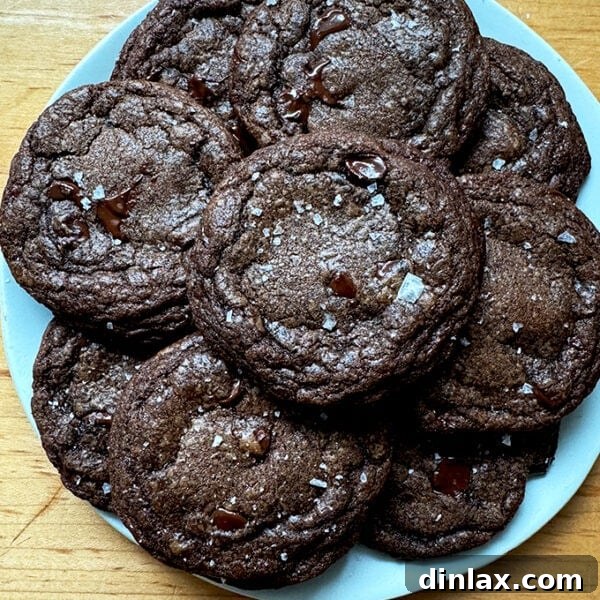
In the world of baking, few treats evoke the same universal joy and comfort as a perfectly crafted chocolate cookie. But imagine a cookie that transcends mere indulgence, one that carries a story of ethical sourcing, community empowerment, and culinary artistry. Our Double-Chocolate Espresso Cookies are just that. Made with a rich blend of premium cocoa powder and generous chocolate chips, elevated by a hint of espresso to deepen the chocolate’s complexity, these cookies deliver an unparalleled experience. Each bite offers a delightful contrast: a crisp, satisfying exterior yielding to a dense, fudgy interior, all perfectly balanced with a touch of sea salt. What makes this recipe even more remarkable is its simplicity, coming together effortlessly in a single bowl – a testament to thoughtful design and delicious results.
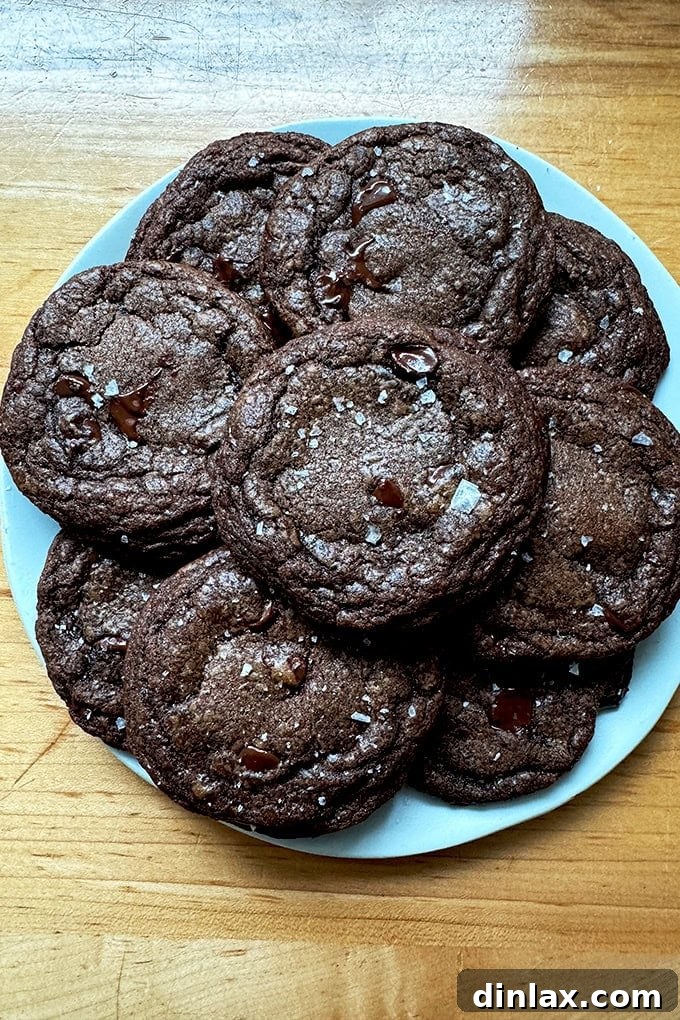
Beyond the delightful taste, these cookies carry a profound significance. Every year, as Mother’s Day approaches, the dedicated team at Fair Trade International embarks on a mission to highlight the incredible women who are the backbone of their certified products. This year’s inspiring theme, “FairHer: Celebrating the Women of Fair Trade,” resonates deeply with the values we cherish. Women’s empowerment stands as one of Fair Trade’s foundational principles. Through Fair Trade certification, women producers are not only safeguarded from harassment and exploitation but are also guaranteed a strong voice, an equal vote, and vital leadership roles within their cooperatives and communities. This commitment transforms lives, fostering economic independence and social equity for countless women across the globe.
Understanding Fair Trade: A Commitment to Ethical Sourcing and Global Impact
Fair Trade is more than just a label; it’s a global movement that champions sustainable development and social justice. By adhering to rigorous standards, Fair Trade ensures that producers in developing countries receive fair prices for their products, empowering them to invest in their communities and improve their livelihoods. Here’s a closer look at the core tenets of Fair Trade:
- Fostering Sustainable Businesses: Fair Trade is instrumental in helping over 1.2 million farmers worldwide establish and grow sustainable businesses. This goes beyond mere survival, allowing them to build resilient enterprises that have a lasting, positive influence on their local economies and social structures. Farmers gain access to resources, training, and stable markets, enabling long-term growth and stability.
- Ensuring Just Compensation: Products bearing the distinctive Fair Trade logo signify that the farmers and workers involved in their production have been justly compensated for their labor. This includes a Fair Trade Minimum Price, which acts as a safety net against volatile market fluctuations, ensuring producers can cover their costs of sustainable production. Additionally, a Fair Trade Premium is paid, which communities collectively decide how to invest in vital projects like education, healthcare, or infrastructure.
- Guaranteeing Safe Working Conditions: Fair Trade’s stringent standards mandate safe and healthy working environments for all workers. This includes regulated work hours, the provision of maternity leave, and the fundamental right to freedom of association and collective bargaining. Critically, slave labor and child labor are strictly and unequivocally prohibited, ensuring human rights are upheld at every stage of the supply chain.
- Upholding Environmental Stewardship: Fair Trade-certified producers are committed to following internationally monitored environmental standards. This often involves promoting sustainable farming practices, reducing reliance on harmful agrochemicals, and implementing initiatives for organic conversion, reforestation, and water conservation. Financial incentives and resources are often provided to support these eco-friendly endeavors, fostering a healthier planet for future generations.
- Empowering Women: The “FairHer” initiative perfectly encapsulates one of Fair Trade’s most impactful missions: empowering women to play active and influential roles in their families and cooperative organizations. This empowerment manifests through guaranteed access to healthcare, secure job rights, freedom from harassment, and opportunities to start their own businesses. Women often reinvest their earnings into their families’ well-being and education, creating a ripple effect of positive change.
- Supporting Education: A significant portion of Fair Trade revenues is often allocated specifically to educational initiatives. This includes funding for building and maintaining schools, providing scholarships, and ensuring high enrollment rates. By investing in education, Fair Trade helps break cycles of poverty, offering children and young adults brighter futures and equipping communities with the knowledge and skills needed for self-sufficiency.

Mariana del Jesus Mendoza and the Fortaleza del Valle Cooperative: A Story of Transformation
To truly illustrate the human impact behind our food choices, Fair Trade annually partners bloggers with individual farmers. This year, I had the privilege of being matched with Mariana del Jesus Mendoza, an inspiring cocoa farmer and a proud member of the Fortaleza del Valle Cooperative in Ecuador. Her story is a powerful testament to the transformative power of Fair Trade.
Mariana’s candid observations highlight the critical difference Fair Trade has made: “Thanks to Fair Trade we are able to sell our cacao at fair and stable prices. Before we were organized into Fortaleza del Valle, many of us did not know how to take true advantage of our plants’ capacities and would ruin them with pesticides and fungicides.” Before joining the cooperative, Mariana and her fellow farmers often faced exploitative market conditions, receiving meager prices that barely covered their costs. This forced many to adopt unsustainable farming practices, often damaging their precious cocoa plants and the surrounding environment. Fair Trade’s intervention provided not only economic stability through guaranteed fair prices but also invaluable training in organic farming techniques and cooperative management. This holistic support has not only improved the quality of their cocoa but also fostered a sense of community, shared knowledge, and collective strength among the farmers of Fortaleza del Valle.
Crafting Perfection: How to Make Double-Chocolate Espresso Cookies, Step-by-Step
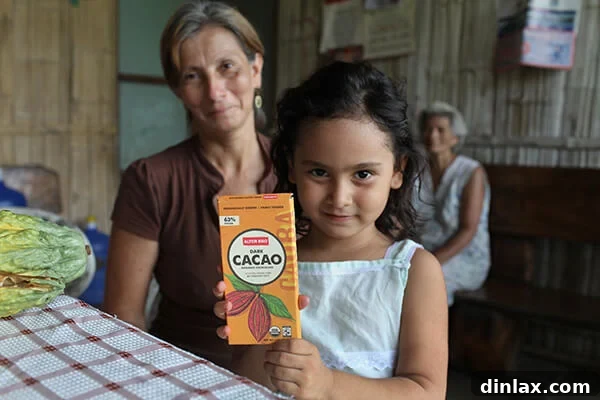
Now, let’s turn our attention to the star of the show: these magnificent double-chocolate espresso cookies. The magic lies in a combination of high-quality ingredients and a few clever techniques. For these deeply flavorful treats, you’ll need the usual suspects like all-purpose flour, butter, brown sugar, granulated sugar, eggs, vanilla extract, baking soda, and salt. But the true depth of flavor comes from two key ingredients: rich Dutch-processed cocoa powder and the secret weapon, finely ground espresso powder or coffee, which subtly intensifies the chocolate notes without adding an overt coffee flavor. And, of course, plenty of delicious chocolate chips for those irresistible melty pockets.
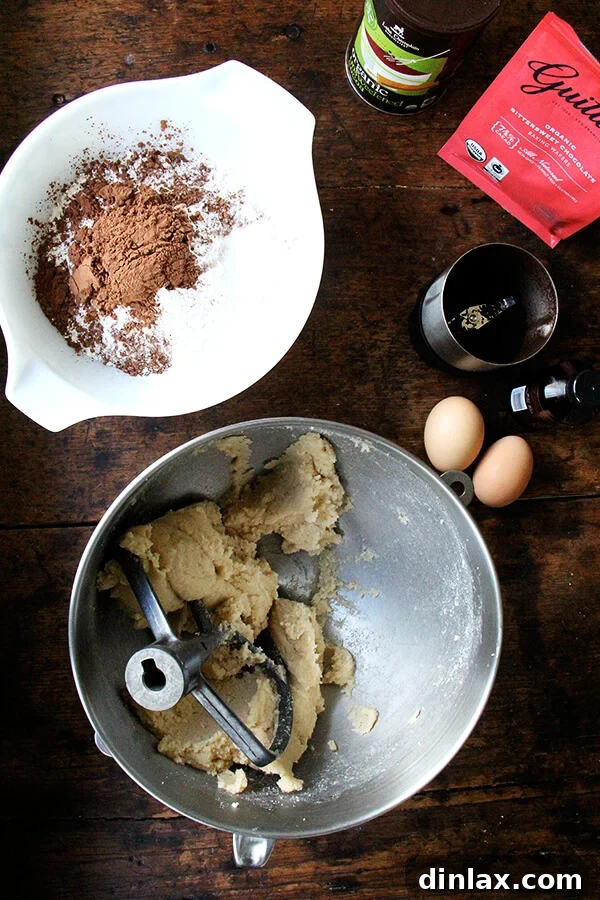
Update February 14th, 2025: I recently refined this recipe to simplify the process, adopting a melted butter method that allows for everything to come together in just one bowl. The results were absolutely beautiful, producing cookies with an even chewier texture and an incredible depth of flavor that I’m thrilled to share.
Achieving consistently baked cookies is key to a truly satisfying batch. To ensure each cookie bakes perfectly evenly and looks picture-perfect, I highly recommend portioning the dough using a digital kitchen scale. Aim for each dough ball to weigh precisely 48 grams. While this step might seem a little meticulous, the uniformity it creates is well worth the effort, resulting in beautifully consistent cookies every time.
There’s something incredibly satisfying about seeing perfectly formed dough balls, patiently waiting to be transformed into golden-edged, fudgy centers… this sight makes my heart so very happy:
One of the best features of this recipe is its flexibility. Once portioned, you can freeze the dough balls for several months, ready to bake on a whim, or store them in the refrigerator for up to two weeks (and often even longer!). This means you can always have warm, fresh-baked cookies at your fingertips. When you’re ready to bake, simply arrange six of these delightful dough balls on a parchment-lined sheet pan, ensuring they have enough space to spread. Press down on them lightly to flatten them slightly and secure them in place, preparing them for their oven transformation.
Bake the cookies for precisely 11 minutes at 375ºF. This timing is crucial for achieving that coveted crisp exterior and fudgy interior. Upon removal from the oven, the cookies will appear slightly puffed and may even look undercooked in the center—resist the urge to bake them longer! This “underbaked” appearance is exactly what you want. They will continue to cook gently from residual heat as they cool completely on the sheet pan, transforming into the perfect texture.
For an extra touch of gourmet sophistication and to truly enhance the rich chocolate flavor, generously sprinkle the warm cookies with flaky sea salt as soon as they emerge from the oven. The delicate crunch and burst of salinity beautifully complement the intense sweetness of the chocolate, creating an irresistible flavor profile.
Patience is a virtue, especially when it comes to these cookies. While it might be tempting to dig in immediately, allowing them to cool completely on the sheet pan is crucial. This step allows their rich, fudgy texture to fully develop and their complex flavors to meld. Once entirely cooled, they reach their peak of perfection, ready to be enjoyed.
Is there anything better than a warm, chewy double chocolate espresso cookie, knowing it’s not just a treat for your taste buds, but also a symbol of support for ethical farming practices and women’s empowerment?
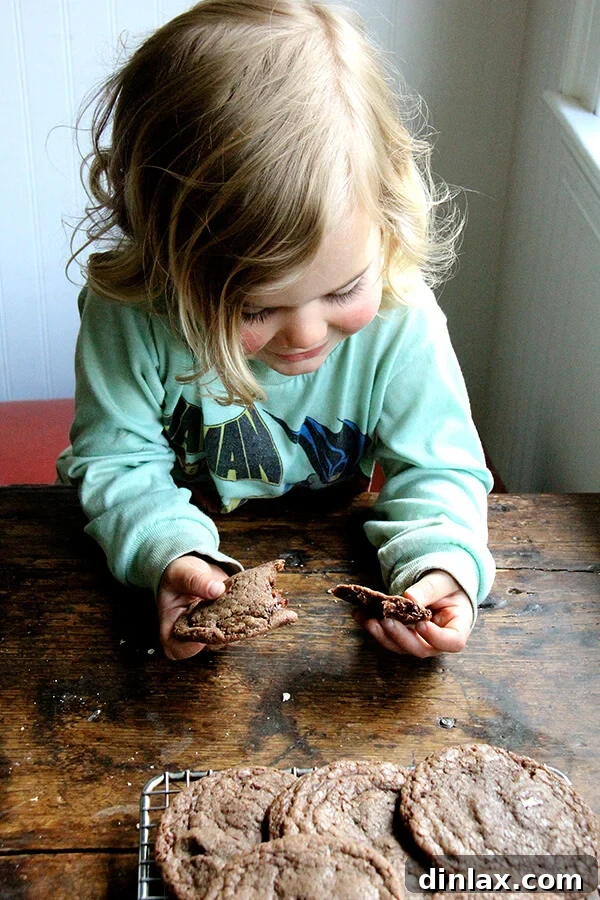
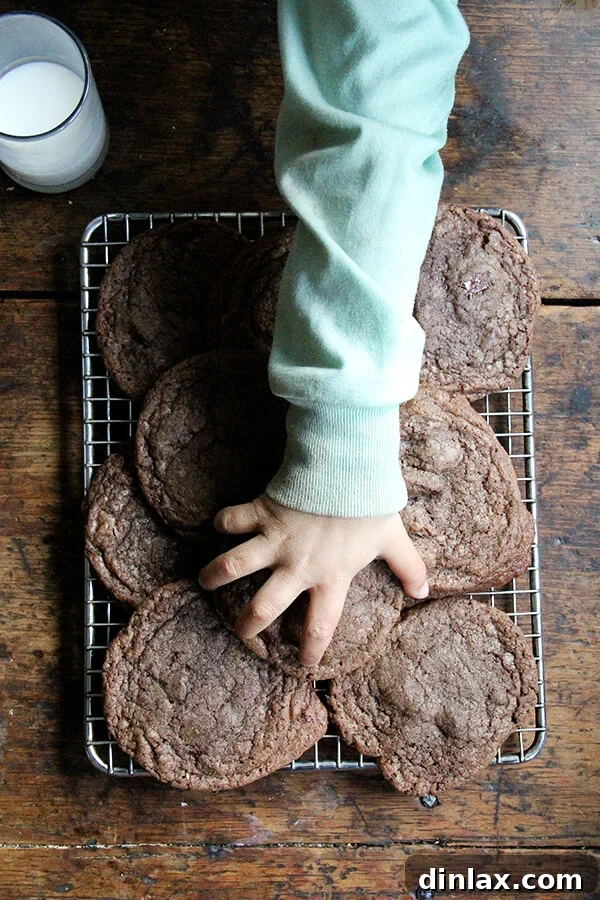
For all the cookie monsters out there, get ready to fall in love:


Double-Chocolate Espresso Cookies
5 Stars 4 Stars 3 Stars 2 Stars 1 Star
5 from 8 reviews
Author: Alexandra Stafford
Total Time: 24 hours 30 minutes
Yield: 35 cookies 1x
Description
This recipe for Double-Chocolate Espresso Cookies is a delightful adaptation of my beloved soft and chewy chocolate chip cookie base. We’ve enhanced it by substituting some of the flour with rich cocoa powder and incorporating two teaspoons of finely ground coffee or espresso powder to amplify the chocolate flavor, creating a truly decadent experience.
Important Notes for Success:
- Plan Ahead for Best Results: For an unparalleled depth of flavor and ideal texture, I strongly recommend preparing the dough in advance. After mixing, portion the dough into precise 48-gram balls. These uniform balls should then be refrigerated in an airtight container for at least 1 hour, though ideally 12 to 24 hours. Chilling the dough allows the flavors to meld and prevents the cookies from spreading too much during baking, resulting in a chewier, richer cookie.
- Choosing Your Espresso Powder: The addition of espresso powder is a game-changer, heightening the chocolate flavor without making the cookies taste distinctly of coffee. My most recent successful experiment involved simply opening a Nespresso pod and using two teaspoons of the finely ground beans within – it worked beautifully! Alternatively, you can use instant espresso powder, which dissolves easily and provides a similar effect. Look for a high-quality espresso powder in the baking aisle of your grocery store or specialty food shops.
- Selecting the Right Cocoa Powder: For this recipe, I’ve had success with both Dutch-processed and natural cocoa powder. While recipes typically call for natural cocoa powder when baking soda is used (due to its acidity activating the leavener), I’ve found that it doesn’t significantly alter the leavening in these cookies. Therefore, I prefer to use a cocoa powder that I truly enjoy for its deep flavor and rich color. I’ve been particularly fond of Dutch-processed Cacao Barry Extra Brute, a recommendation I picked up from the brilliant Stella Parks. Any Dutch-process cocoa powder you love will work wonderfully, as will a good quality natural cocoa powder.
- A Note on Cocoa Quality and Brands: My journey to perfecting shiny brownies once led me to research lead levels in cocoa, prompting many of you, my wonderful readers, to share your favorite cocoa powder brands. Here are some highly recommended options for exceptional flavor and quality:
- Navitas Organic Cacao Powder
- Viva Naturals Organic Cacao Powder
- Fry’s Premium Baking Cocoa
- Rodelle Gourmet Baking Cocoa
Ingredients
- 1⅓ cups (305 g) unsalted or salted butter, softened or melted (refer to method below; I often opt for quality salted butter to enhance flavor)
- 1½ cups packed (300 g) light brown sugar (adds moisture and chewiness)
- 1 cup (200 g) granulated sugar (for crisp edges and sweetness balance)
- 2 large eggs (bind the dough and add richness)
- 1 tablespoon pure vanilla extract (essential for depth of flavor)
- 3 cups (384 g) unbleached all-purpose flour
- ¼ cup (28 g) Dutch processed cocoa powder (see notes above for cocoa powder discussion)
- 1.5 teaspoons Diamond Crystal kosher salt (or half as much if using Morton kosher salt, crucial for balancing sweetness)
- 1 teaspoon baking soda (for lift and tenderness)
- 2 teaspoons finely ground coffee beans or espresso powder (see notes above for best results)
- 12 ounces high-quality bittersweet chocolate chips (for rich, melty pockets)
- flaky sea salt for sprinkling, optional but highly recommended for finishing
Instructions
Method 1: Using Softened Butter for a Classic Texture
- Begin by creaming the softened butter with both the light brown sugar and granulated sugar in the bowl of a stand mixer fitted with the paddle attachment. Beat on medium-high speed until the mixture becomes light, fluffy, and noticeably pale, typically taking 2-3 minutes. Stop the mixer, scrape down the sides and bottom of the bowl, and then beat again on high for another minute to ensure everything is thoroughly combined and aerated. Next, add the large eggs one at a time, beating well after each addition, followed by the pure vanilla extract. Continue to beat on medium-high speed for about another minute until the mixture is well blended and smooth. In a separate medium bowl, whisk together the dry ingredients: all-purpose flour, Dutch-processed cocoa powder, kosher salt, baking soda, and finely ground coffee beans or espresso powder. Gradually add the dry mixture to the wet ingredients. Mix using a spatula or wooden spoon (or very briefly with the paddle attachment on low speed) until just blended – avoid overmixing, as this can lead to tough cookies. Finally, fold in the bittersweet chocolate chips until they are evenly distributed throughout the dough. The resulting dough will be thick and stiff.
Method 2: Using Melted Butter for a One-Bowl, Chewier Cookie
- For a simpler, one-bowl approach and a slightly chewier cookie, melt the butter in a small saucepan over low heat or in the microwave until just liquefied. Pour the melted butter directly into a large mixing bowl. Add both the light brown sugar and granulated sugar to the melted butter and whisk vigorously until well combined and smooth. Next, whisk in the eggs one at a time, ensuring each is fully incorporated before adding the next. Stir in the pure vanilla extract. Once the wet ingredients are thoroughly mixed, add the kosher salt, baking soda, espresso powder, and cocoa powder directly to the bowl, whisking until no dry streaks remain. Finally, add the all-purpose flour. Use a sturdy spatula or wooden spoon to gently incorporate the flour into the dough until just combined. Be careful not to overmix. Fold in the bittersweet chocolate chips until they are evenly distributed. This method yields a wonderfully rich and cohesive dough.
Portioning and Baking for Perfect Results:
- Regardless of the method chosen, portioning the dough is a critical step for uniform, beautifully baked cookies. Using a digital kitchen scale, scoop and roll the dough into 48-gram sized balls. While this may seem a bit tedious, it guarantees that each cookie bakes consistently and looks professional. If a scale isn’t available, a small ice cream scoop or another uniform measuring device will work. Once portioned, arrange the dough balls in an airtight container and chill them in the refrigerator for a minimum of one hour, but preferably for 12 to 24 hours. This chilling period allows the flavors to deepen and prevents the cookies from spreading too much during baking, resulting in a thicker, chewier texture. These portioned dough balls can be stored in the fridge for up to 1 week or frozen for several months, making them perfect for on-demand baking.
- When ready to bake, preheat your oven to 375°F (190°C). Place six of the chilled dough balls on an ungreased or parchment-lined sheet pan, ensuring they are nicely spaced apart to allow for spreading. Gently press down on the top of each dough ball to secure it in place and help it spread evenly. Bake for precisely 11 minutes. It’s crucial to keep a close watch: you want to remove the cookies from the oven when they still look slightly underbaked and puffed in the center. You might feel like you’re taking them out too early, but trust the process! The residual heat from the sheet pan will continue to cook the cookies as they cool, leading to that perfect crisp edge and fudgy, gooey center. Immediately after removing them from the oven, if desired, generously sprinkle with flaky sea salt. Let the cookies cool completely on the baking tray before attempting to move them. I find these cookies reach their peak flavor and texture once they are thoroughly cooled – several hours after baking, or even the next day. They firm up beautifully and develop an incredibly rich, irresistible taste. While warm, they can be a little too soft for my personal preference (though many people love them that way!).
- Prep Time: 24 hours minutes (includes chilling time)
- Cook Time: 11 minutes
- Category: Cookie, Dessert, Baked Goods
- Method: Baking, Oven
- Cuisine: American