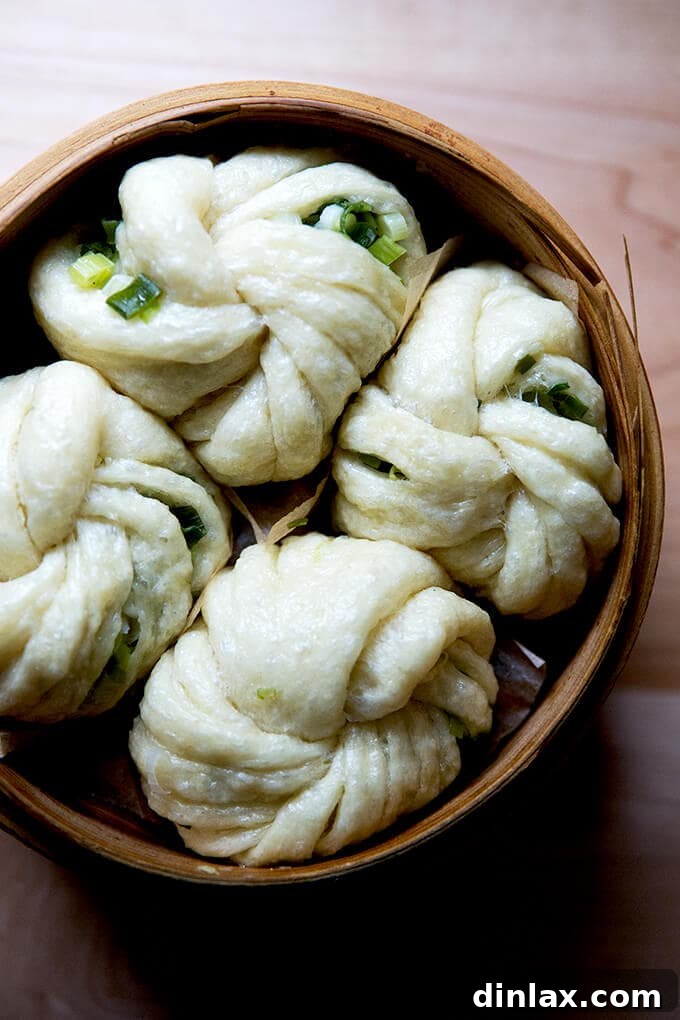
Homemade Chinese Steamed Scallion Buns (Hua Juan): A Fluffy and Flavorful Delight
There’s something truly magical about Chinese steamed buns. Known as Hua Juan, these delicate, cloud-like creations are a cornerstone of Chinese breakfast tables and beloved snacks. Imagine biting into a bun that is incredibly puffed and bouncy, with a feathery light texture yet a satisfying chew, and an intoxicating onion-y flavor permeating every single bite thanks to a generous scattering of fresh scallions. These aren’t just any buns; they are fluffy white vehicles of deliciousness, perfect for enjoying on their own or ready to be stuffed with an array of fillings, from savory barbecued pork to sweet egg custard. And the best part? Crafting these culinary wonders at home is surprisingly simple and incredibly rewarding. Get ready to discover a recipe that will transform your kitchen into a haven of authentic Asian flavors, proving that you, too, can master the art of homemade steamed buns.
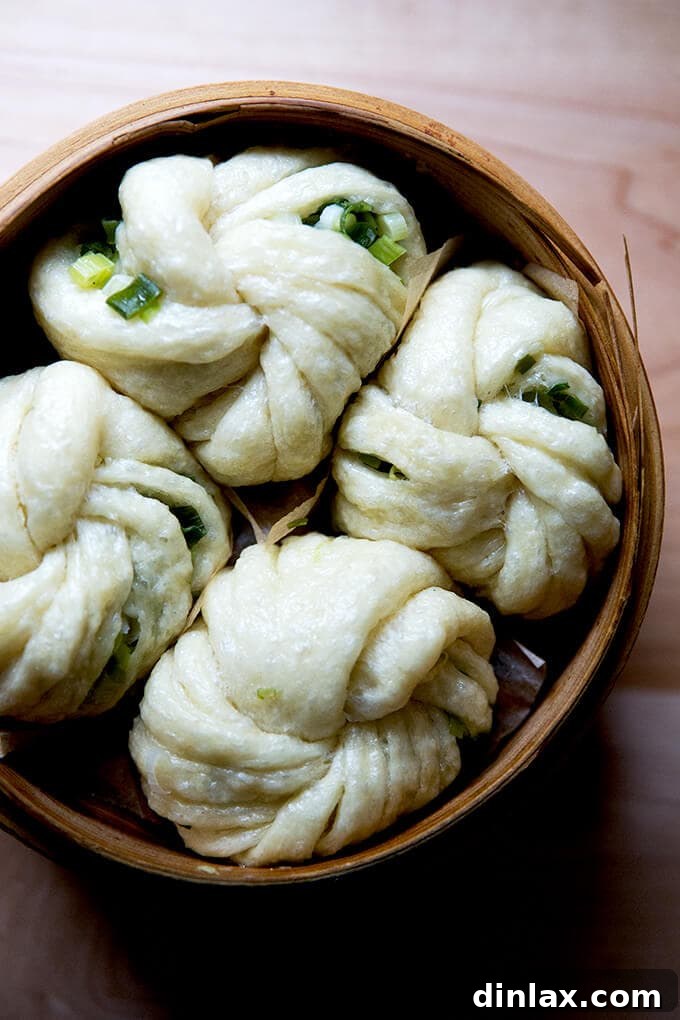
The Journey to Perfect Homemade Buns: An Ode to A Common Table
My culinary adventure into the world of Chinese steamed buns began with Cynthia McTernan’s beautiful cookbook, A Common Table. Flipping through its pages, I was immediately drawn to the vibrant descriptions and enticing photographs of these quintessential Chinese delights. The recipe for steamed scallion buns, or Hua Juan, caught my eye, promising a simplicity that felt unexpectedly familiar, much like preparing a classic brioche roll. The process involves kneading a subtly sweet yeasted dough, allowing it to rise gracefully, gently deflating it, dividing and shaping, and then — the crucial step — steaming!
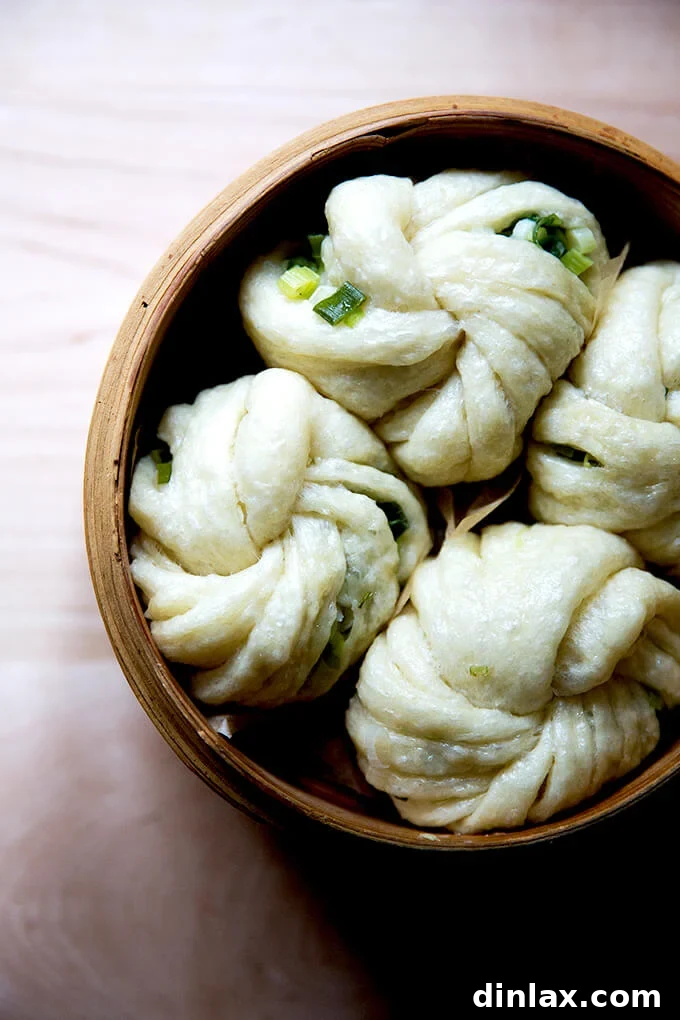
Unlike their baked counterparts, steamed buns owe their distinctive airy and soft texture to the gentle, moist heat of a steamer. This method locks in moisture, resulting in a bun that is miraculously light yet wonderfully chewy, a characteristic often hard to achieve with traditional baking. The promise of spiraled knots, generously flecked with green scallions, was too enticing to resist. And indeed, the first batch emerged from the steamer exactly as promised: magnificently puffed, resiliently bouncy, and imbued with an aromatic, savory onion flavor in every single mouthful. My family, or at least a significant portion of it (50% is a win in my book!), devoured them with gusto. We paired them with a beloved Okonomiyaki (cabbage pancakes) and a simple soy dipping sauce, which complemented both dishes perfectly.
A Taste of Memory: The Elusive Pork Bun
For years, the memory of a perfect pork bun from San Francisco haunted my culinary dreams. It was many years ago, and I was trying to get a table at the renowned Slanted Door. Faced with an hour-long wait, I opted for its takeaway counterpart, Out the Door. There, I found myself with a warm, springy pork bun in hand, strolling through the city streets, utterly content. That bun was pure perfection: the soft, yielding bread cradling sweet, savory barbecued pork. At the time, I never imagined recreating anything remotely similar in my home kitchen. But with the knowledge gleaned from McTernan’s recipe, that dream pork bun feels tantalizingly closer to becoming a reality. The fundamentals of creating such an ethereal dough are now within reach, and I promise to keep you updated on that particular quest!
Cynthia McTernan’s A Common Table: A Culinary Gem
I’ve been a long-time admirer of Cynthia McTernan’s work, diligently following her delightful blog, Two Red Bowls. Her book, A Common Table, is a splendid extension of that online space. It’s a beautifully curated collection of stories and recipes, thoughtfully inspired by the rich cultural and geographical roots of both Cynthia and her husband. The book offers more than just instructions; it provides a window into traditions and flavors that resonate deeply. You can delve deeper into the origins and inspirations behind A Common Table by visiting Cynthia’s lovely blog, where she shares her passion for food and culture.
Why Homemade Scallion Buns Are A Must-Try
If you’ve ever been intimidated by the thought of making steamed buns, let me assure you, this recipe is your gateway to success. The satisfaction of pulling perfectly steamed, fragrant buns from your steamer is unparalleled. Here’s why you’ll fall in love with making your own Hua Juan:
- Unbeatable Texture: Achieving that ideal balance of fluffy, springy, and slightly chewy is what sets these buns apart. The steaming process is key, delivering a softness that baking simply cannot replicate.
- Fresh, Aromatic Flavor: The combination of a lightly sweet dough with savory, fresh scallions creates a flavor profile that is both comforting and exciting. The scallions are not just a garnish; they are integral to the bun’s identity.
- Surprisingly Accessible: While the results are impressive, the steps involved are straightforward. If you can make a simple bread dough, you can make these steamed buns.
- Versatile Serving Options: These buns are incredibly adaptable. Serve them as a unique breakfast item, a delightful snack, or alongside various Asian main courses. They also make an excellent vehicle for any leftovers you might have!
The Step-by-Step Process to Perfection
Creating these delightful scallion buns is a rewarding process, broken down into manageable steps:
1. Preparing the Dough: The Foundation
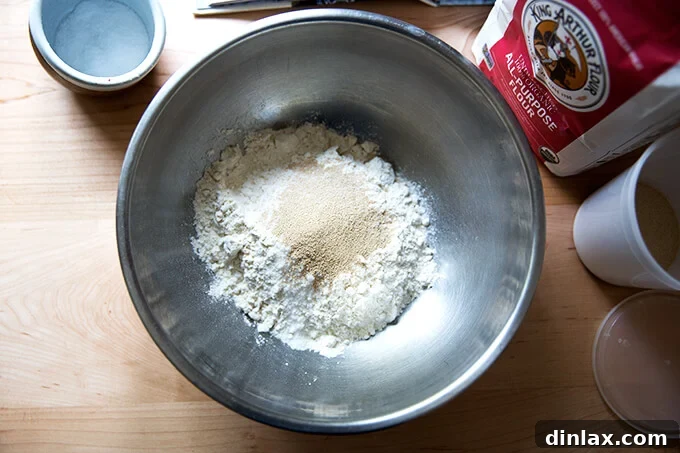
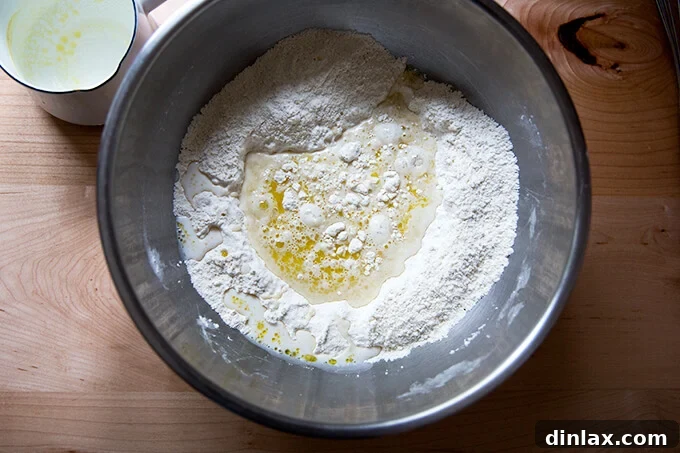
The journey begins with a simple yet effective dough. First, gently warm your milk to activate the yeast. This creates the perfect environment for a light and airy texture. Combine the warm milk with oil. In a separate bowl, whisk together your dry ingredients: flour, instant yeast, sugar, and a touch of salt. For an even richer, softer crumb, you can opt to include nonfat dry milk powder, though it’s optional. Gradually incorporate the liquid into the dry mixture, stirring until a cohesive dough ball forms. This initial mixing is crucial for uniform hydration.
2. Kneading for Elasticity
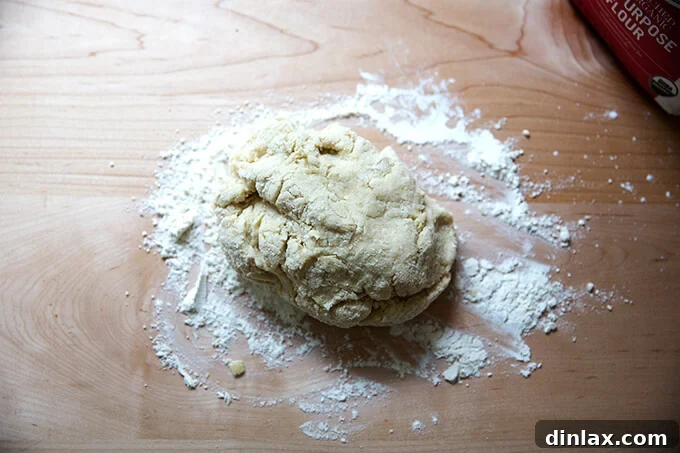
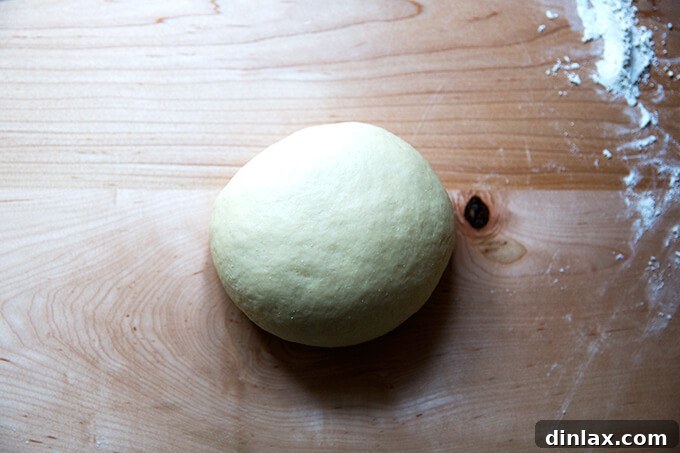
Once the dough comes together, turn it out onto a lightly floured surface. This is where the magic of kneading happens. Spend 6 to 8 minutes kneading the dough until it transforms from a rough mass into a smooth, pliable, and elastic ball. This development of gluten is essential for the bun’s signature chewiness and ability to rise beautifully. After kneading, return the dough to a clean bowl.
3. The First Rise: Patience is Key
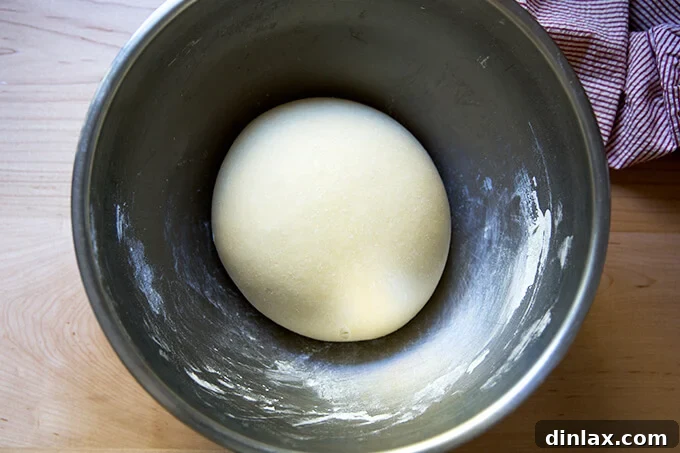
Cover the bowl and let the dough rise in a warm, draft-free spot until it has doubled in size. This typically takes at least 2 hours, but don’t rush it! For an even more developed flavor, you can let it cold-proof in the refrigerator for up to 24 hours. A slow rise often yields a superior texture and taste.
4. Preparing the Scallion Filling and Shaping the Buns
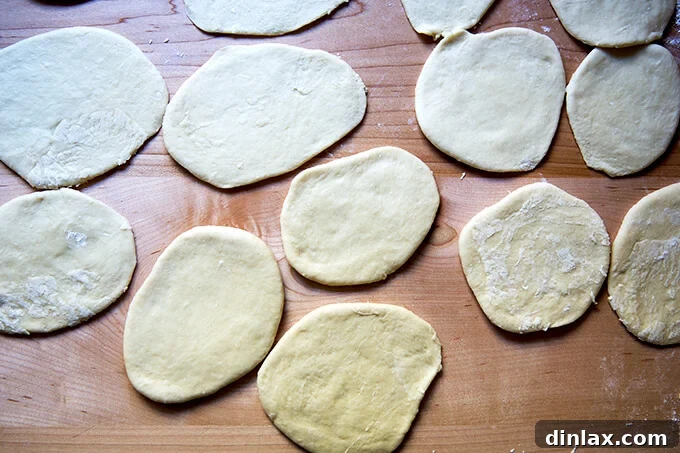
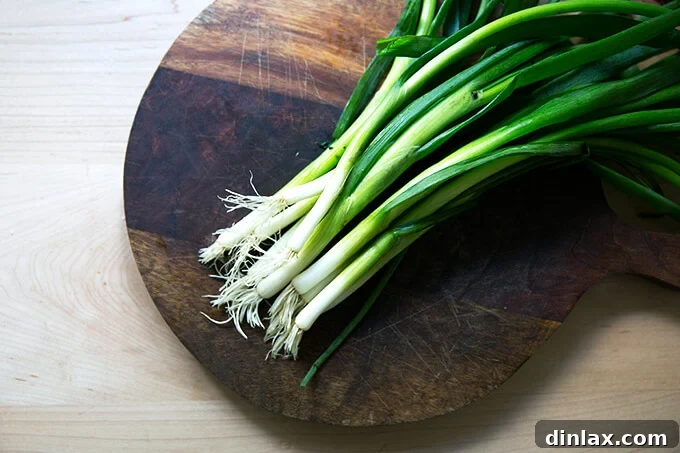
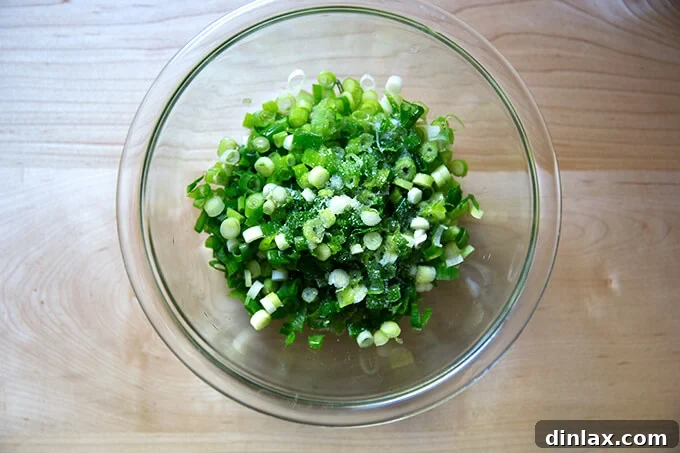
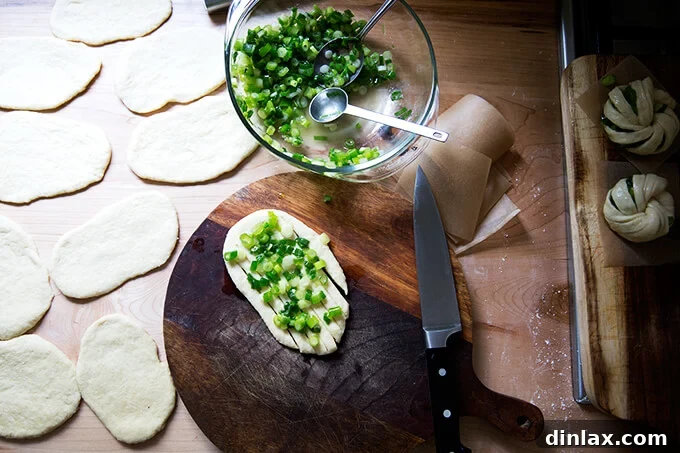
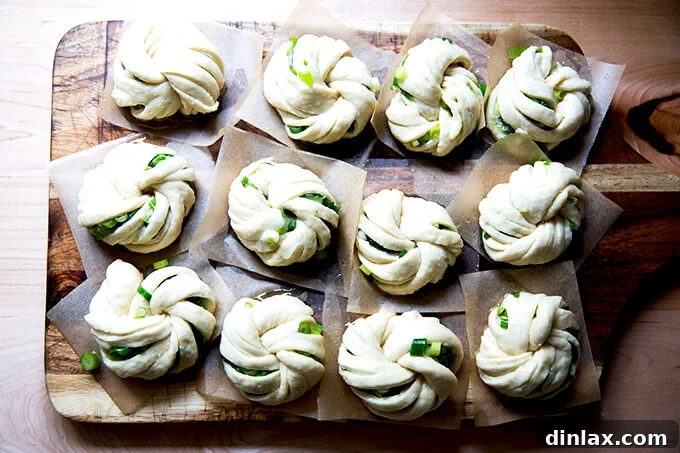
While your dough is rising, prepare the fragrant scallion filling by finely slicing fresh scallions and tossing them with a little oil and salt. This simple mixture will impart that irresistible onion-y flavor. Once the dough has risen, punch it down gently to deflate. Divide it into 12 equal pieces, rolling each into a smooth ball. Then, using a rolling pin, flatten each ball into a 4×6-inch oval. This oval shape is crucial for the unique spiral design of Hua Juan. Carefully make lengthwise slits across each oval, leaving about half an inch intact at the top and bottom. Spread a tablespoon of the seasoned scallion mixture over the dough. Now comes the artful part: pick up the ends of the oval, gently stretch them outwards, and twist the dough into a beautiful coil. Then, twist the coil into a knot. Place each knot on a small square of parchment paper, which prevents sticking during steaming.
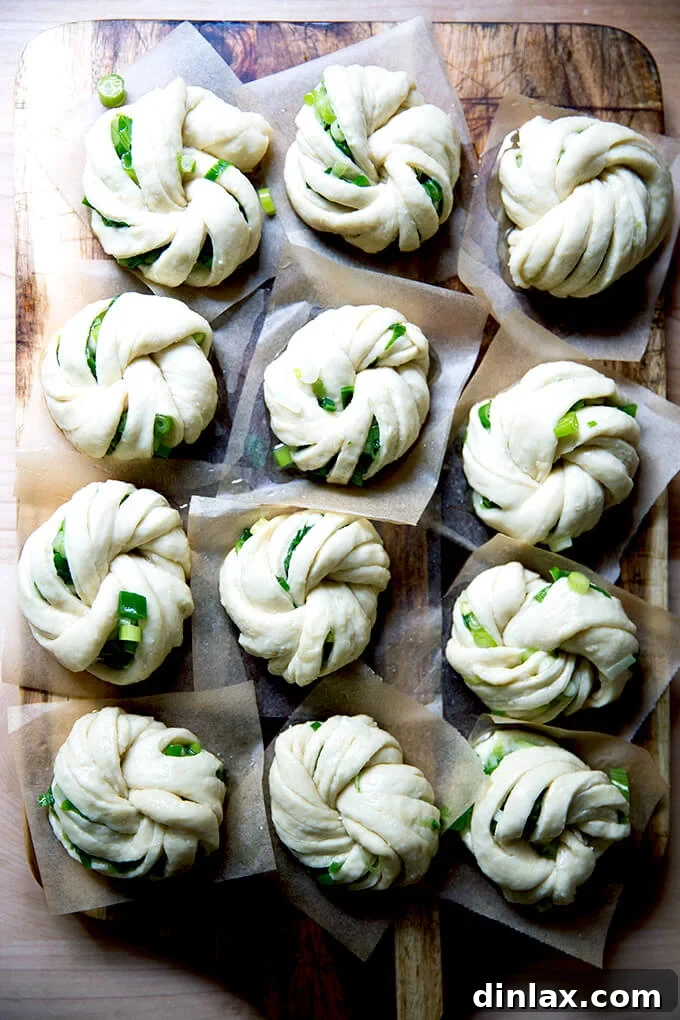
5. The Second Rise (Proofing)
After shaping, let the buns rest for another 30-40 minutes. This crucial second rise, also known as proofing, allows the dough to relax and develop more air pockets, ensuring a lighter texture once steamed.
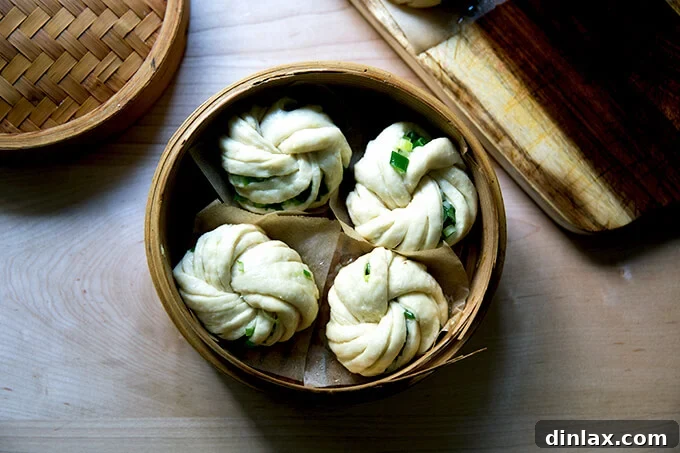
6. Steaming to Perfection
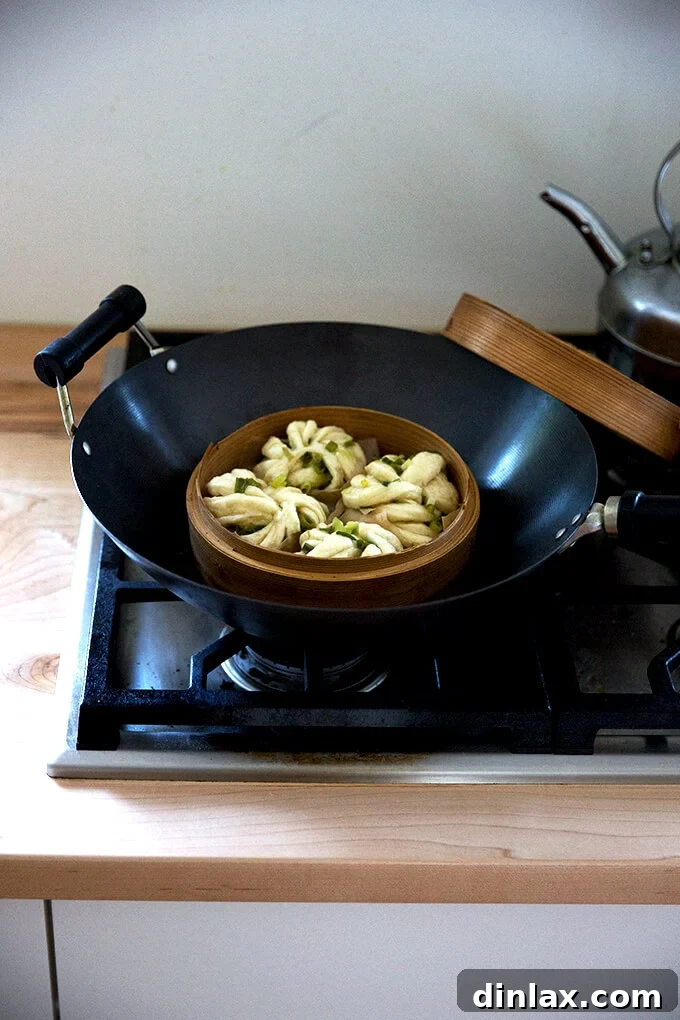
Prepare your steamer, ensuring the water level is sufficient but doesn’t touch the bottom of the steamer basket. Bring the water to a boil, then carefully place 3-4 scallion knots into the steamer, making sure not to overcrowd them. Cover the steamer, reduce the heat to a gentle simmer, and let the buns steam for about 15 minutes. The low, consistent heat is essential for preventing the buns from becoming dense or deflating. When they emerge, they will be beautifully puffed and irresistibly soft.
Serving Suggestions and Storage Tips
Serve your warm Hua Juan immediately! A sprinkle of sea salt can enhance their savory notes, or offer them with a delicious soy dipping sauce. I particularly enjoy this one. They are a fantastic accompaniment to a variety of dishes, from the aforementioned Okonomiyaki to a rich Red-Cooked Pork Belly and Simple Cucumber Salad, making any meal feel more special and complete.
One of the beauties of these scallion buns is their versatility and how well they store. Any leftovers can be easily frozen for future enjoyment. When you’re ready to indulge again, simply reheat them in a steamer for a few minutes until soft and warm, or pop them into the microwave for about 15 seconds for a quick snack. They’ll retain much of their wonderful texture and flavor.
Key Tips for Steamed Bun Success
- Accurate Flour Measurement: For the best results in bread making, a digital scale is always recommended when measuring flour. This ensures consistency and prevents a heavy, dense bun.
- Optimal Water Temperature: Ensure your milk is between 100ºF and 110ºF (38ºC and 43ºC) to properly activate the yeast without killing it.
- Don’t Overcrowd the Steamer: Leave enough space between buns for them to expand during steaming. Overcrowding can lead to uneven cooking and sticking.
- Steady Steam: Maintain a gentle simmer, not a rolling boil, during the steaming process. High, vigorous steam can cause the buns to wrinkle or collapse.
- Parchment Paper is Your Friend: Always place your buns on individual squares of parchment paper to prevent them from sticking to the steamer basket.
Embrace the joy of making these incredible homemade Chinese steamed scallion buns. They are a delightful culinary project that yields unbelievably delicious results, bringing a taste of authentic Chinese cuisine right into your home. Happy steaming!
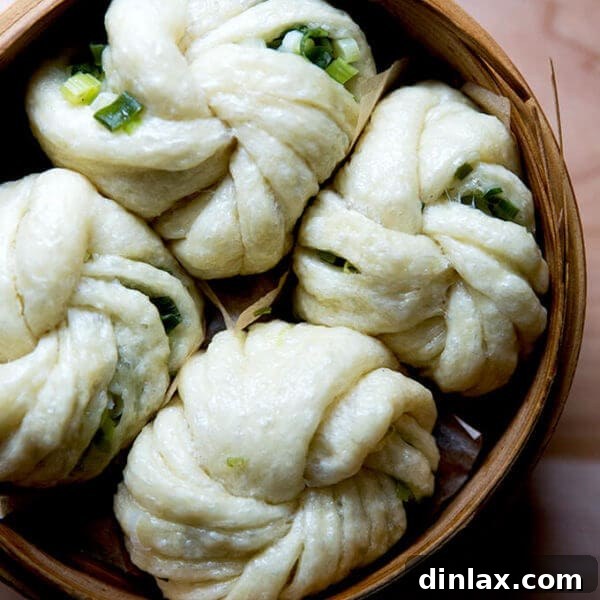
Chinese Steamed Buns with Scallions (Hua Juan)
5 Stars 4 Stars 3 Stars 2 Stars 1 Star
5 from 8 reviews
Author: Alexandra Stafford
Total Time: 3 hours 15 minutes
Yield: 12 buns 1x
Description
This delightful recipe for Hua Juan (Chinese Steamed Scallion Buns) comes from Cynthia Chen McTernan’s acclaimed cookbook, A Common Table. For best results and consistent dough, using a digital scale is highly recommended when measuring flour.
These fluffy, savory buns pair wonderfully with a variety of Asian-inspired dishes. They are particularly delicious alongside Okonomiyaki (Cabbage Pancakes) and would also be a fantastic complement to Red-Cooked Pork Belly and Simple Cucumber Salad.
Ingredients
For the Dough:
- 1 cup milk
- 1 tablespoon oil
- 3 cups (375 g) all-purpose flour, plus extra for kneading
- 2 teaspoons instant yeast
- 1/4 cup sugar
- 1/2 teaspoon salt
- 1 tablespoon nonfat dry milk powder (optional, for a softer crumb)
For the Buns:
- 1 cup finely sliced scallions, from 8 to 10 scallions
- 1/4 cup oil (neutral oil like vegetable or canola)
- 1/4 teaspoon salt
For Serving (Optional):
- sea salt
- soy dipping sauce, such as this easy recipe
Instructions
- Prepare Milk Mixture: In a small saucepan, gently heat the milk over medium heat until it reaches a gentle boil. Remove the pan from heat and allow it to cool to a temperature between 100ºF and 110ºF (38ºC – 43ºC). Stir in the oil.
- Combine Dry & Wet Ingredients: In a large mixing bowl, whisk together the all-purpose flour, instant yeast, sugar, milk powder (if using), and salt. Pour the cooled milk-oil mixture into the flour bowl. Stir well with a spoon or spatula until a shaggy dough ball forms.
- Knead and First Rise: Turn the dough out onto a lightly floured work surface. Knead the dough vigorously for about 6 to 8 minutes until it becomes smooth, elastic, and no longer sticky. Transfer the kneaded dough back to the bowl, cover it, and let it rise in a warm, draft-free spot for at least 2 hours, or until it has doubled in size. Alternatively, you can refrigerate it for up to 24 hours for a slower rise.
- Prepare Scallion Filling & Parchment Squares: While the dough is rising, prepare the scallion mixture. In a small bowl, combine the finely sliced scallions, oil, and salt; stir well. Cut twelve 6-inch square pieces of parchment paper and set aside. Lightly flour your work surface.
- Shape the Buns: Once the dough has risen, turn it out onto the prepared work surface. Gently punch it down to deflate. Using a knife or bench scraper, divide the dough into 12 equal pieces and briefly shape each into a rough ball. Using a rolling pin, roll each dough ball into a 4×6-inch oval. Work with one oval at a time: make several lengthwise slits into the oval, ensuring to leave about 1/2 inch intact at the top and bottom edges. Brush or spoon approximately 1 tablespoon of the scallion mixture across the surface of the dough. Pick up each end of the oval, gently pull outward to stretch it slightly, then twist it into a tight coil. Finally, twist the coil into a decorative knot. Place the shaped knot onto one of the parchment paper squares. Repeat this process with the remaining ovals until all 12 buns are shaped. Let the shaped buns rest for a second rise (proof) for 30-40 minutes.
- Prepare Steamer: Prepare your steamer setup. If using a wok with a bamboo insert, add about 2 inches of water to the wok and bring it to a boil, ensuring the water does not touch the bottom of the steamer basket. If using a pot with a steamer insert, fill with water (again, making sure it doesn’t touch the insert) and bring to a boil.
- Steam the Buns: Carefully place 3 to 4 scallion knots (along with their parchment paper squares) into the prepared steamer basket, ensuring there is enough space between them for expansion. Cover the steamer. Reduce the heat so the water is just simmering gently. Steam the buns for 15 minutes.
- Serve: Serve the Chinese Steamed Scallion Buns warm. You can optionally sprinkle them with a pinch of sea salt or serve alongside a soy dipping sauce.
- Storage: Leftover buns can be frozen for later. To reheat, simply steam them for a few minutes until soft and warm, or microwave for about 15 seconds.
- Prep Time: 3 hours
- Cook Time: 15 minutes
- Category: Bread
- Method: Steamed
- Cuisine: Chinese