
The Endive & Fava Tartine: A Fresh Taste of Spring with Homemade Ricotta & Peasant Bread
Dear friends and fellow food enthusiasts, I am absolutely overwhelmed by the outpouring of support, kind words, and enthusiastic emails over the past week. Your engagement and passion for baking and cooking have truly touched my mother and me, and we are incredibly grateful for such a wonderful community. Thank you, from the bottom of our hearts, for being a part of this culinary journey.
For those who might have missed the exciting news, the beloved peasant bread has been making waves! Kristen Miglore, the brilliant mind behind Food52’s acclaimed Genius Recipes series, featured our no-knead wonder in her column last Wednesday. This recognition underscores the magic of simple, accessible baking, proving that you don’t need to be a seasoned baker to create something truly extraordinary. Following this, Food52’s Sarah Jampel showcased five delightful variations on the peasant bread, broadening the horizons of what this versatile dough can become. Among these, my personal favorite, the cinnamon-swirl bread, truly captivated audiences. The excitement didn’t stop there; last Thursday, I had the pleasure of joining Sarah on Facebook Live to demonstrate how to make this irresistible cinnamon-swirl variation, sharing tips and tricks with a live audience.
Rediscovering “Toast”: Elevating Day-Old Bread into Culinary Masterpieces
Today, I am thrilled to share a new chapter from my cookbook, Bread Toast Crumbs, with the release of Trailer Part II: Toast. This segment, much like the book’s dedicated “Toast” chapter, aims to redefine our perception of toast. Forget the simple bread-and-topping routine; this chapter is a celebration of day-old bread, transforming it into an array of sophisticated and satisfying dishes. We delve into the art of using sliced, slightly stale bread as a foundational ingredient for everything from gourmet sandwiches and elegant tartines to hearty panini, comforting soups, rich stratas, and even inventive bread puddings. It’s about minimizing waste, maximizing flavor, and discovering the endless possibilities that a humble loaf can offer when given a second life.
To perfectly illustrate this concept, I’m featuring a recipe from the book today: the exquisite Endive and Fava Salad Tartines with Herbed Ricotta. This particular tartine, also highlighted in the video above, holds a special place in my heart. It was inspired by a memorable dish my aunt and I savored years ago at Burlington, Vermont’s charming South End Kitchen. This tartine truly shines during that transitional time of year when winter’s heavy comfort foods begin to fade, and a yearning for fresh, crisp, and vibrant vegetables emerges, even as the seasonal pickings remain somewhat limited. It offers a bright, refreshing counterpoint to richer meals, signaling the arrival of spring with every bite.
Navigating seasonal ingredients can sometimes be a challenge. If fresh fava beans prove difficult to source in your area, or if their season is still a distant promise, please know that shelled edamame makes an excellent and equally delicious substitute. The key to this recipe’s sublime creaminess, however, lies in the ricotta. A truly fresh, high-quality ricotta makes all the difference, lending an unparalleled lightness and flavor. If you don’t have access to a local artisanal source, fret not! Making your own ricotta at home is surprisingly simple and incredibly rewarding – I promise! Below, you’ll find the detailed recipe for homemade ricotta, along with a link to the Facebook Live video for step-by-step guidance.

Photo by Eva Kolenko
Endive & Fava Tartine with Herbed Ricotta: A Symphony of Spring Flavors
Imagine a brisk March day, a few years ago, as my aunt and I found solace in Burlington, Vermont’s enchanting South End Kitchen. We were bundled warmly, having braved snowy roads and the icy embrace of Lake Champlain. What truly warmed our spirits, however, was a simple yet profound tartine: a harmonious blend of creamy ricotta, delicate pea shoots, crisp radishes, and aromatic herbs. Each bite was a hopeful promise of spring’s imminent arrival, a delightful assurance that the lingering chill of winter was nearing its end. This tartine is your perfect antidote when you’ve reached your fill of hearty winter fare – the endless rotation of soups, stews, roasts, and braises. It’s a clarion call for something fresh, bright, and invigorating. While favas are indeed a labor of love, their unique, tender sweetness is worth the effort. However, if fresh favas are elusive, frozen edamame stands in beautifully, offering a similar verdant pop and texture.
Homemade Ricotta, Facebook Live:
Save the whey! And make bread:
Cinnamon-Swirl Bread:
Print

Endive & Fava Salad Tartines with Herbed Ricotta
5 Stars
4 Stars
3 Stars
2 Stars
1 Star
No reviews
- Author: alexandra
Description
From Bread Toast Crumbs, this tartine is a vibrant celebration of spring produce, perfect for those craving fresh flavors. It beautifully showcases how day-old peasant bread can be transformed into an elegant and satisfying meal.
Ingredients
- 2 tablespoons minced shallots
- Kosher salt, to taste
- Pinch of sugar
- 2 tablespoons white balsamic vinegar
- 1 pound fava beans (approx. 1.5 cups shelled), or a heaping ½ cup shelled edamame
- 2 heads endive (3 ounces each), finely julienned
- 2 scallions, white and green parts thinly sliced (to yield about 2 tablespoons)
- 6 radishes, very thinly sliced
- ⅓ cup extra-virgin olive oil, plus extra for drizzling
- ½ cup fresh basil leaves (small ones left whole, larger ones roughly chopped)
- 1 cup fresh ricotta, preferably homemade (see recipe below)
- ½ cup finely chopped mixed fresh herbs, such as dill, chives, and fresh parsley
- Zest of 1 lemon
- Freshly cracked black pepper, to taste
- 6 slices peasant bread, about ¾ inch thick (day-old bread works best)
Instructions
- Prepare the Shallots: In a small bowl, combine the minced shallots with a pinch of kosher salt and a pinch of sugar. Pour the white balsamic vinegar over them and let them sit for at least 10 minutes to soften and lightly pickle.
- Blanch the Fava Beans (or Edamame): Bring a large pot of salted water to a rolling boil over high heat. While the water heats, shell the fava beans from their pods. Once the water boils, drop the shelled fava beans in and cook for exactly 1 minute. Immediately drain the favas and plunge them into an ice bath to stop the cooking and preserve their vibrant color. Once cool, peel the outer skin from each fava bean (this step, while a bit tedious, yields incredibly tender beans). Set the peeled favas aside. If using shelled edamame, simply boil for 1 minute, then transfer to an ice bath.
- Assemble the Salad: In a large mixing bowl, gently combine the julienned endive, thinly sliced scallions, sliced radishes, and the prepared fava beans. In a separate small bowl, whisk the ⅓ cup of extra-virgin olive oil into the shallot and vinegar mixture. Pour this dressing over the vegetables in the large bowl and toss gently to ensure everything is well coated. Taste the salad and adjust seasoning with additional salt and pepper as needed. If you have small, tender basil leaves, add them whole to the salad. For larger basil leaves, roughly chop them before adding and tossing to combine.
- Prepare the Herbed Ricotta: In another small bowl, stir together the fresh ricotta, finely chopped mixed herbs (such as dill, chives, and parsley), and the lemon zest. Season generously with salt and freshly cracked black pepper to taste. Mix well until all ingredients are evenly distributed and the ricotta is beautifully fragrant.
- Toast the Peasant Bread: Preheat your broiler to high. Arrange the slices of peasant bread in a single layer on a large sheet pan. Drizzle a little olive oil over one side of the bread slices. Flip them over and drizzle with more olive oil on the other side. Transfer the sheet pan to the preheated broiler. Broil for about 2 minutes, carefully watching the bread to prevent burning, until it turns a lovely golden-brown. Flip the slices and broil the other side for an additional 1 to 2 minutes, or until similarly golden and crisp. Remove the bread from the oven and transfer it to a serving board or platter.
- Serve the Tartines: Generously spread each toasted slice of peasant bread with the herbed ricotta mixture. Then, artfully mound the fresh endive and fava salad on top of the ricotta. Serve these vibrant and refreshing tartines immediately, allowing your guests to savor the harmonious blend of creamy, crisp, and herbaceous flavors.
Print
Creamy 4-Ingredient Homemade Ricotta
5 Stars
4 Stars
3 Stars
2 Stars
1 Star
4.9 from 9 reviews
- Author: Alexandra Stafford
Total Time: 27 minutes
Yield: 2 cups 1x
Description
Source: The Barefoot Contessa via Goop
Unlock unparalleled freshness and flavor by making your own ricotta cheese at home. This incredibly simple, 4-ingredient recipe yields a creamy, delicate ricotta far superior to any store-bought version. It’s perfect for tartines, pastas, desserts, and more.
Salt Notes: The amount of salt can vary slightly depending on your preference and the type of salt used. For Morton Kosher salt or sea salt, use 3/4 teaspoon.
Milk and Cream Quality: The quality of your dairy makes a significant difference. If possible, opt for whole milk and heavy cream that are not “ultra-pasteurized” (UHT). While non-UHT heavy cream can be hard to find, it doesn’t seem to drastically impact the final result. However, avoiding UHT whole milk can result in a firmer, richer curd.
Ingredients
- 4 cups whole milk (see notes above for best results)
- 2 cups heavy cream
- 1.5 teaspoons Diamond Crystal kosher salt (adjust if using other salt types, see notes above)
- 3 tablespoons white balsamic vinegar or another preferred white vinegar (apple cider vinegar can also work)
Instructions
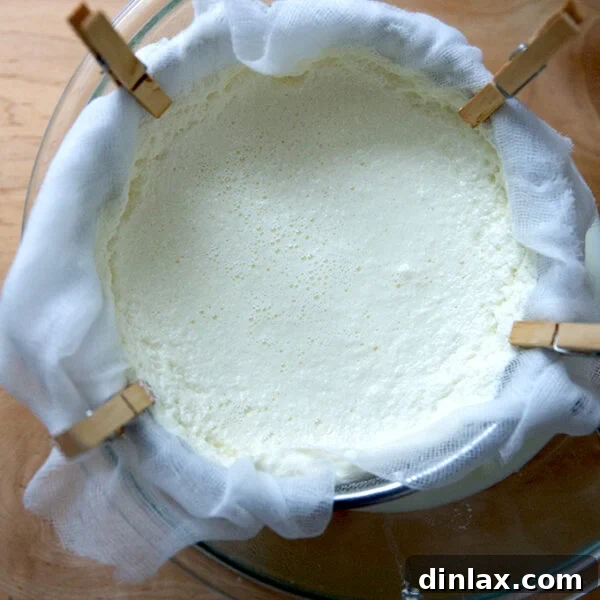
- Prepare the Sieve: Begin by setting up your draining station. Place a large, fine-mesh sieve over a deep bowl. Line the sieve with two layers of folded cheesecloth. This creates roughly four single layers, which is ideal for capturing the delicate curds while allowing the whey to drain efficiently.
- Heat the Dairy: Pour the whole milk and heavy cream into a heavy-bottomed stainless steel or enameled pot. Stir in the measured kosher salt. Place the pot over medium heat and bring the mixture to a full, rolling boil. It’s crucial not to walk away during this step; stir occasionally to prevent scorching the bottom and ensure even heating. Once it reaches a full boil, immediately turn off the heat.
- Curdle and Drain: Promptly stir in the white balsamic vinegar. You will observe the mixture beginning to curdle almost instantly. Allow it to stand undisturbed for 1 minute, or until you clearly see it separate into thick, milky curds and a translucent, yellowish liquid (the whey). Carefully pour this curdled mixture into the prepared cheesecloth-lined sieve. Allow it to drain at room temperature for 20 to 25 minutes. As liquid collects in the bowl below, periodically transfer it to another storage vessel if you plan to save the whey. After draining, you should have approximately 2 cups of fresh ricotta and about 4 cups of whey. Gently transfer the luscious ricotta to a clean bowl, discarding the used cheesecloth.
- Season and Store: Taste your freshly made ricotta. If desired, season with a little more salt to enhance its flavor. Your homemade ricotta is now ready to be used immediately in your favorite dishes. Alternatively, transfer it to an airtight container and refrigerate. It will keep beautifully in the refrigerator for 4 to 5 days. Note that the ricotta will thicken considerably once it has been chilled for about 24 hours, achieving an even richer consistency. Remember, save that whey! It’s an incredibly versatile ingredient you can use to make delicious bread, add to smoothies, or use as a base for soups.
- Prep Time: 2 minutes
- Cook Time: 25 minutes
- Category: Cheese
- Method: Stovetop
- Cuisine: American/Italian