Mastering the Whole Chicken: Unlocking Flavor, Value, and Culinary Versatility
In today’s fast-paced world, convenience often dictates our choices, especially when it comes to food preparation. The allure of pre-packaged boneless, skinless chicken breasts or perfectly portioned thighs is undeniable. They promise a quick meal, minimal fuss, and a straightforward path from package to plate. For many, this efficiency is a non-negotiable part of their weekly routine, and there’s absolutely nothing wrong with embracing such practical solutions. These ready-to-cook options certainly save time and effort, making meal prep a breeze for busy individuals and families alike.
However, for those moments when time allows for a touch more culinary engagement, or for anyone looking to elevate their home cooking, save money, and unlock a world of flavor, the whole chicken stands as an unparalleled champion. While the immediate convenience of individual chicken parts is tempting, buying a chicken whole opens up a realm of possibilities that extends far beyond a single meal. It’s a culinary decision that pays dividends in both taste and economics, offering an abundance of delicious returns from a single, humble bird. This approach not only enhances your cooking skills but also gives you greater control over the quality and specific cuts of meat you consume.
Why Buy a Whole Chicken? More Than Just Meals and Savings
The primary reason I advocate for buying whole chickens, whenever my schedule permits, is the incredible value and versatility they offer. Far from being just one meal, a whole chicken is a powerhouse of ingredients, providing multiple distinct culinary components, often enough for several meals, plus invaluable pantry staples. Let’s delve into the myriad benefits that make purchasing and breaking down a whole chicken a truly rewarding experience for any home cook.
Unbeatable Cost-Effectiveness and Value
One of the most compelling arguments for purchasing a whole chicken is the significant cost savings. Per pound, whole chickens are almost invariably cheaper than their pre-cut counterparts. When you consider that you’re not only getting prime cuts like breasts, thighs, and drumsticks, but also the entire carcass for making rich, flavorful stock, the economic advantage becomes clear. Imagine paying a premium for a pack of boneless breasts and then having to buy chicken stock separately. With a whole chicken, you get both, often for less than the cost of the breasts alone. Over time, these savings can add up considerably, making it a smart choice for budget-conscious cooks without compromising on quality or flavor. This holistic approach to chicken utilization represents a true embrace of culinary economy.
Culinary Versatility: Two Meals (and Often More) for Two
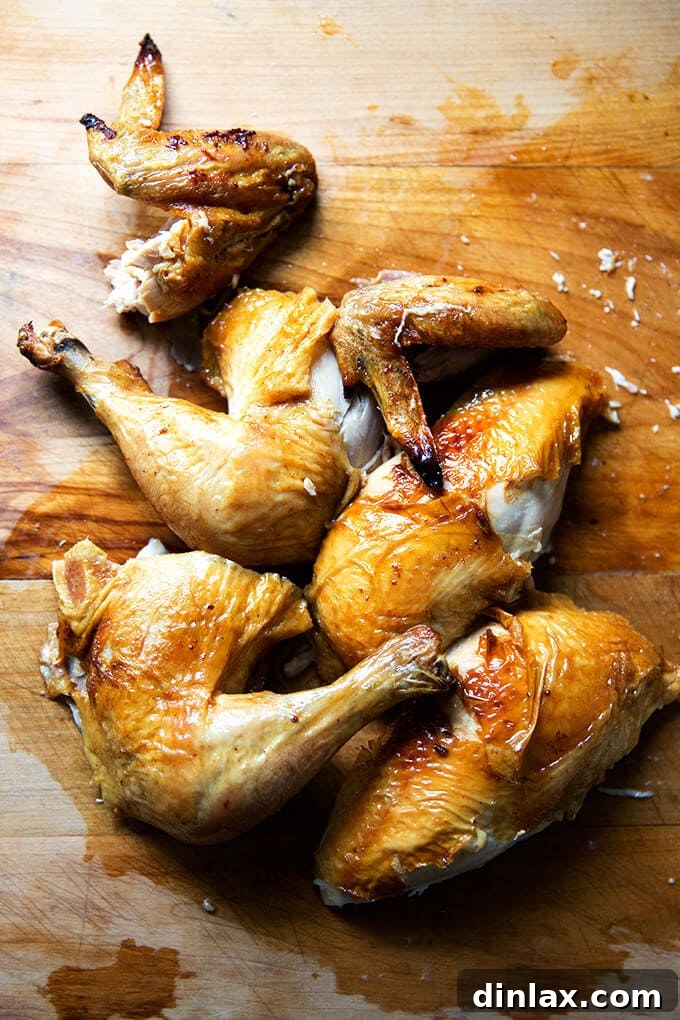
A single whole chicken can effortlessly transform into at least two distinct and delicious meals for two people, often more depending on appetite, accompanying dishes, and your culinary creativity. Imagine this delightful scenario: one night, you can savor beautifully prepared chicken legs and thighs, perhaps baked with fragrant white wine, savory olive oil, and a generous sprinkle of Parmigiano Reggiano. The succulent dark meat provides a comforting and robust meal. Then, a few nights later, you can enjoy elegant, tender chicken breasts, perhaps broiled to perfection with fresh tarragon and a touch of melted butter, offering a lighter yet equally satisfying option. This dual-meal approach not only diversifies your menu throughout the week but also simplifies meal planning, providing delicious options without feeling repetitive.
Beyond these primary cuts, you also get the wings, which are incredibly versatile. They can be roasted to crispy perfection, grilled with a smoky char, or tossed in your favorite spicy or savory sauce for a fantastic appetizer or game-day snack. This comprehensive utilization ensures that every edible part of the chicken is honored and enjoyed, minimizing waste and maximizing your culinary potential in the kitchen.
The Golden Elixir: Homemade Chicken Stock, a Kitchen Essential
Perhaps one of the greatest hidden treasures and most invaluable components of a whole chicken is its carcass, which forms the foundation of truly exceptional homemade chicken stock. Store-bought stocks, while convenient in a pinch, often contain excessive sodium, artificial flavors, and preservatives, and invariably lack the depth, richness, and gelatinous body found in a slow-simmered, homemade version. With a whole chicken, you gain the means to produce a quart (or often more!) of rich, nourishing, and incredibly flavorful chicken stock – a fundamental ingredient that elevates countless dishes. This isn’t just stock; it’s liquid gold for your kitchen, offering unparalleled taste, superior nutritional benefits, and complete control over the ingredients. It’s the secret ingredient chefs swear by for building layers of flavor in their cooking.
Delightful Little Snacks and Culinary Morsels
Don’t overlook the smaller, often discarded parts that come with a whole chicken. You typically find two succulent chicken tenders, nestled under the breast. These delicate pieces cook incredibly fast and are perfect for a quick pan-fry to add to a fresh salad, a satisfying sandwich, or as a small, protein-rich snack for children. And then there’s the chicken liver – a nutrient-dense delicacy often overlooked in modern cooking, but incredibly flavorful when quickly fried with a touch of onion or prepared as a rich, creamy pâté. These little bonuses add another layer of value, versatility, and culinary adventure to your whole chicken experience, ensuring nothing goes to waste and every part contributes to your gastronomic journey.
Overcoming the Apprehension: It’s Easier Than You Think
Does the thought of “dealing with a whole chicken” conjure images of complex butchery, dangerously sharp knives, and a messy kitchen? Many home cooks feel a degree of intimidation when faced with a whole bird, opting instead for the simpler, pre-cut options. The idea of dissecting an animal can seem daunting, especially if you’ve never done it before. However, I urge you not to let this apprehension discourage you. Breaking down a whole chicken is a fundamental kitchen skill that, with a little practice, quickly becomes second nature. It’s not about professional butchery; it’s about understanding the basic anatomy of the bird and making a few strategic cuts at the joints and along the bone structure.
You’ll soon discover that it’s far from a big deal. In fact, it’s actually quite rewarding. There’s a distinct satisfaction that comes from transforming a whole, raw ingredient into its perfectly portioned constituent parts, ready for diverse culinary applications. It connects you more deeply to your food, fosters a greater appreciation for the animal, and empowers you with greater control over your cooking process. Think of it as a small investment of time that yields significant returns in culinary confidence and capability. Moreover, with the right approach and a little organization, you can have your chicken expertly portioned, its carcass simmering for stock, and parts prepped for future meals in under ten minutes – truly a testament to efficient home cooking and a skill that will serve you well for years to come.
Setting Up Your Chicken Breakdown Station for Success
The key to making the process of breaking down a whole chicken efficient, clean, and enjoyable is proper organization. Before you even touch the chicken, take a moment to set up your workspace. A well-organized station not only speeds up the process but also ensures optimal food safety and minimizes mess, which is crucial when handling raw poultry. Here’s how I prepare my station to ensure a smooth, hassle-free experience, allowing you to focus on the task at hand without interruption:
- Two Cutting Boards: This is a crucial tip for food safety and efficiency. Designate one cutting board (perhaps a distinct color, like red for raw meat) specifically for the raw chicken. The second board can be used for any other non-chicken prep, for holding clean tools, or for transferring clean, cut chicken pieces. This critical separation prevents cross-contamination and allows you to work more fluidly without constantly washing a single board between steps.
- One Sharp Knife: A sharp knife isn’t just about ease of cutting; it’s fundamentally about safety. A dull knife requires more force, increasing the risk of slips, uncontrolled movements, and accidents. A good quality, sharp chef’s knife or a dedicated boning knife will make precise cuts through joints, cartilage, and skin effortlessly. Ensure it’s recently sharpened or honed before you begin; a few passes on a steel can make all the difference.
- Trash Can Nearby (with Lid Removed): Position your trash can or a designated waste bowl within easy reach, with the lid open or removed. This allows you to immediately discard trimmings, excess skin, fat, and unwanted bits as you go, keeping your main workspace clean, hygienic, and free from clutter. An uncluttered workspace is a safer workspace.
- Ziplock Bags or Airtight Containers Nearby (Opened, with Top Part Folded Over): Have several ziplock bags (or other preferred airtight containers) ready and open. For bags, fold the top edge over to create a wider, more stable opening that stands upright, making it easy to slide in chicken parts without touching the bag’s interior with your raw-chicken-contact hands. Use separate bags or containers for breasts, legs/thighs, wings, tenders, and liver, ready for immediate refrigeration or freezing.
- Stock Pot: Have your large stock pot ready on the stovetop or nearby on a clean surface. As you break down the chicken, immediately place the carcass, neck, giblets (excluding the liver if you plan to cook it separately), and any other stock-worthy trimmings (like wing tips or excess skin/fat that you don’t intend to cook with the meat) directly into the pot. This primes it for making homemade chicken stock as soon as you’re done portioning.
- Plate or Shallow Bowl: A clean plate or shallow bowl can be incredibly useful for temporarily holding a particular chicken part as you work on another, or for collecting the tenders and liver before they are bagged for storage. This keeps your workspace organized and prevents smaller pieces from getting in the way.
- Mallet (Optional, for Breast Pounding): If your specific recipe calls for flattening chicken breasts for even cooking, quick searing, or making dishes like these tarragon chicken breasts, have a meat mallet or a sturdy, heavy pan ready. Pounding creates a uniform thickness, which ensures the chicken cooks through evenly and quickly, preventing dry spots and resulting in a more tender product.
- Plastic Wrap (Optional, for Breast Pounding): If you plan to pound the breasts, keep a roll of plastic wrap handy. Place the chicken breast between two sheets of plastic wrap before pounding; this prevents tearing of the delicate meat, keeps juices from splattering, and maintains the cleanliness of your mallet and workspace.
The Simple Art of Crafting Homemade Chicken Stock
You’ll notice in the video that as I break down the chicken, I immediately add the carcass and any appropriate trimmings into the stockpot. This isn’t just for convenience; it’s the beginning of something truly wonderful and incredibly valuable. Making homemade chicken stock is astonishingly simple, yet it yields results far superior to anything you can purchase in a carton, both in terms of flavor and nutritional profile.
Once you’ve finished breaking down your chicken, and all the bones, neck, and wing tips are in the pot, simply fill the pot with cold water. It’s important to start with cold water as it allows impurities to rise to the surface for skimming and gently extracts flavors. Ensure the chicken parts are fully submerged, adding more water if necessary. Bring the pot to a rolling boil, then immediately reduce the heat to a very gentle simmer. Let it cook, uncovered or partially covered, for at least 3 hours, and ideally up to 4-6 hours for a richer, more deeply flavored, and gelatinous stock. Skim off any foam or scum that rises to the surface during the first hour or so to ensure a clear, clean stock. That’s it! The longer it simmers, the more flavor, collagen, and gelatin will be extracted from the bones, creating a truly robust, nourishing, and body-enriching stock.
While you can certainly enhance your stock with aromatic vegetables like onions, carrots, and celery (often referred to as a classic mirepoix), and herbs like bay leaves, thyme, and parsley stems, don’t let their absence deter you. A simple stock made with just chicken bones and water will still be incredibly flavorful and significantly healthier than most store-bought options. If you have them on hand, great; they’ll add another layer of complexity. If not, don’t sweat it – the chicken itself provides ample flavor and goodness. Once simmered to your desired richness, strain the stock through a fine-mesh sieve (or a colander lined with cheesecloth) to remove all solids. Let it cool completely before transferring to airtight containers. You can then refrigerate it for up to 5 days or freeze it for several months. This homemade stock will become the backbone of countless future culinary creations, enriching everything from soups and stews to risottos and sauces.
Putting Your Whole Chicken to Work: Inspiring Meal Ideas
So, you’ve embraced the whole chicken, broken it down like a seasoned pro, and now have an array of beautifully portioned parts and a pot of shimmering, simmering stock. What’s next? The real fun begins: transforming these valuable components into magnificent, memorable meals!
Here’s a game plan to inspire your culinary adventures and fully leverage the bounty of your whole chicken, showcasing its incredible versatility and helping you craft delicious, wholesome dishes throughout your week:
- Dinner One: Elegant Broiled Tarragon Breasts. Take those plump, lean chicken breasts, perhaps lightly pounded for even cooking and tenderization, and prepare them as a sophisticated centerpiece for an evening meal. Our recipe for broiled tarragon breasts offers a simple yet incredibly flavorful way to enjoy this cut, served perhaps with roasted asparagus and a light green salad for a balanced plate. The delicate, anise-like flavor of fresh tarragon pairs exquisitely with chicken, making for a truly memorable dish.
- Dinner Two: Hearty Baked Chicken Legs & Thighs. For another night, turn to the darker, richer, and more flavorful meat of the legs and thighs. These cuts are wonderfully versatile and forgiving, perfect for slow cooking methods. Our suggested recipe, chicken legs baked with white wine, olive oil, and Parmigiano Reggiano, creates a deeply savory, comforting, and incredibly aromatic dish. Serve them alongside creamy mashed potatoes or a hearty grain pilaf, and perhaps some vibrant sautéed greens, for a complete and satisfying family meal that embodies rustic elegance.
- Quick Bites: Pan-Fried Chicken Tenders. Don’t forget those precious tenderloins! These small, succulent pieces cook incredibly fast, making them ideal for quick meals. A simple pan-fry with a pinch of salt, pepper, and your favorite herbs transforms them into a perfect, lean addition to a fresh garden salad, a savory filling for a wrap, or a healthy, protein-rich snack for kids. They’re also excellent for quick stir-fries, homemade chicken nuggets, or even a speedy chicken piccata.
- Adventurous Appetizer: Sautéed Chicken Liver. For the more adventurous palate, the chicken liver offers a rich, earthy flavor and a nutritional powerhouse. Quickly fry it up with some thinly sliced caramelized onions, a splash of sherry or balsamic vinegar, and serve on toasted baguette slices for a sophisticated and surprisingly easy appetizer. Alternatively, blend it into a creamy, luxurious pâté for a delightful spread that rivals gourmet versions. It’s a fantastic way to utilize every part of the bird and explore new, sophisticated flavors.
- Versatile Wings: Baked, Grilled, or Fried. The chicken wings can be a standalone treat or a fantastic addition to any gathering. Toss them in your favorite spices and bake them until delightfully crispy, grill them with a smoky BBQ sauce for a summer cookout, or fry them for a classic indulgence. They’re perfect for game nights, casual family dinners, or as a tasty appetizer.
- Foundation for Future Meals: Homemade Stock. And of course, your golden, nourishing chicken stock is now ready. Use it as the base for an incredible homemade chicken noodle soup, a rich and creamy risotto, a flavorful gravy to accompany your roasted meats, or to braise vegetables for added depth. Having homemade stock on hand is a true game-changer for enhancing the depth, complexity, and nutritional value of countless recipes throughout your week, turning ordinary dishes into extraordinary culinary experiences.
Embrace the Whole Chicken, Embrace Culinary Empowerment
The journey from a whole chicken to multiple delicious meals, nourishing stock, and delightful snacks is more than just a series of kitchen tasks. It’s an act of culinary empowerment. It’s about taking control of your ingredients, understanding where your food comes from, mastering a valuable skill, saving money, and ultimately, creating healthier, more flavorful, and deeply satisfying meals for yourself and your loved ones. You’ll gain a valuable, enduring skill, boost your kitchen confidence, and unlock a deeper appreciation for the incredible versatility and economic benefits of this staple protein.
You can do it. 💪💪💪 Step into your kitchen, grab that whole chicken, and prepare to discover a rewarding culinary experience that will transform your cooking for the better, making you a more confident, capable, and creative home chef.