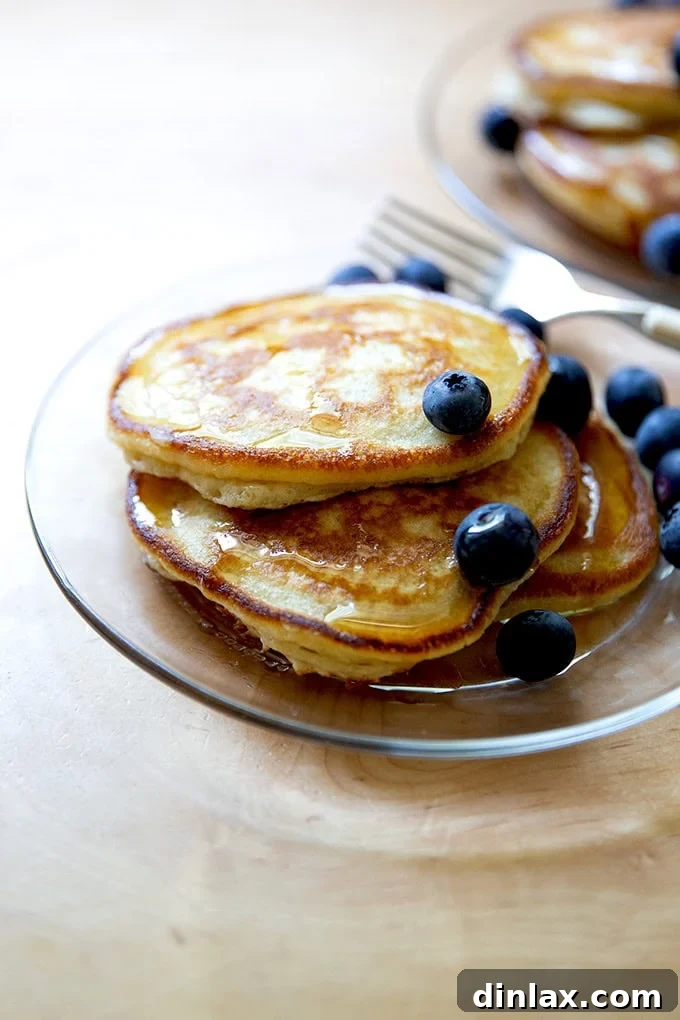
Welcome to your new favorite breakfast tradition! These sourdough discard pancakes are truly a revelation – incredibly light, wonderfully fluffy, and infused with a subtle, delightful tang that will make you wonder why you ever let a single drop of your precious sourdough discard go to waste. This simple, one-bowl, same-day recipe is meticulously designed for maximum flavor and minimal fuss, yielding dozens of perfect pancakes ready to be devoured instantly or frozen for convenient breakfasts all week long. Prepare to transform your sourdough routine and delight your taste buds with every single bite! 🥞🥞🥞
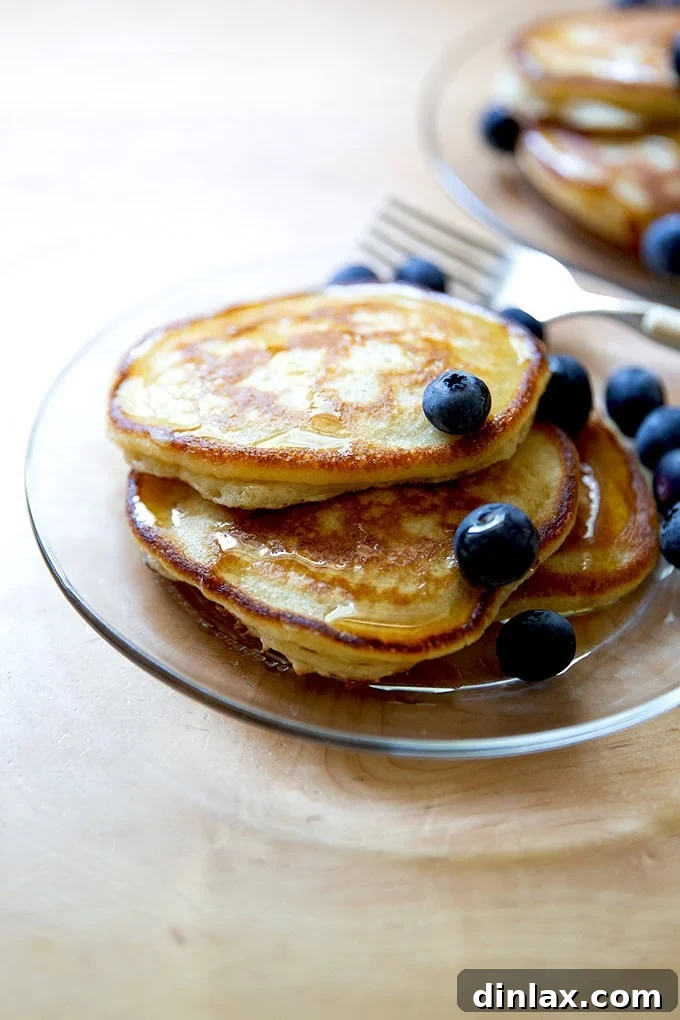
Unlock the Potential of Sourdough Discard: Delicious Pancakes Await
For those who regularly bake artisan sourdough bread, accumulating sourdough discard is a familiar and often abundant occurrence. Instead of viewing it as merely a byproduct, seasoned bakers recognize it as a versatile ingredient brimming with flavor potential, waiting to be transformed into something extraordinary. This simple sourdough discard pancake recipe offers precisely that – an ingenious and utterly delicious way to utilize up to 200 grams of your sourdough discard. It’s an excellent method for making a satisfying dent in your refrigerated supply while simultaneously producing over two dozen light, tender, and airy pancakes. It’s the ideal solution for a scrumptious same-day breakfast or a convenient batch of make-ahead meals, ensuring that none of your precious starter goes to waste.
Why These Sourdough Discard Pancakes Are a Must-Try
What truly elevates these pancakes beyond the ordinary is the exquisite harmony of flavors and textures. The sourdough discard, even when inactive, imparts a delightful, subtle tanginess that adds a layer of complex flavor, making each bite more interesting than a standard pancake. This unique characteristic renders them incredibly irresistible straight off the griddle, needing no additional embellishment. Many find their inherent flavor so satisfying that syrup or butter becomes optional.
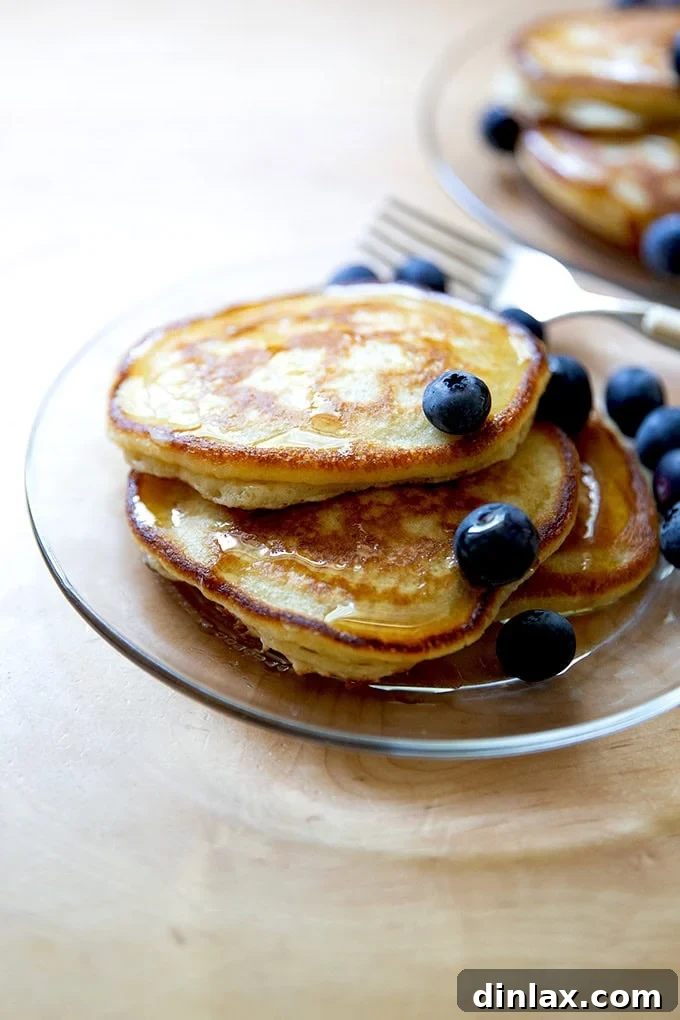
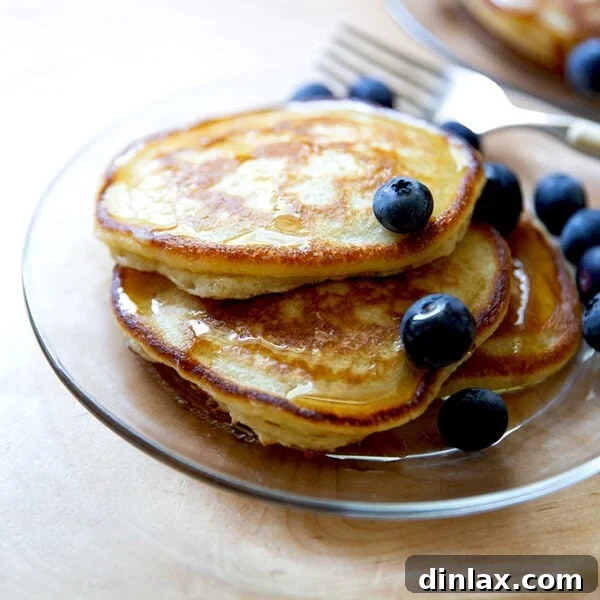
However, if you prefer a sweeter and richer experience, a generous drizzle of pure maple syrup combined with a scattering of fresh, vibrant berries creates a classic combination that appeals to everyone, including the youngest and pickiest eaters in your household. The perfect balance of a slightly crisp exterior and a melt-in-your-mouth, airy interior makes these pancakes a truly exceptional breakfast or brunch item. They manage to be both comforting and sophisticated, simple yet memorable.
Understanding Sourdough Discard: Age and Hydration Considerations
One of the most appealing aspects of this recipe is its remarkable flexibility regarding the state of your sourdough discard. You can effortlessly use either freshly discarded starter – that is, the portion you remove immediately after a room-temperature feeding of your active starter – or discard that has been patiently residing in your refrigerator for some time. While older discard (ideally up to two weeks old for optimal flavor) performs beautifully, it’s generally recommended not to push beyond that timeframe to ensure the best taste and overall pancake quality. The older the discard, the more pronounced and intense its sourness might become, which can be a desirable trait for some palates, while a fresher discard offers a milder, more delicate tang. Regardless of its age, this recipe harnesses the unique qualities of your discard, contributing incredible depth of flavor and tenderness without requiring any active leavening.
It’s also important to note the hydration of your starter. This recipe assumes a 100% hydration starter, meaning equal parts by weight of flour and water in its feeding. If your starter’s hydration differs significantly, slight adjustments to the flour or buttermilk might be necessary to achieve the correct batter consistency, though generally, a standard 100% hydration discard works perfectly without modification. Precision with a kitchen scale is always recommended for consistent results.
Essential Tips for Achieving Sourdough Pancake Perfection
Crafting truly light and magnificently fluffy pancakes is an art that is easily mastered with a few key considerations. Firstly, and perhaps most crucially, resist the powerful urge to overmix the batter. A few small lumps are not only perfectly acceptable but often desirable, as excessive mixing overdevelops the gluten in the flour, leading to tougher, chewier pancakes rather than the desired tender, airy texture. Stop mixing as soon as the ingredients are just combined.
Secondly, always ensure your leavening agents – baking powder and baking soda – are fresh and active. These ingredients are paramount for creating the myriad of airy bubbles that give pancakes their signature rise and fluffiness. Stale leaveners will result in flat, dense pancakes. A quick test for baking soda: mix a teaspoon with a bit of vinegar; if it fizzes, it’s active. For baking powder: mix a teaspoon with hot water; if it fizzes, it’s good to go.
Lastly, precise control over your pan temperature is absolutely vital. A steady medium heat allows the pancakes to cook through evenly from the inside out and develop a beautiful, golden-brown crust without burning before the center is fully cooked. If your pan is too hot, the outside will char; too cool, and they will become greasy and fail to brown.
The Symbiotic Magic of Buttermilk and Baking Soda
Buttermilk is not merely a flavor enhancer in this recipe; it plays a critical, scientific role. Its inherent acidity perfectly reacts with the baking soda, prompting a chemical reaction that produces carbon dioxide bubbles. These bubbles are the primary mechanism responsible for making the pancakes light, tender, and incredibly fluffy. Even if your sourdough discard is on the less active side, perhaps having spent a week or two in the fridge, the powerful combination of buttermilk and baking soda ensures your pancakes will still rise beautifully and achieve that coveted airy texture. This acid-base reaction is a fundamental part of the recipe’s success.
Don’t have buttermilk readily available? There’s no need to delay your pancake cravings! We’ve included a simple yet effective trick in the notes section of the recipe to easily create your own homemade buttermilk substitute using regular milk and a touch of lemon juice or white vinegar. This ensures accessibility and convenience for all home bakers.
How to Make Light and Fluffy Sourdough Discard Pancakes: A Detailed Step-by-Step Guide
Let’s embark on the delightful journey of creating these delectable pancakes. This is a straightforward, one-bowl method designed for efficiency, minimizing cleanup, and maximizing your enjoyment in the kitchen.
1. Prepare Your Workspace and Gather Ingredients
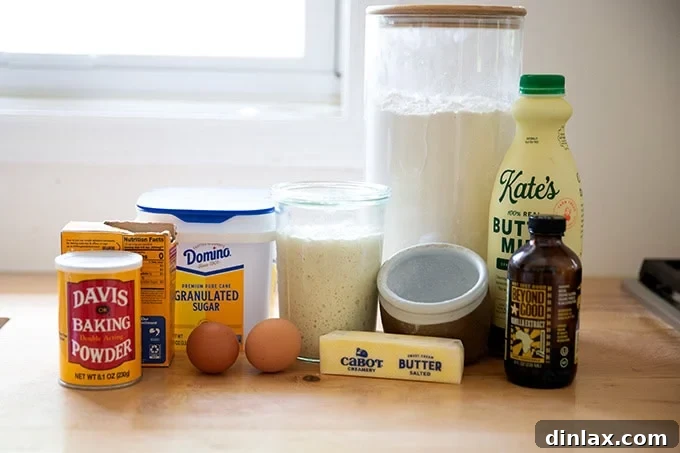
Before you even begin mixing, take a moment to set up your kitchen. Measure out all your ingredients precisely and have them within easy reach. You will need all-purpose flour, granulated sugar, fresh baking powder, active baking soda, salt (preferably Diamond Crystal kosher salt), large eggs, melted unsalted butter, creamy buttermilk, pure vanilla extract, and of course, your star ingredient: sourdough discard. Having everything prepped, a practice known as “mise en place,” makes the entire cooking process smooth, stress-free, and enjoyable.
2. Whisk Together the Wet Ingredients
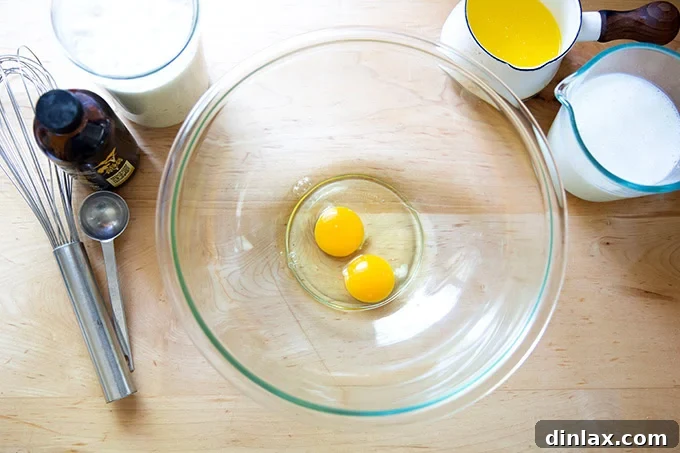
In a generously sized mixing bowl, begin by whisking the eggs until they are thoroughly blended, light yellow, and slightly frothy. This initial aeration step is crucial as it helps to incorporate air into the batter, contributing significantly to the final light and fluffy texture of the pancakes. Once the eggs are sufficiently whisked, carefully pour in the buttermilk, the slightly cooled melted butter, and the vanilla extract. Continue to whisk these liquid ingredients together until the mixture appears smooth, homogenous, and well combined. Ensure your melted butter is warm but not hot, as excessively hot butter could potentially cook the eggs, leading to an undesirable texture.
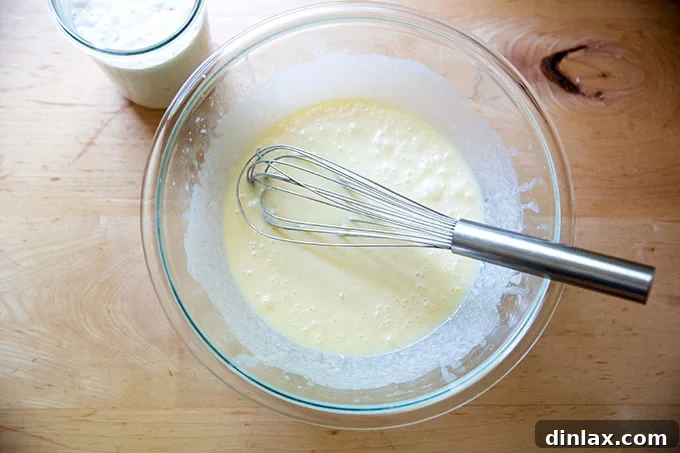
3. Integrate the Sourdough Discard
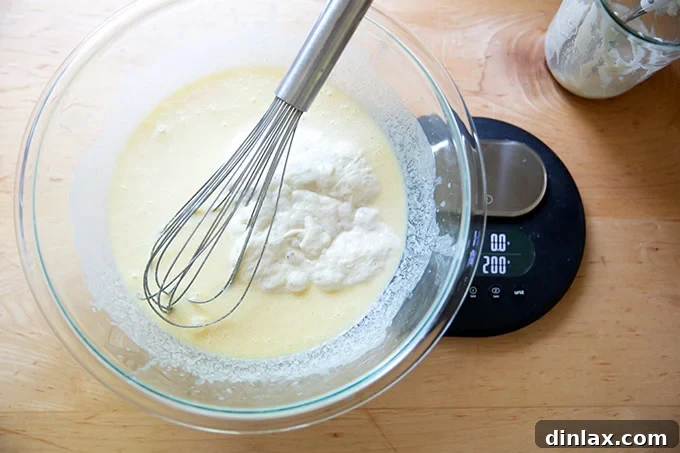
Now, it’s time to introduce the foundational ingredient for that signature tang! Add up to 200 grams of your sourdough discard to the wet mixture. While volumetric measurements are provided, using a precise kitchen scale for the discard (and all ingredients) is highly recommended to ensure consistent and optimal results, especially given the varying viscosities of discard. Gently whisk the discard into the wet ingredients until it is mostly smooth and fully incorporated. Do not stress about eliminating every tiny lump; a few small, unmixed bits are perfectly acceptable and will typically dissolve during the cooking process. The primary objective here is to distribute the discard evenly throughout the liquid base, ensuring every pancake is infused with its unique flavor profile and tenderizing qualities.
4. Gently Fold in the Dry Ingredients
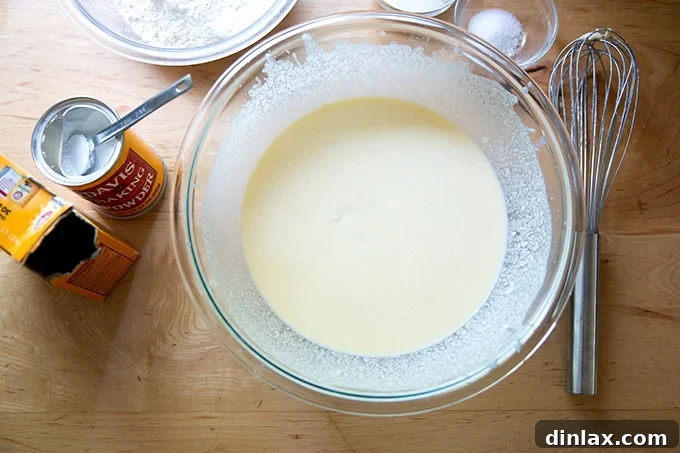
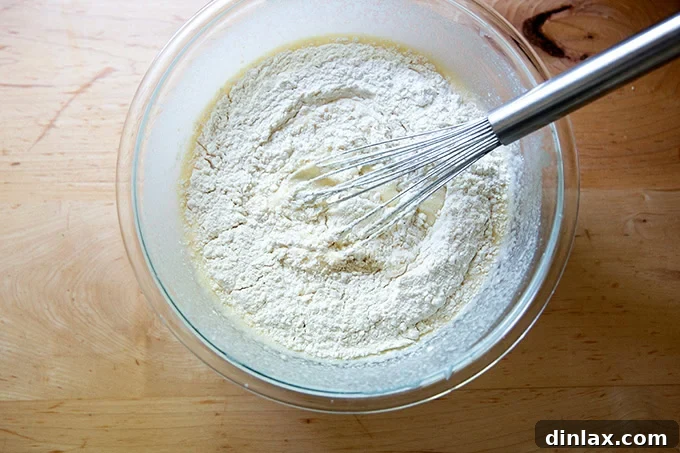
With the wet foundation established, it’s time to introduce the dry components. Begin by whisking in the salt, baking powder, baking soda, and granulated sugar into the wet mixture. Ensure these leavening agents and seasoning are thoroughly and evenly distributed to guarantee a consistent rise and flavor throughout your batch of pancakes. Following this, add the all-purpose flour. Start by whisking the flour until it is mostly incorporated into the wet ingredients, then switch to a rubber spatula for the final few strokes. This technique is crucial for preventing overmixing while ensuring all pockets of dry flour are fully hydrated and scraped from the sides and bottom of the bowl. The resulting batter should be thick but still pourable, with a few small lumps remaining. Remember, less mixing translates directly to more tender and desirable pancakes!
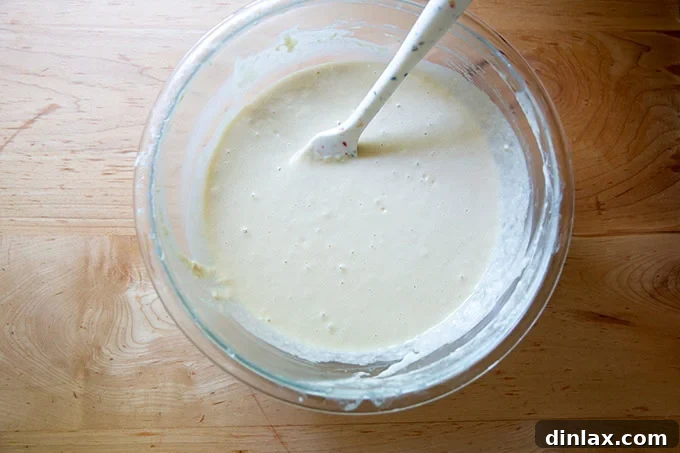
5. Cook Your Pancakes to Golden-Brown Perfection
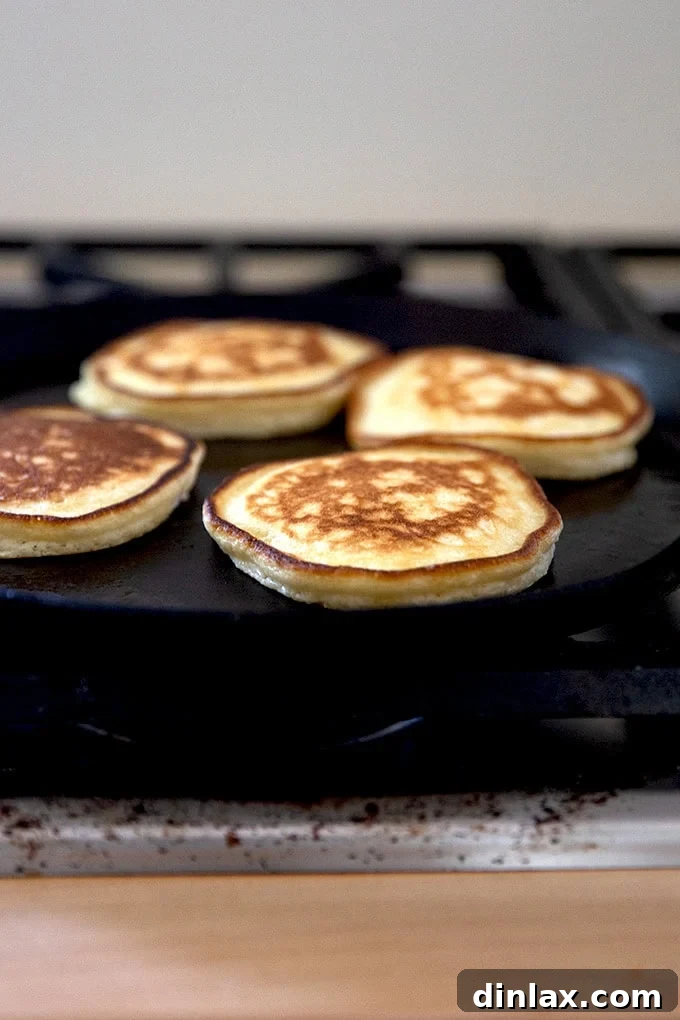
Before you start pouring, ensure your cooking surface is ready. Heat a large skillet or griddle over a steady medium to medium-high heat. A high-quality nonstick pan is strongly recommended for effortless flipping and minimal sticking. Add approximately 1 to 1.5 teaspoons of olive oil or any other neutral-flavored oil (like canola or vegetable oil) to the center of the skillet. Swirl the pan to distribute the oil evenly across the cooking surface, or use a pastry brush for complete and uniform coverage. Using a 2-tablespoon measure (or a 1/4 cup measure for slightly larger pancakes), carefully pour the batter onto the hot skillet. Ensure each pancake has ample space to spread slightly without touching its neighbors, preventing them from fusing together. Cook for about 1 to 2 minutes on the first side. Observe key visual indicators of readiness: you should see numerous bubbles forming and popping on the surface of the pancakes, and the edges should begin to set and appear dry. The underside should be a beautiful, even golden brown.
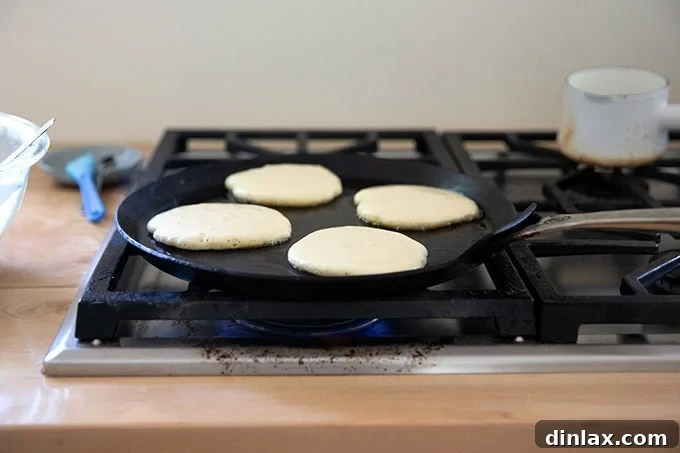
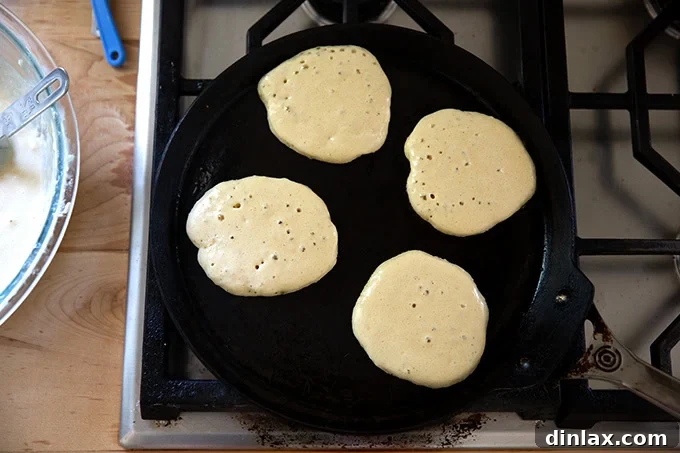
6. The Perfect Flip and Finish
Once the first side has achieved that desired golden hue and the surface shows active bubbling, it’s time for the pivotal moment – the flip! Employ a thin, wide spatula to gently slide underneath each pancake, ensuring you get the entire surface, and then swiftly turn it over with a confident motion. Cook for an additional 30 to 60 seconds on the second side, or until it, too, is beautifully golden brown and the pancake is cooked through to the center. You can verify doneness by lightly pressing on the center of a pancake; if it springs back, it’s likely finished. Repeat this meticulous process with the remaining batter, adding a small amount of additional oil to the skillet between batches as needed to prevent sticking and maintain consistent, even browning. If you are preparing a large quantity for several people, keep your cooked pancakes warm by placing them on a wire cooling rack set over a baking sheet in a low oven (around 200°F / 95°C) until ready to serve.
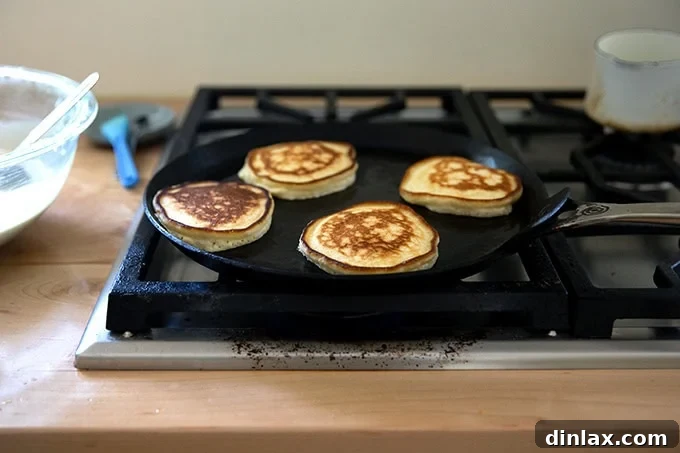
Serving Your Sourdough Discard Pancakes: Creative Topping Ideas
Once your delectable sourdough discard pancakes are cooked to perfection, the real fun begins – customizing them with your favorite toppings! You have two primary options for handling the finished pancakes: transfer them immediately to a cooling rack if you intend to freeze them for later, or stack them high on a waiting plate, ready to be adorned and devoured.
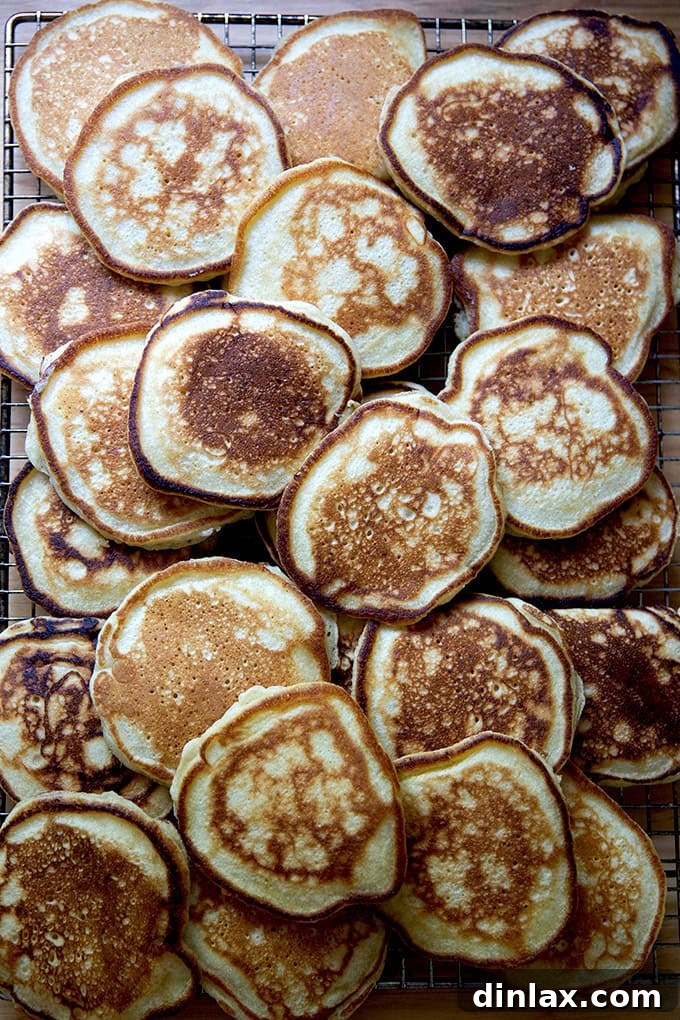
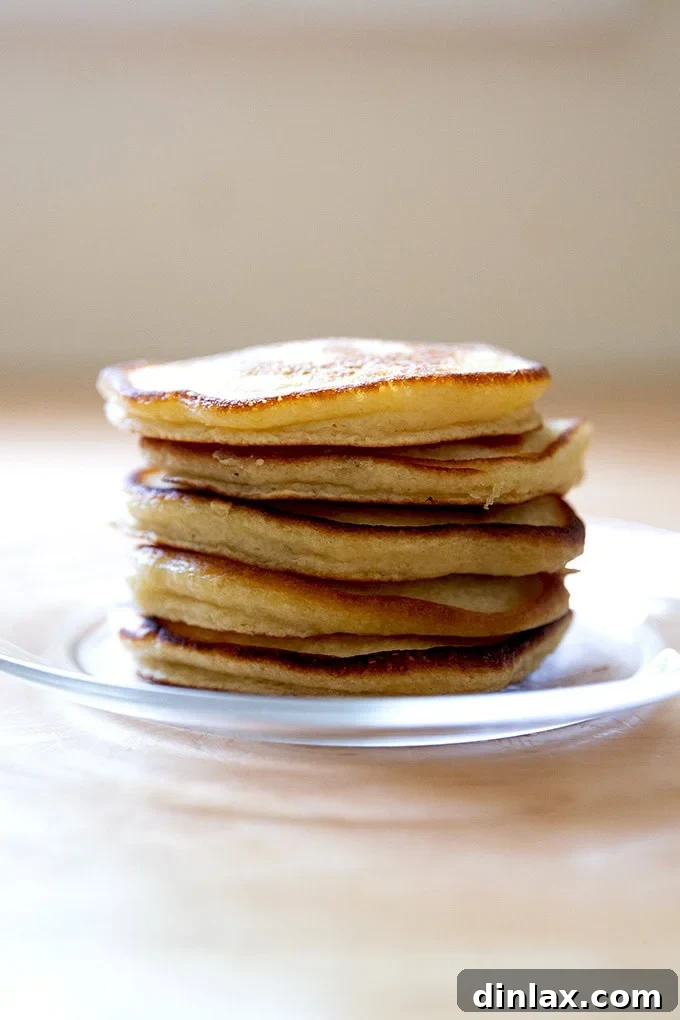
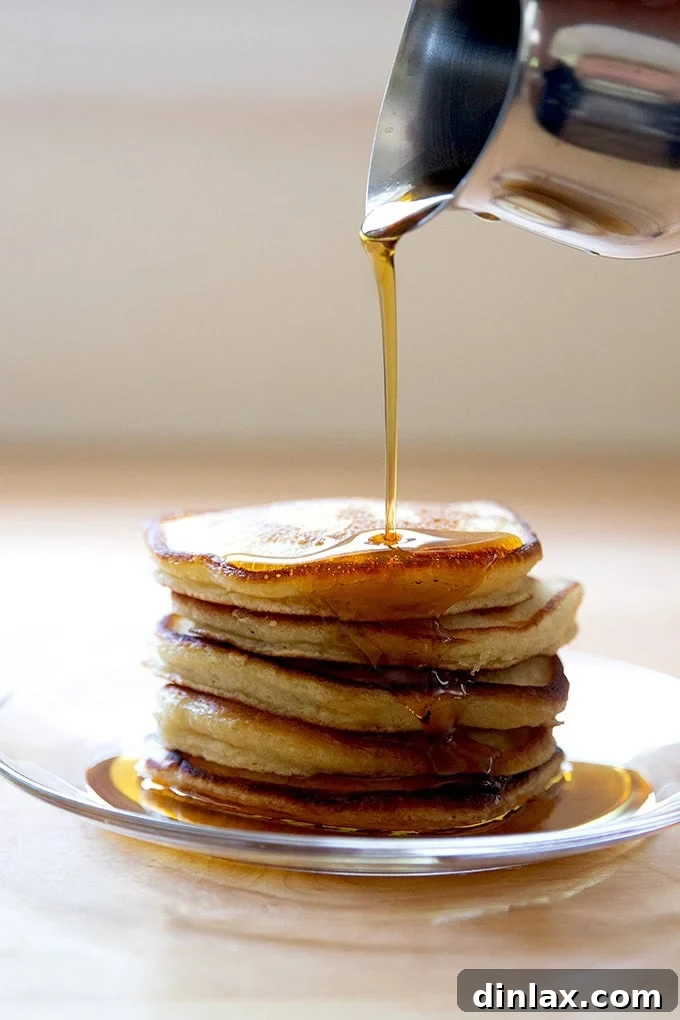
While these pancakes are undoubtedly delightful plain, their inherent tanginess makes them a fantastic canvas for a wide array of accompaniments. A timeless and universally adored choice is a generous drizzle of pure maple syrup, allowing its rich sweetness to beautifully contrast and complement the subtle tang of the pancakes. Enhance this classic pairing with a vibrant scattering of fresh berries – blueberries, raspberries, or thinly sliced strawberries add a burst of color, natural sweetness, and essential nutrients. For those who enjoy a bit of indulgence, consider a dollop of freshly whipped cream, a dusting of powdered sugar, sliced bananas, toasted nuts for crunch, or even a savory twist with a perfectly fried egg and a sprinkle of fresh chives! The possibilities are endless, allowing you to personalize your pancake experience.
Freezing and Reheating Sourdough Discard Pancakes for Convenience
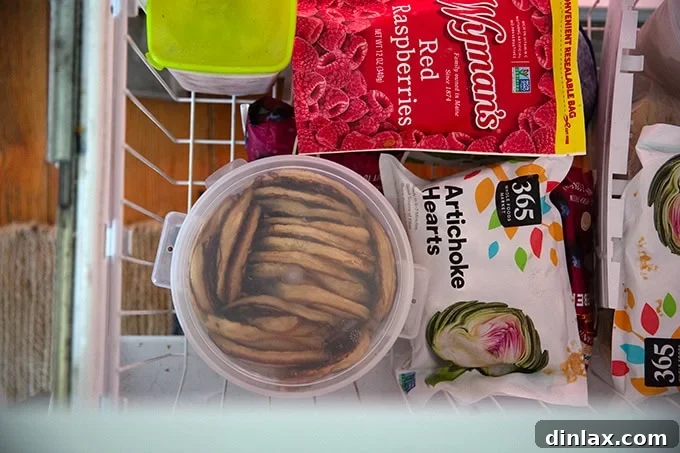
One of the most significant advantages of this recipe, beyond its incredible taste, is its remarkably freezer-friendly nature. Preparing a large batch means you can effortlessly enjoy fresh, warm, homemade pancakes any day of the week with minimal effort and planning. This makes them perfect for busy mornings or unexpected guests. To ensure they freeze well, allow the cooked pancakes to cool completely on a wire rack. This critical step prevents condensation from forming and subsequently avoids ice crystals, which can lead to soggy pancakes, and also keeps them from sticking together in the freezer.
Once fully cooled, you can stack them neatly with small pieces of parchment paper placed in between each pancake. This clever trick makes them incredibly easy to separate when frozen. Then, transfer the stacked pancakes to an airtight, freezer-safe container or a heavy-duty freezer bag. A spacious 2-quart vessel, similar to the one elegantly pictured here, is perfectly sized for storing a substantial batch of these delicious pancakes, ensuring they remain fresh and protected from freezer burn.
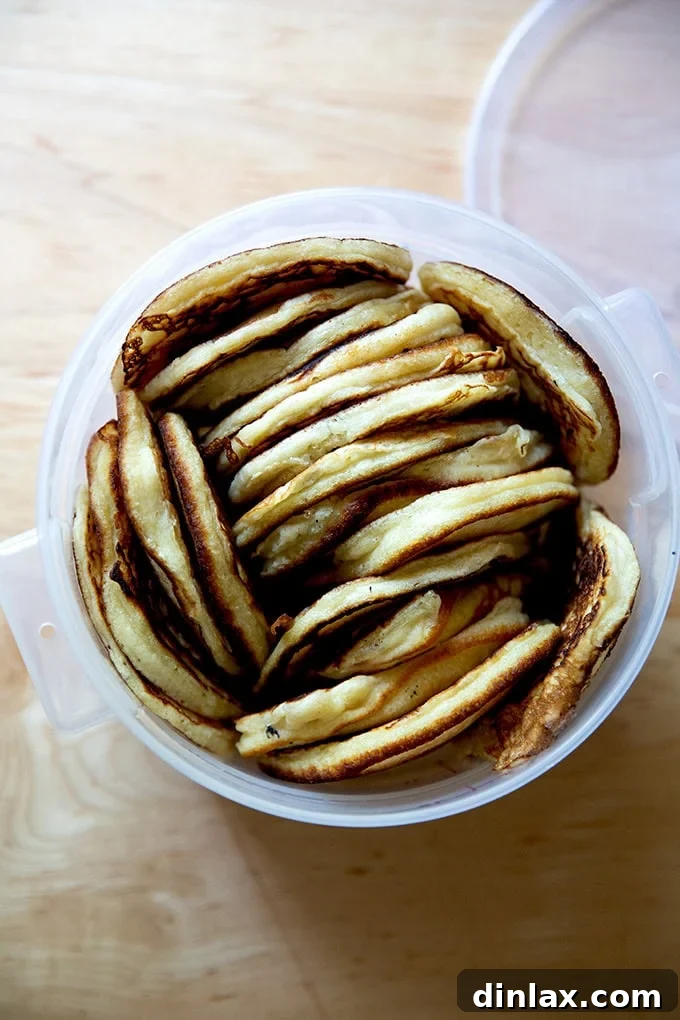
These freezer-ready pancakes can be stored in the freezer for up to three months without compromising their quality or flavor. When you’re ready to indulge, there’s absolutely no need to thaw them beforehand! Simply place the frozen pancakes directly into a toaster oven, a standard toaster, or even a lightly greased skillet over medium-low heat. Toast or heat them for approximately 5 to 6 minutes, or until they are thoroughly heated through, achieve a delightful light crispiness on the exterior, and begin to sizzle ever so slightly. This ingenious reheating method ensures that they retain their wonderfully light and fluffy texture, tasting remarkably close to freshly made pancakes, ready to brighten your day.
The Ultimate Recipe: Light and Fluffy Sourdough Discard Pancakes
Light and Fluffy Sourdough Discard Pancakes
Author: Alexandra Stafford
Total Time: 35 minutes
Yield: 26 pancakes
Print Recipe
Description
These sourdough discard pancakes are light, fluffy, and so utterly delicious — one bite will make you never want to waste a drop of your sourdough discard again! This one-bowl, same-day recipe will leave you with dozens of pancakes to enjoy now or freeze for later 🥞🥞🥞
Notes:
- For best results, please use a kitchen scale to measure ingredients, as it provides greater accuracy than volumetric measurements.
- Salt: If you are opting for Morton Kosher salt or fine sea salt, the recommended amount is 3/4 teaspoon.
- Sourdough Discard: This recipe is versatile; you can use either freshly discarded starter (from a room-temperature feeding of your active starter) or discard that has been stored in your fridge (ideally not older than 2 weeks for optimal flavor and texture). It’s assumed your starter is maintained at 100% hydration (equal parts flour and water by weight). If you wish to use less starter, for example, 100 grams, simply increase both the amount of flour and buttermilk by 50 grams each to maintain balance.
- Buttermilk: No buttermilk on hand? No problem! To create your own homemade buttermilk substitute, pour 1.5 cups of regular milk (dairy or non-dairy) into a 2-cup measuring cup. Stir in 2 tablespoons of white vinegar or fresh lemon juice, and let the mixture sit undisturbed for 10 minutes. Give it another quick stir before using.
- Pan Selection: An 11-inch nonstick pan with low sides is highly recommended for cooking pancakes, as it significantly eases the flipping process. A large griddle would also be an ideal choice for cooking multiple pancakes simultaneously.
Ingredients
- 2 large eggs (approximately 100 grams)
- 380 grams (a heaping 1.5 cups) buttermilk, or homemade buttermilk substitute (see notes above)
- 113 grams (8 tablespoons or 1 stick) melted unsalted butter (salted butter can also be used, adjust added salt accordingly)
- 13 grams (1 tablespoon) pure vanilla extract
- 200 grams (about 1 cup) sourdough discard (at 100% hydration), see notes above
- 6 grams (1.5 teaspoons) Diamond Crystal kosher salt, see notes above for other salt types
- 8 grams (2 teaspoons) fresh baking powder
- 3 grams (1/2 teaspoon) fresh baking soda
- 50 grams (1/4 cup) granulated sugar
- 240 grams (a heaping 1 3/4 cups) all-purpose flour
- Extra-virgin olive oil or a neutral oil (e.g., canola, vegetable), for cooking
- Pure maple syrup and an assortment of fresh berries for serving (optional, but highly recommended)
Instructions
- Prepare the Skillet: Place a large skillet or griddle over low heat to begin gently warming up.
- Combine Wet Ingredients: In a spacious mixing bowl, vigorously whisk the eggs until they are thoroughly blended and slightly frothy. Incorporate the buttermilk, vanilla extract, and melted butter, continuing to whisk until the mixture is smooth and uniform. Next, add the sourdough discard and whisk again until it is mostly smooth, with only minimal lumps remaining.
- Integrate Dry Ingredients: Add the salt, baking powder, baking soda, and granulated sugar to the wet mixture and whisk until these dry components are fully incorporated. Finally, add the all-purpose flour. Whisk until the flour is mostly combined, then switch to a rubber spatula for the last few strokes. Use the spatula to carefully scrape down the sides and bottom of the bowl, ensuring all ingredients are fully integrated without overmixing. A few small lumps are perfectly fine.
- Cook the Pancakes: Increase the heat under your skillet or griddle to medium. Pour 1 to 1.5 teaspoons of oil into the center of the skillet and swirl it around or use a brush to evenly coat the cooking surface. Using a 2-tablespoon measure (or a 1/4 cup measure for larger pancakes), carefully pour portions of the batter into the skillet. In an 11-inch skillet, you can typically cook 3-4 pancakes at a time. Cook for 1-2 minutes on the first side; periodically peek under a pancake with a spatula to monitor browning. Adjust the heat if they are browning too quickly (lower heat) or too slowly (slightly increase heat). Once the pancakes are lightly browned on the bottom and their surfaces show active bubbling, carefully flip them.
- Finish Cooking and Serve: Cook the flipped pancakes for an additional 30 to 60 seconds on the second side, or until they are golden brown and fully cooked through. Transfer the cooked pancakes to a cooling rack, or directly onto hungry eaters’ plates. Repeat the cooking process with the remaining batter, remembering to add more oil to the skillet between batches as needed to prevent sticking and maintain beautiful browning.
- Freezing Instructions: If you have extra pancakes or are batch cooking, allow them to cool completely on a wire rack. Once cool, transfer them to an airtight freezer-safe container or bag, separating layers with parchment paper if stacking. Store in the freezer for up to 3 months. To reheat, place frozen pancakes directly into a toaster oven, a conventional toaster, or a lightly greased skillet over medium-low heat. Toast until thoroughly reheated and slightly sizzling, typically 5 to 6 minutes.
- Prep Time: 15 minutes
- Cook Time: 20 minutes
- Category: Breakfast
- Method: Skillet / Griddle
- Cuisine: American
Frequently Asked Questions About Sourdough Discard Pancakes
- What exactly is sourdough discard?
- Sourdough discard is the portion of your active sourdough starter that you remove (or “discard”) before feeding it. While it’s not typically at its peak activity for leavening bread, it still retains all the beneficial wild yeasts and bacteria that contribute to sourdough’s distinct tangy flavor. It’s a valuable ingredient that’s too good to waste and perfect for enriching the flavor of baked goods like these pancakes, without needing to be “fed” or active.
- Can I use an active sourdough starter instead of discard for this recipe?
- While technically possible, this recipe is specifically formulated to utilize inactive sourdough discard. The primary leavening agents in these pancakes are baking powder and baking soda, designed to create fluffiness. Using an active starter might result in a slightly different texture and potentially an overly sour flavor profile. For the best, most consistent results as described, we recommend sticking to inactive discard.
- How long can sourdough discard be safely stored in the refrigerator?
- Sourdough discard can typically be stored in an airtight container in the refrigerator for about 1 to 2 weeks for optimal flavor and performance in recipes like this. Some experienced bakers extend this to 3-4 weeks, but be aware that the flavor will become more intensely sour and robust over time. Always give your discard a quick sniff test for any off-odors and check for unusual discoloration before incorporating it into your cooking.
- Is it possible to make these pancakes dairy-free?
- Absolutely! Making these pancakes dairy-free is quite simple with a few smart substitutions. For the buttermilk, you can easily use a dairy-free milk alternative (such as almond, soy, or oat milk) mixed with 2 tablespoons of apple cider vinegar or lemon juice to create a dairy-free buttermilk substitute. For the melted butter, opt for a high-quality dairy-free butter alternative or simply use a neutral-flavored oil like canola, vegetable, or melted coconut oil. Ensure your sourdough starter is also maintained using only water and flour if you require a strictly dairy-free outcome.
- Why might my sourdough discard pancakes not be as fluffy?
- Several factors can contribute to less-than-fluffy pancakes. Firstly, ensure that both your baking powder and baking soda are fresh and fully active, as expired leavening agents are ineffective. Secondly, a common culprit is overmixing the batter; too much stirring develops the gluten in the flour, resulting in dense, tough pancakes instead of light, airy ones. A few small lumps in the batter are actually desirable! Lastly, check your pan temperature. If the heat is too high, the outside cooks too quickly before the inside has a chance to fully rise, while too low heat can lead to flat, greasy pancakes.
- Can I add fruits, chocolate chips, or other mix-ins to the pancake batter?
- Yes, absolutely! This sourdough discard pancake recipe is wonderfully versatile and welcomes creative additions. Feel free to gently fold in fresh berries like blueberries or raspberries, mini chocolate chips, finely chopped nuts (such as pecans or walnuts), or even a dash of cinnamon or nutmeg directly into the batter just before cooking. When adding these delicious mix-ins, remember to do so with minimal stirring to avoid overmixing the batter and preserve the pancakes’ tender texture.
Final Thoughts on Embracing the Versatility of Sourdough Discard
This recipe for light and fluffy sourdough discard pancakes is more than just a delightful breakfast item; it stands as a testament to the incredible versatility, resourcefulness, and inherent value found in every stage of your sourdough baking journey. It actively encourages reducing food waste by giving purpose to what might otherwise be discarded, transforming it into a culinary gem. Most importantly, it consistently delivers an exceptionally delicious and satisfying experience that will undoubtedly become a treasured part of your cooking repertoire. Whether you are a seasoned sourdough artisan with years of experience or a curious newcomer just beginning to explore the world of wild yeast, incorporating discard into your everyday cooking opens up a vast and exciting world of culinary possibilities. So go ahead, confidently whip up a batch, savor the delightful subtle tang, and share the comforting joy of these truly incredible pancakes with family and friends. Happy baking, and most importantly, happy eating!