Unlock the secrets to crafting exceptional Sicilian-style pizza right in your own kitchen! If you’ve ever mastered the art of focaccia – and we know you have! – then preparing a truly authentic and utterly delicious pan pizza at home is well within your grasp. This guide will reveal a game-changing technique that ensures a perfectly stabilized, focaccia-like crust and toppings that are cooked to perfection, never overdone. Get ready to transform your pizza nights with this surprisingly easy and incredibly rewarding recipe. 🍕🍕🍕
While the modern interpretation of “Sicilian-style pizza” has broadened over time, its revered ancestor is undoubtedly sfincione. This traditional Sicilian delight features a thick, spongy, focaccia-like dough, generously topped with savory onions, a sprinkle of crunchy bread crumbs, and the distinctive flavor of caciocavallo cheese. Historically, sfincione holds a special place in Sicilian culture, often gracing tables during festive occasions like New Year’s Eve, embodying centuries of culinary tradition.
Today, when you step into a pizzeria advertising Sicilian-style slices, you’ll encounter a delicious evolution of sfincione. These slices typically retain the characteristic airy, focaccia-like base, which is its hallmark. However, the array of toppings has expanded significantly, mirroring the diverse choices found in any contemporary pizza shop. From classic pepperoni to an assortment of fresh vegetables and gourmet cheeses, the versatility of the Sicilian crust allows for endless creative possibilities.
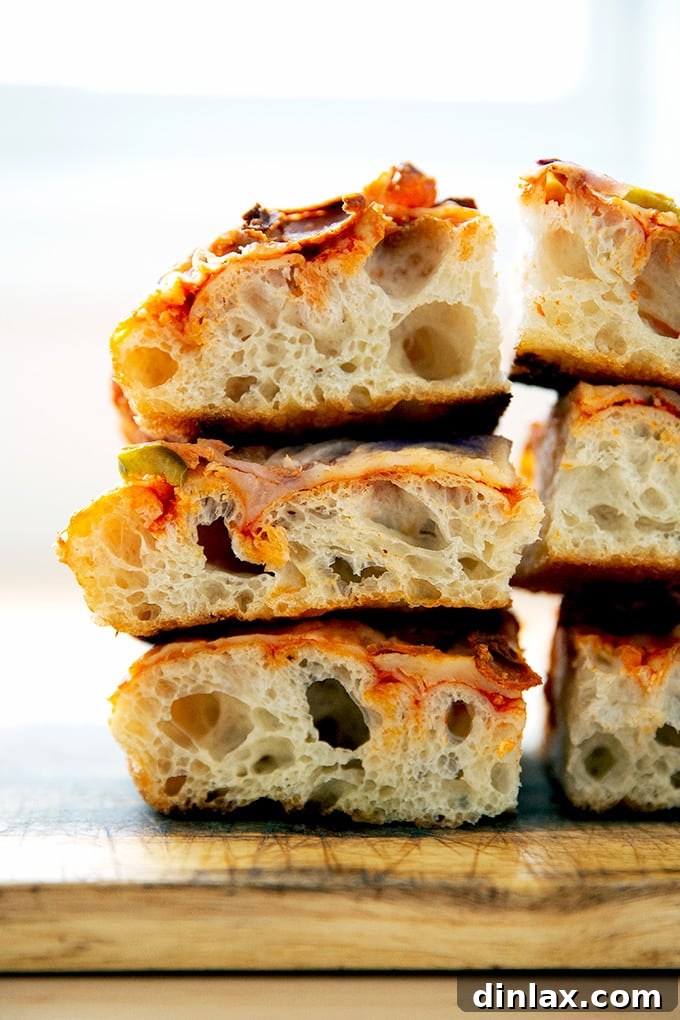
Unlike some other complex pan pizza styles – yes, Detroit-style pizza, we’re looking at you! – Sicilian-style pizza distinguishes itself with its remarkable simplicity for home cooks. The underlying principle is elegantly straightforward: if you can successfully prepare a focaccia dough, whether it’s a yeasted version or a sourdough variation, you possess all the fundamental skills needed to bake a truly outstanding Sicilian-style pizza from scratch. Its forgiving nature and straightforward preparation make it an ideal project for both novice and experienced bakers seeking a truly authentic pizza experience.
Before diving into the detailed, step-by-step instructions below, take a moment to absorb these crucial, game-changing tips. They are designed to elevate your homemade Sicilian pizza from good to absolutely extraordinary, ensuring a perfect crust and harmoniously cooked toppings every single time.
4 Essential Tips for Sicilian-Style Pizza Perfection
- Butter Your Baking Pan: This might sound like an unconventional step for pizza, but it’s a non-negotiable secret to success. Always generously butter your baking pan *before* adding the olive oil. For certain pan types, this dual-greasing method is crucial for preventing the dough from sticking, ensuring a flawless release. Beyond functionality, butter imparts an incredible depth of flavor to the crust and promotes a beautiful, golden-brown underside that is irresistibly crisp. This small detail makes a significant difference in the final taste and texture.
- Strategic Dimpling for an Even Bake: The way you dimple your dough directly impacts the final crust. When performing your final dimpling, focus your efforts primarily on the center of the dough, carefully avoiding the perimeter. This technique, a lesson gleaned from culinary masters like Peter Reinhart in his acclaimed book Perfect Pan Pizza, is essential for achieving an even parbake and a consistent, airy texture throughout the entire crust, especially the critical middle section.
- The Power of Parbaking Your Crust: This step is truly transformative and the ultimate secret weapon for superior Sicilian pizza. Parbaking the focaccia-like crust beforehand allows it to stabilize its structure, preventing it from becoming dense, gummy, or doughy when fully baked with toppings. More importantly, it acts as a protective shield, ensuring that your delicious toppings do not overcook or dry out while the crust finishes baking. This results in a perfectly cooked base and vibrant, flavorful toppings every time.
- Invest in a Lloyd Pan: While not strictly mandatory, a Lloyd pan is a worthwhile investment for any serious home pizza maker. These specialized pans are engineered to conduct heat far more efficiently and evenly than standard half-sheet pans. The superior heat transfer results in an incredibly crispy, golden-brown crust, especially on the bottom, which is a hallmark of authentic pan pizzas. We particularly recommend the 16×12-inch Lloyd “Grandma” pan for its excellent performance with Sicilian-style recipes.
Crafting Your Homemade Sicilian Pizza: A Step-by-Step Guide
Embark on your journey to homemade Sicilian pizza excellence by first gathering your high-quality ingredients. You’ll need bread flour (or all-purpose, as detailed in the notes), fine kosher salt, reliable instant yeast (our preference is SAF for consistent results), and lukewarm water, precisely measured to achieve the perfect dough hydration.
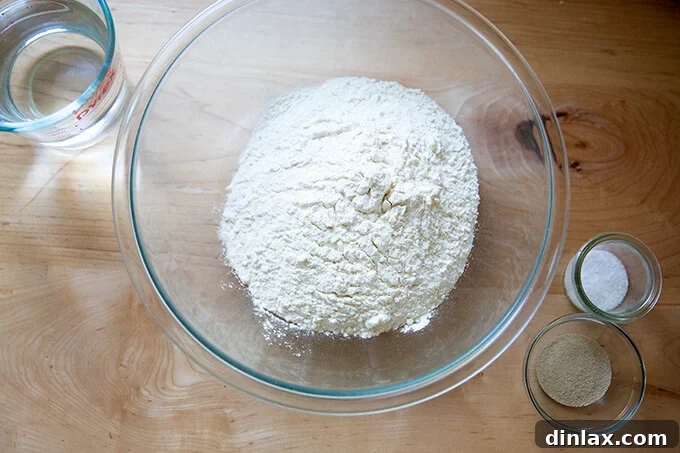
Begin the dough preparation by combining your dry ingredients. In a generously sized mixing bowl, whisk together the bread flour, kosher salt, and instant yeast. Ensure they are thoroughly mixed to evenly distribute the leavening agent and seasoning throughout the flour.
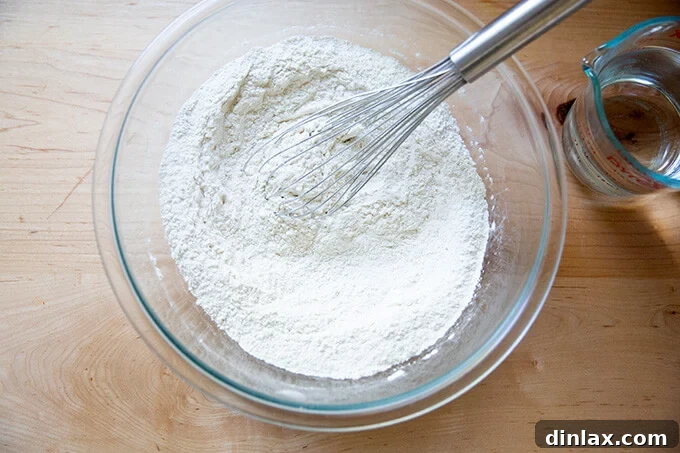
Once the dry ingredients are fully incorporated, it’s time to introduce the liquid element. Pour the measured lukewarm water directly into the bowl with the flour mixture. The temperature of the water is crucial for activating the yeast properly, so aim for lukewarm rather than hot or cold.
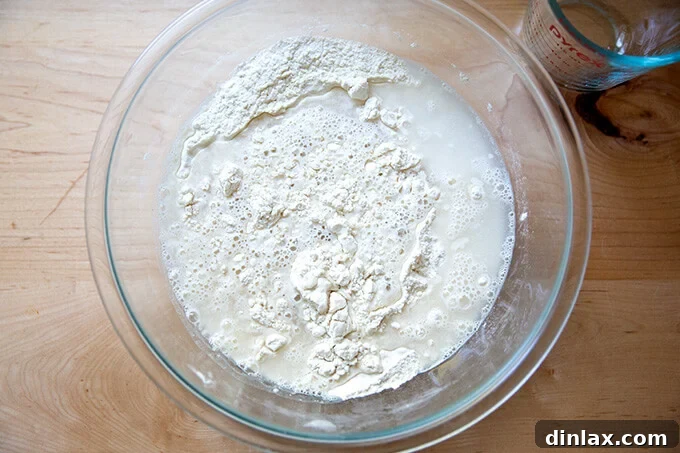
Now, grab a sturdy rubber spatula. Gently but thoroughly stir the water into the dry ingredients. Continue mixing until all the liquid has been fully absorbed and the mixture comes together to form a sticky, shaggy dough ball. There’s no need for intense kneading; a simple stirring motion will suffice for this high-hydration dough.
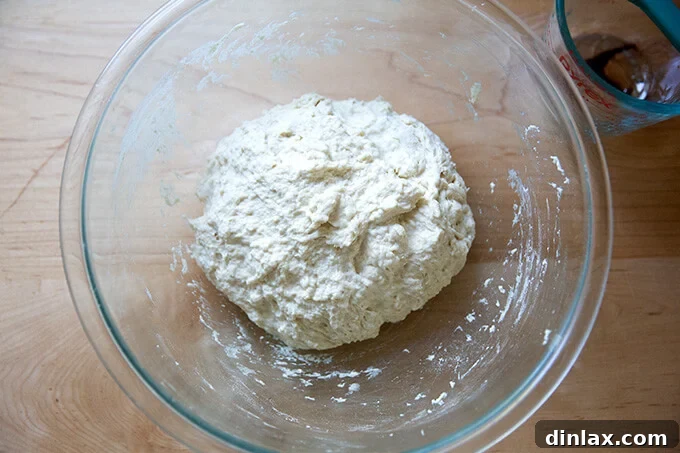
To prepare the dough for its long, slow fermentation, gently slick the entire surface of the dough ball with a generous drizzle of olive oil. This coating not only prevents a skin from forming but also adds to the rich flavor profile of the final crust. The oil creates a protective barrier, keeping the dough moist during its extended stay in the refrigerator.
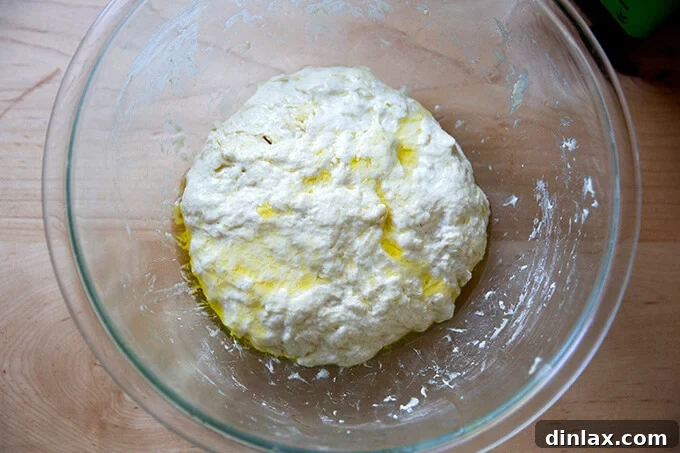
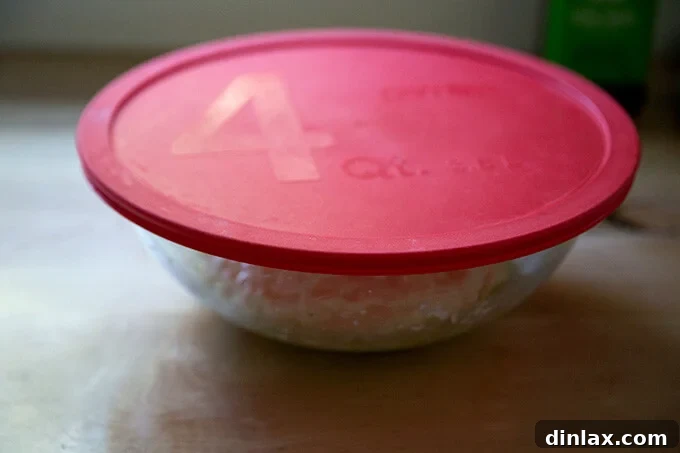
After coating with olive oil, cover the bowl securely. Use either a tight-fitting lid or plastic wrap to create an airtight seal, preventing any air from drying out the dough. Immediately transfer the covered bowl to the refrigerator. This cold fermentation period is crucial: allow it to rise for a minimum of 18 hours, though for an even lighter, more flavorful crust with complex notes, aim for two to three days. This extended chill time develops depth and enhances the dough’s texture significantly.
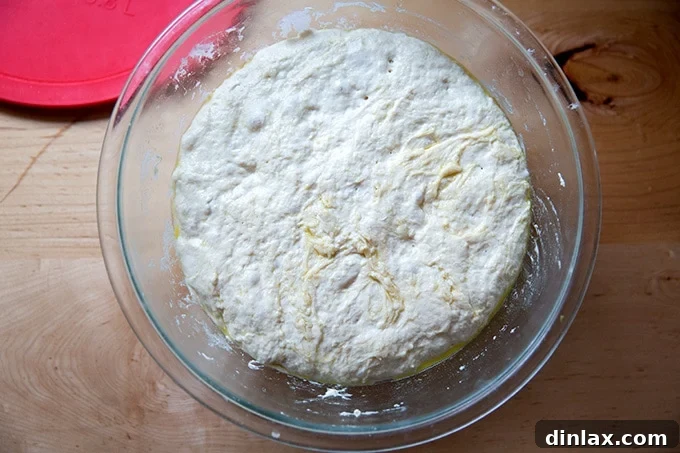
After its extended rest in the fridge, typically 24 hours or more, your dough will have beautifully risen and developed. Uncover the bowl, and you’ll be greeted by a bubbly, airy mass, testament to the yeast’s diligent work and the benefits of cold fermentation.
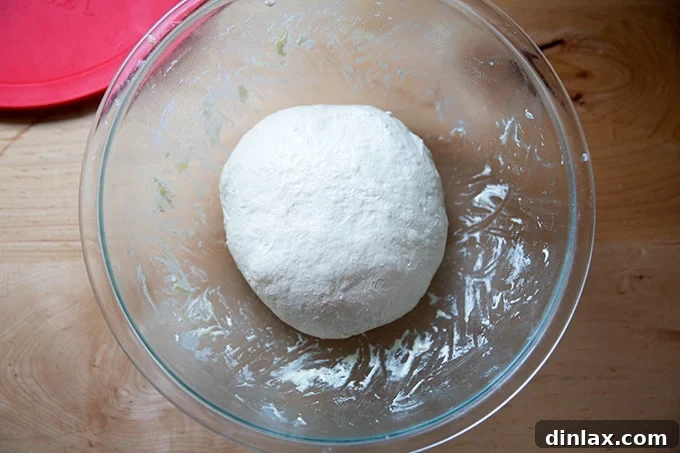
With lightly oiled hands, gently deflate the dough. To do this, grab a section of the dough, stretch it upwards, and fold it towards the center of the bowl. Rotate the bowl slightly and repeat this process, continuing to fold and turn until you’ve formed the dough into a cohesive, rough ball. This action gently redistributes the gases and prepares the dough for its final proofing and shaping.
Now, prepare your baking pan for the next crucial stage. Begin by generously greasing your pan with butter, making sure to cover all corners and edges. Then, pour a pool of olive oil into the center of the pan. This double-layer of fat is key to achieving that signature crispy, non-stick crust. For optimal results, we highly recommend using a Lloyd Sicilian-Style Pizza Pan for its superior heat conduction.
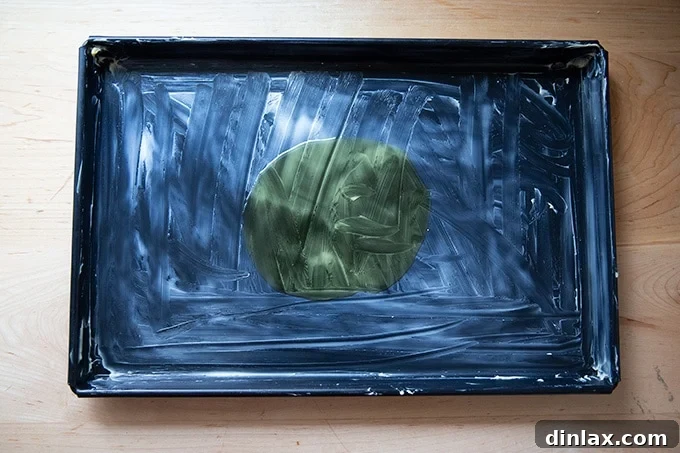
Carefully transfer your prepared dough ball into the center of the olive oil pool in the pan. Gently turn the dough to ensure it is completely coated in the oil. This layer of oil will protect the dough, infuse it with flavor, and contribute to the coveted crispy bottom crust of your Sicilian pizza.
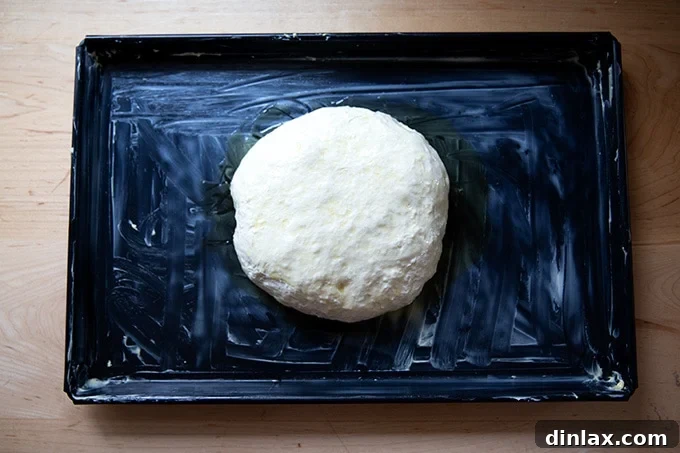
Now, allow the dough to undergo its final proofing. Let it sit undisturbed at room temperature for approximately 2.5 to 3 hours. During this time, the dough will visibly expand, or “poof,” considerably, becoming noticeably airy and bubbly. This final rise is crucial for developing the characteristic light and open crumb of a true Sicilian pizza.
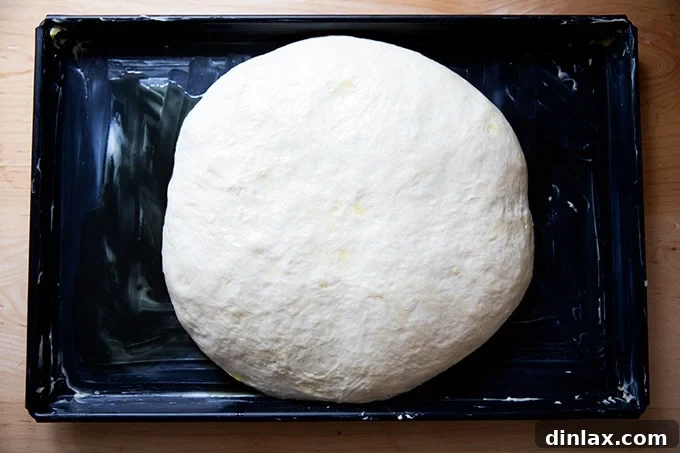
With lightly oiled fingertips, begin to dimple and gently stretch the dough, coaxing it to fill the entire pan. This process requires patience and a light touch. If the dough starts to resist and spring back, stop stretching immediately. Allow it to rest for another 30 minutes; this allows the gluten to relax, making it more pliable. Then, return to stretching.
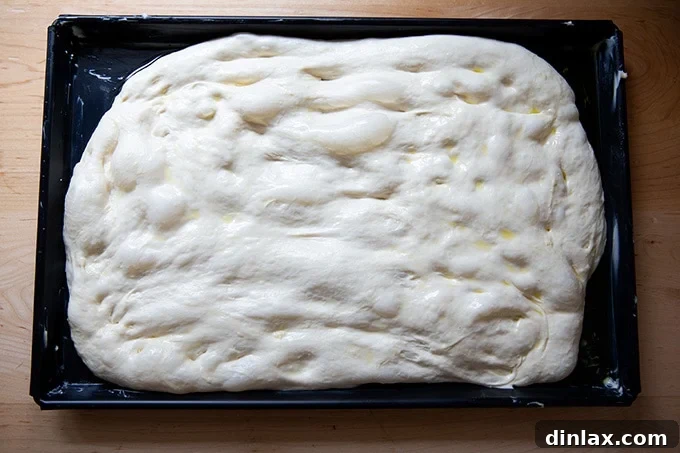
After its brief rest, stretch the dough again until it completely fills the pan, reaching all corners. At this stage, the dough is quite forgiving and can remain in the pan for several hours before baking, especially if your kitchen is cool. If you plan a longer wait, cover the pan loosely with plastic wrap to prevent the dough from drying out. Just before transferring to the oven for parbaking, perform one last dimpling, focusing on the center of the dough while leaving the edges slightly raised, creating that signature focaccia-like crust.
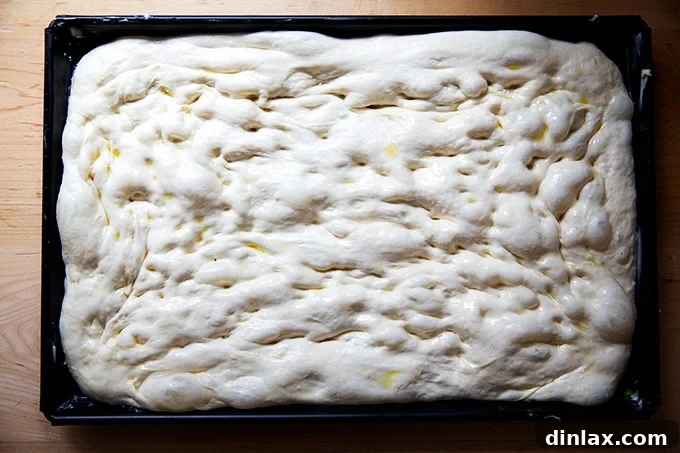
The crucial parbaking step is next. Place your pan directly onto a preheated Baking Steel or pizza stone in an oven set to a blistering 500ºF (260ºC). Bake for a precise 11-12 minutes, or until the crust turns a beautiful, even golden color and has developed a firm structure. This parbaking ensures a light, airy, and stable base that won’t become soggy under the toppings.
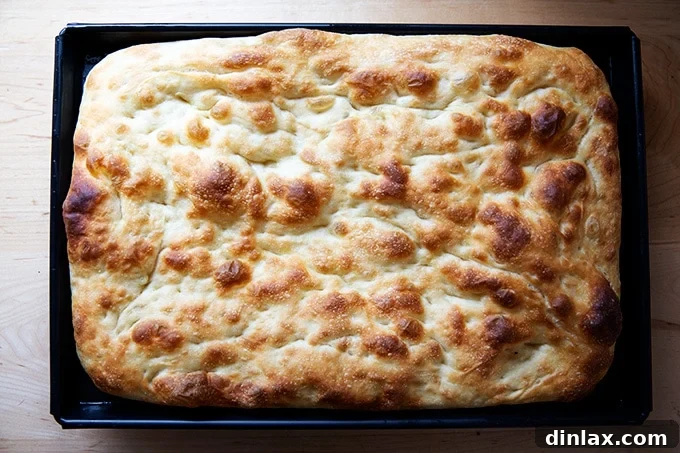
With your parbaked crust ready, the canvas is set for your culinary artistry. Generously spread your chosen tomato sauce evenly across the golden crust. For an unparalleled flavor foundation, we highly recommend using our go-to homemade tomato sauce, crafted from canned tomatoes for rich, consistent taste.
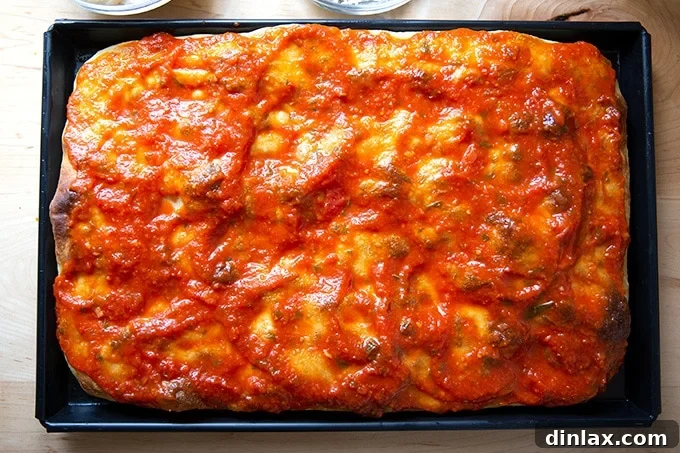
Next, lavishly sprinkle your favorite grated cheese over the tomato sauce. A blend of whole milk mozzarella, Monterey Jack, and a touch of cheddar can create an exquisite melty, gooey layer that’s both flavorful and visually appealing. Refer to our notes for excellent pre-grated cheese recommendations that save time without sacrificing quality.
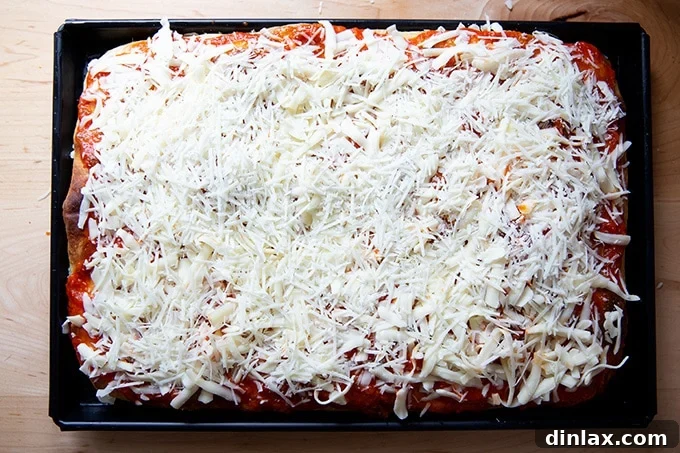
Now comes the moment to customize your pizza with your desired toppings. Whether you prefer classic pepperoni, a medley of sautéed vegetables, savory sausage, or a creative combination of your own, arrange them enticingly over the cheese. The parbaked crust provides a robust foundation, ensuring your toppings cook evenly without charring or becoming watery.
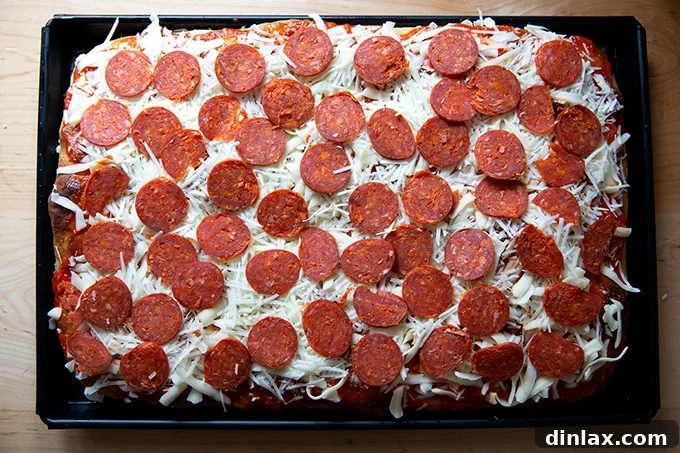
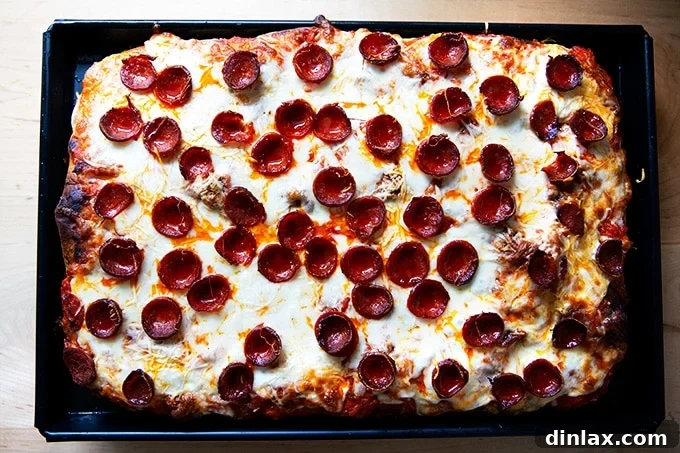
Transfer the fully topped pizza back to the oven for its final bake, typically another 10-12 minutes. Watch for the cheese to melt into a bubbling, golden masterpiece and the crust edges to deepen in color. Once perfection is achieved, remove the pan from the oven and allow the pizza to rest in the pan for 5 minutes. This brief rest period helps the cheese set and makes for easier slicing before you transfer the entire pizza to a cutting board.
For those who appreciate a touch of heat, generously shower your freshly baked Sicilian pizza with crushed red pepper flakes. This optional step adds a delightful kick that complements the rich flavors of the cheese and toppings beautifully.
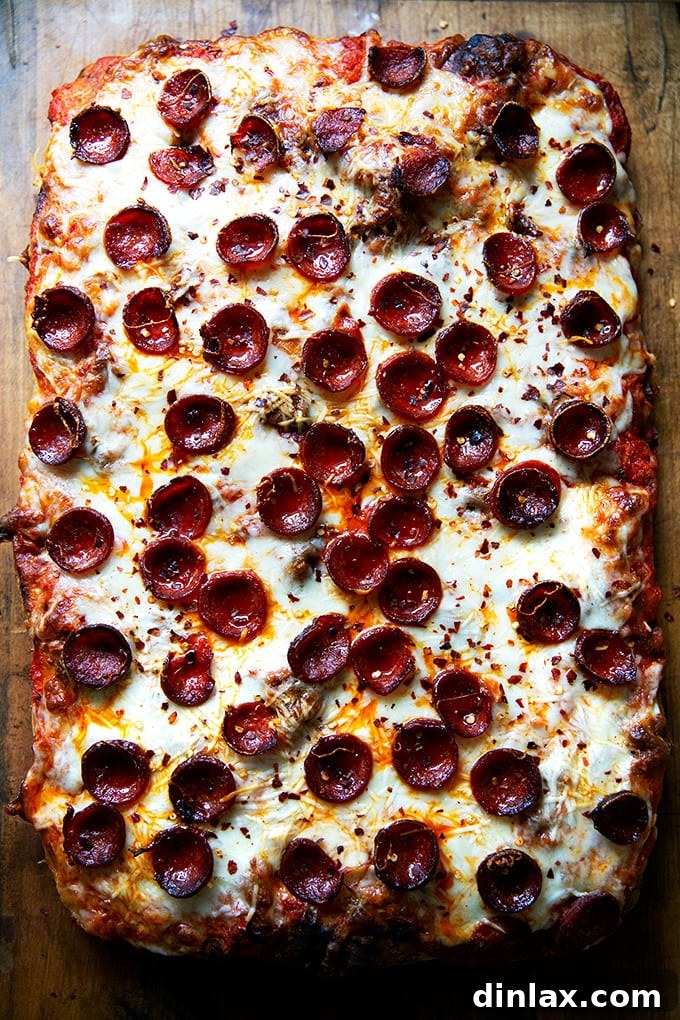
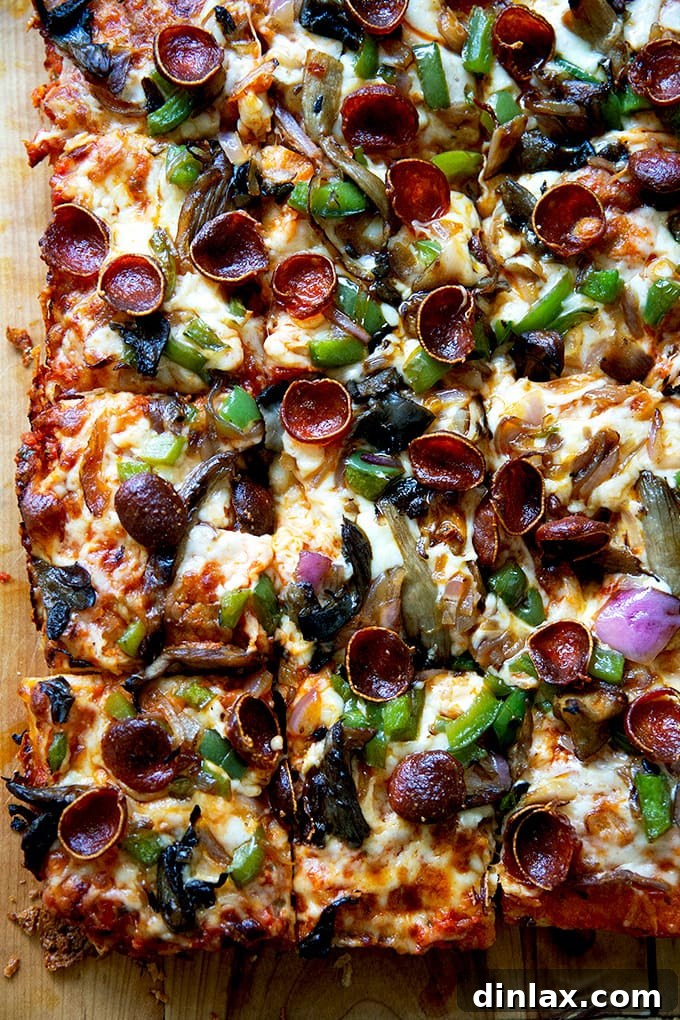
The grand finale! Using a sharp serrated knife, cut your magnificent Sicilian pizza into traditional squares. This classic serving style makes it perfect for sharing, ideal for parties, or simply enjoying as generous individual portions. Serve immediately and savor the taste of homemade perfection.
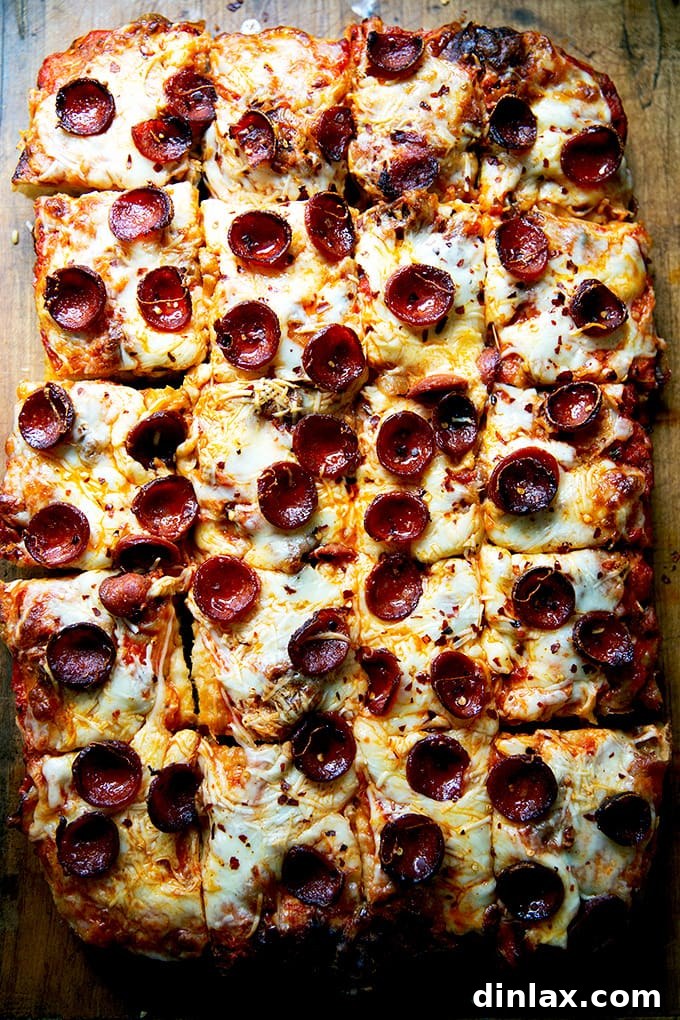
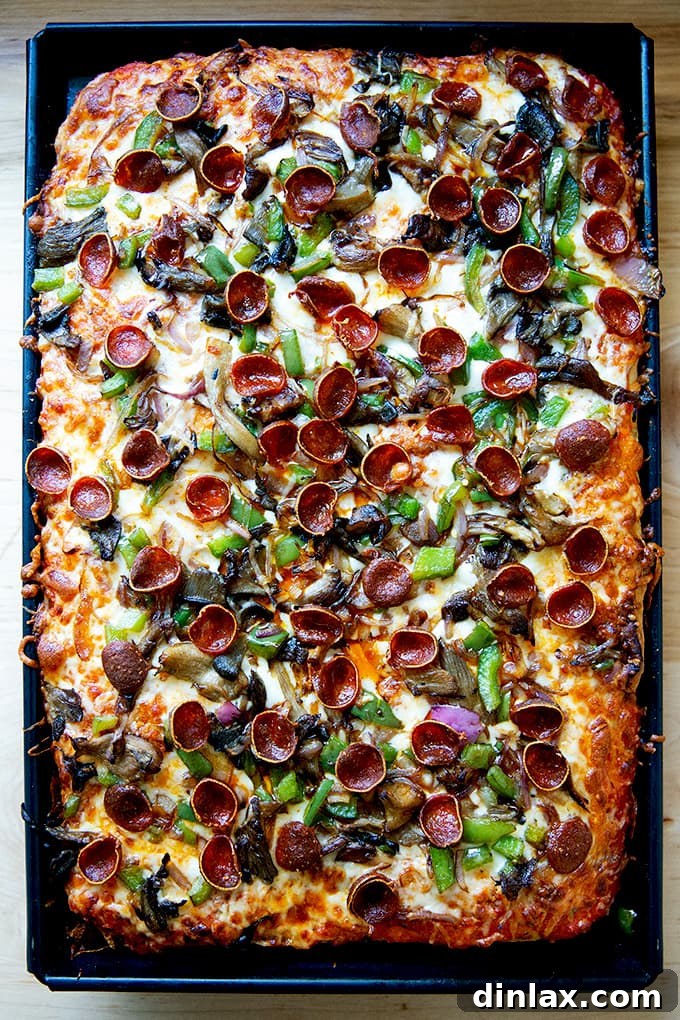
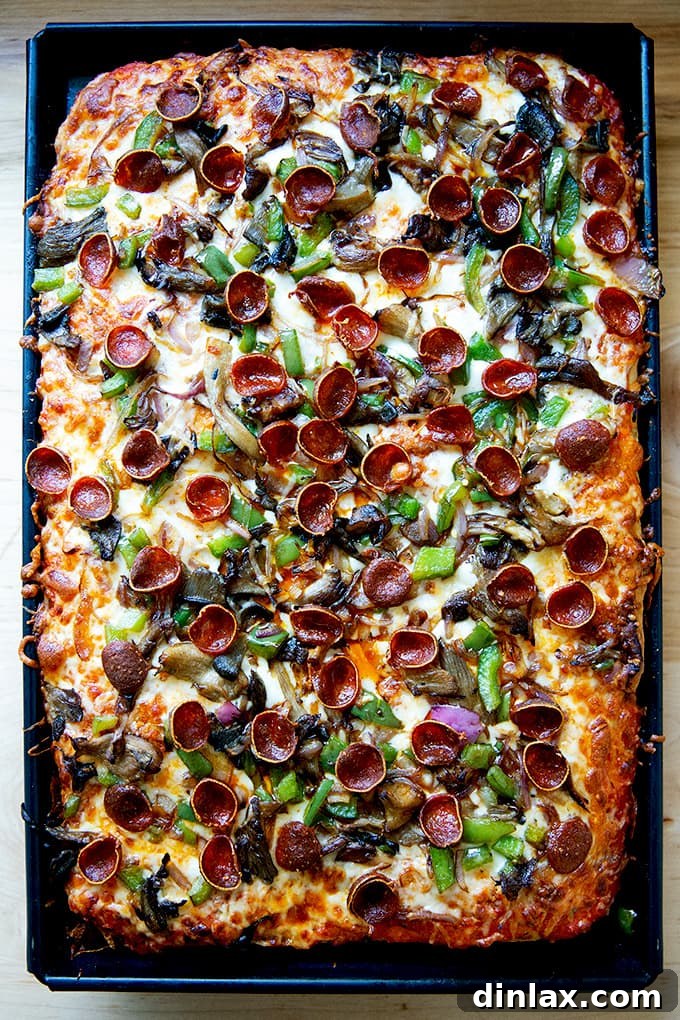
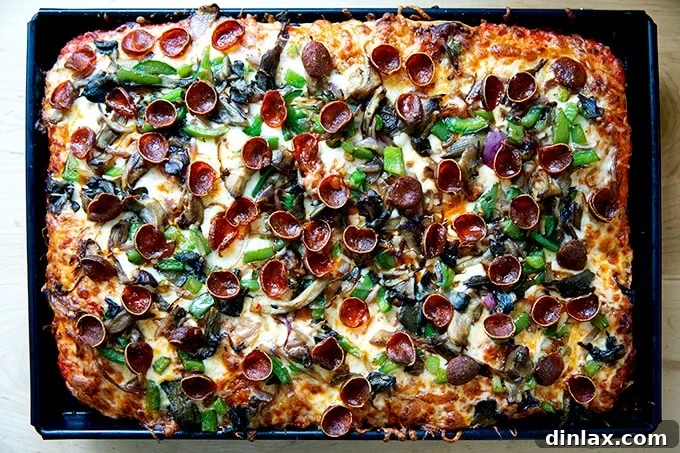
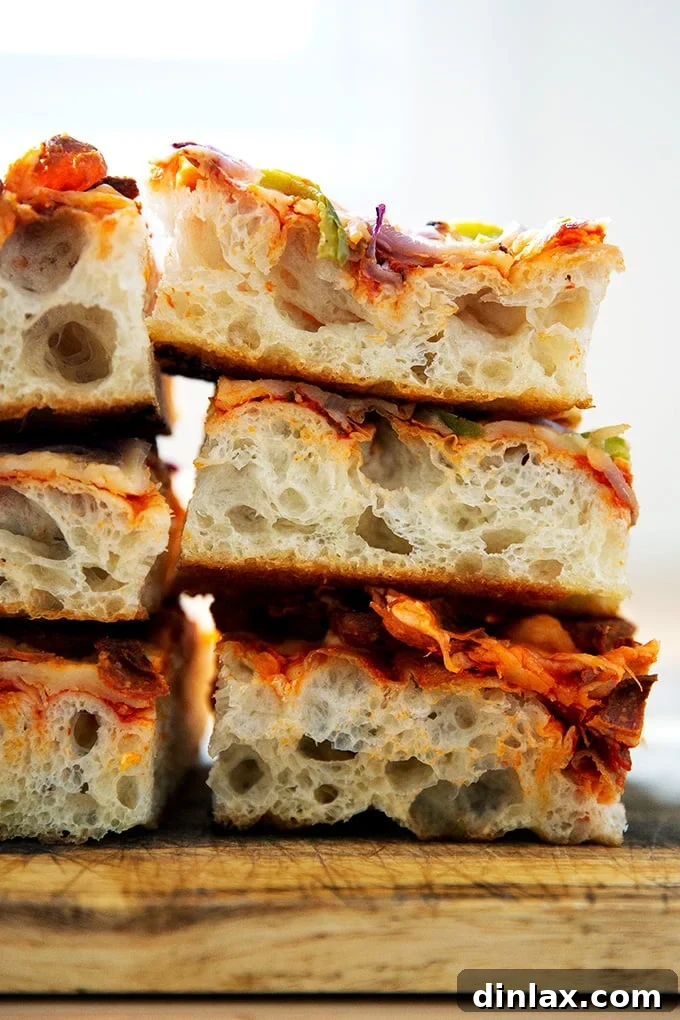
Behold the exquisite beauty of a Sicilian-style pizza, masterfully topped with a vibrant medley of sautéed vegetables and savory pepperoni. This delightful combination offers a burst of fresh flavors balanced by the satisfying chew of cured meat, all resting on that impossibly light and crispy focaccia crust.
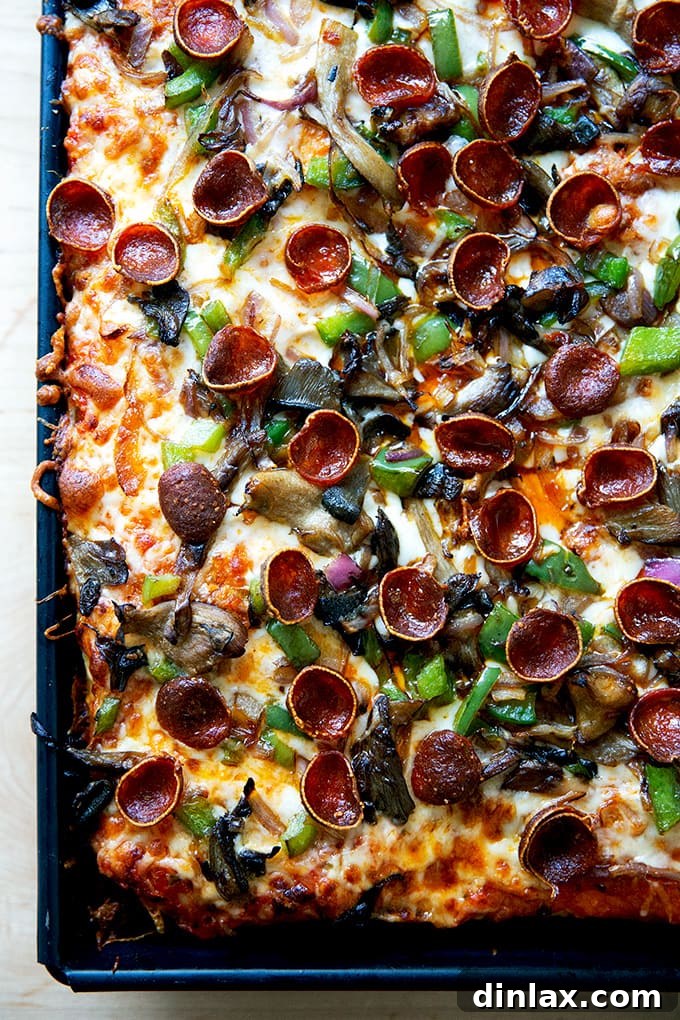
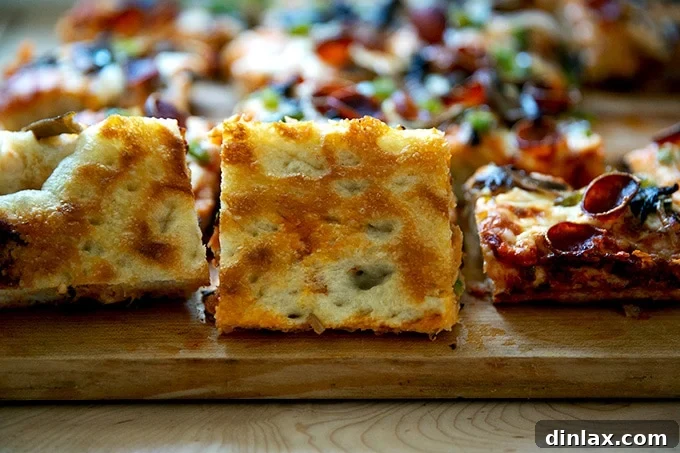
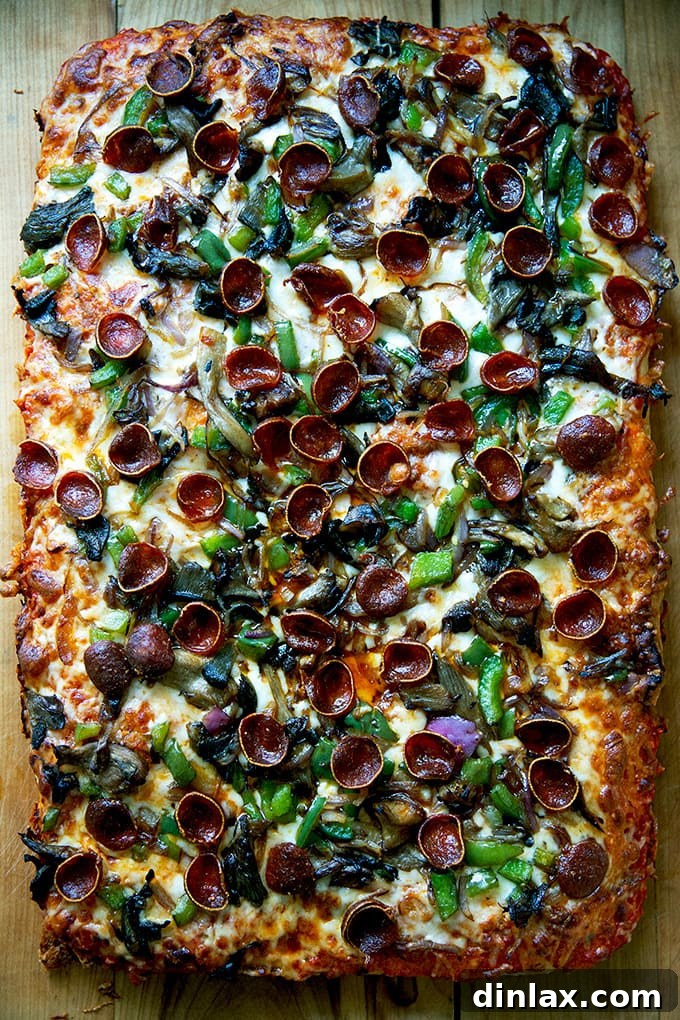
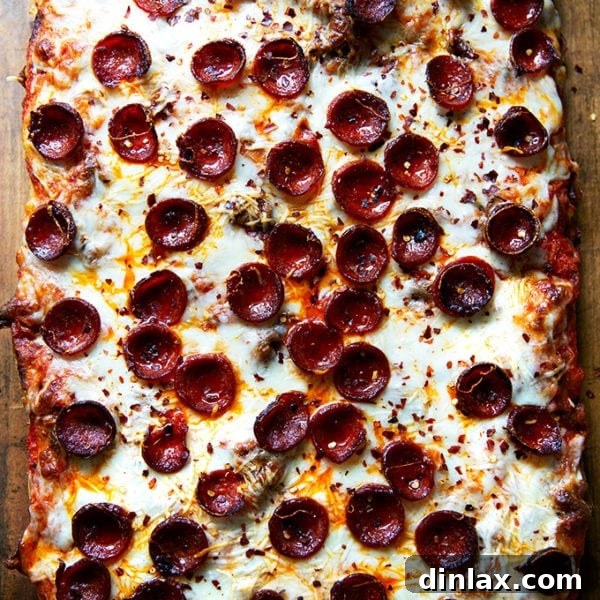
Here’s another stunning view of our freshly baked Sicilian-style pizza, now gracing a sturdy cutting board, awaiting its division into perfect squares. The golden-brown crust and bubbling cheese invite you to experience a slice of pure, homemade bliss.
Print
Homemade Sicilian-Style Pizza
5 Stars 4 Stars 3 Stars 2 Stars 1 Star
5 from 55 reviews
Author: Alexandra Stafford
Total Time: 24 hours 20 minutes
Yield: Serves 10–12 1x
Description
Creating delicious Sicilian-style pizza at home is surprisingly simple, especially if you’re comfortable making focaccia. The secret to its success lies in one crucial step: parbaking the crust. This method ensures a stable, airy base that prevents sogginess and keeps your toppings perfectly cooked. Below, you’ll find a detailed recipe for a yeasted dough. If you prefer to use a sourdough starter, simply follow our simple sourdough focaccia bread recipe up to step 5, then continue with the instructions provided here. Experience the joy of baking a truly authentic pan pizza with a crisp exterior and a tender, flavorful interior.
**Attention Pizza Aficionados**: My highly anticipated pizza cookbook, Pizza Night, is now available!
Notes:
- For the most accurate and consistent results, we highly recommend using a digital scale to measure both your flour and water. This precision is key to achieving the perfect dough hydration and texture.
- As with our favorite focaccia recipe, a long, cold fermentation is always best for developing superior flavor and a wonderfully airy crumb. We often let the dough rest in the fridge for up to 2-3 days before proceeding, which yields an even lighter and more complex crust.
- This recipe is designed for a standard 12″ x 18″ sheet pan.
- We are particularly fond of the Lloyd Sicilian-style pizza pan. While it measures 12×16 inches, it performs exceptionally well and is our top recommendation for achieving an authentic crust.
- Should you own a Lloyd Detroit-style pan and wish to adapt this recipe, please refer to the scaling notes provided at the end of the recipe for adjusted dough proportions.
- Our preferred instant yeast is SAF instant yeast. For convenience and freshness, we buy it in bulk, transfer it to a quart storage container, and store it in the fridge or freezer, where it remains active for many months.
- If you are using active-dry yeast instead of instant yeast, there’s a minor adjustment needed. Simply sprinkle the active-dry yeast over the lukewarm water and let it sit for about 15 minutes, or until you observe a foamy layer forming on the surface. This indicates the yeast is active and ready; then, you can proceed with the recipe as written.
- Flour Choice: You can achieve excellent results with either all-purpose flour or bread flour for this recipe. If you reside in a particularly humid climate, we recommend opting for bread flour, as its higher protein content handles moisture better. For bakers in Canada or the UK, where flour hydration levels can differ, using bread flour is also advisable. Alternatively, consider holding back a small amount of water initially. Reference the accompanying video to gauge the ideal dough texture, then gradually add more water if necessary to reach the desired consistency.
- Cheese Selection: While some may shy away from pre-grated cheese, there are a few brands that we highly recommend for convenience and quality. Trader Joe’s offers an excellent Quattro Formaggi blend, which melts beautifully. Additionally, Tillamook’s large-grate mozzarella is another fantastic option that provides superb coverage and a delightful stretch. These choices can significantly streamline your prep without compromising on the cheesy goodness of your pizza.
Ingredients
For the Dough:
- 4 cups (512 g) bread flour (see notes above for alternatives)
- 2 teaspoons (12 g) kosher salt
- 2 teaspoons (8 g) instant yeast (see notes above if using active dry)
- 2 cups (455 g) lukewarm water (achieved by combining 1/2 cup boiling water with 1 1/2 cups cold water)
- Olive oil, for coating
For the Pizza Assembly:
- Butter, for greasing the pan
- 2 tablespoons olive oil, for the pan
- 12 ounces of grated cheese (e.g., whole milk mozzarella, or a blend of Monterey Jack, Cheddar, and Mozzarella; see notes above for recommendations)
- 1 cup (+ a few extra spoonfuls) tomato sauce, such as this quick homemade version or this fresh tomato basil sauce, or your preferred jarred sauce
For a Delicious Veggie Pizza:
- 3 tablespoons olive oil, divided
- 8 ounces mushrooms, thinly sliced
- 1 medium green (or other color) bell pepper, finely diced
- 1/2 small red onion, very thinly sliced
- Salt, to taste
For a Classic Pepperoni Pizza:
- 6 ounces high-quality pepperoni, sliced as thinly as possible (we highly recommend Vermont Smoke & Cure). For a truly loaded pizza, you might opt for up to 12 ounces.
- Crushed red pepper flakes, for serving (optional)
For a Zesty Pickled Jalapeño & Pepperoni Pizza:
- 1 cup homemade pickled jalapeños (or your favorite store-bought variety)
- 6 ounces pepperoni, thinly sliced
- Hot honey, for drizzling (optional, but highly recommended!)
Instructions
To Prepare the Dough:
- Mix the Dough: In a large mixing bowl, combine the flour, salt, and instant yeast with a whisk until thoroughly blended. Add the lukewarm water to the dry ingredients. Using a sturdy rubber spatula, stir the mixture until all the liquid is absorbed and the ingredients coalesce into a shaggy, sticky dough ball. Lightly rub the entire surface of the dough with olive oil. If your bowl has a lid, cover it securely. Alternatively, transfer the dough to another lidded container or tightly cover the bowl with plastic wrap to prevent it from drying out in the refrigerator.
- Cold Ferment: Immediately transfer the covered dough to the refrigerator. Allow it to cold ferment for a minimum of 18 hours. For optimal flavor development and a lighter crust, aim for a longer fermentation period of 24 to 48 hours. The dough can even remain in the fridge for up to 3 days, further enhancing its characteristics.
Prepare Your Pan for Baking:
- Grease the Pan: Generously grease a 12″ x 18″ sheet pan with butter, ensuring full coverage, especially in the corners. Pour 2 tablespoons of olive oil into the center of the pan. (Note: This dual-greasing step, while seemingly ample, is crucial for preventing sticking with certain pans and significantly enhances both the flavor and golden-brown crispness of the bottom crust.)
Prepare the Pizza for its Final Rise & Bake:
- Shape the Dough: Remove the dough from the refrigerator. With lightly oiled hands, gently release the dough from the sides of the bowl. Then, using oiled hands again, grab an edge of the dough, stretch it upwards, and fold it towards the center of the bowl. Rotate the bowl slightly and repeat this folding motion until the dough forms a rough ball shape.
- Initial Pan Proof & Stretch: Place the dough ball into the prepared pan and turn it to ensure it is fully coated with the olive oil. (You do not need to cover the dough at this stage; the oil coating will prevent it from drying.) Let the dough rest and proof at room temperature for 3 hours. After proofing, use lightly oiled hands to gently dimple and stretch the dough, working from the center outwards, to fit the pan. You may find the dough resists stretching to the edges initially. If so, let it rest for an additional 30 minutes to relax the gluten, then stretch it again using the same gentle technique until it fills the pan.
- Final Rest & Dimpling: At this point, the dough can comfortably rest in the pan for another couple of hours, especially if your kitchen is on the cooler side. We’ve successfully baked it anywhere from 30 minutes to two hours after this stage. If planning a longer wait, cover the pan loosely with plastic wrap to prevent the dough from drying. Just before baking, dimple the dough one last time throughout the center, being careful to avoid the perimeter. This strategic dimpling promotes an even bake and the desired focaccia-like texture.
Bake and Top Your Masterpiece:
- Preheat Oven & Baking Surface: If using a Baking Steel or pizza stone, place it on a rack in the middle or lower third of your oven. Preheat your oven to a high temperature of 500ºF (260ºC).
- Final Dimple for Evenness: With oiled hands, gently dimple the dough one last time, focusing on the center and deliberately leaving the perimeter undimpled. This small but important detail helps the dough bake more evenly, creating a consistent crust from edge to edge.
- Parbake the Crust: Carefully transfer the pan to the preheated oven and place it directly onto the heated Baking Steel or pizza stone. Bake for approximately 10 to 11 minutes, or until the crust is uniformly golden brown and appears firm and slightly puffed.
- Adjust Oven Temperature & Prepare for Topping: Remove the pan from the oven and immediately lower the oven temperature to 475ºF (245ºC). (Note: Our oven doesn’t adjust temperature quickly, so we often turn it off completely during this brief interval, then turn it back on to 475ºF just before returning the pan. Crucially, this parbaked crust can be prepared hours, or even a full day, in advance, making meal prep flexible!)
- Add Sauce & Cheese, Then Toppings: Spread your chosen tomato sauce evenly over the parbaked dough. Follow with a generous layer of grated cheese. Now, customize with your desired toppings:
- For the Veggie Pizza: In a large skillet over high heat, warm 2 tablespoons of olive oil until shimmering. Add the sliced mushrooms and cook undisturbed for about a minute. Season with salt, then stir and continue cooking for 3 to 5 minutes until the mushrooms begin to brown. Transfer them to a bowl. Add the remaining tablespoon of olive oil to the skillet, then add the diced bell peppers and thinly sliced red onion. Cook for 1 to 3 minutes, or until they are slightly softened. Season with salt and transfer them to the bowl with the mushrooms. Toss the vegetable mixture to combine, taste, and adjust seasoning if needed. Spread this flavorful mixture evenly over the cheese. Optionally, add some sliced pepperoni for a mixed veggie-meat option.
- For the Classic Pepperoni Pizza: Arrange the thinly sliced pepperoni generously over the layer of cheese.
- For the Pepperoni + Pickled Jalapeño Pizza: Distribute both the thinly sliced pepperoni and the pickled jalapeños evenly over the cheese layer for a tangy, spicy kick.
- Final Bake: Transfer the topped pizza pan back to the oven and bake for another 10 to 12 minutes. The pizza is ready when the cheese is beautifully melted, bubbly, and just starting to brown in spots, and the crust has achieved a deep golden hue.
- Rest and Finish: Remove the pan from the oven and allow the pizza to rest in the pan for 5 minutes. If you’re making a pepperoni pizza and enjoy a bit of spice, sprinkle crushed red pepper flakes over the top. For the pickled jalapeño pizza, a drizzle of hot honey is highly recommended for a perfect sweet-and-spicy balance.
- Slice and Serve: Run a knife or spatula carefully around the edges of the pan to ensure the pizza releases cleanly. Then, gently slide the entire pizza from the pan onto a cutting board. For best results, use a serrated knife to cut the pizza. You can cut it into any number of pieces you desire; we often cut ours into 20 satisfying squares. Serve immediately and enjoy!
Notes
To Scale the Dough for a Lloyd Detroit-Style Pan, Use These Proportions (and please use a digital scale for accuracy!):
- 277 g flour (approximately 2 cups + 2 tablespoons)
- 8 g salt (approximately 1.5 teaspoons)
- 6 g yeast (approximately 1.5 teaspoons)
- 245 g water (approximately 1 cup + 1 tablespoon)
- Note: Our calculations indicate that a Detroit-style pan typically requires around 532 grams of dough. Therefore, another practical approach is to prepare the full recipe as written, allocate 532 grams of the dough for your Detroit-Style pan, and utilize the remaining dough for other culinary creations like mini focaccia rolls or individual pizzas.
To Scale the Dough for a Lloyd Sicilian-Style Pan (12×16 inches), Use These Proportions (and please use a digital scale for accuracy!):
- 488 g flour (approximately 3 3/4 cups)
- 11 g salt (approximately 2 teaspoons)
- 8 g yeast (approximately 2 teaspoons)
- 432 g water (approximately 1.75 cups + 2 tablespoons)
- Prep Time: 24 hours
- Cook Time: 20 minutes
- Category: Pizza
- Method: Oven
- Cuisine: American, Sicilian