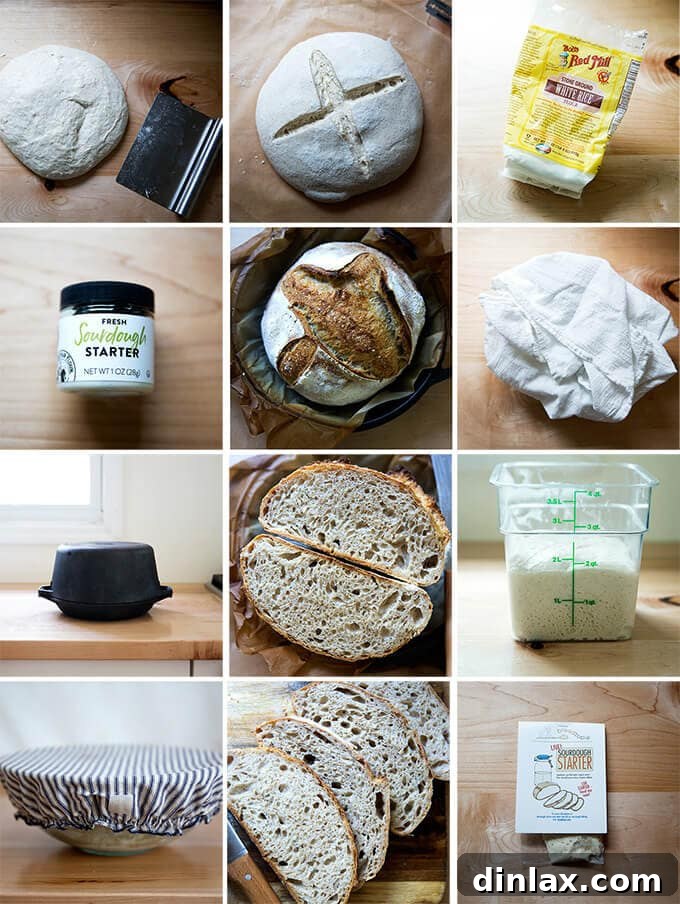
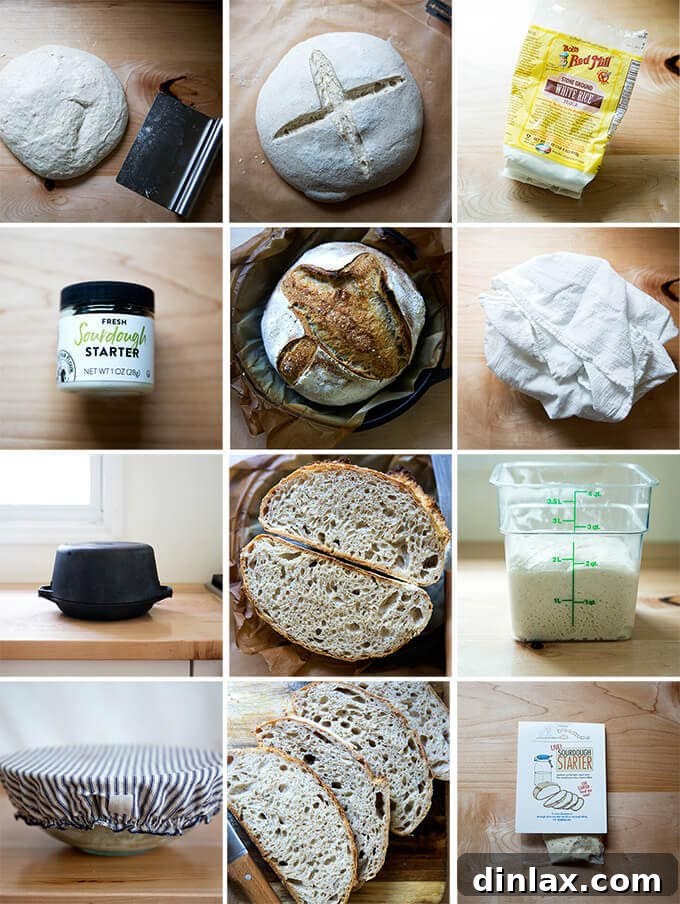
Embarking on the rewarding journey of sourdough bread baking doesn’t necessarily require a kitchen full of specialized gadgets. Many home bakers begin with just a few fundamental items, proving that delicious, artisanal bread is within reach for everyone. With a vibrant sourdough starter and a reliable baking vessel, you’re well on your way to creating your first magnificent loaf. For example, a simple yet incredibly satisfying sourdough focaccia recipe asks for little more than your active starter and a standard 9×13-inch baking dish or similar oven-safe pan.
However, as your passion for sourdough deepens and you aspire to achieve that signature rustic, crackling crust and airy crumb characteristic of a perfect sourdough boule, investing in a few additional pieces of equipment can truly transform your baking experience. These carefully chosen tools are designed not just for convenience, but to elevate the quality and consistency of your homemade sourdough. They can streamline complex steps, provide greater control over your dough, and help troubleshoot common baking challenges, allowing you to master the art of sourdough bread.
This comprehensive guide compiles the essential tools and ingredients that I, and many seasoned sourdough bakers, find indispensable for producing exceptional sourdough bread time and time again. From cultivating your starter to achieving that golden-brown crust, these items will equip you for success in your sourdough journey.
10 Essential Tools for Mastering Sourdough Bread Baking
1. The Sourdough Starter: The Heart of Your Bread
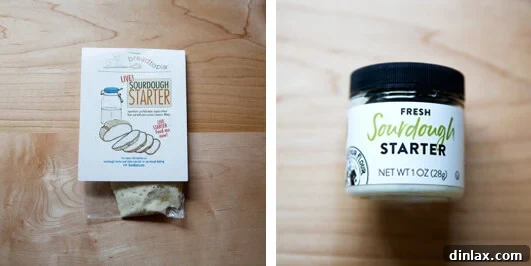
At the very core of sourdough baking lies the sourdough starter—a living, breathing culture of wild yeasts and beneficial bacteria. It’s this natural leavening agent that imparts sourdough bread with its distinctive tangy flavor, incredible texture, and unique aroma, setting it apart from loaves leavened with commercial yeast. For newcomers, acquiring a starter can be the simplest first step. If you’re fortunate enough to know an avid sourdough baker, they might gladly share a portion of their mature starter with you, offering a piece of their baking legacy. If not, don’t fret! You can easily build a sourdough starter from scratch with just flour and water, a process that teaches patience and observation. Alternatively, for instant gratification, several reputable online sources provide active, dehydrated sourdough starters that are ready to be revived and fed, bringing your baking dreams to life much faster:
- Breadtopia
- King Arthur Flour
2. Digital Scale: Precision is Key
I cannot overstate this enough: for anyone serious about bread baking, especially sourdough, a digital scale is an absolute non-negotiable tool. Baking is a science, and unlike cooking where a pinch of this or a dash of that often works, successful baking hinges on precise measurements. Measuring ingredients by weight rather than volume (cups and spoons) eliminates inconsistencies caused by varying densities and packing methods of flour, water, and other components. This precision is critical for maintaining consistent hydration ratios in your sourdough, which directly impacts the dough’s texture, handling, and the final bread’s crumb and crust.
Without a digital scale, it’s incredibly difficult to replicate results, troubleshoot issues like sticky or stiff dough, or even understand why a particular recipe might not be working for you. In fact, I would go as far as to say: do not attempt to bake sourdough bread without a digital scale readily available. It’s the single most important investment you can make for consistent sourdough success. Thankfully, achieving this level of accuracy doesn’t require a significant financial outlay. This particular scale is an excellent choice, costing under $15, providing exceptional accuracy, and boasting a generous capacity of up to 11 pounds, making it perfect for even large batches of dough.
3. Clear, Straight-Sided Vessel: Your Dough’s Growth Monitor
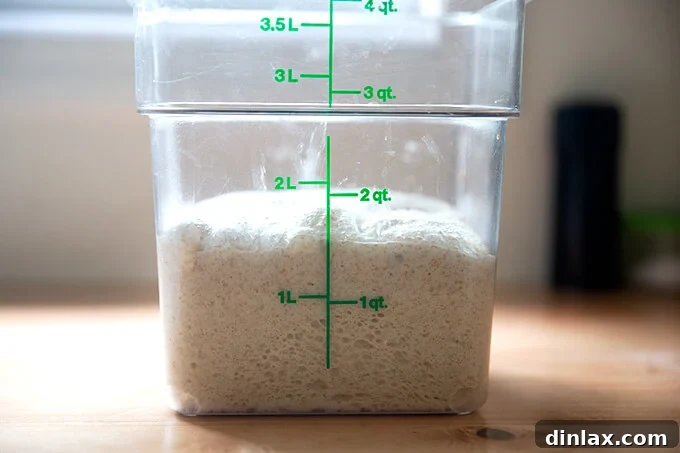
After a reliable digital scale, a clear, straight-sided vessel has quickly become my second most valued piece of equipment for sourdough baking. Its utility lies in its unparalleled ability to accurately monitor the bulk fermentation process. Sourdough success heavily relies on allowing your dough to rise to a specific volume increase, typically around 50%, before shaping. In a standard mixing bowl with sloped sides, judging this increase can be incredibly deceptive and lead to over- or under-proofing, both of which can compromise your final loaf.
A straight-sided container, such as this 4-quart Cambro, removes all guesswork. By placing your dough in it, you can precisely mark its starting level and then watch its ascent against the clear, uniform sides. This visual clarity ensures you shape your dough at the exact right moment, preventing a dense crumb or an overly gassy, difficult-to-handle dough. It’s a simple change that makes an enormous difference in consistency and confidence.
4. Non-Stick Flour-Sack Towels: The Secret to Effortless Release
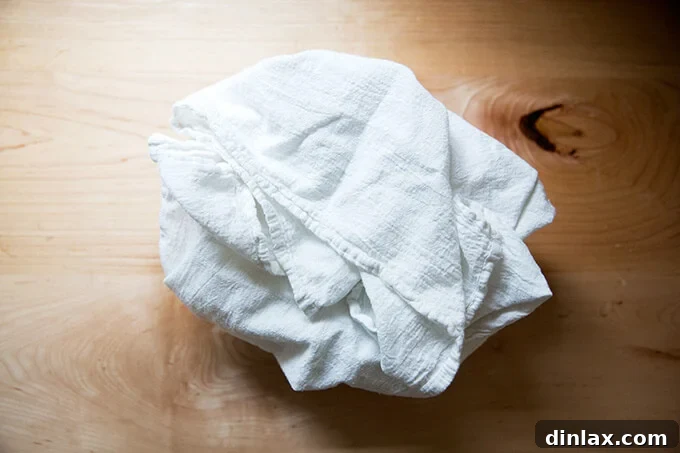
For proofing your shaped sourdough dough, especially when aiming for a beautifully rustic exterior, flour-sack towels are a game-changer. These humble yet incredibly effective towels possess a finely woven, low-lint texture that is naturally resistant to sticking, even with high-hydration sourdoughs notorious for adhering to surfaces. When used to line a bowl or a banneton (proofing basket), they allow your dough to develop its structure without becoming permanently attached, ensuring a clean and effortless release before baking.
I personally adore these flour sack towels from Dot and Army for their reliability and quality. These alternatives are also excellent. They prevent the common frustration of dough tearing or deflating as you try to remove it from its proofing vessel, preserving the integrity of its delicate structure and ensuring a better final bake. They are also incredibly versatile for various kitchen tasks beyond sourdough!
5. Rice Flour: The Non-Stick & Aesthetic Aid
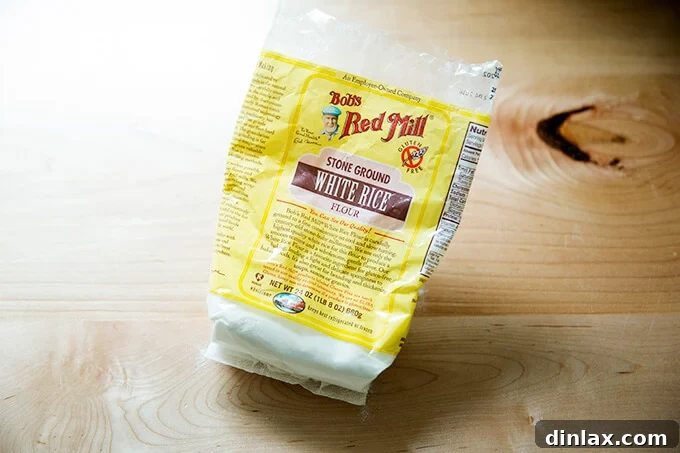
While flour-sack towels are remarkably non-stick on their own, a light dusting of rice flour provides an extra layer of insurance and a pleasing visual touch. Before placing my shaped dough onto a flour-sack towel (or into a banneton), I lightly sprinkle it with rice flour. The primary reason for this, in my current routine, is purely aesthetic: I love the beautiful contrast of the fine white dusting of rice flour against the rich, auburn hue of the baked bread, creating a truly artisanal look. Unlike wheat flour, rice flour doesn’t burn or turn dark during baking, preserving that crisp white finish.
Historically, before I discovered the superior non-stick properties of flour-sack towels, rice flour was indispensable for preventing higher hydration doughs from sticking to traditional tea towels. So, if you’re using other liners or struggling with stickiness, rice flour remains an excellent aid for an easy release. It’s a small detail that makes a big impact on both functionality and presentation.
6. Bench Scraper: Your Dough’s Best Friend for Shaping
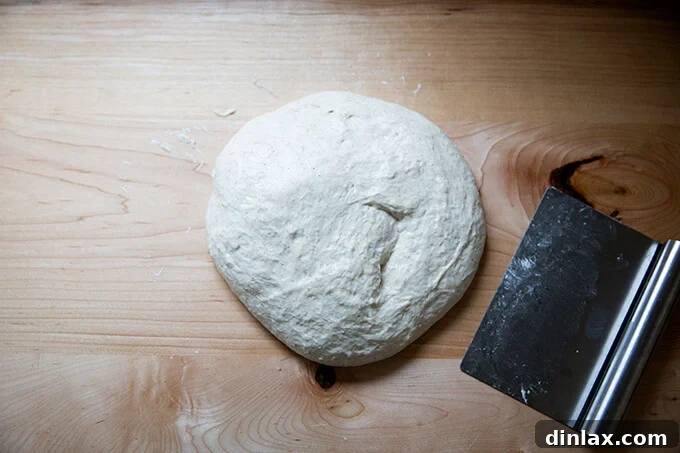
A simple bench scraper, also known as a dough scraper or pastry scraper, is an incredibly versatile and undervalued tool in sourdough baking. I’ve streamlined my shaping process to rely heavily on this single implement, eliminating the need to liberally flour my work surface. This not only reduces mess but also ensures better dough integrity by avoiding excess flour incorporation, which can alter the dough’s hydration and texture. The sharp, straight edge of the bench scraper allows for precise and gentle handling of the dough, making it ideal for dividing, lifting, and shaping, especially with sticky, high-hydration sourdoughs. By using a bench scraper, you can minimize direct hand contact with the dough, which helps maintain its delicate structure and prevents it from sticking to your hands. It enables efficient and confident manipulation of the dough, guiding it into the desired boule or bâtard shape with minimal effort and maximal effectiveness. To see this technique in action, watch this helpful video: See video here or below.
7. Parchment Paper: For Seamless Transfers
Transferring a delicately proofed sourdough boule from its proofing basket to a screaming hot Dutch oven can be a nerve-wracking moment for any baker. This is where parchment paper proves to be an indispensable ally. By gently lowering your shaped dough, resting on a square of parchment paper, into the preheated Dutch oven, you entirely eliminate the risk of burning your hands or awkwardly wrestling the dough into place. The parchment paper acts as a convenient sling, allowing for a smooth and safe transfer without disturbing the dough’s fragile structure, which is crucial for achieving an optimal oven spring and a beautifully shaped loaf. It’s a simple, inexpensive solution that significantly enhances both safety and ease in the final critical steps of baking.
8. Razor Blade (Lame): The Baker’s Signature
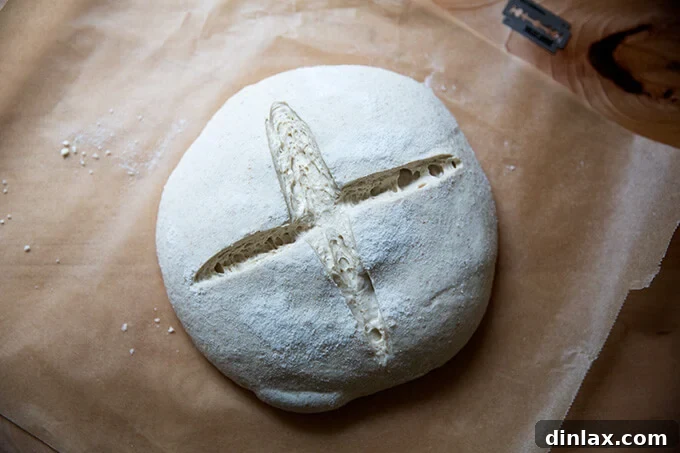
Before your sourdough bread enters the oven, a crucial step is scoring the dough. This is typically done with a sharp razor blade, often fitted into a specialized tool called a “lame” (pronounced “lahm”). Scoring serves several vital purposes: it controls where the dough expands during oven spring, preventing uncontrolled ruptures, and allows for artistic expression, creating stunning patterns on the crust. The sharp edge of a razor blade makes a clean cut through the dough’s surface, promoting an even, controlled rise. While some bakers dedicate themselves to intricate scoring designs, even a simple ‘X’ or a single slash can be incredibly effective and visually striking, transforming a plain loaf into a work of art. The deep cut allows the dough to expand beautifully, creating the desired “ear” on the crust, a hallmark of well-baked sourdough. Don’t be intimidated by fancy patterns; a functional, clean cut is always the goal, and a simple one can look dramatically beautiful in the end.
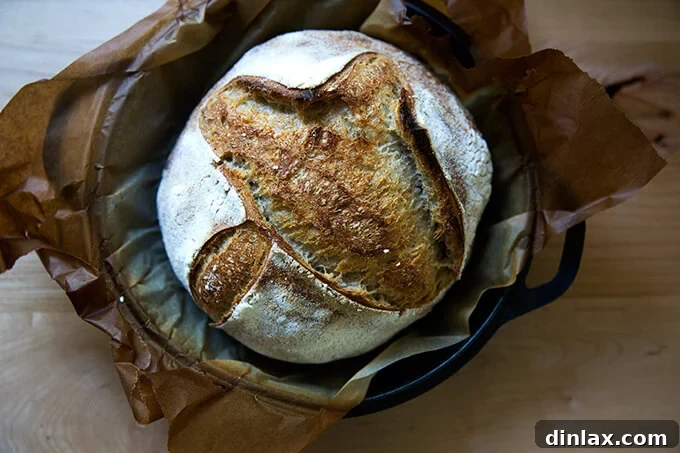
9. Double Dutch Oven: For the Ultimate Crust
If your ultimate goal is that quintessential thick, crackling, deeply caramelized crust that sourdough is famous for, a Dutch oven is an absolute necessity. The magic of baking sourdough in a Dutch oven lies in its ability to trap steam around the dough during the initial phase of baking. This humid environment keeps the crust soft and pliable, allowing the loaf to expand fully (oven spring) before it sets. As the baking progresses and the lid is removed, the trapped moisture escapes, and the dry heat of the oven then works its magic, creating that desirable crispy, golden-brown exterior. This dual-stage baking process is incredibly difficult to replicate in an open oven without commercial steam injection.
Many options exist, but a cast iron Dutch oven is a popular choice for its excellent heat retention. This Lodge Double Dutch Oven is a durable and budget-friendly option, with a lid that can double as a shallow baking pan. For those willing to make more of an investment, the Challenger Bread Pan is a beautifully engineered choice, specifically designed for bread baking with easy-to-grab handles and a shape ideal for both boules and oblong batards. Keep in mind that while your beloved enameled Dutch oven (like a Le Creuset) can certainly be used, the extremely high temperatures required for sourdough can cause cosmetic changes, such as permanent darkening of the enamel, necessitating a deep cleaning afterwards. Consider having a dedicated, less precious cast iron Dutch oven for your intense bread baking sessions.
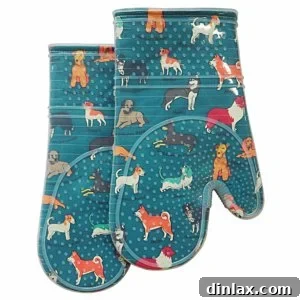
10. Oven Mitts: Safety First!
Working with a preheated oven and a scorching hot cast iron Dutch oven demands respect and, more importantly, robust protection. When handling vessels that have been heating at temperatures often exceeding 450°F (230°C) for an extended period, standard pot holders simply won’t cut it. A high-quality pair of oven mitts is an essential safety tool, safeguarding your hands and forearms from severe burns. Look for mitts that offer ample insulation, extend well past your wrists, and provide a secure, non-slip grip. These attributes are crucial for confidently transferring your dough into the hot Dutch oven, removing the lid, and ultimately retrieving your magnificent, freshly baked sourdough. Don’t compromise on safety; a good pair of oven mitts is an indispensable part of your sourdough toolkit. These have proven to be exceptionally effective and reliable in my own kitchen.
Further Enhancements for Your Sourdough Setup
Beyond the core essentials, a few other items can significantly enhance your sourdough baking and enjoyment, making the process smoother and the results even more rewarding.
- Sharp Bread Knife: Slicing Perfection
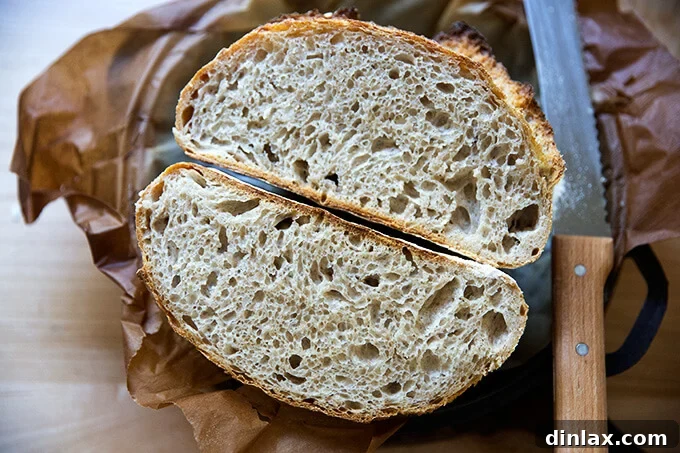
After all the effort you’ve poured into creating a magnificent, crusty sourdough loaf, the last thing you want is to crush its delicate crumb with a dull knife. A good, sharp bread knife is paramount for slicing through that sturdy crust and soft interior without tearing or flattening the bread. Look for a knife with a well-designed serrated edge that can cleanly saw through the crust while gently parting the crumb. This particular model offers an attractive design and excellent value. For those seeking a slight upgrade, this option provides a touch more elegance and superior sharpness, ensuring every slice is as perfect as the loaf itself.
2. A Large Mixing Bowl: Your Dough’s First Home
While you might already have a mixing bowl, having a dedicated large bowl for your sourdough dough is incredibly beneficial. Look for one that offers ample space for mixing, folding, and the initial bulk fermentation, especially as your dough expands. A bowl that’s both large and clear, such as this one, is particularly advantageous. Its transparency makes it easier to accurately weigh ingredients directly into the bowl using your digital scale and allows you to observe the dough’s development during initial mixing stages. The generous size also provides plenty of room for stretch-and-folds, an important technique in sourdough development, without making a mess.
3. A Sturdy Spatula: The Ultimate Scraper and Folder
A high-quality, flexible yet sturdy spatula is an unsung hero in the sourdough baker’s kitchen. It’s perfect for scraping down the sides of your mixing bowl, ensuring all ingredients are fully incorporated, and for gently folding the dough during the bulk fermentation process. A well-designed spatula can navigate the curves of your bowl, efficiently gathering every last bit of dough, minimizing waste, and keeping your workspace cleaner. I personally swear by my GIR Spatula for its ergonomic design, durability, and effectiveness, making dough handling a breeze.
Equipping yourself with these essential tools will not only simplify the sourdough baking process but also empower you to produce consistently superior loaves. Happy baking!