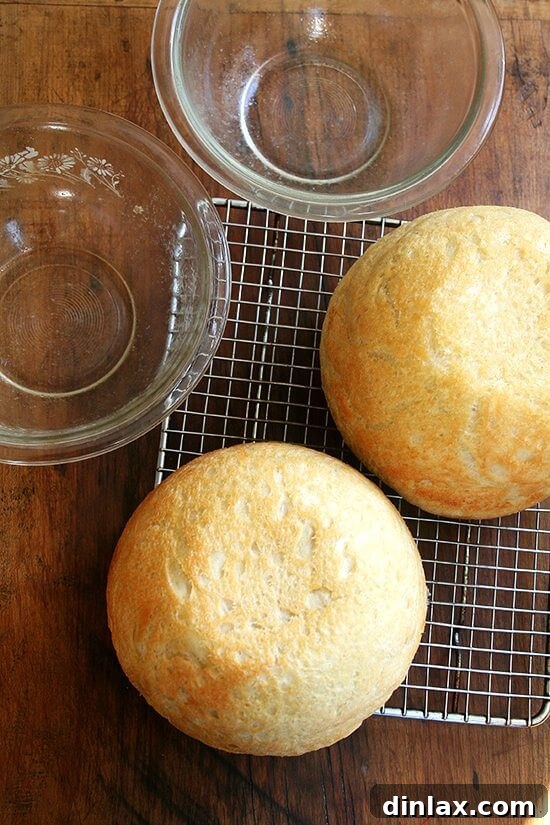
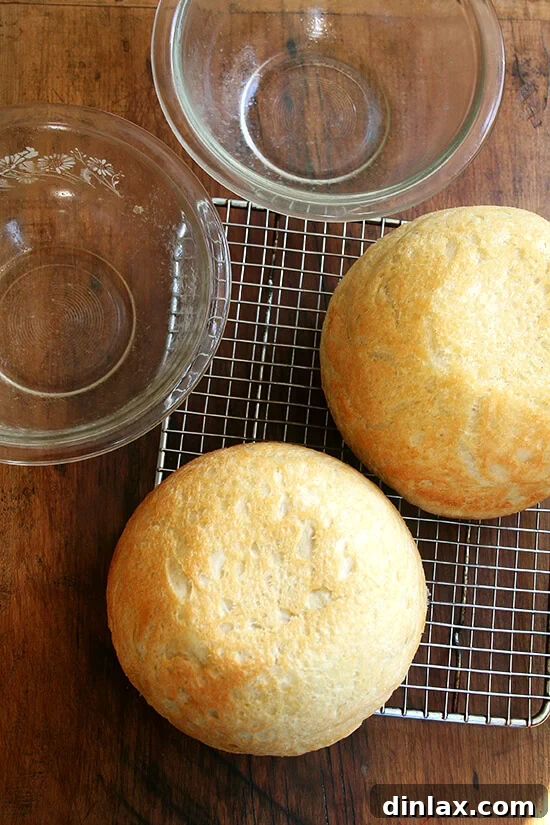
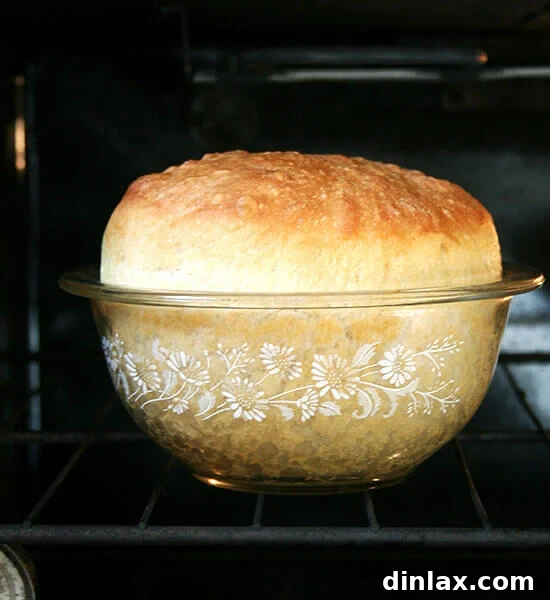
This is the no-knead bread recipe my mother has been baking for 45 years. Start to finish, it can be ready in three hours. It bakes in well-buttered Pyrex bowls — no need to preheat a baking vessel for this recipe — and it emerges golden and crisp with a soft, tender crumb.
The Ultimate No-Knead Peasant Bread: A Family Legacy, Now Yours to Bake
Imagine the irresistible aroma of freshly baked bread filling your home. Now imagine achieving that without the exhaustive kneading, messy flour-dusted countertops, or complex techniques typically associated with artisan loaves. This isn’t a dream; it’s the reality of my mother’s peasant bread recipe, a culinary gem she has perfected over 45 years. If I were ever asked to choose just one recipe to share with the world, this would be it, hands down. It’s more than just bread; it’s a game-changer that brings the simple joy of baking within everyone’s reach, transforming even novice bakers into confident creators.
Why This No-Knead Peasant Bread Recipe Will Transform Your Baking Journey
The sentiment might sound dramatic, but I assure you, it’s not an exaggeration. The impact of this homemade peasant bread is profound. Time and again, guests around my dinner table, captivated by its golden crust and tender interior, have asked, “Did you really make this?” often followed by an incredulous, “You mean, without a bread machine?” The praise is universal: there truly is nothing quite as special as homemade bread, especially when it’s this effortlessly simple and incredibly delicious.
What sets this particular no-knead bread apart from other popular recipes? Its unparalleled simplicity and remarkable speed. Many no-knead bread recipes demand a long, overnight fermentation, requiring significant forethought and patience. This peasant bread, however, can go from mixing bowl to dinner table in a mere three hours. This means you can spontaneously decide to bake bread in the late afternoon and have warm, fragrant loaves ready for an evening meal. The magic lies in its forgiving nature and straightforward process, eliminating intimidating steps like preheating a heavy Dutch oven or struggling to create steam in your oven. It’s designed for real life, for busy schedules, and for anyone who yearns for the simple pleasure of fresh bread without the fuss.
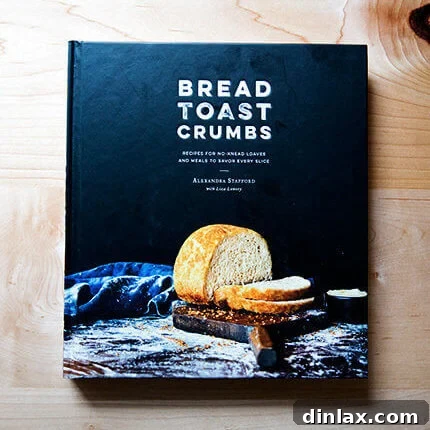
Bread Toast Crumbs: A Loaf-to-Crumb Bread-Baking Book
Already fallen in love with this peasant bread? Dive deeper into the world of simple bread baking with the acclaimed book, “Bread Toast Crumbs.” This essential guide features 40 brilliant variations of the master peasant bread recipe, alongside 70 ingenious recipes designed to help you utilize every single crumb of your homemade loaves. From savory sandwiches to delightful desserts, learn how to elevate your baking skills and minimize waste. It’s the perfect companion for anyone eager to explore more easy, delicious bread adventures.
The Irresistible Charm of Authentic Peasant Bread
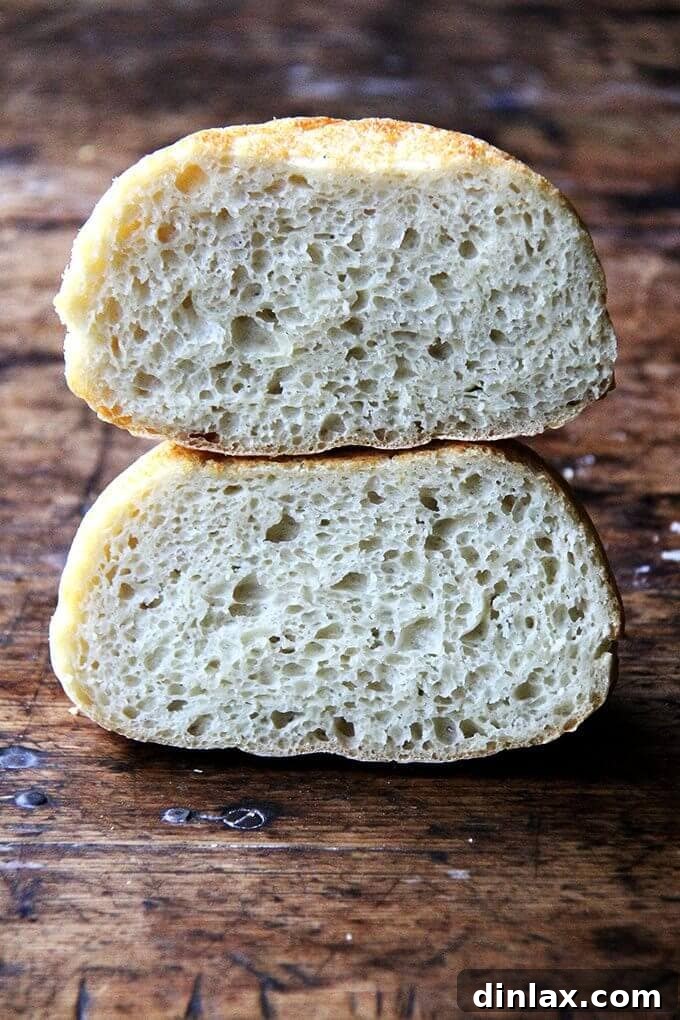
This isn’t an attempt to replicate the often complex structures of artisan bread; it celebrates the rustic, humble essence of true peasant bread. Its charm lies in its perfectly chewy, spongy texture and its wonderfully moist crumb, encased in a buttery, golden crust that sings with flavor. Baked in simple, well-buttered Pyrex bowls, the bread achieves its crisp exterior without any need for steam baths or water spritzes – a testament to its unfussy brilliance. The result is a loaf so comforting and delicious, you’ll be proud to serve it to anyone, from your family to the most discerning “bread gods” like Jim Lahey or Peter Reinhart. When your guests inevitably ask about your secret to such magnificent homemade bread, you can simply smile and say, “Oh, this? It’s just simple peasant bread. Easy as pie. I’ll show you how someday.”
Mastering No-Knead Peasant Bread: A Step-by-Step Guide for Easy Homemade Loaves
Baking this remarkable peasant bread is a straightforward process that yields truly impressive results with minimal effort. Below, we’ll walk through each step, ensuring your journey from raw ingredients to warm, crusty bread is smooth and enjoyable. Pay close attention to the details, especially regarding yeast and water temperature, as these are key to a successful rise and a perfect, tender crumb.
Essential Ingredient Spotlight: Choosing the Right Yeast
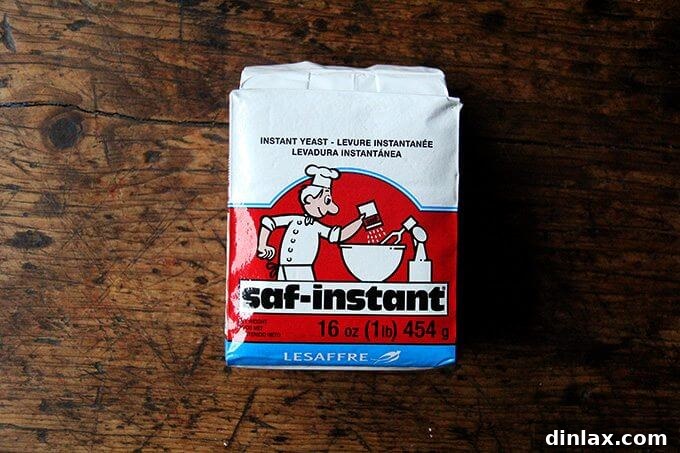
The heart of any leavened bread is yeast. For this recipe, I highly recommend SAF Instant Yeast. Its primary advantage is that it can be whisked directly into the flour mixture without prior “blooming” or “proofing,” saving you time and an extra step. Instant yeast is incredibly reliable and remains active for a long time when stored properly in the fridge or freezer. If you only have active-dry yeast on hand, don’t worry; you’ll find specific instructions on how to use it in the notes section of the recipe card below. Brands like Red Star yeast are also excellent choices for active dry yeast, but remember to proof them first.
Mixing the Dough: Simplicity at Its Best
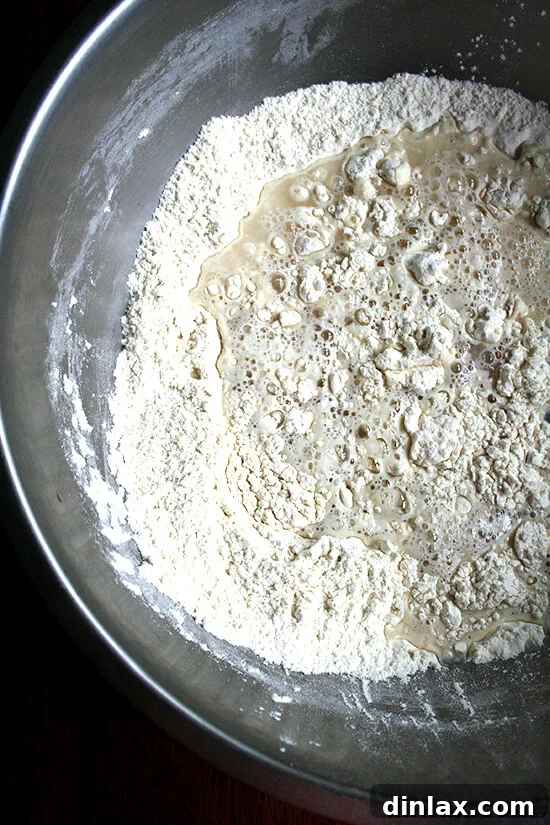
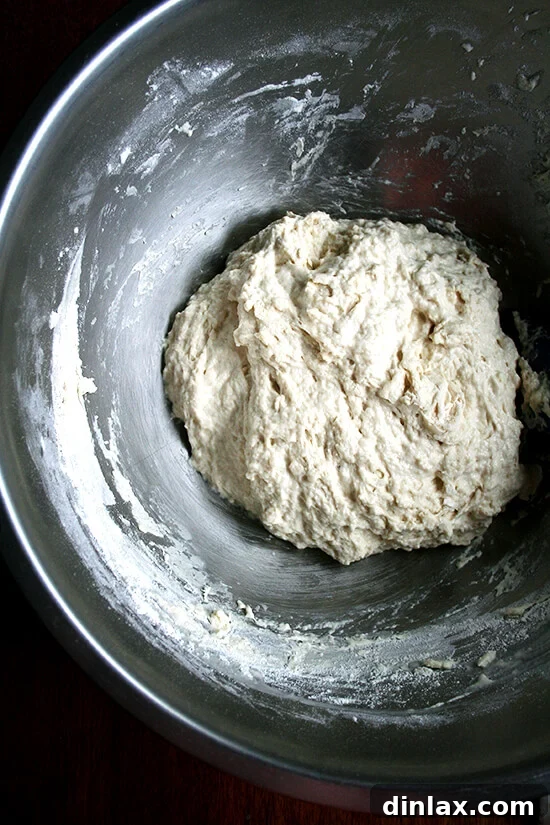
Begin your baking journey by combining your dry ingredients: flour, salt, sugar, and the instant yeast in a large mixing bowl. Whisk them thoroughly to ensure an even distribution before introducing any liquid. Next, pour in the lukewarm water. The temperature of the water is absolutely crucial; it should be warm enough to activate the yeast but not so hot that it kills it. Aim for a temperature that feels like a warm bath on your wrist, roughly between 105-115°F (40-46°C). Mix these ingredients using a sturdy spoon or a Danish dough whisk until the flour is fully absorbed and you have a single, sticky dough ball. Resist the urge to add more flour; a wet, sticky dough is essential for the tender, open crumb characteristic of this delicious peasant bread.
The First Rise: Patience Rewarded with Flavor
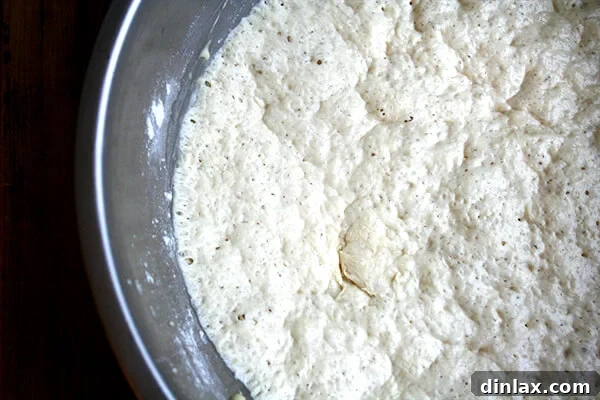
Once your dough is mixed, cover your bowl with a clean tea towel or plastic wrap. Find a warm, draft-free spot in your kitchen for the dough to undergo its first, crucial rise. This usually takes between 1.5 to 2 hours, depending on the warmth of your environment. A slightly warm setting, such as a briefly preheated (then immediately turned off) oven (ensuring it doesn’t exceed 100°F / 38°C), can accelerate this process, especially during colder months. The dough is ready when it has significantly increased in volume, appearing light, airy, and bubbly, as illustrated in the image below. This initial fermentation step is vital for developing the deep flavor and excellent structure of your finished bread.
Punching Down and Dividing the Dough for Two Loaves
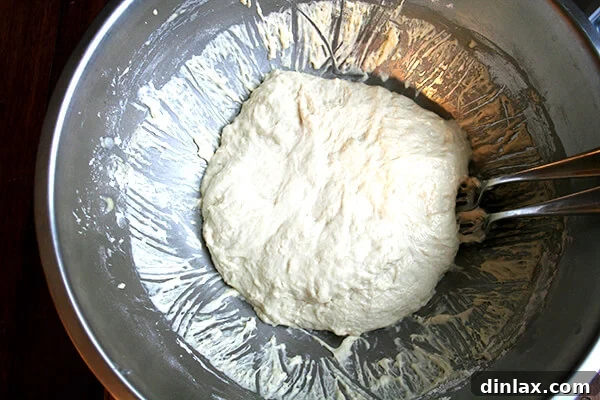
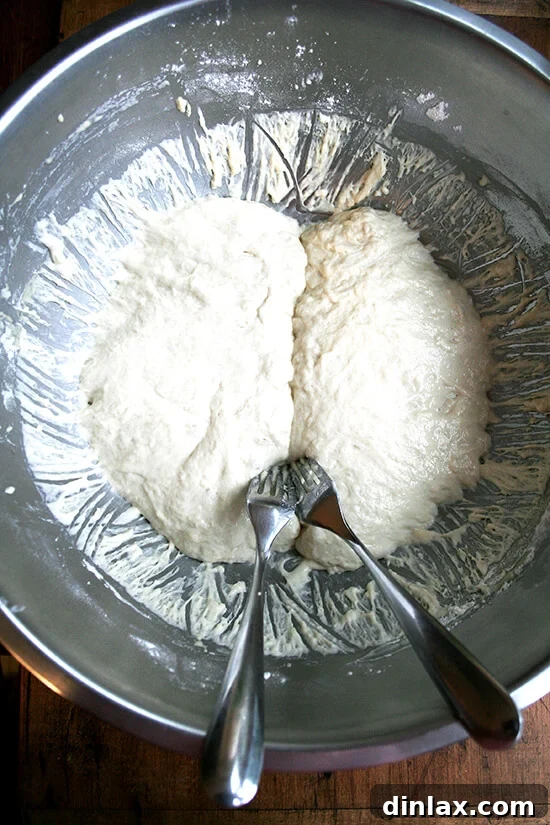
After the first glorious rise, it’s time for a gentle “punch down.” Don’t literally punch the dough; instead, use two forks to gently deflate it, scraping it from the sides of the bowl. This step releases accumulated gases and prepares the dough for its second, shorter rise. Then, using your two forks, carefully divide the sticky dough down the middle into two equal portions. Remember, this dough is intentionally very wet and pliable, so don’t be alarmed if it feels a bit unruly. Quick, confident movements with your forks will make this step easier and less messy. Many bakers also find flexible plastic dough scrapers incredibly useful here for precise handling.
Preparing and Second Rise in Pyrex Bowls
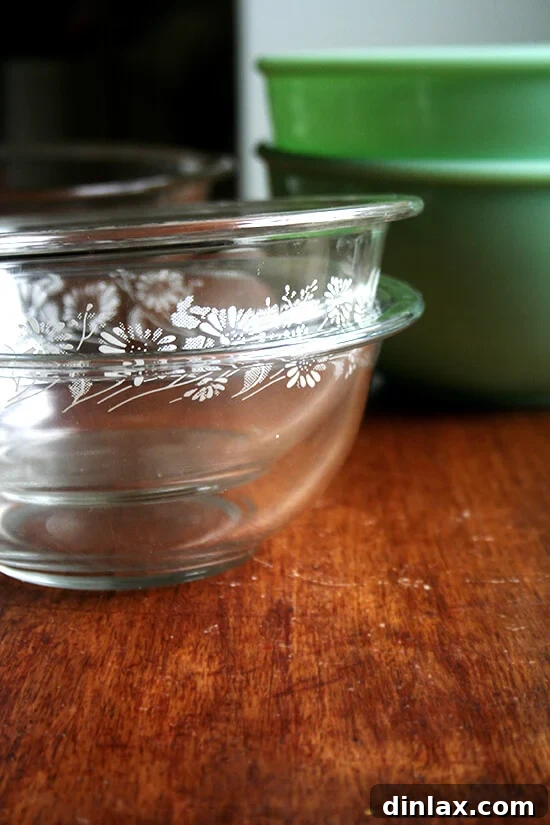
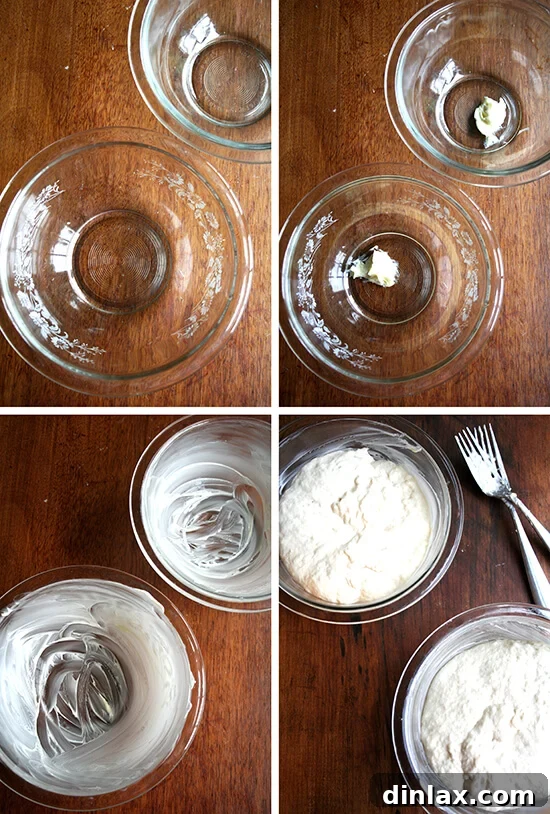
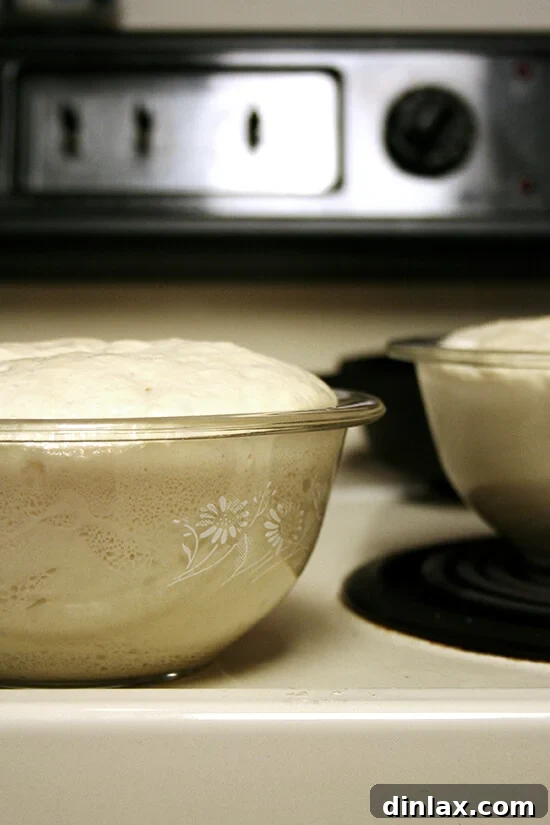
Because of its high hydration, this dough absolutely thrives when baked in an oven-proof bowl. My personal preference, honed over years of baking, is the Pyrex 1L (1-quart) 322 size, which consistently delivers perfectly shaped, rustic loaves. However, any similarly sized oven-safe bowl will work beautifully. Generously butter your chosen baking bowls; this crucial step not only prevents sticking but also contributes to that incredibly rich, golden, and buttery crust. Carefully transfer half of the divided dough into each prepared bowl. Let the dough undergo its second, shorter rise for about 20-30 minutes, ideally near a warm spot like on top of your preheating oven. The dough should gently crown the rim of the bowl, indicating it’s perfectly proofed and ready for baking.
Baking and Cooling: The Grand Finale of Your Homemade Bread
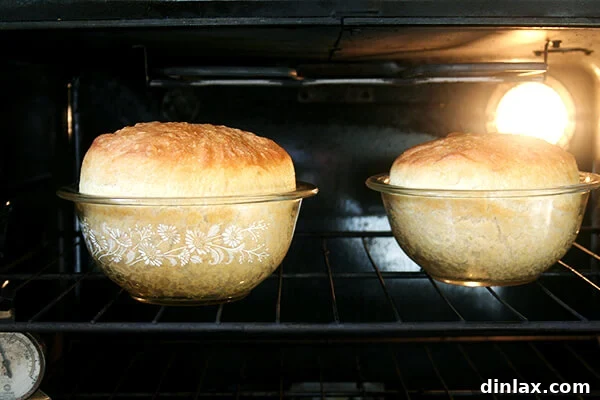
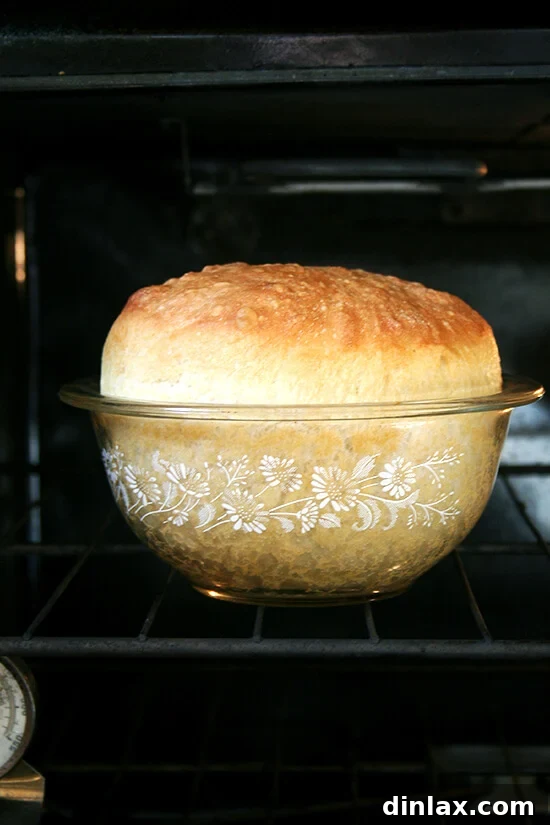
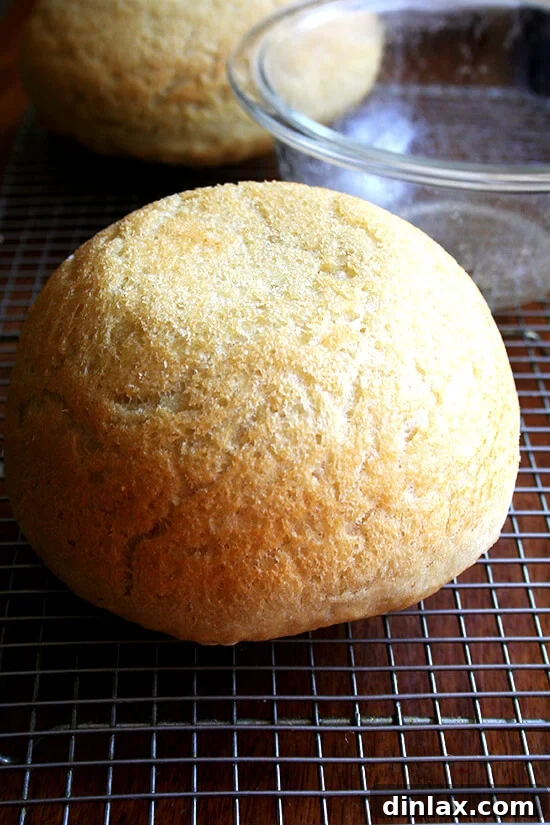
Preheat your oven to a robust 425°F (220°C). Once the oven is hot and the dough has completed its second rise, carefully transfer the bowls with the risen dough into the oven. Bake for an initial 15 minutes at this high temperature to achieve excellent oven spring and the start of a crisp crust. Then, reduce the oven temperature to 375°F (190°C) and continue baking for another 15 to 17 minutes, or until the loaves are beautifully golden brown and sound hollow when tapped on the bottom. The irresistible aroma filling your kitchen will be a sure sign they are nearly done! Remove the bowls from the oven and immediately invert the piping hot loaves onto a cooling rack. A well-buttered bowl ensures they slide out effortlessly. If your loaves appear a little pale or soft, you can place them directly on the oven rack (without the bowls) for an additional 5 minutes to crisp them up further. Allow the bread to cool for at least 10 minutes before slicing; this crucial step ensures the crumb sets properly and prevents it from being gummy.
Versatility and Enjoyment: Serving Your Homemade Peasant Bread
While this bread is undeniably irresistible when enjoyed fresh from the oven, its charm doesn’t fade with time. It makes for truly wonderful toast, providing a sturdy yet tender base for butter, jam, or avocado on subsequent mornings. Its robust structure and delicate flavor also make it the ideal foundation for the best grilled cheese sandwiches you’ll ever taste, or any kind of hearty sandwich filling. Pair it with a steaming bowl of soup, a fresh salad, or simply a drizzle of good olive oil and a sprinkle of sea salt. This versatile peasant bread is a staple that elevates any meal, any time of day, making every bite a delight.
No-Knead Peasant Bread: The Full Recipe
My Mother’s Peasant Bread: The Best Easiest Bread You Will Ever Make
Rated 4.9 out of 5 stars from 1292 reviews
Author: Alexandra Stafford
Total Time: 2 hours 27 minutes
Yield: 2 loaves
Description
This wonderfully sticky, no-knead dough requires baking in oven-proof vessels. For optimal results, use two 1-quart Pyrex bowls (such as the Pyrex 322 model) or similarly sized ramekins for charming mini loaves. While a 2-quart bowl can accommodate the entire batch of dough, avoid using it for half the dough as it will be too large. For additional guidance and visuals, a full video tutorial is available earlier in this post to assist you every step of the way.
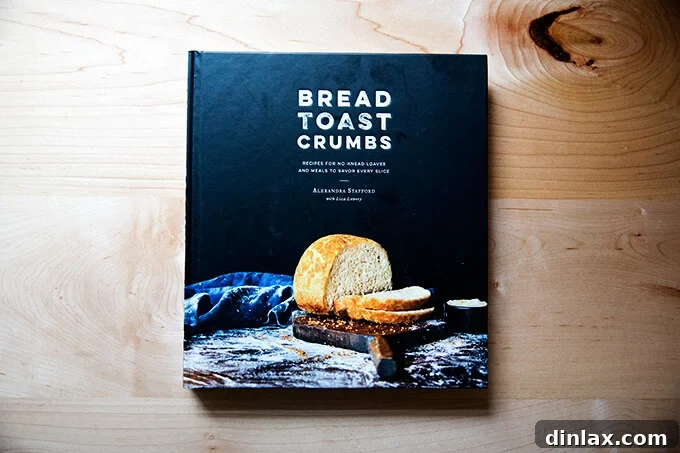
For Peasant Bread Enthusiasts: Explore the comprehensive guide, “Bread Toast Crumbs.” This “loaf-to-crumb” bread-baking book is packed with valuable tips, tricks, and answers to all your questions, featuring 40 variations of the master peasant bread recipe and 70 recipes for enjoying every last crumb. Learn more about the book here or purchase it on Amazon.
Ingredients
- 4 cups (512 g) unbleached all-purpose or bread flour
- 2 teaspoons (10 g) kosher salt
- 2 cups (454 g) lukewarm water (achieved by mixing 1.5 cups cold water with 0.5 cup boiling water)
- 2 teaspoons (8 g) sugar
- 2 teaspoons (8 g) instant yeast (SAF Instant Yeast highly recommended, see notes below for active-dry yeast)
- ~2 tablespoons room temperature butter, for generously greasing bowls
Instructions
- Mixing the Dough: In a large mixing bowl, thoroughly whisk together the flour, salt, sugar, and instant yeast. Add the lukewarm water, then mix until all the flour is fully incorporated and you have a sticky, cohesive dough. (If using active dry yeast, refer to the detailed instructions in the notes section below).
- First Rise: Cover the bowl with a tea towel or plastic wrap. Allow the dough to rise in a warm spot for 1.5 to 2 hours, or until it has noticeably doubled in size and appears bubbly. To create a warm environment, turn your oven on to 350°F (175°C) for just one minute, then turn it off; the residual heat should be ideal (aim for under 100°F / 38°C).
- Preheat Oven & Prepare Bowls: While the dough is rising, preheat your oven to 425°F (220°C). Generously grease two 1-quart to 1.5-quart oven-safe bowls with about one tablespoon of room-temperature butter each.
- Punch Down & Divide: Using two forks, gently punch down the risen dough, scraping it from the sides of the bowl. Aim to loosen the dough entirely and bring it towards the center. Then, use the forks to divide the dough into two equal portions. This dough is quite wet, so working swiftly will help. Scoop each half into your prepared, buttered bowls.
- Second Rise: Place the uncovered bowls on the countertop near the preheating oven (or another warm area) for a second rise, lasting approximately 20 to 30 minutes. The dough should rise to just crown the rim of the bowls. Avoid covering the bowls or using the warm-oven trick for this second rise, as it could over-proof.
- Baking: Transfer the bowls to the preheated oven. Bake for 15 minutes at 425°F (220°C). Then, reduce the oven temperature to 375°F (190°C) and continue baking for another 15 to 17 minutes, or until the loaves are deeply golden brown and sound hollow when tapped on the bottom.
- Cooling: Immediately remove the bowls from the oven and invert the loaves onto cooling racks. They should release easily if the bowls were well-buttered. If your loaves seem a bit pale or soft, return them to the oven directly on the racks (without the bowls) for an additional 5 minutes to crisp up. Allow the bread to cool for at least 10 minutes before slicing and serving; this critical step ensures the crumb sets perfectly.
Watch the Peasant Bread Video Tutorial
Notes & Troubleshooting for Perfect Peasant Bread
- Recommended Baking Vessels: While the classic Pyrex 322 (1-quart) is ideal, it can be challenging to find. Alternatively, the Pyrex 3-piece set offers a 1-quart and a 1.5-quart bowl, which can be used together, though the loaves will have slightly different shapes. An Anchor Hocking set is another reliable option for oven-safe glass bowls.
- Yeast Selection & Storage: For consistent, no-fuss results, I consistently use and recommend SAF Instant Yeast, which can be purchased in bulk and stored efficiently in your fridge or freezer for extended freshness. If you’re using standard yeast packets, a full 2.25-teaspoon packet will be equivalent. This recipe is wonderfully forgiving and works well with instant, rapid rise, or active-dry yeast.
- Using Active-Dry Yeast: If active-dry yeast is your only option, you’ll need to activate it first. In a small bowl, dissolve the sugar into the lukewarm water. Sprinkle the active-dry yeast over the surface (do not stir) and let it stand for 10-15 minutes until it becomes noticeably foamy and bubbly. This visual cue confirms its activity. Then, stir it gently and add it to your dry ingredients as instructed.
- Troubleshooting the Second Rise: If your dough struggles with the second rise, leading to flatter loaves, it’s often due to the shape of the bowl or overly long proofing. The second rise should be brief, typically no more than 30 minutes, ensuring the dough remains lively. Always ensure you’re using appropriately sized bowls for the two dough halves.
- Experimenting with Flour: While the original recipe shines with unbleached all-purpose or bread flour, you can confidently experiment with incorporating other flours. For a different texture and nutritional profile, you can substitute up to 3 cups of the all-purpose flour with whole wheat flour. Start with the recommended flour, and once you get the hang of it, feel free to try various combinations.
- The Importance of a Digital Scale: For truly foolproof and consistently perfect bread baking, investing in a digital kitchen scale (often available for under $10) is highly recommended. Measuring ingredients by weight (grams) is far more accurate than by volume (cups) and mitigates common issues like dense bread from inadvertently adding too much flour.
- Simplified Printable Recipe: For a concise, easy-to-follow version of this recipe, a printable PDF is available here.
- Baking in a Dutch Oven for a Rustic Crust: For a beautiful, extra-crusty, round loaf, preheat a Dutch oven for 45 minutes at 450°F (230°C). After the first rise, gently shape the dough into a ball on a lightly floured work surface, transfer it to parchment paper, and let it rest for 20 minutes. Then, carefully lower the dough and parchment into the preheated Dutch oven, cover, and bake for 30 minutes. Uncover and bake for another 15 minutes until it achieves a deep golden brown crust.
- Baking in a Loaf Pan: If you prefer a more traditional loaf shape, you can use loaf pans. An 8.5×4.5-inch or 9×5-inch loaf pan can accommodate 3/4 of the dough, with the remainder baked in smaller vessels like ramekins or muffin tins for cute mini loaves. If you have a large 10×6-inch loaf pan, the entire dough batch can be baked in one. For loaf pans, adjust the baking temperature to 375°F (190°C) and bake for approximately 45 minutes.
- High Altitude Baking Tips:
- First, try the original recipe as written (preferably measuring ingredients by weight with a scale). You may find no adjustments are necessary, as some bakers at 9200 ft report success with the standard recipe.
- If the original recipe doesn’t quite work, consider adding a little more water – about a quarter cup for every 512 g of flour – as higher altitudes tend to be drier.
- Alternatively, try slightly decreasing the yeast to 1.5 teaspoons to slow down the rapid rise often experienced at altitude.
- If your dough is particularly gooey, try decreasing the water by 1/4 cup. However, investing in a digital scale to precisely weigh your flour and water is the most impactful step for high-altitude success.
- Consider an extra punch-down: Let the dough rise for 1-1.5 hours, punch it down, let it rise again for about an hour, punch it down once more, then transfer it to your buttered Pyrex bowls for the final rise.
- Exciting Variations to Try:
- Cornmeal Bread: For a delightful texture, substitute 1 cup of the all-purpose flour with 1 cup of fine cornmeal. Proceed with the recipe as directed.
- Faux Focaccia: To create a delicious, savory focaccia-style bread, instead of buttering two Pyrex bowls, generously butter one 9×9-inch or a larger 9×13-inch glass baking dish. If using two vessels, divide the dough in half; otherwise, place all dough in the large dish. Drizzle the dough with 1-2 tablespoons of olive oil, gently spread it to fit the pan, and create dimples with your fingers. Sprinkle with chopped rosemary and coarse sea salt before the second rise and baking.
- For specific Thyme Dinner Rolls, follow the linked recipe.
- For a Gluten-Free Peasant Bread, consult the dedicated recipe link for special instructions.
- Everything Bagel Seasoning Bread: For a savory and aromatic crust, generously coat your buttered bowls with everything bagel seasoning before adding the dough. Other seeds and seed mixes work wonderfully too, such as toasted sesame seeds or a homemade dukkah blend.
- Hearty Whole Wheat Peasant Bread: For a richer, nuttier flavor and denser texture, incorporate up to 50% whole wheat flour into your dough.
Prep Time: 5 minutes
Cook Time: 32 minutes
Category: Bread
Method: Baked
Cuisine: American