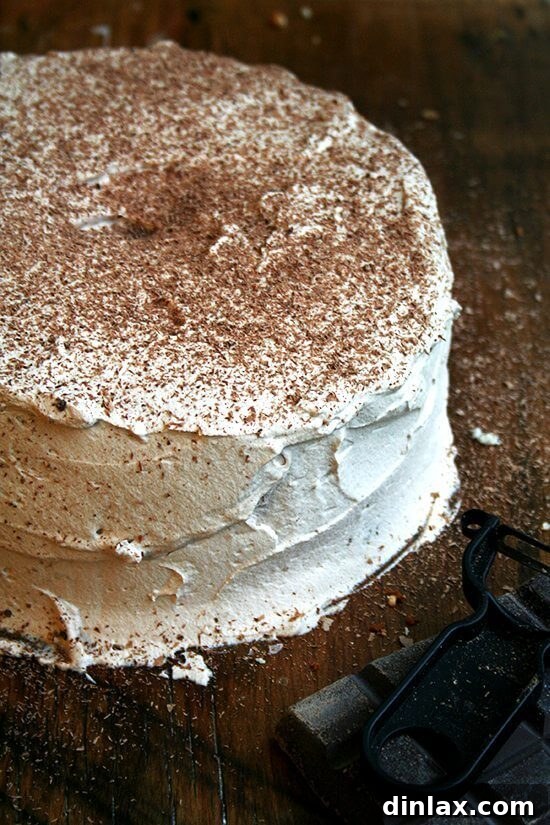
The Heavenly Delight of Homemade Angel Food Cake: A Timeless Family Tradition

Just this past Monday, our youngest, Graham, marked his first year, and we celebrated in the most cherished way possible: with a magnificent homemade angel food cake. This isn’t just any cake; it’s a deeply woven thread in the fabric of our family’s celebrations, a confection my mother meticulously prepared for me and each of my siblings for nearly two decades of our lives. Growing up, angel food cake was so intrinsically linked to every birthday, anniversary, and special gathering that I genuinely believed it was a unique Greek tradition. Indeed, it seemed every aunt, great-aunt, and cousin also embraced this cloud-like dessert for their own festive occasions, reinforcing my sweet misconception.
The absence of traditional Greek ingredients like phyllo dough and sweet syrup should have perhaps hinted at its non-Greek origins, but the revelation still came as a delightful shock. This beloved tradition, it turns out, began with my maternal grandmother. She adored all things light and airy, serving her homemade angel food cake with a simple yet elegant chocolate glaze. This glaze would artfully cascade down the cake’s sides, freezing halfway to create a beautiful, delicate scalloped edge. However, an even more astonishing discovery awaited me than learning angel food cake wasn’t a Greek invention: for many years, my mother didn’t bake our birthday cakes from scratch. Yes, the very woman who would never dream of making soup without homemade broth, who would disdain jarred roasted peppers, and who considered bottled salad dressing an abomination, relied on Duncan Hines for roughly 90% of our childhood birthday cakes.
Yet, I find I cannot fault her. Boxed cake mixes, particularly those for angel food cake, are remarkably good. Had the ingredient lists on these convenient mixes been even remotely recognizable or free from artificial additives, my mother, and consequently, I, would likely still keep our pantries well-stocked with them. But there comes a turning point in every baker’s journey, especially when it comes to this ethereal dessert.
Why Homemade Angel Food Cake is a Culinary Revelation
Once you’ve experienced the joy and superior taste of baking your first angel food cake from scratch, the thought of returning to a boxed mix becomes almost unfathomable. The perceived complexity often deters home bakers, but the reality is quite the opposite. Compared to many elaborate cake recipes, the ingredient list for homemade angel food cake is surprisingly modest and straightforward. True success, however, hinges on a few crucial, yet easily mastered, techniques.
Firstly, precise measurement of egg whites is paramount. Beyond that, taking the time to thoroughly sift your flour is non-negotiable – if ever there was a recipe that truly benefits from this extra step, angel food cake is it. Sifting aerates the flour, resulting in an incomparably light and tender crumb. These initial steps pave the way for a truly successful outcome.
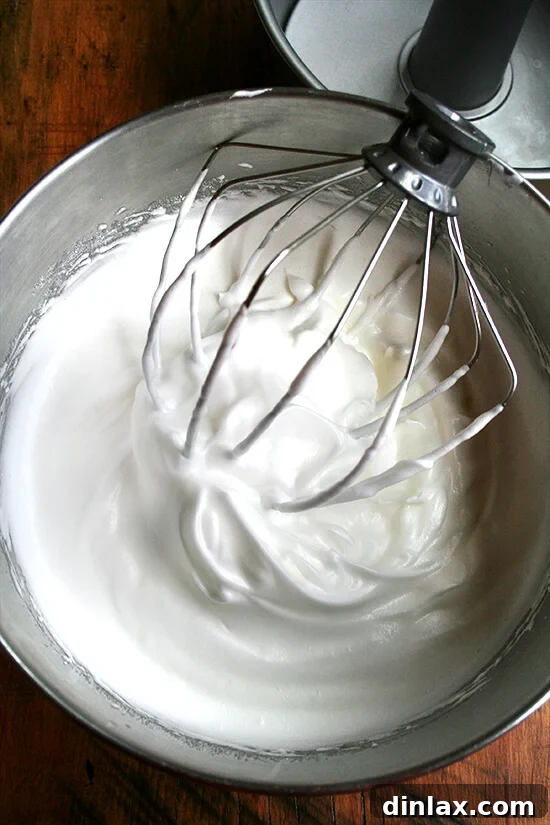
The true artistry of angel food cake lies in the delicate handling of the egg whites. They must be beaten to perfection, never overbeaten. This invaluable wisdom was passed down by the esteemed Florence Fabricant, whose guidance in the preface to the angel cake recipe in The New York Times Desserts Cookbook is a baker’s bible. She advises: “It is absolutely essential that great care be taken in beating the egg whites so they remain creamy and do not weep or break from overbeating preventing the cake from rising so magnificently. It’s best to underbeat them slightly.” She also notes that room temperature egg whites whip best, contributing to a more stable and voluminous meringue. This meticulous attention ensures the cake achieves its signature magnificent rise and delicate structure.
Secondly, there’s an undeniable sense of culinary triumph that accompanies a successfully baked homemade angel food cake. This magnificent dessert rises to extraordinary heights without the aid of any traditional chemical leavening agents, relying solely on the air incorporated into the egg whites. Furthermore, the cake remains incredibly moist and wonderfully spongy, defying expectations for a dessert made without a single drop of butter or oil. It truly is a baking marvel, a testament to simple ingredients transformed by careful technique.
And finally, beyond its ethereal lightness and impressive structure, homemade angel food cake is, quite simply, incredibly delicious. The late, great food critic Craig Claiborne, who famously declared angel food cake his absolute favorite dessert, perhaps captured its essence best: he described it as “divine, celestial, manna from heaven.” I couldn’t agree more with his poetic assessment. The pure, clean flavor and airy texture are unlike any other cake, making it a perfect canvas for various toppings, though it shines beautifully on its own.
Mastering Homemade Angel Food Cake: Essential Tips for Angelic Results
Achieving the perfect homemade angel food cake is within every home baker’s reach with a few key practices:
- Room Temperature Egg Whites: Ensure your egg whites are at room temperature. This allows them to whip up to their maximum volume, creating a more stable and airy meringue.
- Sift, Sift, Sift: As emphasized, sifting your cake flour multiple times (with some of the sugar) is crucial. This step aerates the flour, removes lumps, and ensures a super-fine texture, contributing to the cake’s signature lightness. Use a fine-mesh sieve if you don’t have a dedicated sifter.
- Do Not Overbeat the Meringue: This is perhaps the most critical tip. Overbeaten egg whites become dry and brittle, making it difficult to fold in the flour and sugar mixture without deflating them. Beat until soft, moist peaks form, and then stop. Underbeating slightly is better than overbeating.
- Gentle Folding: When incorporating the flour and sugar mixture into the meringue, use a light hand and a cut-and-fold technique. The goal is to retain as much air as possible in the egg whites. Fold just until no streaks of flour remain.
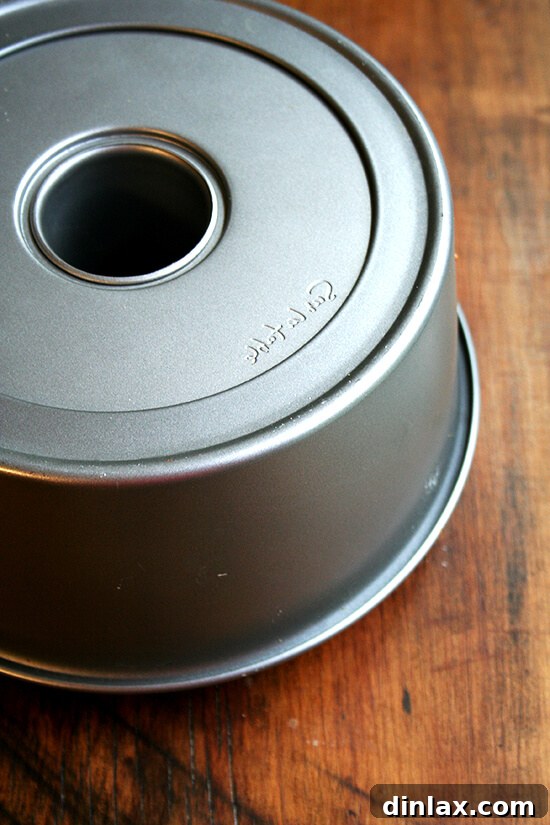
- Ungreased Tube Pan: Angel food cake batter needs to “climb” the sides of the pan as it bakes to achieve its impressive height. A greased pan will prevent this. Always use an ungreased tube pan.
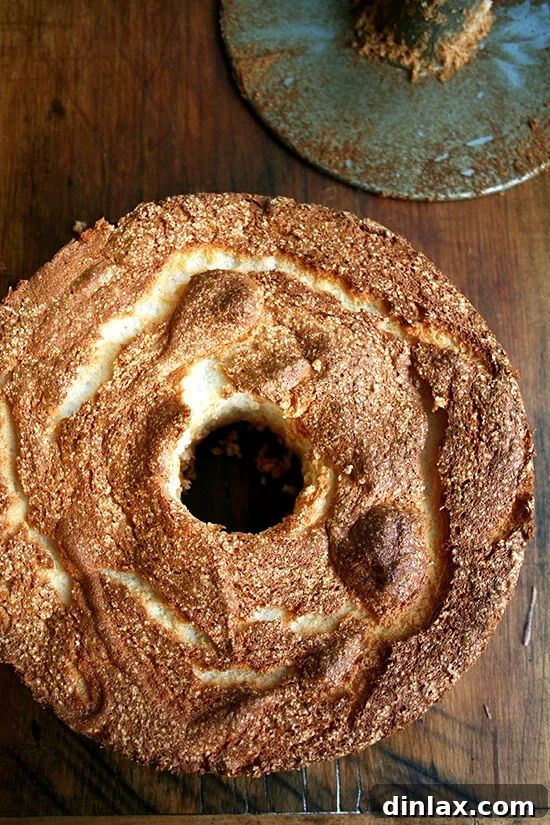
- Cool Upside Down: Immediately after baking, invert the pan onto a rack or suspend it over a bottle (if your pan has feet). This prevents the delicate cake from collapsing under its own weight as it cools, maintaining its lofty structure. Allow it to cool completely before removing.
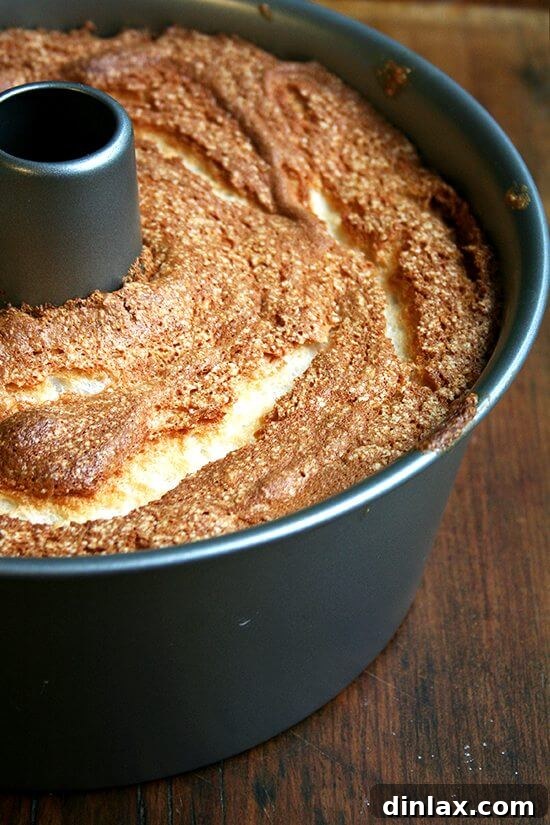
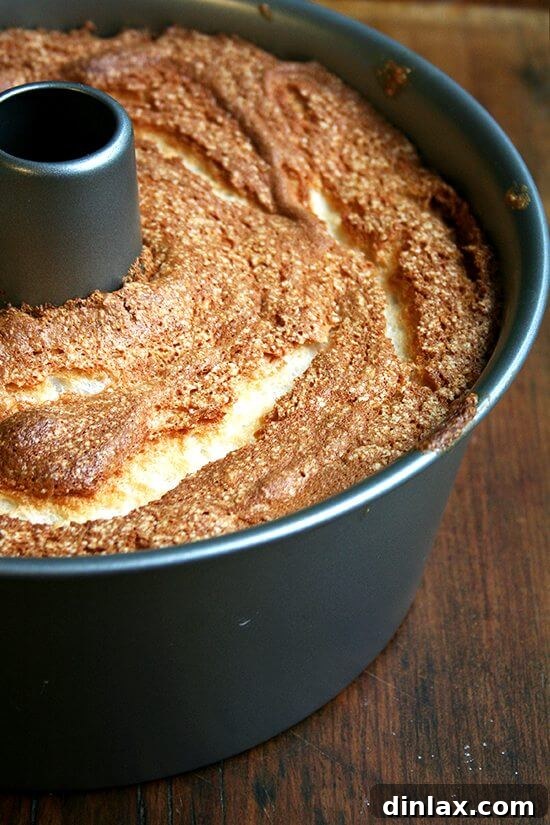
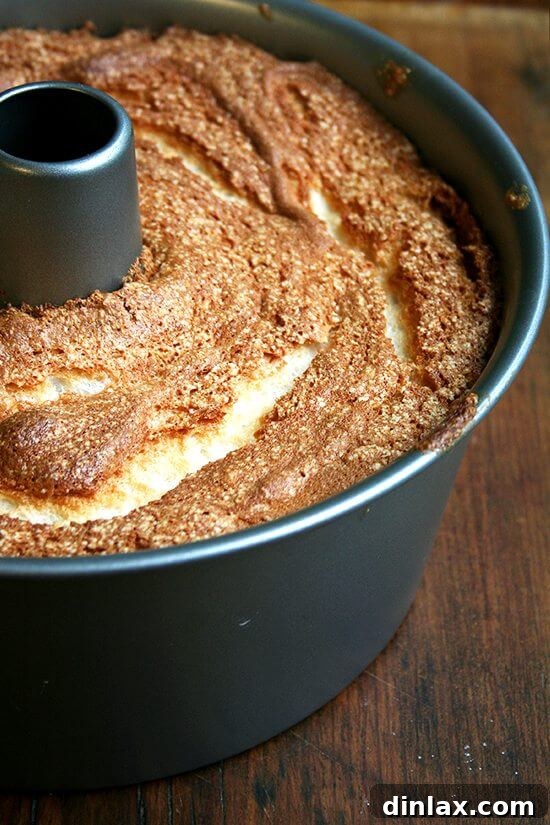
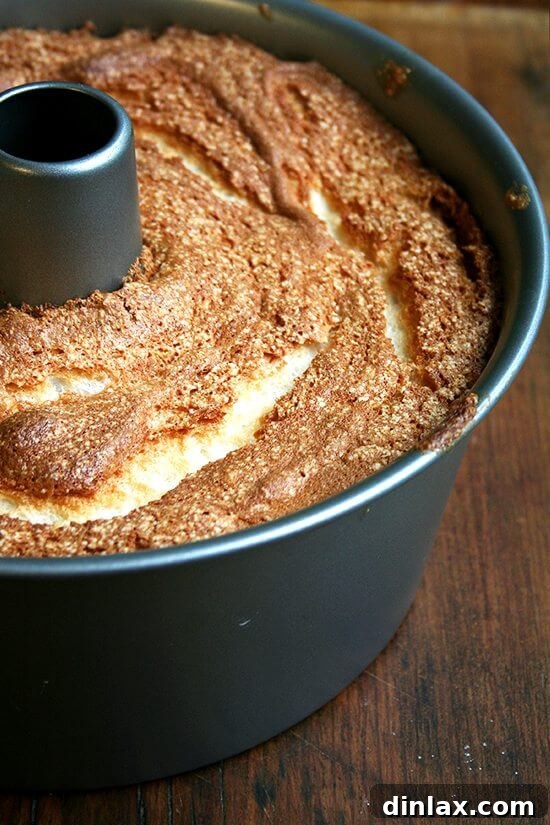
Cooling upside down — this essential step helps prevent the cake from falling:
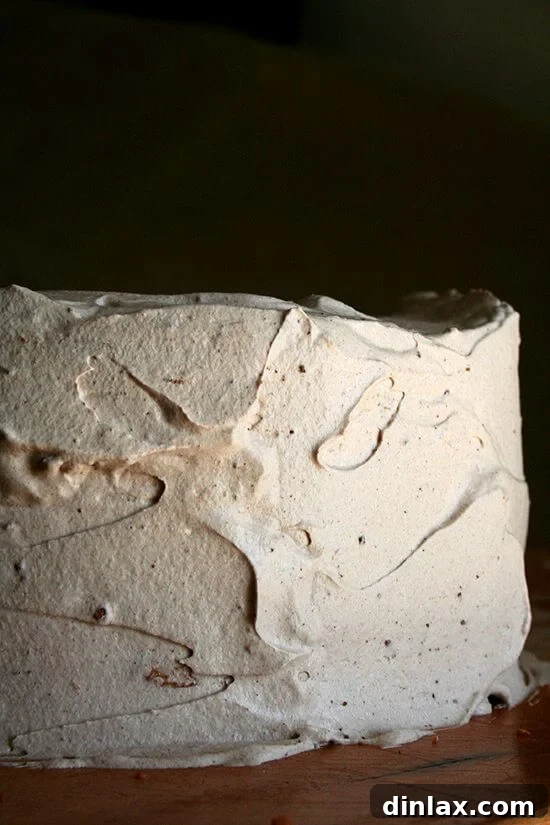
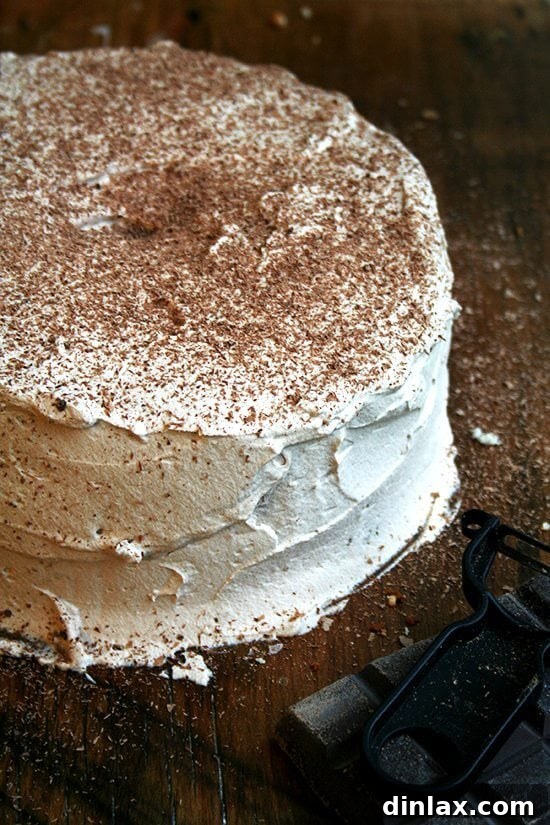
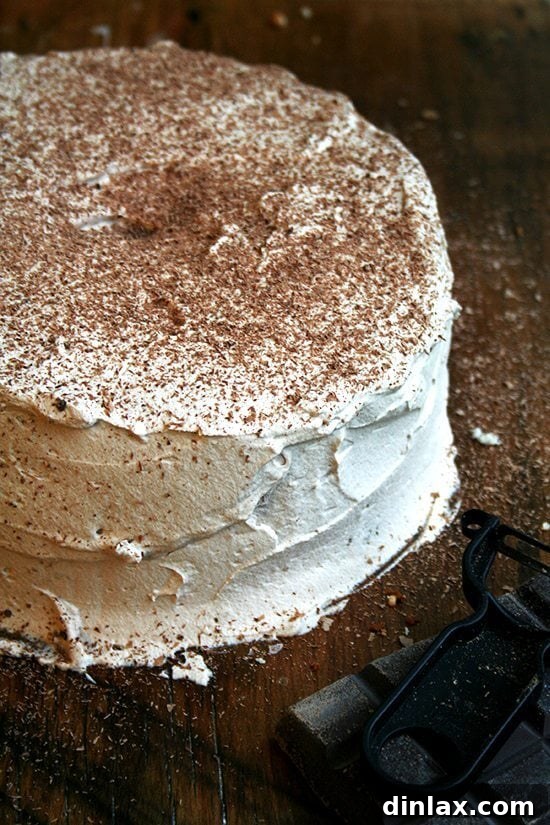
Ella’s first birthday celebration on February 16, 2011:


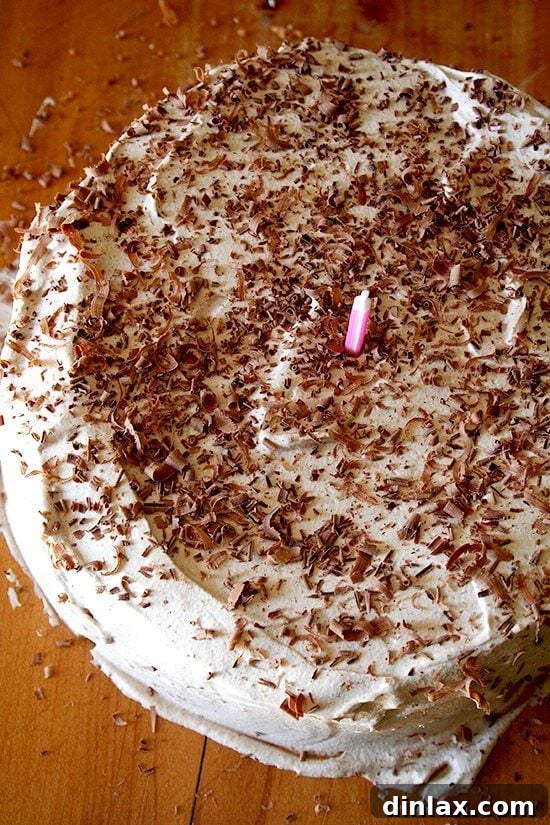
Homemade Angel Food Cake Recipe
- Author: Alexandra Stafford
- Total Time: 2 hours 35 minutes
- Yield: 1 cake
Description
This recipe for classic homemade Angel Food Cake results in an incredibly light, airy, and moist cake, perfect for any celebration. It’s a culinary triumph that’s surprisingly easy to make from scratch, and far superior to any boxed mix.
Source: The New York Times Cookbook, Craig Claiborne
Important Notes: While the primary recipe is from Craig Claiborne’s New York Times Cookbook, I also reference Florence Fabricant’s invaluable guidance from The New York Times Dessert Cookbook, which is also credited to Claiborne and differs mainly in sugar quantity. Her insights are crucial for success:
- It is absolutely essential that great care be taken in beating the egg whites so they remain creamy and do not weep or break from overbeating, preventing the cake from rising so magnificently. It’s best to underbeat them slightly.
- Egg whites beat best if they are not ice cold; allow them to come to room temperature.
- The pan is not greased, allowing the batter to easily “climb” up the sides as it bakes, which significantly increases the loftiness of the cake.
- Tracing a square in the top of the unbaked batter with a knife can also encourage a more even rise.
- Keeping the cake upside down until it cools completely is essential to prevent it from falling and losing its volume.
Ingredients
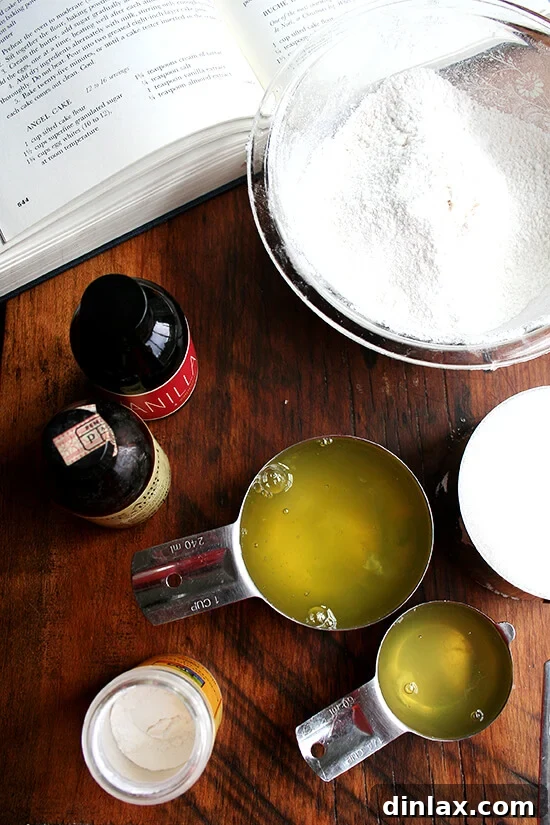
- 1 cup sifted cake flour*
- 1 1/2 cups superfine granulated sugar (regular granulated sugar works fine too)
- 1 1/4 cups egg whites (10 to 12 large eggs), at room temperature
- 1 1/4 teaspoons cream of tartar
- 1/4 teaspoon salt
- 1 teaspoon vanilla extract
- 1/4 teaspoon almond extract
*I used Lily White cake flour, but all-purpose flour can be used as well.
Instructions
- Preheat your oven to 325ºF (160ºC).
- In a bowl, sift the cake flour four times with 1/2 cup of the granulated sugar. This thorough sifting is crucial for the cake’s light texture. (If you don’t have a sifter, a fine-mesh sieve works perfectly).
- In a large, clean mixing bowl, beat the room temperature egg whites until they become foamy. Add the cream of tartar and salt, then continue beating until soft, moist peaks form when you lift the beater. Be careful not to overbeat.
- Gradually add the remaining sugar, about two tablespoons at a time, beating well after each addition until fully incorporated and the meringue is glossy and holds soft peaks. Stir in the vanilla and almond extracts.
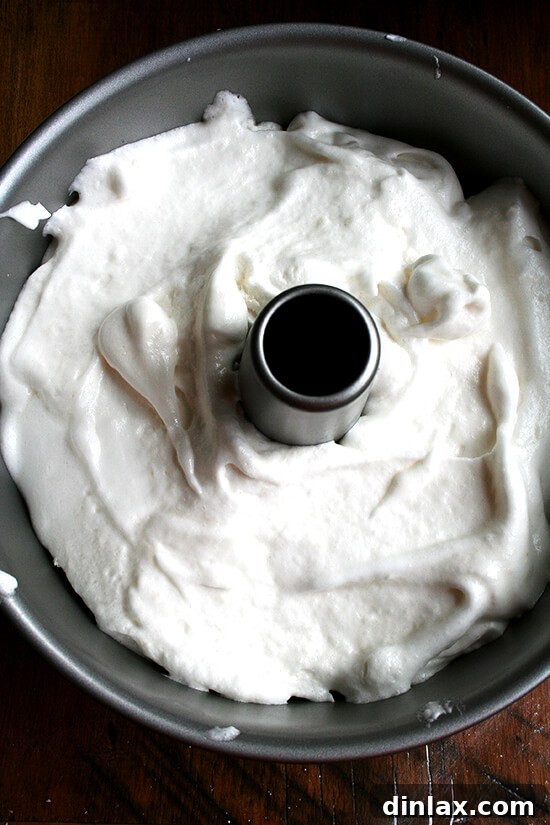
- Carefully sift about one-quarter cup of the flour-sugar mixture over the meringue at a time. Using a large spatula, gently cut and fold the flour mixture into the meringue just until no dry flour spots are visible. This part requires a delicate hand to avoid deflating the egg whites.
- Gently spoon the batter into an ungreased nine- or ten-inch tube pan. Bake for approximately 45 minutes to 1 hour, or until the cake is lightly golden brown on top and springs back when lightly touched.
- Immediately after removing from the oven, invert the pan onto a wire rack or suspend it over the neck of a bottle. Let the cake cool completely in the pan, which will take about an hour and a half. This step is vital to prevent the cake from collapsing.
- Once completely cooled, run a thin knife or metal spatula around the sides of the pan and the inner tube to release the cake. Invert onto a plate.
To assemble and frost the cake:
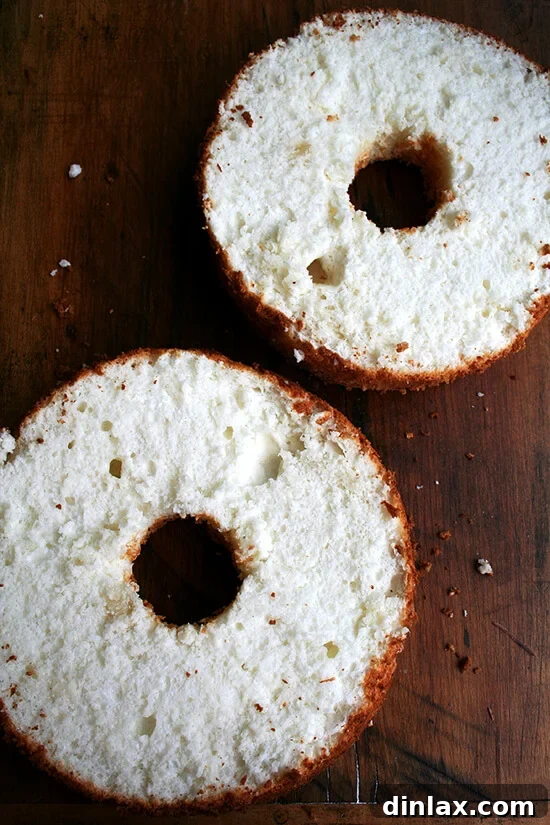
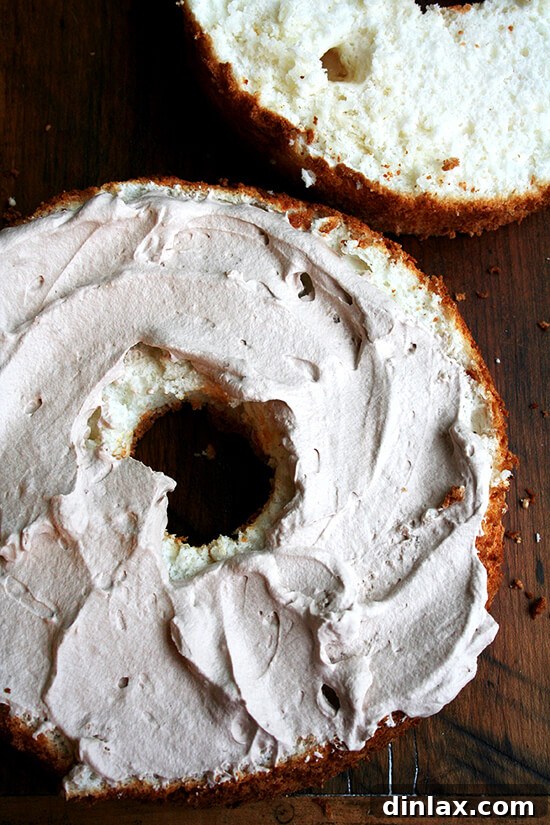
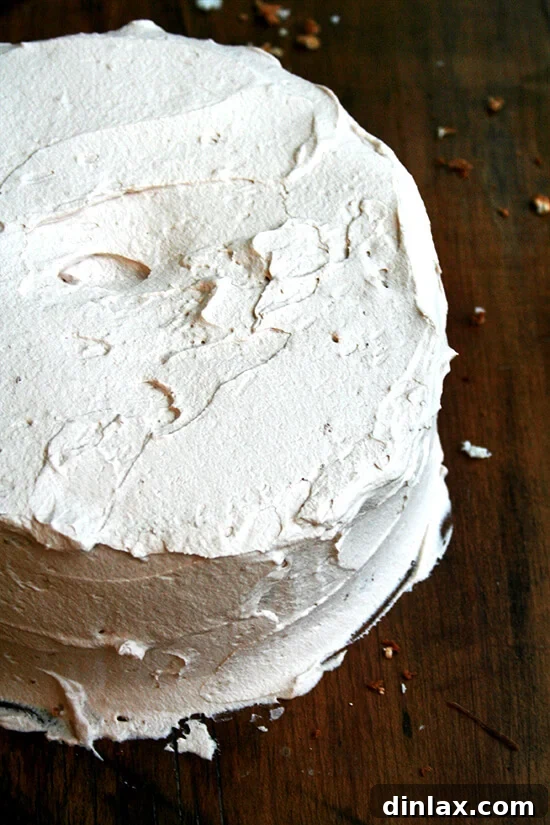
Carefully halve the cooled angel food cake horizontally. Spread an even layer of Chocolate Whipped Cream Frosting (recipe below) on top of the bottom half. Place the top half of the cake over the frosting. Dollop a generous amount of frosting on the very top of the cake, and using an offset spatula (if available) or a regular butter knife, gently spread it down and all around the cake, covering all sides evenly. For a beautiful finish, use a vegetable peeler to shave a bar of chocolate directly over the frosted cake.
- Prep Time: 20 minutes
- Cook Time: 45 minutes
Did you make this recipe?
Tag @alexandracooks on Instagram and hashtag it #alexandracooks
Chocolate Whipped Cream Frosting
- Author: Alexandra Stafford at alexandracooks.com
- Total Time: 10 minutes
Description
A simple yet rich chocolate whipped cream frosting that complements the lightness of the angel food cake beautifully. Adjust cocoa and sugar to your personal taste for the perfect balance of sweetness and chocolate flavor.
Ingredients
Note: This recipe is flexible. Adjust the amounts of cocoa powder and confectioners’ sugar based on your desired sweetness and chocolate intensity. The following proportions are a good starting point:
- 2 cups heavy cream, very cold
- 1 teaspoon vanilla extract
- 1 tablespoon unsweetened cocoa powder
- 1/4 cup to 1/2 cup confectioners’ sugar (powdered sugar)
Instructions
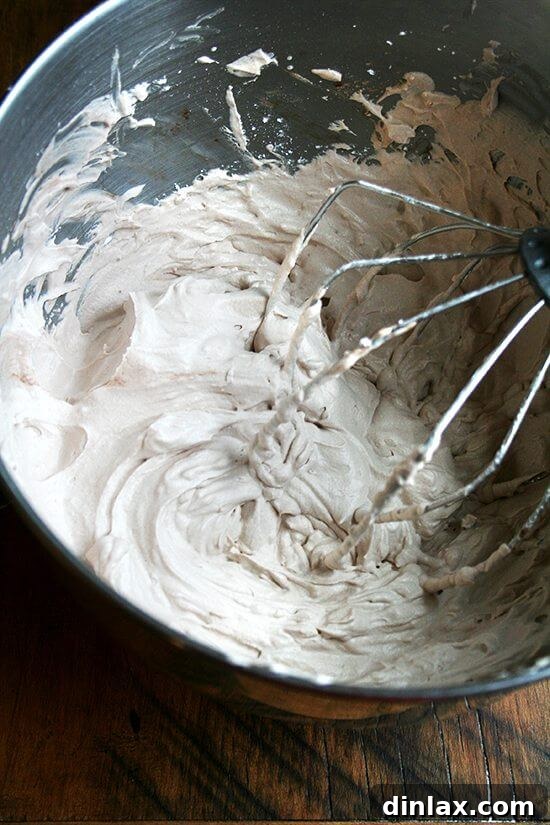
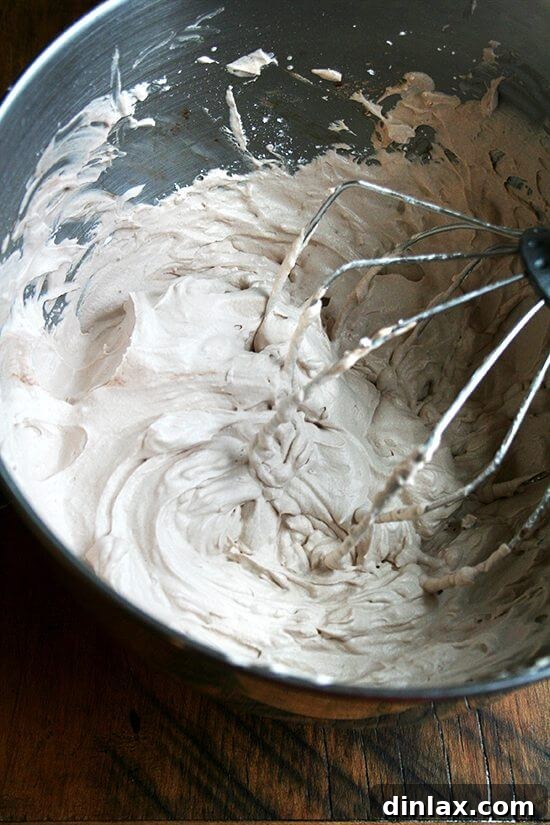
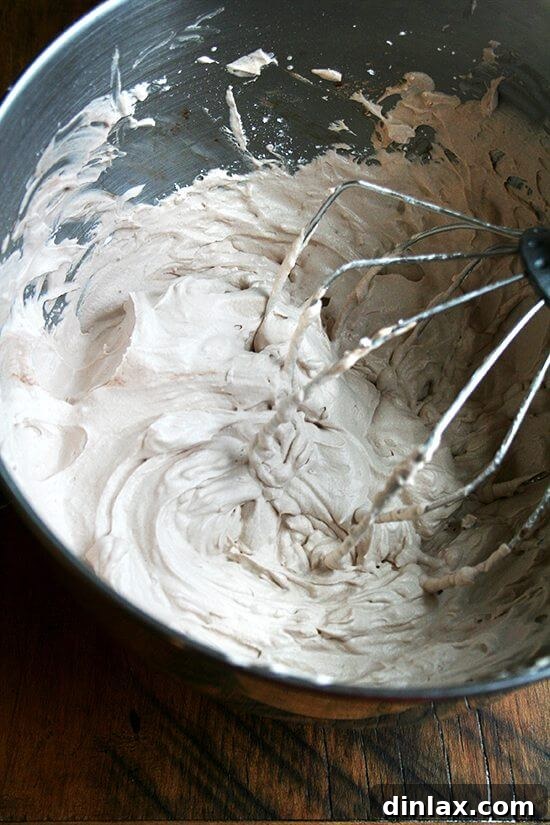
- In a large, chilled bowl, beat the heavy cream on high speed until it just begins to thicken. Add the vanilla extract and continue beating until it thickens further, reaching soft peaks.
- Sift in the cocoa powder and add about 1/4 cup of the confectioners’ sugar. Continue beating until the frosting thickens to your desired consistency for spreading, reaching medium-firm peaks.
- Taste the frosting. If you prefer it sweeter or more chocolaty, add more confectioners’ sugar and/or cocoa powder, one tablespoon at a time, beating briefly after each addition until smooth and incorporated. Be careful not to overbeat, which can turn whipped cream grainy.
- Prep Time: 10 minutes
Did you make this recipe?
Tag @alexandracooks on Instagram and hashtag it #alexandracooks