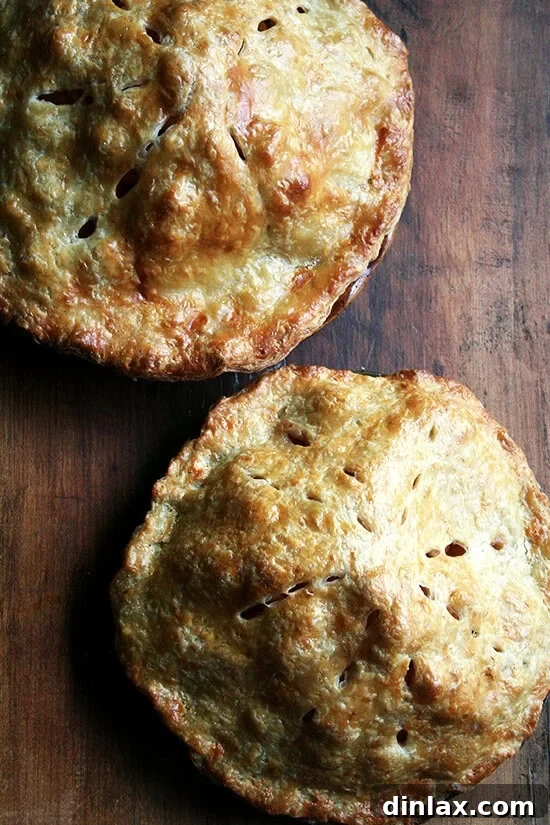
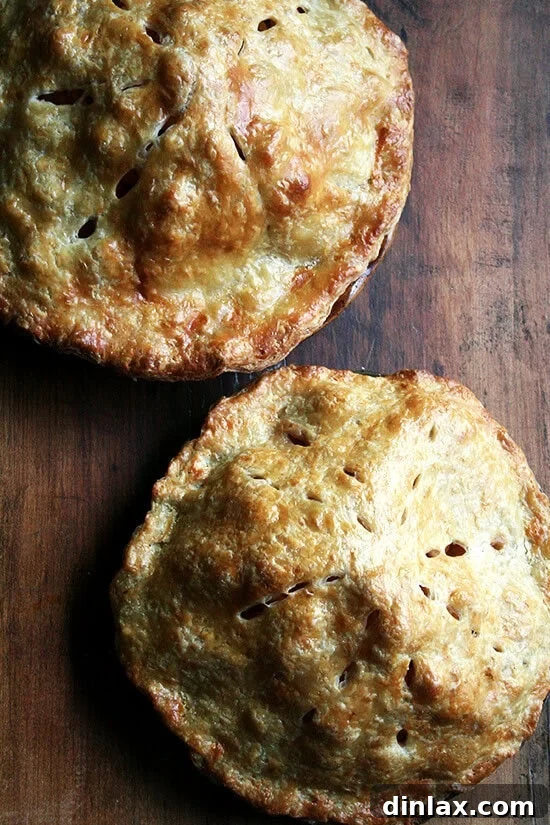
The Art of the Classic Apple Pie: A Wedding Journey & Family Legacy
What truly makes an apple pie unforgettable? Is it the perfect symphony of sweet and tart apples, the warming embrace of autumn spices, or perhaps the ethereal flakiness of a meticulously crafted crust? For many, a homemade apple pie isn’t just a dessert; it’s a taste of home, a cherished symbol of fall, and a centerpiece for the most beloved gatherings. It’s a culinary tradition, deeply woven into the fabric of family memories and celebrations.
A Wedding Request: Beyond the Traditional Cake
The news that my dear friend Anne was planning her wedding in my hometown filled me with immense joy. But then came an unexpected question, delivered with Anne’s characteristic charm: “Would you be interested in baking a selection of classic apple pies in place of a traditional wedding cake?” My heart initially swelled with pride. What a unique, personal, and utterly charming touch for her special day! The thought of contributing such a meaningful dessert was truly heartwarming. However, this initial surge of excitement was quickly followed by a wave of apprehension, as the practical realities of such a grand undertaking began to sink in.
While I passionately enjoy baking, pie-making has always felt like a craft of an entirely different magnitude. It demands precision, patience, and a delicate touch — an art form, really, and a significant commitment. My memory banks instantly conjured images of my last pie-making endeavor, a distant recollection from years ago, which had been fraught with uneven crusts and fillings that stubbornly refused to thicken. Could I genuinely deliver a fleet of wedding-worthy apple pies for an entire guest list, even a modestly sized one? The sheer logistical challenge — sourcing dozens of apples, preparing countless batches of dough, coordinating baking times, and ensuring proper storage for optimal freshness — loomed large. It threatened to transform what should have been a joyous contribution into a monumental culinary ordeal.
Consulting the Pie Master: Aunt Marcy’s Invaluable Wisdom
There was only one person I could turn to for guidance, one whose expertise in the realm of pastry was unparalleled: my Aunt Marcy. In our family, Marcy isn’t merely a baker; she is, without a shadow of a doubt, the undisputed “Pie Master.” Her pies are legendary, the stuff of family lore and fervent cravings, eagerly anticipated at every holiday gathering. I desperately needed her profound wisdom on every aspect of pie-making: from determining the ideal number of apples, to perfecting the precise blend of spices, navigating the eternal tapioca-versus-flour debate for thickening agents, and achieving the delicate balance of sugar. Crucially, I also needed her pragmatic, realistic assessment of the logistical nightmare I was unwittingly contemplating.
Marcy, with her characteristic wisdom and calm demeanor, listened patiently as I laid out the ambitious plan. Her conclusion, delivered swiftly and decisively, was a liberating “No. Absolutely not.” It was a blunt, yet profoundly necessary dose of reality. As I’ve grown older, I’ve come to learn the invaluable lesson of understanding and accepting my own limitations. Sometimes, finding grace and dignity comes not from attempting the impossible, but from recognizing when to gracefully step back and seek a more sensible path. This moment was a prime example of such wisdom, reminding me that even the most passionate intentions require a pragmatic approach.
A Saner Solution: Two Ceremonial Apple Pies
Anne, being the wonderfully understanding friend she is, quickly embraced my honest assessment. Together, we collaboratively crafted a much saner and infinitely more manageable solution: I would bake two exquisite, ceremonial apple pies for the traditional “pie-cutting” ritual. This felt unequivocally right. Two pies I could confidently handle. Two pies I could pour my heart and soul into, ensuring they met Aunt Marcy’s impossibly high standards, all without sacrificing my sanity or disrupting the hard-earned peace within my household.
Marcy’s Masterclass: Unlocking the Secrets of the Flaky Crust
Over the subsequent weeks, my kitchen transformed into a dedicated pie-making test lab, operating under Aunt Marcy’s remote yet ever-present guidance. Her first and most fundamental commandment echoed consistently: “Temperature is everything.” She adamantly insists on using refrigerated bowls, a chilled marble rolling pin, and impeccably cold flour and butter. This isn’t merely a preference; it is a foundational, non-negotiable principle for achieving that coveted, melt-in-your-mouth flaky crust. The cold temperatures are vital because they prevent the butter from melting too quickly into the flour, allowing it to remain in distinct, tiny pockets. During baking, these butter pockets release steam, which then creates myriad delicate layers, resulting in that extraordinary flakiness that defines a truly exceptional pie crust.
The Elusive Art of Fraisage: The Ultimate Crust Secret
Beyond the strict adherence to cold temperatures, Marcy’s ultimate secret for her unparalleled crust lies in a sophisticated technique known as `fraisage`. This method, which involves using the heel — decidedly *not the palm* — of her hand to gently smear and incorporate the butter into the flour, meticulously creates long, thin flakes of butter within the dough. This, she meticulously explained, is the profound key to her crusts’ extraordinary, almost ethereal flakiness. It is a technique I must confess I haven’t yet fully mastered; it remains a personal culinary Mount Everest I still fervently aspire to conquer. I know that once I do, I will truly ascend from a mere “pie maker” to a genuine “pie master,” a title I hope to one day earn in tribute to her teaching.
The Heart of the Pie: Aromatic Apple Filling Perfection
Aunt Marcy’s meticulous philosophy extends far beyond the crust, delving deeply into the heart of the pie: the filling. She adamantly specifies never to use fewer than *ten* apples per pie. This generous quantity ensures a beautifully mounded, satisfyingly robust filling that won’t shrink dramatically during the baking process, preventing that disappointing empty space beneath the top crust. Her preferred apple varieties, typically Cortland and Honeycrisp, are chosen for their perfect balance of sweetness and tartness, and their commendable ability to hold their shape and texture beautifully, even after extended baking.
The Symphony of Spices and Thickening
The spice profile, in Marcy’s world, is equally critical. A generous hand with both warm cinnamon and freshly grated cloves infuses the apples with an inviting, deeply aromatic essence that is the very definition of autumn baking. A careful touch of lemon juice serves multiple purposes: it prevents the apples from oxidizing and turning brown, and it brightens the overall fruit flavors, adding a vibrant counterpoint to the sweetness. Furthermore, the lemon zest contributes another subtle yet vital layer of aromatic complexity. And for thickening? Marcy unequivocally endorses tapioca over flour. Tapioca creates a clear, glossy filling that perfectly cradles the tender apples, avoiding the cloudy, sometimes gummy texture that flour can impart, ensuring every slice is a masterpiece of taste and texture.
A Family Affair: The Undisputed Authority of Marcy’s Pies
Such is the formidable and revered reputation of Aunt Marcy’s pies that even my own mother and sister, both accomplished and experienced cooks in their own right, politely demur from offering any pie-related advice. During my rigorous test runs, whenever I called them with a query concerning crust consistency or filling sweetness, their immediate and consistent response was always the same, delivered with an air of respectful finality: “Ask Marcy.” Her authority in the realm of pies is absolute, her recipes sacred, and her judgment unquestionable, a testament to her lifelong dedication to perfecting this beloved dessert.
My journey to master the classic apple pie continues, deeply informed by Marcy’s invaluable wisdom. While I’ve done my utmost to faithfully record and relay her pie-making secrets here, the subtle yet powerful `fraisage` method remains my personal challenge. It is a technique that I know holds the ultimate key to unlocking the truly unparalleled flakiness that defines *her* legendary crusts. And so, as the crisp, inviting days of autumn beckon us to orchards brimming with ripe, fragrant apples, I leave you with this delicious culinary quandary: To fraisage or not to fraisage? Perhaps it’s a question best pondered and explored with a generous basket full of freshly picked apples this very weekend. Happy baking, everyone!
A thoughtful gift from a dear friend in Chicago, this charming pie box added a touch of whimsical fun to my baking journey this past summer. Isn’t it delightful?
Imagine delivering this freshly baked pie by bicycle! Wouldn’t that add an extra layer of charm and nostalgia to the experience?
Update: October 12th, 2013, Anne & Matt’s Wedding
The radiant couple, Anne and Matt, celebrating their special day with a touch of homemade charm:
Print Recipe
Classic Apple Pie Recipe
5 Stars
4 Stars
3 Stars
2 Stars
1 Star
No reviews
- Author: Alexandra Stafford
Total Time: 1 hour 15 minutes
Yield: 1 pie 1x
Ingredients for One Classic Apple Pie
- 2 rounds of flaky pie dough (homemade or store-bought)
- 10 medium to large apples (a mix of varieties like Cortland and Honeycrisp works wonderfully for balanced flavor and texture)
- 3/4 cup to 1 cup granulated sugar, adjust to your apples’ sweetness
- 1 teaspoon ground cinnamon
- A grating of fresh cloves (approximately 1/4 teaspoon), optional but highly recommended for depth of flavor
- Zest of one medium lemon (optional, for brightness)
- Juice of one medium lemon (to prevent browning and enhance flavor)
- 2 tablespoons instant tapioca (the minute kind) or all-purpose flour, as a thickener
- 2 tablespoons unsalted butter, cut into small pieces (cold or room temperature)
- 1 large egg, beaten, mixed with 1 tablespoon heavy cream or milk for the egg wash
Step-by-Step Apple Pie Instructions
- Prepare the Apples and Oven: Preheat your oven to 425ºF (220ºC). If you have a pizza stone or baking steel, place it on the lowest rack in the oven to preheat. Peel, core, and cut your apples into generous, uniform chunks (about 1-inch pieces). Place the apple chunks in a large mixing bowl. Add 3/4 cup of the sugar, cinnamon, freshly grated cloves (if using), lemon zest (if using), lemon juice, and instant tapioca. Toss everything gently to ensure the apples are evenly coated. Set the bowl aside to allow the flavors to meld while you prepare the crust.
- Roll Out the First Crust: On a lightly floured, cool work surface, place one round of pie dough. Roll it out into a circle approximately two inches larger in diameter than your pie plate. Carefully fold the rolled-out circle in half, then in half again, creating a quarter-circle shape. Gently transfer it to the center of your pie plate and unfold. Press the dough down gently to ensure it fits snugly into the bottom and sides of the pie plate without stretching. Place the pie plate with the first crust in the refrigerator to keep it chilled while you roll out the second round of dough. Roll the second round of dough in the same manner, aiming for it to be slightly larger in diameter than the first, especially if you plan to create a decorative top.
- Assemble the Pie: Before filling, taste one of the prepared apple pieces. If the apples aren’t sweet enough for your preference, add the remaining 1/4 cup of sugar to the bowl and toss again. Carefully pour the apple filling into the center of your chilled pie plate, mounding the apples slightly higher in the middle. Use your hands to arrange the apples tightly, minimizing gaps. Cut the cold butter into small cubes and scatter these evenly over the apple filling. Carefully lay the second, rolled-out pie dough round over the top of the apples. Using kitchen scissors, trim the overhanging dough, leaving about a 1/2-inch to 1-inch overhang. Reserve these dough scraps; they can be wrapped into a ball and used to make delightful cinnamon snails or a rustic apple galette.
- Crimp the Edges: To create a classic crimped edge, fold the overhanging top crust under the bottom crust. Then, using two fingers of your right hand placed a finger’s-width apart below the edge of the dough, gently press down with your left index finger in between the two fingers. Move two fingers’ width to the right and repeat the motion – your left-most finger on your right hand will naturally reinforce the impression made by the right-most finger from the previous crimp. Alternatively, you can simply crimp the edges together in any style you prefer; the end result will taste equally delicious!
- Prepare for Baking: In a small bowl, whisk together the egg and cream (or milk) to create your egg wash. Brush the entire surface of the top pie crust evenly with the egg wash; this will give the pie a beautiful golden sheen. Using a sharp paring knife, make several decorative slits across the surface of the top crust. These vents are crucial for allowing steam to escape during baking, preventing the crust from becoming soggy. Carefully place the prepared pie on a parchment-lined baking sheet; this will catch any potential drips and make cleanup easier.
- Bake the Pie: Transfer the baking sheet with the pie to the preheated oven. Bake for 20 minutes at 425ºF (220ºC). After 20 minutes, reduce the oven temperature to 350ºF (175ºC) and continue baking until the crust is deeply golden brown all over and the filling is bubbling invitingly. This second stage of baking can take anywhere from 30 minutes to an hour longer, depending on your oven and the exact moisture content of your apples. I typically find 30-40 minutes at 350ºF sufficient, but my Aunt Marcy, the true expert, often bakes hers longer for maximum flavor development. Trust your judgment: a golden crust and bubbling filling are your best indicators. Let the pie cool completely on a wire rack for at least 3-4 hours before slicing and serving. This allows the filling to set properly, preventing it from being runny.
- Prep Time: 25 minutes
- Cook Time: 50 minutes
- Category: Dessert, Fall Recipes, Classic American
- Method: Baking
- Cuisine: American