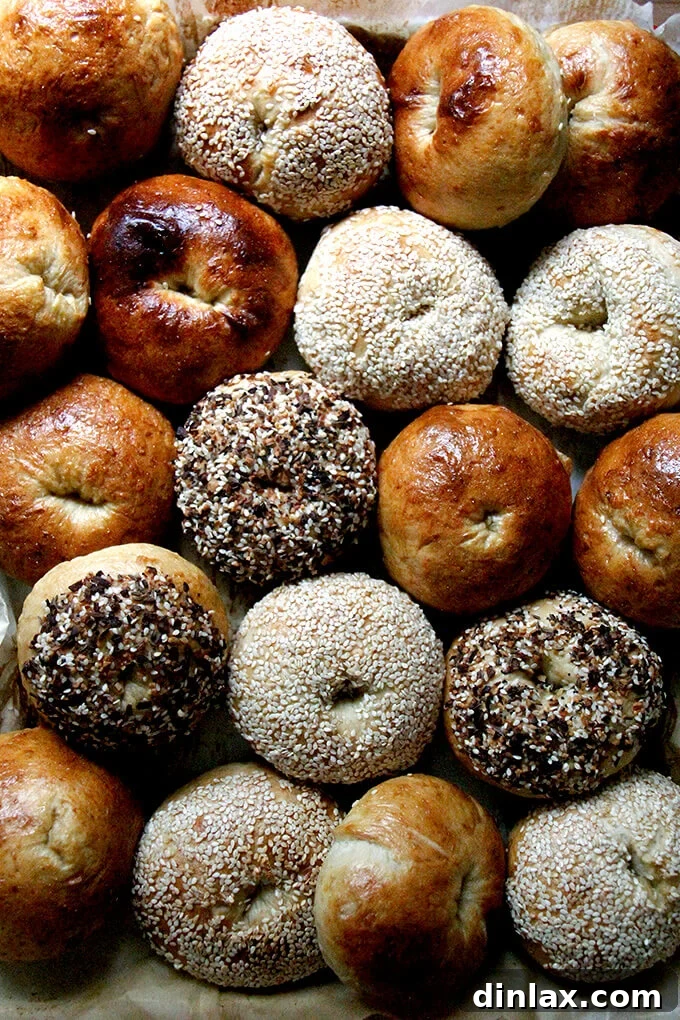
Welcome to the ultimate guide to creating unbelievably **chewy, golden, seed-crusted bagels** right in your own kitchen! Forget store-bought; the satisfaction of biting into a warm, freshly baked bagel, handcrafted by you, is truly unparalleled. This isn’t just a recipe; it’s a journey into the simple art of bagel making, where the dough comes together in a mere 90 seconds, setting the stage for a delightful culinary adventure. Get ready to transform basic ingredients into breakfast perfection. Below, you’ll find comprehensive step-by-step instructions and expert tips to ensure your homemade bagels are nothing short of spectacular. 🥯🥯🥯
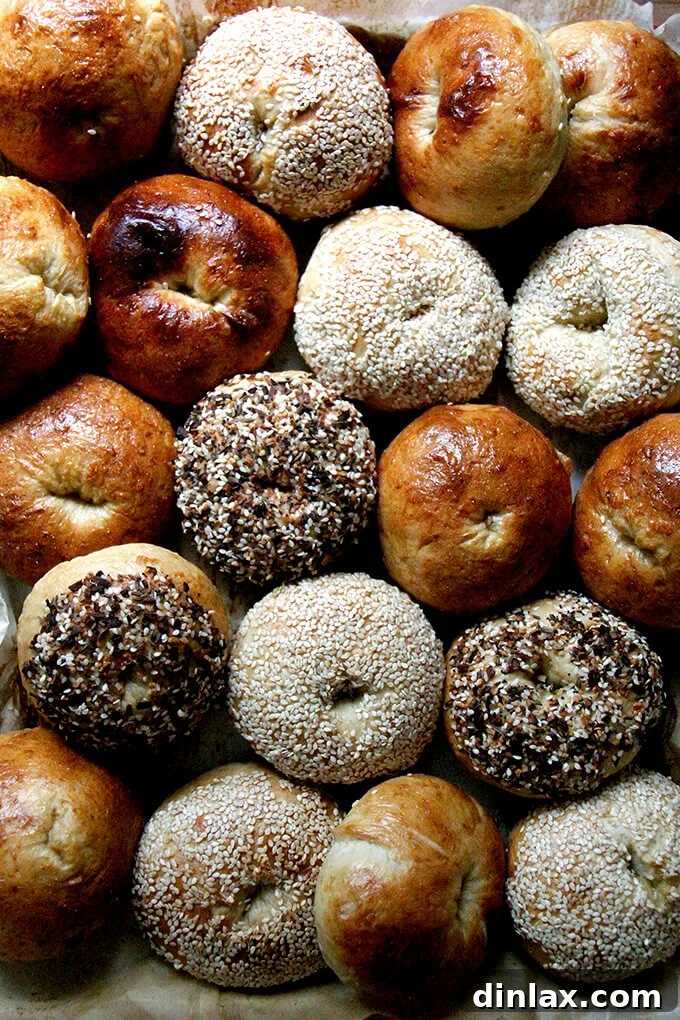
The Art of Bagel Making: Why Homemade Bagels Are Truly Special
Unlike many traditional bread recipes you might encounter, bagels demand a unique approach. They are crafted from a low-hydration dough, which is precisely what gives them their distinctive, dense chewiness. This low moisture content necessitates thorough kneading to develop the gluten structure, transforming simple flour and water into a cohesive, elastic dough. Beyond the initial mix, the journey to a perfect bagel involves several essential stages: precise shaping, a brief but critical boil, and a final egg wash before baking.
While the process may sound intricate, it’s surprisingly straightforward and incredibly rewarding. The rapid 90-second dough preparation makes these homemade bagels accessible even for busy schedules. The end result? A perfectly chewy base, ideal for holding a generous smear of cream cheese, slices of juicy summer tomatoes, or classic lox. The effort invested truly pays off with a superior bagel experience that surpasses anything you’ll find in a grocery store. To guide you, we’ve distilled the process into three essential tips for achieving deliciously chewy bagels at home, followed by detailed, easy-to-follow instructions.
Key Principles for Perfect Homemade Bagels
Mastering the art of homemade bagels comes down to a few critical steps that elevate them from good to truly exceptional. These foundational techniques ensure your bagels achieve that coveted texture, rich flavor, and beautiful golden finish.
- The Power of Proper Kneading: Unlocking the Signature Chew. To achieve that characteristic chewy interior—the hallmark of a genuine bagel, distinct from just bread shaped like a ring—your dough absolutely needs to be thoroughly kneaded. This process develops the gluten, creating the elastic network that gives bagels their unique texture. The good news is, a food processor can handle this task effortlessly in about 90 seconds, making it a quick and efficient part of your bagel recipe. For those without a food processor, a stand mixer works just as well, or you can knead by hand, ensuring you dedicate enough time to develop that essential elasticity.
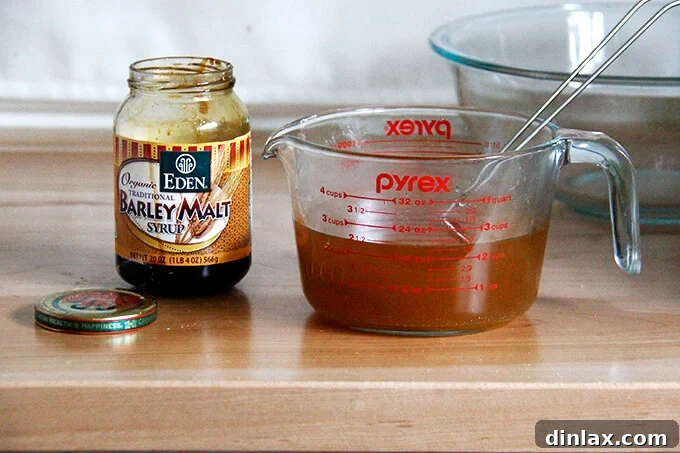
- Barley Malt Syrup: The Secret Ingredient for Authentic Flavor and Crust. Integrating barley malt syrup into your bagel dough and boiling water is a game-changer. As culinary expert Stella Parks brilliantly highlights, barley malt syrup not only imparts a deep, complex flavor but also contributes to “a more delicate texture in the crust, one that’s chewy and crisp rather than crunchy and hard.” This subtle sweetness and enzymatic activity are crucial for that authentic bagel taste and texture. If barley malt syrup is unavailable, don’t fret; honey, molasses, or maple syrup can serve as suitable substitutes, though the flavor profile may be slightly different.
- The Golden Sheen: Mastering the Egg Wash. For that irresistible, beautifully shiny, golden-brown crust, an egg wash is essential. While professional bakers often employ a lye solution for enhanced browning and crispness, working with lye at home can be challenging and requires extreme caution. A simple egg wash (one egg whisked with a tablespoon of water) provides a safe, accessible, and highly effective alternative, giving your easy homemade bagels that professional finish without the extra fuss.
PS: Looking for another delightful baked good? Check out our Foolproof Homemade Bialys: A Step by Step Guide.
A Culinary Journey: Step-by-Step Guide to Crafting Your Own Bagels
Embark on the journey of making truly exceptional homemade bagels. Each step is designed for clarity and success, leading you to a baker’s triumph.
Begin by combining the dry ingredients: whisk together your chosen flour (bread, high-gluten, or all-purpose), kosher salt, and instant yeast. This can be done efficiently in a food processor or a stand mixer, depending on your equipment of choice.
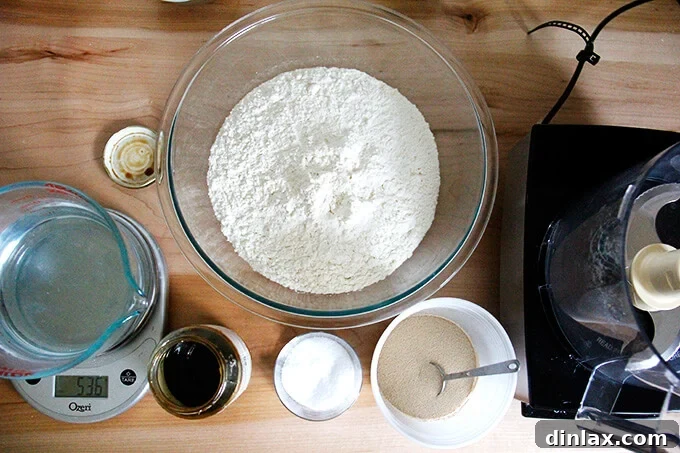
In a separate bowl, whisk together the water and the barley malt syrup. This liquid mixture will hydrate your dry ingredients, initiating the dough formation.
Pour the whisked liquid ingredients into the dry mixture. Immediately begin kneading for a swift 60 to 90 seconds. If using a food processor, monitor it closely, ensuring the blade doesn’t jam due to the dense dough. For a stand mixer, knead on medium speed until the dough forms a cohesive, slightly tacky ball.
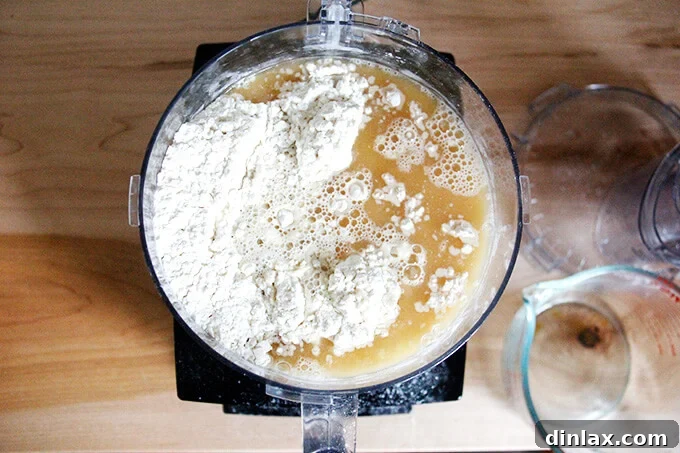
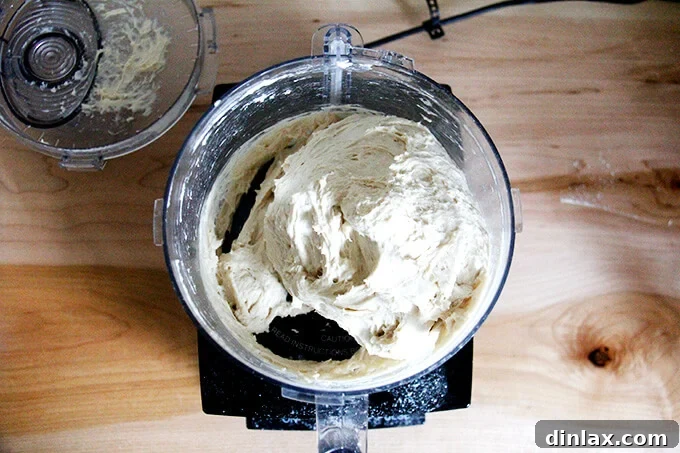
Once kneaded, use greased hands to transfer the slightly warm and tacky dough into a clean bowl. Gently coat the dough with a small amount of olive or grapeseed oil to prevent a crust from forming during its long, slow rise. Cover the bowl securely with a lid or plastic wrap and transfer it to the refrigerator. This overnight cold fermentation (ideally 12 hours or more) significantly enhances the flavor and texture of your bagels. The image below illustrates the dough freshly mixed on the left, and after a night in the fridge, noticeably expanded and ready for the next steps, on the right.
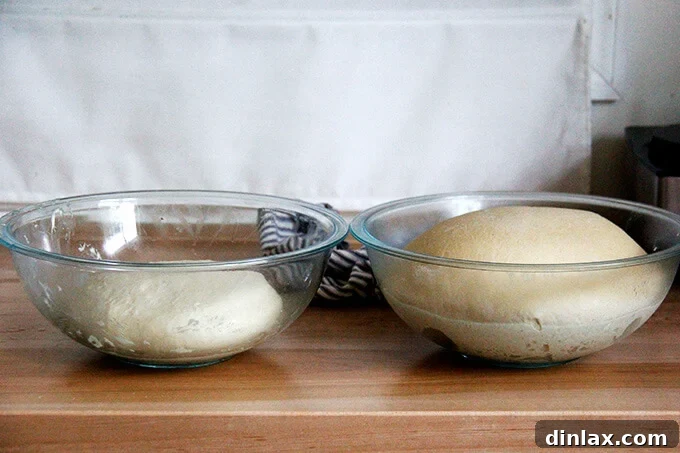
The next morning, remove the chilled dough from the fridge and turn it out onto a lightly floured work surface. Its cool temperature will make it easier to handle and portion.
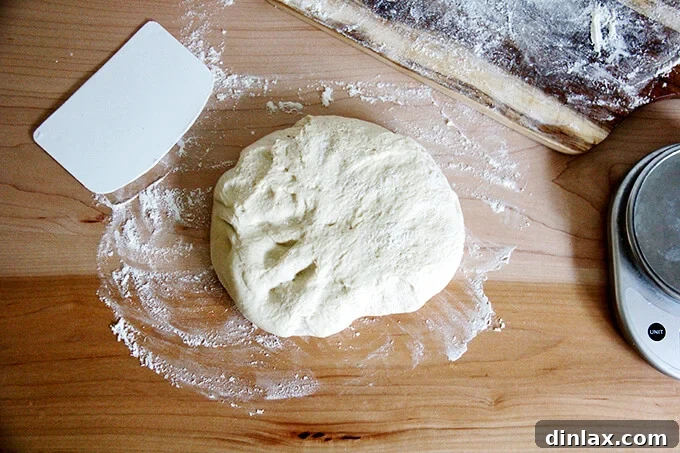
For uniform bagels, use a kitchen scale to portion the dough into 10 to 12 even pieces. Each piece should be approximately 105 grams for 12 smaller bagels, or 125 grams for 10 slightly larger ones. Precision here helps ensure even baking.
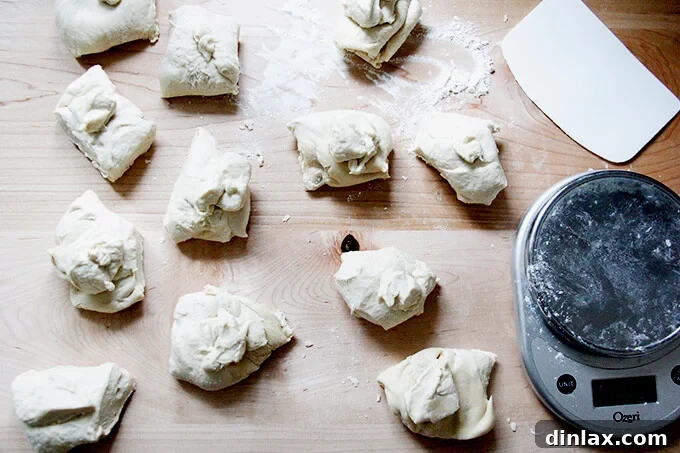
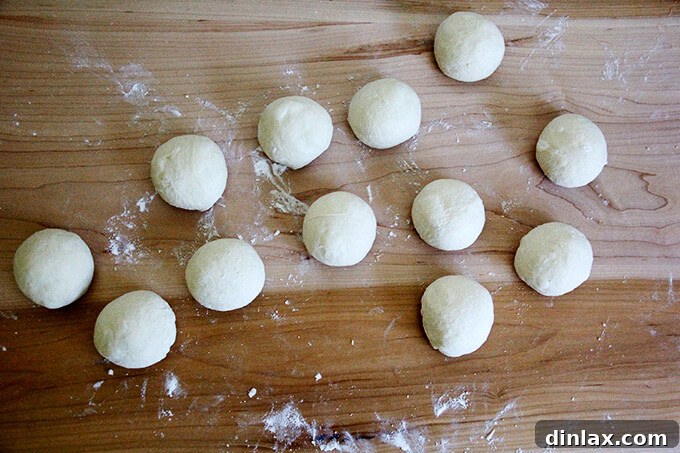
Gently roll each portion into a tight ball, using the pinky edges of your hands to create surface tension, which results in a smooth, even shape. Arrange these dough balls on a lightly floured surface and cover them with a tea towel or plastic wrap. Allow them to rest for a full hour; this relaxation period is crucial for easier shaping later on.
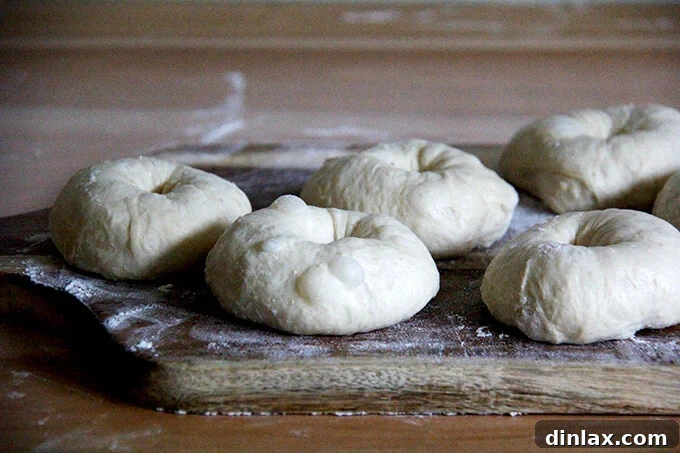
Now for the iconic bagel shape! Lightly flour your hands. Use your thumb to poke a hole directly through the center of each dough ball. Then, with both hands, gently but firmly stretch the dough outwards and underneath, continuously widening the hole. Don’t be afraid to be assertive here; this aggressive stretching prevents the hole from closing up during baking and ensures that classic bagel ring. You’re essentially turning the dough inside out without actually doing so, building tension for a sturdy shape.
While the shaped bagels rest briefly, prepare the water bath. Bring a large pot of water to a rolling boil. Crucially, add a generous “glug” (about ¼ cup) of barley malt syrup (or maple syrup if substituting) to the boiling water. This syrup contributes to the crust’s texture and color during the boiling process.
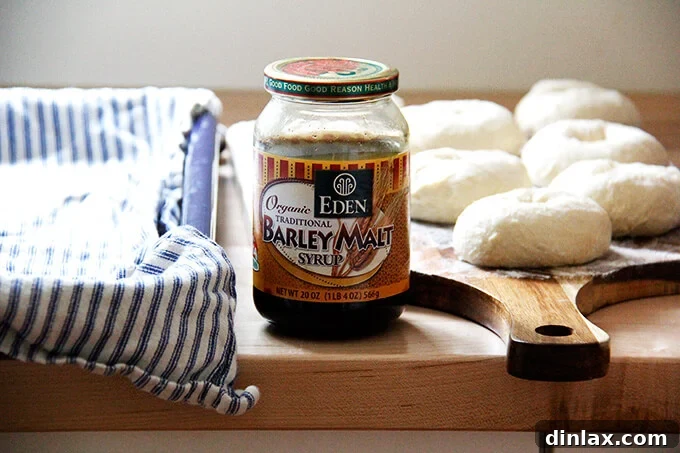
With your water bath ready and oven preheating to 425°F, your workstation should be organized. Have a timer or stopwatch ready, as the boiling time is precise.
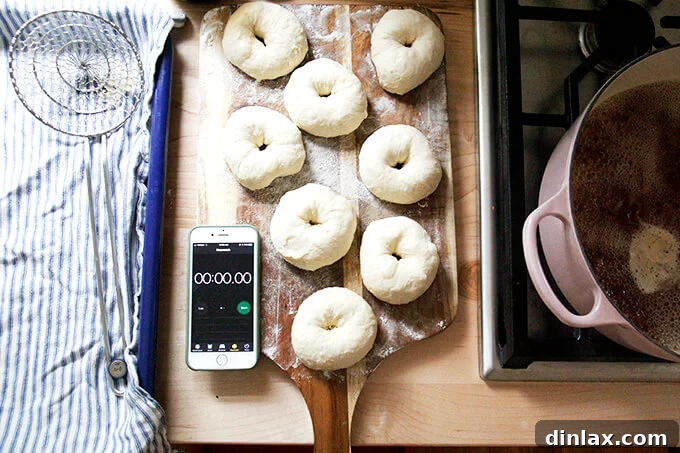
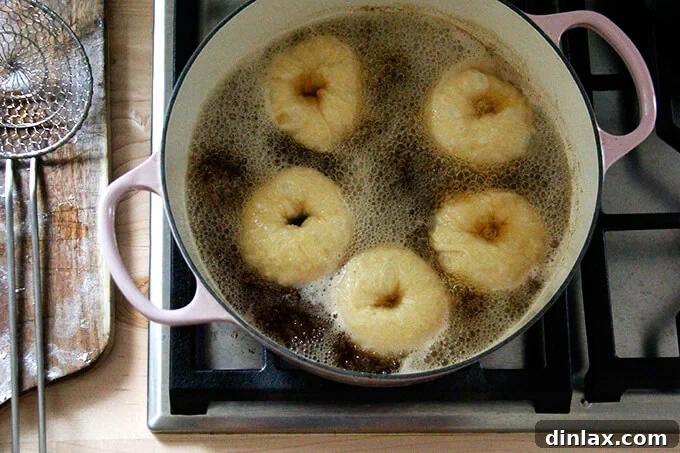
Carefully drop 3-4 shaped bagel rings into the boiling water. Boil each side for precisely 30 seconds. This brief boil is what gives bagels their signature chewy crust and helps them puff up nicely in the oven.
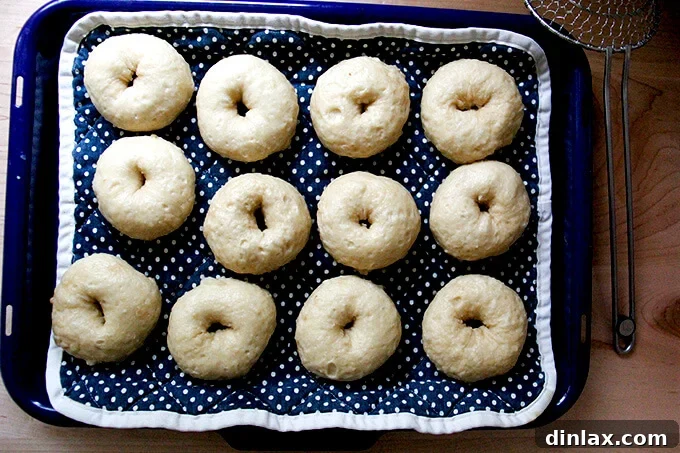
Using a spider or a slotted spoon, carefully transfer the boiled bagels to a sheet pan lined with a clean tea towel. The towel will absorb excess moisture, preparing them for the egg wash and toppings.
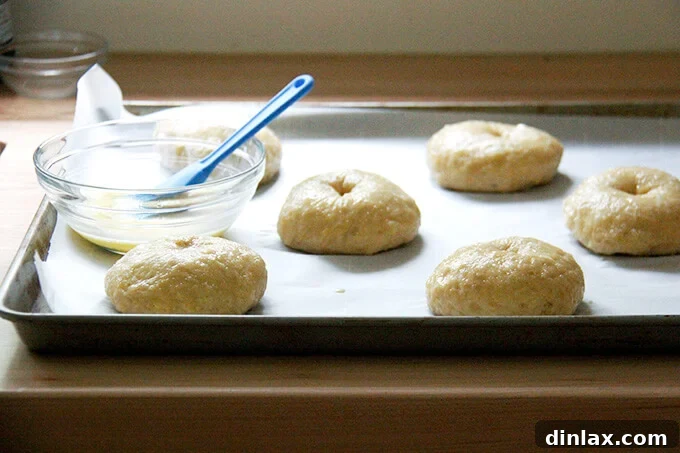
Now, brush each boiled bagel generously with the prepared egg wash. This thin coating will give your bagels that beautiful, irresistible golden sheen and help toppings adhere.
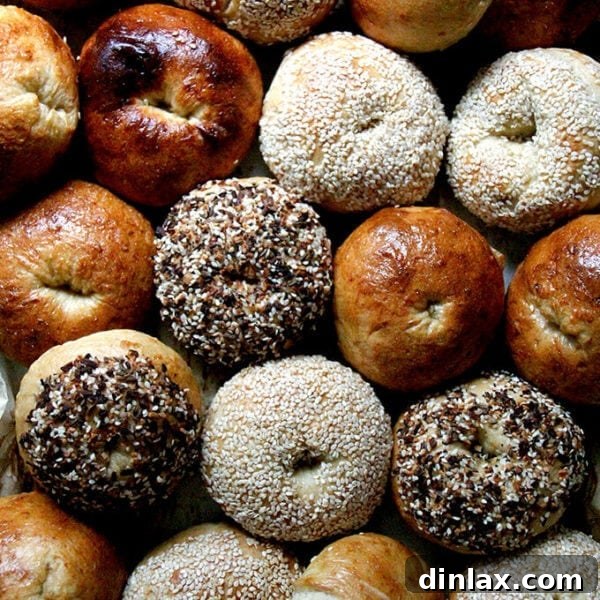
Time to customize! Dip the egg-washed bagels into your desired seasonings—everything bagel seasoning, sesame seeds, poppy seeds, or even a flavorful dukkah. Press firmly to ensure the toppings stick well.
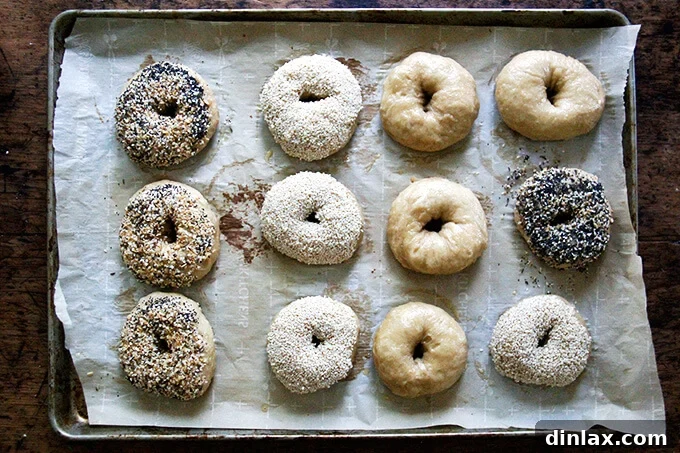
Transfer the seasoned bagels to parchment-lined sheet pans and bake for 20 to 25 minutes, or until they are uniformly golden brown. If using multiple pans, rotate them halfway through for even baking. Let the bagels cool slightly on the sheet pans before serving.
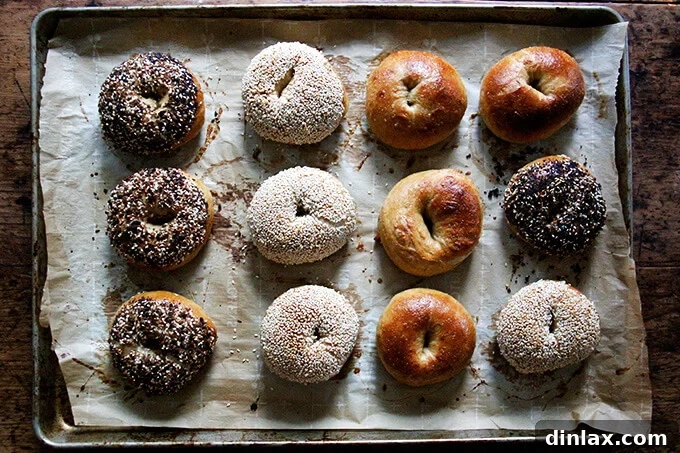
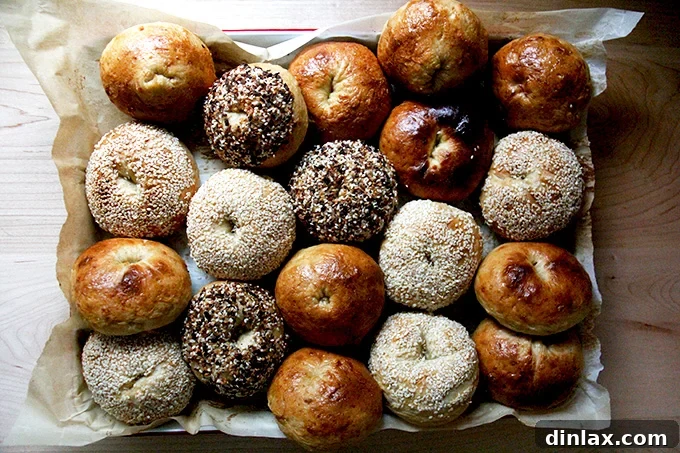
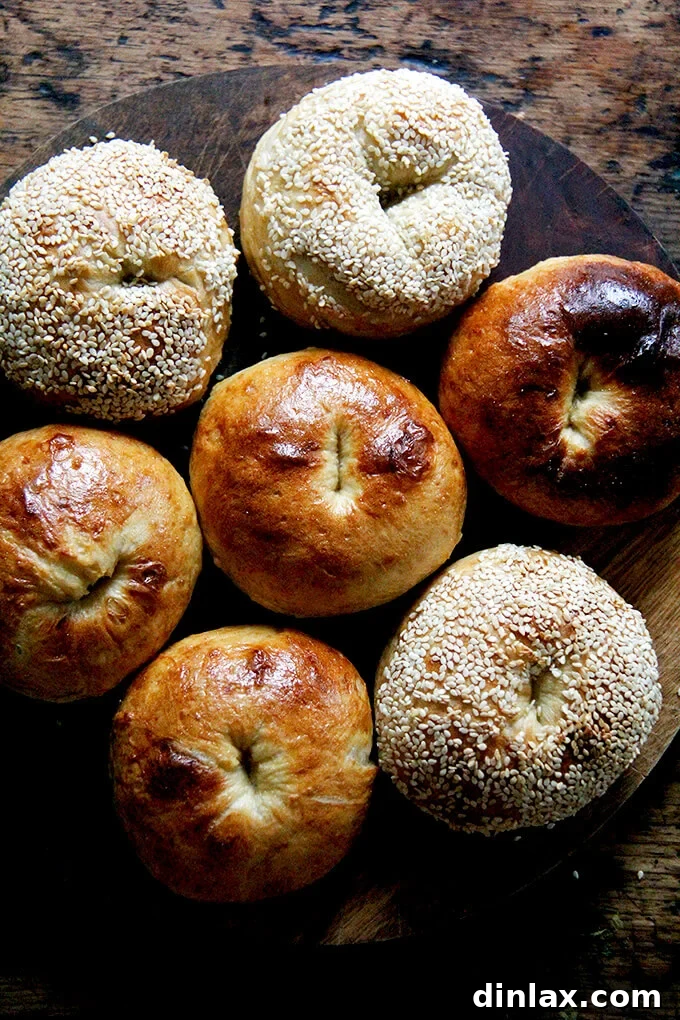
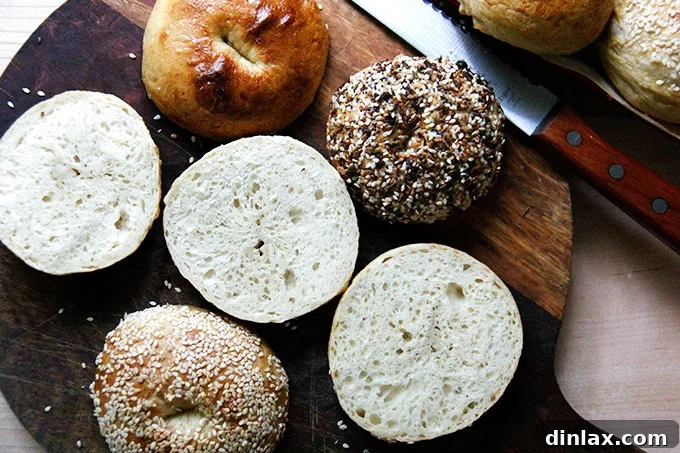
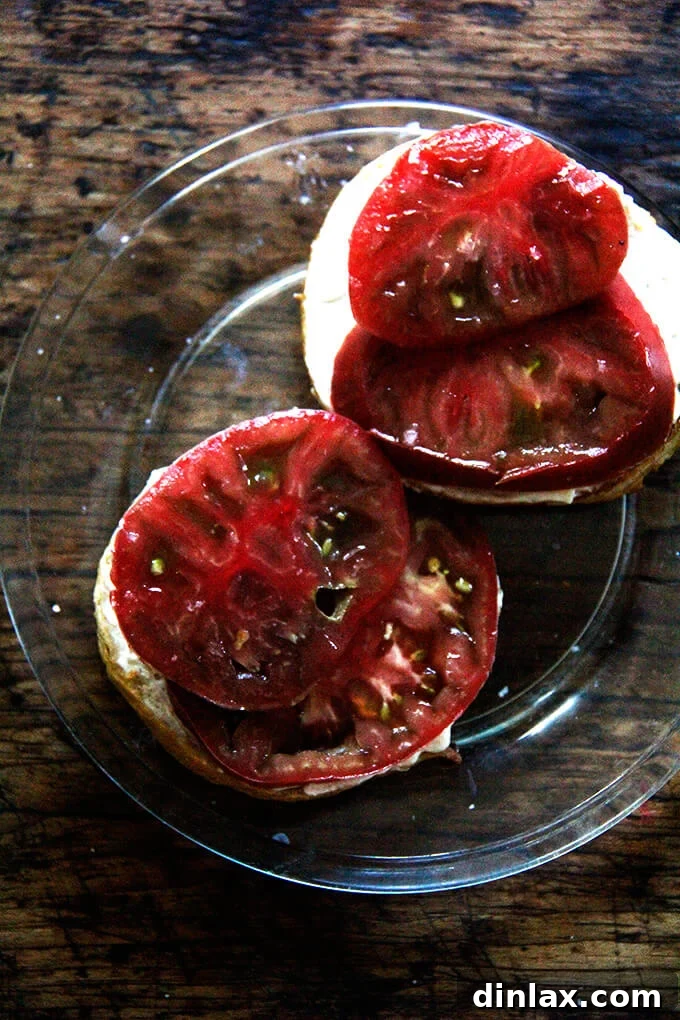
Once cooled, slice your bagels, add your favorite toppings, and savor the incredible flavor and texture you’ve created. Invite some friends over for brunch, find yourself some good, ripe tomatoes, and enter summer-morning breakfast nirvana. This is more than just a meal; it’s an experience!
Print
Foolproof Chewy Homemade Bagels
5 Stars 4 Stars 3 Stars 2 Stars 1 Star
5 from 61 reviews
Author: Alexandra Stafford
Total Time: 12-14 hours
Yield: 10–12 bagels 1x
Description
Achieve incredible, chewy, golden, seed-crusted bagels at home with this foolproof recipe. The dough is quick to prepare in just 90 seconds, followed by a rewarding process that yields truly authentic results. Refer to the detailed guide above for expert tips and visual assistance!
Notes for Success:
- Overnight Rise: For best flavor and texture, allow the dough to cold ferment in the fridge for at least 12 hours. If time is short, you can skip this by increasing the instant yeast to 2 teaspoons, using lukewarm water, and letting the dough rise at room temperature until doubled in volume (approximately 2-3 hours) before proceeding with shaping.
- Essential Equipment:
- Kitchen Scale: For precise ingredient measurements, especially flour, a digital scale is highly recommended.
- Large Sheet Pan: A full-size sheet pan allows you to bake all bagels simultaneously. If unavailable, use two standard sheet pans and bake in batches.
- Spider or Slotted Spoon: Necessary for safely transferring bagels from boiling water.
- Food Processor or Stand Mixer: Highly recommended for efficient and powerful kneading. If using a food processor, ensure it has at least a 14-cup capacity. Monitor closely for jamming and start kneading immediately after adding liquids to prevent leakage from the center hole.
- Hand Kneading: If no machine is available, knead briefly by hand, adding as little extra flour as possible.
- Ingredient Insights:
- Flour Type: Bread flour or high-gluten flour yields the chewiest bagels, but all-purpose flour works well and still produces delicious, chewy results.
- Barley Malt Syrup: This crucial ingredient contributes unique flavor and crust texture. It can often be found at Whole Foods Market or ordered online. Honey, molasses, or maple syrup are acceptable substitutes.
- Homemade Everything Bagel Seasoning:
- 1/4 cup sesame seeds
- 1/4 cup poppy seeds
- 3 tablespoons dried onion flakes
- 3 tablespoons dried garlic flakes
- 2 tablespoons flaky sea salt
Ingredients
For the Bagel Dough:
- 6 cups (768 g) bread, high-gluten, or all-purpose flour
- 3 teaspoons (20 g) kosher salt, (Diamond Crystal recommended)
- 1.5 tsp (6 g) instant yeast
- 2 cups (454 g) water, room temperature or cold tap water
- 1 heaping teaspoon barley malt syrup, honey, molasses, or maple syrup (for the dough)
- grapeseed, olive, or other neutral oil (for greasing)
For Boiling & Baking:
- 1 egg, whisked with 1 tablespoon water (for egg wash)
- Additional barley malt syrup, honey, molasses, or maple syrup (for boiling water)
- Various toppings: everything bagel seasoning (see recipe notes above), sesame seeds, dukkah, etc.
Instructions
- Prepare the Dough: (Please read all notes, especially about timing, before starting.) In the bowl of a food processor with the blade attachment (or a stand mixer with the dough hook), pulse (or stir on low) the flour, salt, and yeast until combined. In a separate medium bowl, whisk together the water and the heaping teaspoon of barley malt syrup. Add this liquid mixture to the food processor (or stand mixer) and immediately blend for 60-90 seconds. Monitor the machine closely, stopping if the blade shows signs of jamming. (If using a stand mixer, knead on medium speed for 90 seconds until the dough is cohesive and tacky.)
- First Rise (Cold Fermentation): With hands lightly oiled, transfer the dough from the food processor to a clean bowl. It will feel warm and slightly tacky. Gently stretch the dough up and fold it down toward the center several times to form a ball (refer to the video for guidance). Lightly rub a bit more oil over the dough’s surface to prevent a crust. Cover the bowl tightly with a lid or plastic wrap and refrigerate for 12 hours or longer (up to 48 hours for enhanced flavor).
- Portion the Dough: Remove the chilled dough from the fridge. Turn it out onto a lightly floured work surface. For uniformly sized bagels, use a kitchen scale to divide the dough into 10 to 12 equal pieces. For 12 smaller bagels, each piece should be about 105 grams; for 10 slightly larger ones, aim for 125 grams each. Form each portion into a tight ball, using the pinky edges of your fingers to create tension. Place the dough balls on a lightly floured surface and cover them with a clean tea towel or plastic wrap. Let them rest at room temperature for 1 hour.
- Prepare Your Station: Towards the end of the resting hour, begin setting up. Place a large pot of water on the stove and bring it to a boil. Once simmering, add approximately ¼ cup of barley malt syrup (or your chosen substitute) to the water. Preheat your oven to 425ºF (220ºC). Line two standard sheet pans or one extra-large sheet pan with parchment paper. Prepare your egg wash (1 egg whisked with 1 tablespoon water) and place your chosen toppings in small, shallow dishes.
- Shape the Bagels: Lightly flour your hands. Take each dough ball and use your thumb to poke a hole through its center. Then, use both hands to stretch the dough outward and underneath, aggressively widening the hole into a donut shape. This vigorous stretching is crucial to prevent the hole from closing during baking and ensures a proper bagel form. *Note: If you don’t stretch firmly, the bagels may puff up into undesirable cone-like shapes.* See video for precise shaping technique.
- Boil the Bagels: Line a clean sheet pan with a tea towel. Have a stopwatch or timer nearby. Carefully drop 4 of the shaped bagel rings into the simmering water bath at a time. Boil for 30 seconds on one side, then flip them over and boil for another 30 seconds on the other side. Using a spider or slotted spoon, transfer the boiled bagels to the towel-lined sheet pan to drain excess water. Repeat this process until all bagel rings have been boiled.
- Egg Wash & Top: Brush each boiled bagel generously with the prepared egg wash. If you plan to add toppings, immediately dip the egg-washed side of each bagel into your chosen seasoning, pressing gently to adhere. Transfer the topped bagels to your parchment-lined baking sheet(s). If using an extra-large sheet pan, all 10-12 bagels may fit. Otherwise, use two standard pans and bake 5-6 bagels per pan.
- Bake to Perfection: Transfer the sheet pan(s) to the preheated oven. Bake for 20 to 25 minutes, or until the bagels are evenly golden brown all around and sound hollow when tapped. If using two pans, rotate them halfway through the baking time for even coloration. Allow the baked bagels to cool on the sheet pans for at least 15-20 minutes before slicing and serving.
- Prep Time: 20 minutes
- Cook Time: 30 minutes
- Category: Bread
- Method: Boil & Bake
- Cuisine: American
There’s nothing quite like the taste of a homemade bagel – the perfect blend of chewiness, a slightly crisp crust, and rich flavor. With these detailed instructions and tips, you’re now equipped to create bakery-quality bagels right in your own kitchen. Enjoy the process, savor the aroma, and delight in sharing your delicious creations with family and friends!