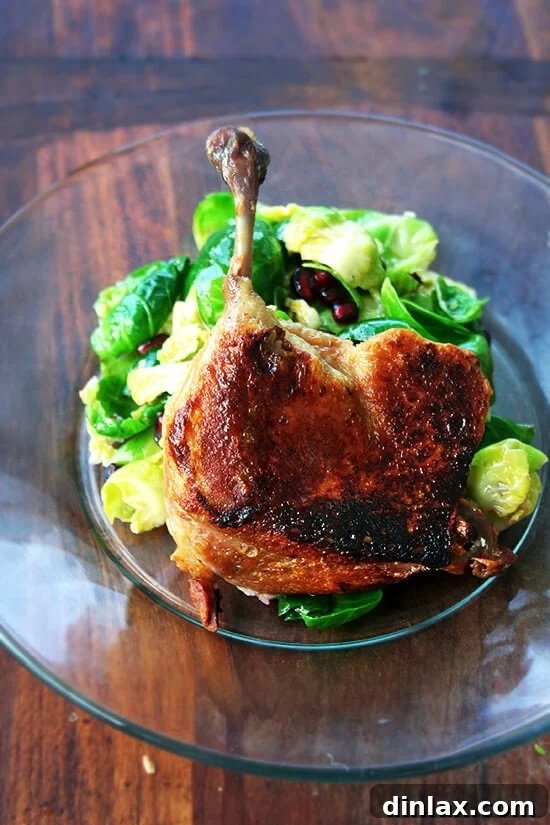
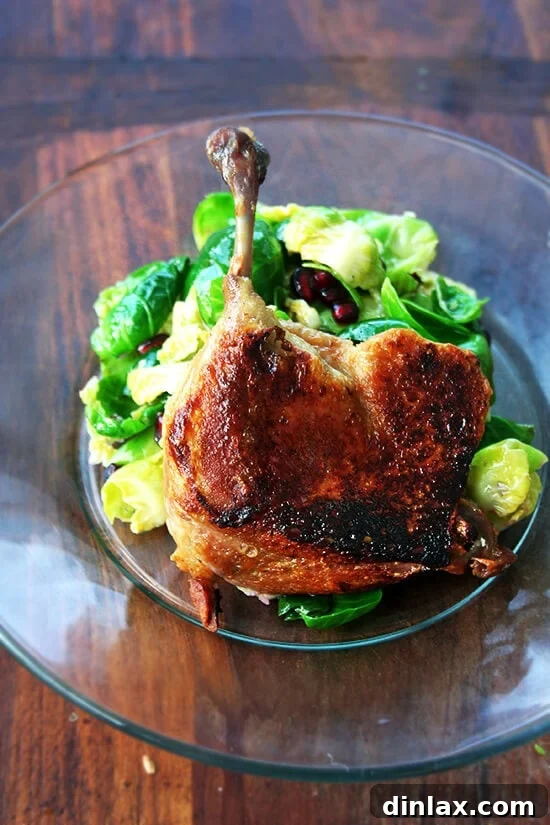
Imagine serving a dish so elegant, so rich, and so profoundly flavorful that your guests might suspect you spent days laboring over it. What if we told you it only takes three ingredients and three hours to achieve this culinary masterpiece? Forget the traditional, multi-day duck confit process that typically requires vast quantities of expensive duck fat. This “cheater’s” duck confit recipe is a true game-changer for home cooks, delivering tender, succulent duck legs with incredibly crispy skin and an authentic bistro-style taste, all with remarkable ease. As an added bonus, you’ll render your own supply of precious duck fat, ready for future gastronomic adventures.
What Exactly is Duck Confit? A Glimpse into Culinary History
Confit (pronounced “kon-FEE”) is an ancient French culinary technique, originating as a vital method of food preservation long before the advent of modern refrigeration. The term “confit” comes from the French word “confire,” meaning “to preserve.” Historically, meats—most commonly duck, goose, or pork—would be heavily salted and cured, then slowly cooked in their own rendered fat at a very low temperature. Once cooked, the meat would be stored completely submerged in this solidified fat, creating an anaerobic environment that prevented spoilage. This ingenious practice allowed families to preserve their harvest and enjoy rich, flavorful meat for months, particularly through harsh winters.
While modern refrigeration has rendered confit unnecessary as a preservation method, its enduring appeal lies in the unparalleled flavor and luxurious texture it imparts to meat. The slow cooking process tenderizes the toughest cuts, breaking down connective tissues until the meat becomes extraordinarily succulent and nearly falls off the bone. When properly prepared, duck confit boasts a unique combination of deeply savory, aromatic meat and skin that, when crisped, offers a delightful crackling texture. This dual sensory experience makes duck confit a beloved staple in French cuisine and a highly sought-after dish in fine dining establishments worldwide. Understanding this traditional background makes our simplified, butter-based method even more revolutionary for the home kitchen.
The Unexpected Revelation: My 3-Ingredient, 3-Hour Duck Confit Story
The story behind this incredibly accessible duck confit recipe is a testament to the adage that necessity is the mother of invention, often born in the heat of a busy professional kitchen. It was January 23rd, 2006 – a date indelibly marked in my culinary memory – during my tenure at the renowned Fork restaurant. On that fateful day, two cases of duck legs arrived, and my task was straightforward: prepare them for the restaurant’s signature duck confit. Our standard procedure involved a generous kosher salt cure followed by slow cooking, fully submerged in our prized, aged duck fat. This wasn’t just any duck fat; it was a supply Chef Thien Ngo had meticulously cultivated for eight years, growing richer and more flavorful with every batch.
I headed to the walk-in cooler, expecting to retrieve the usual large tubs of rendered duck fat. But to my mounting horror, they were nowhere to be found. I searched every shelf, every corner, convinced I was making a rookie mistake. The thought of reporting such a critical shortage, especially of an ingredient so central to Fork’s reputation, sent a chill down my spine. After a frantic and utterly fruitless search, I had to relay the grim news to Chef Thien. He joined the hunt, equally perplexed, and soon we faced the inescapable conclusion: our entire, years-in-the-making supply of sixteen quarts of precious duck fat had likely been mistakenly discarded by new kitchen staff during a recent period of high turnover. The gravity of the loss, both culinary and sentimental, was palpable.
Chef Thien, understandably, was not amused. Following a dramatic moment—filled with exclamations about the impossibility of taking a day off, let alone a vacation, with such occurrences—he swiftly transitioned from frustration to ingenious problem-solving. With no time to source traditional duck fat and a busy dinner service looming, he made a bold and unconventional call. Into each hotel pan holding the salted duck legs, he instructed me to toss not duck fat, but pounds upon pounds of unsalted butter, along with a few sprigs of fresh thyme for aromatic depth. The pans were then tightly covered with aluminum foil and cooked in the oven for two and a half hours, exactly as we would have done with duck fat. The anticipation was intense.
When those duck legs emerged from the oven, the result was nothing short of miraculous. They were incredibly tender, deeply flavorful, and surrounded by a pool of beautifully rendered fat (a mix of duck fat and butter, now). We stored them just the same as the traditional method: legs in one tub, the newly rendered, clearly labeled “duck fat” in another. That evening, the line cooks crisped the legs to perfection, serving them dramatically with mounds of frisée tossed with crispy lardons and pan-seared Brussels sprouts. Not a single diner, nor even the most seasoned food critic, suspected the ingenious substitution. Losing 16 quarts of duck fat turned out to be less of a culinary catastrophe and more of a groundbreaking discovery. While I’ve never quite forgotten the panic of that day, the experience forever changed my perception of making gourmet duck confit at home.
Why This “Cheater’s” Method is Your Go-To for Homemade Duck Confit
For too long, duck confit has been considered an intimidating dish, reserved for restaurant menus or experienced chefs. This innovative “cheater’s” method dismantles those barriers, making this luxurious culinary experience perfectly attainable in your home kitchen. Here’s why this simplified approach is a revelation:
- Accessibility of Ingredients: The most common deterrent for home cooks is the need for large quantities of pure duck fat, which can be expensive and difficult to find. Our recipe cleverly substitutes this with readily available, good quality unsalted butter. As the duck legs slowly cook, their natural fat renders and blends with the butter, creating a flavorful confit medium without the initial investment or hunt for specialized ingredients.
- Significantly Reduced Time Commitment: Traditional duck confit often involves a multi-day process, including a 12-24 hour salt cure followed by several hours of slow cooking. This streamlined recipe condenses the entire process to just three hours from preparation to delicious doneness, without compromising on flavor or texture. It’s perfect for an impressive weekend meal without the extensive planning.
- Gourmet Results with Minimal Effort: Despite its simplicity and speed, this recipe consistently delivers duck legs that are incredibly tender, infused with rich, savory flavor, and boast skin that crisps to an irresistible golden perfection. You’ll be amazed at how easily you can achieve restaurant-quality results that will impress even the most discerning palates.
- Sustainable Duck Fat Supply: A fantastic byproduct of this recipe is the accumulation of beautifully rendered duck fat during the cooking process. You can easily strain and store this flavorful liquid gold to use in future batches of confit, for roasting potatoes or vegetables, or even in sautéing. Over time, you’ll build your own sustainable and cost-effective supply of a versatile fat that adds unparalleled depth to various dishes.
This method proves that you don’t need to be a professional chef or devote an entire weekend to enjoy exquisite duck confit. With just three simple ingredients—duck legs, salt, and butter—and about three hours, you can create a truly memorable, bistro-style meal that is both efficient and utterly delicious.
PS: Looking to complete your French-bistro dinner at home? Elevate your meal with these exquisite accompaniments: pair your confit with Perfect Pan-Seared Duck Breasts with Port Wine Sauce or indulge in a classic French dessert like Chocolate Pots de Crème for a truly authentic dining experience.
How to Make Easy Duck Confit: A Detailed Step-by-Step Guide
Making duck confit with this simplified method is straightforward, involving two main stages: first, the slow braising of the duck legs in their buttery fat bath until they become lusciously tender, and then a final quick searing to achieve that signature crispy skin. Follow these steps, complete with visual guidance, for perfect results every time.
-
Step 1: Prepare and Season the Duck Legs
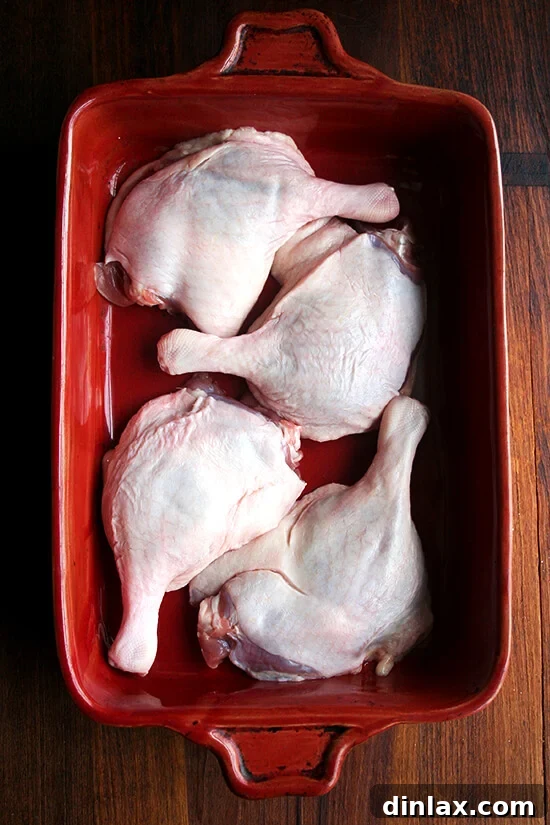
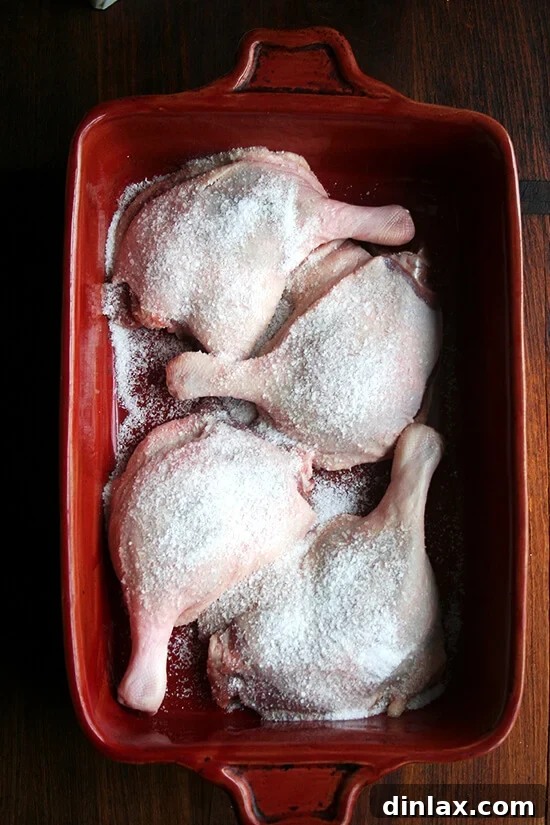
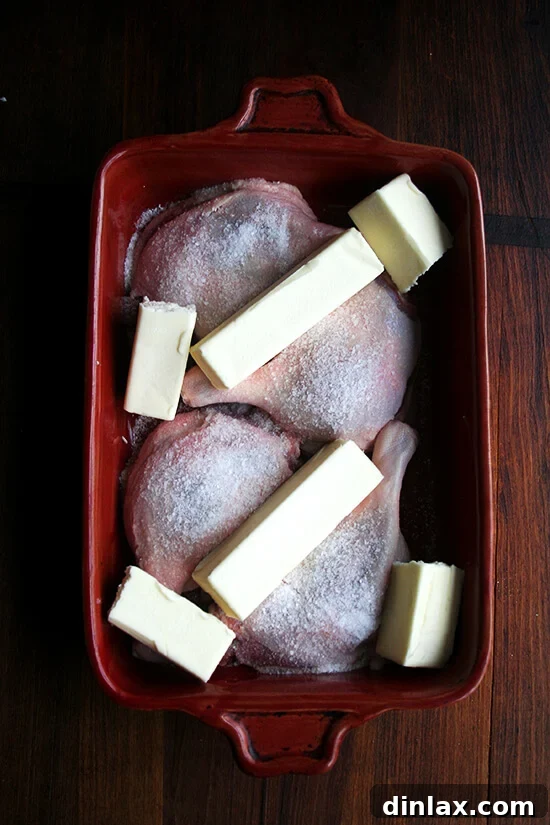
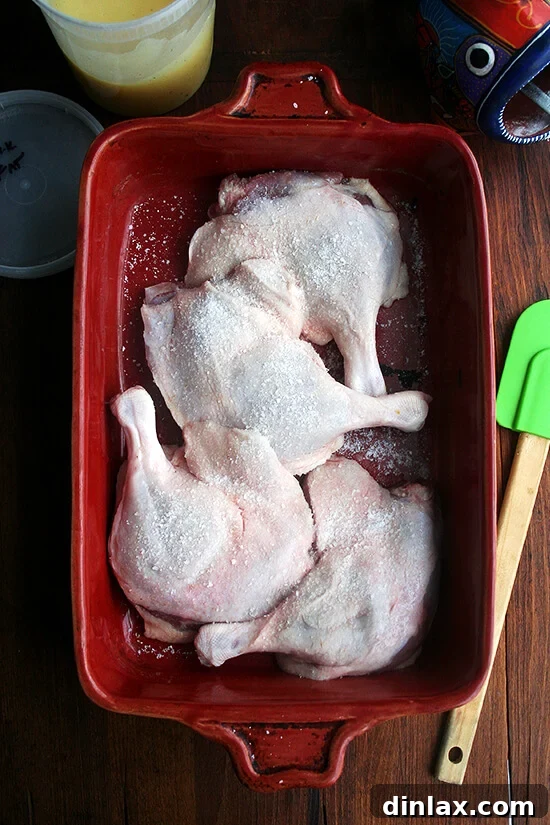
Begin by preheating your oven to 325ºF (160ºC). This gentle heat is key for the slow rendering process. Take four duck legs, and it’s crucial to pat them thoroughly dry with paper towels. Excess moisture on the skin can prevent it from crisping properly later. Arrange the dry duck legs snugly in a 9×13-inch baking dish or a similarly sized oven-safe pan. A snug fit is beneficial as it helps ensure the legs are sufficiently submerged in the rendered fat as they cook, promoting even tenderization and flavor infusion. Sprinkle 1 tablespoon of good quality kosher salt evenly over all the duck legs, ensuring they are well-coated. This initial seasoning is vital for both flavor and the tenderizing process.

-
Step 2: Apply the Salt Evenly
Once your duck legs are arranged in the baking dish, ensure the 1 tablespoon of kosher salt is distributed across all surfaces. Don’t be shy with the salt; it plays a critical role in curing and flavoring the meat during the long, slow cook. A uniform coating ensures every part of the duck leg benefits from this essential first step.
-
Step 3: Cover with Butter – The Unconventional Medium
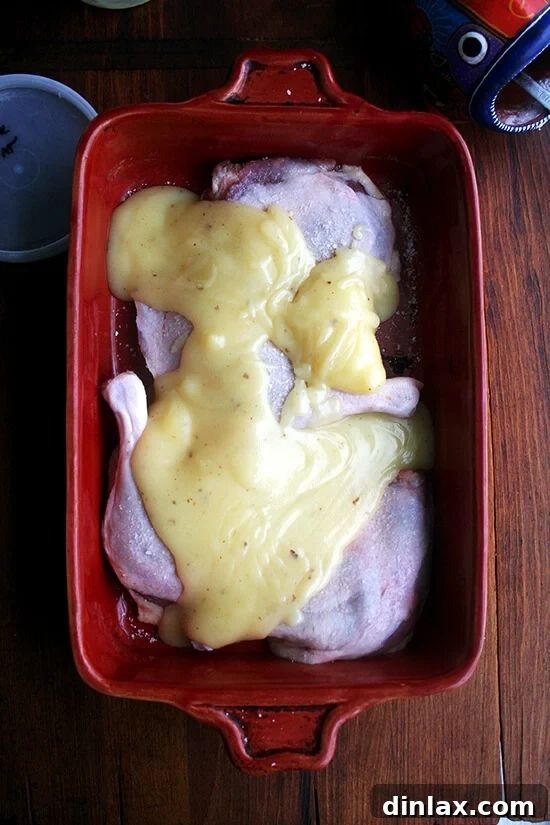
Now, for the “cheater’s” secret: generously cover the duck legs completely with one pound (approximately two cups) of unsalted butter. You can break the sticks of butter in half or in smaller pieces if necessary to ensure full and even coverage. This might seem like an extravagant amount of butter, but trust the process! As the duck slowly cooks, the butter will melt and combine with the duck’s own rendered fat, creating a rich, flavorful poaching medium that will make the meat incredibly tender. A significant portion of this rendered fat will be retrieved and saved, so very little actually ends up in the meat.
-
Step 4: Slow Cook to Tender Perfection
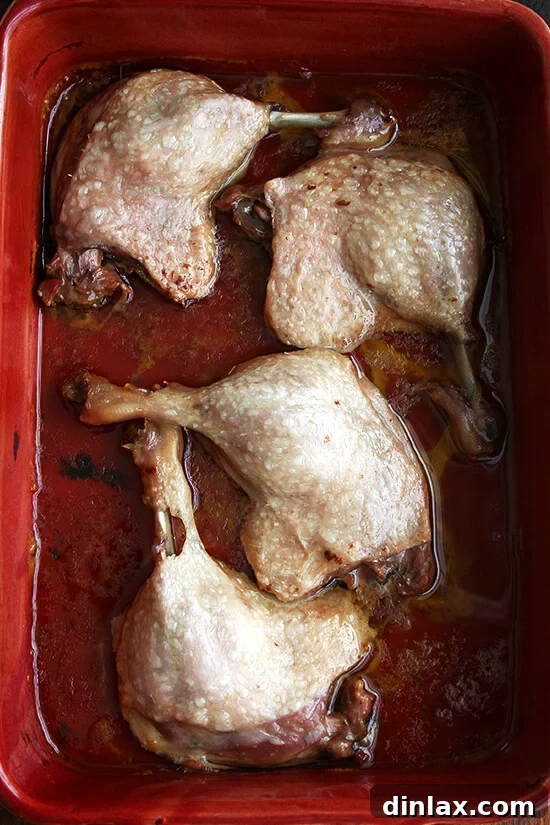
Once the duck legs are seasoned and completely covered in butter, cover the baking pan very tightly with aluminum foil. This tight seal is absolutely crucial. It traps steam and moisture within the pan, creating a moist environment that allows the duck legs to braise slowly and evenly in their fat without drying out, much like a traditional confit. If necessary, use a couple of sheets of foil to ensure there are no gaps. Transfer the tightly covered pan to your preheated 325ºF (160ºC) oven and bake for 2.5 hours. During this period, the meat will become exceptionally tender, and the fat will render beautifully, creating a rich, golden cooking liquid.
-
Step 5: Cool, Separate, and Store Your Homemade Duck Fat
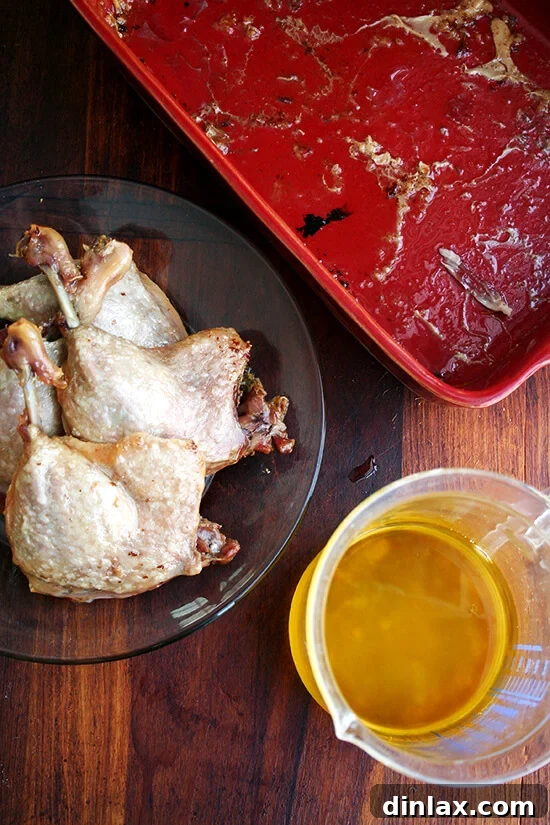
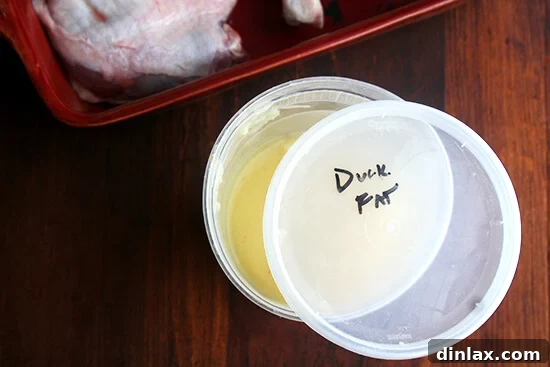
Carefully remove the pan from the oven and let it cool briefly on a wire rack. Once it’s cool enough to handle safely, remove the foil. The duck legs should be incredibly tender and fragrant. Gently transfer the cooked legs to a separate plate if you’re serving them immediately, or to an airtight storage container if you plan to enjoy them on subsequent days. Now, for the golden reward: carefully pour the rendered fat and melted butter into a heat-proof storage vessel. You’ll be delighted to find approximately 1.75 cups of this flavorful liquid gold. This means only about 1/4 cup of fat (roughly 1 tablespoon per leg) was absorbed during the cooking process. Label your container clearly as “Duck Fat” and store it in the refrigerator. This homemade duck fat is a culinary treasure, perfect for your next confit batch or for adding rich flavor to roasted vegetables, fried potatoes, or other savory dishes. It solidifies upon cooling and can be kept indefinitely in the fridge.

Optional Presentation Steps for Bistro-Style Duck Confit
Before you embark on the final crisping, you might consider a couple of optional steps to enhance the presentation of your duck confit, especially if you’re aiming for that authentic bistro aesthetic. These small, purely aesthetic touches can elevate your dish to an even more professional and appealing level.
-
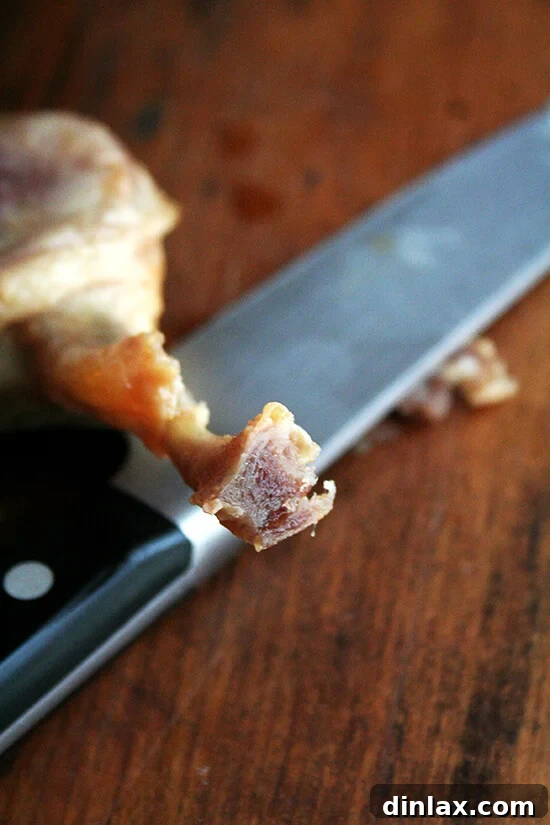
Trim the Bone Nub: For a refined and polished finish, use the heel of your sharp knife to carefully whack off the very tip of the bone at the end of each duck leg. This creates a cleaner, more elegant presentation, a technique often employed in professional kitchens to make the confit look more appealing on the plate.
-
Trim Excess Fat: Gently trim away any excess rendered fat that might be clinging to or extending too far up the bone. This helps the duck leg appear tidier and allows the skin to crisp more evenly, showcasing the beautifully tender meat beneath.
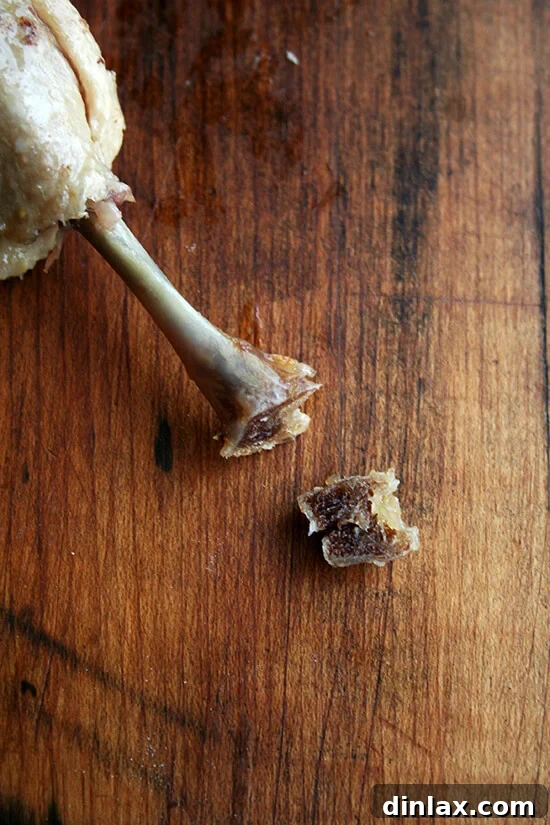
Crisping Your Duck Confit: The Grand Finale for Irresistible Skin
This is the moment where your tender duck confit transforms, achieving that coveted golden-brown, crackling skin that defines a truly exceptional dish. Follow these steps carefully for the perfect crispy finish:
-
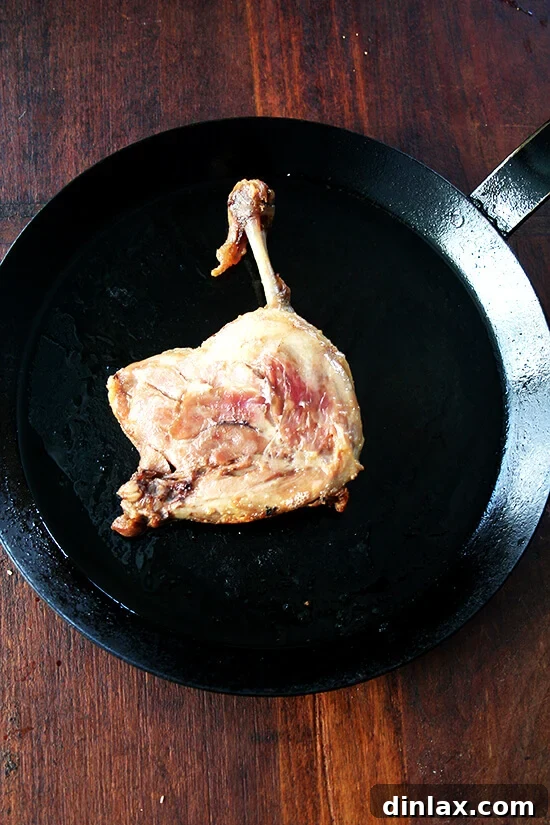
Bring to Room Temperature (If Refrigerated): If your cooked duck legs have been stored in the refrigerator, it’s ideal to bring them to room temperature for about an hour before you begin crisping. This ensures more even heating of the meat and contributes significantly to achieving that superior crispy skin. If you’re short on time, don’t worry, the dish will still be delicious.
-
Preheat Oven (If Legs are Cold): If your duck legs are coming straight from the fridge and haven’t had time to warm up, preheat your oven to 350ºF (175ºC). This oven step will be used to thoroughly heat the meat through after the skin has crisped on the stovetop.
-
Heat the Pan: Place a cast-iron skillet or any other heavy-bottomed, oven-safe pan over medium heat on your stovetop. You typically won’t need to add any additional fat to the pan at this stage, as the duck legs usually have enough residual fat clinging to their skin. This rendered duck fat will aid in achieving a beautiful crisp.
-
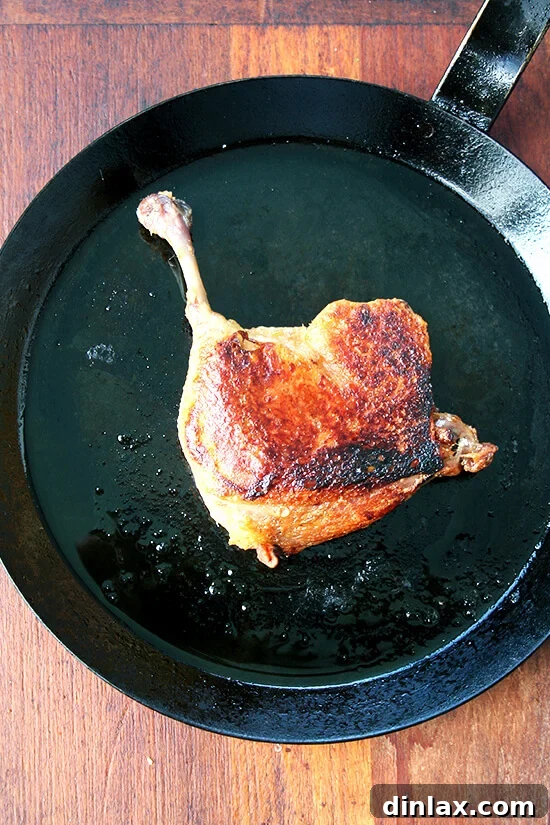
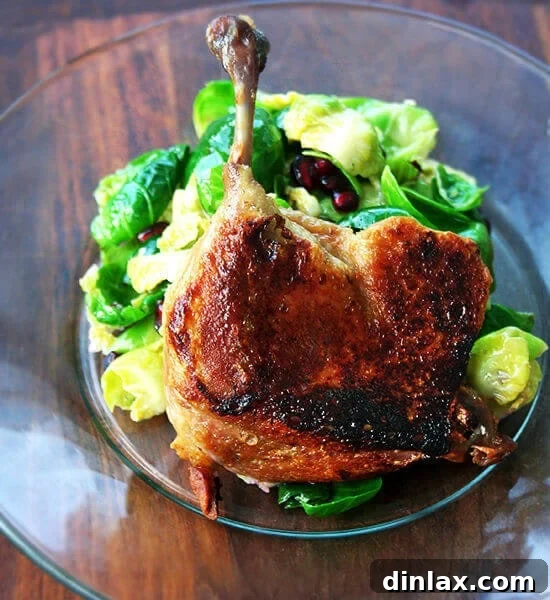
Sear Skin-Side Down for Crispy Perfection: Once the pan is hot, carefully place the duck legs, skin-side down, into the skillet. Allow them to crisp undisturbed for 1-2 minutes to allow an initial crust to form. Then, gently shake the pan to ensure the skin isn’t sticking. If it does, use a thin spatula to carefully release it without tearing the delicate skin. Continue crisping for a total of 5 to 8 minutes, repositioning the legs as needed to achieve an even golden-brown, irresistibly crispy skin across the entire surface.
-
Finish Heating (Oven or Stovetop): If your legs were refrigerated, transfer the entire pan (with the skin-side still down for maximum crispness) to the preheated 350ºF (175ºC) oven for an additional 5 to 10 minutes, or until the meat is thoroughly heated through to the bone. If your legs were already at room temperature, you can often simply flip them over and cook for about one minute on the flesh side to warm them through, being careful not to overcook and toughen the meat. Serve your glorious duck confit immediately with your favorite sides – a simple green salad with a sharp shallot vinaigrette is a classic pairing, or consider roasted potatoes cooked in some of that retrieved duck fat!
Storing and Reusing Your Homemade Duck Fat: Kitchen Gold
One of the most delightful and often overlooked benefits of making this duck confit is the valuable byproduct: your very own supply of flavorful, rendered duck fat. This “kitchen gold” is incredibly versatile and enhances a multitude of dishes beyond just confit.
After you’ve transferred the warm, liquid fat and butter mixture to a clean, heat-proof, and airtight storage container, allow it to cool completely at room temperature. As it cools, it will solidify into a creamy, pale yellow consistency. Once solid, seal the container tightly and store it in the refrigerator. Stored properly, homemade duck fat can last for many months, if not indefinitely. It’s crucial to keep it well-sealed to prevent it from absorbing any other odors from your refrigerator.
This precious fat is not just for future confit batches. Its high smoke point and rich, umami flavor make it an indispensable ingredient for elevating everyday cooking. Use it to roast potatoes to an unparalleled crispness, sauté a variety of vegetables (Brussels sprouts, green beans, and asparagus are particularly fantastic), or even use a spoonful to fry eggs for a luxurious breakfast. It can also be incorporated into savory pie crusts or used for searing meats, adding a depth of flavor that butter or oil simply cannot match.
The next time you’re ready to make another batch of this easy duck confit, you can simply use your newly created supply of duck fat in place of the butter specified in the recipe. To do so, you may need to gently warm your stored duck fat in the microwave or by placing the sealed container in a bowl of hot water to liquefy it, making it easy to pour over the fresh duck legs. This creates a wonderful, self-sustaining cycle for making delicious, homemade confit, ensuring you always have this exceptional ingredient on hand.
Frequently Asked Questions (FAQ) About Easy Duck Confit
- Can I use frozen duck legs for this recipe?
- Yes, absolutely. However, it’s crucial to ensure your duck legs are fully thawed in the refrigerator before you begin the preparation. Pat them very dry with paper towels once thawed; removing excess moisture is key for achieving that wonderfully crispy skin.
- What type of salt is best for duck confit?
- Kosher salt is highly recommended for this recipe. Its larger, coarser flake size allows for more even seasoning across the duck legs without the risk of over-salting, which can happen with finer-grained salts. If you only have fine sea salt, use slightly less than the amount specified for kosher salt. Avoid using standard table salt.
- How long can cooked duck confit be stored?
- Once cooked, cooled, and stored in an airtight container in the refrigerator, your duck confit legs will remain delicious for 3-5 days. While traditional confit submerged in fat can last for weeks or even months, for this “cheater’s” method, separate storage of legs and fat is usually sufficient for typical home consumption.
- What are some serving suggestions for duck confit?
- Duck confit is incredibly versatile! A classic pairing is a simple green salad dressed with a sharp vinaigrette (like a shallot vinaigrette) to cut through the richness. Other excellent accompaniments include roasted potatoes (especially if cooked in duck fat!), braised red cabbage, creamy polenta, or sautéed seasonal greens like asparagus or Brussels sprouts. The shredded meat is also fantastic in tacos, sandwiches, or added to salads for a gourmet touch.
- My duck skin isn’t getting crispy – what went wrong?
- There are a few common culprits. Firstly, ensure the duck legs were thoroughly patted dry before the initial cooking process. Any moisture on the skin will hinder crisping. Secondly, when searing, make sure your pan is hot enough and avoid overcrowding it, as this can steam the skin instead of crisping it. Give the skin sufficient time (5-8 minutes) to render its fat and crisp without moving it too much initially. If all else fails, a final minute or two under a broiler can often help achieve that desired crackle, but watch it very carefully to prevent burning.
The Streamlined Duck Confit Recipe Card
Easy Duck Leg Confit: 3 Hours, 3 Ingredients
5 Stars from 3 reviews
- Author: Alexandra Stafford
- Total Time: 2 hours 50 minutes
- Yield: 4 servings
Description
This recipe offers a genius shortcut to making luxurious duck confit at home, inspired by a clever restaurant improvisation. Instead of a multi-day process with specialized duck fat, it uses readily available butter and takes only three hours. You’ll achieve incredibly tender meat with wonderfully crispy skin, perfect for an impressive bistro-style meal. Plus, you’ll render your own duck fat in the process, which can be saved and reused!
Serve this confit with a simple green salad dressed in a shallot vinaigrette for a complete and elegant meal. Don’t be concerned by the initial amount of butter; very little fat is absorbed by the meat, resulting in a rich, flavorful, and not greasy, final dish.
Ingredients
- 4 duck legs
- 1 tablespoon kosher salt
- 1 lb. unsalted butter
Instructions
- Preheat your oven to 325ºF (160ºC).
- Pat the duck legs dry. Arrange them snugly in a 9×13-inch baking pan. Sprinkle evenly with 1 tablespoon of kosher salt. Cover the legs completely with the 1 lb. of butter, breaking sticks in half if necessary. Cover the pan very tightly with aluminum foil (use multiple sheets if needed to ensure a tight seal).
- Bake for 2.5 hours. Remove from the oven and let cool briefly with the foil on, then remove foil and cool completely. Once cool enough to handle, transfer the cooked legs to a plate (for immediate serving) or a storage container (for later). Carefully pour the rendered fat and melted butter into a separate storage container. Label it “Duck Fat” and store in the fridge. This fat can be reused for future confit or other cooking.
- If serving later, bring the cooked duck legs to room temperature for about an hour before crisping. Optionally, trim the bone nub at the end of each leg and any excess fat extending up the bone for presentation.
- To crisp: If legs were refrigerated, preheat oven to 350ºF (175ºC). Heat a cast iron skillet over medium heat (no additional fat needed). Place duck legs skin-side down and crisp undisturbed for 1-2 minutes, then continue crisping for 5-8 minutes total, repositioning as needed for even browning. If refrigerated, transfer the pan to the preheated oven for 5-10 minutes to heat through. If at room temperature, simply flip the legs over and cook flesh-side down for 1 minute to warm, being careful not to overcook. Serve immediately.
- Prep Time: 5 minutes
- Cook Time: 2 hours 45 minutes
- Category: Dinner, Main Course
- Method: Oven, Pan-Frying
- Cuisine: French, Bistro