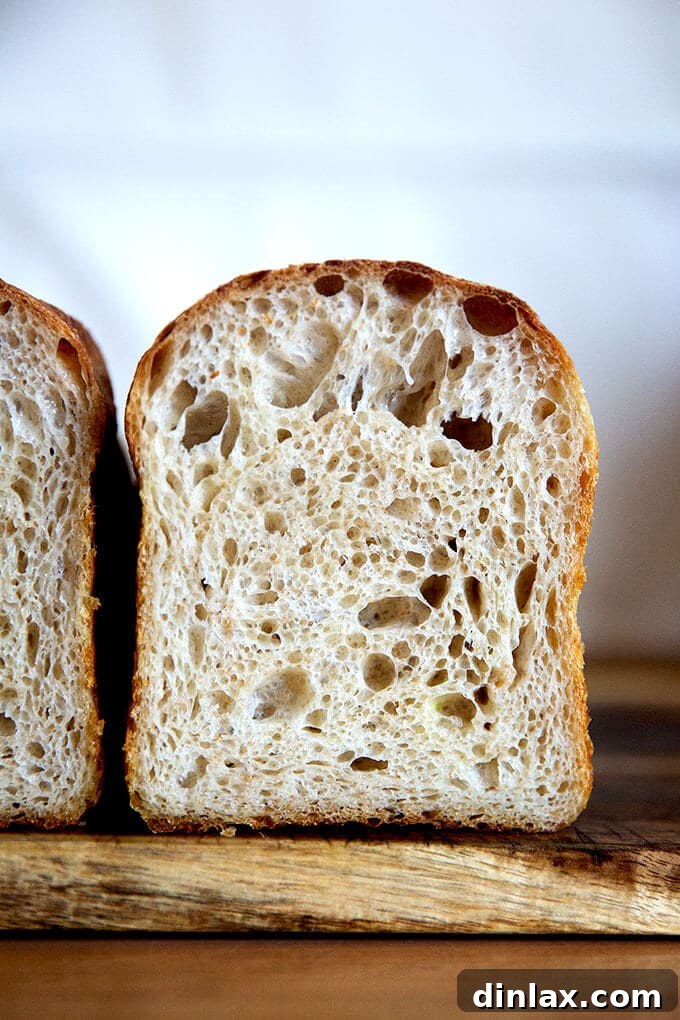
A little over a year ago, the world collectively discovered, or rediscovered, the simple joy of baking bread. As countless loaves emerged from home ovens, so did an avalanche of questions. This period marked an unprecedented surge in home baking, turning kitchens worldwide into bustling artisanal bakeries. While the initial wave of enthusiasm may have stemmed from necessity, the enduring appeal of fresh, homemade bread has captivated many, transforming a fleeting trend into a cherished skill.
In all my years of food blogging, no single subject has generated more inquiries than bread baking. These interactions, though sometimes challenging to troubleshoot without being in the baker’s kitchen, have been incredibly insightful. Each question, every struggle, and every triumph shared by readers has deepened my understanding of the intricate technicalities involved in bread making. It’s a testament to the complex yet rewarding nature of working with flour, water, salt, and yeast.
Through these extensive discussions and shared experiences, two significant truths about bread baking became abundantly clear:
- The Myth of High-Maintenance Baking Persists: Despite its rising popularity, bread baking often carries a lingering reputation for being overly demanding and time-consuming. The fact that a global lockdown was seemingly required to encourage so many people to try their hand at it underscores this persistent misconception. Many believe that successful bread baking necessitates being confined to the kitchen for hours, meticulously attending to every stage. This perception can deter aspiring bakers, making them hesitant to embrace what is, in reality, a far more flexible and accommodating process than commonly believed.
- The Unwavering Joy and Sense of Accomplishment: Conversely, the act of baking bread continues to fill people with an immense sense of joy and profound accomplishment. There’s an almost magical quality to pulling a beautifully golden, fragrant loaf from the oven – a moment that never fails to inspire wonder and pride. The satisfaction isn’t just in the creation; it extends to the sharing. Bakers often derive as much happiness from gifting a freshly baked loaf to friends and family as they do from the baking process itself, fostering connections and spreading warmth through a tangible act of care.
My continuous goal has always been to demystify bread baking and to showcase its inherent flexibility, proving it doesn’t have to be a “needy” undertaking. Even as the world gradually reopens and schedules become more demanding, I firmly believe that everyone can integrate the meditative and rewarding practice of bread baking into their lives. To support this, and to empower both new and seasoned bakers, I’ve compiled some of the most crucial insights and practical advice that I’ve found myself sharing repeatedly over the past year. These tips are designed to simplify the process, enhance your results, and encourage you to keep the tradition of homemade bread alive and thriving in your kitchen.
10 Essential Tips for Better Bread Baking
Whether you’re a beginner just starting your bread journey or an experienced baker looking to refine your techniques, these tips are designed to make your baking experience more enjoyable and successful. By understanding these fundamental principles, you can transform your approach to bread making, leading to consistently delicious results.
- Embrace Your Refrigerator as a Baking Ally: This is arguably the most transformative tip for busy individuals. The refrigerator isn’t just for storing leftovers; it’s a powerful tool in your bread-baking arsenal. Dough can be safely transferred to the fridge at almost any stage of the process: immediately after mixing, after its first rise (bulk fermentation), after shaping, or even after its final proof. This cold environment significantly slows down fermentation, allowing you to pause and resume baking at your convenience, often for several days. This flexibility means you can mix dough on a Tuesday evening, shape it on Wednesday morning, and bake it Friday afternoon, fitting bread making seamlessly into even the most hectic schedules. Moreover, a cold proof can often enhance the flavor and texture of your finished loaf. Just remember to store your dough in an airtight container to prevent a dry crust from forming.
- A Digital Scale is Your Most Indispensable Tool: While many recipes still provide volumetric measurements (cups and spoons), precise baking truly begins with a digital scale. I once only advocated weighing flour and other dry ingredients, but I now strongly encourage weighing everything – flour, water, salt, yeast, and any other additions. This precision is paramount for consistent results. Flour density can vary significantly depending on how it’s scooped, leading to inconsistent hydration. Weighing ingredients eliminates this variability, ensuring you follow recipes exactly as intended. It also simplifies troubleshooting: if a loaf doesn’t turn out right, precise measurements allow you to accurately adjust ratios for your next attempt, making your baking journey more scientific and less prone to guesswork.
- Master the Art of Salting by Weight: Just like any great dish, bread needs proper seasoning. Salt is not merely for flavor; it plays a crucial role in regulating fermentation, strengthening gluten, and contributing to crust color and texture. Using the correct amount of salt in relation to your flour, measured by weight, is fundamental. As a general guideline, aim for a minimum of 10 grams of salt for every 500 grams of flour. Many experienced bakers, myself included, often prefer to use slightly more to achieve a richer, more complex flavor profile. Experiment within this range to find your preferred balance, always ensuring your salt is finely dissolved and evenly distributed throughout the dough.
- Understand Hydration Ratios by Weight: The amount of water in your dough, known as hydration, is critical and highly variable. It impacts everything from the dough’s workability to the bread’s final crumb structure and texture. The ideal water-to-flour ratio depends on several factors: the type of flour you’re using (whole wheat absorbs more water than white flour), your ambient environment (humidity levels affect flour absorption), and the specific type of bread you’re aiming to create. Achieving the perfect hydration often requires some trial and error, as flour characteristics can even change from batch to batch. Using a digital scale to weigh your water ensures consistent starting points for your experiments, allowing you to make small, informed adjustments and quickly home in on the ideal hydration for your recipe and conditions.
- The Foundation: Salt and Water are Key: If you master points #3 (salt by weight) and #4 (water by weight), you’ve already conquered approximately 80% of the journey to baking an exceptional loaf of bread. These two elements, precisely measured and balanced, form the backbone of any successful bread recipe. Getting them right provides a solid foundation upon which all other techniques and variables can be built, significantly increasing your chances of consistent success.
- Cultivate a Nimble Approach – No Foolproof Recipe Exists: While I strive to create the most straightforward and reliable recipes, the reality is that bread baking is an incredibly dynamic process. What yields perfect results for me in my specific kitchen environment – with my flour, my water, and my ambient temperature – may not work identically for you, even with the same recipe and ingredients. Furthermore, conditions change with the seasons; flour characteristics can subtly shift, and even atmospheric pressure can play a role. Approach bread baking with a willingness to adapt and adjust. Learn to read your dough rather than rigidly adhering to timings. A digital scale is invaluable here, enabling you to easily tweak ingredient ratios as needed. I continually experiment with my own recipes, adjusting ratios and methods, and I encourage you to do the same, making each bake an opportunity for learning and refinement.
- Focaccia: The Ultimate Beginner’s Bread: For those new to bread making, or even experienced bakers seeking a low-stress project, focaccia is an absolute revelation. Whether you opt for a yeast-leavened or sourdough focaccia, it stands out for several compelling reasons. It requires no specialized equipment beyond a standard 9×13-inch baking pan, eliminating the need for bannetons or Dutch ovens. There’s no complex shaping technique to master; simply spread the dough into the pan. Crucially, scoring, which can be daunting for beginners, is entirely unnecessary. With focaccia, you just need your fingertips for dimpling and your creativity for toppings, making it an incredibly forgiving and rewarding entry point into the world of bread baking.
- Demystifying Sourdough: Simplicity and Flavor: Sourdough bread, often perceived as intimidating, can be remarkably simple and incredibly delicious, especially if you skip complex steps like autolyse, preferments, or levains for your first attempts. The key to successful sourdough lies in a few fundamental practices:
- A Robust Starter is Paramount: Your sourdough journey begins and ends with your starter. Ensure it is vigorous, active, and consistently fed before you even think about mixing dough. A strong starter will provide the necessary lift and flavor, setting the stage for a successful loaf.
- Monitor Bulk Fermentation with Precision: Instead of simply waiting for your dough to double in volume, use a straight-sided container to accurately track its volume increase during bulk fermentation. Aim to stop this stage when your dough has expanded by 50-75% of its original volume. Over-fermenting is a common pitfall that can lead to a dense, gummy crumb and a lack of oven spring.
- Embrace the Cold Proof: After shaping, transfer your sourdough to the refrigerator for a cold proof of at least 24 hours (and often longer). This extended cold fermentation not only makes the dough easier to handle but also develops deeper, more complex flavors and contributes to a superior crust and crumb structure.
- Reconsider Commercial Whole Wheat Flour for Nutrition: If your primary goal is to significantly boost the nutritional value of your homemade breads, solely relying on commercial whole wheat flour may not be the most effective strategy. While it contains the entire grain, the milling process for many commercial flours can strip away some of the most beneficial nutrients and delicate germ. For a true nutritional and flavor upgrade, seek out stone-milled flours. These flours retain more of the grain’s natural goodness, offering a richer flavor, deeper color, and more complex aroma. Be mindful that incorporating more stone-milled flour will naturally result in a less light and airy crumb structure, yielding a denser, heartier loaf. However, even a small percentage of stone-milled flour can make a noticeable difference in terms of taste and nutritional profile, adding wonderful character to your bread. (Learn more about the benefits of stone-milled flour here.)
- The Batard Shape for an Open Crumb: For bakers chasing that coveted open, airy crumb, a surprisingly simple trick can make a significant difference: instead of shaping your dough into a traditional round boule, try shaping a batard. A batard is an oval or torpedo-shaped loaf. While the exact scientific reason for this isn’t fully clear, many bakers observe that the shaping technique used for a batard can create more internal tension and even distribution of gas pockets, potentially leading to a more open crumb structure. It’s a simple adjustment that can yield impressive results in terms of aeration. Watch the video below to see the batard shaping technique in action.
Friends, the journey of bread baking is one of continuous discovery. What invaluable lessons have you gleaned from your bread-making adventures this past year? I’m always eager to hear your biggest revelations, unique tips, or words of wisdom that could inspire and assist fellow bread bakers. Your shared experiences enrich this wonderful community.
PS: For more in-depth troubleshooting, delve into: Why is My Sourdough So Sticky? Plus Fixes to 4 Common Sourdough Mistakes
PPS: Discover all my cherished bread recipes here, carefully curated for every skill level: → Favorite Bread Recipes