A Culinary Journey to the West Coast: Grilled Grass-Fed Flank Steak & Gourmet Sandwiches
My recent move to the West Coast has opened up a world of new experiences, and last weekend marked a delightful first: my inaugural visit to a Whole Foods Market since settling in. The day began with a stimulating, albeit lengthy, visit to The Getty Center, a testament to my dad’s impressive endurance for art. After soaking in magnificent art and breathtaking views, we embarked on a scenic drive homeward along the iconic Pacific Coast Highway. The stunning coastal scenery set the perfect backdrop for our impromptu stop in Long Beach, where the quest for a satisfying dinner began. Exhausted from a day filled with culture and travel, my dad opted for a well-deserved snooze in the car, leaving me to explore the aisles of Whole Foods.
Sourcing Quality: The Quest for Grass-Fed Goodness
Stepping into Whole Foods, I was immediately drawn to the vibrant and carefully curated selections. My primary mission: to find high-quality meat. The meat department did not disappoint, boasting a fairly large and enticing selection of grass-fed beef. As an advocate for sustainable and ethical eating, I always prioritize grass-fed options when available. Despite the butcher behind the counter being unable to pinpoint the exact ranch of origin for the flank steak – a detail I typically prefer to know for true local sourcing – the quality looked undeniable. I ultimately purchased two sizable slabs of flank steak, later discovering that they hailed from Nebraska. I confess, it felt a little hypocritical to preach local and buy from so far away, but the commitment to grass-fed quality often presents such geographical compromises, especially when local options are scarce or prohibitively expensive.
The decision to opt for grass-fed beef isn’t merely a trend; it’s a conscious choice driven by a desire for a superior product, both in terms of flavor and nutritional profile. Grass-fed cattle typically lead healthier, more natural lives, grazing on pastures as nature intended. This diet results in leaner meat with a different fat composition, often higher in beneficial omega-3 fatty acids and conjugated linoleic acid (CLA) compared to their grain-fed counterparts. While the challenge of true local sourcing remains, sometimes the best available option means extending the radius for quality.
A Simple Yet Sublime Dinner: Grilling Flank Steak to Perfection
With our prime ingredient secured, dinner preparations at home were refreshingly simple, focusing on enhancing the natural flavors of the steak. My partner, Ben, took charge of the grilling, seasoning the flank steak generously with kosher salt and freshly ground black pepper – a minimalist approach that truly allows the meat to shine. The sizzle of the steak hitting the hot grill was music to our ears, promising a delicious meal after our long day.
While Ben expertly managed the grill, I assembled the accompanying sides. A crisp, peppery arugula salad, dressed simply, provided a refreshing counterpoint to the rich steak. Sliced ripe avocados added a creamy texture and healthy fats to the plate. Meanwhile, my dad savored a wedge of robust Stilton cheese, its pungent, creamy notes an indulgent prelude to the main course. The beauty of such a meal lies in its efficiency; dinner was ready in what felt like no time at all, a testament to the power of quality ingredients and straightforward cooking methods.
The Unmistakable Taste of Grass-Fed Beef: A Sensory Exploration
The moment of truth arrived with the first bite, and we were all thoroughly impressed. The difference in grass-fed meat compared to corn-fed is not subtle; it’s a distinct culinary experience. Visually, its color, regardless of the level of doneness – be it rare, medium-rare, or medium – presents a noticeably lighter, more vibrant shade of pink. This leaner profile is often an immediate indicator.
Before cooking, the raw meat itself possesses a unique aroma. It’s not the typical metallic scent often associated with conventional beef; instead, it carries an earthy, almost mineral quality, perhaps even a hint of what one might describe as “grassy.” This olfactory preview sets the stage for a distinct flavor profile that follows.
And the taste? It’s genuinely hard to articulate, but “grassier” comes remarkably close. It’s a flavor that speaks of the animal’s diet and environment, a cleaner, richer, and more complex taste that often lacks the overt fattiness of grain-fed beef. Ben, with his discerning palate, even remarked that the meat tasted “like an egg.” While it might sound unusual, I understood his sentiment. It’s a complete, wholesome flavor, perhaps reminiscent of the depth found in a truly farm-fresh egg, rather than a literal eggy taste. This unique character comes from the diverse nutrients and phytochemicals present in the grasses and forage consumed by the cattle, which translates directly into the meat’s composition and resulting flavor profile. It’s a taste that resonates with health and authenticity. The steak was, without a doubt, delicious, leaving us all wishing for a more consistently local source for such exceptional quality.
Beyond the Grill: The Art of the Leftover Flank Steak Sandwich
One of the true joys of a well-cooked meal is the potential for magnificent leftovers, and this grass-fed flank steak certainly delivered. For a welcome change, Ben had some truly desirable leftovers to bring to work this week, a significant upgrade from his usual microwave-zapped mixture of chard and brown rice. Repurposing the thinly sliced, flavorful flank steak transformed his lunch into a gourmet affair.
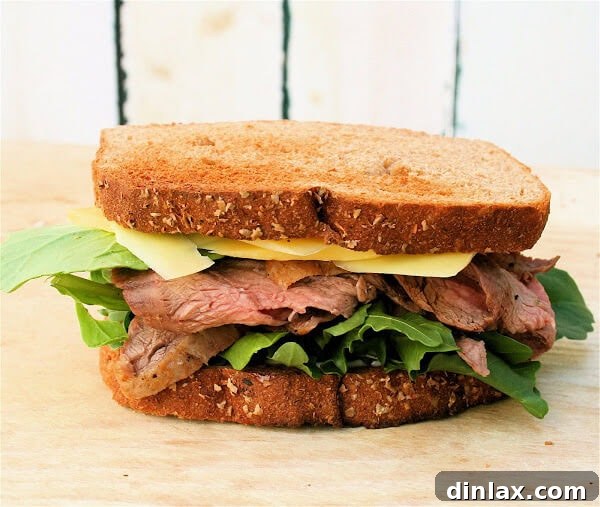
Crafted between two slices of wholesome whole wheat bread, slathered with a harmonious blend of Dijon mustard and creamy mayonnaise, and layered with fresh arugula and sharp cheddar cheese, the flank steak sandwich became a culinary masterpiece. The combination of textures and flavors – the tender steak, the crisp peppery arugula, the tangy mustard, the rich mayo, and the melt-in-your-mouth cheddar – created a satisfying and immensely enjoyable midday meal. It underscored the versatility of flank steak and the simple pleasure of transforming dinner into an even more exciting lunch.
Also, a quick note: I’m currently experiencing some technical difficulties with Google Docs, but The Bulletin can still be read here. Feeding A Marine
Recipe: Grilled Grass-Fed Flank Steak & Gourmet Leftover Sandwiches
This recipe serves 3 for dinner, with ample meat remaining for 2-3 gourmet leftover sandwiches.
Ingredients:
- For the Steak & Dinner:
- 2 smallish-sized (approx. 1.5 – 2 lbs total) grass-fed flank steaks
- 1-2 tablespoons kosher salt (adjust to taste)
- 1-2 teaspoons freshly ground black pepper (adjust to taste)
- 2 cups fresh arugula, for serving
- 1-2 ripe avocados, sliced, for serving
- Optional: Good quality olive oil and a squeeze of lemon for the arugula salad
- For the Gourmet Leftover Sandwiches:
- Leftover grilled flank steak, thinly sliced
- 4-6 slices good quality whole wheat bread
- 2-3 tablespoons Dijon mustard
- 2-3 tablespoons mayonnaise (or a mix of both)
- 1 cup fresh arugula, for layering
- 2-3 slices sharp cheddar cheese
- Freshly ground black pepper, to taste
Instructions:
For the Grilled Flank Steak Dinner:
- Prepare the Grill: Preheat your grill to high heat (around 450-500°F or 230-260°C). Ensure the grates are clean and lightly oiled to prevent sticking.
- Season the Steak: Pat the flank steaks dry with paper towels – this helps achieve a better sear. Season generously on both sides with kosher salt and freshly ground black pepper. Don’t be shy; flank steak can handle a good amount of seasoning.
- Grill the Steak: Place the seasoned flank steaks directly on the hot grill. Grill for 3 to 5 minutes per side for medium-rare, depending on the thickness of your steak and the intensity of your grill. For accurate doneness, an internal temperature of 130-135°F (54-57°C) for medium-rare is ideal.
- Rest and Slice: Once cooked to your desired doneness, remove the steaks from the grill and let them rest on a cutting board, loosely tented with foil, for at least 5-10 minutes. This crucial step allows the juices to redistribute, ensuring a tender and flavorful steak. After resting, slice the steak thinly *against the grain* to maximize tenderness.
- Serve Dinner: Arrange the thinly sliced flank steak on plates alongside fresh arugula (lightly dressed with olive oil and lemon if desired) and sliced avocado. Serve immediately and enjoy!
For the Gourmet Leftover Flank Steak Sandwiches:
- Prepare the Bread: Lightly toast your whole wheat bread if desired for extra texture and warmth.
- Assemble the Base: Spread Dijon mustard on one slice of bread and mayonnaise on the other. This creates a balanced flavor profile, tangy and creamy.
- Layer the Steak: Pile a generous amount of thinly sliced leftover flank steak onto one side of the bread. Ensure the slices are evenly distributed.
- Add Cheese & Greens: Top the steak with a slice of sharp cheddar cheese. Then, add a fresh layer of arugula for a peppery crunch and vibrant color.
- Finish and Season: Place the second slice of bread on top, pressing down gently. If desired, give the sandwich a final crack of fresh black pepper.
- Enjoy: Slice in half and enjoy your remarkably satisfying and gourmet flank steak sandwich for lunch. It’s truly a vast improvement over typical midday meals!
Chef’s Tips:
- For an extra layer of flavor on the steak, consider a simple marinade of olive oil, minced garlic, a splash of soy sauce, and a touch of red wine vinegar for at least 30 minutes before grilling.
- Always use a meat thermometer for perfect doneness. Overcooked flank steak can become tough.
- Don’t skip the resting period – it’s key to juicy steak!
- For the sandwich, you can customize with other toppings like pickled red onions, roasted bell peppers, or a swipe of pesto for different flavor combinations.