Mastering Onion Cutting: The Essential Guide to Dicing and Slicing Onions Like a Pro
For many home cooks, slicing and dicing onions can feel like a chore, often leading to uneven pieces, tears, and frustration. However, mastering basic onion cutting techniques is a fundamental skill that elevates your cooking from good to gourmet. The way an onion is cut dramatically impacts its texture, flavor release, and visual appeal in a dish. This comprehensive guide will walk you through two essential methods: creating perfect, delicate arched diamond dice for vibrant salads and salsas, and efficient slicing for sautéing, caramelizing, or raw applications.
While some seasoned cooks might believe they know every trick in the book, there’s always room for refinement. This article is crafted for anyone seeking to enhance their knife skills, learn professional techniques, and transform the humble onion into a culinary masterpiece. We’ll delve into the precise methods I learned during my time working in a bustling restaurant kitchen, where the art of onion preparation was held in high regard, particularly for dishes demanding both precision and aesthetics.
The Importance of Proper Onion Cuts in Culinary Arts
Why bother with meticulous onion cutting? The answer lies in the finished dish. Unevenly cut onions cook inconsistently; some pieces might burn while others remain raw. The shape and size also dictate how the onion integrates with other ingredients. For instance, a finely diced onion disperses flavor more evenly in a salsa, while long, consistent slices caramelize beautifully without burning. A perfectly cut onion is not just about aesthetics; it’s about achieving optimal flavor, texture, and cooking consistency across your entire meal.
Choosing the Right Onion for Your Dish
Before we dive into the techniques, let’s briefly consider the star ingredient: the onion itself. While this guide focuses primarily on red onions due to their common use in the techniques discussed, understanding onion varieties is beneficial:
- Red Onions: Known for their vibrant color and milder, slightly sweet flavor when raw. Ideal for salads, salsas, and garnishes.
- Yellow Onions: The all-purpose workhorse. Pungent when raw, but sweeten significantly when cooked. Perfect for sautéing, roasting, and nearly any cooked dish.
- White Onions: Sharper and more pungent than yellow onions, with a thinner skin. Often used in Mexican cuisine, sauces, and raw applications where a strong onion flavor is desired.
- Sweet Onions (Vidalia, Walla Walla): Exceptionally mild and sweet, excellent for eating raw in sandwiches, salads, or for making onion rings.
For the delicate dicing method we’re about to explore, red onions are frequently preferred due to their striking color and crisp texture when served raw.
The Art of Dicing Onions: Crafting Perfect Arched Diamonds
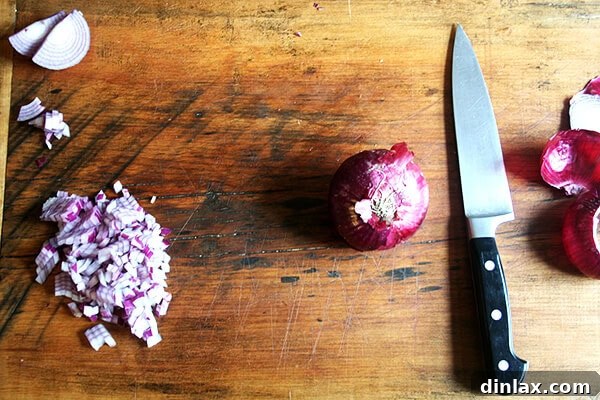
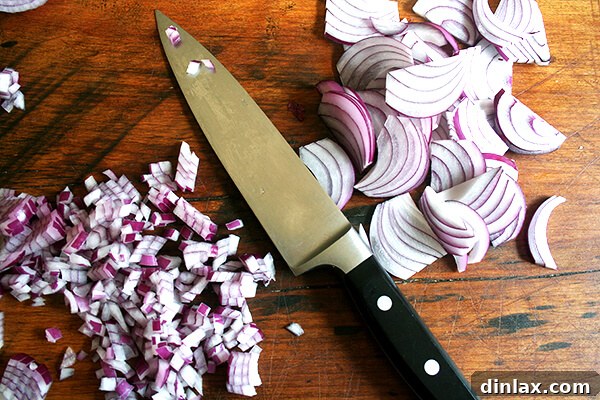
My journey into precision onion cutting began in a professional kitchen, where the chef’s salads, relishes, ceviches, and especially his salsas, were legendary. The supporting cast of these vibrant concoctions always included a consistent lineup: fresh herbs (cilantro, mint, Thai basil), an acidic element (lime juice, lemon juice, vinegar), a touch of heat (jalapeño, Thai bird chili, Tabasco), and, invariably, red onion. It was the red onion, meticulously diced into perfect little arched diamonds, that consistently stood out for its beauty and texture.
This dicing method isn’t just about cutting an onion; it’s about transforming it into an ingredient that enhances both the taste and visual appeal of your dish. The resulting “arched diamonds” are not only visually appealing but also offer a delightful crunch and release their flavor gently, making them ideal for delicate mixtures that top fresh oysters, or as a foundational element in a robust tomato bruschetta.
Step-by-Step Guide to the Perfect Red Onion Dice
Let’s break down the technique that creates these exquisite pieces. This method is designed for precision and presentation, not necessarily for speed. The beauty of the final product lies in its consistency and shape.
- Prepare the Onion: Begin by cutting the onion in half from root to stem. Place the cut side down on a stable cutting board. Trim off the very top (non-root) end, but leave the root intact for stability during cutting. Peel away the outer layers.
- Horizontal Incisions: With the flat, cut side of the onion down, make several horizontal cuts, parallel to the cutting board, towards the root end but not cutting through it. The number of cuts depends on the desired thickness of your dice. For delicate results, aim for 2-3 cuts.
- Vertical Incisions: Now, make several vertical cuts from the top end towards the root, again, not cutting through the root. These cuts should be perpendicular to your horizontal cuts. The spacing of these vertical cuts will determine the width of your dice.
- The Critical Final Slicing Step: This is where the magic happens and where the “arched diamonds” are formed. Once you have made your horizontal and vertical incisions, begin slicing down from the top of the onion towards the root. The key, and what makes this method distinctive, is to always keep your knife at a 90-degree angle to the natural curve of the onion as you slice. Instead of cutting straight down, which would result in flat squares, following the curve with a perpendicular blade creates those elegant, slightly arched pieces.
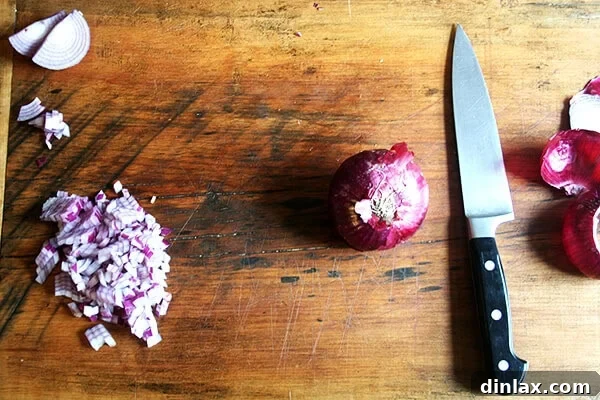
Does keeping your knife 90º to the curve make sense? It’s a subtle but crucial detail that might be challenging to fully grasp without visual aid. However, once you master this angle, you’ll be thrilled to see those perfect little red diamonds accumulating on your cutting board. They are truly the prettiest additions to not only salsa but also potato salads, whole grain salads, bean salads, and any dish where a fine, consistent, and visually appealing onion dice is desired.
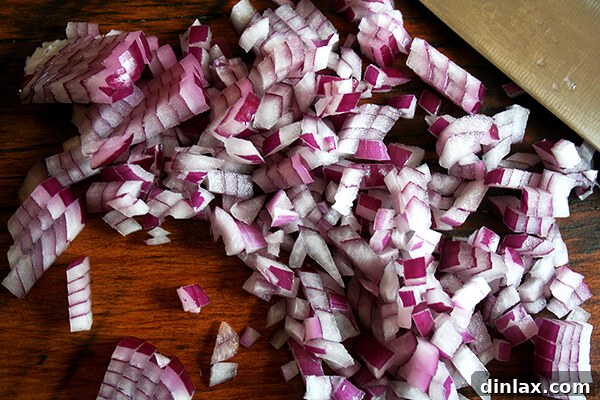
Note: This technique prioritizes beauty and delicacy over speed. The goal is to create exquisite red diamonds that enhance the presentation and texture of your dishes.
Video Demonstration: Achieving the Perfect Dice
To truly grasp the critical 90-degree knife angle, a visual demonstration is invaluable. Watch the video below to see this technique in action and practice alongside it.
The Art of Slicing Onions: Versatility for Cooked Dishes
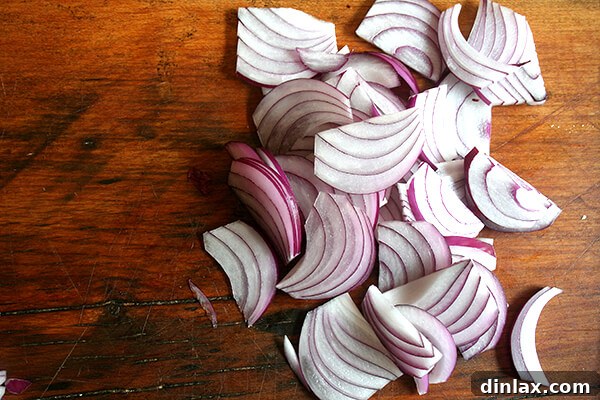
Beyond dicing, another essential onion cutting skill is precise slicing. While perhaps less visually intricate than the arched diamonds, uniform slicing is critical for many dishes, particularly those involving cooking. I also learned this technique in the restaurant, and it has served me well for countless preparations.
When to Use Sliced Onions: Applications and Benefits
Sliced onions are incredibly versatile. They are the foundation for:
- Sautéing: Whether for stir-fries, omelets, or as a base for sauces, consistent slices ensure even cooking and browning.
- Caramelizing: Long, thin, and uniform slices are paramount for achieving that deep, sweet, melt-in-your-mouth caramelization without burning some pieces prematurely. Think French onion soup, topping for burgers, or a sweet addition to tarts.
- Raw Applications: For dishes like Greek salads, fajitas, or sandwich toppings, uniformly thin slices provide a pleasant texture and distribute flavor evenly.
- Pickling: Sliced onions absorb pickling liquid more effectively and present beautifully in jars.
Step-by-Step Guide to Efficient Onion Slicing
The method for slicing is more straightforward but equally important for consistency:
- Prepare the Onion: As with dicing, cut the onion in half from root to stem. Place the cut side down on your cutting board. Trim the top end, but again, leave the root intact to hold the onion together. Peel away the outer layers.
- Positioning for Slicing: With the half onion flat on the board, decide whether you want to slice with or against the grain.
- With the Grain (root to stem): This results in longer, tougher strands that hold their shape better during cooking. Ideal for stir-fries where you want the onion to maintain some bite.
- Against the Grain (across the width of the onion): This breaks down the onion’s cellular structure, resulting in softer slices that cook down more quickly and are preferred for caramelizing or for raw applications where a less fibrous texture is desired (like in a Greek salad, as mentioned in the original text, or for onion rings).
- Making the Slices: Holding the onion firmly, use a sharp chef’s knife to make thin, even slices across the onion. Use a rocking motion and keep your guiding hand (the one holding the onion) tucked with knuckles against the blade for safety and precision. The goal is uniformity in thickness.
Video Demonstration: Mastering Onion Slicing
Even though slicing might seem self-explanatory, a visual aid can help refine your technique, ensuring consistent thickness and safety.
Essential Knife Skills and Safety Tips
Regardless of whether you’re dicing or slicing, a few universal principles apply to all onion preparation:
- Sharp Knife: A sharp knife is safer and more efficient. It cuts cleanly through the onion, reducing the chance of slipping and minimizing the release of tear-inducing compounds.
- Stable Cutting Board: Always place a damp cloth or non-slip mat under your cutting board to prevent it from sliding.
- The Claw Grip: When holding the onion, curl your fingertips inwards, forming a “claw.” This protects your fingers from the blade and allows you to guide the knife safely and effectively.
- Root End Stability: Leaving the root end intact for as long as possible helps hold the onion halves together, making cutting safer and easier.
Dealing with Onion Tears
It’s almost inevitable that cutting onions will bring tears to your eyes. Here are a few common tips that might help:
- Chill the Onion: Refrigerating the onion for 15-30 minutes before cutting can reduce the release of tear-inducing enzymes.
- Cut Near a Vent/Fan: Air circulation can help disperse the compounds.
- Wear Goggles: If all else fails, dedicated onion goggles or even swimming goggles can provide a barrier.
- Cut Under Running Water: While effective, this can be less safe due to slippery surfaces and reduced visibility.
Storing Cut Onions
While whole onions store well in a cool, dark, dry place, cut onions have a shorter shelf life. Store them in an airtight container in the refrigerator for up to 7-10 days. They are best used within a few days for optimal freshness and flavor. Keep in mind that cut onions will release their odor, so an airtight container is crucial to prevent other foods in your fridge from absorbing the smell.
Conclusion: Elevate Your Culinary Creations with Perfect Onions
Mastering onion cutting might seem like a small detail in the grand scheme of cooking, but it is a foundational skill that significantly impacts the quality and presentation of your dishes. The delicate arched diamond dice for salsas and salads, and the uniform slices for sautéing and caramelizing, are techniques that once learned, will become invaluable in your kitchen. They demonstrate attention to detail, a commitment to flavor, and a respect for the ingredients.
Practice makes perfect. Don’t be discouraged if your first attempts aren’t flawless. With each onion you prepare, your knife skills will improve, your cuts will become more consistent, and your confidence will grow. Embrace these techniques, and you’ll soon find joy in transforming a simple onion into an elegant component of your most delicious culinary creations. Happy chopping!