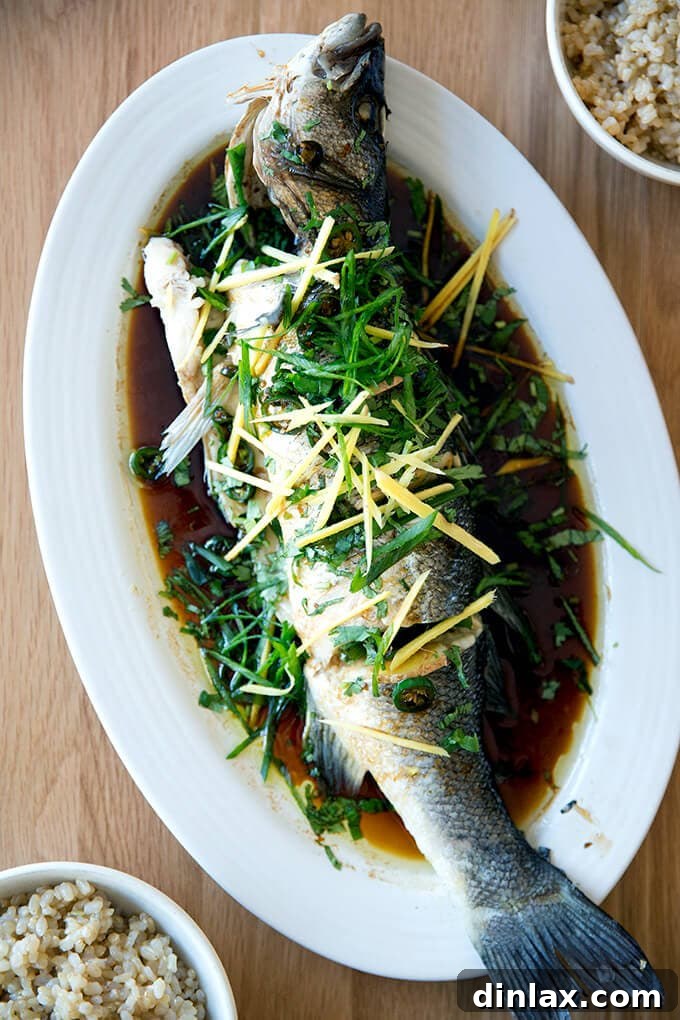
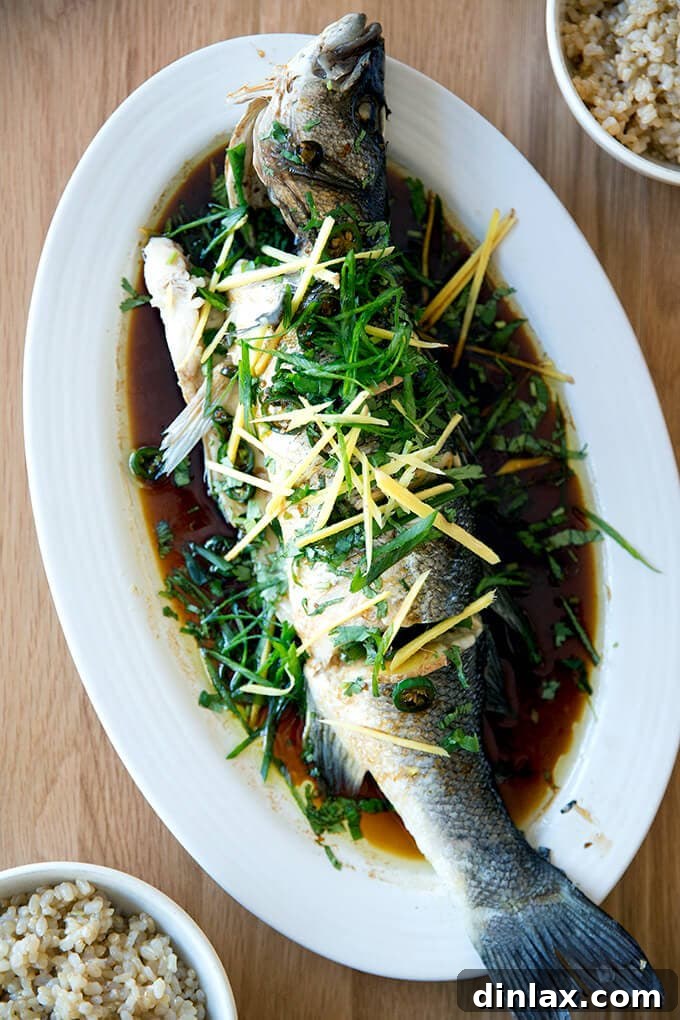
Mastering Chinese-Style Steamed Whole Fish: A Restaurant-Quality Branzino Recipe for Your Home Kitchen
For many home cooks and even seasoned fish enthusiasts, the idea of preparing a whole fish can feel intimidating. The head, the tail, the fins – these elements can sometimes make a whole fish seem a bit too daunting for a weeknight meal. However, I am here to gently guide you into the wonderfully rewarding world of whole-fish cooking. Once you experience the unparalleled flavor and moist texture, especially with this particular Chinese-style preparation, you might just find yourself completely won over. This recipe delivers a restaurant-quality experience right in your own kitchen, proving that gourmet flavors don’t have to be complicated.
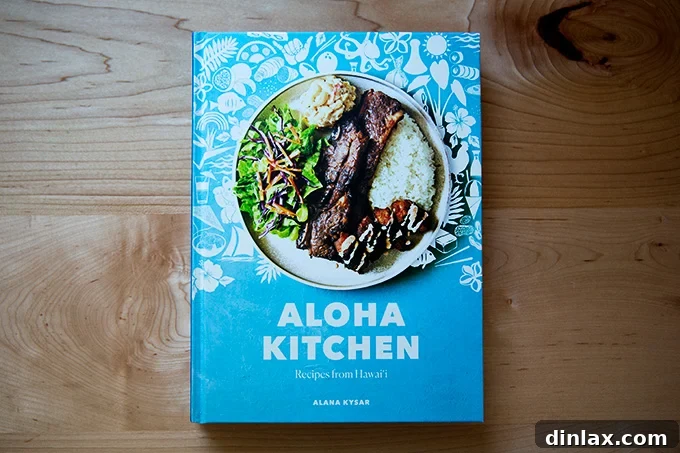
Inspired by Alana Kysar’s acclaimed cookbook, Aloha Kitchen, this method for steaming a whole fish, like Branzino, simplifies what many perceive as a complex culinary feat. The beauty of this dish lies in its elegant simplicity and the harmonious blend of fresh aromatics and a savory sauce. Forget your fears of dry, overcooked fish; steaming ensures a consistently moist and tender result, making it one of the most forgiving and satisfying ways to prepare seafood.
The Art of Chinese Steamed Fish: A Four-Step Culinary Journey
This exquisite Chinese-style steamed fish recipe can be broken down into four straightforward steps, each contributing to the dish’s incredible depth of flavor and texture:
- Perfectly Steaming the Fish: We begin by steaming a whole fish, ideally Branzino or another mild white-fleshed variety, atop a fragrant bed of ginger, scallions, and cilantro, enhanced by a splash of sake. This gentle cooking method locks in moisture and infuses the fish with delicate aromatic notes.
- Crafting the Simple Yet Flavorful Sauce: While the fish steams, you’ll whip up a quick and easy sauce. This vibrant concoction combines soy sauce, sesame oil, and sugar for a perfect balance of umami, nuttiness, and subtle sweetness. For those who enjoy a bit of heat, thinly sliced hot chilies can be added to elevate the profile.
- The Sizzling Hot Oil Finish: This step is where the magic truly happens! Once the fish is steamed, it’s transferred to a serving platter. A few tablespoons of sizzling hot oil are poured over the fish, followed by the briefly heated soy sauce mixture. The dramatic sizzle as the hot oil and sauce meet the warm fish not only creates an enticing aroma but also cooks the final garnishes lightly, bringing out their essential oils and intensifying their flavors.
- Final Garnish for Freshness and Aroma: The dish is completed with a generous shower of fresh cilantro, thinly sliced scallions, and delicate julienned ginger. These vibrant garnishes provide a final burst of freshness, contrasting beautifully with the rich sauce and tender fish.
Preparing this dish is not only a delight for the taste buds but also a genuinely enjoyable culinary experience. The process is engaging, and the outcome is truly one of the most delicious fish recipes I’ve ever had the pleasure of making. I highly recommend serving this flavorful fish with a side of steamed rice, as the rice perfectly soaks up the savory sauce, creating an irresistible combination.
Prior to discovering Aloha Kitchen, I, like many, would often reserve steamed whole fish for restaurant outings. There’s a certain mystique around Chinese restaurant dishes, an assumption that they simply taste better when prepared by professional chefs. I harbored a fear that I couldn’t replicate that authentic, consistently excellent flavor at home. However, Alana Kysar’s brilliant recipe completely shattered that misconception. It’s wonderfully simple, incredibly delicious, and has transformed my perspective on cooking whole fish at home. I wholeheartedly encourage you to give it a try; you might just surprise yourself!
“Aloha Kitchen”: A Culinary Journey Through Hawaii’s Diverse Flavors
Incidentally, Aloha Kitchen is a treasure trove of recipes dedicated to local Hawaiian food. Alana Kysar eloquently describes this unique cuisine as “Creole cuisine built on the many influences of Hawai’i’s early immigrants.” These influential cultures include Hawaiians themselves, Westerners, Chinese, Japanese, Portuguese, Koreans, and Filipinos. The rich tapestry of these diverse culinary traditions is beautifully reflected in the recipes within Aloha Kitchen. Flipping through its pages will undoubtedly ignite an immediate urge to book a flight to Hawaii, dash to the nearest drive-in, and indulge in a classic plate lunch featuring loco moco, fluffy steamed rice, and a scoop of creamy mac salad. Perhaps I’ll see you there?
Perfect. I can hardly wait. But first, let’s bring our focus back to the star of our show: the whole fish.
Why Embrace Whole Fish Cooking? The Unsung Benefits
The reluctance to cook whole fish often stems from unfamiliarity, but once you understand the compelling advantages, you’ll wonder why you ever shied away. Here are three key reasons why cooking fish whole is not only approachable but also yields superior results:
- Unrivaled Texture and Moisture Retention: One of the primary benefits of cooking fish whole, regardless of the method, is its incredible forgiveness. Unlike delicate fillets that can quickly become dry and overcooked if left in the oven, on the stovetop, or on the grill for even a minute too long, a whole fish is far more resilient. The bones and skin act as natural barriers, protecting the flesh and ensuring it remains wonderfully moist and tender throughout the cooking process. Steaming, in particular, excels at preserving the fish’s natural juices, resulting in a succulent, flaky texture that’s simply divine. In fact, I’m already envisioning applying the hot oil and sauce trick over a grilled whole fish come summer – the possibilities are endless when you master this technique!
- Superior Heat Retention and Flavor Infusion: Similar to another beloved fish-cooking method, en papillote (cooking in parchment), a whole fish naturally retains its heat much better than individual fillets. This is a significant advantage, especially when serving. Furthermore, this Chinese-style preparation elevates heat retention by incorporating two blasts of warmth: first, the initial steaming, and second, the pouring of sizzling hot oil and warm soy sauce over the cooked fish. This final step not only keeps the fish delightfully hot but also creates an aromatic explosion, infusing the fish with the vibrant flavors of the sauce and aromatics.
- Effortless Preparation and Minimal Fuss: Forgoing the challenge of flipping delicate fish fillets on a grill or stovetop, where the risk of sticking and breaking is always present, steaming a whole fish offers remarkable ease. There’s no need for elaborate maneuvering or worrying about the fish adhering to the cooking surface. Simply place the fish in your steamer, cover, and let the gentle steam work its magic. This hands-off approach makes whole-fish cooking surprisingly stress-free, allowing you to focus on preparing your accompaniments or simply enjoying the anticipation of a truly spectacular meal.
So, are you convinced yet? Will you take the plunge and give whole-fish cooking a try? Or perhaps you’re already a seasoned whole-fish enthusiast, enjoying the many benefits this method offers? Either way, I hope this recipe inspires you to explore new culinary horizons.
PS: For more seafood inspiration, discover ALL the Fish Recipes right here.
Here’s a visual guide to the preparation steps:
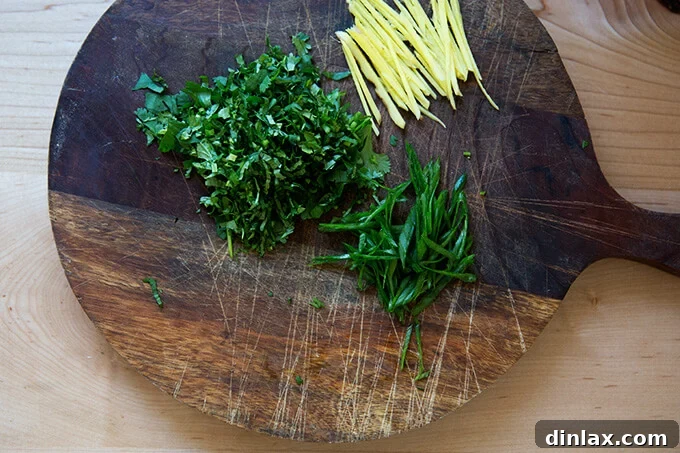
First, gather your essential aromatics: fresh ginger, vibrant cilantro, crisp scallions, and a hot chili if you desire a kick.
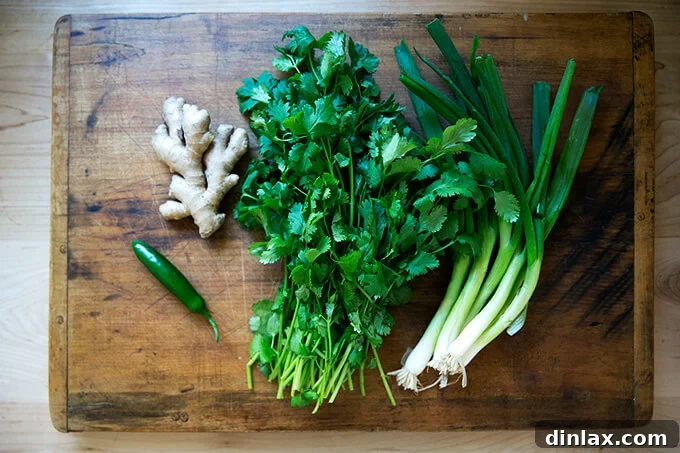
Coarsely cut a portion of these aromatics – ginger, scallions, and cilantro – to form the flavorful bed for steaming the fish.
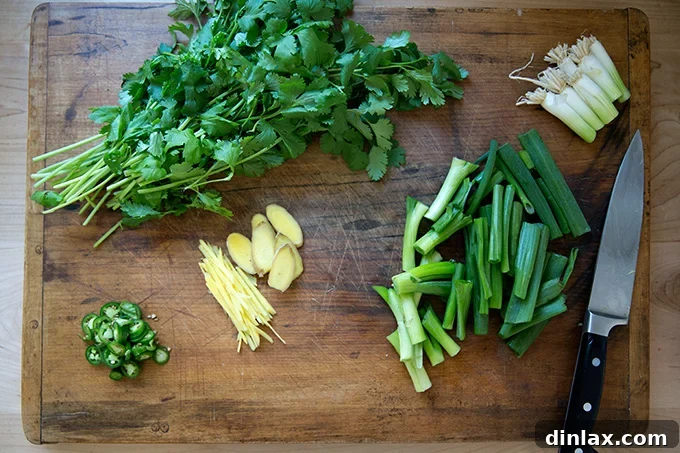
Reserve another portion, finely sliced or julienned, for the fresh and aromatic final garnish.
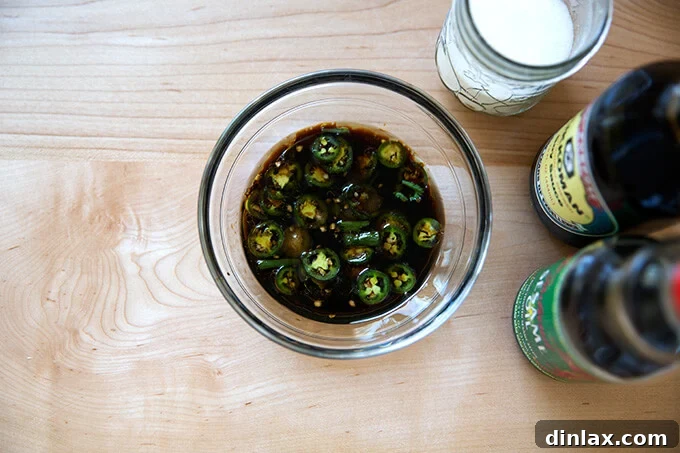
Prepare the incredibly simple yet potent sauce by stirring together soy sauce, fragrant sesame oil, a touch of sugar for balance, and the optional hot chili.
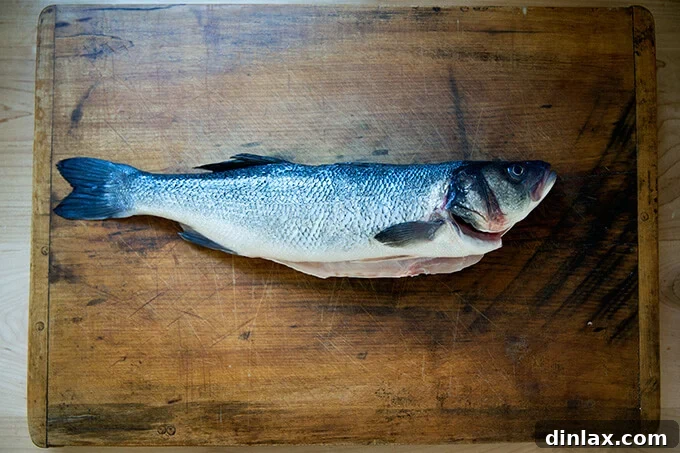
For this recipe, a mild, white-fleshed fish is ideal. Here, we are showcasing a beautiful whole Branzino.
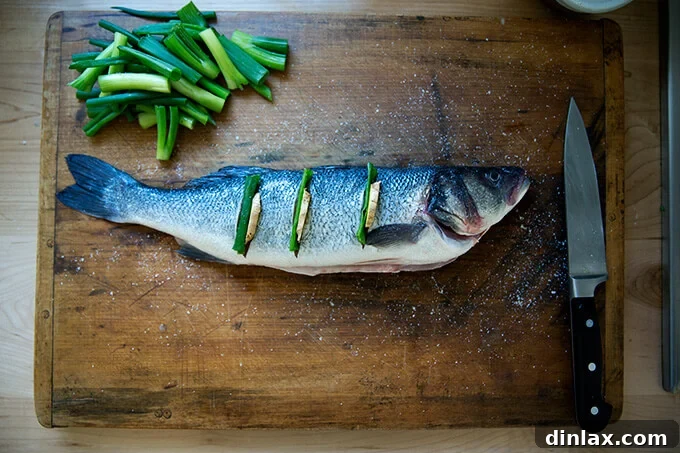
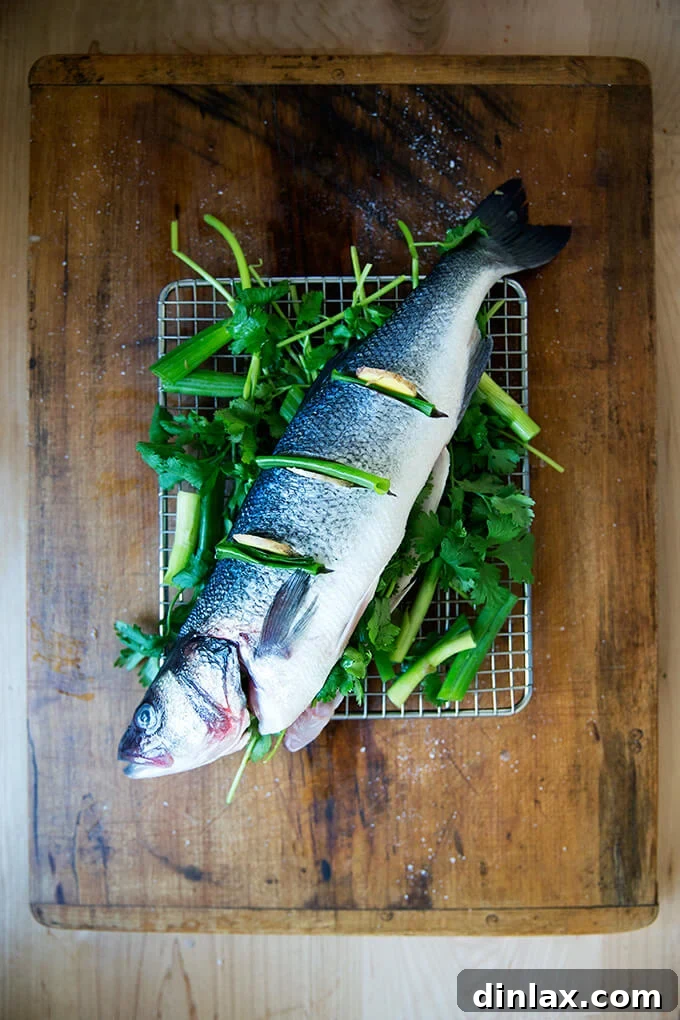
Carefully make a few slits in the Branzino’s skin on each side, then insert a thin coin of ginger and a slice of scallion into each slit. This helps infuse flavor directly into the fish.
Set up your steamer basket – a cooling rack can work perfectly – with a generous layer of cilantro, ginger, and scallions to create an aromatic bed. Then, gently lay the prepared fish on top.
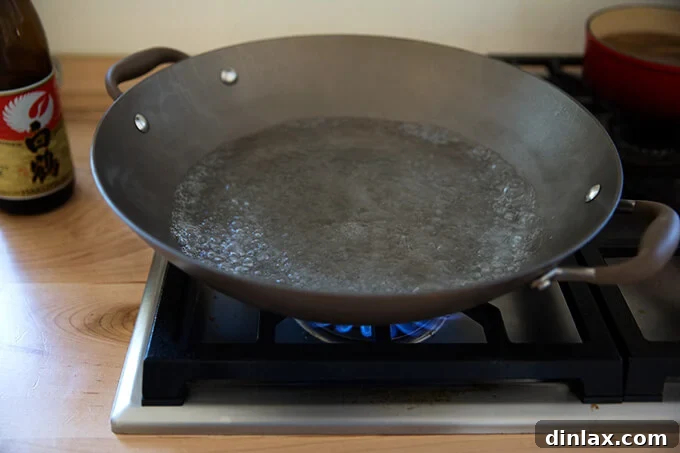
Bring a few inches of water to a rolling boil in a wok or any other wide vessel capable of accommodating your steamer.
Carefully lower the steamer basket with the fish into the wok, ensuring the water does not touch the fish.
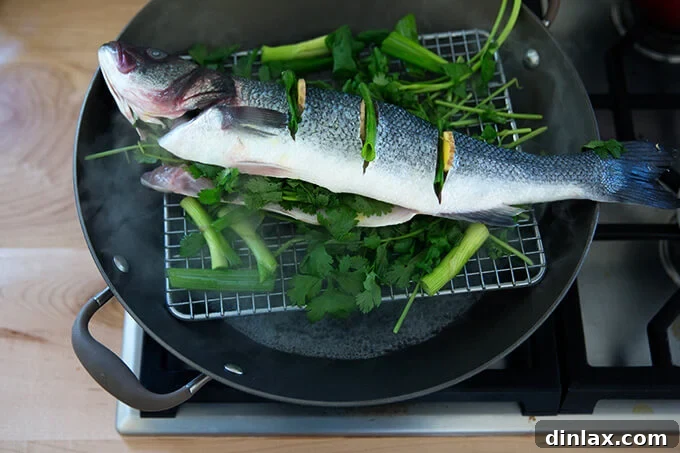
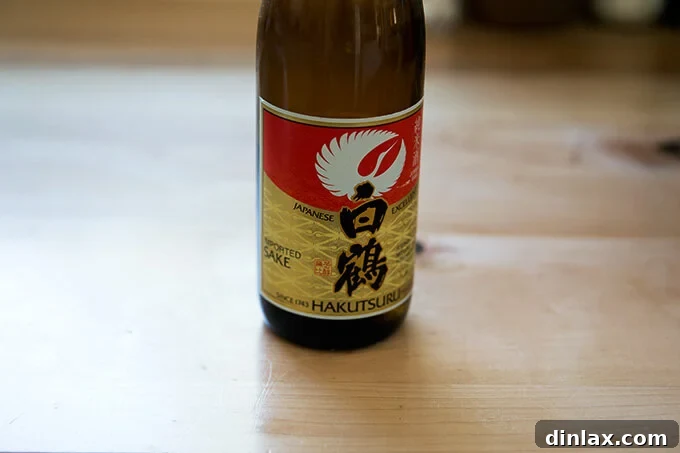
Pour about 2 tablespoons of sake over the fish. This adds another layer of delicate flavor and aroma. Immediately cover the wok with a tight-fitting lid.
Steam the fish for approximately 10 minutes, depending on its size. Towards the end of the steaming process, heat 2 tablespoons of olive oil in a small pot until it shimmers and is almost smoking.
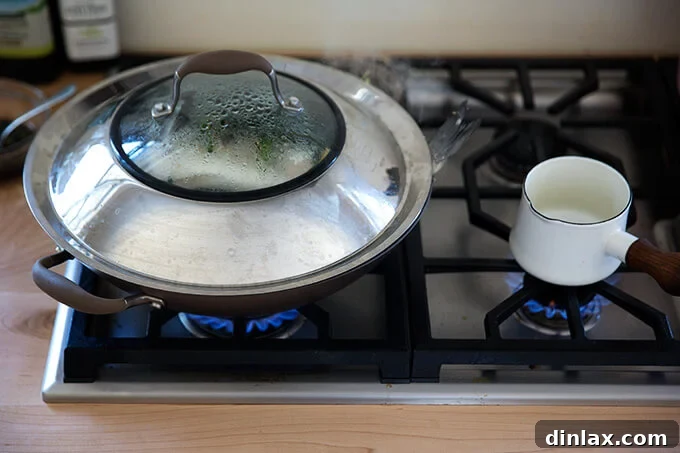
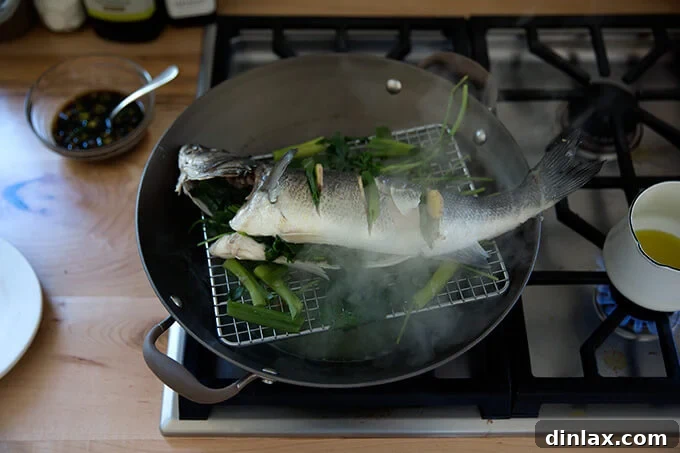
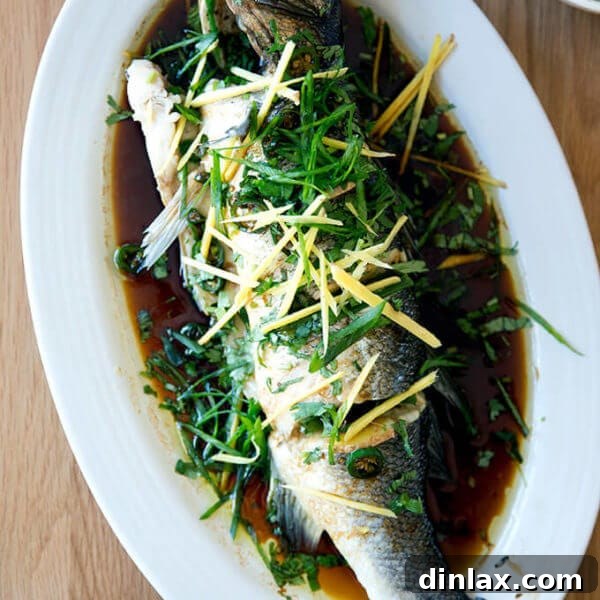
Once steamed, carefully transfer the fish to a serving platter. First, pour the shimmering hot oil over the fish – listen for the delightful sizzle! Then, quickly heat the soy sauce mixture in the now-empty small pot until it bubbles, and pour that over the fish as well.
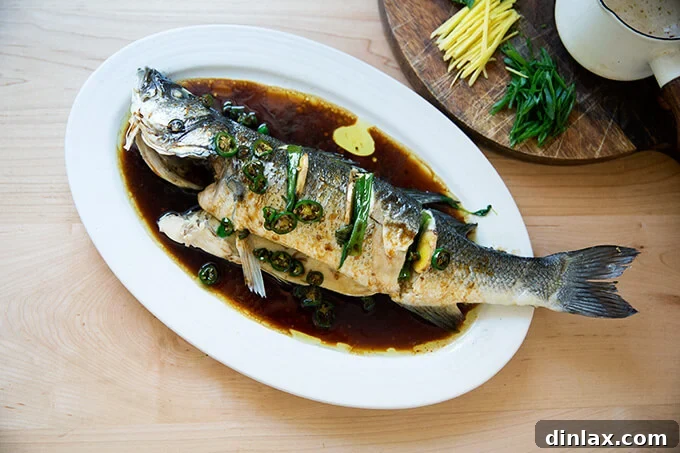
Finally, generously garnish the entire dish with your reserved slivered ginger, fresh scallions, and cilantro. This adds a vibrant pop of color and an aromatic finish.
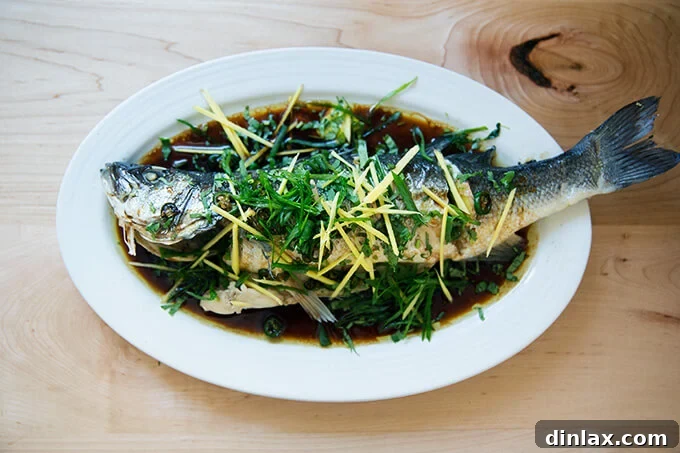
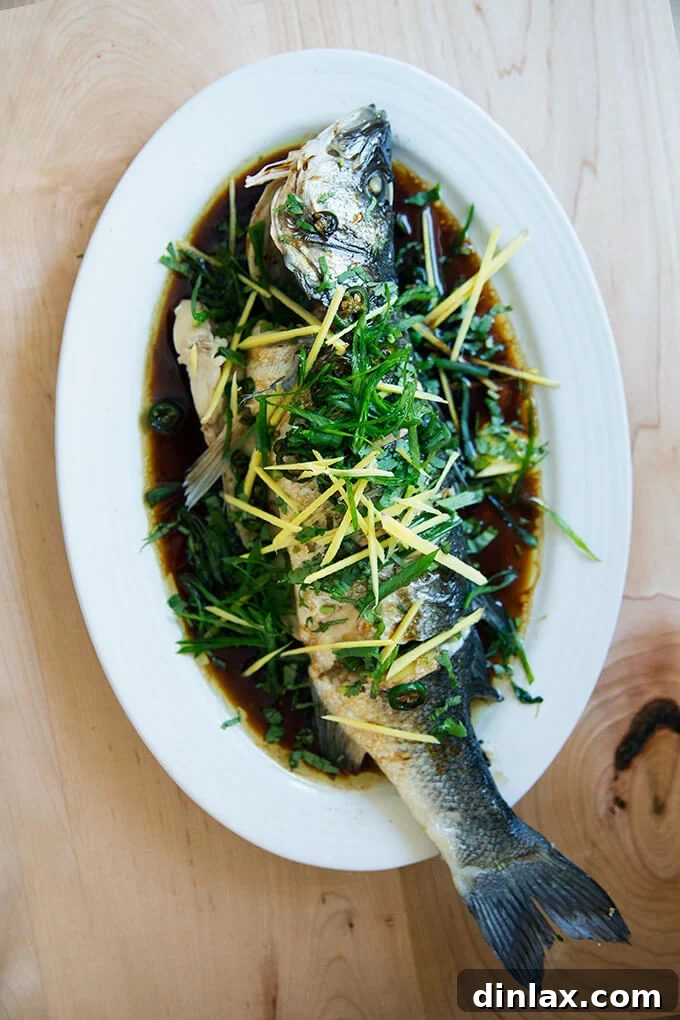
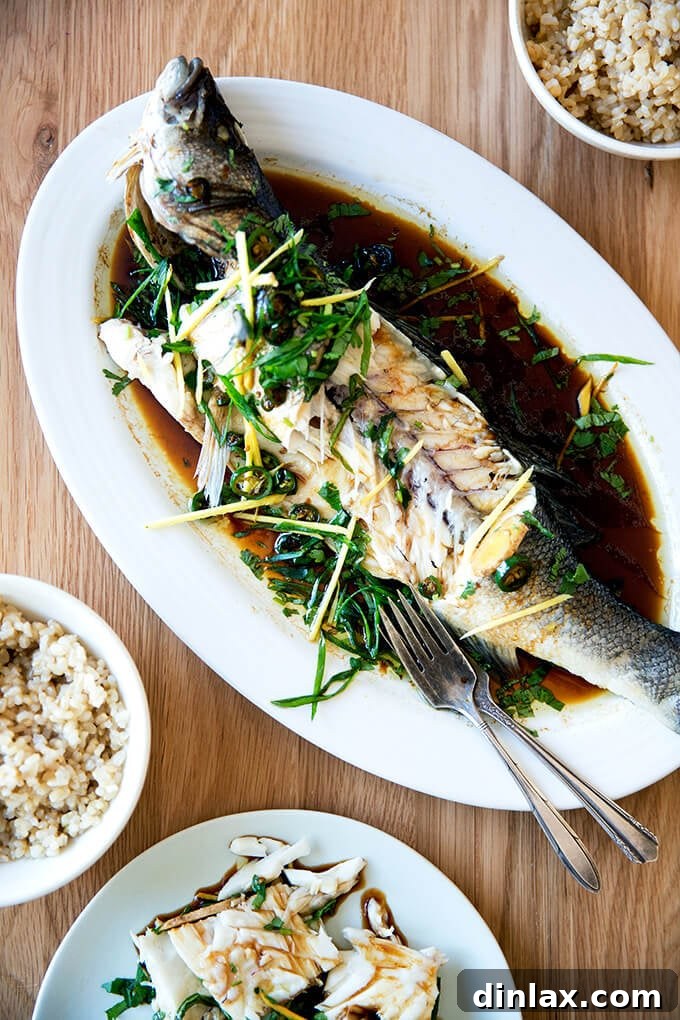
This dish is exceptionally good when served with steamed rice, which perfectly complements the rich sauce and tender fish.
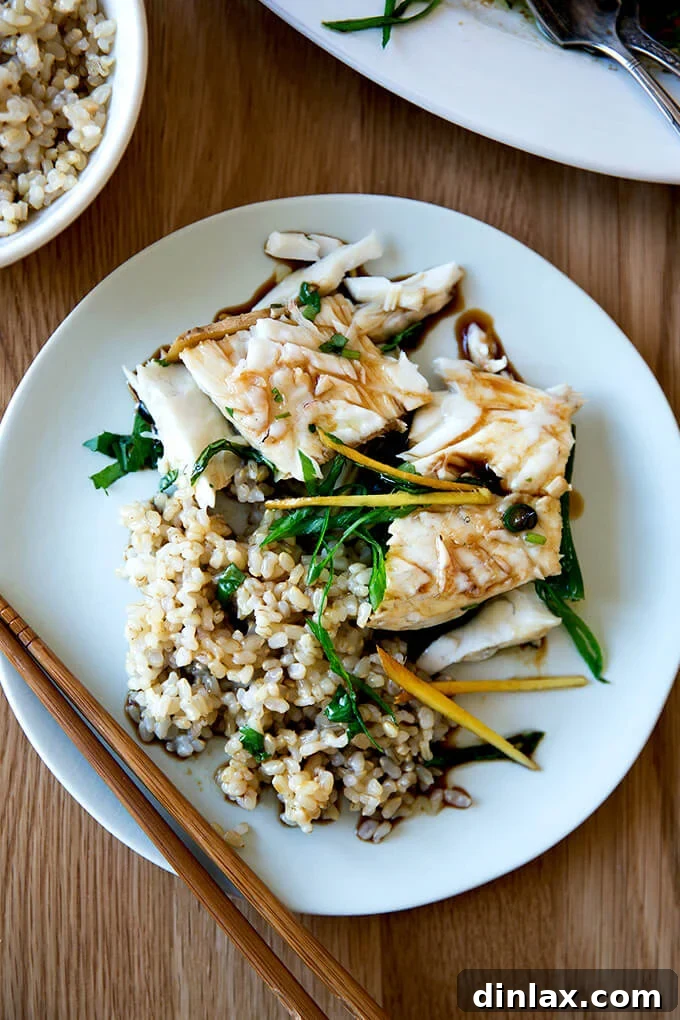
For a fantastic side, I highly recommend my recipe for Perfect Instant Pot Brown Rice. It’s incredibly easy to make and pairs beautifully with the Chinese-style fish.
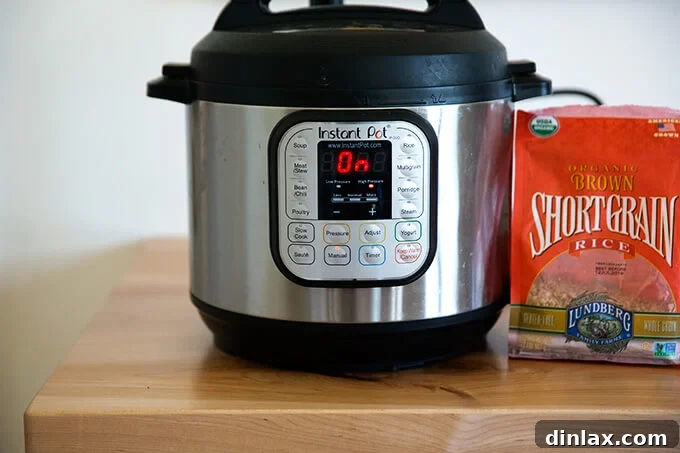
A final nod to the wonderful inspiration behind this recipe: Alana Kysar’s essential Aloha Kitchen cookbook.
Chinese-Style Steamed Whole Fish with Ginger and Scallions
Rating: 5 out of 5 stars based on 5 reviews
- Author: Alexandra Stafford
- Total Time: 30 minutes
- Yield: Serves 2
Description
Source: Alana Kysar’s Aloha Kitchen
A few notes for the best results:
- If you plan to serve this delicious fish with rice, start cooking your rice first. I highly recommend making Perfect Instant Pot Brown Rice; you’ll only need the rice preparation part, not the dressing recipe.
- This recipe requires a wide pot or pan with a well-fitting lid for effective steaming. A wok is ideal because its wide shape allows the cooling rack (used as a steamer basket) to rest higher in the pan, ensuring the simmering water doesn’t touch the fish directly. It also comfortably accommodates a whole fish.
- The cooking time for the fish will vary depending on its size. For a Branzino weighing between 1.25-1.5 lbs, 9 to 10 minutes of steaming is typically perfect. If you’re using a larger fish, around 2 lbs, extend the steaming time to approximately 16-20 minutes. Alana’s original recipe calls for Moi or other mild, white-fleshed fish, which are excellent alternatives to Branzino.
Ingredients
For the sauce:
- 1 tablespoon sesame oil
- 1/4 cup soy sauce
- 2 teaspoons sugar
- 1 hot chili, thinly sliced (optional, for those who enjoy a little heat)
For steaming the fish:
- 1 whole fish, such as Branzino, weighing about 1–1.5 lbs (cleaned and scaled)
- Kosher salt and freshly ground black pepper, to taste
- 6 scallions, green parts only, cut into 2-inch lengths
- One 3-inch piece of fresh ginger, sliced crosswise into thin coins
- A few small handfuls of fresh cilantro sprigs
- 2 tablespoons sake (Japanese rice wine)
For finishing and garnish:
- 2 tablespoons olive oil (or traditional macadamia nut oil, if available)
- 1 scallion, green part only, thinly sliced on the bias for an elegant presentation
- One 2-inch piece of fresh ginger, peeled and finely julienned
- Small handful of fresh cilantro, finely chopped
Instructions
- Make the sauce. In a small bowl, thoroughly whisk together the sesame oil, soy sauce, sugar, and the thinly sliced chili (if you are using it). Set this flavorful sauce aside.
- Prepare the fish. Using a sharp paring knife or chef’s knife, make three or four 1-inch deep slits on each side of the fish, cutting through the skin down to the bone. Gently pat the entire fish dry with paper towels to ensure optimal seasoning and texture. Season the fish generously all over, inside and out, with kosher salt and freshly ground black pepper. Insert one piece of scallion and one ginger coin into each of the slits you made. Stuff the remaining half of the scallions and ginger into the fish’s cavity, along with a handful of fresh cilantro.
- Prepare the steamer bed. Lay the remaining cilantro, scallions, and ginger evenly on top of your chosen steamer basket (a cooling rack placed inside a wok works perfectly as a makeshift steamer). Carefully place the seasoned fish on this aromatic bed.
- Steam the fish. In a large, wide pot such as a wok, bring about 2 inches of water to a vigorous boil over high heat. Once boiling, carefully set the steamer basket containing the fish inside the pot, ensuring that the water level is below the fish. Pour the 2 tablespoons of sake evenly over the fish. Immediately cover the pan with a tight-fitting lid. Reduce the heat to medium-low, maintaining a gentle simmer. Steam the fish for 9-10 minutes (refer to notes above for timing adjustments based on fish size), until the flesh turns opaque and flakes easily with a fork. Once cooked, carefully transfer the steamed fish to your serving platter. Discard the spent aromatics from the steamer.
- Finish the dish. Heat the 2 tablespoons of olive oil (or macadamia nut oil) in a small saucepan over high heat until it begins to shimmer and shows signs of fizzing slightly. Carefully pour this sizzling hot oil over the fish on the platter. Return the now-empty saucepan to the burner and pour in the reserved soy sauce mixture. Heat the sauce until it bubbles up vigorously – this typically happens almost instantaneously. Immediately pour the hot sauce over the fish. Finally, scatter the thinly sliced scallions, julienned ginger, and finely chopped cilantro over the top of the fish for a fresh, aromatic garnish. Serve this exquisite Chinese-style steamed whole fish immediately with warm bowls of steamed rice.
- Prep Time: 20 minutes
- Cook Time: 10 minutes
- Category: Dinner
- Method: Steaming
- Cuisine: Chinese
Did you make this recipe?
Tag @alexandracooks on Instagram and hashtag it #alexandracooks