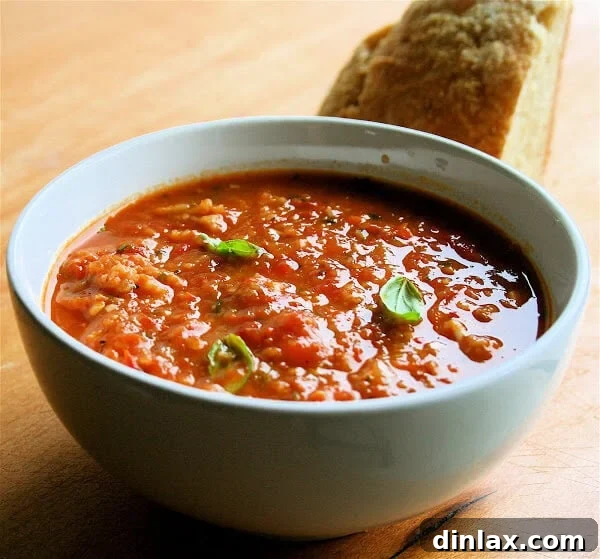
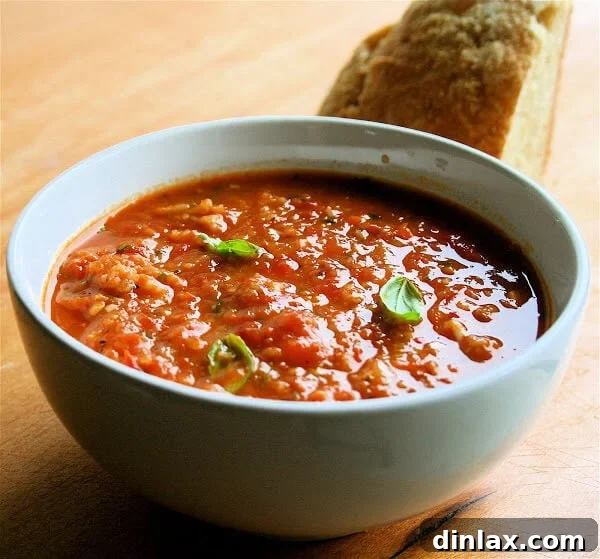
The Soulful Simplicity of Roasted Tomato and Bread Soup: A Tuscan Classic Reimagined
Imagine this: four ladies, captivated by an exquisite bowl of tomato and bread soup at an enchanting San Clemente café, found themselves compelled to seek out the chef. Through the bustling kitchen window, they showered him with praise, gushing over the soup’s profound, rich flavors and eagerly inquiring about any hidden culinary secrets. The chef, both flattered and genuinely transparent, simply listed the core ingredients: fresh tomatoes, aromatic basil, sweet onions, crusty bread, and a touch of salt. A seemingly straightforward answer that left the women in disbelief, secretly yearning for a more complex revelation. Perhaps a drizzle of exotic white truffle oil, a delicate goats’-milk foam, or a splash of 80-year-old Xeres vinegar? Yet, in that moment, the timeless principle of simplicity once again triumphed, proving that true culinary magic often lies in the unadorned beauty of quality ingredients.
This heartwarming experience resonates deeply with the spirit of Pappa al Pomodoro, a rustic Tuscan bread and tomato soup celebrated for its humble origins and robust flavor. It’s a dish that embodies the very essence of “cucina povera” – the Italian tradition of using simple, readily available ingredients to create incredibly flavorful and satisfying meals. Much like its cousins such as panzanella salad, bread pudding, bruschetta, or even French toast, Pappa al Pomodoro was born out of a desire to prevent day-old bread from going to waste. This shared philosophy of resourceful cooking and the pivotal role of bread serve as the common thread connecting these beloved traditional recipes.
Unveiling Pappa al Pomodoro: A Taste of Tuscan Heritage
Pappa al Pomodoro is more than just a soup; it’s a culinary embrace of Italian ingenuity and the vibrant flavors of the Mediterranean. Historically, this beloved dish originated in the countryside of Tuscany, where farmers and homemakers skillfully transformed stale bread and ripe garden tomatoes into a nourishing and deeply comforting meal. It’s a testament to the power of basic ingredients, elevated through thoughtful preparation. The word “pappa” itself translates to “pap” or “mush,” hinting at the soup’s wonderfully thick, almost stew-like consistency achieved by the softened bread. This rich heritage makes it a perfect dish for late summer, when tomatoes are at their peak, bursting with sun-drenched sweetness.
While the original story mentions the use of chicken stock for achieving the right consistency, it’s worth noting that many traditional versions, and even updated recipes from the original author Alexandra Stafford, now lean towards using water. This subtle change allows the pure, intense flavor of the tomatoes to shine even brighter, making the soup truly sing. The beauty of Pappa al Pomodoro lies in its adaptability; whether you opt for stock or water, the foundational elements remain the same: rich tomatoes, aromatic vegetables, fresh basil, and that indispensable stale bread.
Slow roasted tomatoes, onions, shallots and garlic form the base of this Tuscan tomato soup.
The Magic of Roasting: Deepening Tomato Flavor
The secret to transforming this humble soup into an unforgettable culinary experience often lies in one crucial step: roasting the vegetables. While a fresh tomato soup can be delightful, slow roasting tomatoes, onions, garlic, and shallots at a gentle temperature unleashes a depth of flavor that simply cannot be replicated otherwise. This process, spanning several hours, allows the natural sugars within the vegetables to caramelize, intensifying their sweetness and creating complex, savory undertones. The tomatoes become jammy and concentrated, their acidity mellowed, while the onions and shallots turn incredibly tender and sweet. Garlic, when roasted, loses its sharp pungency and develops a wonderfully mild, nutty flavor.
This caramelization process is what makes the soup so profoundly satisfying. It concentrates the essence of each ingredient, building a robust flavor profile that requires no extravagant additions. As the chef in San Clemente instinctively knew, when you start with such a rich, flavorful base, the need for any “exotic” or unexpected flavorings becomes entirely unnecessary. The true art is in coaxing out the inherent deliciousness of simple, high-quality produce. Roasting not only sweetens and deepens the tomato flavor but also adds a layer of umami, creating a base that guarantees a successful and deeply flavorful soup every time.
Crafting Your Own Culinary Masterpiece: The Recipe
Inspired by the simplicity and profound taste of traditional Pappa al Pomodoro, this recipe, originally shared by Alexandra Stafford at alexandracooks.com, guides you through creating a roasted tomato and bread soup that is utterly customizable. Remember, the true essence of this dish is to adjust it “completely to taste.” Starting with a foundation of slow-roasted vegetables ensures a rich, flavorful base, guaranteeing a successful outcome for your culinary endeavor. This recipe yields approximately 1.5 to 2 quarts of soup and takes about 3 hours and 35 minutes of total time, including a generous 3 hours for roasting.
Ingredients: The Building Blocks of Flavor
- Fresh Tomatoes: Halved if large (like Roma or Beefsteak), left whole if cherry or grape. You’ll need enough to fill a single-layer sheet tray. Choose ripe, seasonal tomatoes for the best flavor.
- 1 large Onion: Peeled and chopped into big chunks.
- 1 large Shallot: Peeled and chopped into big chunks.
- 1 Head of Garlic: Cloves removed and peeled. Roasting whole cloves mellows their flavor beautifully.
- A few Carrots: Peeled and cubed. These add a touch of sweetness and depth, but other root vegetables or celery could also be used.
- Olive Oil: A good quality extra virgin olive oil for drizzling and enhancing flavors.
- Kosher Salt: To season the vegetables and soup.
- Fresh Cracked Pepper: For seasoning.
—
- 3–4 slices of Stale Bread: French or Italian bread works wonderfully. Day-old bread is ideal as it absorbs the soup liquid without becoming mushy too quickly.
- About 2 cups Vegetable Stock or Water: While chicken stock was initially suggested, the author (Alexandra Stafford) now recommends water to let the tomato flavor truly shine. Use a low-sodium variety if opting for stock.
- 1 Bunch Fresh Basil: Large leaves roughly chopped or torn. Basil is crucial for that classic Italian aroma and taste.
- Crushed Red Pepper Flakes: Optional, for a subtle kick.
- Shaved Parmigiano Reggiano and extra crusty bread for serving: Optional, but highly recommended for an authentic experience.
Note: This recipe is highly adaptable. Feel free to adjust ingredient amounts based on your preference and the ripeness of your produce.
Step-by-Step Instructions: From Roasting Pan to Bowl
- Roast the Vegetables: Begin by preheating your oven to a gentle 300°F (150°C). Line a large, rimmed baking sheet with all your prepared vegetables—tomatoes, onion chunks, shallot chunks, peeled garlic cloves, and cubed carrots. Ensure they are spread in a single layer to allow for even roasting and caramelization; avoid overcrowding the pan. Drizzle generously with a good quality olive oil, then season liberally with kosher salt and fresh cracked pepper to taste. Roast for approximately three hours, or until the vegetables are incredibly soft, slightly shriveled, and beautifully caramelized around the edges. This slow roasting process is key to developing their deep, sweet flavors.
- Prepare the Bread: While the vegetables are roasting, slice your day-old French or Italian bread into ½-inch thick pieces. The goal here is to dry out the bread, not necessarily to brown it. You can simply leave the slices on your kitchen counter for an hour or two to air-dry, or for a quicker method, toast them briefly in a toaster until they are firm but still pale. This dryness allows the bread to absorb the soup’s liquid effectively, creating that signature thick texture without disintegrating too quickly.
- Puree the Soup: Once the roasted vegetables are perfectly tender and aromatic, carefully transfer them to a large pot. Add about 2 to 2.5 cups of vegetable stock or water to the pot. The exact amount can be adjusted based on the volume of your roasted vegetables and your desired soup consistency; a good starting point is roughly half the volume of your roasted vegetables in liquid. Bring the mixture to a gentle simmer over medium heat. At this stage, season with an initial pinch of salt and, if you like a little warmth, add some crushed red pepper flakes. Now, incorporate the entire bunch of fresh basil leaves. Break two slices of your prepared dry bread into medium-sized cubes and add them to the pot.
- Achieve Desired Consistency: Using an immersion blender directly in the pot, or carefully transferring the mixture to a food processor or traditional blender (working in batches if necessary), begin to puree the soup. Blend until it reaches a rustic, slightly chunky consistency. Pappa al Pomodoro is traditionally not silky smooth, so a bit of texture is desirable. Taste the soup and adjust the seasoning: add more salt if needed, or incorporate additional dry bread cubes if you prefer a thicker soup. If the soup is too thick, gradually add more stock or water until it reaches your desired consistency. Continue to simmer gently for another 5-10 minutes to allow the flavors to meld and the bread to fully soften and thicken the soup.
Serving Suggestions and Delicious Variations
Pappa al Pomodoro is a versatile dish that can be enjoyed in many ways. Serve it warm, garnished with a generous scattering of freshly shaved Parmigiano Reggiano cheese and a final drizzle of high-quality extra virgin olive oil. A side of additional crusty bread is essential for dipping and soaking up every last drop of the rich soup. For a truly authentic experience, pair it with a light, crisp white wine or a young, fruity red from Tuscany.
Beyond being a delightful soup, its rustic, slightly chunky texture makes it an excellent base for a pasta sauce. Simply leave it a bit thicker, perhaps adding a touch more olive oil, and toss it with your favorite short pasta like penne or rigatoni for a quick and flavorful meal. For a heartier twist, you can stir in some cannellini beans or add a poached egg just before serving. Vegetarians can easily make this soup by ensuring they use vegetable stock or, as recommended, simply water, to keep it entirely plant-based. Experiment with different fresh herbs like oregano or thyme, or vary the amount of red pepper flakes to suit your palate. This soup also freezes beautifully, making it perfect for meal prepping and enjoying the taste of summer well into the colder months.
Why This Soup Resonates: Simplicity and Comfort
In a culinary world often striving for complexity, the enduring appeal of Roasted Tomato and Bread Soup, or Pappa al Pomodoro, lies in its profound simplicity. It’s a dish that teaches us the beauty of letting quality ingredients speak for themselves, transforming humble elements into something extraordinary. This soup is not just food; it’s a comforting embrace, a warm memory of late summer days, and a testament to the timeless wisdom of traditional Italian cooking. Whether you’re gathering with loved ones or seeking a moment of quiet solace, a bowl of this rustic, flavorful soup offers a deeply satisfying experience. We encourage you to try this timeless Tuscan recipe and discover for yourself the magic that happens when simple ingredients are treated with care and attention.