Mastering Your Cinder Block Garden: A Comprehensive Guide to Bountiful Harvests
Embarking on a gardening journey can be incredibly rewarding, transforming a simple patch of land into a vibrant source of fresh produce. Recently, we plunged headfirst into establishing our own cinder block garden, and the experience has been nothing short of enlightening. As the robust foundation was laid and the nutrient-rich soil prepared, we followed expert guidance to cultivate a space designed for success. This guide distills our hands-on learning into a straightforward, actionable plan, showing you how to build a flourishing garden that promises abundant yields by prioritizing soil health.
Why Choose a Cinder Block Garden? The Benefits Unveiled
Cinder block gardens, often referred to as concrete block gardens or raised beds, offer a multitude of advantages, especially for home gardeners. Their inherent durability ensures a long-lasting structure, defining your gardening space with clean lines. They provide excellent drainage and allow for precise control over soil composition, which is crucial for healthy plant growth. Additionally, raised beds can offer improved accessibility, reduce compaction, and even deter some pests. They are a fantastic option for beginners and seasoned gardeners alike, providing a structured, efficient, and often aesthetically pleasing way to grow your own food.
Your Step-by-Step Guide to a Thriving Cinder Block Garden
Step 1: Vision, Planning, and Resource Gathering
Every successful garden begins with meticulous planning. Before you even lift a block, consider your garden’s location. Sunlight is paramount – most vegetables require at least 6-8 hours of direct sunlight daily. Assess your chosen spot for water access, proximity to your home (for convenience), and overall topography. While a flat area is ideal, cinder block gardens can be adapted for gentle slopes with proper reinforcement. Determine the desired size and shape of your garden bed, envisioning how it will integrate with your outdoor space.
To lay a solid theoretical foundation, we highly recommend investing in a comprehensive guide like Lynn Gillespie’s e-book, “Cinder Block Gardens.” Available for just $19.95, this resource provides invaluable insights, detailed instructions, and proven methods for constructing and maintaining your garden. Reading through it will equip you with the knowledge needed to avoid common pitfalls and optimize your garden’s potential. While the original advice humorously suggested marrying someone strong, the truth is that building a cinder block garden, while requiring effort, is achievable through smart planning, the right tools, and perhaps a helpful friend or two! Teamwork makes the dream work, whether it’s with a partner, family, or a neighbor.
Step 2: Assembling Your Garden Arsenal
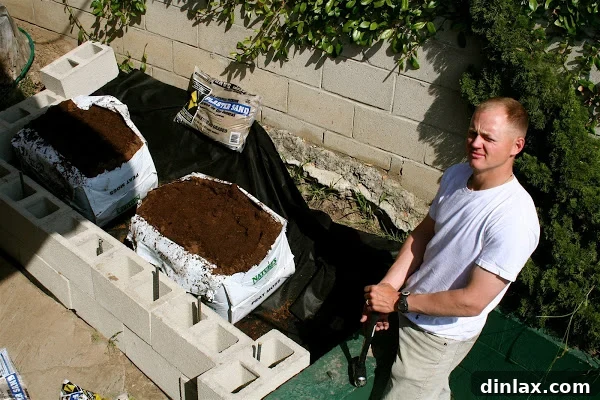
Once your plan is firm, it’s time for a trip to your local home and garden supply store. A pickup truck or a borrowed trailer will prove indispensable, as the total weight of the basic supplies for a decent-sized garden can easily approach 1500 pounds! Quality materials are the bedrock of a durable and productive garden, so choose wisely.
Basic Construction Materials for Your Cinder Block Garden:
- 24 Cinder Blocks (approx. $0.79 each): These form the perimeter and structure of your raised bed. Their hollow cores can also be used for planting herbs or small vegetables, maximizing your growing space.
- 2 Bales (3.8 c.f. each) Peat Moss (approx. $12.00 each): An essential component of your soil mix. Peat moss helps retain moisture and provides a lightweight, airy structure, crucial for root development.
- 10 Bags (50-lb. each) All-Purpose Sand (approx. $2.80 each): Sand improves soil drainage, preventing waterlogging and promoting healthy root systems, especially important in raised beds.
- 3 Bags (2 c.f. each) Quality Compost (approx. $6.00 each): The heart of your soil blend. Compost enriches the soil with vital nutrients, beneficial microorganisms, and improves soil structure, embodying the principle of “feeding the soil, not just the plants.”
- 1 Roll Commercial-Grade Weed Barrier (approx. $11.00): This vital layer prevents weeds from growing up into your garden bed from beneath, reducing maintenance and competition for your plants.
Essential Tools for the Novice Gardener:
While the above covers the core materials, a few additional tools will make your gardening experience smoother and more enjoyable:
- Garden Hose & Spray Nozzle: For efficient and controlled watering, especially during planting and establishment.
- Sink Adapter (if no outside water source): A practical solution for urban dwellers or those without convenient outdoor spigots.
- Shovel and Rake: Indispensable for tilling, leveling, mixing soil, and general garden maintenance.
- Rebar Stakes and Sledgehammer (if building on a slope): Provides crucial stability and prevents your cinder block structure from shifting on uneven ground.
Forward-Thinking Garden Additions (Costs to Consider Down the Road):
Planning for future needs ensures your garden continues to thrive and meet your growing demands:
- Mulch: Helps retain soil moisture, suppresses weeds, and regulates soil temperature.
- Cages for Vining Plants (e.g., Tomatoes): Provides support as plants grow, keeping fruit off the ground and preventing disease.
- Trellis for Climbing Plants (e.g., Pole Beans, Cucumbers): Maximizes vertical growing space and improves air circulation, leading to healthier plants and easier harvesting.
Step 3: Laying the Foundation: Garden Construction
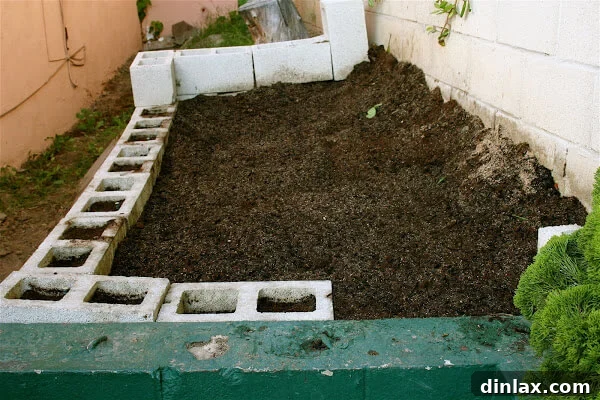
With your supplies gathered, it’s time to build! Start by clearing your chosen site of any existing vegetation, rocks, or debris. Even if the area appears flat, minor leveling with a shovel and rake will ensure a stable foundation for your cinder blocks. Precision in this step will pay dividends later, preventing uneven settlement and structural issues.
Follow the specific instructions outlined in your gardening guide for laying the cinder blocks. Typically, this involves creating a rectangular or square perimeter, ensuring each block is snugly placed against its neighbor. The hollow cores of the blocks can face inwards or outwards, depending on whether you plan to plant in them. Once the perimeter is established, carefully lay down your commercial-grade weed barrier, ensuring it covers the entire bottom of the bed and extends slightly up the sides. This barrier is a crucial defense against tenacious weeds. Finally, it’s time to mix and fill your soil. Combine the peat moss, sand, and compost in the recommended proportions, creating a loose, well-draining, and nutrient-rich growing medium. This specially formulated soil is key to the “feed the soil, not the plants” philosophy, providing a robust environment where your plants can truly flourish.
Step 4: Cultivating Life: Choosing and Planting Your Crops
Now for the exciting part: bringing your garden to life! Consult a comprehensive plant reference guide, such as the “Vegetable Reference Guide” often found in gardening e-books, to select crops best suited for your climate, available sunlight, and personal preferences. Consider factors like growing season, space requirements, and companion planting benefits. For example, some plants thrive when grown near others, while certain combinations can deter pests or improve growth.
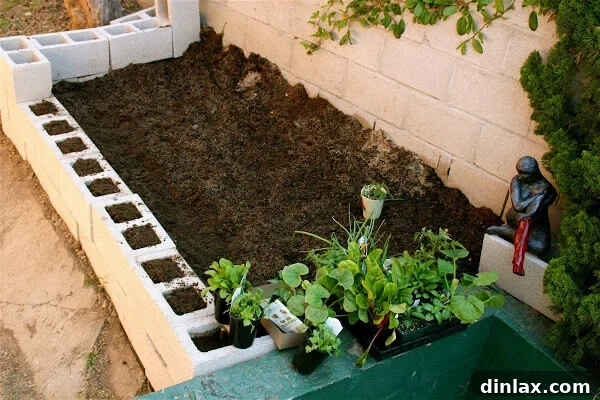
Decide whether you’ll start from seeds or purchase starter plants. Seeds offer a wider variety and are more cost-effective, but require more patience and care. Starter plants provide a head start and are great for beginners. When buying plants, always choose robust, healthy specimens – look for strong stems, good leaf color, and no signs of pests or disease. As for specific plants, we planted varieties like garlic, basil, cilantro, oregano, and tomatoes. When selecting tomato plants, consider sturdy, disease-resistant varieties that promise a bountiful harvest, much like choosing a robust “lady with the red foot” (a humorous reference to a strong, fruitful plant).
Planting in a cinder block garden offers unique advantages. You can utilize the hollow cores of the blocks for individual plants or herbs, creating a modular and organized layout. Ensure proper spacing between plants to allow for ample growth and air circulation. Plant seeds or seedlings at the recommended depth, gently firm the soil around them, and give your new garden residents a good initial watering. This first drink is vital for settling the soil and reducing transplant shock.
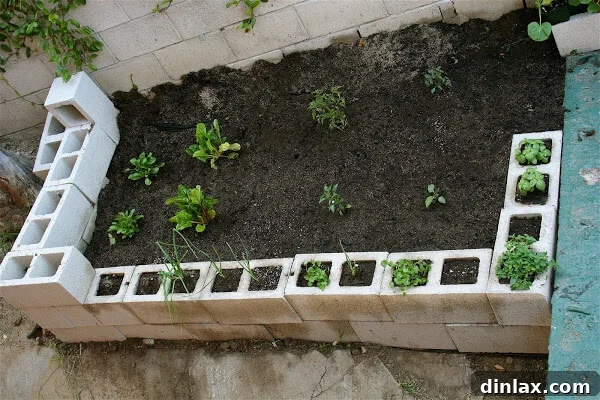
Step 5: Nurturing Growth: Care and Maintenance
Once planted, your primary role shifts to nurturing your garden. Consistent watering is crucial, especially during dry spells and for young plants. Monitor soil moisture daily; the goal is evenly moist soil, not soggy or parched. Overhead watering is generally fine, but consider drip irrigation for water efficiency and to prevent certain foliar diseases. While your weed barrier significantly reduces weeds, some may still appear. Regular, gentle weeding will prevent them from competing with your crops for nutrients and water.
Keep a watchful eye for pests and diseases. Early detection is key to successful management. Often, organic solutions like neem oil, insecticidal soap, or simply hand-picking pests can keep problems at bay. As your plants grow, provide necessary support for vining crops like tomatoes and pole beans. Harvest your produce regularly, as this often encourages further production. The joy of picking fresh, homegrown vegetables and herbs is one of gardening’s greatest rewards.
Step 6: The Sustainable Loop: Embracing Composting
To truly embrace sustainable gardening and enhance your soil’s long-term vitality, consider starting a compost pile. Composting is the process of recycling organic matter – kitchen scraps, yard waste, and plant trimmings – into a rich, dark, and nutrient-dense soil amendment. It’s an eco-friendly practice that reduces household waste, enriches your garden soil, and minimizes the need for synthetic fertilizers.
You can purchase a compost container online or from your local home and garden center. Options range from simple bins to sophisticated tumblers. Alternatively, you can construct a compost pile or bin following instructions like those Ms. Gillespie might provide. The basics of composting involve layering “greens” (nitrogen-rich materials like food scraps and grass clippings) with “browns” (carbon-rich materials like dried leaves, shredded paper, and wood chips), and keeping the pile moist and aerated. Over time, microorganisms break down the materials into valuable humus.
While some specialized composters can be pricey (like the $500 model mentioned in the original text, which is likely a high-end tumbler), many effective and affordable options exist, including simple wire bins or DIY wooden structures. The investment in composting pays off through healthier soil, more robust plants, and a significant reduction in waste sent to landfills.
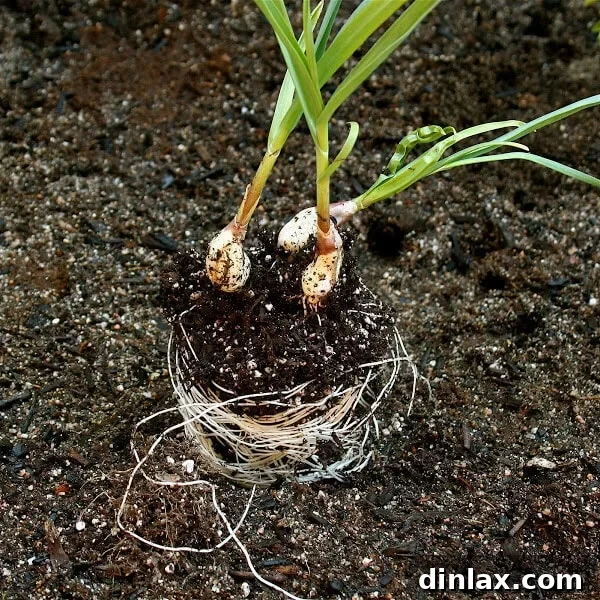
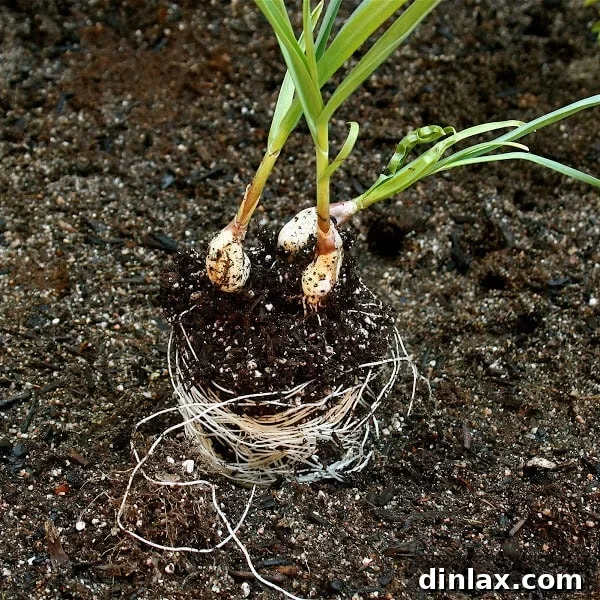
Pictured above are individual garlic cloves, each nestled within its own cinder-block hole. With time and care, each of these promises to grow into a full, robust bulb, showcasing the efficiency of this planting method.
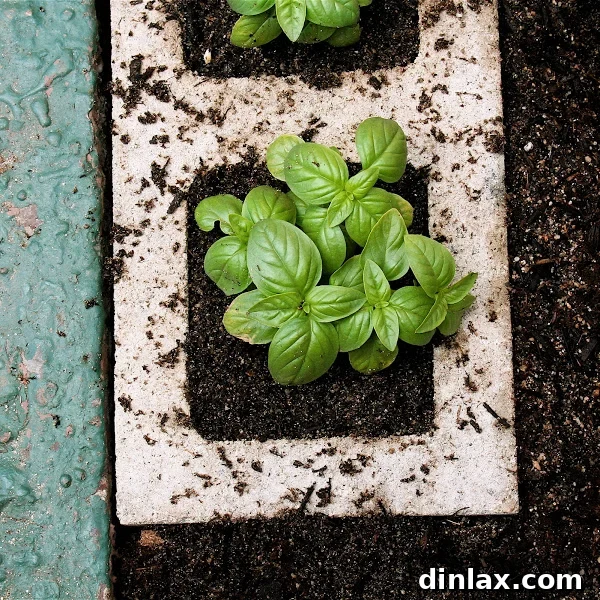
We also took advantage of the modularity of the cinder blocks to plant two vibrant bunches of basil, two generous bunches of cilantro, and a fragrant bunch of oregano. Each of these herbs thrives in its dedicated cinder-block hole, demonstrating how you can maximize your garden’s diversity and yield.
Celebrating Your Harvest: Success Stories and Future Growth
Watching your garden flourish, from tiny seeds to bountiful harvests, is an incredibly fulfilling experience. Each successful crop, each vibrant leaf, is a testament to your effort and commitment to feeding both your family and the soil. Your cinder block garden is not just a growing space; it’s a living testament to sustainability, fresh eating, and the simple joy of connecting with nature. We encourage you to start your own garden, experiment with different plants, and continuously learn and adapt. Happy gardening!
Further Reading and Resources
For more insights into our gardening journey and continued updates on our cinder block garden, please visit our related posts:
- Garden Update
- Garden Update II