Mastering Suzanne Goin’s Addictive Slow-Cooked Kale: A Culinary Journey Beyond Stuffing
My kitchen adventures often lead down unexpected paths, and lately, I’ve been fixated on Suzanne Goin’s famed stuffing, particularly the slow-cooked kale component. However, despite my best intentions, I find myself unable to progress beyond the very first step: preparing the kale. It’s a delicious dilemma, as each batch of this exquisitely cooked kale vanishes almost as soon as it’s off the stove. This captivating side dish has repeatedly hijacked my plans, leaving my meticulously gathered loaves of country bread and bulbs of fennel for the intended stuffing recipe in a state of hopeful neglect.
For someone who primarily consumed kale either raw or in a lightning-fast sauté, Goin’s method of slow-cooking was an entirely new revelation. Traditionally, I embraced raw kale for its crisp texture and its ability to stretch across multiple meals. When a quick sauté was in order, it was always a high-heat, rapid affair, seasoned simply with a splash of olive oil, garlic, and a sprinkle of crushed red pepper flakes. While those methods have their merits, I can confidently say that after experiencing Goin’s technique, my perspective on cooking kale has been forever altered. I’m genuinely not sure I’ll ever go back to my old ways.
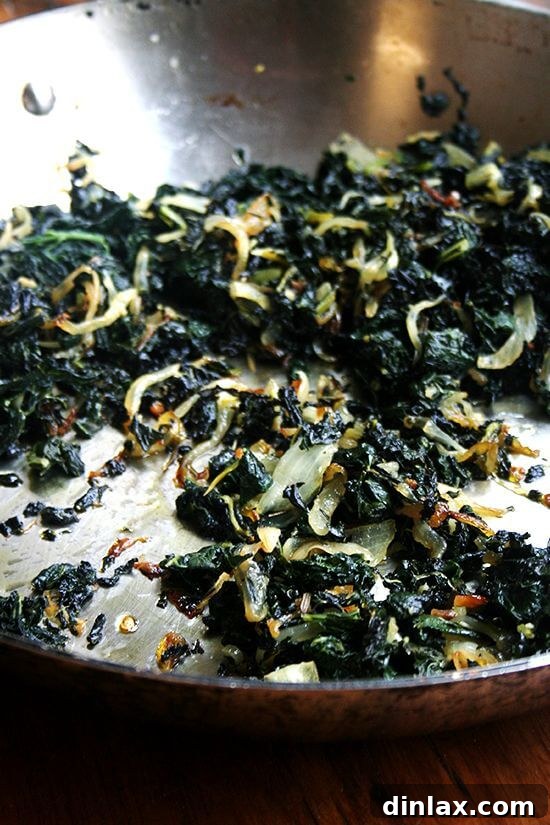
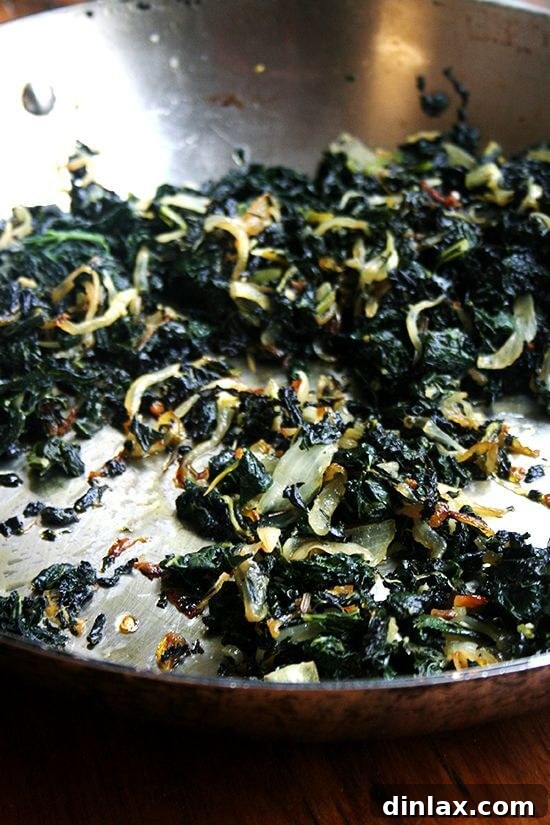
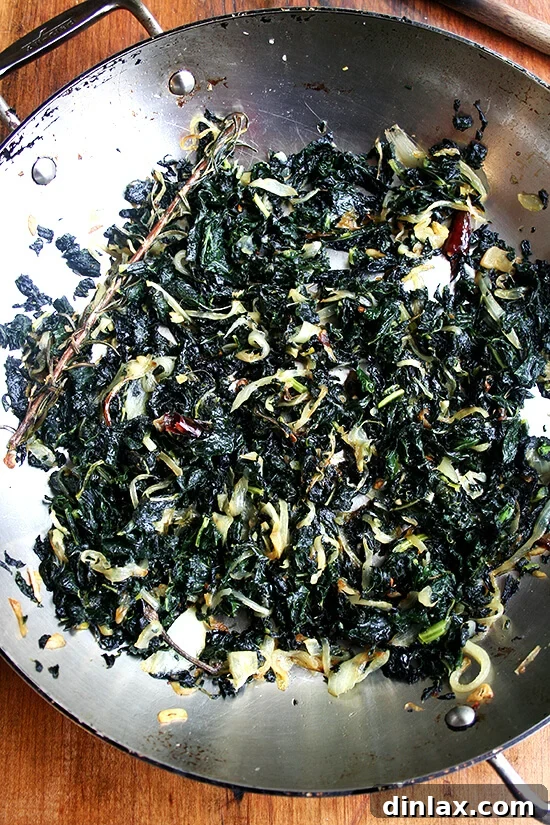
Suzanne Goin’s approach to kale transforms this humble leafy green into something truly extraordinary. The process begins with blanching the kale, a crucial step that softens its robust texture. Once blanched and roughly chopped, the kale is introduced to a pan, where it’s gently sautéed over low heat for a full thirty minutes. This extended, patient cooking occurs in a generous bath of olive oil, infused with the aromatic trinity of onions, garlic, fragrant rosemary, and the subtle warmth of chile de árbol. The result is nothing short of culinary magic. As it cooks, the kale gradually deepens in color, developing an almost black hue, while its edges become delightfully crispy. The flavor profile is profoundly sweet, savory, and undeniably addictive. It’s this very dish that provides a profound insight into the vegetarian palate, making me understand, almost entirely, the allure of a plant-based diet.
My initial encounter with this slow-cooked kale was impulsive and utterly satisfying. I devoured the entire first batch—nearly a pound of kale—directly from the pan. Each spoonful was a revelation, scooped onto toasted bread, prompting a fleeting wish that I had the foresight to poach an egg to accompany it. The second batch, cooked with equal enthusiasm, suffered a similar fate. While a portion was quickly consumed, I managed to save just enough to generously top a giant omelet, which, sprinkled with crumbled feta, became a memorable dinner that my partner Ben and I enthusiastically devoured. This kale is not merely a side; it’s a star in its own right.
The Art of Slow Cooking Kale: Unlocking Deep Flavors
The beauty of Goin’s slow-cooking method lies in its ability to coax out an incredible depth of flavor from the kale that faster cooking methods simply cannot achieve. By keeping the heat low and extending the cooking time, the kale has ample opportunity to tenderize, caramelize, and absorb the rich aromatic notes of olive oil, onion, garlic, rosemary, and the gentle heat of chile de árbol. This process breaks down the kale’s tougher fibers, transforming it into a silken, savory, and slightly crispy delight.
Many home cooks are accustomed to high-heat cooking for greens, aiming for a vibrant green color and a slight crunch. However, Goin’s recipe champions the opposite approach, demonstrating that a patient, slow sauté can yield a far more complex and satisfying result. The subtle bitterness often associated with kale dissipates, replaced by a profound sweetness and an umami-rich character that is genuinely irresistible. This dish is not just about nutrition; it’s about culinary transformation, elevating a simple vegetable to a gourmet experience.
Tips for Perfect Slow-Cooked Kale Every Time
Achieving the perfect texture and flavor for this slow-cooked kale requires attention to a few key details. Firstly, the type of kale makes a difference. While both Tuscan (Lacinato, black, or dinosaur kale) and curly kale yield delicious results, Tuscan kale tends to have a slightly more tender leaf structure that caramelizes beautifully. Its long, narrow, dark green bumpy leaves offer a distinct texture that curly kale’s more ruffled form sometimes misses.
Secondly, proper blanching is essential. This initial step helps to soften the kale and ensures a more even cooking process during the sauté. Squeezing out excess water after blanching is vital to prevent steaming and allow the kale to truly fry and crisp at the edges. This also concentrates the flavor and helps the kale absorb the seasoned olive oil more effectively.
Perhaps the most crucial tip, which I learned from personal experience, is to avoid overcrowding the pan. In one instance, I tried to cram more than a generous layer of kale into my pan, hoping to expedite the process. While still tasty, the kale didn’t achieve the desired deep caramelization and crispiness that makes this dish so special. Unlike spinach or chard, which reduce dramatically when sautéed raw, blanched kale shrinks only modestly. Give your kale room to breathe and brown; if necessary, cook it in batches to ensure each piece has direct contact with the hot pan surface. Patience in this step will be richly rewarded with an unparalleled depth of flavor and texture.
Serving Suggestions: Versatility on a Plate
While this slow-cooked kale is so delightful it can be eaten straight from the pan, its versatility allows for numerous applications. Beyond serving it on toasted bread or as part of a hearty omelet, consider incorporating it into a variety of meals:
- As a standout side dish: Pair it with roasted chicken, grilled fish, or a juicy steak for a vibrant and flavorful accompaniment.
- In pasta dishes: Toss it with your favorite pasta, a little extra olive oil, lemon zest, and perhaps some grated Parmesan or nutritional yeast for a quick and satisfying meal.
- In grain bowls: Elevate your quinoa, farro, or rice bowls by adding a generous scoop of this flavorful kale, alongside other roasted vegetables and a protein.
- With eggs: Beyond omelets, it’s fantastic folded into scrambled eggs, tucked into a breakfast burrito, or served alongside a fried egg with crispy edges.
- In sandwiches and wraps: Add a layer to your favorite sandwich for an extra burst of flavor and texture.
- In vegetarian mains: This kale makes an excellent base for a rich vegetarian lasagna or a savory galette.
The sweet, savory, and slightly spicy notes make it a harmonious addition to both simple and elaborate dishes, proving that sometimes, the most humble ingredients, when treated with care and patience, can become the most memorable.
Suzanne Goin’s Slow-Cooked Kale: A Delicious Side
★★★★★
5 out of 5 stars from 2 reviews
- Author: Alexandra
- Total Time: 55 minutes
- Yield: 2 servings
Description
Source: Bon Appetit
Bon Appetit’s notes: Tuscan kale, also known as black kale, dinosaur kale, Lacinato kale, or cavolo nero, features long, narrow, dark green bumpy leaves. You can typically find it at farmers’ markets and many supermarkets. Dried chiles de árbol are readily available at Latin markets, specialty food stores, and select supermarkets.
My notes: I experimented with two batches, one using Tuscan kale and another with curly kale. Both were incredibly delicious, though I found the Tuscan kale to be slightly superior in texture and flavor. During my second attempt, I regrettably overcrowded the pan with kale, which prevented the pieces from achieving that desirable dark, crispy, and intensely delicious caramelization. Therefore, I strongly advise against trying to fit more than a generous single layer of kale into your pan. While kale does cook down somewhat, it doesn’t reduce as dramatically as unblanched spinach or chard when sautéed. If your pan is too full, consider cooking the kale in separate batches to ensure optimal browning and crispiness.
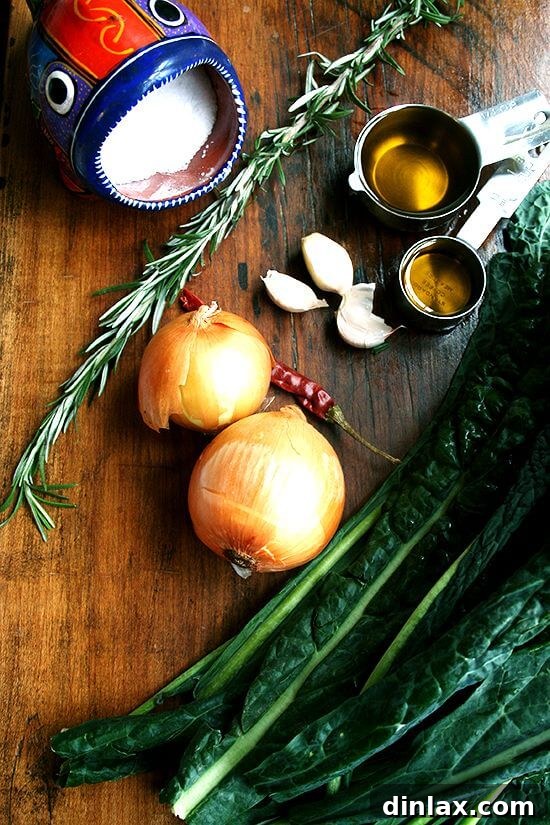
Ingredients
- 3/4 teaspoon kosher salt, divided, plus more to taste
- 1 pound Tuscan kale (about 2 bunches), center ribs and stems removed
- 1/4 cup plus 2 tablespoons extra-virgin olive oil
- 1/2 sprig fresh rosemary
- 1 dried chile de árbol, broken into 4 pieces
- 1 cup sliced yellow onion
- Freshly ground black pepper to taste
- 2 garlic cloves, thinly sliced
Instructions
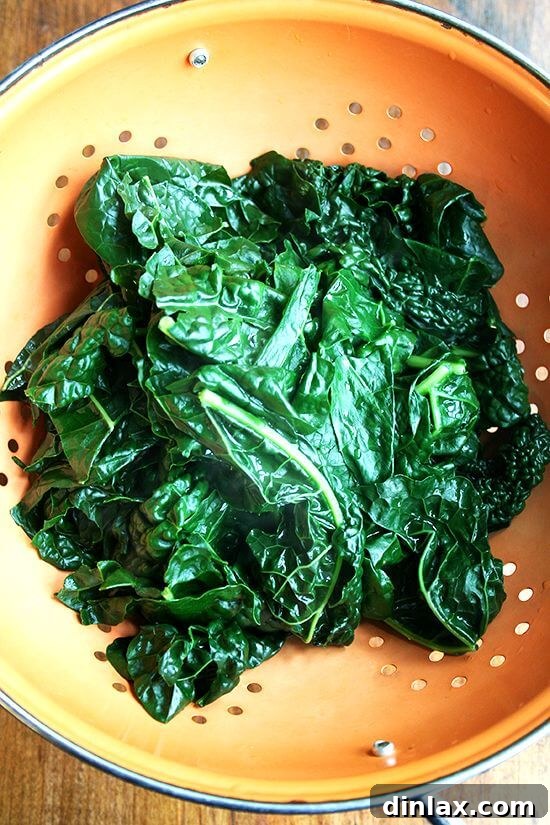
- Bring a large pot of heavily salted water to a rapid boil over high heat. Working in two manageable batches, blanch the kale for approximately 2 minutes per batch. Once blanched, drain the kale thoroughly, allow it to cool slightly, and then squeeze out any excess water using your hands. Coarsely chop the blanched kale and set it aside. (Note: Starting with slightly over one pound of kale before removing the tough center ribs and stems typically yields about 3 cups of chopped kale.)
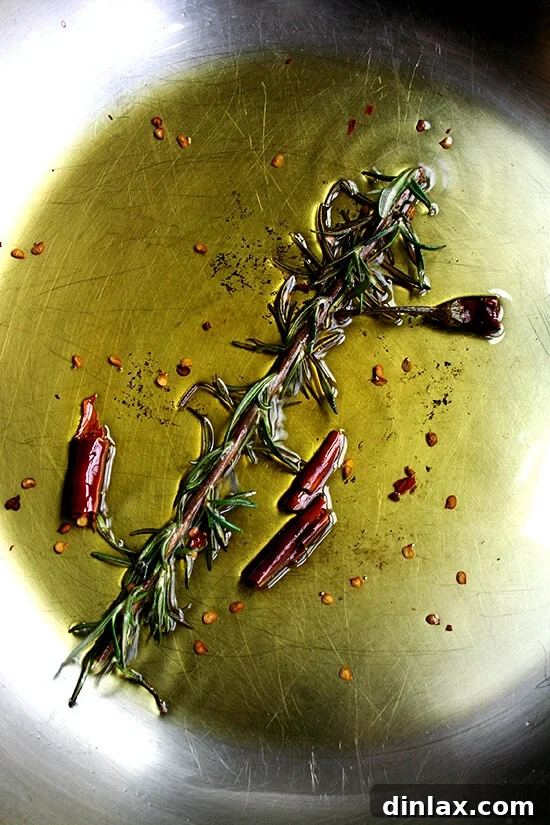
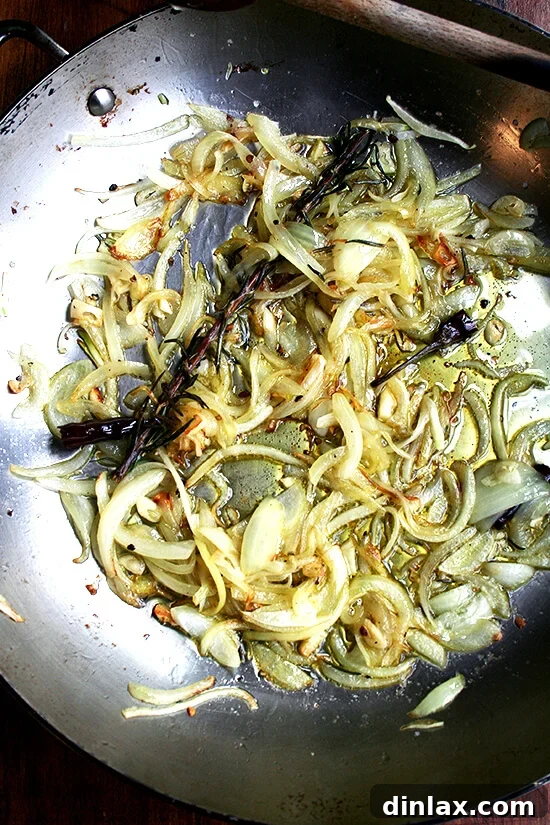
- Heat a large, heavy-bottomed pot or Dutch oven over medium heat for about 2 minutes. Add 1/4 cup of the olive oil, the rosemary sprig, and the broken chile de árbol. Let these aromatics sizzle gently, shaking the pan frequently, for about 1 minute until fragrant. Reduce the heat to medium-low, then add the sliced yellow onion. Season with 1/2 teaspoon of salt and a pinch of freshly ground black pepper. Cook the onion for 2 minutes, stirring often. Stir in the thinly sliced garlic and continue to cook, stirring frequently, until the onion is soft and begins to turn a light golden brown, which should take approximately 5-7 minutes.
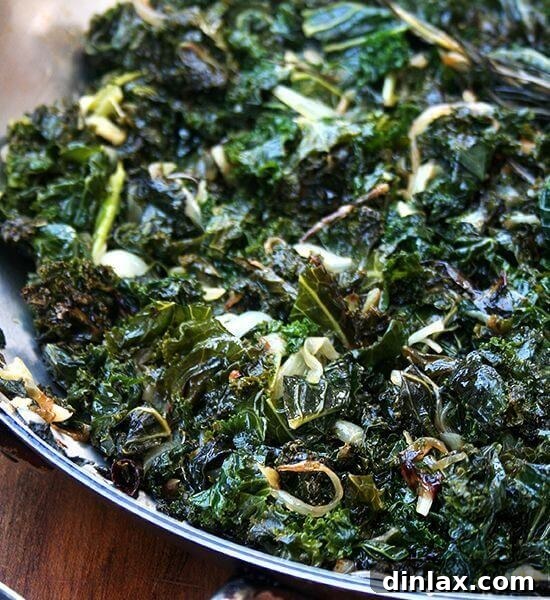
- Add the remaining 2 tablespoons of olive oil to the pan, followed by the chopped blanched kale. Stir well to ensure the kale is evenly coated with the oil and aromatics. Season with an additional 1/4 teaspoon of salt. Reduce the heat to medium-low and continue to cook, stirring often, for about 30 minutes. During this time, the kale will gradually transform, becoming almost black in color and slightly crisp at its edges. Once cooked to perfection, remove the pot from the heat and allow the kale to cool slightly. Before serving, remember to discard the rosemary sprig and the dried chile de árbol pieces.
- Prep Time: 10 minutes
- Cook Time: 45 minutes