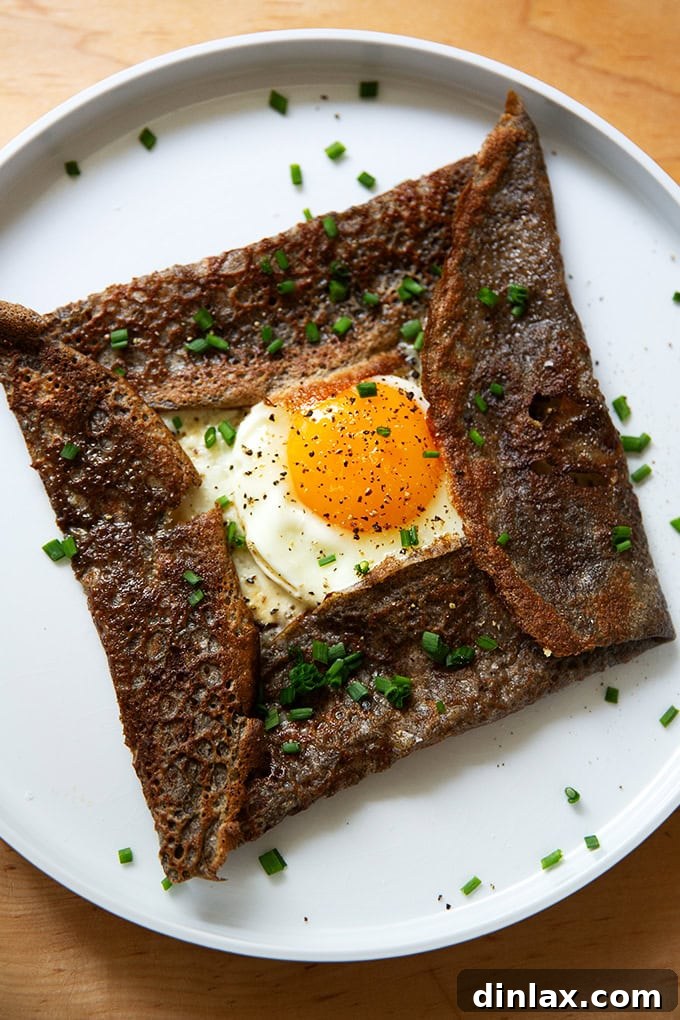
Embark on a culinary adventure with these incredibly simple, 5-ingredient buckwheat crepes. Crafted in mere moments within a blender, this batter requires no resting, making it perfect for spontaneous culinary creations. Revel in their delicate, lacy texture and distinctive nutty flavor. These gluten-free buckwheat crepes are not just surprisingly easy to make, but also delightfully versatile and utterly delicious!
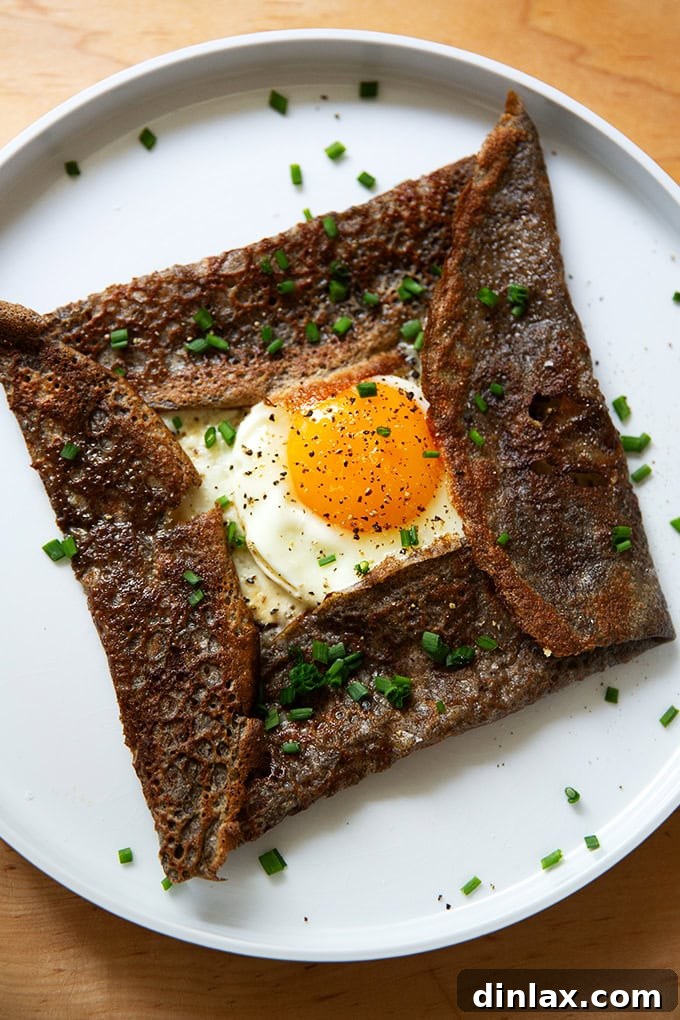
For years, the art of making buckwheat crepes remained a captivating yet elusive dream, especially since my return from the enchanting streets of Paris almost seven years ago. Traditional crepes themselves had proven to be a delicate dance, often resulting in only partial success. The prospect of tackling them with gluten-free buckwheat flour felt even more daunting, anticipating a level of finesse I wasn’t sure I possessed.
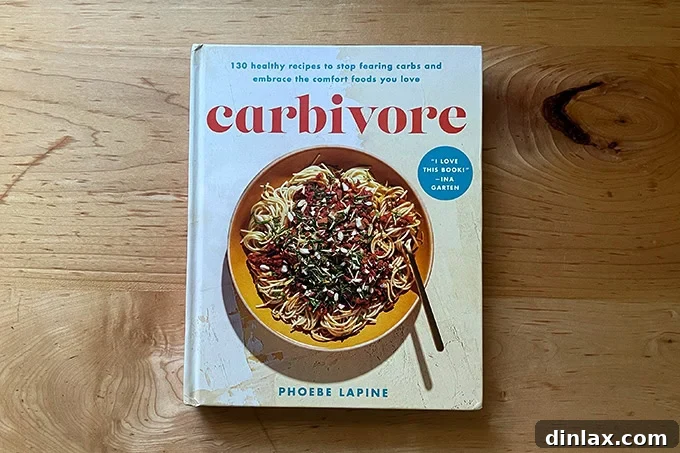
My hesitation began to wane when I stumbled upon a buckwheat crepe recipe in Phoebe Lapine’s insightful new book, Carbivore. Her description—that the process “sounds intimidating” but is “actually quite easy”—was the encouragement I needed. Phoebe’s genius lies in a batter that blends buckwheat and rice flours, a combination that, unlike many traditional crepe recipes, requires absolutely no resting time before hitting the pan. This feature alone was a game-changer, promising immediate gratification.
I dove straight into the recipe, and the results were nothing short of astonishing. The batter, comprising just five core ingredients, came together in a flash. While my first few attempts were a little… rustic, I quickly found my rhythm. Discovering the ideal batter quantity for my skillet, recognizing the visual cues for perfect doneness, and fine-tuning the heat became second nature. Soon, I was producing perfectly formed, delicate crepes with remarkable ease.
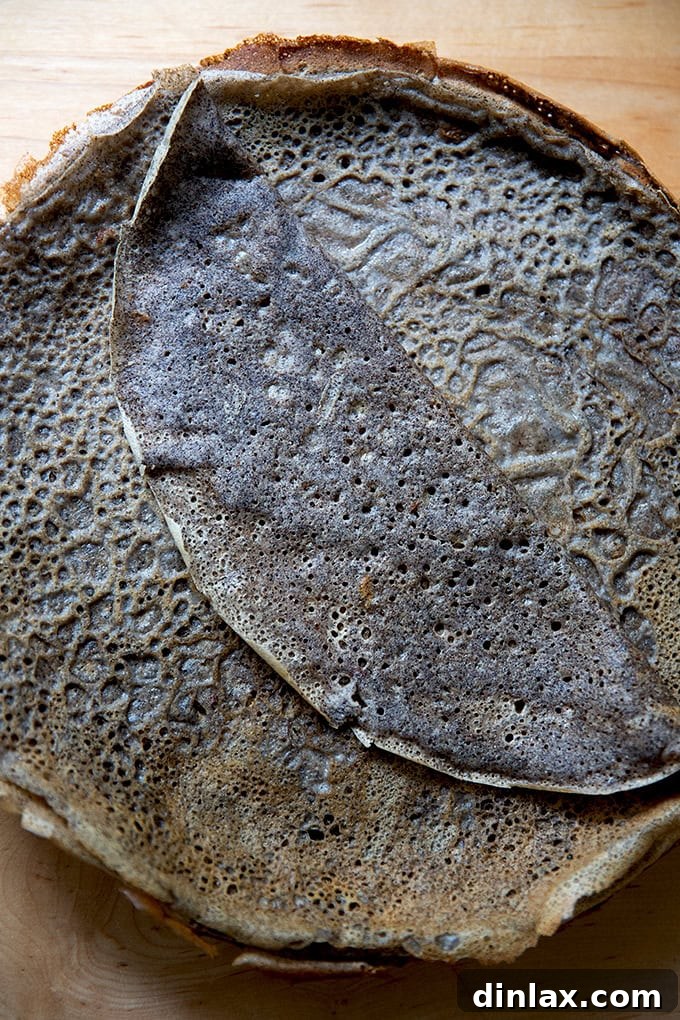
These crepes are a testament to culinary simplicity and flavor. Their texture is beautifully lacy and light, while the taste is distinctly nutty and earthy—a true celebration of buckwheat’s unique character. What’s more, when gently reheated and filled with your chosen ingredients, they develop a delightful crispness and a deeper, richer hue. They are, in my humble opinion, utterly irresistible, and I am confident you will find them to be a new favorite.
Unlocking Perfect Buckwheat Crepes: Essential Tips for Success
Making crepes, especially for the first time, can feel like a delicate art. It’s a process that genuinely rewards patience and a little practice. Don’t be discouraged if your initial attempts aren’t flawless; those first one or two crepes are often the “testers” that help you find your groove. Here are my tried-and-true tips to guide you towards crepe-making mastery:
- Precision with a Digital Scale: In baking and delicate recipes like crepes, accurate ingredient measurement is paramount. Using a digital scale to weigh your flours ensures consistency and the perfect batter consistency every time. Volume measurements can vary significantly, leading to unpredictable results.
- Invest in a Quality Nonstick Skillet: The right pan makes all the difference. A reliable nonstick crepe pan or a well-seasoned cast-iron skillet (though nonstick is easier for beginners) is crucial for preventing sticking and allowing the crepes to release cleanly. This significantly reduces frustration and torn crepes.
- Cultivate Patience – The Key to a Flawless Flip: Rushing the flip is one of the most common pitfalls. If the batter hasn’t fully set, attempting to flip will result in a messy, broken crepe. Be patient! A good rule of thumb is to cook for about 2 minutes on the first side. Look for visual cues: the edges of the crepe should begin to pull away slightly from the sides of the pan, and the surface of the crepe should appear mostly dry and set. Once you see these signs, you’re ready to flip.
- Master the Batter-to-Skillet Ratio: The amount of batter needed is directly proportional to your skillet size. Too much batter will result in crepes that are overly thick and resemble pancakes, losing that characteristic lacy texture. Too little, and they’ll be too fragile, prone to tearing. For my 12-inch skillet, a generous 1/3 cup of batter works perfectly, creating a thin, even layer. You might need to experiment with slightly more or less depending on your pan.
- Dial in the Perfect Heat Balance: Heat management is critical. If your pan is too hot, the crepes will brown too quickly and become overly crispy, potentially burning before they cook through. Conversely, if the heat is too low, you won’t achieve that desirable lacy, delicate texture, and the crepes might turn out pale and rubbery. You may need to adjust your burner’s temperature throughout the cooking process, finding the sweet spot where the crepes cook evenly and develop their beautiful golden-brown color and delicate pattern.
Discovering Carbivore: A New Perspective on Carbs
As I mentioned earlier, this wonderful recipe originates from my dear friend Phoebe Lapine’s highly anticipated new book, Carbivore. This book is a true treasure trove of insightful information, challenging many modern misconceptions about carbohydrates. Phoebe brilliantly demystifies why carbs have become so unfairly vilified and misunderstood in recent years, offering a refreshing and balanced perspective.
In Carbivore, Phoebe empowers us with the knowledge that “carbs don’t have to be the enemy of [our] blood sugar or hormone health, nor are they the secret agents of inflammation.” She encourages readers to embrace nourishing, wholesome carbohydrates as part of a healthy diet, rather than fearing them. All the delicious dishes featured in the book are thoughtfully crafted to be entirely gluten-free, yet they are also incredibly adaptable, allowing you to seamlessly incorporate your favorite pasta, bread, or other carbohydrate sources. As someone who has always cherished carbohydrates, this book truly resonates with my approach to food and wellness.
Buckwheat Crepes: A Simple Step-by-Step Guide
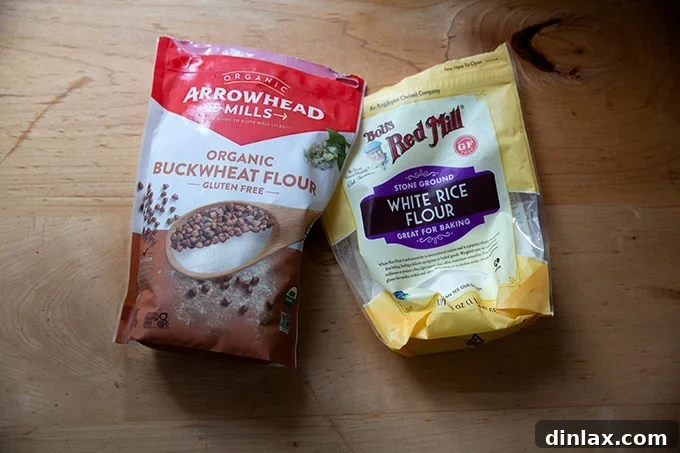
Creating these delightful buckwheat crepes is a straightforward process, made even easier with the right ingredients and a little guidance. You’ll need a combination of flours to achieve that perfect lacy texture and distinctive flavor.
Specifically, for this recipe, you’ll be using both buckwheat flour, which provides the unique earthy notes and gluten-free structure, and white rice flour, which contributes to the crepe’s delicate crispness and light texture.
In addition to these flours, the remaining essential ingredients are pantry staples: a fresh egg, a touch of salt to enhance the flavors, refreshing water, and your choice of milk (dairy or non-dairy, as per your preference and Phoebe’s notes). These simple components come together to create a truly remarkable batter.
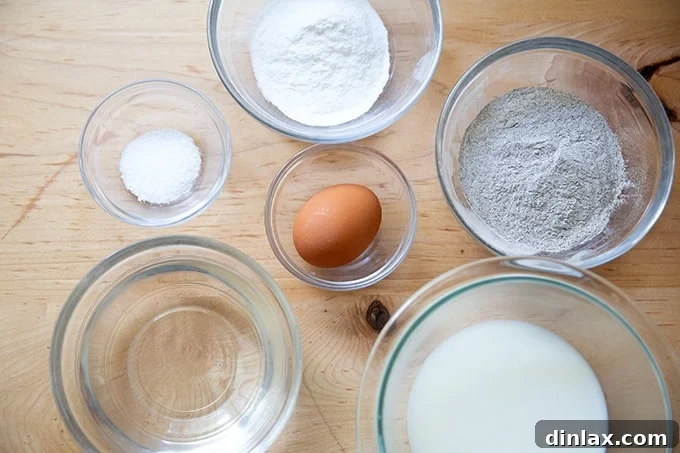
The magic begins as you combine all the measured ingredients directly into your blender. This one-step mixing process is what makes this recipe incredibly fast and convenient, eliminating the need for separate bowls and whisking.
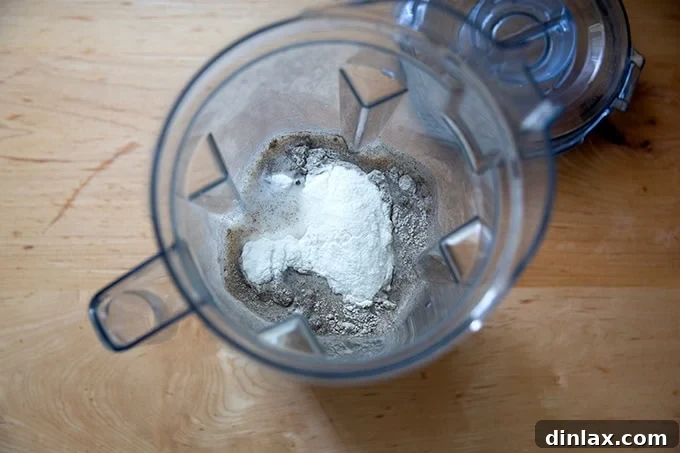
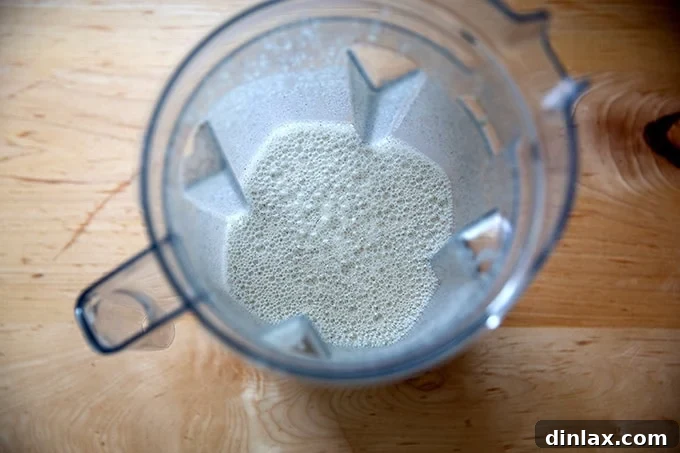
Blend the mixture until it becomes completely smooth, uniform, and delightfully frothy. This usually takes about one minute on medium speed. The frothy texture indicates that the ingredients are well incorporated and will contribute to the crepes’ light and airy consistency.
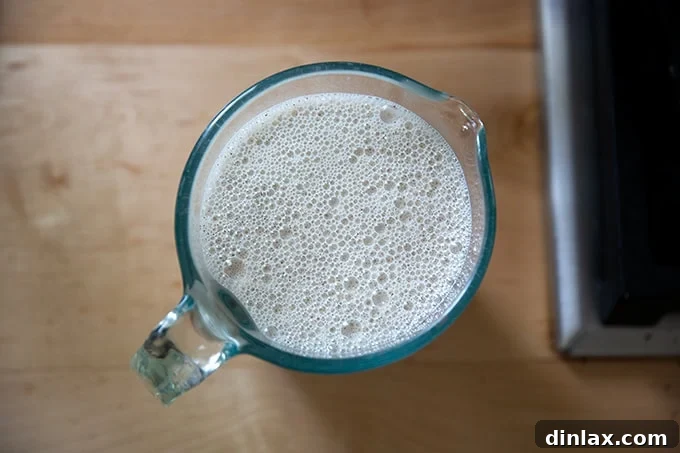
For easier pouring and better control while cooking, transfer the blended batter into a smaller, more manageable pourer. A 2-cup liquid measuring cup with a spout is ideal for this task, allowing you to precisely dispense the batter into the hot skillet.
Next, prepare your skillet. Melt a teaspoon of butter over medium heat in your 12-inch nonstick skillet. I personally adore using my Le Creuset crepe pan for its even heat distribution and superb nonstick properties, which are essential for perfect crepes.
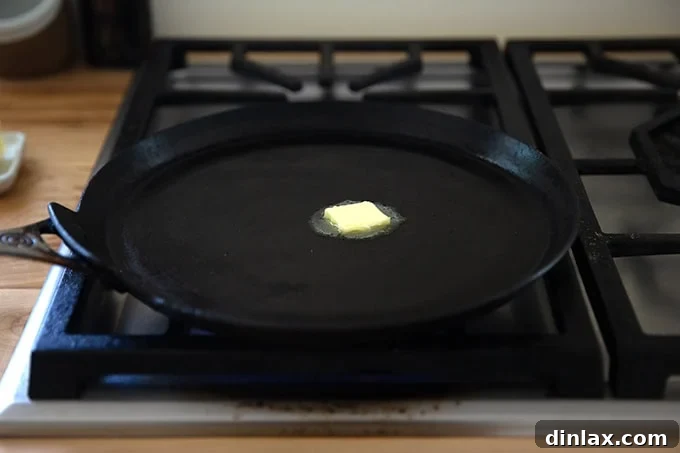
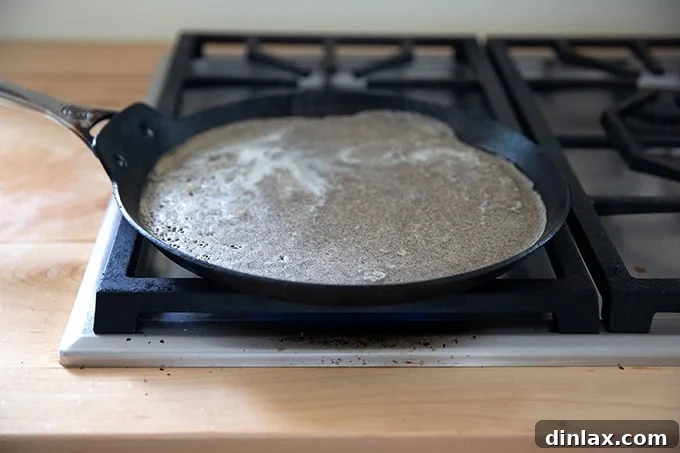
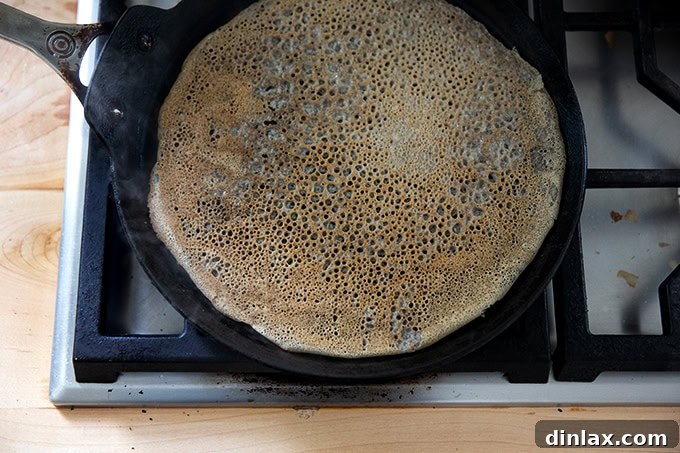
Pour approximately 1/3 cup of the crepe batter into the hot skillet. Immediately swirl the pan to ensure the batter coats the entire bottom surface in a thin, even layer. Cook for about 2 minutes, or until the edges of the crepe begin to pull away distinctly from the sides of the pan and the surface appears set. This is your cue to flip!
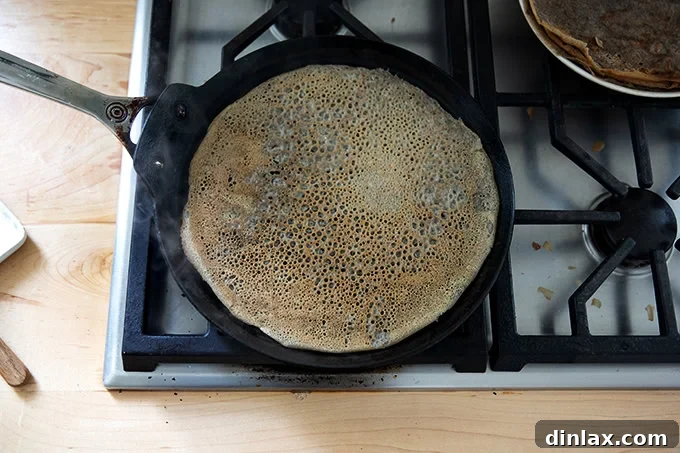
Once ready, carefully flip the crepe. While a large offset spatula can work, I often find my hands to be the most effective “utensil” for a swift, clean flip—just be cautious of the heat to avoid burning yourself. Continue cooking the second side for another minute, or until it is set and lightly golden. The second side usually cooks faster than the first.
Continue this process, repeating with the remaining batter until you’ve cooked all your crepes. Remember to add a tiny pat of butter to the pan between each crepe, if needed, to maintain its nonstick surface and enhance flavor.
Before you know it, you’ll have a magnificent stack of freshly made buckwheat crepes. This recipe typically yields about 5 large crepes, often with a small bonus one, but you can easily scale the recipe up or down depending on your needs and how many hungry mouths you’re feeding!
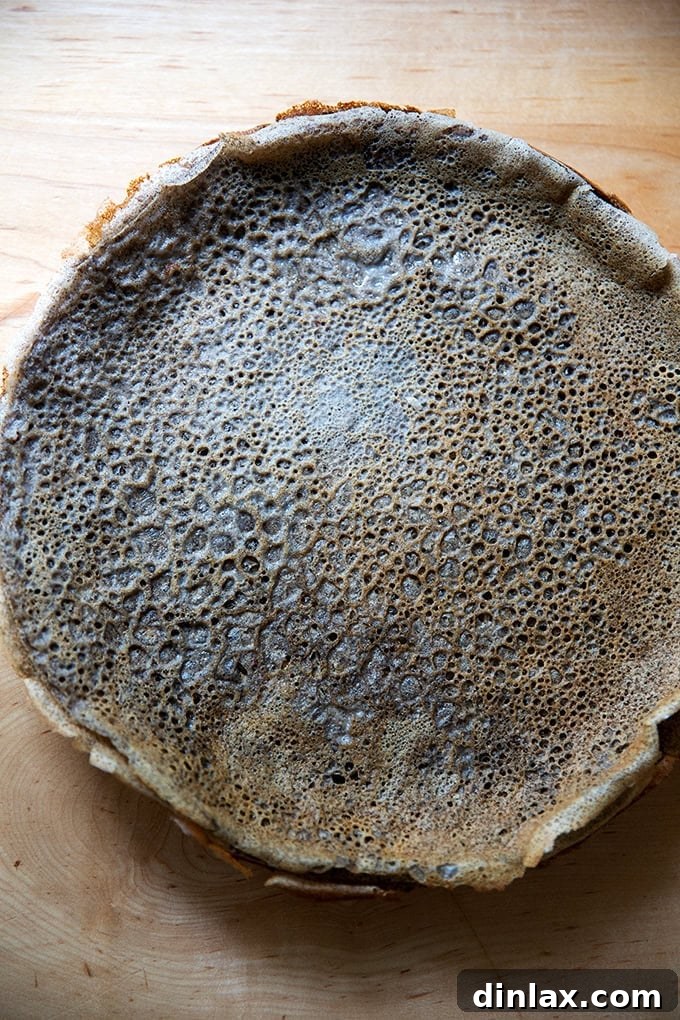
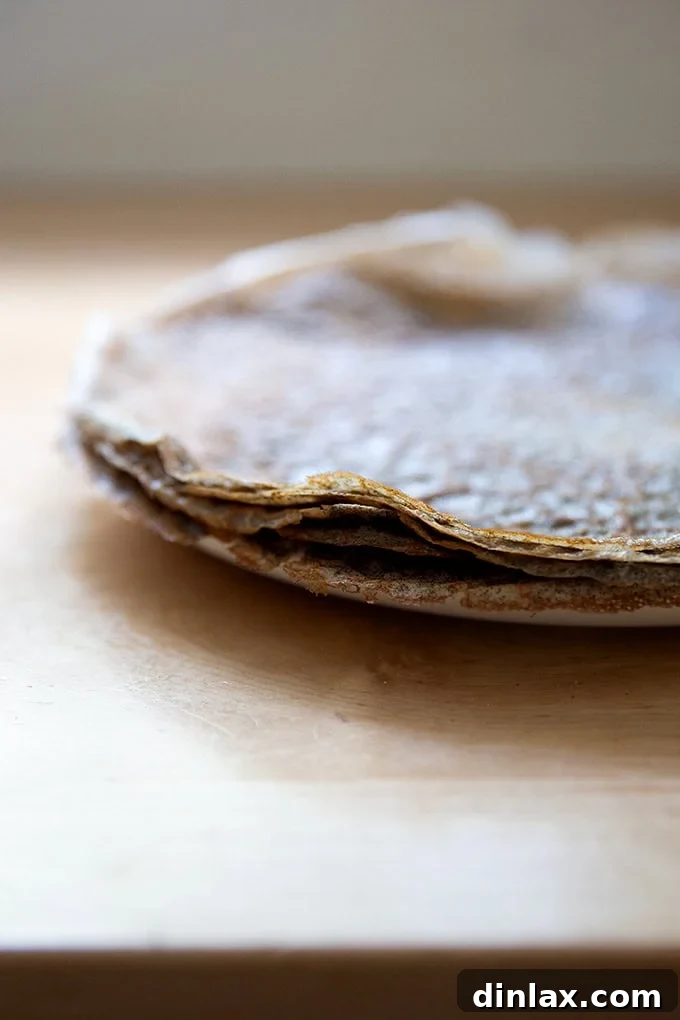
One of the hallmarks of these crepes is their incredible thinness. They are truly paper-thin, which contributes to their delicate texture and ensures they cook quickly and evenly, making them a joy to eat with any filling.
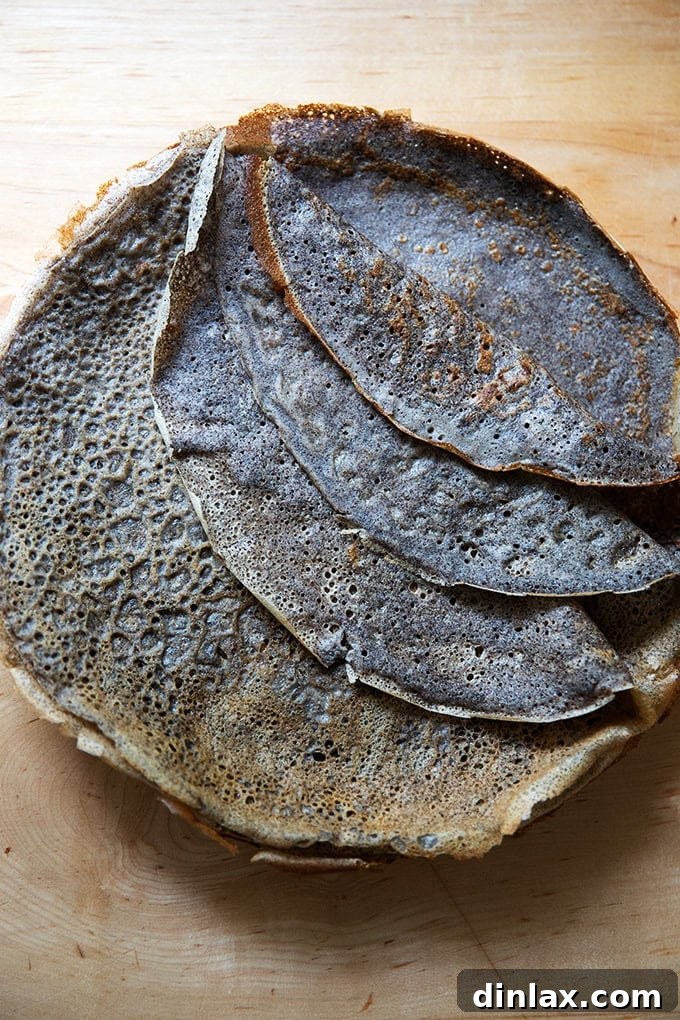
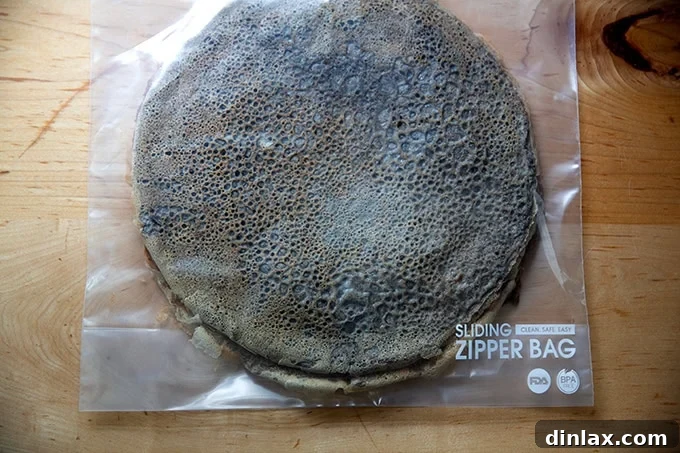
These thin, versatile crepes are perfect for immediate consumption, especially when transformed into savory “galettes” (as shown below). However, they also store beautifully. You can easily transfer them to an airtight bag and freeze them for up to three months, ensuring you always have a delicious, gluten-free option on hand for a quick meal or snack.
The Classic Egg & Cheese Crepe (A.K.A. Galette Complete)
While often enjoyed as a breakfast item in the States, the beloved savory buckwheat crepe finds its true culinary home in France, where it’s known as a “galette complète” or “galette Bretonne.” This hearty and satisfying dish is a staple of Breton cuisine and makes for an incredible brunch, lunch, or light dinner.
To assemble one of these delectable galettes, gather your simple yet flavorful ingredients. For this classic rendition, I’m using fragrant Gruyère cheese, finely chopped chives for a fresh aromatic touch, and, of course, a perfectly cooked egg. The beauty of the galette complete lies in its elegant simplicity and the harmonious blend of these core ingredients, which can be easily customized to your liking with other herbs or cheeses.
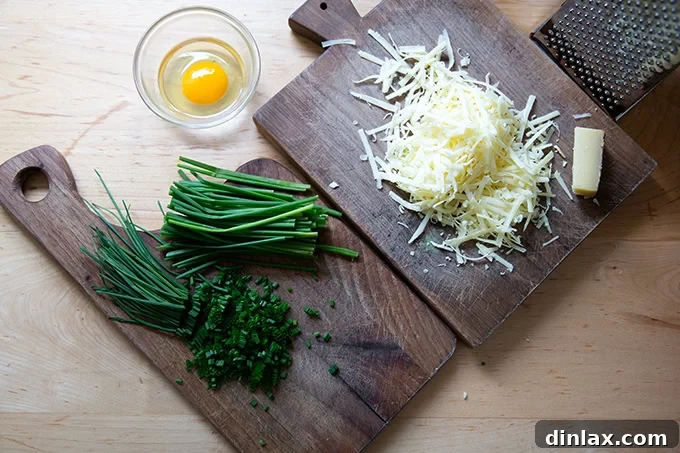
To create a single galette, gently return one of your prepared buckwheat crepes to the same nonstick skillet you used to cook them, setting it over medium heat. As the crepe warms, generously sprinkle a portion of the grated Gruyère cheese over its center, leaving a clear border around the edges. Simultaneously, in a separate small skillet, fry an egg to your desired doneness—a slightly runny yolk is often preferred for a richer experience, but firm is also delicious.
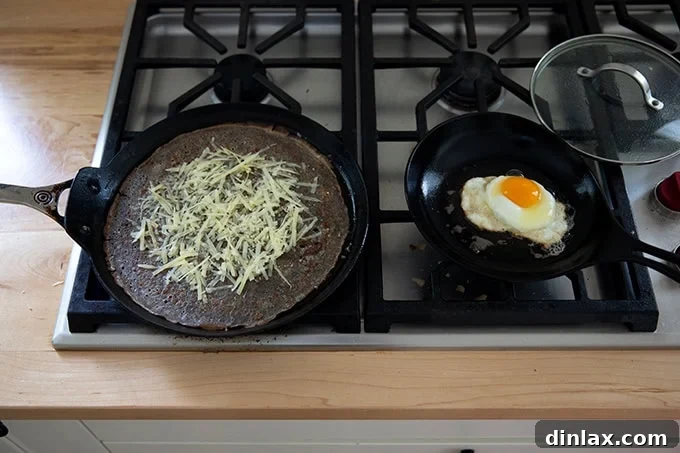
Once the cheese on the crepe has begun to melt and the egg is cooked, carefully slide the fried egg directly onto the cheese-covered center of the warming buckwheat crepe. This step brings together the core components of the galette, preparing it for its final, iconic shape.
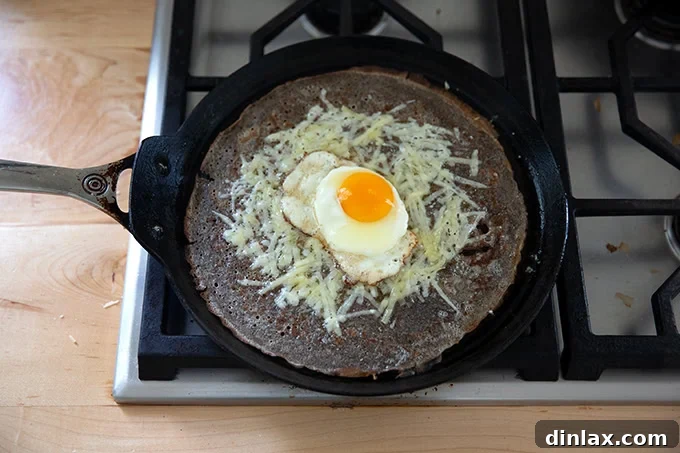
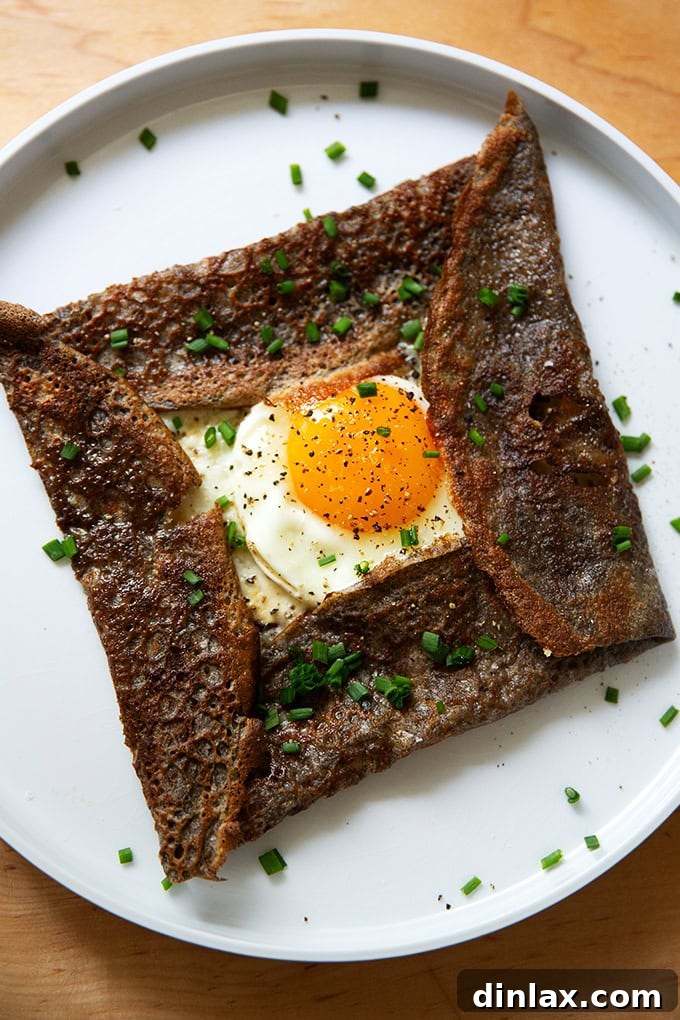
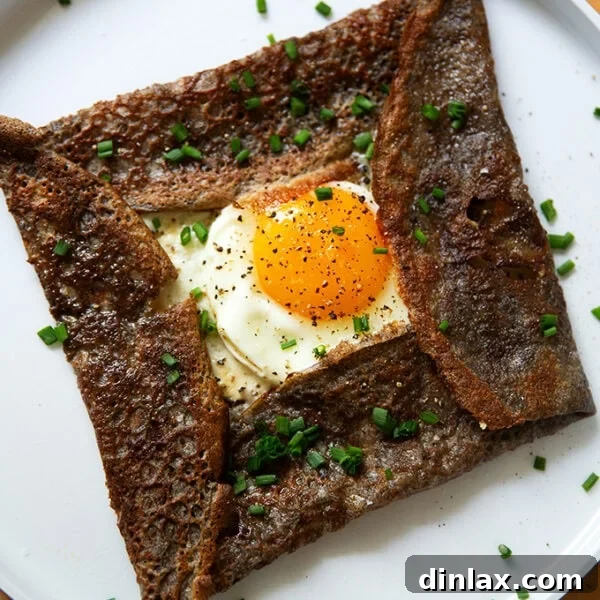
The final touch is to fold the sides of the crepe inward, creating a distinctive square shape that partially encloses the egg and cheese filling. This traditional folding method not only makes for an appealing presentation but also keeps the filling warm and contained, ready for serving.
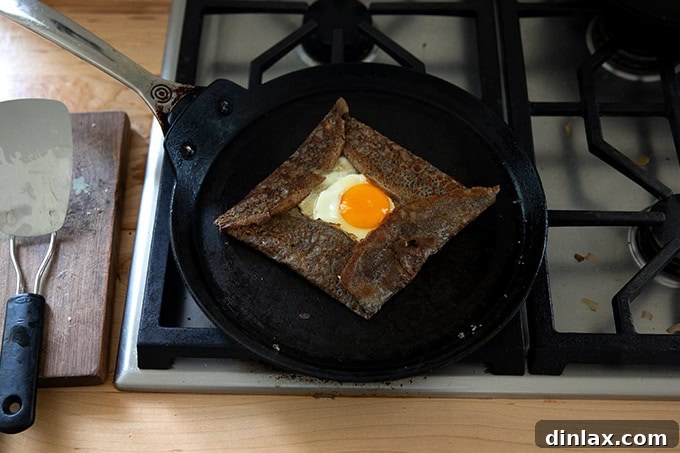
Once folded, carefully transfer the warm, savory galette to a plate. For a burst of fresh flavor and color, shower it generously with finely chopped chives or your favorite fresh herb. The vibrant green of the chives perfectly complements the rich flavors of the egg, cheese, and nutty buckwheat crepe.
Friends, I can’t express enough how truly enjoyable these buckwheat crepes are to make and to eat. They offer a delightful and wholesome alternative to traditional crepes, packed with flavor and surprisingly easy to master. I sincerely encourage you to give this recipe a try; I’m confident you’ll find as much joy in them as I do!
Lacy Buckwheat Crepes (Gluten-Free)
5 from 3 reviews
Author: Alexandra Stafford
Total Time: 35 minutes
Yield: 5 crepes 1x
Diet: Gluten Free
Description
This recipe for delicate, gluten-free buckwheat crepes is adapted from Phoebe Lapine’s inspiring cookbook, Carbivore. It offers a simple, blender-friendly method for creating lacy, nutty crepes that require no resting time. Perfect for sweet or savory fillings, these crepes are a testament to easy and delicious gluten-free cooking. Embrace the unique flavor of buckwheat and master the art of crepe making with these invaluable tips.
Ingredient Notes for Optimal Results:
- For consistently perfect batter and crepes, a digital kitchen scale is highly recommended for measuring flours and liquids by weight rather than volume. This ensures accuracy and helps maintain the ideal batter consistency.
- A high-quality 12-inch nonstick crepe pan is a game-changer for this recipe. Its even heat distribution and nonstick surface simplify the cooking and flipping process, yielding beautifully uniform crepes.
- Salt: The recipe suggests 3 grams or 3/4 teaspoon of Diamond Crystal kosher salt. If you are using Morton kosher salt or fine sea salt, you’ll need to adjust the amount. Typically, use half as much by volume or the same amount by weight. The original recipe calls for 1/4 teaspoon, but I’ve personally found that a little more salt truly elevates the flavor of these crepes. Feel free to adjust the quantity to suit your personal taste preferences.
- Milk: I typically use 2% dairy milk for this recipe. However, Phoebe Lapine notes in Carbivore that you can readily use either whole milk or any preferred non-dairy milk alternative without compromising the quality or texture of the crepes.
Process Notes: Key Insights for a Smooth Crepe-Making Experience:
Crepe making is a skill that improves with practice. Don’t worry if your first few crepes aren’t picture-perfect; they’re valuable learning opportunities! Here’s how to navigate common challenges and ensure success:
- The Crucial Moment: Flipping at the Right Time. One of the most common mistakes is attempting to flip the crepe too soon. If the batter hasn’t fully set, you’ll end up with a torn, messy crepe. The secret is patience. Set a timer for about 2 minutes for the first side. More importantly, observe the crepe’s edges: they should visibly begin to pull away from the sides of the pan, and the surface of the crepe should appear mostly dry. These are your clear signals that it’s ready for a confident flip.
- Achieving the Ideal Batter Thickness: The Right Amount for Your Skillet. The quantity of batter per crepe is vital for achieving the desired lacy thinness. If you use too much, your crepes will be thick and heavy, resembling a pancake. Use too little, and they might be overly fragile and tear easily. I’ve found that a generous 1/3 cup of batter is perfect for my 12-inch skillet, creating a beautifully thin layer. You may need to slightly increase or decrease this amount based on the exact size and heat retention of your specific pan.
- Balancing the Heat: Finding Your Burner’s Sweet Spot. The right temperature is essential for developing the crepe’s characteristic lacy texture and preventing it from sticking or burning. If the pan is too hot, the crepes will become excessively crispy and brown too quickly. If it’s not hot enough, they won’t develop that appealing, intricate lacy pattern (which affects visual appeal more than taste, but is still desirable!). Don’t hesitate to adjust your burner’s heat throughout the cooking process to maintain a consistent medium to medium-high temperature that works best for your stovetop.
Ingredients
For the Lacy Buckwheat Crepes:
- 1 large egg
- 68 grams (1/2 cup) buckwheat flour
- 48 grams (1/3 cup) white rice flour
- 3 grams (3/4 teaspoon) Diamond Crystal kosher salt (see notes above for other salt types)
- 227 grams (1 cup) water
- 124 grams (1/2 cup) milk (2% dairy, whole milk, or non-dairy options, see notes above)
- Butter, as needed, for greasing the pan between crepes
For each Savory “Galette Complete”:
- Butter, a small amount for cooking
- 1 large egg
- 1 freshly cooked buckwheat crepe
- 1/2 to 3/4 cup grated Gruyère cheese (or your favorite melting cheese)
- Salt and freshly ground black pepper, to taste
- Finely chopped fresh chives, for garnish (or other fresh herbs like parsley)
Instructions
- Prepare the Quick Crepe Batter: Begin by placing all the measured ingredients for the buckwheat crepes (egg, buckwheat flour, white rice flour, salt, water, and milk) directly into a blender. Secure the lid and blend on medium speed for approximately 1 minute, or until the mixture is completely frothy and all ingredients are smoothly combined. The resulting batter will be noticeably thin, which is exactly the desired consistency for lacy crepes. For ease of pouring, transfer the batter to a smaller vessel, such as a 2-cup liquid measuring cup with a spout. If not using immediately, the batter can be transferred to an airtight container and stored in the refrigerator for up to 1 week.
- Preheat and Prepare the Skillet: Place a large nonstick skillet (ideally a 12-inch crepe pan) over medium to medium-high heat. Allow the pan to heat for a few minutes until it’s consistently warm. Add about 1 teaspoon of butter to the hot pan. Let it melt completely, then swirl the pan to ensure the butter evenly coats the entire cooking surface. This initial greasing is crucial for the first crepe and may be needed intermittently for subsequent crepes.
- Cook the Buckwheat Crepes: (Before proceeding, please refer to the detailed “Tips for Success” and “Process Notes” sections above for critical advice on batter quantity, heat management, and timing.) Pour a heaping 1/3 cup of the prepared crepe batter into the center of the hot, buttered skillet. Immediately and smoothly tilt and rotate the pan to swiftly spread the batter across the entire bottom in a very thin, even layer. If you notice any small gaps or holes, quickly add a tiny splash more batter to fill them. Cook the crepe for approximately 2 minutes, or until the edges appear firm, slightly crisp, and visibly begin to pull away from the sides of the pan. The surface of the crepe should also look mostly dry and set. Once ready, carefully slide a large offset spatula along the perimeter to loosen it, then, in one swift motion, flip the crepe. Many find it easier and more efficient to use their hands for flipping: gently grab one edge of the crepe between your fingers (being mindful of the heat!) and swiftly flip it over. Cook the second side for about 1 minute, or until it is lightly golden and fully set. Transfer the cooked crepe to a plate and repeat the process with the remaining batter, adding a small amount of butter to the pan between crepes as needed.
For the Classic “Galette Complete”:
- Prepare the Egg: In a separate small skillet, melt about 2 teaspoons of butter over medium-high heat. Crack one egg into the hot butter. Cook the egg until the whites are fully set and the yolk reaches your desired level of doneness—often, a slightly runny yolk is preferred for galettes. Covering the skillet with a lid can help the egg cook more evenly and quickly.
- Assemble and Finish the Galette: Return one of your prepared buckwheat crepes to the larger skillet (the same one used for making the crepes) and place it over medium heat. Add a small amount of butter (less than a teaspoon) to the pan and swirl it around to lightly coat the surface. Lay a crepe flat in the skillet. Generously sprinkle 1/2 to 3/4 cup of grated Gruyère cheese over the center of the crepe, making sure to leave an approximate 1.5-inch border clear around the edges. As the cheese melts and the crepe begins to crisp slightly on the bottom, carefully slide the cooked egg from the small skillet onto the cheese-covered center of the crepe. Season the egg and cheese with a pinch of salt and freshly ground black pepper to taste. Using a spatula, meticulously fold in the four sides of the crepe over the egg and cheese, forming a neat square package.
- Serve and Garnish: Carefully transfer the finished galette from the skillet to a serving plate. For a burst of freshness and color, generously sprinkle with finely chopped chives or your herb of choice. Serve immediately and savor this delightful, savory treat!
- Prep Time: 15 minutes
- Cook Time: 20 minutes
- Category: Breakfast
- Method: Stovetop
- Cuisine: American, French