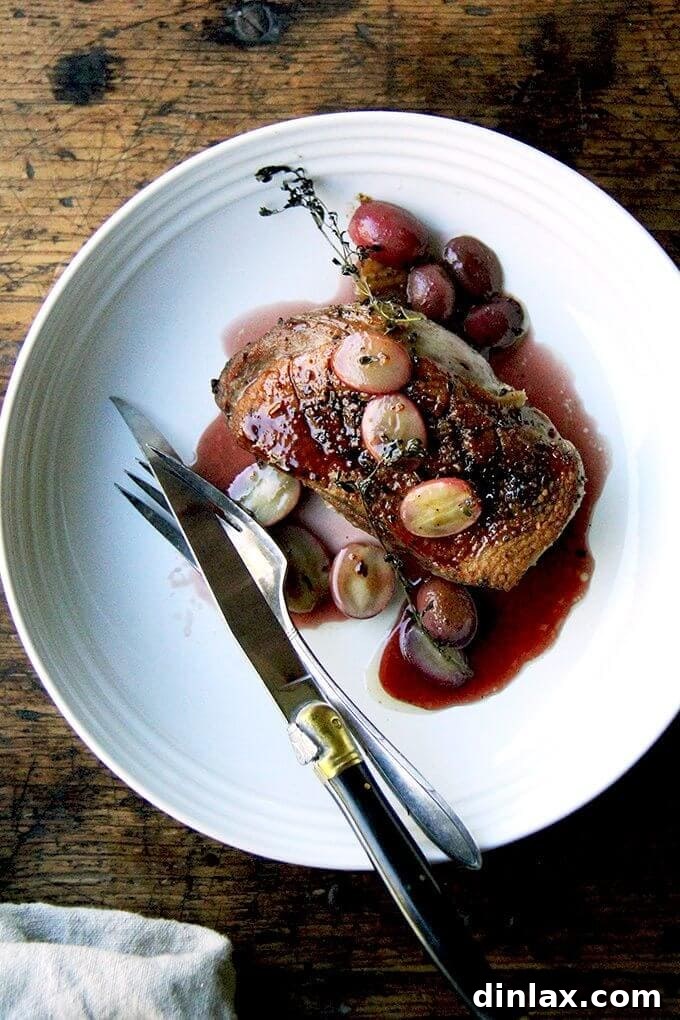
Delight in the exquisite taste of restaurant-quality pan-seared duck breast right in your own kitchen. This remarkable recipe, featuring perfectly crisp skin, tender medium-rare flesh, and a rich, sweet-sharp Port wine gastrique, comes together surprisingly quickly and looks absolutely stunning on the plate. It’s the ideal choice for a special date night at home, requiring only a bottle of good wine and a willingness to explore a simple yet transformative cooking technique.
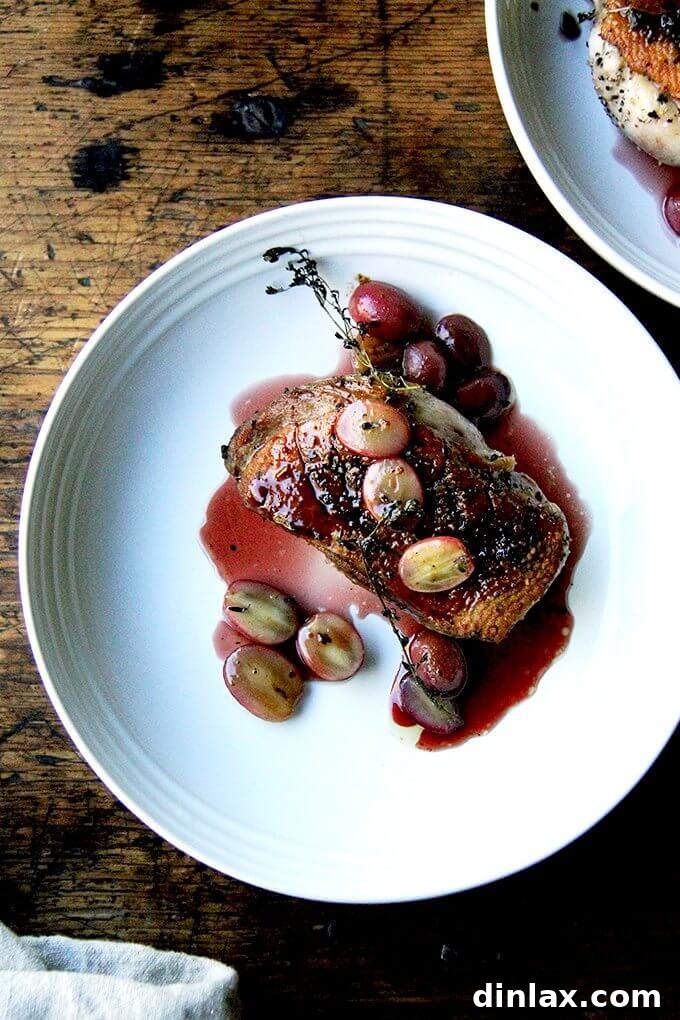
Unlocking the Secret to Perfect Pan-Seared Duck Breast
My culinary journey with this duck breast recipe began after a memorable dinner at Otway in Brooklyn. Chef Claire Welle, in collaboration with Le Creuset and CherryBombe, showcased dishes from the then-upcoming Le Creuset Cookbook and their elegant tableware collection. Among the many exceptional plates, the duck breast with banyuls gastrique stood out as a highlight.
Each slice of duck, perfectly cooked and coated in that vibrant ruby-red sauce, made me believe that such perfection could only be achieved in a professional restaurant kitchen. The meat was flawlessly tender, and the sauce, bursting with complex flavors, felt incredibly gourmet. When I later consulted the recipe in the Le Creuset Cookbook, I braced myself for an intimidating list of obscure ingredients and specialized equipment, perhaps even a sous-vide machine.
To my pleasant surprise, the recipe was remarkably straightforward. The gastrique sauce required just three core ingredients, and the duck cooked beautifully in an oven-proof skillet. What truly captivated me was the ingenious cooking technique for the duck itself:
“Instead of slapping the duck into a screaming hot skillet, scored breasts are placed skin-side down in a cold pan, slowly brought up to temperature, and left undisturbed until they render copious amounts of delicious fat and the skin turns deep brown and crisp.”
Did you catch that crucial detail? The **cold pan** is the game-changer. This counter-intuitive method is the secret to achieving that coveted crispy duck skin without overcooking the meat or, perhaps even better, without filling your kitchen with smoke.
Since that discovery, I’ve prepared this dish – complete with its elegant Port wine gastrique and thyme-roasted grapes – numerous times. Each occasion reinforces how swiftly it comes together, how stunningly it presents, and how incredibly delicious it tastes. Honestly, I’ve never cooked better duck at home. The skin achieves a beautiful crispness, the flesh cooks to a perfect medium-rare, and the sauce rivals anything you’d find in a fine dining establishment. It’s a win-win: gourmet results and a smoke-free kitchen.
What is a Gastrique? Elevating Your Duck Breast with a Port Wine Sauce
At its heart, a gastrique is a sophisticated and intensely flavorful sauce, typically characterized by a balance of sweet and tart notes. For this recipe, we create a rich Port wine gastrique that beautifully complements the savory duck. While the name might sound intimidating, the process is surprisingly simple and accessible to any home cook.
If you’ve ever made caramel sauce, or even if you haven’t, you possess the skills to master a gastrique. Here’s the fundamental process:
- Combine sugar with a small amount of water in a saucepan and cook until it transforms into a pale golden caramel.
- Carefully add vinegar to the caramel. This step will cause the sugar to seize and harden momentarily, which is completely normal.
- Return the pan to the heat and gently simmer until the hardened caramel melts back into the vinegar.
- Stir in a fortified wine, such as Ruby Port or Banyuls, and continue to simmer.
- Reduce the mixture until it thickens into a syrup that coats the back of a spoon.
As this exquisite sauce simmers, it gradually reduces into an irresistibly sweet-sharp syrup, offering a flavor profile reminiscent of an expensive aged vinegar. The result is truly a “pot of gold”—a versatile sauce that can elevate not just duck, but many other dishes. Once the gastrique is prepared, the rest of the meal comes together effortlessly, allowing you to focus on the perfect pan-seared duck.
The Genius of Thyme-Roasted Grapes: A Perfect Pairing
One of the brilliant touches in this recipe is the addition of thyme-roasted grapes. Once the duck breasts are cooked and resting (a crucial step for any meat to redistribute its juices), you simply toss a handful of grapes and a few sprigs of fresh thyme into the now-empty pan, then transfer it to the oven. This not only yields sweet, slightly wrinkled grapes that burst with flavor but also provides a clever distraction, preventing you from slicing into the duck before it has properly rested. The sweet, tangy grapes offer a delightful contrast to the rich duck and the vibrant gastrique.
Given the richness of duck, similar to a perfectly cooked steak, I recommend serving these pan-seared duck breasts with a light, simple green salad. A refreshing shallot vinaigrette adds a bright counterpoint, and of course, some crusty bread is essential for soaking up every last drop of the incredible sauce. This meal is elegant enough for a formal dinner party yet can be made weeknight-friendly if you prepare the gastrique ahead of time, bringing the total cook time for the duck and grapes down to about 20 minutes.
For those interested in exploring more duck recipes, be sure to check out my Cheater’s Duck Confit.
Step-by-Step Guide: Crafting Your Port Wine Gastrique
Creating this flavorful Port wine gastrique is simpler than you might imagine. Follow these steps to achieve a perfectly balanced sauce:
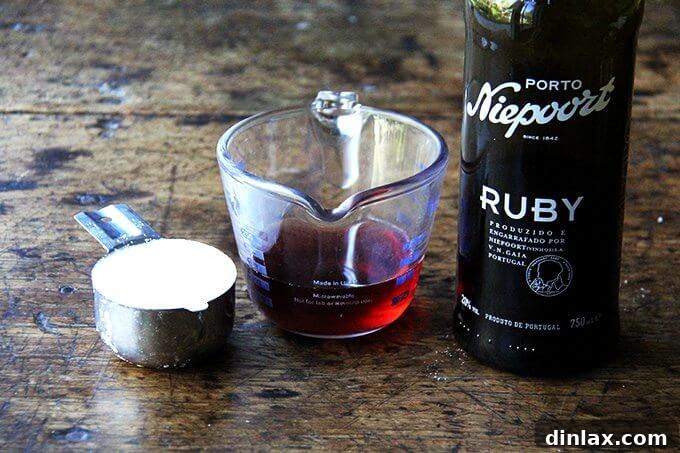
- Gather Your Ingredients: You’ll need sugar, vinegar (Banyuls vinegar is ideal for its unique depth, but red wine vinegar is a superb substitute), and fortified wine (Banyuls fortified wine or Ruby Port).
2. Caramelize the Sugar: In a small, heavy-bottomed saucepan, melt the sugar with a bit of water over medium-high heat. Swirl gently until the sugar dissolves and transforms into a pale golden caramel, which typically takes 8 to 10 minutes.
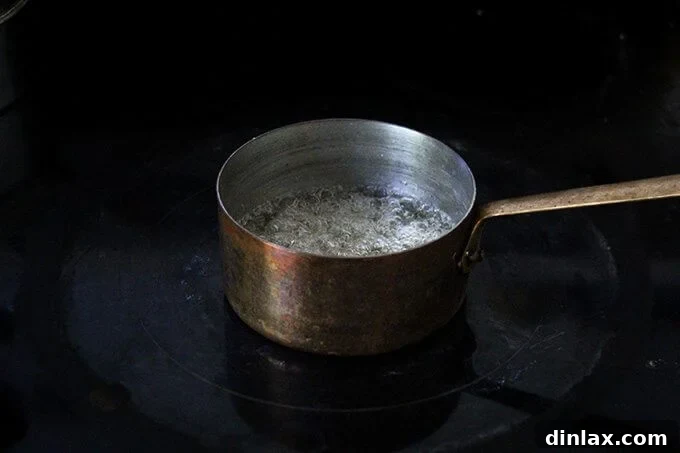
3. Introduce the Vinegar: Carefully lift the pan from the heat and pour in the vinegar. Don’t be alarmed if the caramel vigorously bubbles, hisses, or even seizes and hardens; this is a normal reaction.
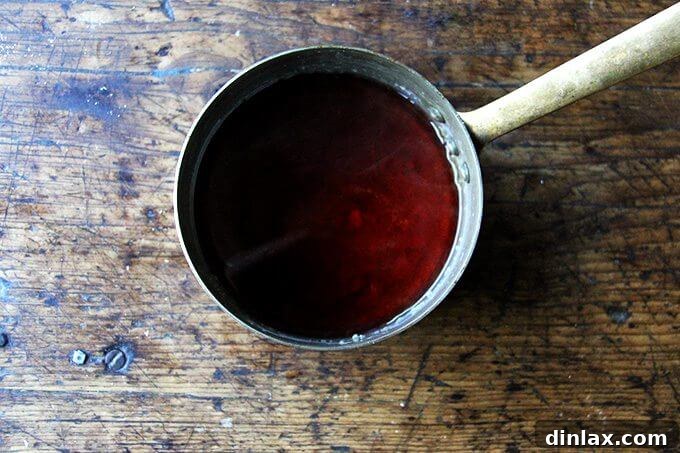
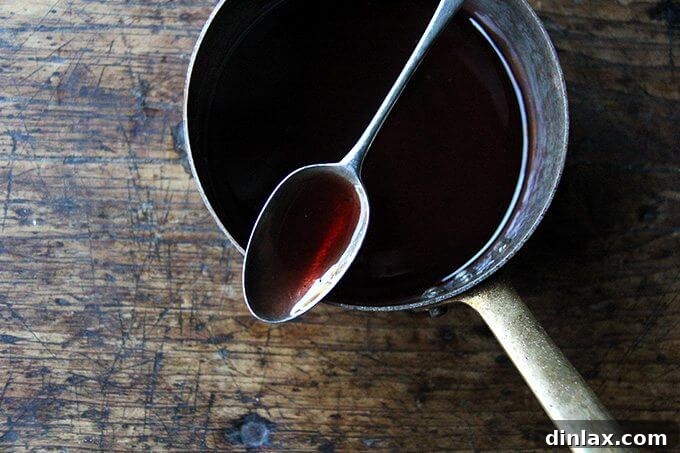
4. Melt and Reduce: Return the pan to low heat and cook, stirring gently, until the hardened caramel fully melts and the mixture becomes smooth again, usually taking 2 to 3 minutes. Add the Port or Banyuls wine (and a star anise pod if desired for a subtle spice). Simmer the sauce for about 10 minutes, allowing it to reduce to a thin, syrupy consistency that gracefully coats the back of a spoon. Discard the star anise if used. Keep the gastrique warm over very low heat until you’re ready to serve. This sweet-sharp elixir is truly delightful!
Achieving Crispy Skin and Medium-Rare Perfection: Pan-Seared Duck Breasts
The “cold pan” method is key to restaurant-quality duck breast at home. Here’s how to do it:
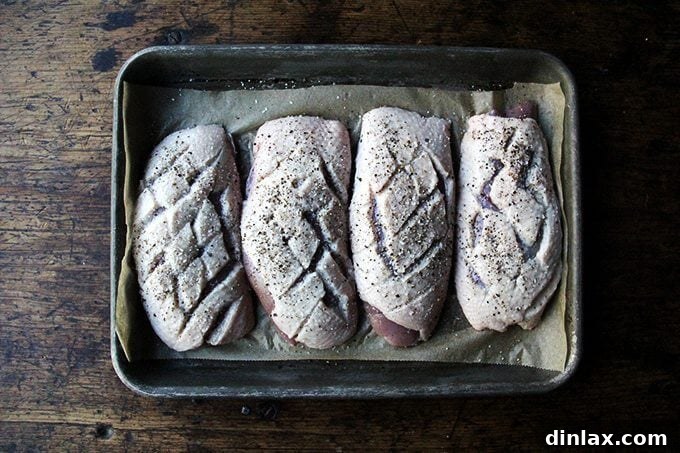
- Prepare the Duck Breasts: Begin by blotting four boneless duck breast halves thoroughly dry with paper towels. Using a sharp knife, score the fat in a diamond pattern, being careful not to cut into the meat itself. This scoring helps render the fat efficiently and creates a beautifully crisp skin. Season both sides generously with kosher salt and freshly cracked black pepper.
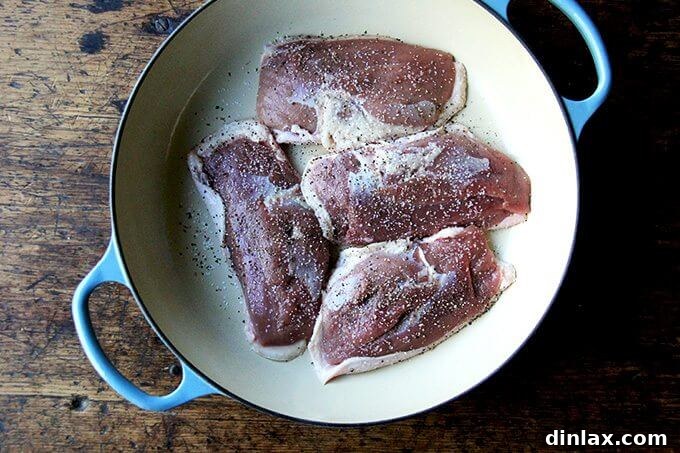
2. The Cold Pan Start: Place the seasoned duck breasts, skin-side down, into a large, cold oven-safe skillet. A high-quality braiser, such as this 5-quart Le Creuset pan, is excellent for its even heat distribution and versatility (I’ve used it in other dishes like this Carbonara and Chickpea Tagine). Begin cooking over low heat for 3 minutes.
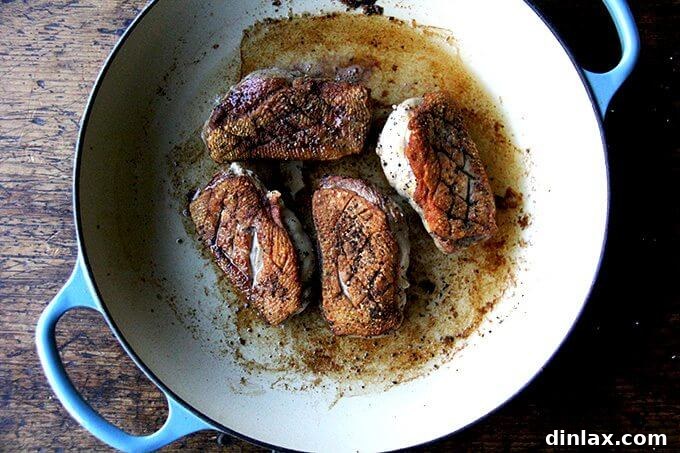
3. Render the Fat: Increase the heat to medium. Continue cooking, undisturbed, until the duck begins to sizzle, and the fat slowly renders out. Keep cooking until the skin is deep golden brown, beautifully crisp, and most of the fat has rendered, typically 6 to 8 minutes. This slow rendering process is crucial for achieving that irresistible crispy skin.
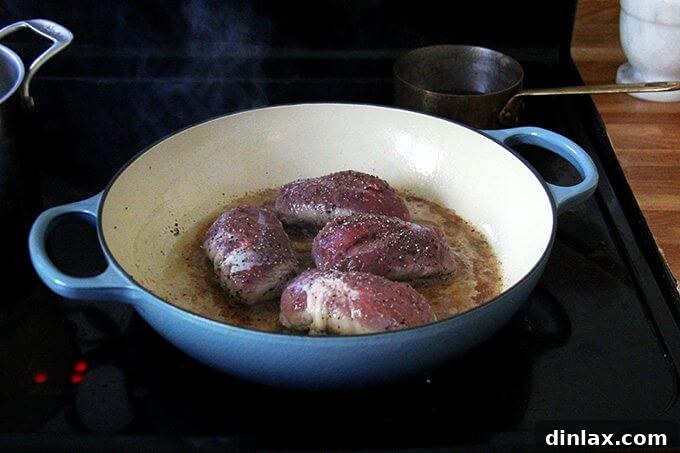
4. Finish Cooking to Perfection: Spoon off and reserve any excess rendered duck fat from the skillet. Flip the breasts over. At this point, you have two options:
- Oven Finish: Preheat your oven to 350ºF. Transfer the skillet to the oven and roast for 2 to 4 minutes.
- Stovetop Finish: Alternatively, and my preferred method for greater control, continue cooking the duck breasts on the stovetop for about 2 minutes on the second side.
Use a reliable instant-read thermometer, such as a Thermapen, to check for doneness. For a perfect medium-rare, the thickest part of the breast should register between 125ºF-130ºF (125ºF-135ºF is also acceptable). The Thermapen truly takes the guesswork out of achieving ideal doneness for meats like duck or steak, preventing both under and overcooking. Once cooked, transfer the duck breasts to a plate and allow them to rest for at least 5-10 minutes. This resting period is essential for the juices to redistribute, ensuring a tender, moist result.
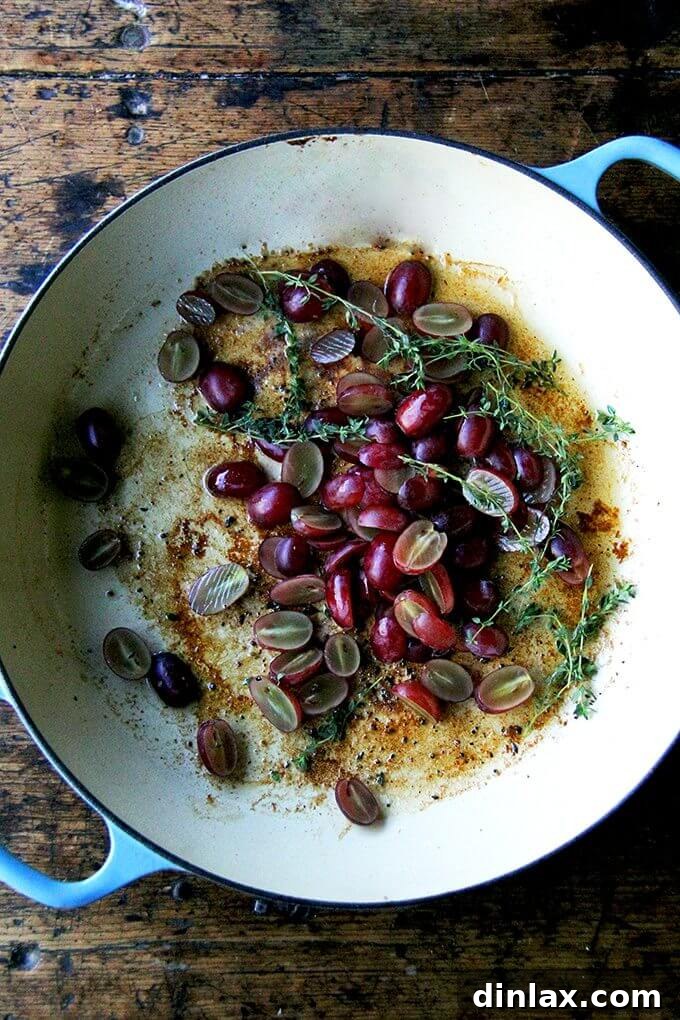
5. Roast the Grapes and Thyme: While the duck rests, add the halved red seedless grapes to the skillet. Toss them with the chopped fresh thyme (or a few sprigs if you prefer) and a pinch of salt and pepper. Roast in the preheated oven (or return to stovetop on medium-low) for 8 to 10 minutes, or until the grapes are hot, slightly softened, and pleasantly wrinkled in spots.
6. Assemble and Serve: Slice the rested duck breasts against the grain. Arrange them on plates, then generously spoon the warm, roasted grapes and the prepared gastrique over the top. For an optional fresh garnish, sprinkle a small handful of mâche or watercress leaves. Serve immediately and prepare to impress your guests (or yourself!).
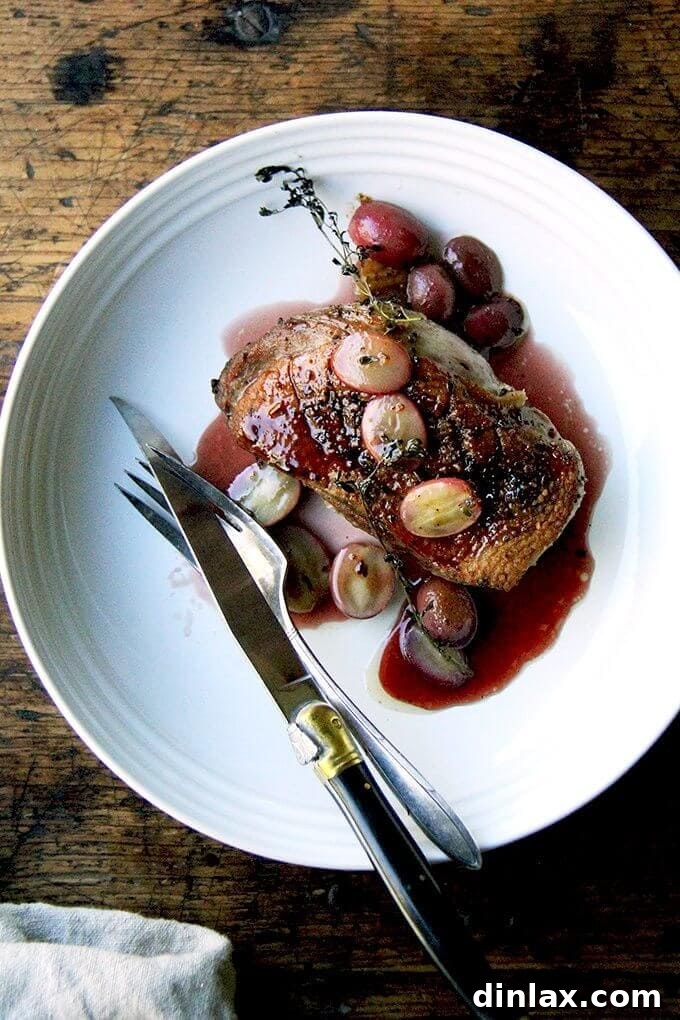
With such a stunning dish, all that’s left is to gather your favorite people around the table and enjoy a truly memorable meal.
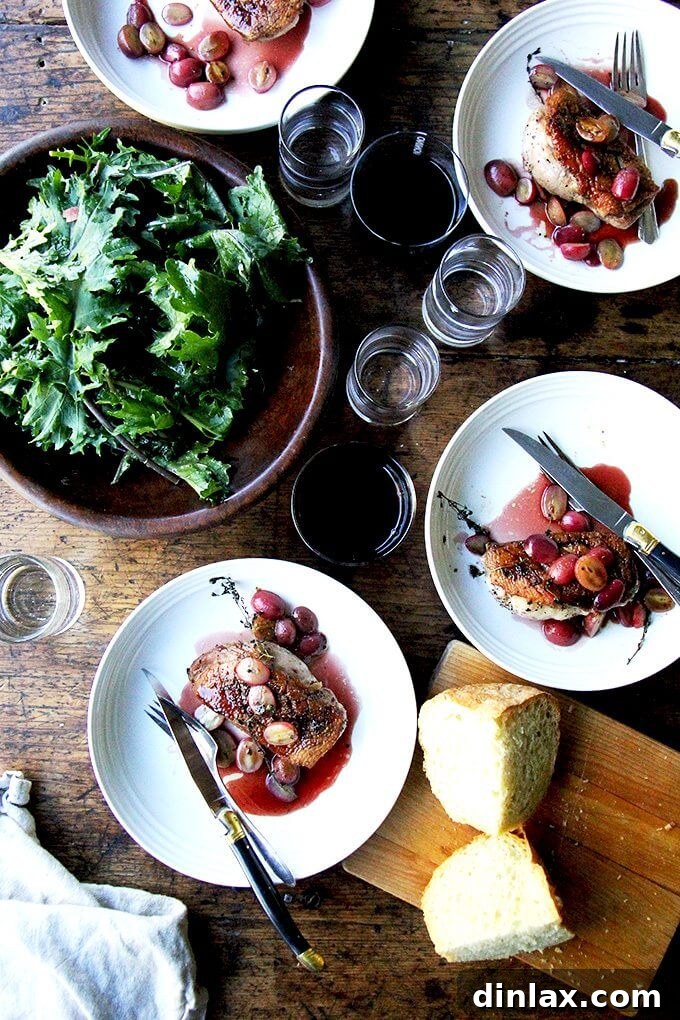
Perfect Pan-Seared Duck Breast with Roasted Grapes & Gastrique
4.9 from 91 reviews
- Author: Alexandra Stafford
- Total Time: 1 hour
- Yield: Serves 4
Description
Adapted from the Le Creusetcookbook (pronounced l’uh • cru • say)
A few notes:
This summer I invested in a good instant-read thermometer: a Thermapen. I can’t recommend this tool enough. Duck breasts in particular have been a challenge for me to cook — so many times I’ve pulled them from the heat, let them rest, only to cut into them to find flesh too rare or way overcooked. What is hard about cooking meat like steaks or duck breast is that when you get that good sear, it’s misleading — the meat may feel firm to the touch, but you might only be feeling your nice sear … what lies beneath is a guess. The Thermapen takes the guesswork out.
I do not use the star anise, because the first time I made this, I didn’t have any on hand, and I absolutely loved the flavor of the sauce as it was, so I’ve since omitted it. I imagine a single star anise would impart a very nice, subtle spice to the sauce, so absolutely use it if you have one on hand.
Finally, if you have a hard time finding duck, D’artagnan is a great source. I’ve sampled all of the duck varieties they sell. The Muscovy is the tastiest. It’s pricey, but if you think about what it costs to eat duck breast out at a restaurant, it’s not so bad.
Ingredients
- 1/2 cup sugar
- 2 tablespoons water
- 1/2 cup Banyuls vinegar or red wine vinegar
- 1/4 cup Banyuls fortified wine or ruby port
- 1 star anise pod, optional
- 4 boneless duck breast halves with skin
- Kosher salt to taste
- Fresh cracked black pepper to taste
- 1.5 cups halved red seedless grapes
- 1 teaspoon chopped fresh thyme (or a few sprigs if you are lazy)
- 1 cup loosely packed mâche or watercress leaves, optional
Instructions
For the gastrique:
- In a small saucepan over medium-high heat, cook the sugar and water, swirling gently until the sugar dissolves and the mixture turns a pale golden color, 8 to 10 minutes. Lift the pan from the heat and pour in the vinegar. The caramel will bubble vigorously and possibly seize and harden. Return the pan to the heat and cook until the caramel is melted and smooth, 2 to 3 minutes. Add the wine and star anise, if using. Simmer until the liquid reduces to thin syrup, about 10 minutes. Discard the star anise. Keep the gastrique warm over very low heat until ready to use.
For the duck breasts:
- Blot the duck breasts dry. Use a sharp knife to score the fat of each in a diamond pattern, taking care not to cut into the meat. Season both sides of each breast generously with salt and pepper, then place them skin side down in a large, cold skillet. Place the skillet over low heat and cook for 3 minutes. Increase the heat to medium, and continue cooking until the duck begins to sizzle. Continue cooking undisturbed until the skin is browned, crisp, and has rendered most of its fat, 6 to 8 minutes.
- Heat oven to 350ºF.
- Spoon off and reserve the fat from the skillet. Flip over the breasts and transfer the skillet to the oven. Alternatively, flip the breast and cook stovetop until the breast registers 125ºF-130ºF. I prefer finishing the breasts stovetop as I feel I have more control/vision on when the breasts look done, at which point I test with my instant-read thermometer. For me it’s been about 2 minutes on the second side. If you place pan in oven, roast for 2 to 4 minutes or until an instant-read thermometer inserted into the thickest part of the breast registers 125ºF-135ºF — Note: I find 125ºF-130ºF to be about right for medium rare. Transfer breasts to a plate to rest.
- Add the grapes to the skillet and toss with the thyme and a pinch of salt and pepper. Roast in the oven until the grapes are hot and wrinkled in spots, 8 to 10 minutes.
- Transfer breasts to plate, spoon grapes over top. Spoon sauce over top. Top with a small handful of mâche, if using, and serve immediately.
- Prep Time: 20 minutes
- Cook Time: 40 minutes
- Category: Dinner
- Method: Stovetop
- Cuisine: French