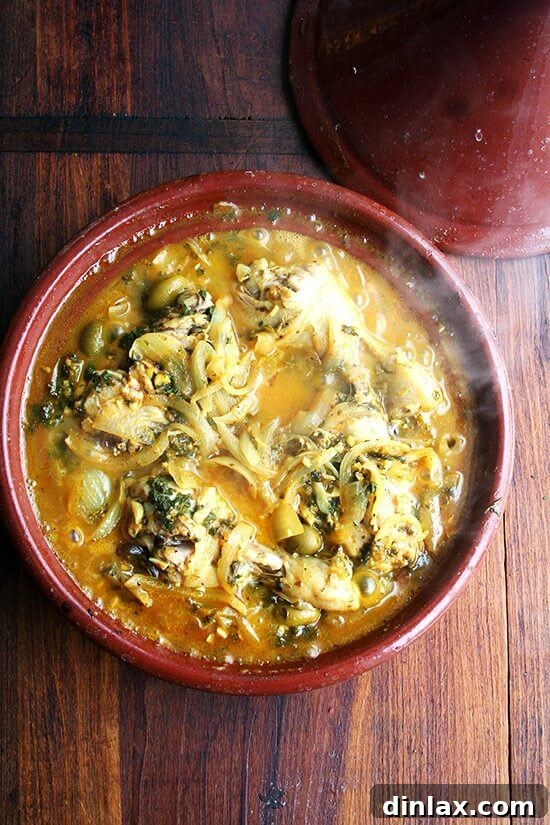
Embark on a culinary adventure into the vibrant world of Moroccan cuisine with this incredibly simple yet profoundly flavorful chicken tagine. Infused with aromatic spices, tangy preserved lemons, and briny green olives, this dish promises an unforgettable dining experience right in your home. Whether you’re a seasoned chef eager to master exotic flavors or a home cook looking for an effortless, one-pot meal, this recipe offers a gateway to the rich traditions of North African cooking.
My hope is that by the end of this guide, you’ll find yourself inspired in one of two ways. Perhaps you’ll be compelled to fully immerse yourself in Moroccan cooking, leading you to acquire your very own tagine, meticulously preserve a batch of lemons, and diligently seek out a quality source for ras-el-hanout. In this scenario, you’ll join me on a delightful culinary journey, eager to experiment with every ingredient imaginable in your new favorite kitchen vessel.
Alternatively, you might discover the sheer convenience of having access to a well-stocked Moroccan pantry, much like mine. Imagine effortlessly assembling a feast because you have premium ras-el-hanout, pre-made preserved lemons, savory tomato jam, and fresh parsley chermoula readily available. This simplifies the process to an extent where preparing a Moroccan meal becomes as easy as heating a frozen pizza. Both outcomes are a win in my book, especially the latter – perhaps we could even share a meal!
Embracing Tagine Cooking: The Simple Approach
For those ready to dive into the hands-on experience of tagine-style cooking from your own kitchen, let’s start by challenging some conventional cooking wisdom. Forget everything you know about traditional braising, which typically involves searing meat to develop a crust and then slowly cooking it in a covered pot with liquid. Tagine cooking, while sharing the low-and-slow essence of braising, takes a remarkably different, and simpler, path.
The beauty of the tagine lies in its “no-fuss” approach. There’s no initial browning of the meat, no deglazing of the pan to capture fond, and no multi-step process that complicates your cooking. Instead, all the ingredients are layered into the tagine at the very beginning and allowed to meld and cook together. This method not only saves time and reduces cleanup but also allows the flavors to truly infuse into every component of the dish, creating a depth that is uniquely Moroccan.
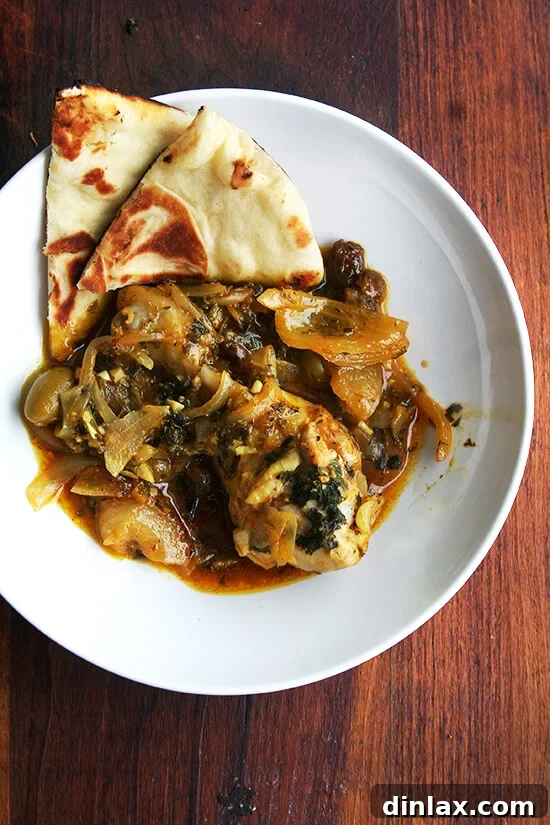
I distinctly remember observing this simplified technique at Tara Kitchen, a local Moroccan restaurant that ignited my passion for tagine. It took significant restraint for me to resist my ingrained habits of browning chicken in a separate pan, sautéing onions in rendered fat, and then transferring everything to the tagine. Yet, with a tagine, such extra steps are genuinely unnecessary. While browning might add a touch of color or a subtle nuance of flavor, it doesn’t warrant the additional effort or the extra dishes to wash. This Moroccan chicken tagine, I assure you, is bursting with flavor and vibrant color. The blend of various spices in the ras-el-hanout, particularly the turmeric and paprika, imparts an inviting and appetizing yellow hue that permeates the entire dish, making it as visually appealing as it is delicious.
Effortless Assembly: Your Guide to Tagine Perfection
The assembly of this delightful dish is astonishingly straightforward. With no specific order required, simply combine all your ingredients in the base of your tagine. Start with a thinly sliced onion and a generous minced garlic clove, forming a fragrant foundation. Next, add a tablespoon of exquisite ras-el-hanout – the heart of Moroccan spice blends – followed by a drizzle of rich olive oil and a splash of water to kickstart the braising process. Introduce a spoonful or two of bright preserved lemon purée, a handful each of sweet raisins and briny green olives, and finally, a handful of freshly chopped parsley. Gently place your bone-in, skin-on chicken pieces on top of this aromatic mixture. Once assembled, simply cover your tagine and place it over medium heat on your stovetop.
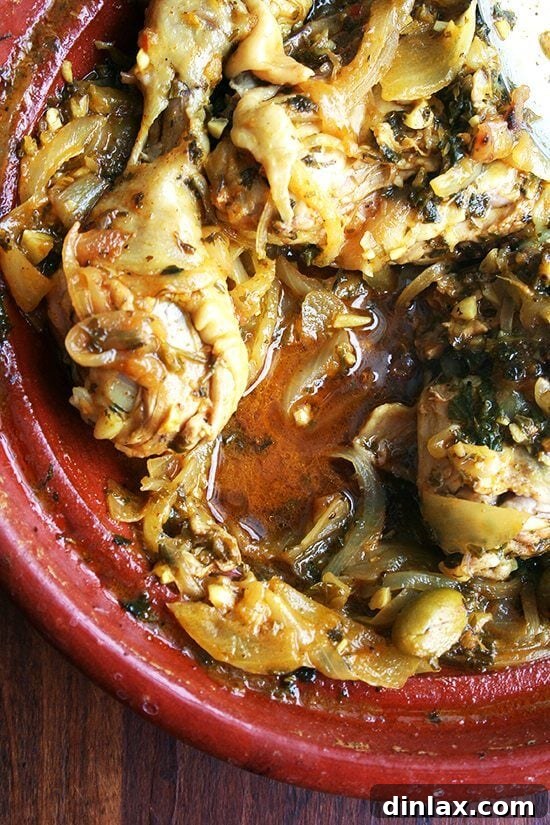
After just 30 to 40 minutes, a magical transformation occurs. The chicken will begin to tenderly pull away from the bone, indicating its perfect doneness. The juices will be bubbling gently around the ingredients, a testament to the concentrated flavors of the onions, preserved lemons, and ras-el-hanout slowly stewing together. This harmonious blend creates an incredibly fragrant and delectable sauce that is both rich and perfectly balanced. This one-pot method truly allows the ingredients to shine, making it an ideal choice for both weeknight dinners and special occasions.
The Marvel of the Tagine Pot: Design and Function
Despite having owned my tagine for only a short period, I am completely captivated by its functionality and the culinary possibilities it unlocks. My research into this traditional Moroccan cooking vessel has revealed its ingenious design. The conical lid, characteristic of a tagine, plays a crucial role in creating the perfect cooking environment. It’s specifically crafted to promote the return of condensation back to the base of the pot, ensuring that every ingredient remains incredibly moist and tender throughout the cooking process. This self-basting mechanism is what makes tagine-cooked dishes so succulent and flavorful, preventing dryness often associated with other braising methods.
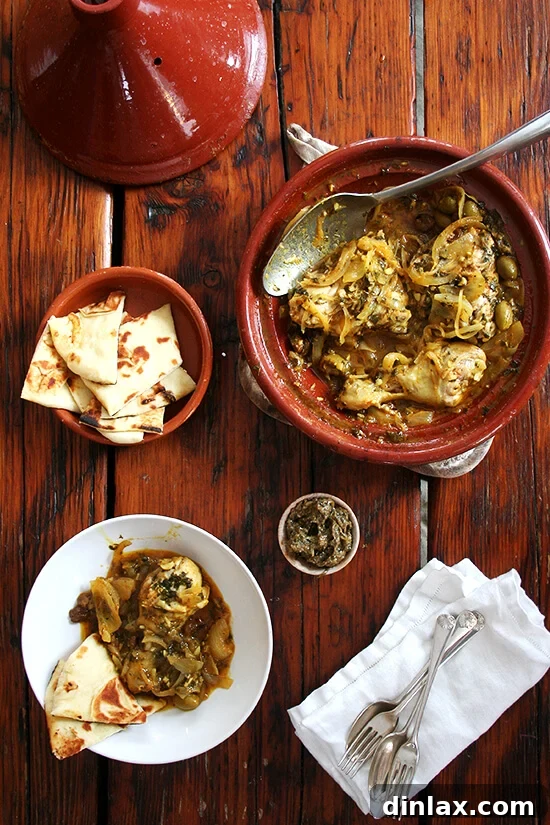
Beyond its ability to retain moisture, what truly impresses me is how effectively the tagine maintains the heat of the food. Whether it’s chickpeas, fish, or chicken, every dish served from this pot stays wonderfully warm, allowing for a leisurely and enjoyable meal. This feature not only enhances the dining experience but also speaks to the thoughtful design rooted in centuries of Moroccan culinary tradition. The tagine isn’t just a cooking pot; it’s a centerpiece that brings warmth and flavor to any table.
Sourcing Ingredients: The DIY vs. Convenience Dilemma
If the thought of building a Moroccan pantry from scratch feels daunting, and you’re leaning towards the convenience of having pre-prepared staples, I completely empathize. As I’ve often noted, the process of creating a delicious tagine is astonishingly simple, provided you have a few key ingredients readily available. The most crucial among these is ras-el-hanout, a cornerstone in every tagine recipe I’ve mastered so far. But also vital are preserved lemons (essential for this chicken dish and many others), rich tomato jam (perfect for the chickpea tagine I shared previously), and vibrant harissa (for various other spicy tagine creations).
While I generally advocate for the satisfaction of crafting sauces and spice mixtures from scratch, there are definite times when delegating to a more knowledgeable expert makes perfect sense. Preparing preserved lemons, for instance, involves just two ingredients and a straightforward process that is well worth the effort. However, blending ras-el-hanout is an entirely different undertaking, often requiring 14 or even more distinct spices. Although the process of mixing spices, many of which you might already have in your pantry, can be simple and quick to get right, finding a reputable source for a pre-mixed, high-quality ras-el-hanout is often the most practical and equally rewarding option. In such cases, I wholeheartedly encourage embracing convenience.
So, what’s your preference? Are you ready to pack your bags and join me for a Moroccan lunch, savoring the ease of pre-prepared ingredients? Or does the challenge of mixing dozens of individual spices sound like an exciting culinary endeavor? I would genuinely love to hear from anyone who has crafted their own ras-el-hanout blend or can recommend an excellent online source for this essential spice mixture.
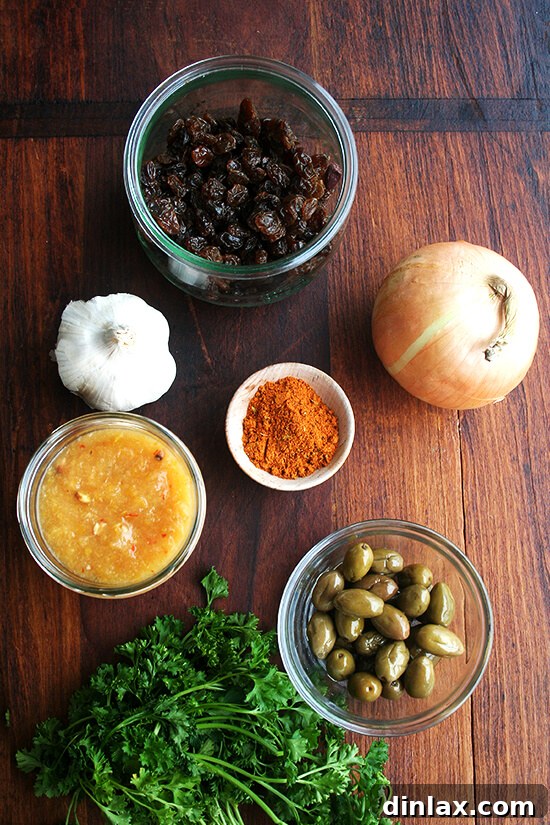
As you can see, if you have ras-el-hanout (the vibrant orange spice mixture in the center) and preserved lemons (or preserved lemon purée) on hand, the ingredient list for this delightful tagine is remarkably minimal, highlighting the efficiency and focus on essential flavors.
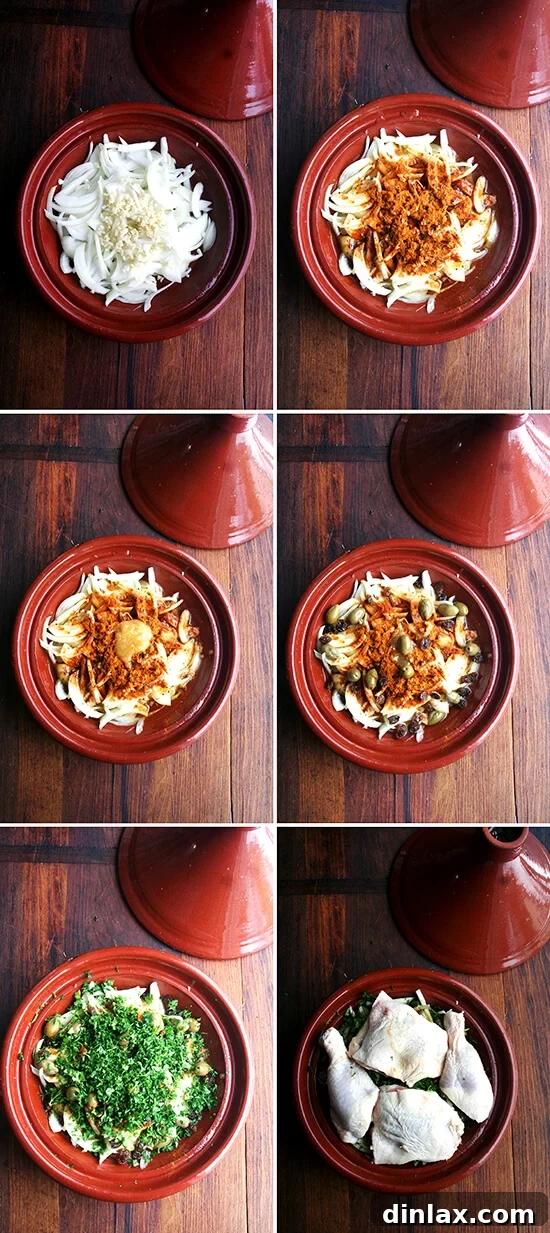
And the process truly is simple: from left to right, top to bottom, layer the ingredients into the tagine. Begin with sliced onions and minced garlic, followed by ras-el-hanout, olive oil, and water. Add a spoonful of preserved lemon purée, then green olives and raisins, and finally, chopped parsley. Top with unseasoned, bone-in, skin-on chicken thighs and drumsticks for the perfect finish.
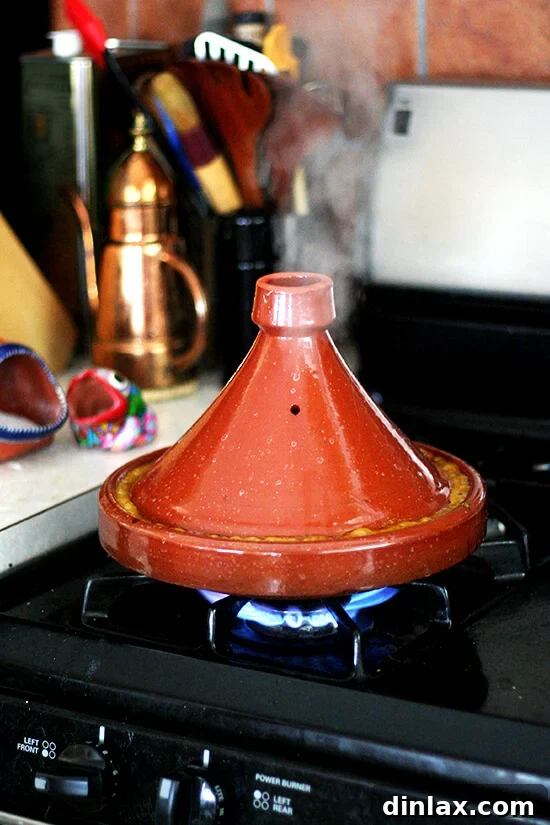
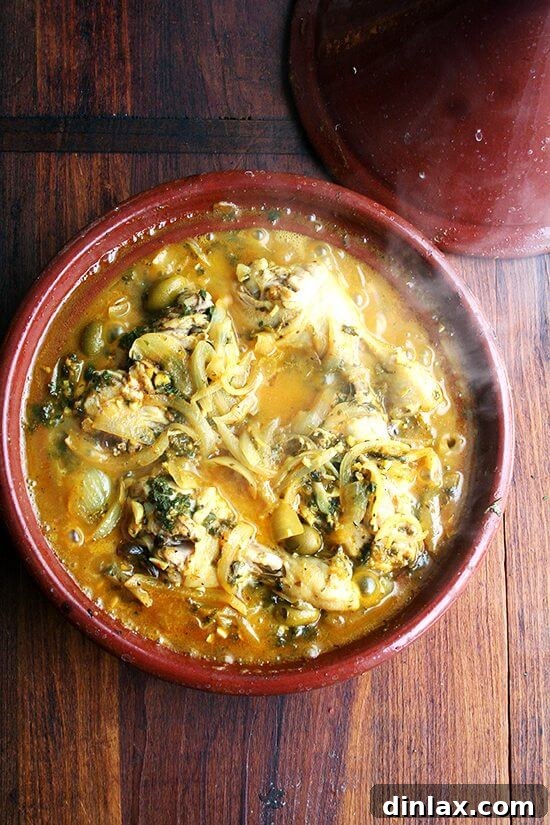
I may have packed a few too many onion slices, chicken pieces, and a little too much water into my tagine here—the juices probably shouldn’t be bubbling up around the lid quite as vigorously as shown in this image. A slight adjustment will ensure an even more perfect braise!
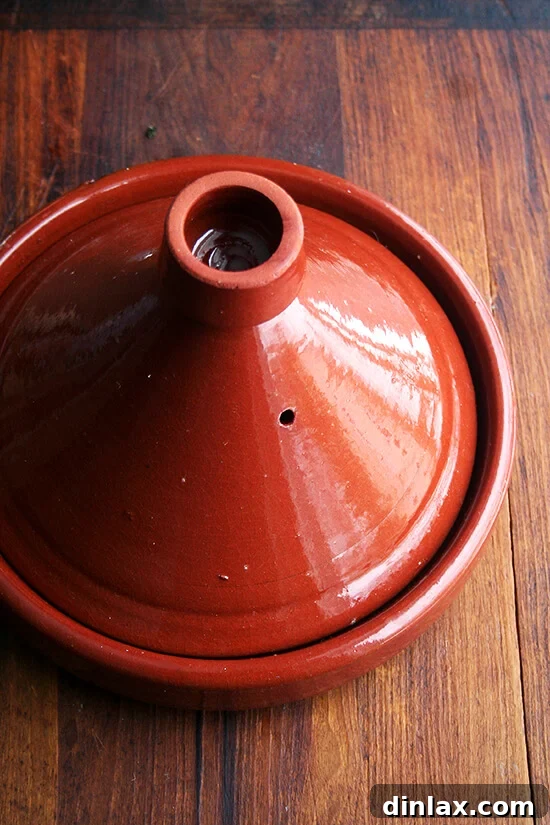
This particular tagine is a 10-inch model, which I acquired from Tara Kitchen. Aneesa, the proprietor, shared invaluable advice regarding tagine selection and care. She recommended looking for a tagine with an air hole, a feature that was unfortunately missing from two others I initially ordered, despite product photos suggesting otherwise. Furthermore, Aneesa strongly advised against using tagines that are painted, as the pigments can potentially leach into your food, compromising both flavor and safety.
Before using a new tagine for the first time, it’s crucial to properly cure it. Soak the tagine in water for at least 12 hours, allowing the clay to fully hydrate. After soaking, let it dry completely – I waited four hours, but a longer drying period is generally advisable for optimal results. It is also important to note that tagines are not suitable for electric coil stovetops, and even diffusers are generally not recommended. Tagines are inherently prone to cracking, especially when subjected to sudden or drastic temperature changes. Therefore, always heat your tagine slowly and allow it to cool down gradually to preserve its integrity and longevity.
My Moroccan Culinary Journey: Inspired by Tara Kitchen
My delightful foray into Moroccan cooking truly began in early December, ignited by an unforgettable dinner with friends at the esteemed Tara Kitchen. The experience was nothing short of delectable, leaving a lasting impression on my palate and inspiring a new culinary quest. Shortly after that memorable evening, I embarked on a weekend project to create my own preserved lemons, a fundamental ingredient in Moroccan cuisine. This led to attending a cooking class hosted by Tara Kitchen’s owner, Aneesa, where I had the wonderful opportunity to stock up on several of her expertly blended spice mixtures and signature sauces. A week ago, I proudly purchased my very own tagine directly from Tara Kitchen, and I couldn’t be more pleased with its performance and how it has transformed my cooking.
Aneesa is a true culinary artisan, offering all of her exquisite spices, homemade sauces, and authentic tagines for sale directly at Tara Kitchen. She also generously shares her expertise through monthly cooking classes, providing a unique opportunity to learn traditional Moroccan techniques. For those in the area, a selection of her delectable creations can also be found at the Niskayuna Coop, making it even easier to bring these authentic flavors into your home.
Tara Kitchen: 431 Liberty Street | Schenectady | 518-708-3485
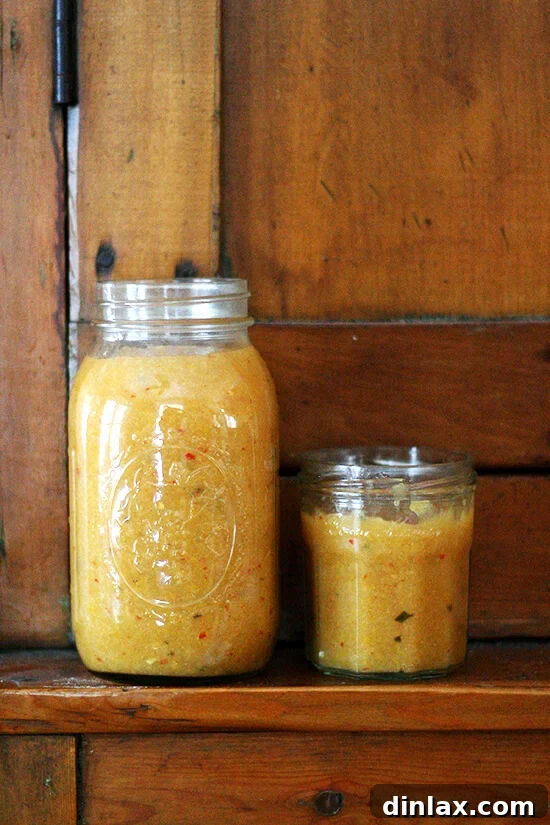
Upon returning from Tara Kitchen and discovering Aneesa’s technique of puréeing her preserved lemons for use in her dishes, I immediately adopted this clever method. It truly simplifies the incorporation of that essential tangy, salty flavor into any Moroccan recipe.
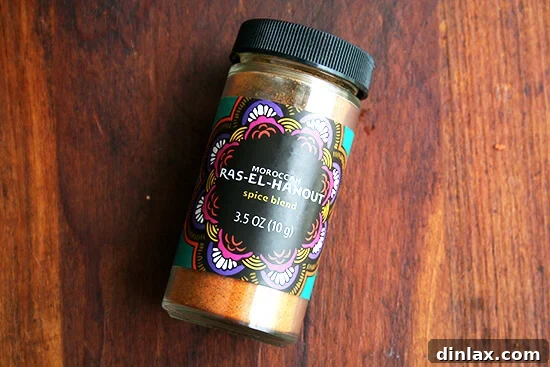
Tara Kitchen’s ras-el-hanout is a meticulously crafted blend of 14 different spices, including paprika, parsley, cinnamon, cardamom, cloves, bay leaves, star anise, cumin, coriander, thyme, fenugreek, pepper, turmeric, and ginger. This complex and aromatic mixture is the secret to many authentic Moroccan dishes, offering a depth of flavor that is hard to replicate.
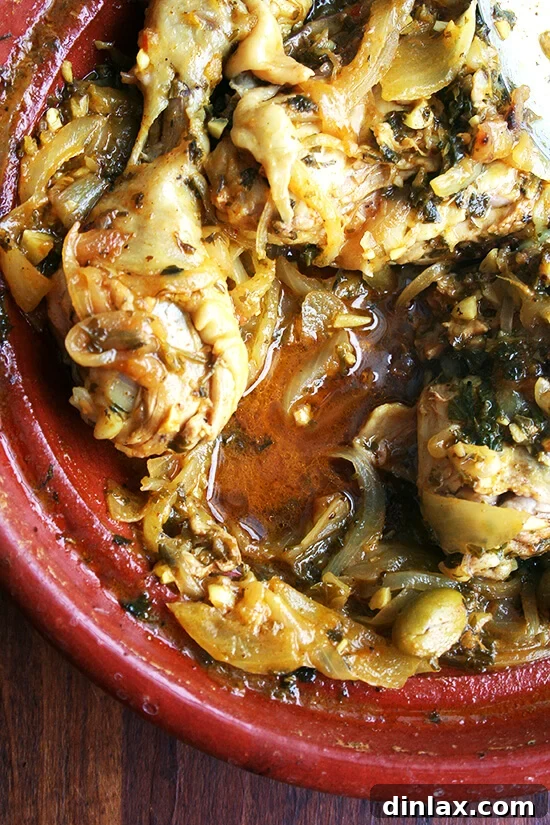
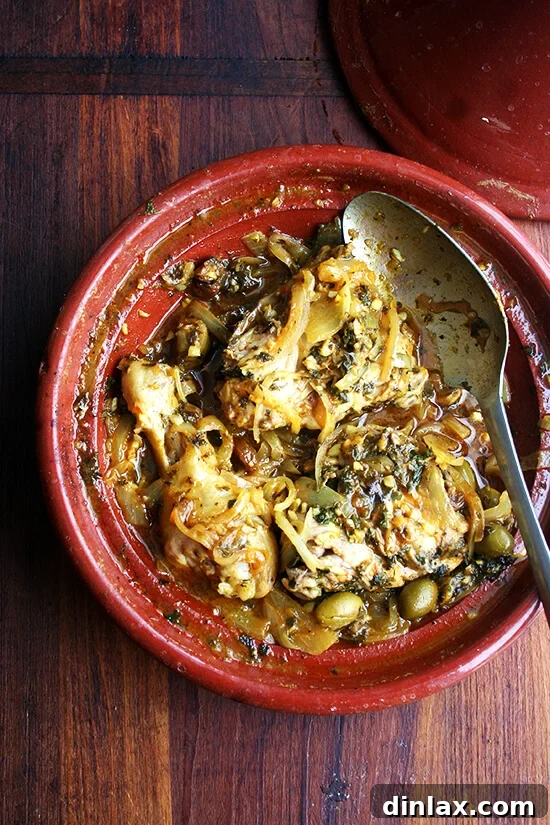
While I may still be a novice tagine user, I am undeniably a dedicated fan. Just look at those incredible juices – a testament to the tagine’s ability to create succulent, deeply flavorful meals!
Print Recipe
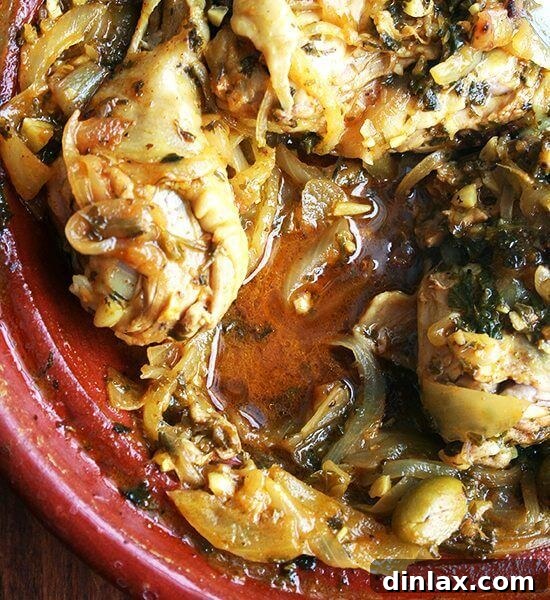
Chicken with Preserved Lemons & Green Olives
5 Stars4 Stars3 Stars2 Stars1 Star
5 from 1 review
- Author: alexandra
- Total Time: 40 minutes
- Yield: 2 1x
Description
I have been using a 10-inch tagine, but a larger one might be better for more servings. It works, but it’s definitely crowded and stirring can be a little tricky. Two or three bone-in, skin-on chicken pieces is probably ideal for this size tagine. You can also use boneless, skinless chicken thighs, which will halve the cooking time, though I find the bone-in, skin-on pieces offer richer flavor. Chicken breasts can be used, but I generally prefer thighs for their moisture and taste. You don’t necessarily need a tagine for this dish; before I owned one, I successfully used my everyday pan. I simply used a little more water, and the process was otherwise identical.
The two essential ingredients you’ll need to make or source are preserved lemons and ras-el-hanout. I previously shared two recipes for preserved lemons; if you can buy them, that’s an easy option. At the Tara Kitchen cooking class I attended, I learned that Aneesa purées her preserved lemons, using spoonfuls of the purée in her dishes, a technique I now employ. As for ras-el-hanout, I haven’t yet tried blending my own. My advice is twofold: 1. For simplicity, find a quality pre-mixed ras-el-hanout from a spice market or online. 2. If you’re adventurous, try mixing your own (and please share your recipe!). Aneesa’s blend contains 14 different spices: paprika, parsley, cinnamon, cardamom, cloves, bay leaves, star anise, cumin, coriander, thyme, fenugreek, pepper, turmeric, and ginger. This recipe looks promising, though I can’t vouch for it personally yet. I’ll report back once I’ve tried it.
Another interesting fact I learned is that fresh cilantro isn’t common in Moroccan cooking. While I adore fresh cilantro and have enjoyed it in other tagine recipes, I wanted this recipe to closely mirror what I learned in class. Feel free to add some if you like, however. Ground coriander, on the other hand, is a staple in Moroccan cuisine and is often included in ras-el-hanout. Finally, raisins are not traditional in this specific dish—they are Aneesa’s unique addition—but I find their sweetness provides a wonderful contrast to the saltiness of the olives and preserved lemons, enhancing the overall flavor profile beautifully.
Ingredients
- 1 onion, thinly sliced
- 1 to 2 cloves garlic, minced
- 1 tablespoon ras-el-hanout
- 3 tablespoons olive oil
- 1/4 to 1/2 cup water
- 1 to 2 teaspoons preserved lemon purée
- handful of green olives (I like them with the pits, but buy what you prefer)
- handful of raisins, preferably golden
- handful of chopped parsley, or more or less to taste
- 4 pieces bone-in, skin-on dark meat chicken
- pita, naan or some sort of flatbread or couscous or rice for serving
Instructions
- Place all of the ingredients (starting with 1/4 cup of water) into the base of the tagine. Cover the tagine with its lid and place it over medium to medium-high heat on your stovetop.
- After 10 to 15 minutes, carefully remove the lid (using a towel or pot holder to protect your hands from steam). Give all the ingredients a gentle stir. At this point, the liquid should be bubbling softly. If the moisture level appears low, add another 1/4 cup of water.
- Return the lid and continue cooking for an additional 15 minutes, adjusting the heat as necessary to maintain a gentle bubbling of the liquid. Check the tagine again and carefully dip a spoon into the sauce to taste. If it requires more salt, add a pinch, or for an extra layer of tangy flavor, add another spoonful of preserved lemon purée. Continue cooking until the chicken meat is tender and easily pulling away from the bone. The liquid should be bubbling vigorously by this stage. Serve this aromatic tagine hot with warm pita bread, naan, other flatbreads, couscous, or rice.
- Prep Time: 10 minutes
- Cook Time: 30 minutes