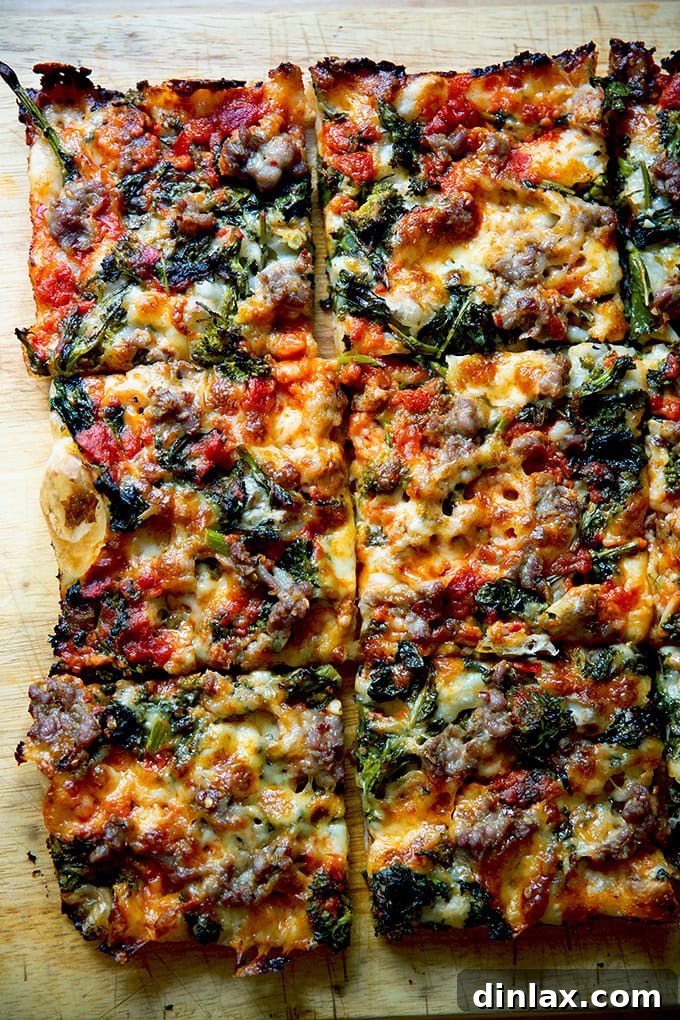
Grandma-style pizza: a beloved pan pizza renowned for its airy, light crust and irresistibly crisp edges. This classic Italian-American creation shares a delightful kinship with focaccia, making its dough incredibly simple to prepare, demanding no fancy mixers or advanced techniques. It’s the quintessential pizza for effortlessly feeding a crowd, offering a perfect balance of flavor and texture that captivates every palate. Dive into our comprehensive guide below for step-by-step instructions to master this culinary gem.
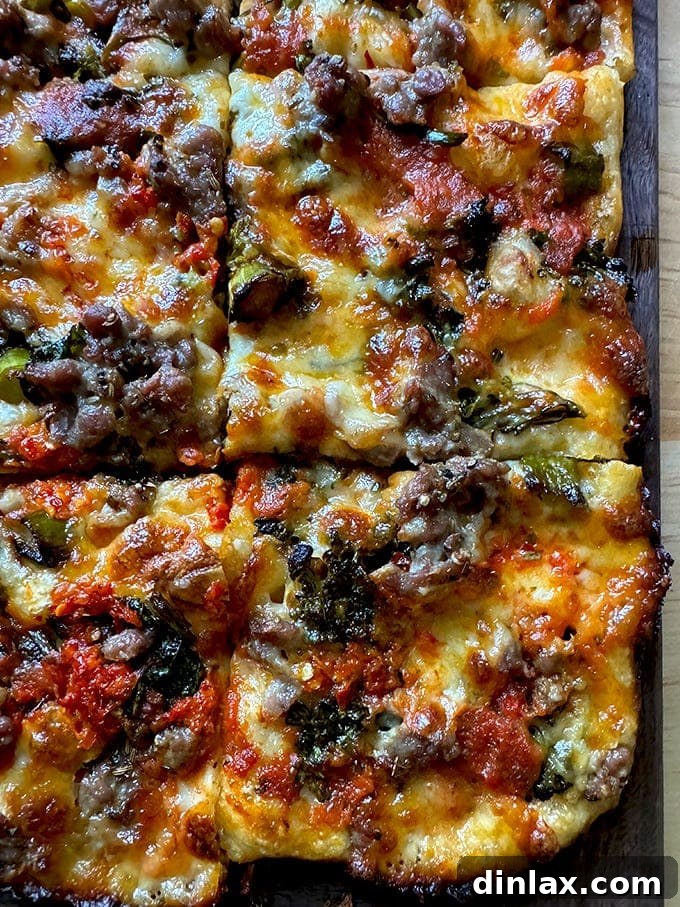
Grandma pizza, a celebrated style of sheet pan pizza, offers a delightful departure from its thicker cousin, Sicilian-style pizza. While both are baked in generous sheet pans, Grandma pizza distinguishes itself with a significantly thinner crust. This means you utilize the same pan size but with only half the amount of dough, resulting in a lighter, more delicate base. A key advantage of Grandma pizza over Sicilian is the absence of a parbaking step, streamlining the preparation process and making it an even more accessible option for home cooks.
Among the diverse world of pan pizzas, each style boasts its unique charm. Detroit-style pizza captivates with its unparalleled frico crust—a caramelized, crispy cheese edge that is utterly addictive. Sicilian pizza, on the other hand, is cherished for its remarkably pillowy and airy crumb, offering a satisfying chew. Yet, for many pizza aficionados, including myself, Grandma-style pizza stands out as the ultimate choice. It represents the thinnest of these three distinct pan styles, striking a perfect balance between the toppings and the crust. The texture is a true marvel: reminiscent of a light and airy focaccia, yet endowed with distinctively crisp edges that provide a delightful contrast with every bite.
Much like Sicilian and Detroit-style pizzas, Grandma pizza is exceptionally well-suited for serving large gatherings, making it an ideal centerpiece for family dinners, parties, or any festive occasion. Its crowd-pleasing nature is further enhanced by its flexibility in preparation. A significant portion of the cooking process, from preparing the dough to stretching it and applying toppings, can be done well in advance, minimizing last-minute stress. For those seeking an extra-crispy crust, a Lloyd steel pan is highly recommended, though a standard half-sheet pan will also yield excellent results. Before we delve into the detailed instructions, be sure to watch our helpful how-to video for visual guidance, followed by comprehensive step-by-step directions to guide you on your journey to homemade Grandma-style pizza perfection.
Crafting the Perfect Grandma-Style Pizza: A Step-by-Step Culinary Journey
The foundation of an exceptional Grandma-style pizza lies in its dough, a remarkably simple yet flavorful creation. To begin, you’ll need just a few essential ingredients: high-quality bread flour, instant yeast (our preferred choice is SAF instant yeast for its reliability), salt, and water. These humble components come together to form a dough that’s surprisingly easy to handle and bursting with potential. Opting for bread flour helps develop a stronger gluten network, contributing to that desired airy interior and crispy exterior, while instant yeast ensures a consistent and efficient rise without the need for prior activation.
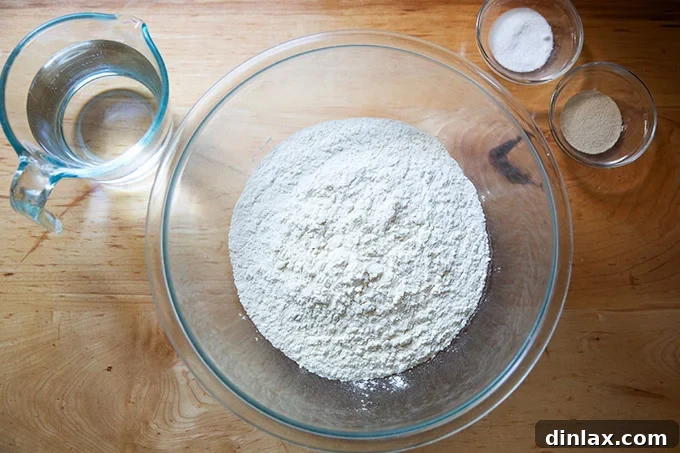
The initial steps for making Grandma pizza dough mirror the simplicity of crafting focaccia. In a spacious mixing bowl, combine all the dry ingredients: the bread flour, salt, and instant yeast. This ensures an even distribution of leavening and seasoning throughout the dough, setting the stage for optimal flavor development. Using a large bowl provides ample space for mixing and subsequent stretching and folding, preventing any spills or mess.
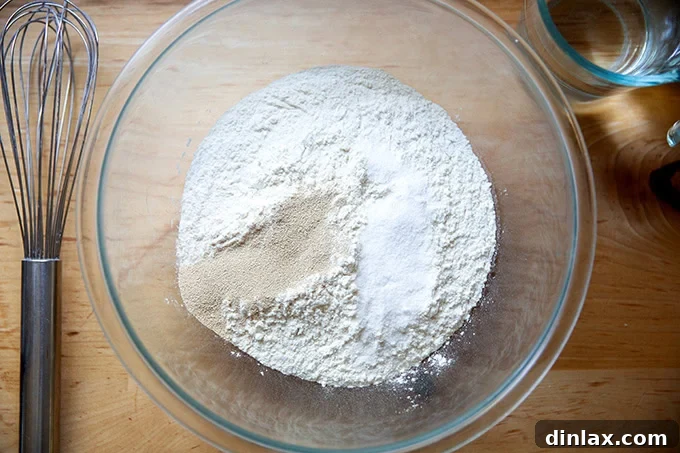
Once the dry ingredients are in the bowl, whisk them together thoroughly to fully incorporate the salt and yeast into the flour. This crucial step prevents pockets of unmixed ingredients and ensures a uniform dough texture. After whisking, introduce the water. The hydration level is key to the focaccia-like texture of Grandma pizza dough, making it quite wet and sticky – don’t be alarmed by this characteristic, as it contributes to the light and airy final crust.
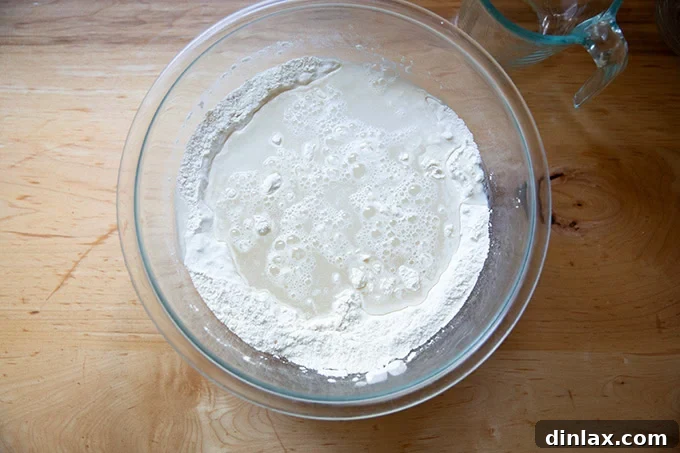
Continue to mix until the water is completely absorbed and the ingredients coalesce into a sticky, shaggy dough ball. At this stage, the dough will not appear smooth or perfectly formed, but rather somewhat unkempt. This rough appearance is perfectly normal and expected for this type of high-hydration dough. Resist the urge to add more flour, as this can lead to a dense, tough crust. The stickiness is a sign of a well-hydrated dough, which is essential for developing the characteristic open crumb structure of Grandma pizza.
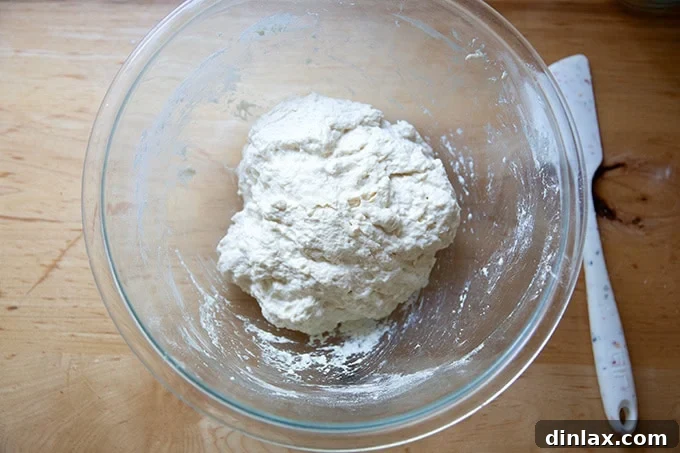
Allow the dough to rest for 30 minutes. This brief autolyse period allows the flour to fully hydrate, making the dough more pliable and easier to work with. Following this rest, perform a series of gentle stretch and folds. You can find detailed video guidance for this technique embedded above and in the recipe card below. This process is crucial for developing gluten structure without the need for intensive kneading. After these stretch and folds, your dough will transform into a noticeably more cohesive and elastic ball. Finish by slicking the dough with a light layer of olive oil, covering the bowl tightly, and allowing it to undergo its first significant rise at room temperature for 6 to 10 hours. The duration of this rise will depend on the ambient temperature of your kitchen, with warmer conditions accelerating the process.
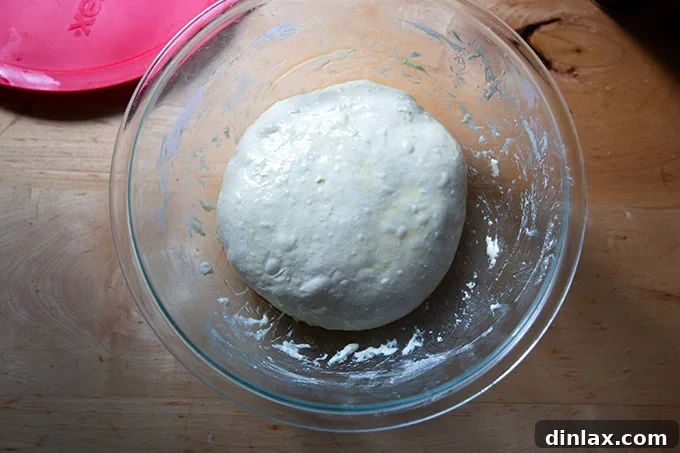
Once the dough has risen beautifully, revealing a network of bubbles and an expanded volume, carefully uncover the bowl. You’ll notice the dough has become even more aerated and lively, a testament to the yeast’s activity. The goal now is to gently handle it to prepare for portioning.
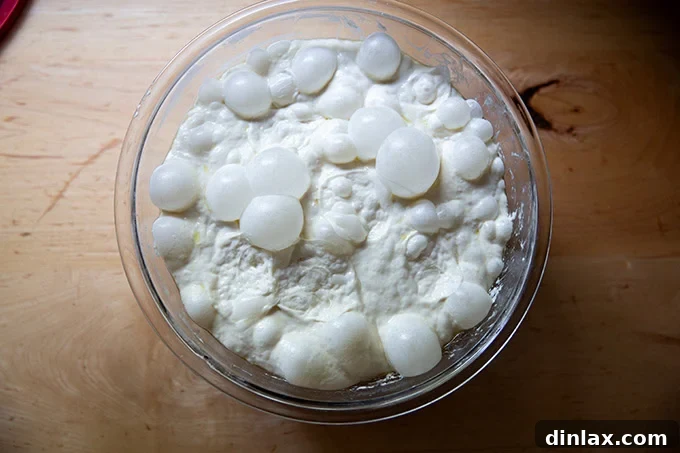
Gently deflate the risen dough. This action helps to release some of the gas, making it easier to manage and shape. It’s important to do this with care to avoid tearing the delicate gluten structure you’ve worked to develop. A light touch is all that’s needed to bring the dough back to a more compact form.
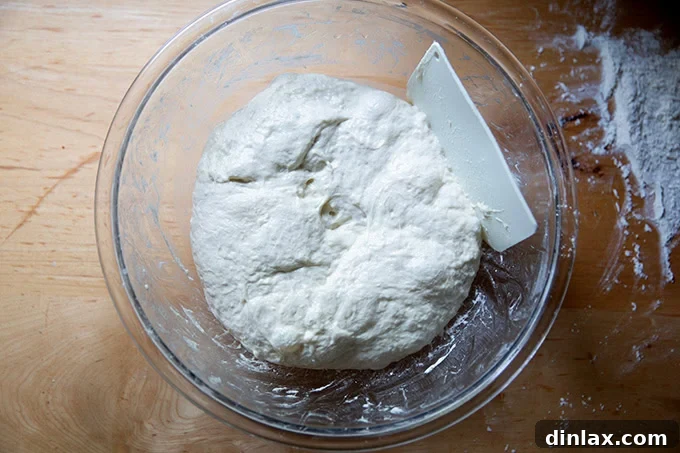
Next, turn the deflated dough out onto a lightly floured work surface. The flour will prevent the sticky dough from adhering excessively to your countertop, making it easier to handle during the next steps. A bench scraper can be particularly useful here for cleanly transferring the dough from the bowl.
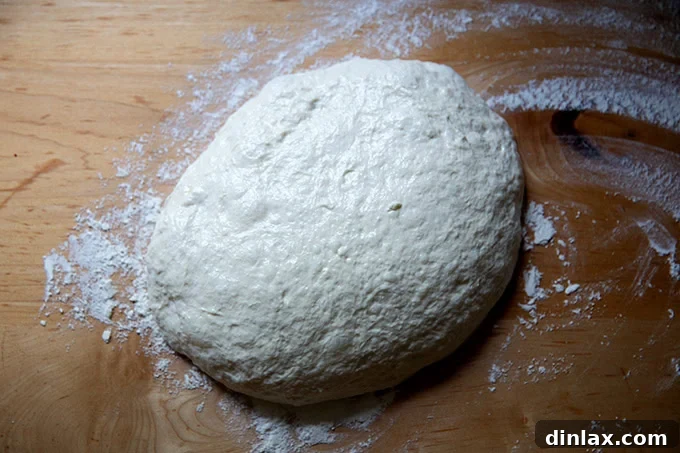
Carefully divide the dough into two equal portions. Each portion should ideally weigh approximately 525 grams. Precision here ensures two pizzas of consistent size and thickness. A kitchen scale is highly recommended for accurate division, which contributes to uniform baking results.
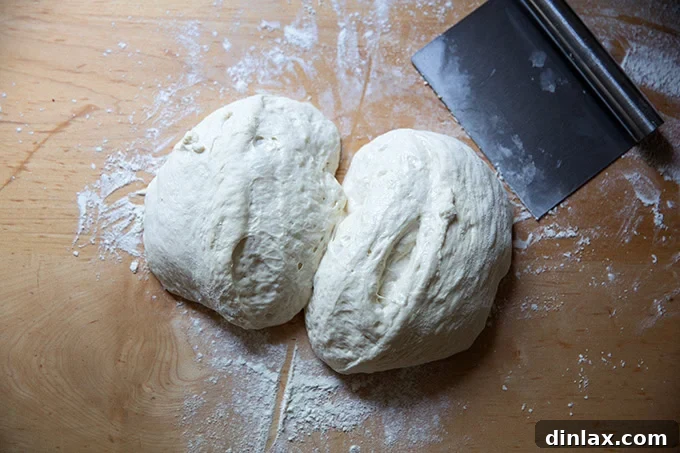
Now, gently ball up each portion of dough. Given the dough’s inherent wetness and stickiness, liberal use of flour on your hands and the work surface will be your best friend during this step. Don’t strive for absolute perfection in the ball shape; the goal is simply to create a more manageable, rounded mass. This light shaping helps prepare the dough for its cold fermentation, a crucial step for flavor development.
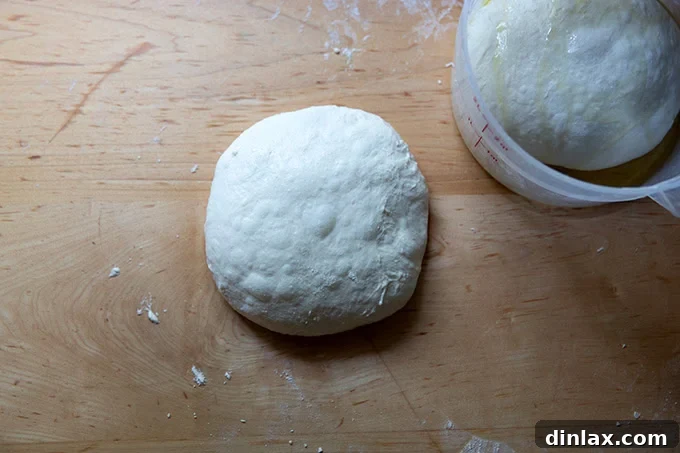
Once balled, transfer each portion to a lightly oiled, individual airtight container. For this purpose, I highly recommend a 2-quart dough rising bucket; they are incredibly versatile and I personally own four for various dough-related tasks. Drizzle each dough ball with a touch more olive oil and turn to ensure it’s fully coated. This prevents sticking and helps maintain moisture during the cold fermentation. Securely cover the containers and place them in the refrigerator for 1 to 3 days, or even up to 5 days for optimal flavor development. This long, slow cold ferment significantly enhances the complexity and depth of the pizza’s taste. Should your schedule require a shorter timeline, refer to the recipe box for guidance on adapting the fermentation period without compromising quality.
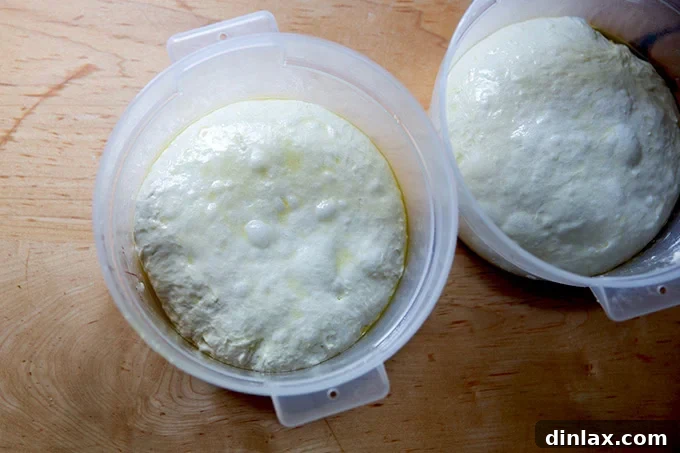
On the highly anticipated baking day, retrieve one or both dough-filled containers from the refrigerator, depending on how many pizzas you plan to make. Allowing the dough to come to a slightly warmer temperature before handling will make it more pliable and easier to stretch.
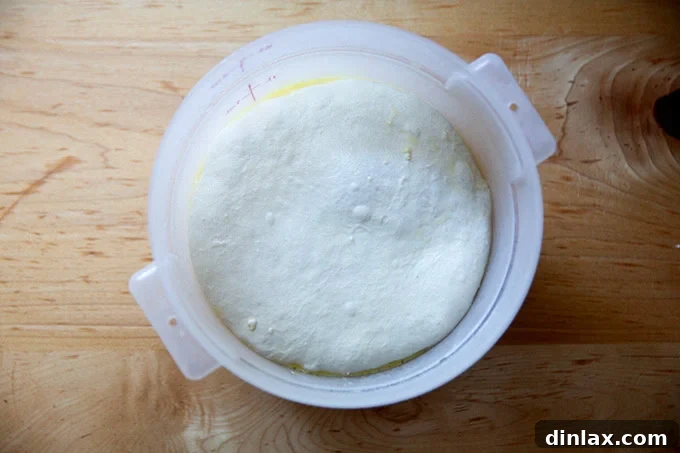
Preparing your baking pan correctly is a critical step for achieving the signature crispy crust of Grandma-style pizza. While a standard half-sheet pan will work effectively, a Lloyd grandma-style pizza pan is specifically designed to create an exceptionally crisp and evenly browned crust due to its dark coating and slightly sloped edges. Before adding any oil, generously butter the pan. This butter layer serves multiple purposes: it imparts a rich, savory flavor to the crust, significantly promotes a beautiful golden-brown caramelization, and acts as a powerful non-stick agent. After buttering, pour a tablespoon of high-quality olive oil into the center of the pan, forming a shimmering pool that the dough will soon embrace.
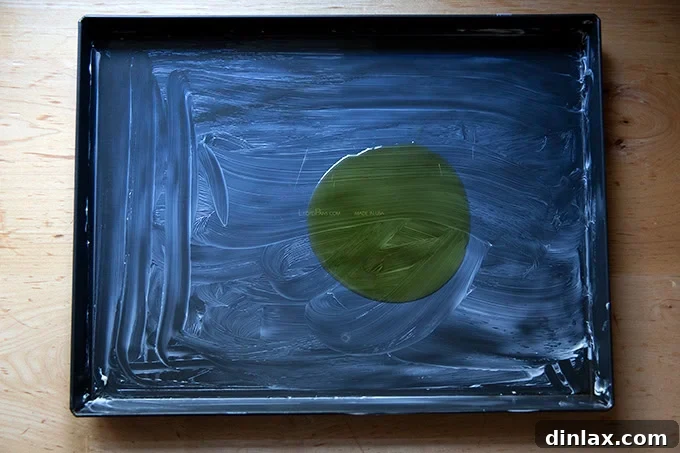
Gently turn the chilled dough ball out into the inviting pool of olive oil in the prepared pan. Once it’s in the pan, turn the dough to ensure it’s thoroughly coated on all sides with the oil. This coating is vital for preventing the dough from drying out during its proofing stage and contributes significantly to the final crispness and flavor of the crust. The oil also aids in the initial stretching process.
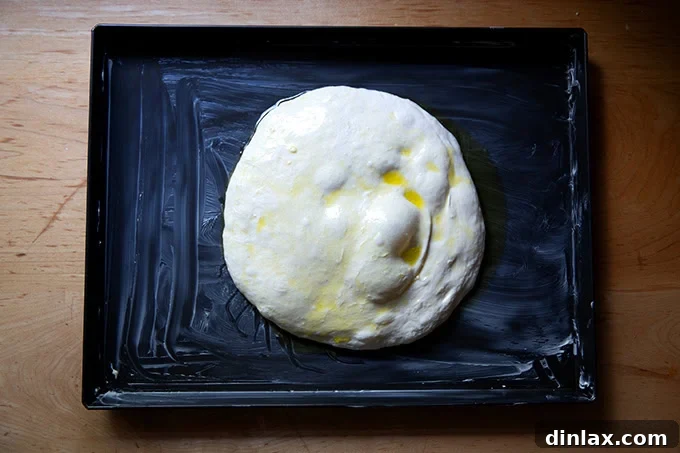
Allow the dough to rest at room temperature in the pan for 1 to 4 hours. This proofing period is flexible, accommodating your schedule, and permits the dough to relax and begin its final rise before baking. This relaxation makes the dough much easier to stretch without tearing, and the ambient temperature encourages the yeast to become active again, resulting in an airy texture.
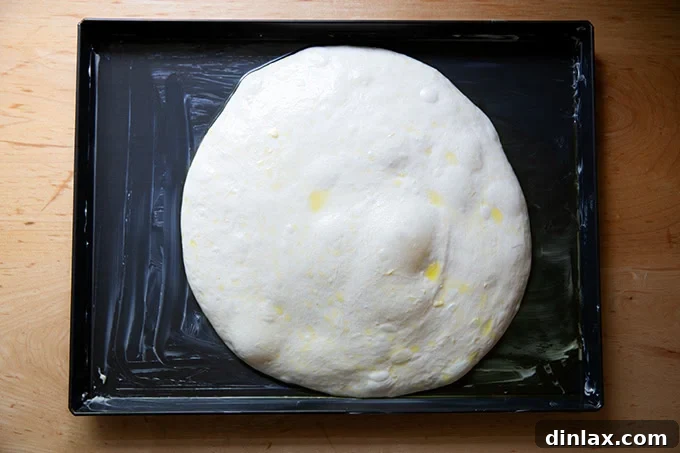
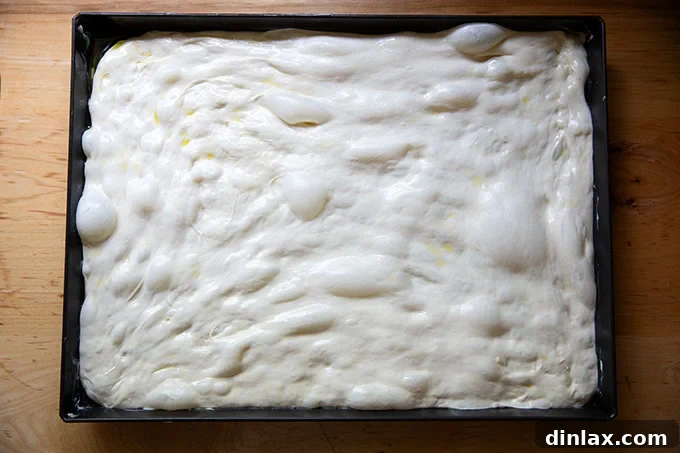
With lightly oiled hands, gently begin to stretch the dough to fit the contours of the pan. The oil prevents sticking and allows your fingers to glide effortlessly over the dough’s surface. Use your fingertips to dimple and press the dough outwards, gradually coaxing it to fill the entire pan. If the dough resists and springs back, cover it with a towel and let it rest for 15-30 minutes. This short rest allows the gluten to relax, making subsequent stretching much easier. Repeat this gentle stretching and resting process until the dough comfortably reaches all edges of the pan, forming a uniform base for your pizza.
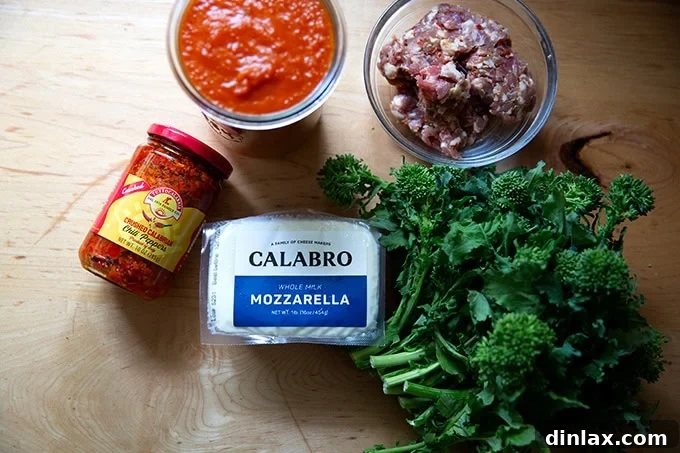
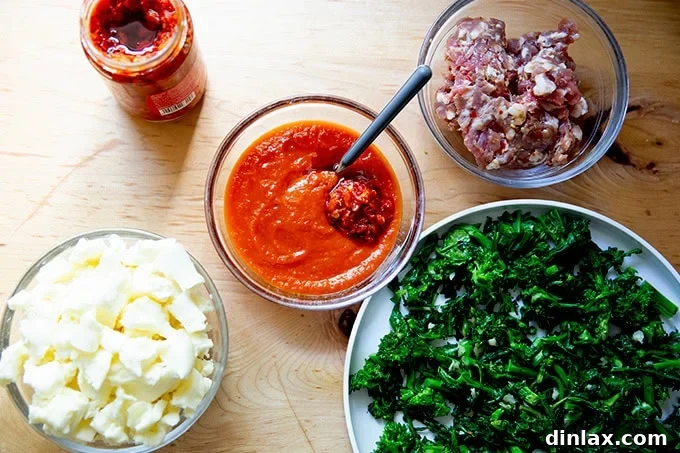
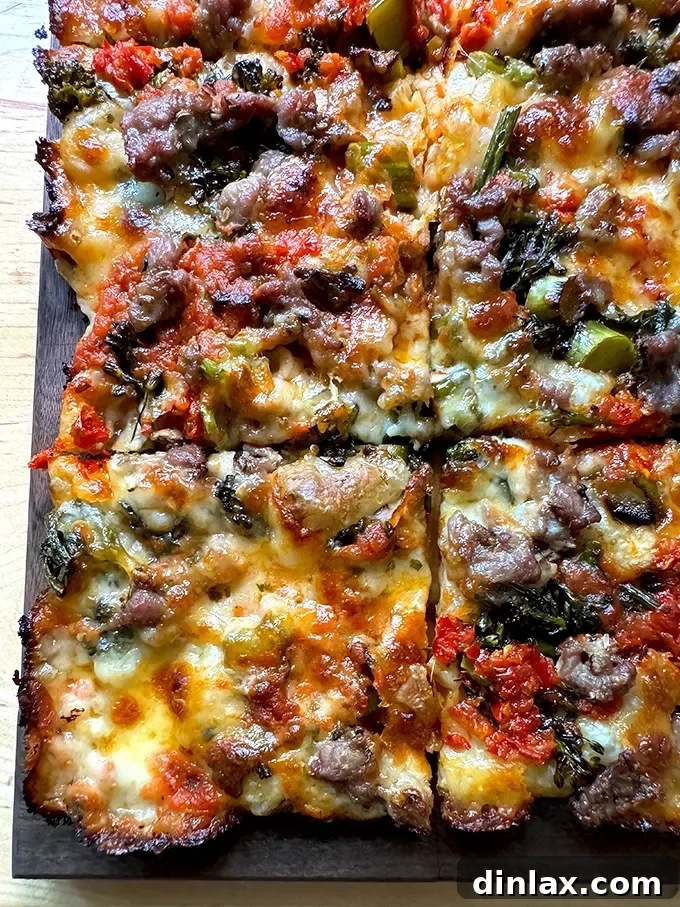
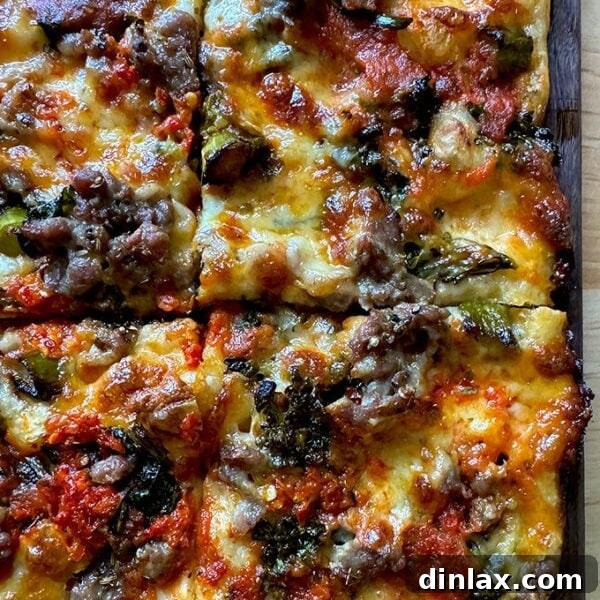
While the dough rests and proofs, gather all your desired toppings. This particular combination, a highlight from the cookbook Pizza Night, is a symphony of flavors and textures: tender broccoli rabe, savory Italian sausage, rich mozzarella, and a fiery kick from spicy tomato sauce, achieved by infusing your favorite sauce with Calabrian chili paste. Arranging all your ingredients beforehand, known as “mise en place,” ensures a smooth and enjoyable topping process.
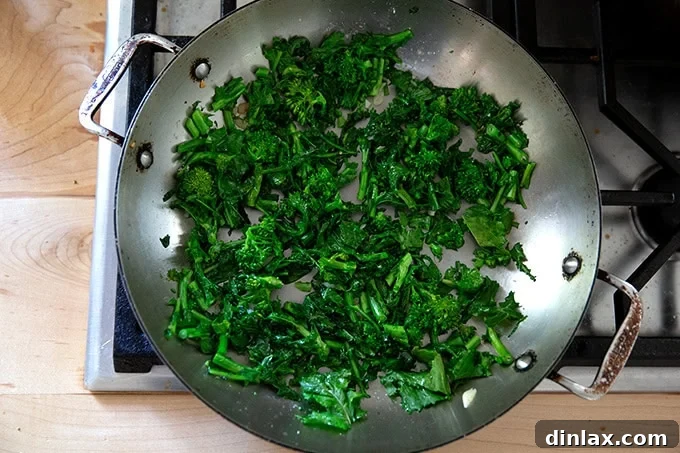
For this delightful pizza, a quick sauté of the broccoli rabe (or any other green vegetable you prefer) is essential. Heat a tablespoon of olive oil in a large skillet over medium-high heat, then add minced garlic. Cook until the garlic just begins to shimmer and turn fragrant, being careful not to brown it excessively. Add the trimmed broccoli rabe, season with a pinch of kosher salt, and sauté, stirring frequently with tongs, until it wilts and turns vibrant green, usually about 2 minutes. A splash of water and a brief cover helps to steam it gently, ensuring tenderness. Finish with a squeeze of fresh lemon for brightness.
To infuse your pizza with a wonderful spicy kick, stir 1 to 2 tablespoons of Calabrian chili paste directly into your chosen tomato sauce. The amount can be adjusted based on your preference for heat; start with less if you’re unsure. If Calabrian chili paste isn’t readily available, or if you prefer a milder flavor, feel free to omit it entirely. The pizza will still be incredibly delicious with a classic tomato sauce.
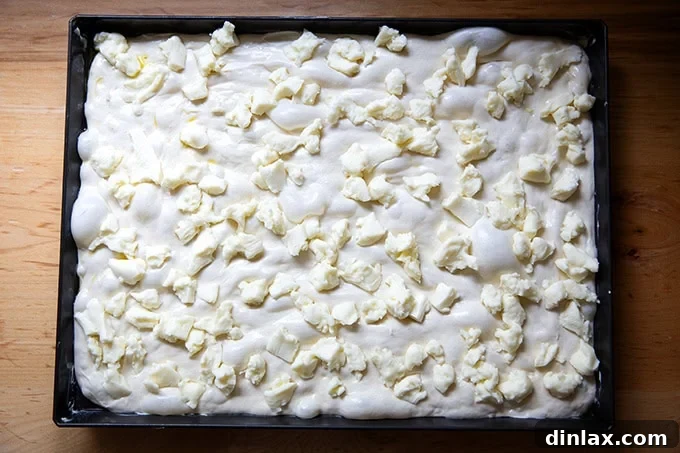
The order of assembling your pizza toppings is more strategic than you might imagine, especially when aiming for a crispy crust. Begin by evenly spreading the shredded mozzarella cheese across the stretched dough, ensuring it reaches all the way to the edges. This initial layer of cheese acts as a barrier, protecting the crust from becoming soggy from the wetter ingredients that follow. It also melts down to form a delicious, caramelized edge during baking.
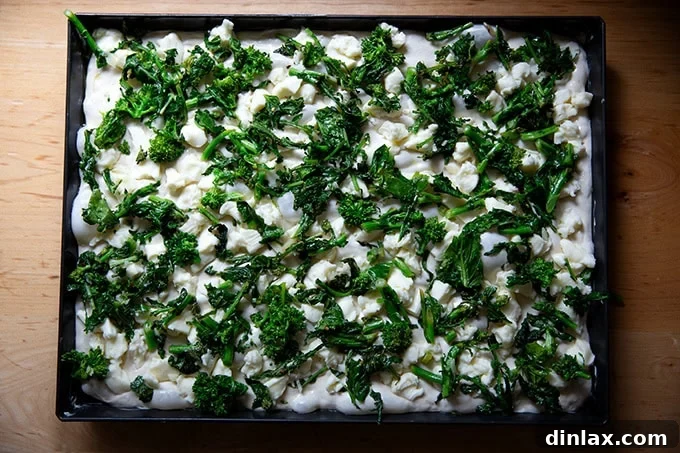
Following the cheese, evenly distribute the sautéed broccoli rabe over the surface of the pizza. Placing the cheese and other solid toppings down before the sauce is a smart technique to help maintain the crust’s coveted crispness. The moisture from the sauce is kept away from the dough, allowing the crust to bake directly and achieve maximum crunch. This method is a hallmark of many successful pan pizza recipes, particularly for those striving for that perfect balance of chewy interior and golden-crisp base.
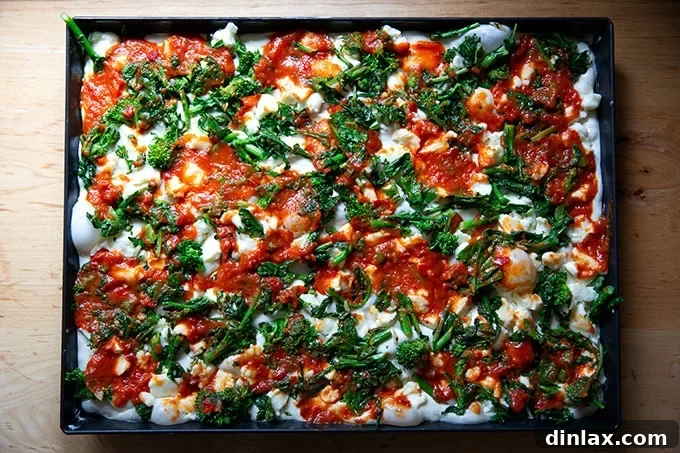
Once the cheese and vegetables are in place, artfully drop spoonfuls of your seasoned tomato sauce all around the pizza. Rather than pouring it, spooning allows for better control and more even distribution. Then, use the back of a spoon to gently spread the sauce, creating small pockets of flavor without saturating the layers beneath. This ensures the sauce complements, rather than overwhelms, the other toppings and contributes to a balanced bite with every square.
Finally, if you’re including Italian sausage, pinch off small, irregular pieces of the bulk sausage and scatter them evenly over the top of the pizza. This ensures that each slice gets a delightful bite of savory meat. The small size allows the sausage to cook through perfectly and crisps up nicely during the bake, adding another layer of texture and flavor to your homemade Grandma-style pizza. Ensure the sausage is distributed across the entire surface for a truly satisfying experience.
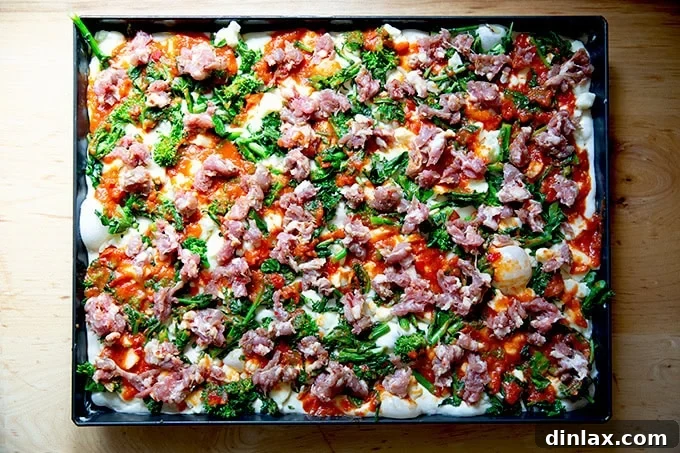
Preheat your oven to a robust 450ºF (230ºC). For the ultimate crispy crust, bake the pizza on a preheated Baking Steel or a high-quality pizza stone. These accessories conduct heat exceptionally well, ensuring a uniformly golden and crisp bottom crust. Bake for approximately 23-25 minutes, or until the edges of the pizza are deeply caramelized and the cheese is bubbly and beautifully browned. Keep a close eye on it during the last few minutes to achieve your desired level of crispness without burning.
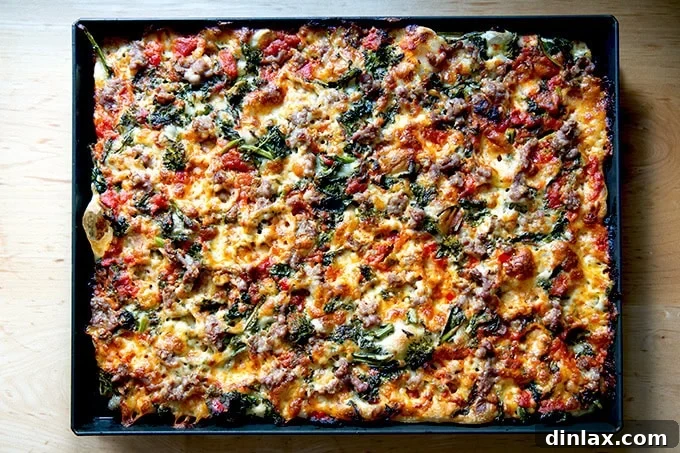
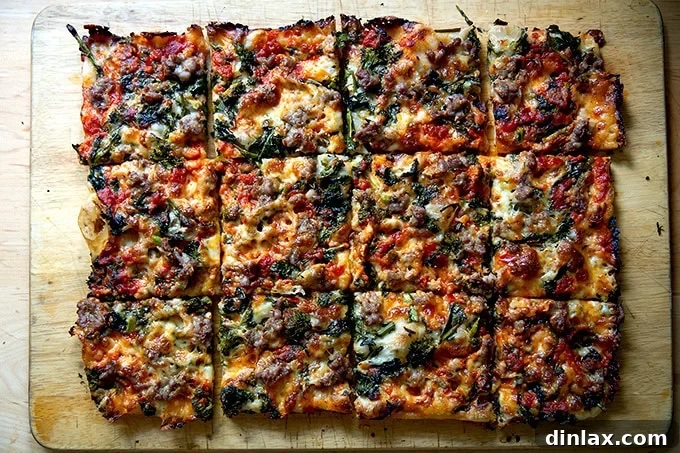
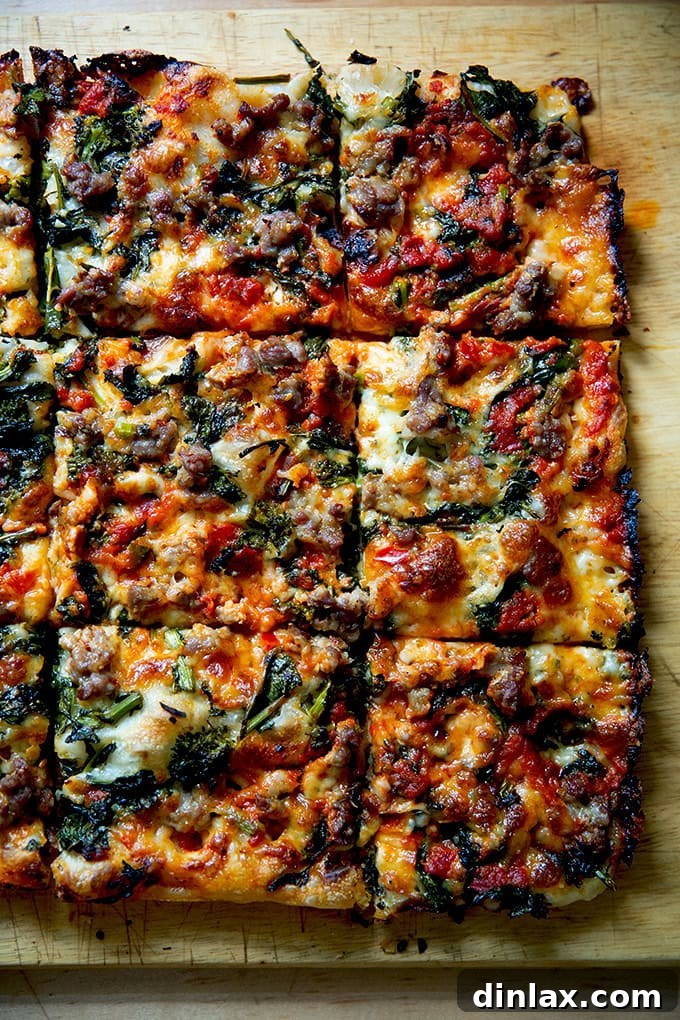
Once baked to perfection, carefully remove the pizza from the oven. To ensure easy transfer, run a thin paring knife or a flexible spatula around the perimeter of the pan, gently loosening the edges. Then, using an offset spatula or two regular spatulas, carefully slide the entire pizza from the pan onto a sturdy cutting board. This method prevents the crust from bending or tearing. Once on the cutting board, the traditional Grandma-style dictates slicing it into convenient squares, making it perfect for sharing and easy to handle at any gathering.
Print
Homemade Grandma-Style Pizza
5 Stars 4 Stars 3 Stars 2 Stars 1 Star
5 from 6 reviews
Author: Alexandra Stafford
Total Time: 24 hours 25 minutes
Yield: 2 pizzas 1x
Description
Grandma-style pizza is a delicious pan pizza, sharing similarities with Sicilian-style in its sheet pan baking method, but distinctively thinner and crisper. Its generous size and uncomplicated preparation make it the ultimate choice for feeding a crowd with ease and flavor!
This authentic recipe is proudly featured in my cookbook, Pizza Night.
Chef’s Notes & Pro Tips:
- For unparalleled accuracy and the best baking results, always use a digital scale to precisely measure both your flour and water. This is the secret to consistent dough hydration.
- Flour & Water Dynamics: The ideal flour-to-water ratio can vary based on environmental humidity and flour brand. In humid climates, opting for bread flour is highly recommended due to its higher protein content, which absorbs more moisture. If you reside in regions like Canada or the UK, or if your specific bread flour (e.g., King Arthur vs. Central Milling, as in my tests) results in a stiffer dough, consider holding back a small amount of water initially. Always reference the video for visual cues on optimal dough texture, then gradually add more water as needed. Remember, this is intended to be a wet and sticky dough; handling it becomes easier with practice and a generous dusting of flour.
- Salt: The Flavor Enhancer: A general guideline for bread dough is to use salt at 2-3% of the flour’s weight. For this recipe’s flour quantity, this translates to 10 to 15 grams. If you prefer a less salty profile, aim for 10 grams. For those who enjoy a bolder flavor, 12 to 15 grams is ideal. My personal preference is Diamond Crystal kosher salt for its consistent texture and pure flavor.
- Yeast Essentials: My go-to is SAF instant yeast. I purchase it in bulk and store it in a quart storage container in the fridge (or freezer) for extended freshness. If you’re using active-dry yeast, simply sprinkle it over the specified lukewarm water and let it sit for about 15 minutes, or until a foamy layer appears, before proceeding with the recipe. This step activates the yeast, ensuring a good rise.
- Mastering Your Timeline: The initial room temperature rise for this dough typically spans 6-10 hours, and for optimal flavor development and ease of handling, the balled dough ideally benefits from 1 to 3 days (or even up to 5) of cold fermentation in the refrigerator. However, if time is a constraint, you have options: you can skip the fridge rise entirely and proceed directly to proofing the dough in the pan at room temperature after the initial rise. To expedite the first rise itself, increase the instant yeast to 2 teaspoons and use lukewarm water (around 75-80°F/24-27°C). This adjustment will shorten the room temperature rise to 1 to 3 hours, allowing you to move forward with the recipe more quickly.
Recommended Equipment for Grandma Pizza Excellence:
- A Lloyd grandma pan is specifically designed to create an exceptionally crisp and perfectly caramelized crust due to its unique dark finish and slightly sloped edges. It’s a worthy investment for serious pan pizza enthusiasts.
- Elevate your crust game with a Baking Steel or a high-quality pizza stone. These thermal masses absorb and radiate intense heat, significantly boosting oven spring and contributing to an incredibly crisp bottom crust.
- Two 2-quart dough storage vessels are invaluable for managing and storing individual portions of your Grandma-style dough in the refrigerator. Their airtight seal ensures optimal conditions for a long, slow cold fermentation, enhancing flavor and texture.
Ingredients
For the pan pizza dough (which yields enough for 2 Grandma pizzas):
- 550 grams (about 4¼ cups) bread flour or all-purpose flour, plus more for dusting, see notes above for guidance
- 15 grams salt, see notes above for specific recommendations
- 2 grams (about ½ teaspoon) instant yeast, or use up to 2 teaspoons for a faster rise
- 485 grams (a generous 2 cups) cold (around 60°F/15°C) water, or lukewarm if shortening the rise time
- Extra-virgin olive oil, for coating
For one pizza:
- 2 tablespoons unsalted butter, softened to room temperature
- 2 tablespoons extra-virgin olive oil, divided, plus additional for hands as needed
- One 525-gram ball of pan pizza dough (prepared as above)
- 8 ounces fresh broccoli rabe, trimmed with ends removed
- 1 medium clove of garlic, finely minced
- A squeeze of fresh lemon juice, to taste
- 12 ounces (approximately 3 cups) shredded low-moisture whole-milk mozzarella cheese (Calabro brand is highly recommended for its quality)
- ¾ cup quality tomato sauce, such as this homemade version or your preferred jarred brand
- 1 to 2 tablespoons Calabrian chili paste, optional, adjusted to your heat preference
- 8 ounces bulk hot or sweet Italian sausage, if desired
Instructions
For the Dough:
- Mix the dough: In a large mixing bowl, meticulously whisk together the bread flour, salt, and instant yeast until evenly combined. Pour in the specified amount of water and, using a sturdy spatula or your hand, mix until all the water is thoroughly absorbed and the ingredients form a cohesive, yet wet and sticky, dough ball. Avoid overmixing. Cover the bowl snugly with a clean kitchen towel or plastic wrap and allow the dough to rest undisturbed for at least 15 minutes, or up to 30 minutes. This initial rest, known as autolyse, helps the flour hydrate fully, making the dough more pliable.
- Stretch and fold for strength: Prepare a small bowl of water for moistening your hands. Dip one hand into the water to prevent sticking. With your wet hand, gently grab an edge of the dough, pull it upwards, and fold it towards the center of the bowl. Rotate the bowl 90 degrees and repeat this stretching and folding motion 8 to 10 times. As you work, you’ll notice the dough becoming progressively smoother and more cohesive, despite its initial wetness. The primary purpose of this technique is to develop gluten strength and ensure all dry pockets of flour are fully hydrated and integrated. Don’t worry if your technique isn’t perfect; the dough is quite forgiving.
- The leisurely rise: Drizzle approximately 1 teaspoon of extra-virgin olive oil over the dough, and using your hands, gently rub it all over the surface. This prevents a crust from forming and adds flavor. Re-cover the bowl tightly with plastic wrap or a lid and allow the dough to undergo its primary fermentation at room temperature. This process will take 6 to 10 hours, or until the dough has nearly doubled in volume and exhibits a bubbly surface. The exact timing will fluctuate based on your kitchen’s ambient temperature and the activity of your yeast.
- Portioning the dough: Lightly oil your hands to minimize sticking. Gently release the risen dough from the sides of the bowl. Carefully turn the entire dough mass out onto a lightly floured work surface. Using a clean bench scraper, divide the dough into two equal portions. Each portion should weigh roughly 525 grams. Precision here ensures two uniformly sized pizzas.
- Ball up the dough: With floured hands, take one portion of dough. Gently grab the edges and pull them towards the center, forming a rough ball shape. Flip the dough ball over so the seam is underneath. Cup your hands around the dough and drag it across the work surface towards you, creating tension on the surface and forming a tight, smooth ball. Repeat this cupping and dragging motion until the ball holds its shape. Remember, the dough is naturally wet and sticky, so don’t be concerned if it’s not perfectly round.
- Cold storage for flavor: Place each meticulously balled dough portion into its own individual airtight container. Transfer these containers to the refrigerator for a cold fermentation period of 1 to 3 days. This slow, cool rise is crucial for developing deep, complex flavors in your pizza crust. The dough can even be stored for up to 5 days, with longer fermentation yielding richer taste.
For the Pizza Assembly and Baking:
- Proofing in the pan: Generously grease a 12 × 16-inch Grandma-style pan or a standard 13 × 18-inch sheet pan with the softened unsalted butter. Pour one tablespoon of the extra-virgin olive oil directly into the center of the pan. Place one dough ball into this pool of oil and gently turn it to thoroughly coat all sides. Leave the dough uncovered and allow it to rest and proof at room temperature for 1 to 4 hours, depending on your schedule. This allows the dough to relax and become more pliable for stretching.
- Stretch the dough: Lightly oil your fingertips and gently begin to dimple and stretch the dough outwards to fit the dimensions of the pan. Work from the center outwards, pushing the dough to the edges. If the dough resists and starts to shrink back, cover the pan with a clean towel and let it rest for 20-30 minutes. This brief rest allows the gluten to relax. Repeat the stretching and resting process until the dough smoothly fills the entire pan, reaching all corners and edges.
- Preheat the oven: If you are using a Baking Steel or pizza stone for an extra-crispy crust, place it on a rack in the middle or lower third of your oven. Preheat your oven to a high 450ºF (230ºC) for at least 30-45 minutes to ensure the steel/stone is thoroughly heated.
- Prepare the broccoli rabe: Trim the tough ends from the broccoli rabe and cut the remaining stalks into manageable 1-inch segments. In a large skillet, heat the remaining tablespoon of olive oil over medium-high heat. Add the minced garlic and sauté briefly, just until it becomes fragrant and begins to shimmer, typically 1 to 2 minutes; be careful not to burn it. Add the prepared broccoli rabe, season with a generous pinch of kosher salt, and cook, stirring and tossing frequently with tongs, until it wilts and turns a vibrant green, about 2 minutes. Pour in 2 tablespoons of water, cover the skillet, and cook for an additional 2 minutes to tenderize. Remove the cover, squeeze fresh lemon juice over the top, stir, and taste, adjusting with more salt or lemon if desired.
- Season the tomato sauce: In a small bowl, combine the tomato sauce with 1 to 2 tablespoons of Calabrian chili paste. Stir well to fully incorporate the paste, adjusting the amount to suit your preferred level of spice. If you don’t have Calabrian chili paste, or prefer a milder pizza, simply omit this step.
- Assemble the pizza: For the final stretch, lightly oil your hands again and gently push the dough to ensure it perfectly fits the pan. First, sprinkle the shredded mozzarella cheese evenly over the entire surface of the dough, extending it all the way to the pan’s edges. Next, uniformly spread the sautéed broccoli rabe over the cheese layer. Now, drop spoonfuls of the seasoned tomato sauce evenly across the pizza, then use the back of your spoon to gently spread it in a swirling motion, leaving some areas with just cheese and broccoli rabe visible. Finally, if using, pinch the bulk Italian sausage into small, dime-sized pieces and scatter them evenly over the top of the pizza.
- Bake the pizza: Carefully slide the pizza pan onto the preheated Baking Steel or pizza stone in the oven. Bake for 23 to 25 minutes, or until the pizza’s edges are deeply caramelized and golden brown, the crust is puffed and golden, and the cheese is molten and bubbling with some browned spots. The caramelized edges are a hallmark of a perfectly baked Grandma-style pizza.
- Cool and serve: Once baked, carefully remove the pan from the oven. Immediately run a thin paring knife or a sturdy offset spatula around the edges of the pizza to loosen it from the pan. Using an offset spatula, carefully transfer the entire pizza from the pan to a clean cutting board. Allow it to cool for a few minutes before slicing into 12 to 16 square pieces, a signature cut for Grandma-style pizza. Serve hot and enjoy the perfect crispy, airy crust!
- Prep Time: 24 hours
- Cook Time: 25 minutes
- Category: Pizza
- Method: oven
- Cuisine: American