Roasted Ratatouille: The Ultimate Easy & Flavorful Summer Vegetable Dish
The essence of summer, captured in a single, irresistibly delicious dish: Roasted Ratatouille. Forget the traditional, time-consuming stovetop methods; this recipe transforms humble garden vegetables into a rich, deeply flavored stew with minimal fuss. Inspired by Gena Hamshaw’s brilliant approach in Food52 Vegan and my friend Gena Hamshaw’s culinary wisdom, this roasted version is a testament to the power of high heat and simple ingredients. It’s a culinary revelation that turns abundant seasonal produce – eggplant, zucchini, tomatoes, bell peppers, and onions – into a hands-off masterpiece, perfect for weeknight dinners or elegant entertaining.
This method celebrates simplicity without compromising on taste. By roasting all the vegetables together in a large pan, their natural sugars caramelize, concentrating their flavors and creating an incredible depth that’s hard to achieve otherwise. The subtle yet distinct tang of white balsamic vinegar elevates the dish, reminiscent of a classic eggplant caponata but with a smoother, mellower profile that is utterly addictive. Whether you’re a seasoned chef or a kitchen novice, this forgiving recipe promises delicious results every time, making it an essential addition to your recipe repertoire.
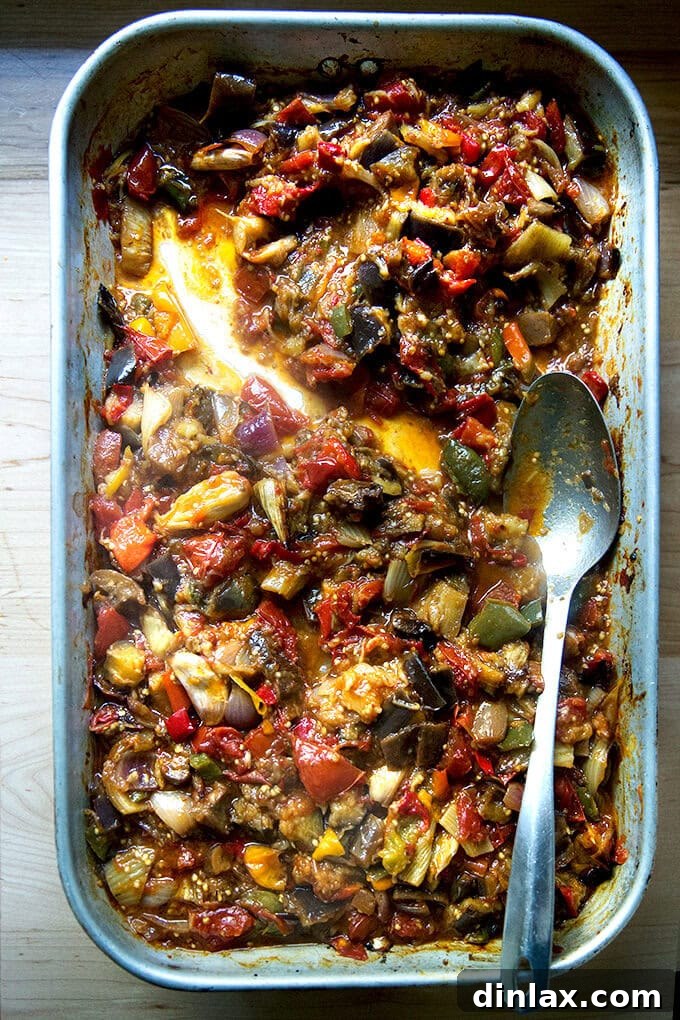
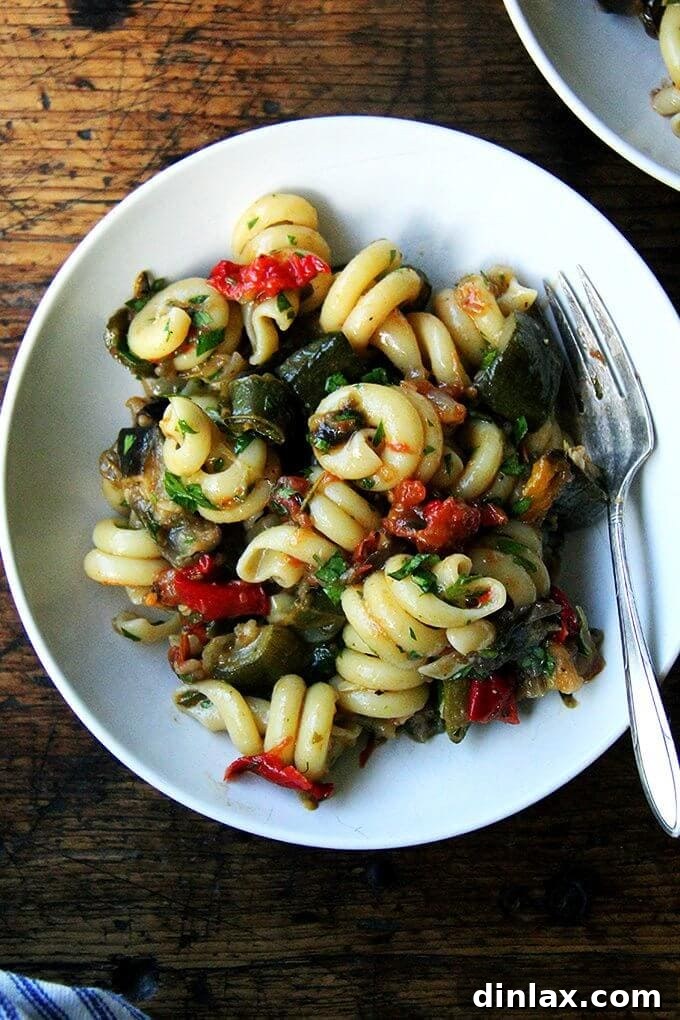
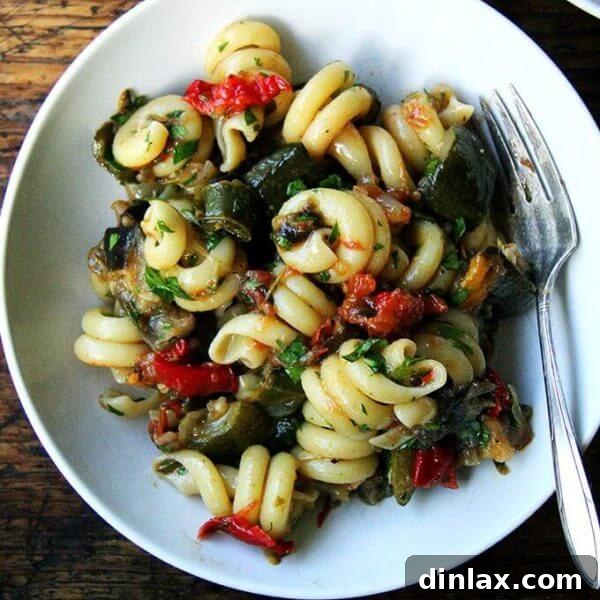
My own experience last Friday perfectly illustrates this. Before heading out for a long weekend, I prepped a large batch. I simply chopped every available pepper, onion, eggplant, tomato, and zucchini, tossed them into my largest roasting pan with olive oil, white balsamic vinegar, fresh thyme, and salt. The oven did the rest, slowly cooking them until they released their juices and transformed into a luscious, stewy mix. That evening, following Gena’s suggestion, I tossed a portion with pasta, packing the rest for the road. My friends and I enjoyed the ratatouille all weekend, from cold straight out of the fridge for lunch to a spread over grilled bread before dinner – a true testament to its versatility and enduring appeal.
Why Roasted Ratatouille Reigns Supreme
Effortless Elegance: The Magic of Roasting
Traditional ratatouille often involves a series of sautéing steps, adding vegetables at specific times, and vigilant stirring. While delicious, it can be high-maintenance. Our roasted ratatouille recipe, however, embraces a “set it and forget it” philosophy. All your chopped vegetables and seasonings go into one pan, and the oven does the hard work. This hands-off approach frees up your time, allowing you to focus on other tasks or simply relax while the aromas of a gourmet meal fill your kitchen. The result is a richly flavored, beautifully tender dish without the constant attention required by stovetop methods, making it an ideal choice for busy schedules.
A Symphony of Flavors: Concentrated Goodness
Roasting vegetables intensifies their natural sweetness and creates a wonderfully caramelized exterior, adding layers of complex flavor. The high heat coaxes out the vegetables’ moisture, which then reduces into a thick, stewy sauce that coats every piece. The addition of white balsamic vinegar is a game-changer; it provides a bright, subtle acidity that cuts through the richness of the olive oil and balances the sweetness of the roasted vegetables, giving the ratatouille an irresistible lift. Fresh thyme, though optional, adds an aromatic, herbaceous note that perfectly complements the robust flavors. The depth of flavor achieved through roasting is unparalleled, making this dish a true culinary delight.
Unmatched Versatility & Seasonal Adaptability
This roasted ratatouille is incredibly flexible. While a balanced mix of vegetables is ideal, the recipe is forgiving of variations. Have an abundance of eggplant? Go heavy on it. More tomatoes than you know what to do with? They’ll shine here. You can experiment with different types of peppers, summer squash, or even add sweet potatoes for a twist. This adaptability makes it a perfect dish to prepare year-round, adjusting the ingredient list to whatever is freshest and most abundant at your local market. It’s also an excellent way to use up garden gluts, transforming them into a freezer-friendly staple that you can enjoy for months to come.
Key Ingredients for Your Perfect Roasted Ratatouille
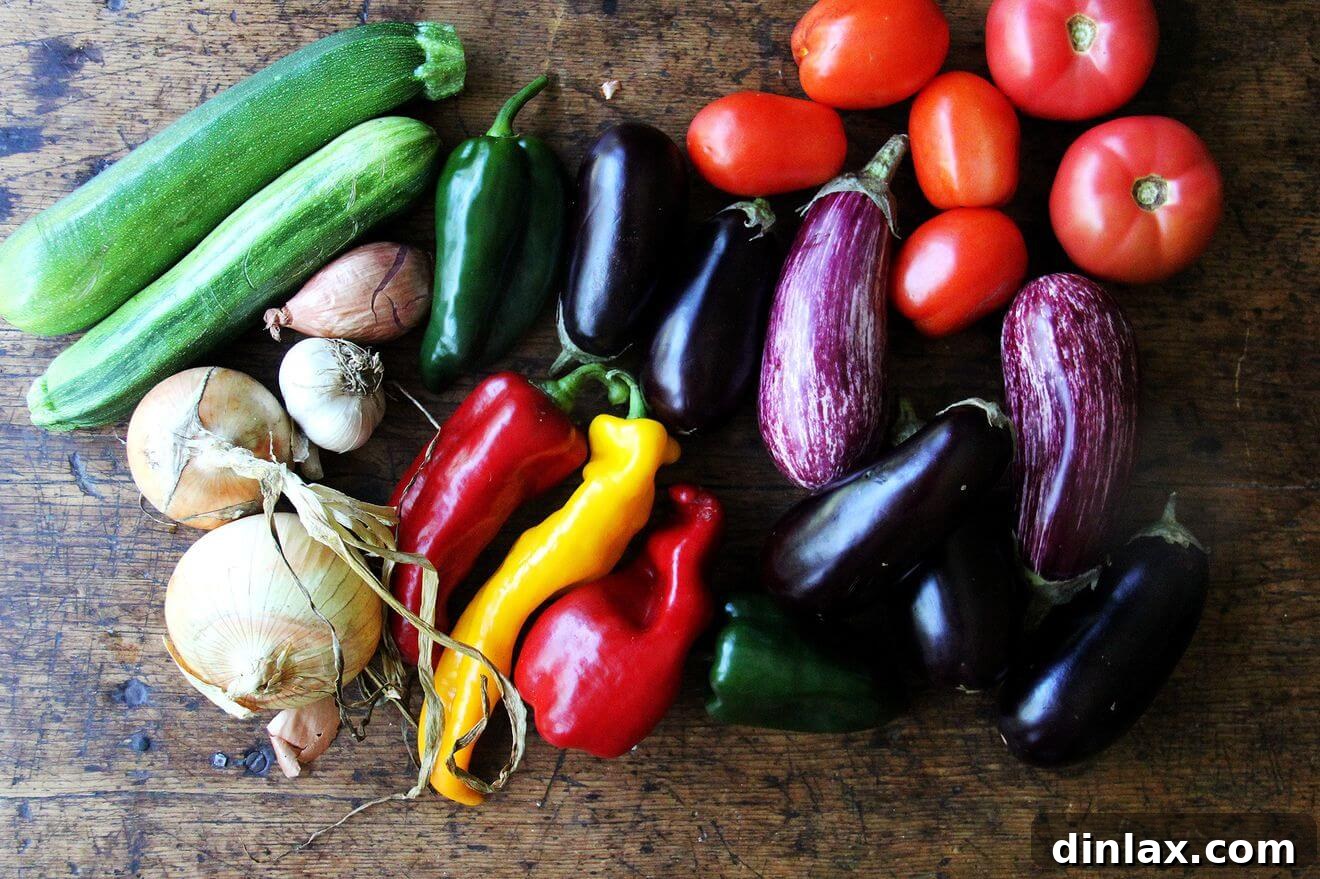
The beauty of roasted ratatouille lies in its celebration of simple, wholesome ingredients. Each component plays a crucial role in building the dish’s rich flavor and delightful texture:
- Eggplant: The star of many Mediterranean dishes, eggplant adds a meaty texture and absorbs flavors beautifully. When roasted, it becomes wonderfully tender and creamy.
- Tomatoes: Fresh, ripe tomatoes are essential, providing sweetness, acidity, and the liquid base for the stew. As they roast, their juices release and reduce, forming a concentrated, flavorful sauce.
- Zucchini & Summer Squash: These quick-cooking vegetables add a delicate texture and mild flavor that complements the more robust ingredients.
- Bell Peppers: Offering vibrant color and a sweet, slightly smoky flavor when roasted, bell peppers are indispensable for classic ratatouille. Red, yellow, or orange varieties work wonderfully.
- Onion & Shallot: These aromatics form the foundational flavor, caramelizing in the oven to add depth and a touch of sweetness.
- Garlic: No savory vegetable dish is complete without it! Minced garlic infuses the ratatouille with its pungent, warm aroma.
- Olive Oil: A generous drizzle of good quality olive oil is vital for roasting, helping the vegetables soften, caramelize, and become incredibly succulent. It also carries the flavors throughout the dish.
- White Balsamic Vinegar: This secret ingredient provides a crucial bright acidity and a mellow tang that distinguishes this roasted ratatouille. Unlike darker balsamic, it won’t stain the vegetables.
- Fresh Thyme & Salt/Pepper: Simple seasonings are all that’s needed to enhance the natural flavors of the vegetables. Thyme adds an earthy, aromatic note, while salt and pepper bring everything into balance, ensuring every bite is perfectly seasoned.
Step-by-Step Guide: Mastering the Perfect Roasted Ratatouille
Creating this magnificent roasted ratatouille is wonderfully straightforward, designed for maximum flavor with minimal effort. Here’s a detailed guide to walk you through the process:
1. Preparation is Paramount
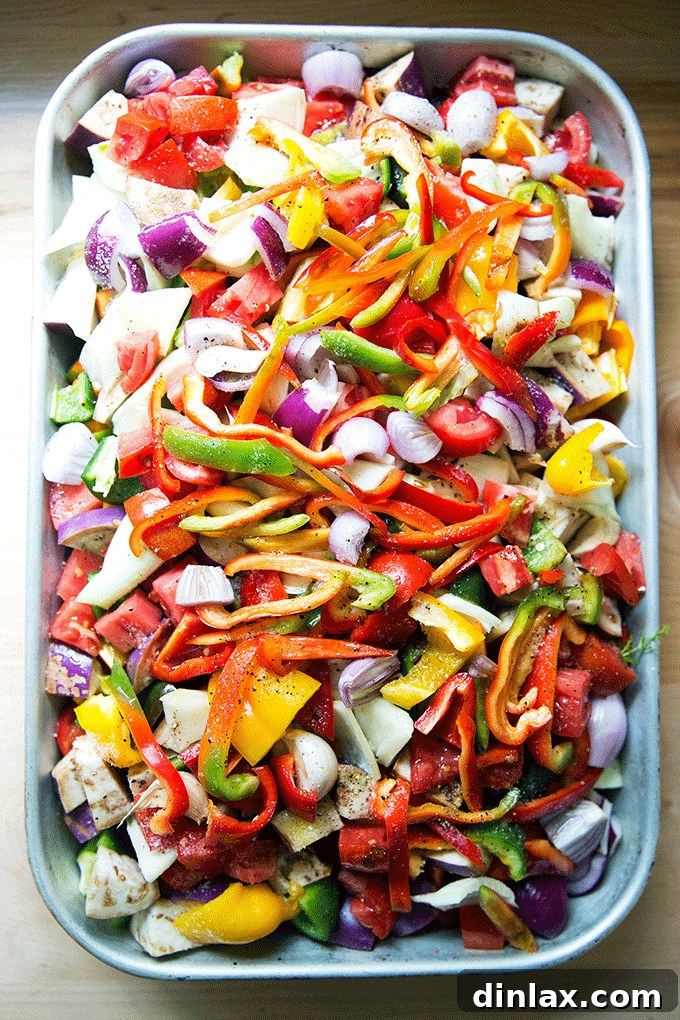
Begin by preheating your oven to a robust 400°F (200°C). This high temperature is key to achieving that desirable caramelization and tender texture. As you roughly chop your eggplant, tomatoes, zucchini, peppers, onion, shallot, and garlic into roughly 1-inch pieces, pile them directly into your largest roasting pan or casserole dish. The key here is not to be overly precise; the rustic charm is part of its appeal. As you add each layer of vegetables, sprinkle generously with kosher salt. This early seasoning helps to draw out moisture and ensures every piece is seasoned from within, contributing to a deeper flavor profile. Don’t worry if the pan looks overflowing initially; the vegetables will shrink considerably as they roast.
2. The Flavor Foundation
In a small bowl, whisk together the olive oil, white balsamic vinegar, and the optional fresh thyme (if using). If you’ve been seasoning each vegetable layer with salt, you might not need to add more salt at this stage. Pour this fragrant dressing evenly over the piled vegetables. Finish with a generous crack of fresh black pepper. Resist the urge to stir just yet! Letting the vegetables sit as they are for the initial roast encourages distinct flavor development.
3. The Initial Roast
Transfer your loaded pan to the preheated oven and let it roast undisturbed for the first 30-45 minutes. During this time, the vegetables will begin to release their copious juices, and the edges will start to soften and caramelize. You’ll notice the volume in your pan reducing significantly. This is exactly what you want!
4. The Stir and Deepen
After the initial roasting period, carefully remove the pan from the oven. Now is the time to give everything a good, thorough stir. This distributes the released juices and ensures even cooking and browning. Return the pan to the oven.
5. The Long Slow Transformation
Continue roasting the ratatouille for an additional 1 to 2 hours, or even longer if you’ve doubled or quadrupled the recipe. Stir the mixture about halfway through this second stage. The goal is to cook until the vegetables are incredibly tender, almost melting, and their released juices have reduced dramatically into a thick, stewy, almost jam-like consistency. This reduction process concentrates all the wonderful flavors. Taste and adjust seasonings – you might want a little more salt, pepper, or a splash more vinegar to brighten it up. Patience truly pays off here; the longer it roasts and reduces, the more intensely flavorful your ratatouille will be.
Beyond the Bowl: Creative Ways to Enjoy Roasted Ratatouille
One of the greatest joys of roasted ratatouille is its incredible versatility. Once you’ve mastered the basic recipe, the possibilities for enjoying this vibrant vegetable medley are endless:
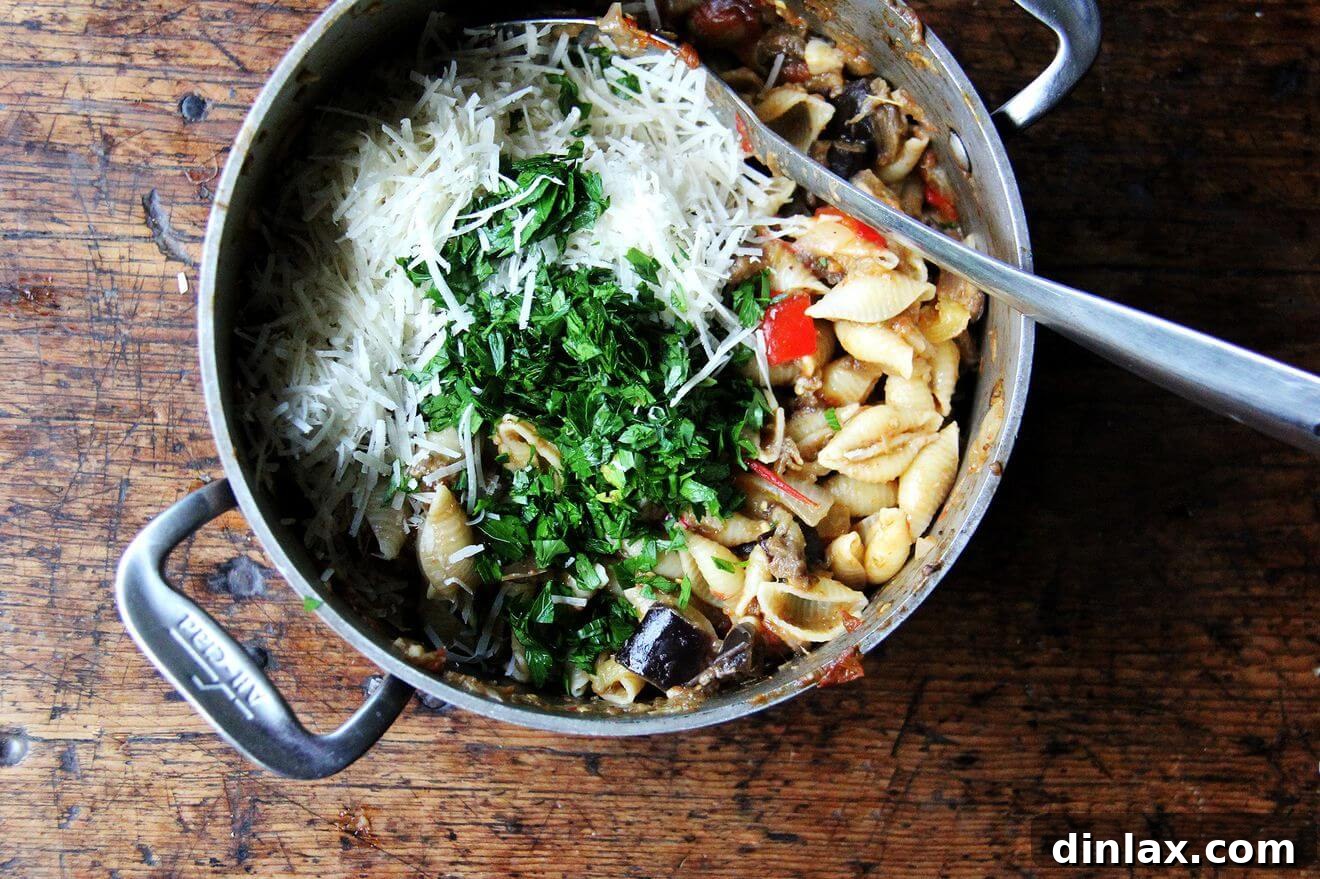
- Classic Pasta Companion: The most popular pairing! Toss the warm, stewy ratatouille with your favorite dried pasta, a generous dusting of freshly grated Parmesan cheese, and a handful of finely chopped fresh basil. A splash of reserved pasta cooking liquid will help create a luscious, cohesive sauce.
- Elegant Crostini or Bruschetta: Spoon cold or warm ratatouille over toasted baguette slices for an instant appetizer or light lunch. A drizzle of extra virgin olive oil and a sprinkle of fresh herbs can elevate it further.
- Wholesome Side Dish: Serve it warm alongside grilled chicken, fish, or any roasted meat. Its bright flavors and tender texture make it a perfect accompaniment.
- Savory Breakfast or Brunch: Incorporate it into an omelet or frittata, or serve it simply alongside scrambled eggs for a healthy start to your day.
- Layered in Lasagna: Use it as a flavorful vegetable layer in a summer lasagna. Its rich, reduced texture works beautifully.
- Hearty Grain Bowl Topping: Add a spoonful or two to grain bowls with quinoa, farro, or rice for a nutritious and flavorful boost.
- Stuffed Vegetables: Use it as a filling for bell peppers, zucchini boats, or even baked potatoes.
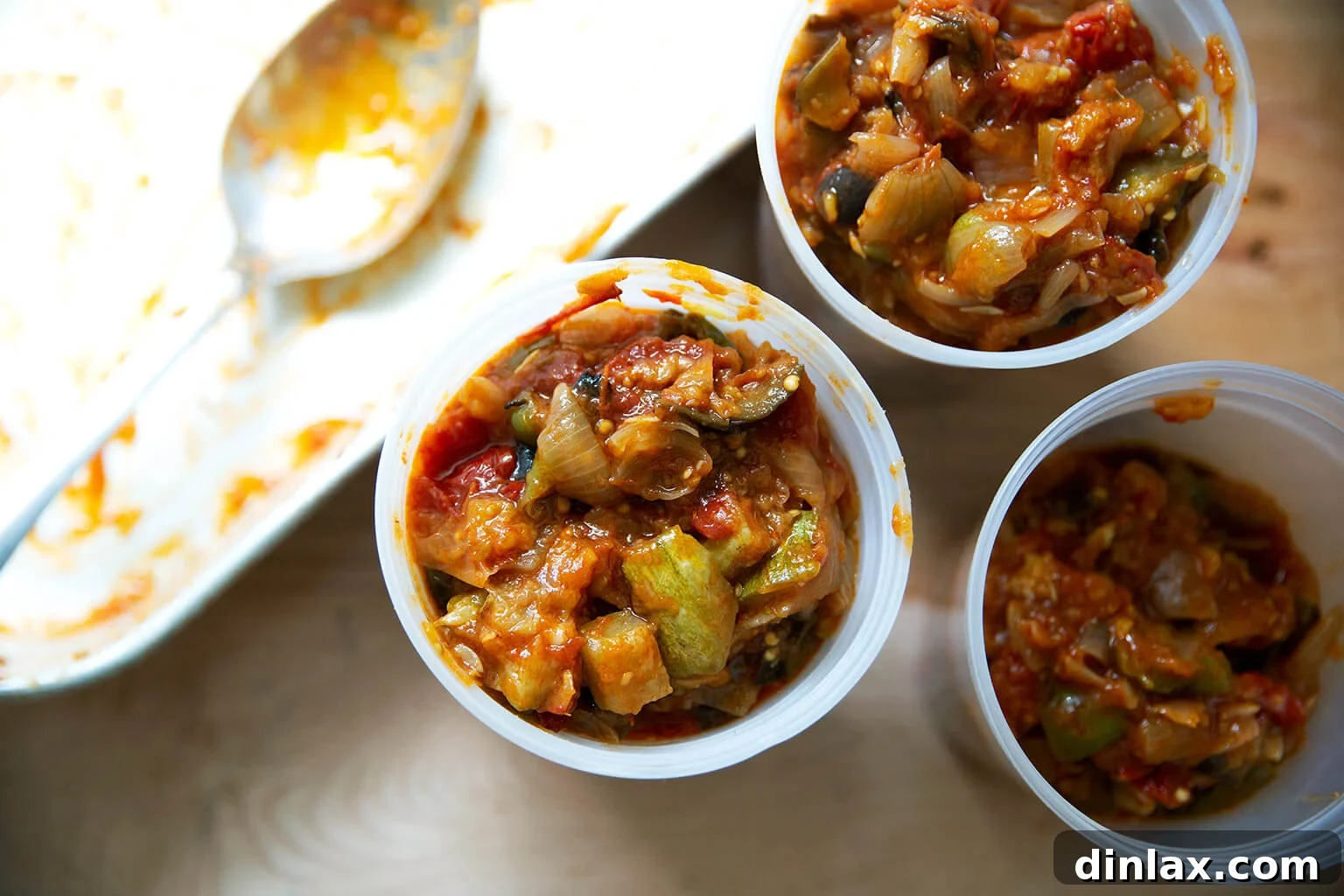
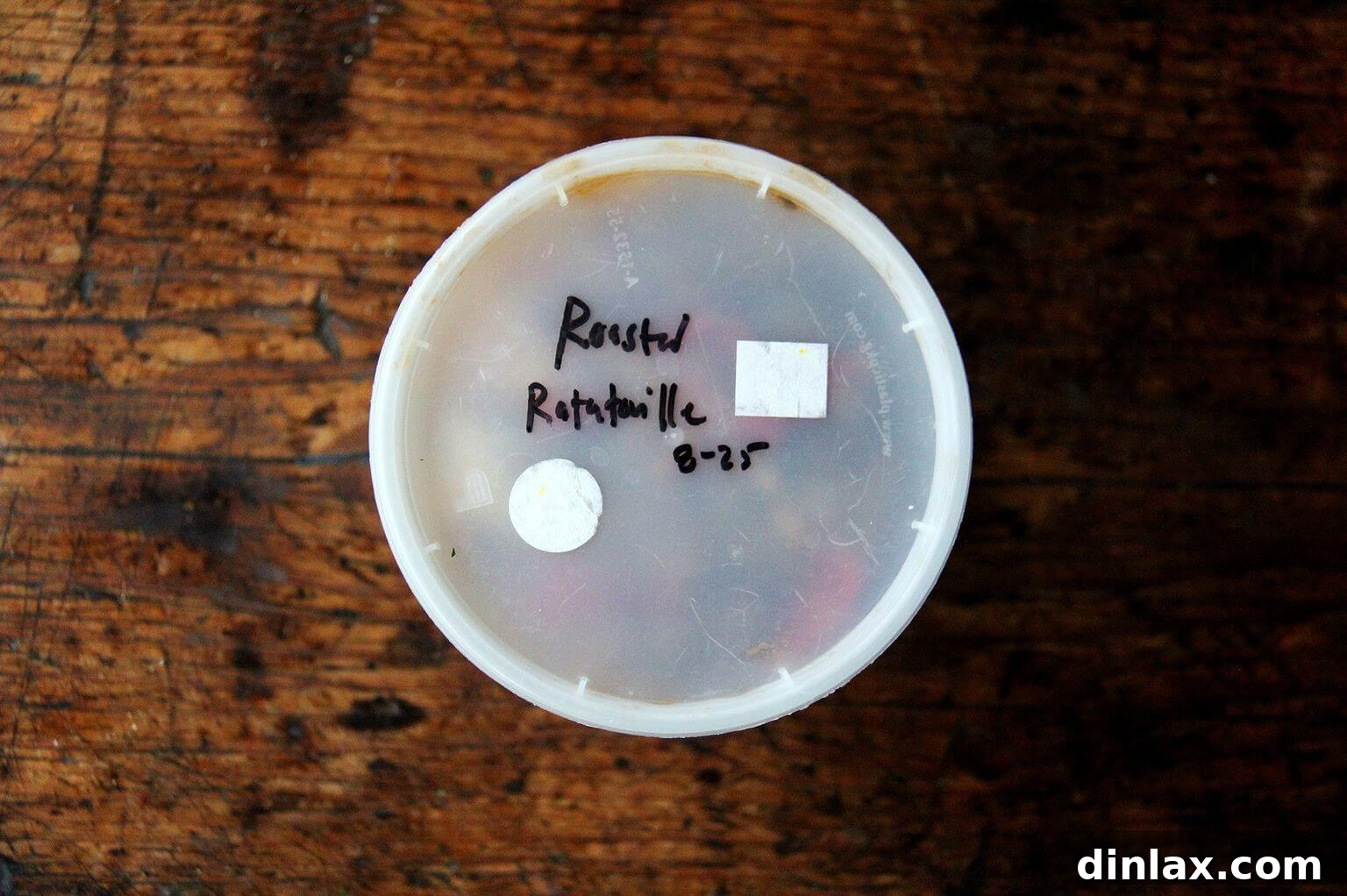
- Meal Prep Marvel: Roasted ratatouille freezes beautifully, making it an ideal component for meal prepping. Divide it into quart containers and store it in the freezer for quick and easy future meals. This means you can enjoy the taste of summer sunshine even in the depths of winter.
- Dietary-Friendly: Naturally vegan, gluten-free, and packed with nutrients, roasted ratatouille is a fantastic choice for a wide range of dietary preferences and healthy eating goals.
This easy, forgiving, and utterly delicious roasted ratatouille is more than just a recipe; it’s an invitation to savor the season’s bounty and enjoy wholesome, flavorful meals with minimal fuss. Embrace the roast, and discover your new favorite way to eat vegetables!
Print
Roasted Ratatouille: The Best Ratatouille Recipe!
5 Stars
4 Stars
3 Stars
2 Stars
1 Star
Rated 5 out of 140 reviews
- Author: Alexandra Stafford
- Total Time: Varies: 1 to 3 hours
- Yield: Varies: 1 to 3 quarts
Description
This recipe for Roasted Ratatouille is adapted from Food52 Vegan by Gena Hamshaw, a true master of effortless vegetable dishes.
Use this recipe as a flexible guide: the roasting process is incredibly forgiving, allowing for variations in vegetable quantities. While a balanced mix is ideal, feel free to lean heavily on specific vegetables you have in abundance. For instance, I’ve successfully made this both with and without zucchini, and have varied the ratios of eggplant to tomatoes, always with delicious results. Don’t hesitate to use a mix of whatever bell peppers, tomatoes, and eggplants you have on hand.
I often make a quadruple (or even larger!) batch, so don’t be afraid to fill your largest roasting pan to the brim. The crucial aspect is patience with the roasting time. Allow the vegetables to cook until all liquids have significantly reduced, and the mixture becomes wonderfully thick and stewy. When scaling up the recipe, I adjust the dressing proportionally. For a completely loaded roasting pan, I typically use 1 cup of olive oil and 1/2 cup of white balsamic vinegar (or 1/2 cup olive oil and 1/4 cup vinegar for a slightly less rich version), and extend the cooking time to about 3 hours to achieve that perfect consistency.
For added simplicity, I sometimes omit the fresh thyme altogether. In such cases, I simply season each layer of vegetables with salt as I add them to the pan. Once all vegetables are in, I pour over the olive oil and white balsamic vinegar. After the first hour of roasting, I give it a good stir, and then stir again every hour until the total roasting time reaches around 3 hours. This minimalist approach still yields a deeply flavorful and satisfying ratatouille.
Ingredients
For the Roasted Ratatouille:
- 12 ounces eggplant (about 1 medium), chopped into 1-inch pieces — adjust quantity based on availability, see notes above
- 1 1/4 pounds ripe tomatoes, chopped into 1-inch pieces
- 12 ounces zucchini (about 2 small), chopped into 1-inch pieces
- 2 red bell (or other color) peppers, seeded and coarsely chopped
- 1 large yellow or white onion, chopped
- 1 shallot, thinly sliced
- 4 cloves garlic, minced
- 1/4 to 1/2 cup high-quality olive oil — adjust based on pan size and quantity of vegetables, see notes
- 2 to 4 tablespoons white balsamic vinegar
- 2 teaspoons chopped fresh thyme, optional
- 1 teaspoon kosher salt, plus more to taste
- Freshly cracked black pepper, to taste
For Serving with Pasta:
- Dried pasta of your choice
- Reserved pasta cooking liquid (optional, for sauce consistency)
- Freshly grated Parmesan cheese (or nutritional yeast for vegan)
- Fresh basil, finely chopped
Instructions
- Preheat Oven: Preheat your oven to 400° F (200°C).
- Combine Vegetables: In your largest roasting pan or casserole dish, combine the chopped tomatoes, eggplant, zucchini, peppers, onion, shallot, and minced garlic. Note: I recommend adding vegetables to the pan as you chop them, sprinkling each layer lightly with salt. This helps draw out moisture and seasons thoroughly.
- Prepare Dressing: In a small bowl or measuring cup, whisk together the olive oil, white balsamic vinegar, the optional 2 teaspoons of fresh thyme, and 1 teaspoon of kosher salt. Pour this mixture evenly over the vegetables. Toss gently to ensure all vegetables are coated. Season generously with freshly cracked black pepper. (Alternatively: If you’ve seasoned each layer of vegetables generously with salt, you can simply pour the olive oil and vinegar directly over the vegetables and omit the additional salt in the dressing. I often skip the thyme for simplicity.)
- First Roast & Stir: Bake for an initial 30 minutes. At this point, the vegetables will have released some of their juices and begun to soften. Carefully remove the pan from the oven and give everything a good, thorough stir to redistribute the vegetables and juices.
- Second Roast & Reduce: Return the pan to the oven and continue to cook for another 30 to 45 minutes, or significantly longer (up to 2-3 hours total) if you’ve increased the quantities or prefer a more stewy, jam-like texture. If your roasting pan is heavily loaded, I recommend roasting for up to 3 hours, stirring every hour, until the vegetables are incredibly tender and the released juices have reduced and thickened considerably. The key is patience; the longer it reduces, the more concentrated and flavorful your ratatouille will be. Taste and adjust seasoning with more salt, pepper, or a splash of vinegar as desired for perfect balance.
- Serve: To serve, spoon the warm roasted ratatouille over toasted crusty bread for a simple appetizer. Alternatively, toss it with your favorite cooked pasta, a generous amount of freshly grated Parmesan (or nutritional yeast for a vegan option), finely chopped fresh basil, and enough of the reserved pasta cooking liquid to create a silky, delicious sauce. It also freezes beautifully for future enjoyment!
- Prep Time: 20 minutes
- Cook Time: 1 to 2 hours (or more, depending on quantity)
- Category: Vegetable, Main Dish, Side Dish
- Method: Roasted, Baking
- Cuisine: French, Mediterranean