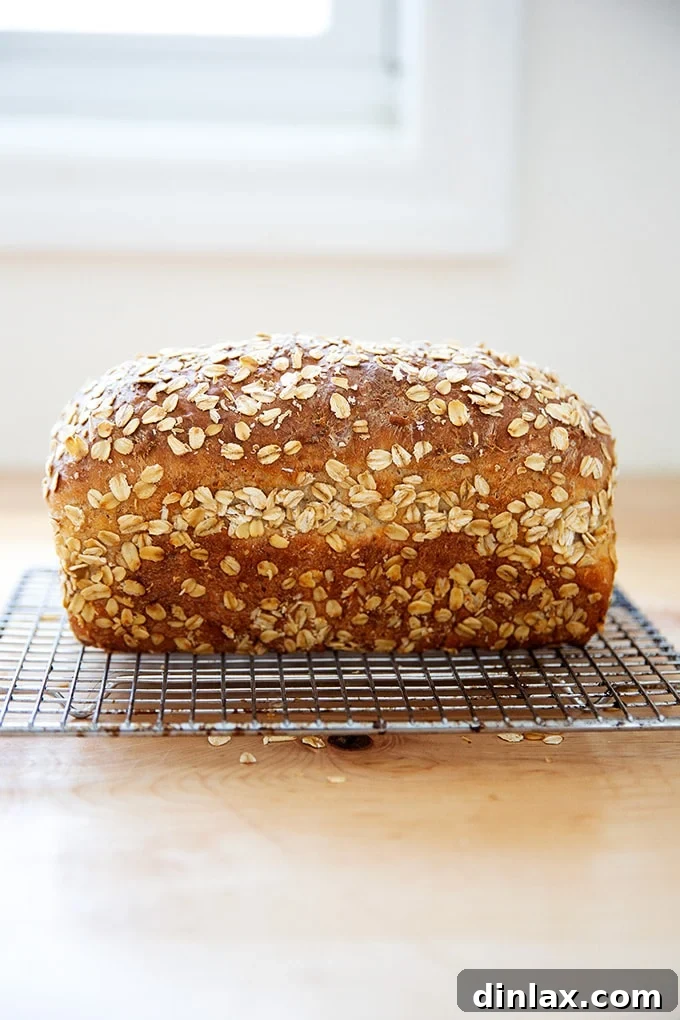
Welcome to a culinary journey where simplicity meets irresistible flavor! Today, we’re diving into the wonderful world of No-Knead Maple Oat Bread – a delightful loaf that promises a wholesome taste and a satisfying texture with minimal effort. Sweetened naturally with rich maple syrup and generously studded with hearty oats, this bread bakes up beautifully in a standard loaf pan, offering a comforting aroma that fills your kitchen and a taste that will captivate your palate.
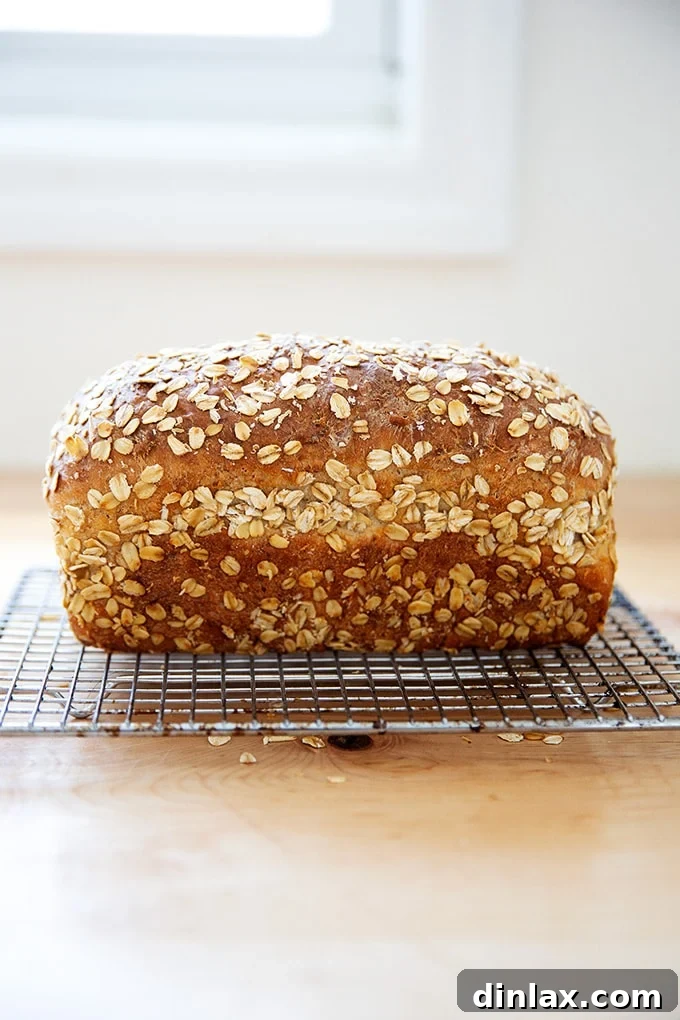
Crafted as a beloved variation from my cookbook, Bread Toast Crumbs, this recipe embodies the philosophy of simple, accessible baking. While it shares the “no-knead” ethos with my renowned peasant bread recipe, it introduces a unique two-phase water addition method and is designed specifically for baking in a loaf pan, yielding a perfectly shaped, golden-brown creation every time.
The magic of this bread lies in its thoughtful combination of ingredients and a slightly unconventional process. First, the oats, maple syrup, and salt are allowed to soak and bloom in a cup of boiling water for ten minutes. This crucial step softens the oats, ensuring they integrate beautifully into the dough, contributing to that irresistible chewy texture. Following this, an additional cup of water, along with yeast and flour, is incorporated, bringing the dough to life. Unlike some of the free-form breads from Bread Toast Crumbs, this recipe is tailored for a single, standard loaf pan, promising a consistent and aesthetically pleasing result.
What makes this maple oat loaf truly exceptional? It’s the harmonious blend of textures and flavors. The oats impart a delightful chewiness, while the inclusion of whole wheat flour (or preferably, stone-milled flour) introduces a robust heartiness and depth of flavor. This combination makes it an unparalleled choice for toasting, where its exterior crisps up beautifully, offering a soft, fragrant interior. However, its versatility extends beyond the toaster; it makes for equally fantastic sandwiches, providing a sturdy yet tender base for all your favorite fillings.
If you’re eager to explore more effortless bread recipes, be sure to check out my No-Knead Three-Seed Bread for another exciting baking adventure!
Baking the Perfect No-Knead Maple Oat Loaf: A Step-by-Step Guide
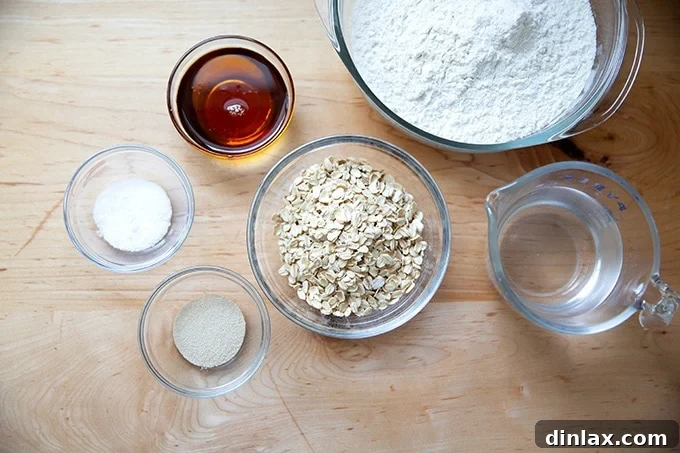
Embarking on this baking journey is incredibly rewarding. Let’s gather our simple yet powerful ingredients to create this wholesome bread. You’ll need high-quality flour, a pinch of salt, water, wholesome oatmeal, pure maple syrup, and reliable instant yeast (I highly recommend SAF Instant Yeast for consistent results).
Phase 1: Hydrating the Oats and Flavor Base
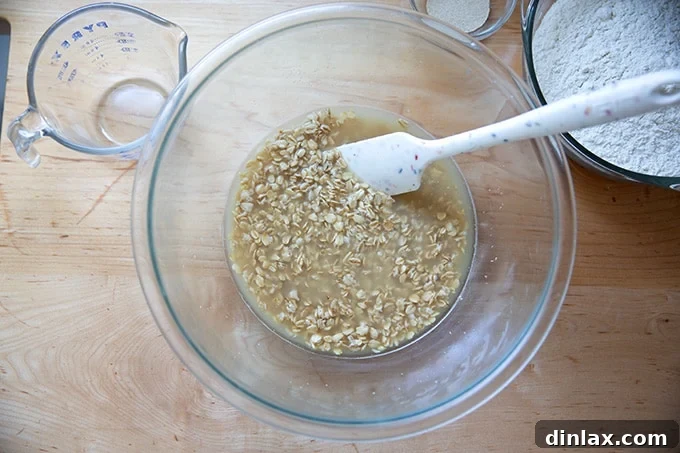
Begin in a spacious mixing bowl. Combine your rolled oats, kosher salt, and pure maple syrup. Pour one cup of freshly boiled water over this mixture. This step is critical; allowing the oats to soak for 10 minutes ensures they fully hydrate, becoming tender and contributing their signature chewiness without making the bread dry. After the oats have soaked, add three-quarters of a cup of cold or room-temperature water. This brings the mixture to an ideal temperature for the yeast.
Phase 2: Introducing Yeast and Flour
Next, sprinkle the instant yeast evenly over the oat-water mixture. Give it a gentle stir to ensure the yeast is well-distributed and begins to activate. You’ll notice it slowly dissolving, ready to work its magic.
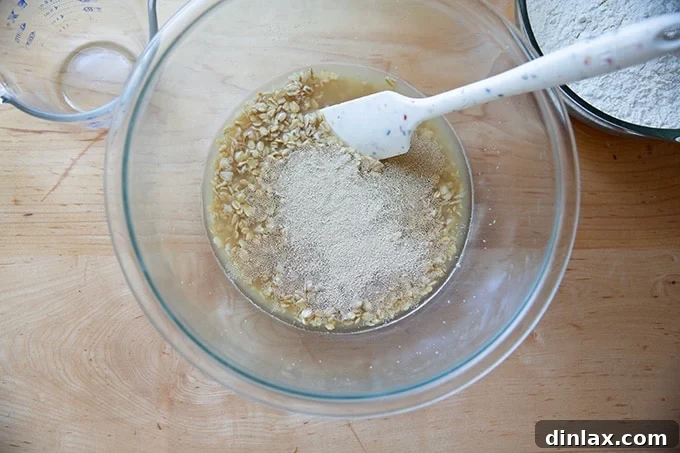
Now, it’s time for the star of any bread – the flour. For this recipe, I’ve found a combination works best. I use 1 cup of Trailblazer Bread Flour, known for its incredible flavor and texture, combined with 2.25 cups of King Arthur Flour bread flour. This blend ensures a robust structure and a rich taste profile. Feel free to experiment with your favorite unbleached bread or all-purpose flours, or even explore stone-milled varieties for enhanced nutrition and depth.
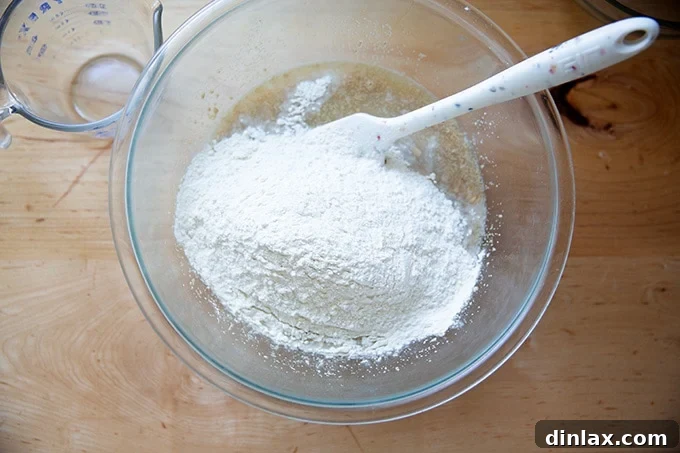
Using a sturdy rubber spatula, mix the ingredients until all the liquid is absorbed and a sticky, shaggy dough ball forms. Don’t worry if it looks a bit messy at this stage; perfection is not the goal. If needed, you can briefly use your hands to bring the dough together into a cohesive ball, but avoid overworking it. Remember, this is a no-knead recipe, so minimal manipulation is key.
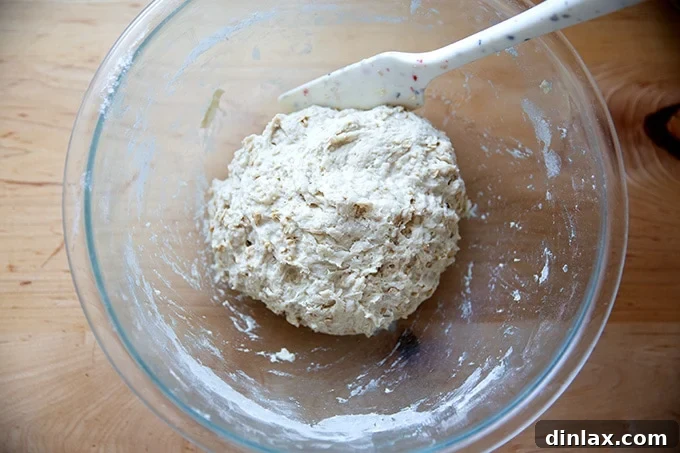
The First Rise: Developing Flavor and Structure
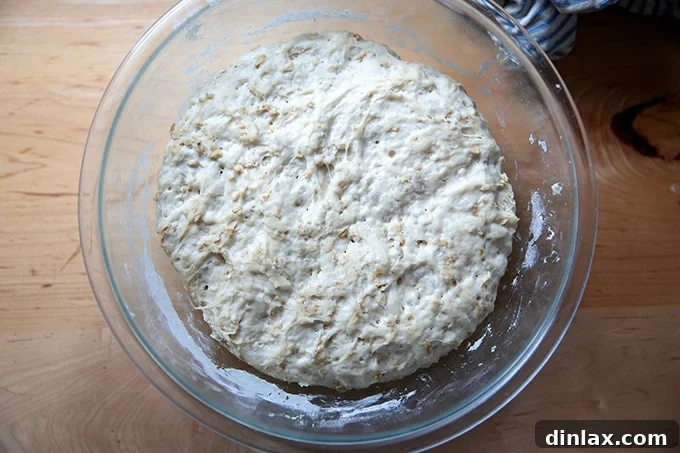
Cover the bowl with a clean tea towel or plastic wrap. Find a warm, draft-free spot in your kitchen – this is where the magic of fermentation truly happens. Allow the dough to rise for 2 to 3 hours. During this time, the yeast will feast on the sugars, producing carbon dioxide that creates air pockets and develops the bread’s characteristic flavor and texture.
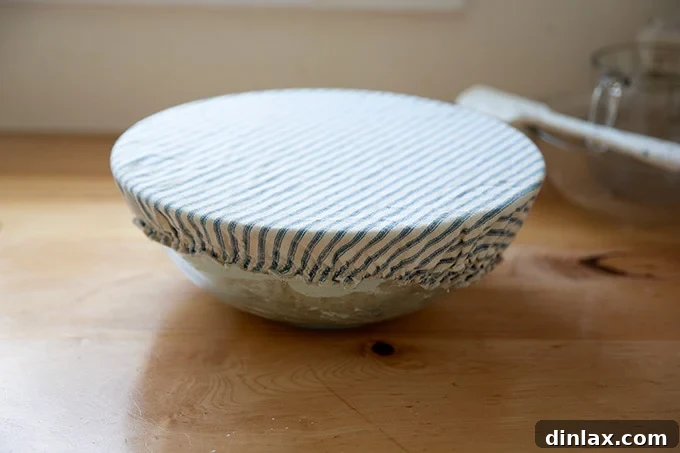
You’ll know the dough is ready when it has visibly doubled in volume, becoming light and airy. This indicates that the yeast has done its job effectively, preparing the dough for its final shape and bake.
Shaping and the Second Rise
Once the dough has doubled, gently slick the surface with a tablespoon of olive oil. This helps prevent sticking and adds a subtle richness to the crust. Use your hand to carefully release the dough from the sides of the bowl, then gently flip it over so the oiled side is down. This allows for easier handling. Now, delicately roll the dough into a coil or a traditional loaf shape. The video below provides an excellent visual guide for this step, ensuring you achieve the perfect form without deflating the dough too much.
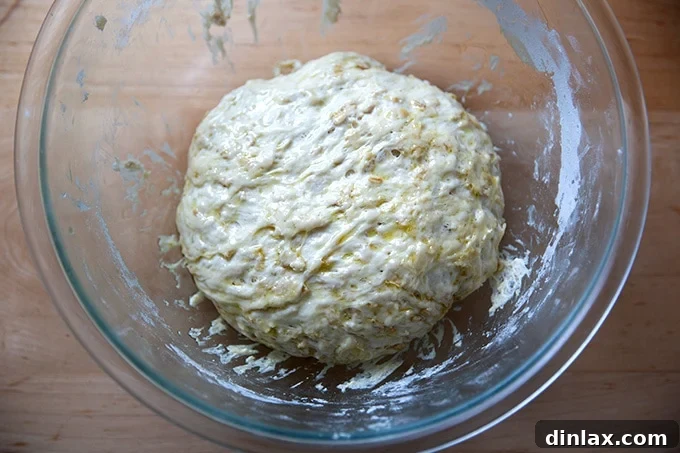
Before placing the shaped dough into its pan, prepare your loaf pan (an 8.5×4.5-inch or 9×5-inch pan works best; I prefer the smaller for a taller loaf). Grease it generously with softened unsalted butter, then pour about half a cup of rolled oats into the pan. Rotate the pan to coat all sides evenly with the oats, then pour out any excess. This creates a beautiful, rustic crust. Transfer your shaped dough, seam-side down, into this prepared pan. Sprinkle the reserved oats over the top of the dough for an appealing finish.
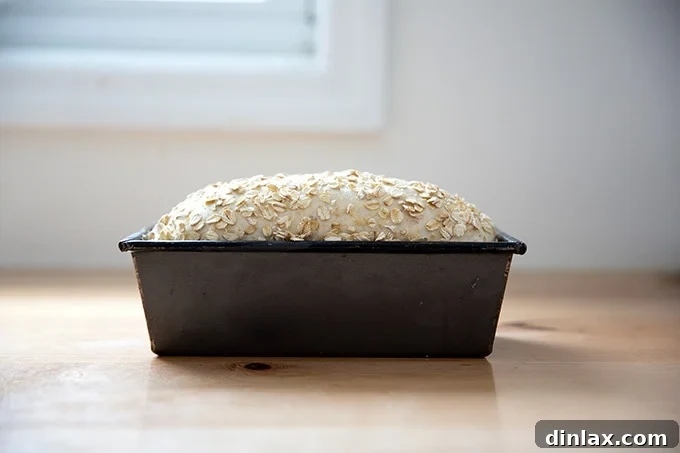
Now, let the dough embark on its second rise. Place the pan in a warm, draft-free spot for another 45 minutes to an hour. This final rise is crucial for achieving that light, open crumb. You’ll observe the dough rising considerably, doming beautifully above the rim of the pan, typically by about an inch. The accompanying photos illustrate the ideal state before baking.
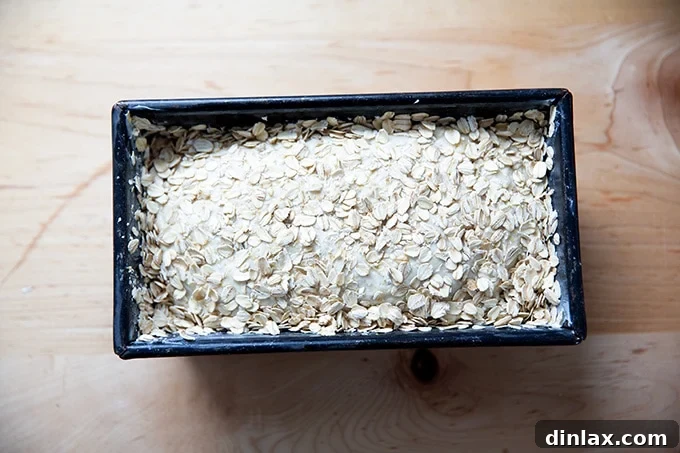
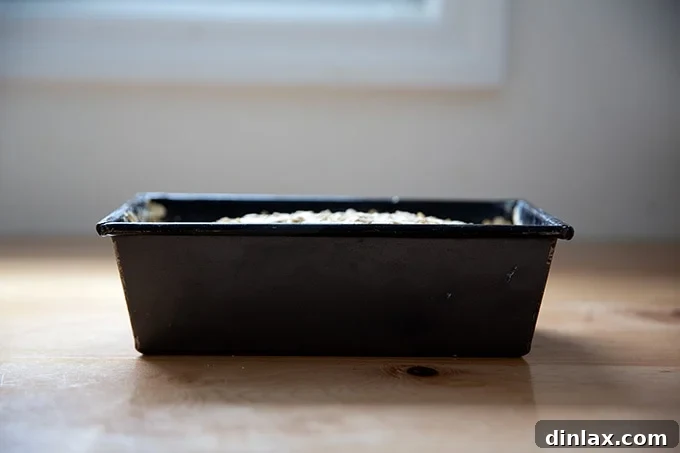
Once your loaf has achieved this impressive rise, it’s ready for the oven. This stage, often called “proofing,” indicates the dough has reached its peak readiness for baking, promising a soft, airy texture within.
Baking and Cooling: The Final Steps to Perfection
Preheat your oven to 375ºF (190ºC). Carefully transfer the pan to the preheated oven and bake for approximately 45 minutes. The baking time may vary slightly depending on your oven, so keep an eye on the bread. You’re looking for a gorgeous, evenly browned crust that sings with a hollow sound when tapped on the bottom.
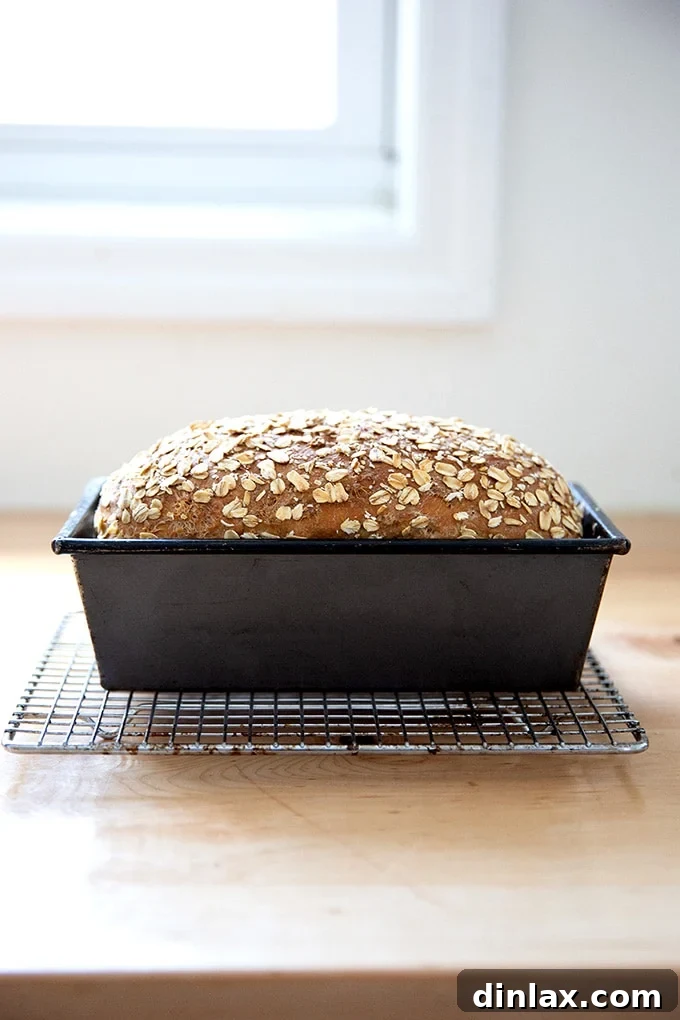
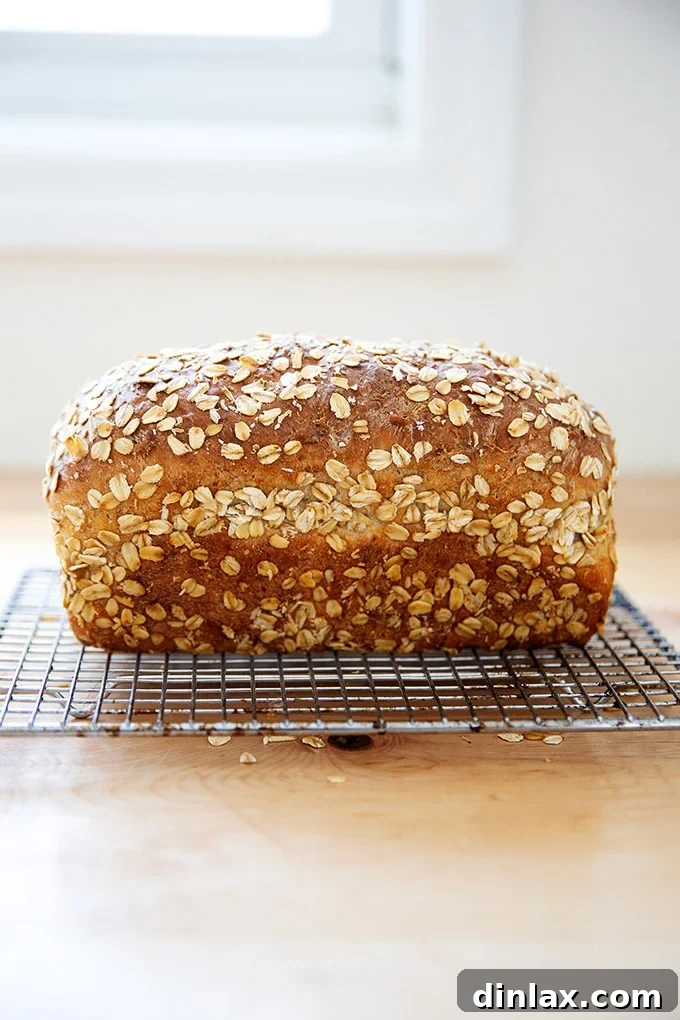
Once baked, immediately remove the loaf from its pan and place it on a wire cooling rack. This allows air to circulate around all sides, preventing the bottom from becoming soggy and ensuring a crisp crust. Patience is paramount here: allow the loaf to cool for at least 30 minutes before attempting to slice it. Slicing too early can result in a gummy texture, as the internal structure is still setting.
Understanding Flour Variances
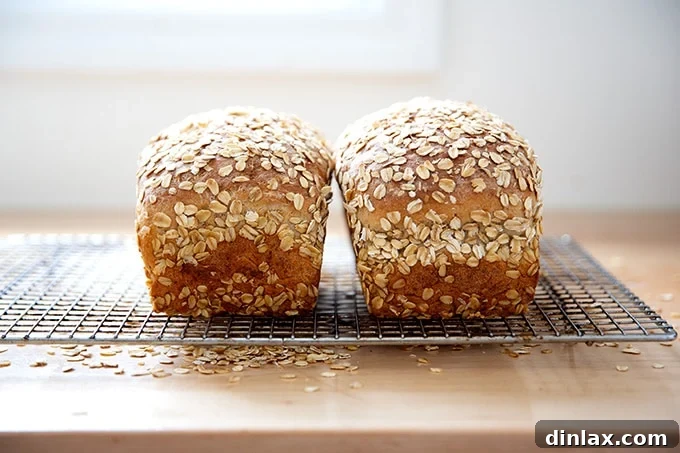
For those curious about the subtle nuances of baking, observe this side-by-side comparison: a loaf made entirely with bread flour (on the right) and one featuring a mix of stone-milled flour and bread flour (on the left). While the difference is subtle, the loaf crafted solely with bread flour tends to achieve a slightly loftier, more voluminous rise. This demonstrates how different flour types can impact the final structure and texture of your bread, encouraging experimentation to find your personal preference.
Once cooled, slice your beautiful bread. The interior reveals a soft, inviting crumb dotted with plump oats, promising a delightful bite.
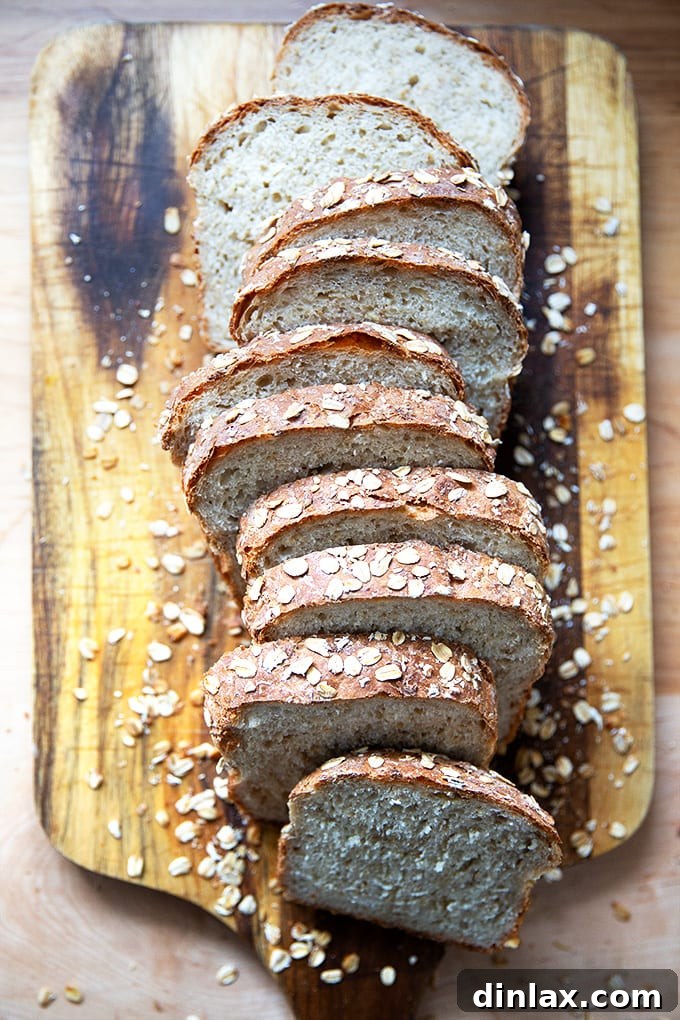
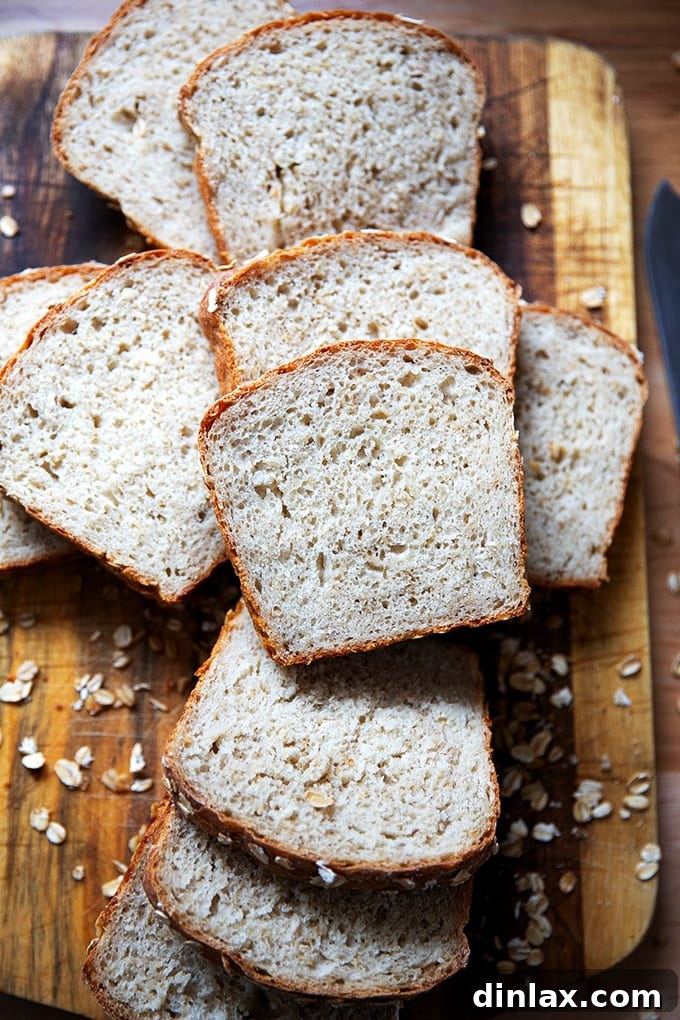
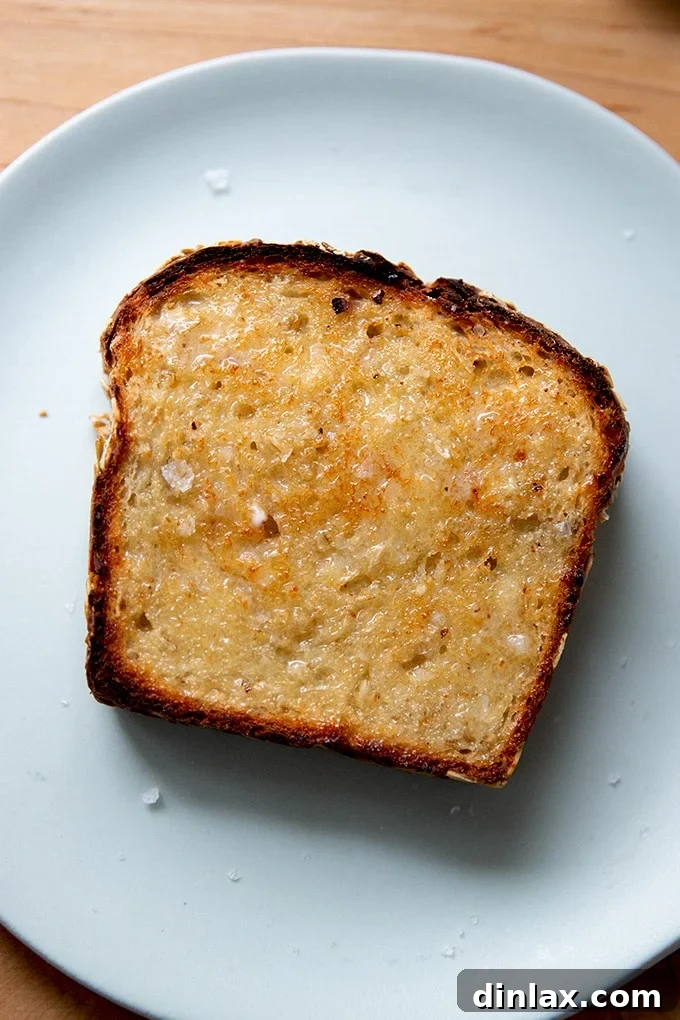
The ultimate indulgence? Toast a slice until golden, then generously slather it with a pat of rich, creamy butter. The warmth melts the butter, creating a symphony of flavors and textures that is truly heavenly.
Print Recipe
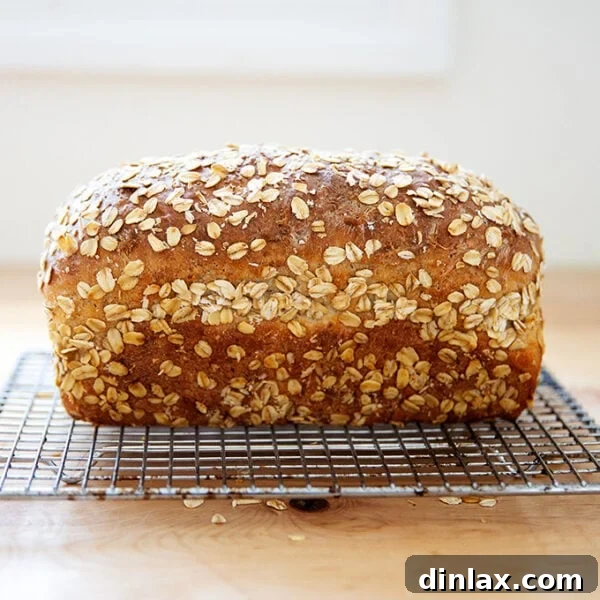
No-Knead Maple Oat Bread
4.9 from 50 reviews
- Author: Alexandra Stafford
Total Time: 5 hours 45 minutes
Yield: 1 loaf 1x
Diet: Vegan
Description
Discover the joy of baking with this effortless No-Knead Maple Oat Bread. Sweetened with rich maple syrup and packed with wholesome oats, this loaf boasts a delightful chewiness and a hearty texture thanks to a blend of flours. It’s incredibly easy to make, requires no kneading, and bakes perfectly in a standard loaf pan. An excellent choice for toasting, sandwiches, or simply enjoying with butter.
This recipe is an adaptation from my popular cookbook, Bread Toast Crumbs. Significant changes from the original peasant bread recipes include:
- The Baking Vessel: Unlike many recipes in my book that utilize two 1-quart Pyrex bowls, this specific recipe is designed for baking in a single loaf pan. You can opt for an 8.5×4.5-inch pan or a 9×5-inch pan. I personally prefer the 8.5×4.5-inch pan as it consistently yields a slightly taller, more aesthetically pleasing loaf.
- Flour Blend: The original peasant bread often calls for a mix of white and commercial whole wheat flour. For this maple oat bread, I’ve upgraded to stone-milled flour in place of commercial whole wheat. Stone-milled flour not only offers superior nutritional value but also imparts a richer, more complex flavor profile. For further reading on this, explore my detailed post here. I highly recommend stone-milled flours from reputable mills such as Cairnspring Mills, Anson Mills, Community Grains, and Red Tail Grains.
- Water Content Adjustment: I’ve slightly reduced the water by a quarter cup compared to my original recipe. This adjustment was made to prevent the finished loaf from being overly damp. With this slightly firmer dough, you might notice the rising time is a bit longer, but the result is a perfectly textured bread.
If this recipe captivates your baking spirit, remember there are over 40 variations awaiting you in my cookbook:

Ingredients
- 1 cup (88 g) rolled oats, plus another 1/2 cup (44 g) for coating the pan
- 1 cup (227 g) boiling water
- ¼ cup (86 g) maple syrup
- 1.5 teaspoons (5 g) kosher salt
- ¾ cup (170 g) room-temperature water
- 1.5 teaspoons (5 g) instant yeast
- 2¼ cups (288 g) unbleached bread flour or all-purpose flour
- 1 cup (128 g) stone-milled flour or whole-wheat flour (see notes above for recommendations)
- Softened unsalted butter, for greasing
- 1 tablespoon olive oil
Instructions
- In a large bowl, combine the 1 cup of oats, boiling water, maple syrup, and salt. Allow this mixture to stand for 10 minutes, giving the oats time to soften and absorb moisture. After 10 minutes, add the remaining ¾ cup (170 g) of room-temperature water and stir gently to combine. Sprinkle the instant yeast over the top of the liquid and stir again to ensure it dissolves and disperses evenly. Finally, add both types of flour (unbleached bread flour and stone-milled/whole-wheat flour). Stir with a sturdy rubber spatula until all the liquid is absorbed and the ingredients form a sticky, shaggy dough ball. If necessary, you may use your hands to briefly bring the dough together into a cohesive ball, but limit this to no more than 15 to 30 seconds to maintain the “no-knead” integrity.
- Cover the bowl tightly with a clean tea towel or plastic wrap. Place the covered bowl in a warm, draft-free location in your kitchen. Allow the dough to rise for 2 to 3 hours, or until it has visibly doubled in volume and appears light and airy.
- Approximately 30 minutes before the end of the first rise, preheat your oven to 375ºF (190ºC). Generously grease an 8.5- x 4.5-inch (or 9×5-inch) loaf pan with softened unsalted butter. Pour the remaining ½ cup of oats into the greased loaf pan and turn the pan in various directions to ensure the oats coat the bottom and sides evenly. Once coated, pour out any excess oats and set them aside; these will be used later.
- Once the dough has doubled in size, drizzle the tablespoon of olive oil over its surface. Use your hand to gently rub the oil over the entire surface of the dough. Then, use your hand to carefully release the dough from the sides of the bowl, and flip the ball over so that the oiled side is now facing down. Gently roll the dough into a tight coil or shape it into a traditional loaf (refer to the video in the main post for visual guidance on shaping). Carefully transfer the shaped dough into your prepared, oat-coated loaf pan, placing it seam side down. Take the reserved oats and sprinkle them generously over the top surface of the dough. You can gently pat them down with your hand or shake the pan slightly to ensure even distribution.
- Allow the dough to undergo its second rise (proofing) on the countertop. Again, a warm, draft-free spot is ideal. This rise will take approximately 45 minutes to an hour, or until the dough has risen significantly within the pan and is doming about one inch above the rim. Check the accompanying photos in the main post for visual reference to confirm the ideal state before baking.
- Carefully transfer the loaf pan to your preheated oven. Bake for 45 minutes, or until the top crust is a beautiful, even golden-brown and the internal temperature reaches around 200-210°F (93-99°C) if you use a thermometer. Immediately upon removing it from the oven, turn the hot loaf out onto a wire cooling rack. This crucial step prevents the bottom crust from becoming soggy. Allow the loaf to cool completely for at least 30 minutes before slicing. This resting period allows the internal structure of the bread to set, ensuring a perfect texture when cut.
- Prep Time: 5 hours
- Cook Time: 45 minutes
- Category: Bread
- Method: Oven
- Cuisine: American
Tips for Baking Success
Achieving a consistently perfect loaf of No-Knead Maple Oat Bread is easily within reach with these expert tips:
- Temperature Matters: Ensure your room-temperature water is truly at room temperature (around 68-75°F or 20-24°C) to properly activate the yeast. Too cold, and the yeast will be sluggish; too hot, and it might kill the yeast.
- Flour Choice Impact: While bread flour provides excellent structure, experimenting with stone-milled flours introduces incredible flavor and nutrients. Understand that different flours absorb water differently, so slight adjustments might be needed. If your dough feels too dry, add a tiny bit more water, a tablespoon at a time. If too wet, a sprinkle of flour.
- Don’t Rush the Rise: The “no-knead” method relies heavily on long fermentation times. Allow the dough its full rising time, or even longer if your kitchen is cool. Visual cues (doubled in size, domed above the pan rim) are more important than strict timings.
- Proper Cooling is Crucial: Resist the temptation to slice into your warm bread immediately after baking. Cooling on a wire rack allows steam to escape and the internal structure to set, preventing a gummy texture.
- Oven Calibration: Ovens can vary. If your bread is browning too quickly or not enough, consider adjusting your oven temperature or baking time slightly in future attempts. An oven thermometer can be a great tool for accuracy.
Troubleshooting Common Issues
Even seasoned bakers encounter hiccups. Here are solutions to some common challenges:
- Dough Too Sticky/Dry: If your dough is excessively sticky and unmanageable after mixing, you might need a tiny sprinkle of extra flour (start with a tablespoon). Conversely, if it’s too dry and crumbly, add a teaspoon of water. Remember, no-knead dough should always be a bit sticky.
- Bread Didn’t Rise: The most common culprits are inactive yeast (check the expiration date!), water temperature (too hot or too cold), or a too-cold rising environment. Ensure your yeast is fresh and active by testing it in warm water with a pinch of sugar first. Find a truly warm, draft-free spot for rising.
- Crust Too Hard: This can happen if your oven is too hot or if the bread bakes for too long. If you notice it browning too quickly, you can loosely tent the loaf with foil for the remainder of the baking time. Also, a proper cooling process on a wire rack helps prevent a rock-hard crust.
Storage and Freezing Instructions
To enjoy your No-Knead Maple Oat Bread at its freshest, store it properly:
- Countertop: Once completely cooled, store the bread in an airtight container, a bread box, or a sealed plastic bag at room temperature for up to 3-4 days. For optimal freshness, wrap it in a clean linen towel first, then place it in a bag or box.
- Freezing: This bread freezes exceptionally well. For longer storage, slice the cooled loaf and arrange the slices in a single layer on a baking sheet to freeze them individually. Once frozen, transfer the slices to a freezer-safe bag or container. This way, you can easily pull out a single slice to toast whenever a craving strikes. Whole loaves can also be frozen, tightly wrapped in plastic wrap and then foil, for up to 3 months. Thaw at room temperature and refresh in a warm oven if desired.
Baking this No-Knead Maple Oat Bread is more than just following a recipe; it’s an experience that brings warmth, aroma, and the unmatched satisfaction of homemade goodness into your home. Its simplicity makes it approachable for beginners, while its delightful flavor and texture make it a staple for experienced bakers. So go ahead, mix up a batch, and let the comforting magic of homemade bread elevate your everyday moments. Happy baking!