Navigating the Modern Market: Finding Local Delights in Unexpected Places
In an increasingly complex world of consumption, it often feels like a paradox to reconcile our desire for local, artisan products with the undeniable convenience and value offered by large retailers. Consider this: the surprising journey to discover exquisite local cheese not at a quaint farmers’ market, but within the cavernous aisles of a global warehouse club like Costco. This seemingly contradictory scenario encapsulates a broader debate about our food systems, ethical consumerism, and the choices we make daily.
My own entry into the world of wholesale club membership wasn’t driven by a quest for gourmet dairy, but rather by the allure of a flat-screen television. A confession, perhaps, that might invite a label of hypocrisy. Yet, before any judgment is cast upon my membership to this retail behemoth, let’s delve deeper into the intricate web of modern consumption, as illuminated by the insights of culinary writer Bill Buford.
Deconstructing the Food System: Bill Buford’s “Small Food” Theory
Bill Buford, in his insightful book Heat, offers a profound perspective on the evolution of our food culture, a perspective that resonates deeply with the contemporary consumer’s dilemma. His time spent immersed in Panzano, Italy, a picturesque village nestled amidst the vineyards and olive groves of the “Conca d’Oro” or “Golden Valley”—a renowned Chianti-producing region—shaped his understanding. Towards the culmination of his Italian journey, Buford articulates a theory that challenges conventional thinking about food:
“My theory is one of smallness … As theories go, mine is pretty crude. Small food — good. Big food — bad. For me, the language we use to talk about modern food isn’t quite accurate or at least doesn’t account for how this Italian valley has taught me to think.
“The metaphor is usually one of speed: fast food has ruined our culture; slow food will save it … You see the metaphor’s appeal. But it obscures a fundamental problem, which has little to do with speed and everything to do with size. Fast food did not ruin our culture. The problem was already in place, systemic in fact, and began the moment food was treated like an inanimate object — like any other commodity — that could be manufactured in increasing numbers to satisfy a market.
“In effect, the two essential players in the food chain swapped roles. One moment the producer determined what was available and how it was made. The next moment it was the consumer. The Maestro blames the supermarkets, but the supermarkets are just a symptom.
“What happened in the food business has occurred in every aspect of modern life, and the change has produced many benefits: I like island holidays and flat-screen televisions and have no argument with global market economies, except in this respect — in what it has done to food.”
Speed vs. Size: A Critical Distinction in Food Philosophy
Buford’s argument masterfully shifts the focus from the often-discussed ‘speed’ of food – the dichotomy between ‘fast’ and ‘slow’ food – to the more fundamental issue of ‘size.’ He posits that the downfall of our food culture isn’t merely a matter of how quickly food is prepared or consumed, but rather the scale at which it’s produced and distributed. “Big food,” characterized by industrial-scale manufacturing, standardization, and a drive for mass market satisfaction, inevitably leads to the commodification of food. When food becomes just another inanimate object, stripped of its connection to place, seasonality, and skilled craftsmanship, its inherent value diminishes.
This systemic shift represents a fundamental imbalance in the food chain. Historically, producers dictated what was available, reflecting local conditions and traditional methods. Today, the consumer, influenced by pervasive marketing and the vast selection in supermarkets – which Buford identifies as symptoms, not root causes – largely drives demand. This consumer-driven model, while offering apparent choice, often prioritizes uniformity and low cost over quality, sustainability, and supporting local economies. Buford, however, is not a luddite; he acknowledges the myriad benefits of modern life, including technological advancements and global market efficiencies, but he draws a clear line when it comes to the impact on food.
The Consumer’s Quandary: Balancing Values and Convenience
Buford’s astute observations provide a crucial framework for understanding my personal dilemma. While Costco undoubtedly embodies much of the “big food” paradigm he describes, it also serves as a purveyor of those very “inanimate objects” that have undeniably enhanced modern life. My Vizio flat-screen television transformed our living room entertainment; a robust desktop computer significantly boosted my work efficiency; and a Canon Rebel XT camera opened up new creative avenues. These gadgets, manufactured at scale, offer accessibility and benefits that are hard to deny, and for which I am genuinely grateful.
Is there an inherent wrong in enjoying these modern conveniences? The guilt I often feel when shopping at Costco, even when my basket contains zero food items, stems from a deeper awareness. By supporting the sale of these non-food commodities, I am inherently contributing to the overall success of a store that also champions a food system diametrically opposed to the local, sustainable ethos I strive to uphold. This is the heart of the quandary for many conscious consumers: how to navigate a marketplace where convenience and ethical consumption often seem to be at odds.
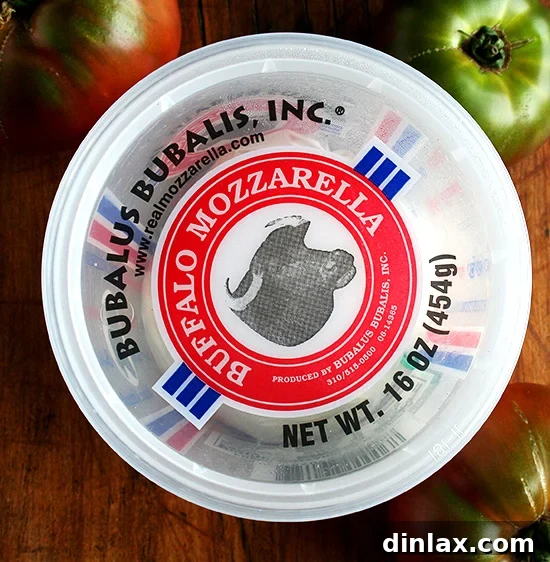
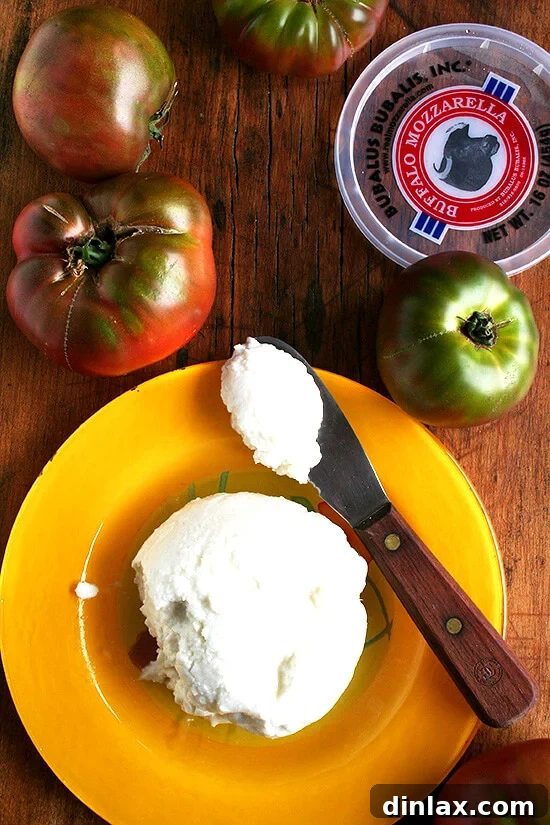
This internal conflict, however, began to ease with a serendipitous discovery in the dairy aisle. It was here that I found a beacon of small-scale quality within the vastness of the megastore: Bubalus Bubalis mozzarella. This wasn’t just any mozzarella; it was a local brand, crafted from the milk of water buffalo that graze gracefully in the verdant pastures of northern California. The cheese itself, if my understanding is correct, finds its artisanal production home in Gardena, California, making it a truly regional product.
The Allure of Bubalus Bubalis: A Local Gem
My first encounter with this exquisite mozzarella was at the bustling Santa Monica farmers’ market last summer. From the initial bite, I was utterly captivated. Its rich creaminess, delicate texture, and unparalleled flavor immediately set it apart, easily rivaling even the finest imported Italian mozzarella di bufala. For months, I searched in vain for a nearby source, convinced it would remain a seasonal farmers’ market exclusive. Imagine my delight and surprise when I stumbled upon it at Costco, bridging the gap between my desire for local, high-quality food and the practicality of a large retailer.
This discovery underscores a nuanced reality: even within large-scale retail environments, there are opportunities for artisan products to reach a wider audience. While Buford criticizes the commodification of food, perhaps this is an example of a “small food” item successfully navigating the “big food” system, offering consumers a chance to make a more informed and ethical choice without completely abandoning convenience. It represents a potential evolution in the market, where consumer demand for quality and locality might subtly influence the offerings of larger stores.
Celebrating Seasonal Pairings: Bubalus Bubalis and Cherokee Purple Tomatoes
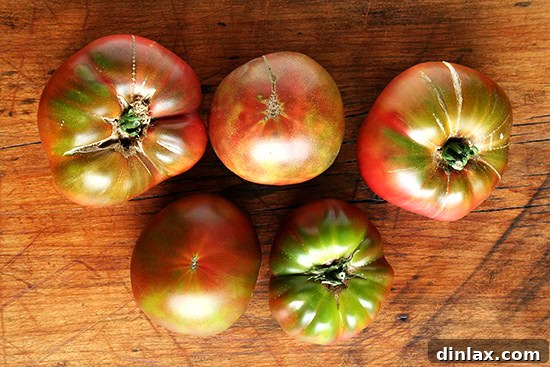
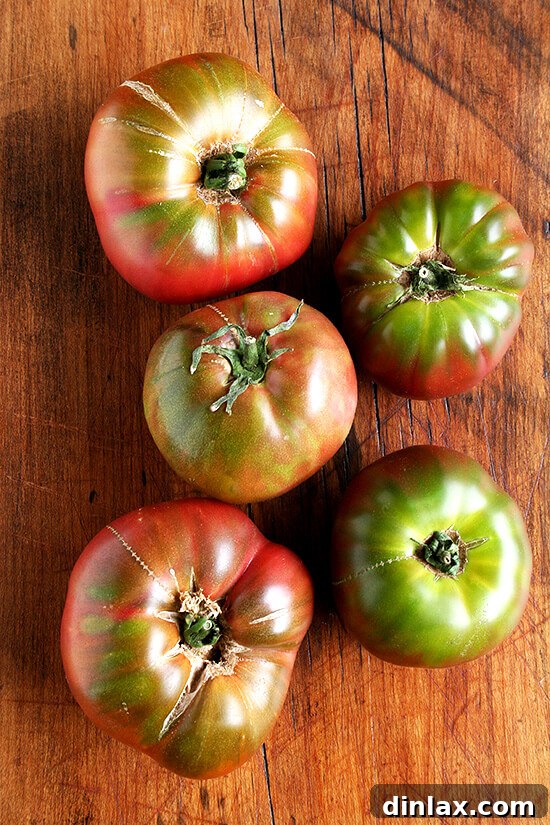
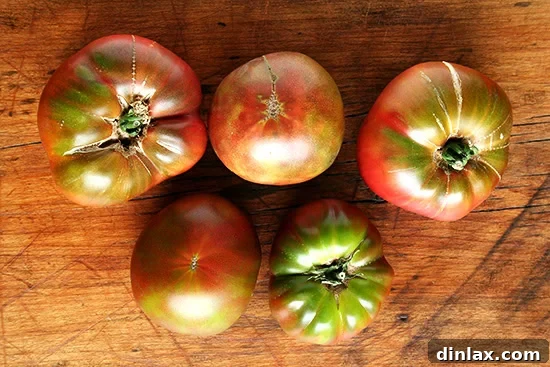
Summer, for many, is synonymous with the simple pleasure of fresh, vibrant salads, and for me, that unequivocally means a glorious combination of ripe tomatoes and creamy mozzarella. The Bubalus Bubalis mozzarella, with its luscious texture, finds its perfect counterpart in the extraordinary Cherokee Purple tomatoes. This heirloom variety, with its rich, smoky-sweet flavor and distinctive dusky purple-red hue, creates a sensory experience that defines the essence of summer eating.
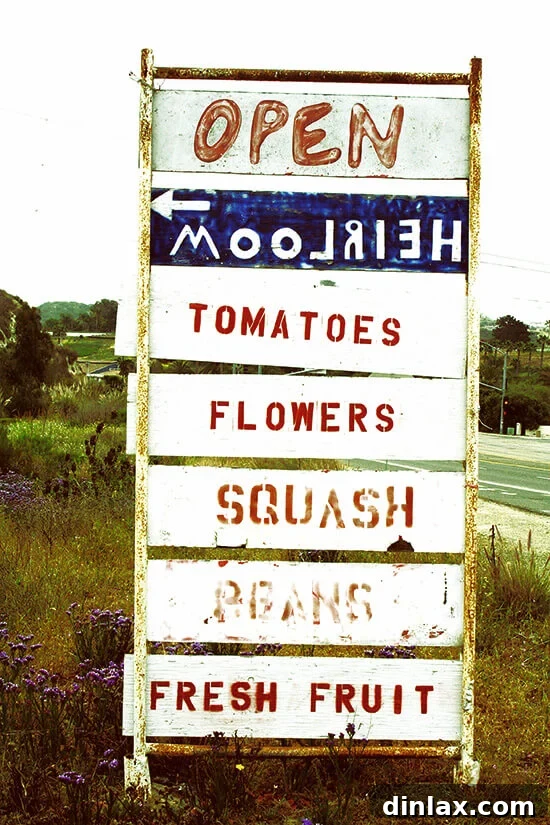
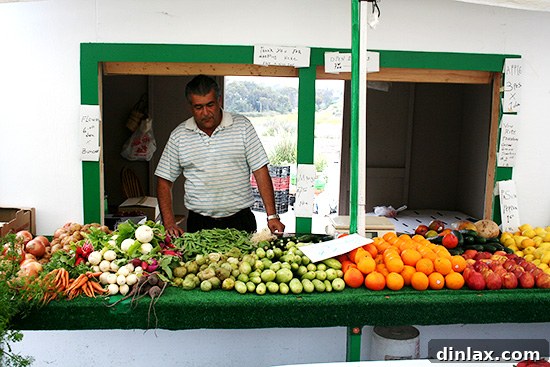
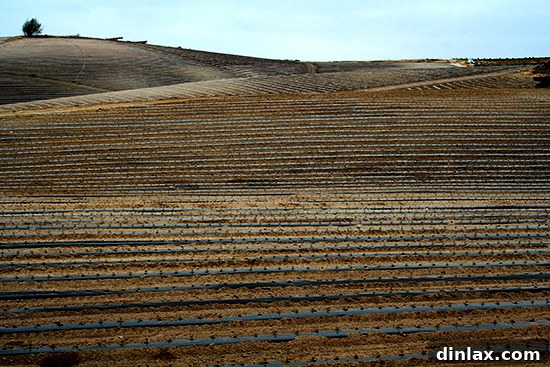
My affection for Cherokee Purple tomatoes blossomed last summer during a visit to the San Clemente farmers’ market. Their unforgettable taste lingered long after the season ended in October, leaving me eagerly anticipating their return. The opportunity to witness their cultivation came in April, during a visit to Valdivia Farm in Carlsbad. Valdivia Farm, a testament to dedicated, sustainable farming, specializes in growing these delectable heirloom tomatoes, ensuring their availability for discerning palates. Below are a few glimpses from my visit to the farm, capturing the serene beauty of the fields just after the young tomato plants were set.
A man proudly selling fresh, seasonal produce at the Valdivia Farmstand in Carlsbad, highlighting farm-to-table access.
The expansive tomato field at Valdivia Farm in April, just a few weeks after the careful planting of the tomato seedlings, promising a bountiful harvest.

Conclusion: Navigating the Nuances of Modern Consumerism
The journey from purchasing a flat-screen TV at Costco to discovering a prized local mozzarella within its aisles encapsulates the complex realities of modern consumerism. It highlights the ongoing tension between our attraction to the convenience and affordability of large-scale retail and our growing desire to support local, artisan producers and sustainable practices. Bill Buford’s “small food” theory offers a vital lens through which to view this conflict, emphasizing that the scale of production, rather than mere speed, profoundly shapes our food landscape.
The existence of products like Bubalus Bubalis mozzarella at a megastore like Costco, or the dedication of farms like Valdivia to cultivate heirloom varieties such as Cherokee Purple tomatoes, provides a glimmer of hope. It suggests that consumer demand for quality, authenticity, and local provenance can indeed penetrate even the largest of market structures. Our choices as consumers are powerful; they can, over time, influence the offerings of retailers and support the continued viability of small-scale, ethical producers.
Ultimately, there is no simple answer to the quandary of modern shopping. It’s about being an informed, conscious consumer, recognizing the benefits and drawbacks of various retail channels, and making choices that align with our values whenever possible. By seeking out those local delights, whether at a bustling farmers’ market or nestled unexpectedly within a global warehouse, we can advocate for a food system that values quality, origin, and craftsmanship, even as we navigate the conveniences of contemporary life.