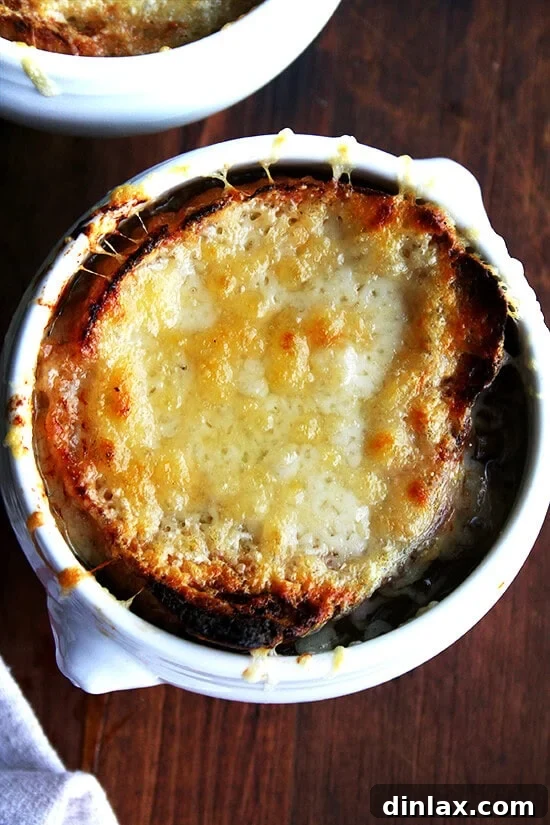
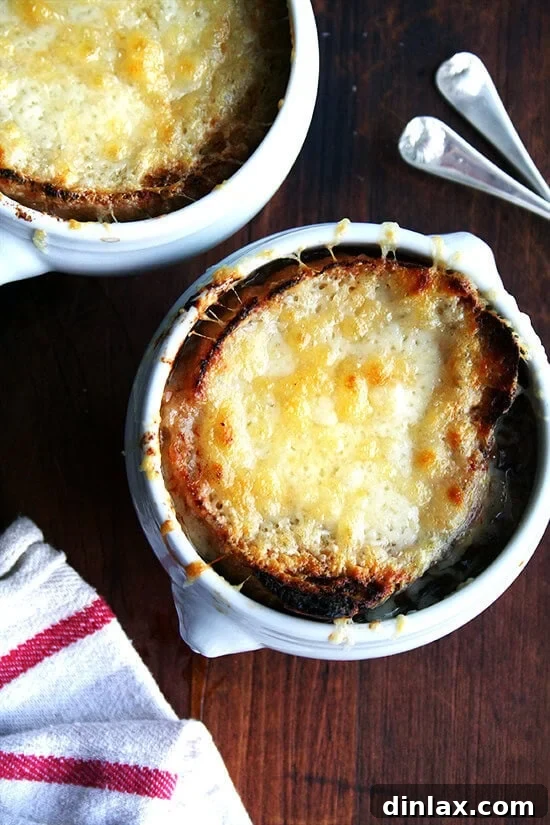
The Secret to Authentic French Onion Soup: No Stock Required
For centuries, French Onion Soup, or Soupe à l’Oignon Gratinée, has been revered as the ultimate comfort food, a hearty and flavorful dish often enjoyed during colder months. Its reputation precedes it, often associated with rich beef or chicken broth, deeply caramelized onions, and a glorious cap of toasted bread and melted Gruyère cheese. However, a fascinating culinary revelation suggests that the truest, most profoundly oniony French Onion Soup doesn’t rely on costly animal stock at all. Instead, it embraces simplicity, proving that sometimes, less truly is more. This traditional approach to a classic vegetarian French onion soup recipe elevates the humble onion to star status, delivering an authentic flavor experience that is both surprising and deeply satisfying.
Historically, French Onion Soup originated as a peasant dish, born out of necessity and the clever utilization of humble ingredients readily available to rural households. The notion of using expensive, time-consuming beef or chicken stock in such a recipe not only contradicts its economical roots but, as some culinary experts argue, also dilutes the very essence of what makes this soup so special: the pure, unadulterated flavor of caramelized onions. This “no stock” method is not merely an omission but a deliberate choice to highlight the natural sweetness and savory depth that onions develop through slow cooking.
Embracing Purity: Michael Ruhlman and the “No Stock” Philosophy
The culinary landscape often encourages the use of complex ingredients to achieve depth of flavor. Yet, renowned author and chef Michael Ruhlman challenges this convention with his compelling argument for a “no stock” French Onion Soup. He highlights the traditional bouchons of Lyon, France — small, family-run bistros known for their country-style fare. In these establishments, where economy and authentic flavor are paramount, owners wouldn’t dream of using a costly and laborious stock. Ruhlman insists that a “fine soup with a pure caramelized onion flavor” requires nothing more than water, onions, and perhaps a touch of wine for nuanced seasoning, allowing the natural essence of the onions to truly shine.
Initially, this concept might sound radical, even skeptical. Many home cooks, myself included, have been conditioned to believe that a rich broth is indispensable for a truly great French Onion Soup. But last week, I put this theory to the test. After dedicating several hours to the meditative process of slicing six pounds of onions and coaxing them into a state of deep caramelization, I poured six cups of plain water into the pot. A few cracks of fresh black pepper were added, and I stirred, a moment brimming with anticipation and a touch of doubt.
The first taste was an awakening. The broth, untainted by any competing flavors from chicken or beef, offered an astonishingly pure, sweet, and complex onion essence. It was so complete and satisfying that I could have served it right then and there, foregoing any further additions or the classic bread-and-Gruyère topping. Following Ruhlman’s advice, I introduced a splash of vinegar to beautifully temper the sweetness and a touch of sherry and red wine to build an even deeper, more sophisticated flavor profile. The result? Arguably the most exquisite French Onion Soup I have ever created, a testament to the power of simple, high-quality ingredients and patient technique.
The Art of Caramelization: A Patient Pursuit of Flavor
The heart and soul of this “no stock” French Onion Soup lies squarely in the meticulous art of caramelizing onions. This isn’t merely cooking onions; it’s a transformative process that extracts their natural sugars, breaking them down into rich, complex compounds that form the foundational flavor of the soup. This journey demands patience, challenging instincts that might urge you to rush the process. However, the reward for your dedication is a depth of flavor that is simply unparalleled, creating a savory sweetness that defines the best French onion soup.
The process begins with a generous amount of thinly sliced onions – six pounds is a substantial quantity, but they reduce dramatically. These onions are initially cooked in a covered pot with just a tablespoon of butter over low heat. During the first half-hour, a remarkable transformation occurs. The onions release copious amounts of their natural juices, creating a steamy environment that softens them beautifully. As they simmer gently in their own liquid, their volume visibly shrinks by half, preparing them for the next, more intensive stage of caramelization.
Once these natural juices have mostly evaporated, the true caramelization begins. Uncovered, and with the heat maintained at a low-to-medium-low setting, the onions embark on a long, slow journey. Over the course of three to four hours, they gradually transform from translucent white to a luscious, deep amber hue. This is where the magic happens: the sugars within the onions slowly caramelize, developing profound sweetness and savory notes. Regular, though not constant, stirring is essential to prevent sticking and ensure even browning. You’ll witness the onions reduce to a mere fraction of their initial volume, becoming incredibly concentrated and intensely flavorful. This is the moment to trust the process, resisting any temptation to introduce stock, and instead, marvel at the rich, golden swirls forming at the bottom of your pot – these are the concentrated flavors waiting to be resurrected by pure water.
Crafting the Purest Broth
After hours of patient caramelization, when the onions have achieved that magnificent amber color, the next step is deceptively simple: adding water. This is the moment where skepticism often creeps in, yet it’s precisely where the brilliance of this traditional method shines. Six cups of plain water are added to the pot, gently deglazing the deeply flavorful fond (the browned bits at the bottom) that has formed. As the soup comes to a simmer, these super-concentrated onion essences dissolve into the water, creating an extraordinarily flavorful broth that tastes purely of sweet, savory onions.
To further enhance this already incredible base, a few key additions are introduced. A generous splash of dry sherry contributes a nutty, slightly sweet complexity, perfectly complementing the rich onion base. A dash of white balsamic or red wine vinegar is crucial for balancing the inherent sweetness of the caramelized onions, adding a bright counterpoint that prevents the soup from becoming cloying and lifts all the other flavors. Finally, an optional splash of red wine can deepen the overall flavor profile, adding another layer of sophistication and a subtle fruitiness. Adjusting salt and pepper to taste is, of course, essential to bring all these exquisite flavors into perfect harmony, culminating in a truly pure and delicious French Onion Soup.
The Iconic Topping: Bread and Gruyère Perfection
No French Onion Soup is complete without its iconic gratinée topping, a golden, bubbly crown that promises delightful texture and flavor. This involves preparing slices of sturdy, country-style bread – day-old peasant bread works exceptionally well, as its slightly drier texture absorbs the flavorful broth without becoming soggy. These bread slices are lightly dried in a warm oven, ensuring they become perfectly toasted and crunchy under the broiler, providing the ideal foundation for the cheese.
Once the soup is ladled into individual oven-safe bowls, the toasted bread is placed on top, forming a sturdy raft. This is then generously covered with grated Gruyère or Comté cheese. Both cheeses are celebrated for their superb melting qualities and nutty, savory flavors that complement the sweet onions beautifully. A quick trip under a hot broiler transforms the cheese into a bubbly, golden-brown crust, creating an irresistible contrast of textures and flavors. Serve immediately, allowing guests to break through the molten cheese to the aromatic soup below, revealing the pure onion goodness beneath.
Your Game Plan for Onion Perfection
Preparing six pounds of onions can seem daunting, but with a simple game plan, it becomes a manageable and even enjoyable task, transforming a chore into a methodical step towards culinary excellence:
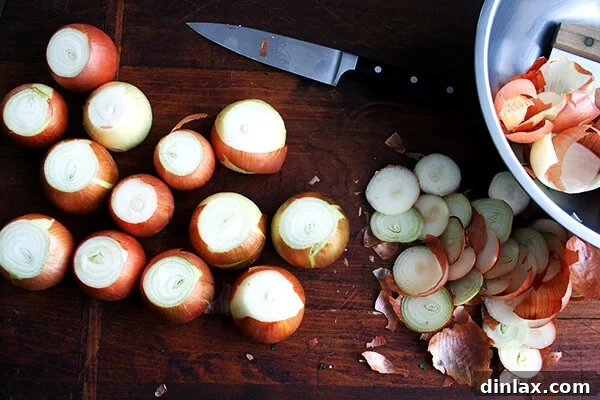
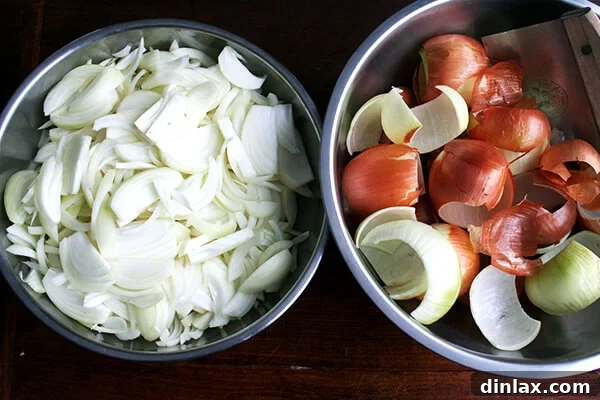
1. Gather Your Tools: You’ll need two large bowls—one specifically for onion scraps (ends and skins) and another for the neatly trimmed and sliced onions. A bench scraper is also incredibly helpful for gathering and transferring the sliced onions efficiently and safely. Begin by trimming off the tough ends of each onion, placing the scraps in one bowl as you work.
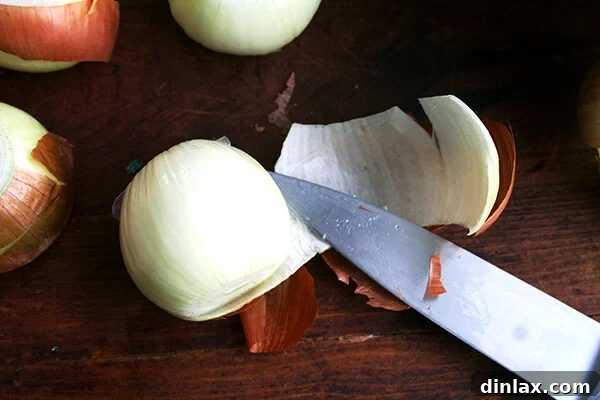
2. Score and Peel: Next, gently score the outside layer of each onion with your knife, making it easier to peel away the tough outer skin. This step ensures you’re left with only the tender, flavorful layers of the onion, maximizing taste and minimizing waste.
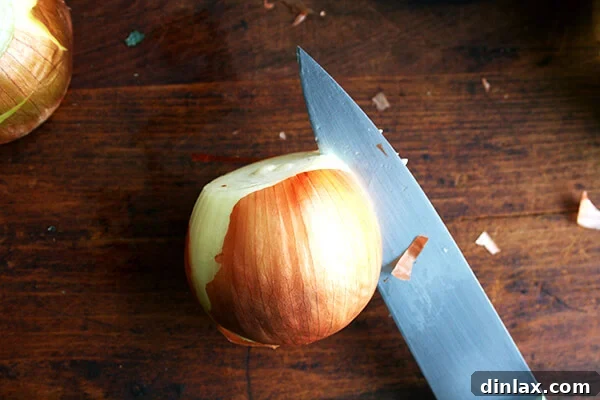
…and use your knife to carefully peel away the skin.
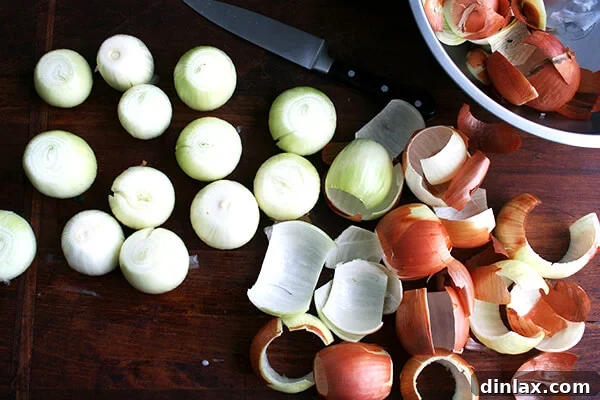
3. Halve the Onions: Cut each peeled onion precisely in half through the root end. This creates a stable, flat base for slicing, significantly increasing safety and consistency during the next step.
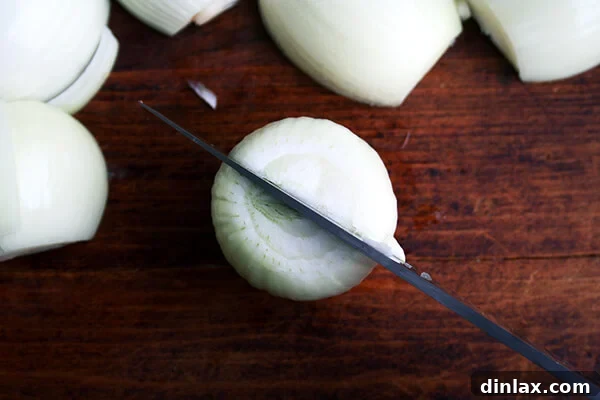
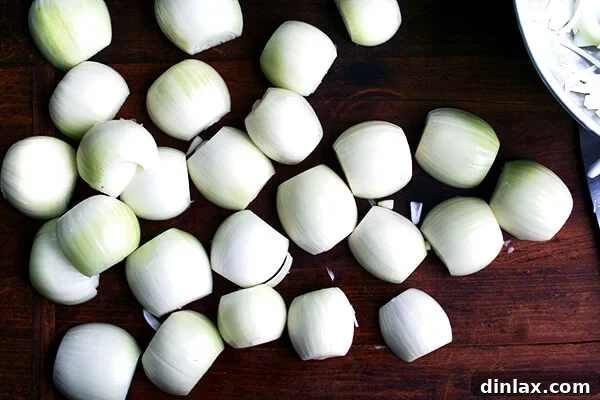
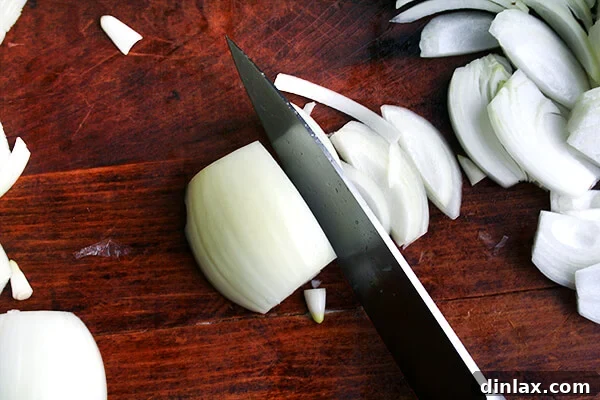
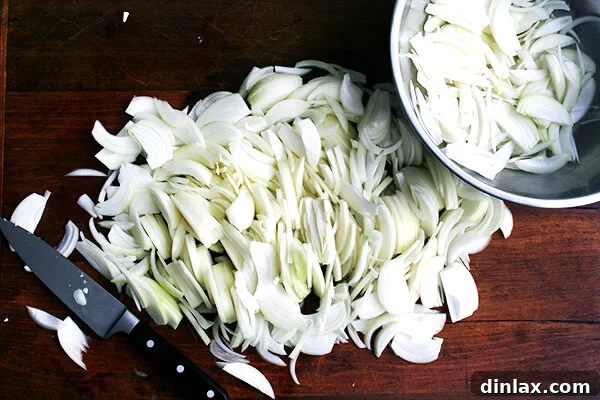
4. Thin Slices are Key: Place the halved onion flat on your cutting board. Using a sharp knife, thinly slice the onion perpendicular to the natural rings. Aim for uniform slices, as this ensures even cooking and caramelization, which is crucial for developing the soup’s deep flavor. Once all six pounds are sliced, you’ll have an impressive mound of onions, ready for their delicious transformation into caramelized perfection.
Visual Journey of Caramelization
Witness the incredible transformation of onions as they slowly caramelize to perfection, a process that is as visual as it is aromatic:
Onions after 30 minutes of cooking covered over low heat – they’ve released their moisture, softened significantly, and their volume has reduced, setting the stage for deeper flavors: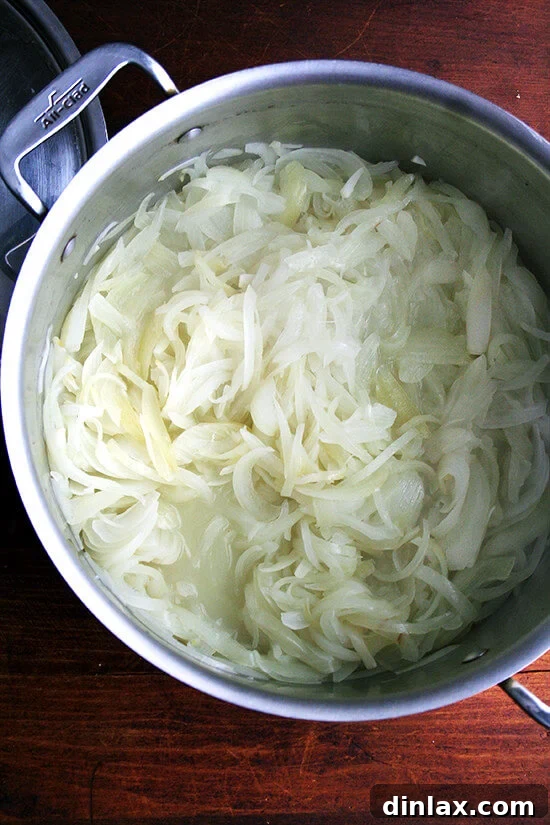
After two hours of stewing uncovered – the liquid has mostly evaporated, and the onions have begun their browning journey, starting to develop that crucial golden hue: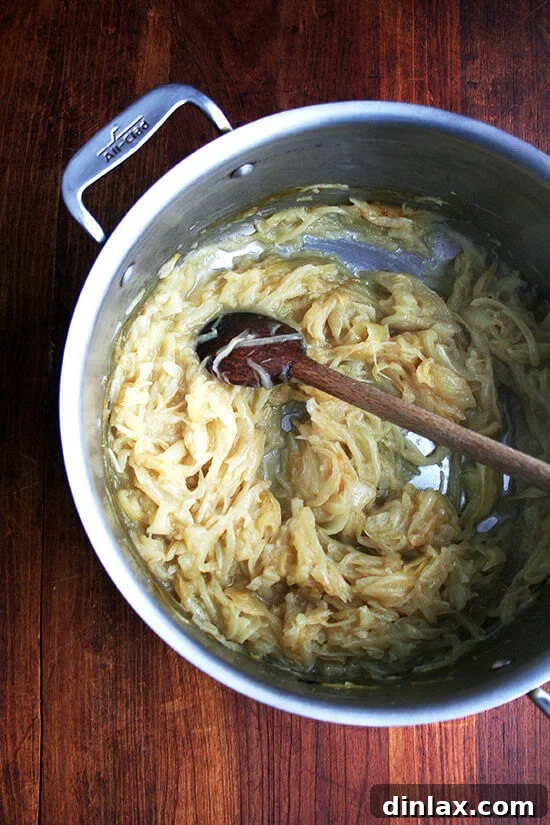
After three and a half hours total – a rich, deep amber color indicates full caramelization, achieving the complex, sweet, and savory flavor base essential for this classic soup: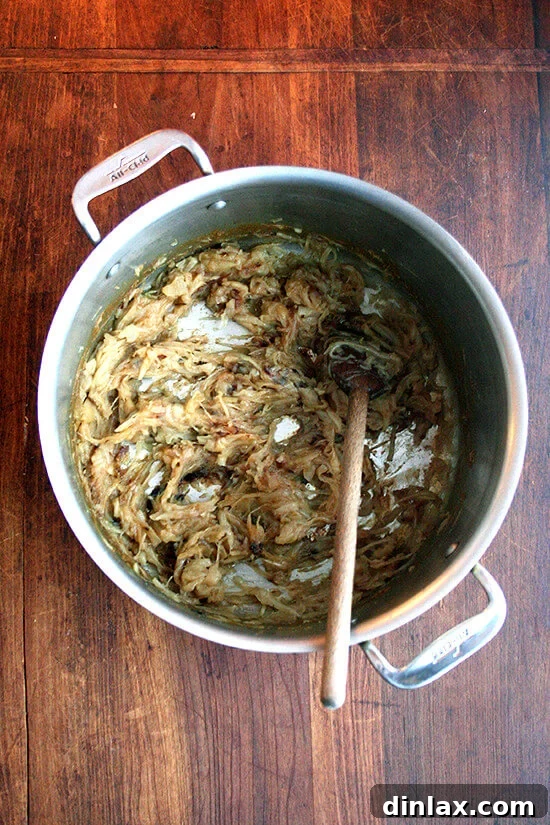
When the onions reach this beautiful amber stage, it’s time to add 6 cups of water, ⅓ cup Sherry, a splash of red wine, and a splash of vinegar, transforming the concentrated onions into a magnificent broth: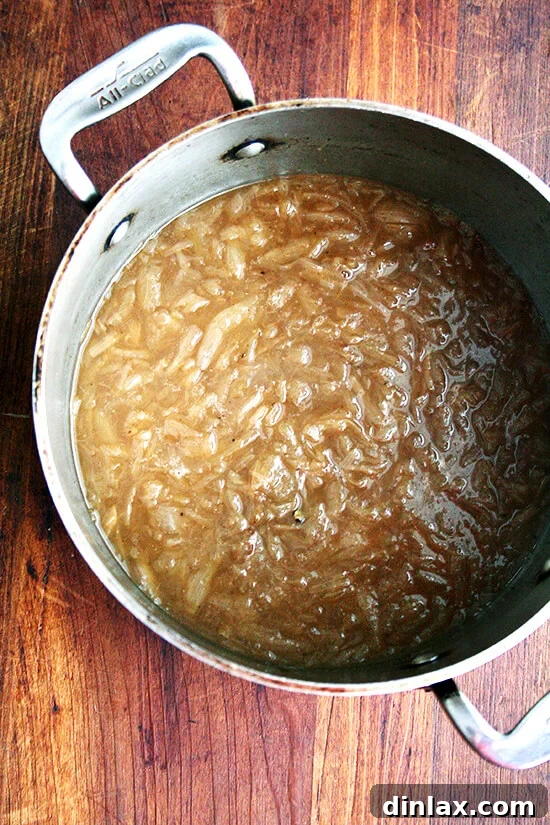
Grated Gruyère cheese, meticulously prepared and ready for its role in the glorious, bubbly gratinée topping – a crucial component for the authentic French Onion Soup experience: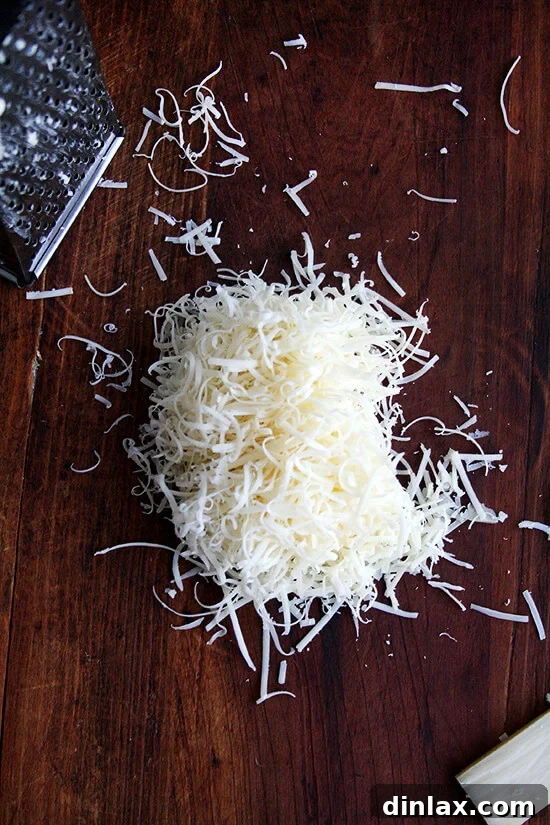
Day-old peasant bread, perfectly sliced and toasted, awaiting its destiny atop the soup to soak up the exquisite broth and provide a delightful textural contrast: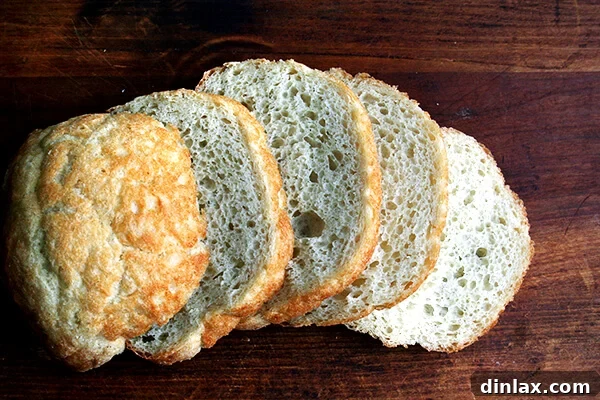
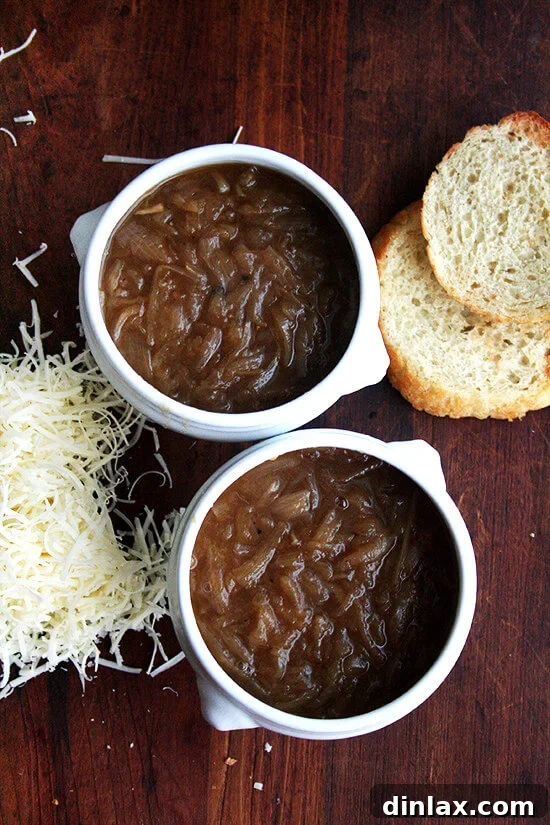
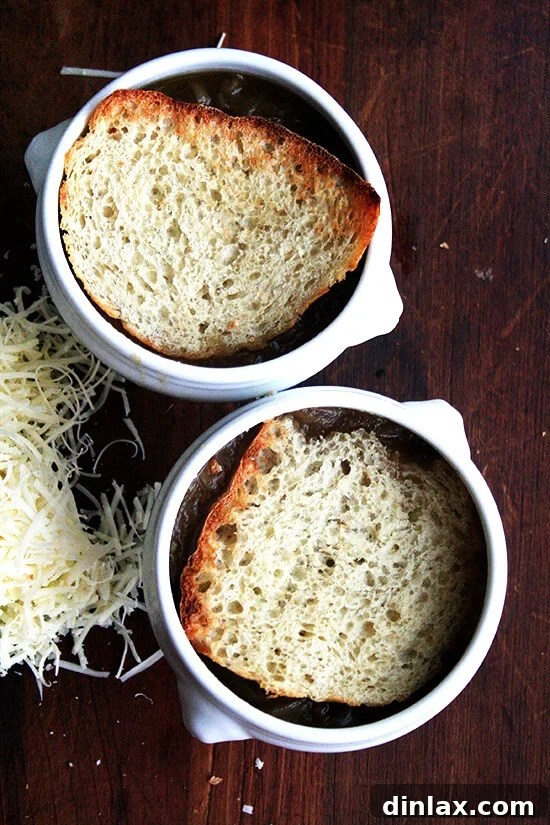
Ready for the broiler, these soup bowls, topped with bread and generous amounts of Gruyère, anticipate that golden, bubbly crust that makes French Onion Soup so irresistible: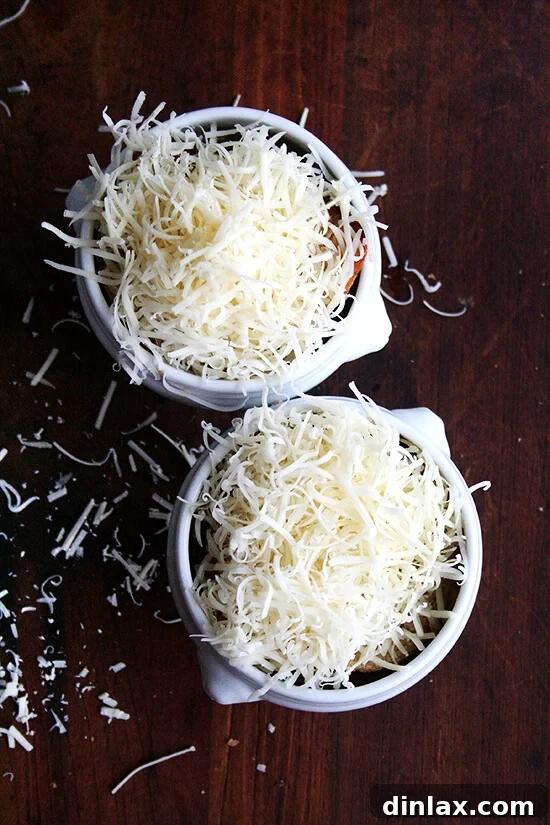
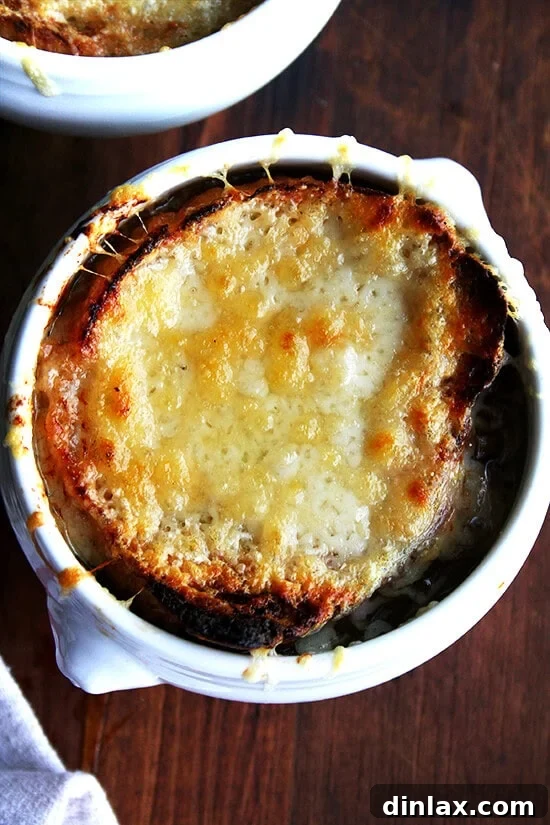
This journey of making French Onion Soup without stock may test your patience and challenge conventional wisdom. However, the profound, pure onion flavor achieved is a testament to the power of simplicity and dedication. It’s a culinary experience that rewards effort with unparalleled taste and a true connection to classic French cuisine. I sincerely hope you find the time to try this rewarding process and discover the unparalleled taste of truly authentic, no-stock French Onion Soup for yourself.
Print Recipe
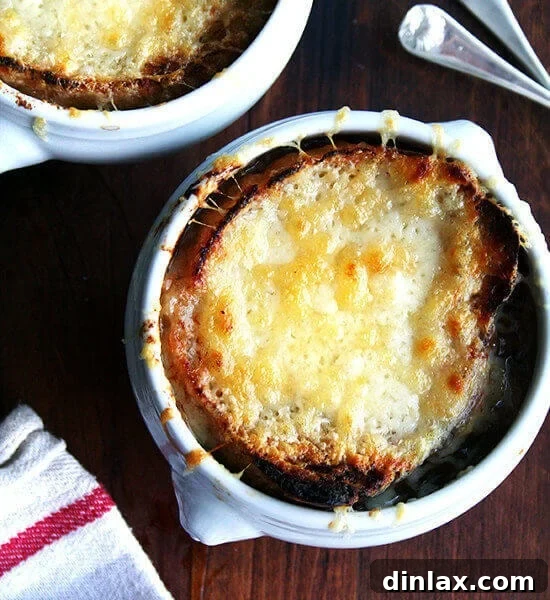
Classic French Onion Soup (No Stock)
5 Stars 4 Stars 3 Stars 2 Stars 1 Star
5 from 24 reviews
Author: Alexandra Stafford
Total Time: 4 hours 30 minutes
Yield: 4 servings 1x
Description
This recipe for Classic French Onion Soup is adapted from Michael Ruhlman’s traditional method, emphasizing pure onion flavor without the need for stock. Be prepared for a delightful culinary journey that requires patience, as slicing and caramelizing the onions takes a significant amount of time—approximately 3 to 4 hours. The reward, however, is an incredibly rich and satisfying soup.
Ingredients
- 1 tablespoon unsalted butter
- 6 to 8 pounds yellow onions, thinly sliced (refer to notes below for detailed slicing instructions)
- Kosher salt, to taste
- Freshly ground black pepper, to taste
- 6 slices of sturdy, day-old country-style bread (such as peasant bread)
- ⅓ cup dry sherry
- 1 tablespoon white balsamic vinegar or white/red wine vinegar (optional, for balance)
- 1 tablespoon red wine (optional, for added depth)
- ½ to ¾ pound | 225 to 340 grams Gruyère or Comté cheese, freshly grated
Instructions
- Sauté Onions: In a large, heavy-bottomed pot (7 to 8 quarts capacity) that can comfortably hold all the sliced onions, melt the butter over medium heat. Add all the sliced onions, sprinkle with about 2 teaspoons of kosher salt, and stir well to combine. Cover the pot and cook for approximately 30 minutes, or until the onions have heated through, softened, and released a significant amount of their liquid, creating steam.
- Caramelize Onions: Uncover the pot, reduce the heat to low (or medium-low, depending on your stove), and continue to cook the onions. Stir occasionally, especially during the initial stages when water is still evaporating. Once the liquid has mostly cooked off, you can leave the onions for longer stretches (up to an hour) between stirs, allowing them to slowly caramelize. This caramelization process will take about 3 hours. Season with several generous grinds of fresh black pepper during this stage. The onions will gradually turn a deep amber color and significantly reduce in volume.
- Prepare Bread: While the onions are caramelizing, preheat your oven to 200°F (95°C). Arrange the slices of country-style bread on a baking sheet and place them in the oven to dry out completely. This process can take a few hours, and the low heat ensures the bread toasts without burning, making it perfect for absorbing the soup without disintegrating.
- Build the Broth: Once the onions are fully caramelized and a rich amber color (total cooking time will be 3-4 hours), add 6 cups of water to the pot. Increase the heat to high and bring the soup to a gentle simmer, scraping up any browned bits from the bottom of the pot. Reduce the heat to low. Stir in the ⅓ cup of dry sherry. Taste the soup and adjust seasoning with additional salt and pepper as needed. If the soup tastes too sweet, add the optional tablespoon of white balsamic or wine vinegar. For an even richer, deeper flavor, incorporate the optional tablespoon of red wine. Allow to simmer gently for another 10-15 minutes to meld flavors.
- Broil and Serve: Preheat your broiler. Ladle the hot soup into individual oven-safe bowls. Place a slice of dried bread on top of each bowl of soup, then generously cover the bread (and some of the soup) with the grated Gruyère or Comté cheese. Carefully transfer the bowls to the preheated broiler. Broil for 2-5 minutes, watching constantly, until the cheese is beautifully melted, bubbly, and golden brown. Serve immediately and enjoy the pure, rich flavor of your homemade Classic French Onion Soup.
Notes
Tips for Preparing Onions: Slicing a large quantity of onions requires a bit of organization. Here’s a detailed game plan to make the process smoother:
- Preparation Bowls: Have two large bowls ready. Designate one for onion trimmings (ends and skins) and the other for the prepared, sliced onions. A bench scraper is highly recommended for easily scooping and transferring the onions.
- Trimming & Peeling: Start by trimming off both ends of each onion. Then, make a shallow cut along the outside layer of the onion skin and peel it away.
- Halving: Cut each peeled onion in half lengthwise, from root to stem. This creates a flat surface, making slicing safer and more consistent.
- Slicing Technique: Place the halved onion flat on your cutting board. Using a sharp knife, thinly slice the onion perpendicular to the natural rings. Aim for uniform slices, as this ensures even cooking and caramelization.
Choosing Onions: Yellow onions are ideal for French Onion Soup due to their balanced sweetness and ability to caramelize beautifully. Avoid using red onions as they can impart a slightly bitter taste when caramelized for extended periods.
Patience is Key: The caramelization process cannot be rushed. Low and slow heat is essential to develop the deep, complex flavors without burning the onions. Resist the urge to turn up the heat, as burnt onions will impart an undesirable bitter taste to your soup.
- Prep Time: 30 minutes
- Cook Time: 4 hours
- Category: Soup, Main Course
- Method: Stovetop, Broiler
- Cuisine: French
- Diet: Vegetarian