
Experience the joy of baking truly exceptional sourdough English muffins right in your own kitchen! Light, incredibly airy, and boasting that signature chewy texture, these homemade muffins are surprisingly straightforward to create. Forget complicated techniques like autolyse or the need for special English muffin rings – this recipe simplifies the process, making delicious sourdough accessible to every home baker.

When it comes to mastering sourdough bread recipes, simplicity is often the key to success and enjoyment. My philosophy, shared across all the sourdough recipes on this site, champions an approachable method. You won’t find any demands for an autolyse – a time-consuming pre-hydration step – nor will you need to invest in a collection of specialized equipment. This commitment to ease is what makes baking with sourdough a delightful and rewarding experience, rather than a daunting challenge.
My quest for an effortlessly delicious English muffin recipe led me to Maurizio Leo’s renowned cookbook, The Perfect Loaf. His method for English muffins stood out precisely because it aligned with my baking ethos: no autolyse, and no requirement for traditional English muffin rings. I was immediately captivated. Upon trying the recipe for the first time, meticulously following his instructions using my stand mixer, the results were nothing short of thrilling. I was rewarded with a batch of light, airy English muffins, each possessing that perfectly delightful chew that makes them utterly irresistible.
Driven by my personal preference for a more hands-on approach to sourdough, I attempted the recipe a second time, this time mixing the dough by hand. To my immense satisfaction, the muffins turned out equally beautifully, proving the recipe’s versatility and robustness regardless of the mixing method. These sourdough English muffins are a true culinary delight, especially when sliced, toasted to a golden crisp, and generously slathered with melted butter. They also serve as an exceptional foundation for classic dishes like Eggs Benedict, elevating a brunch favorite to new heights. Below, you’ll discover comprehensive, step-by-step instructions to guide you through crafting these incredible English muffins.
Crafting Your Own Sourdough English Muffins: A Step-by-Step Guide
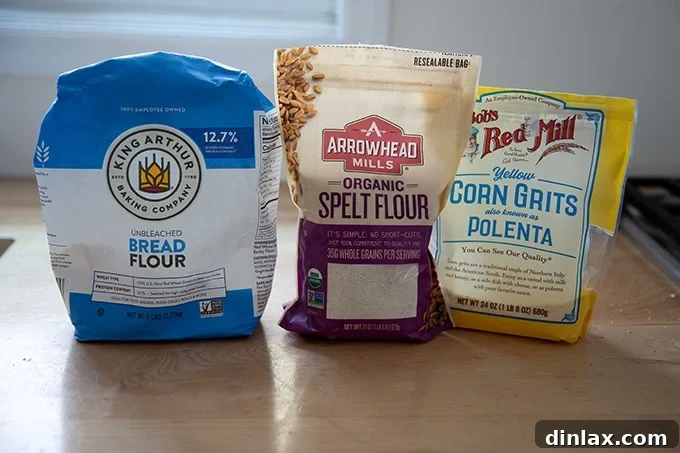
Embarking on your sourdough English muffin journey begins with gathering the right ingredients. For optimal texture and flavor, consider stocking up on specific flours: a high-protein white flour (such as King Arthur Flour’s bread flour, known for its excellent gluten development), whole spelt flour (which adds a wonderful nutty depth), and fine polenta or semolina flour for dusting the exterior, providing that iconic English muffin crunch.
The foundation of these superb sourdough English muffins is a robust and active levain. This crucial pre-ferment is a simple mixture of your fed, ripe sourdough starter, water, and flour. It’s the engine that will drive the fermentation and provide the distinctive sourdough tang and airy structure.
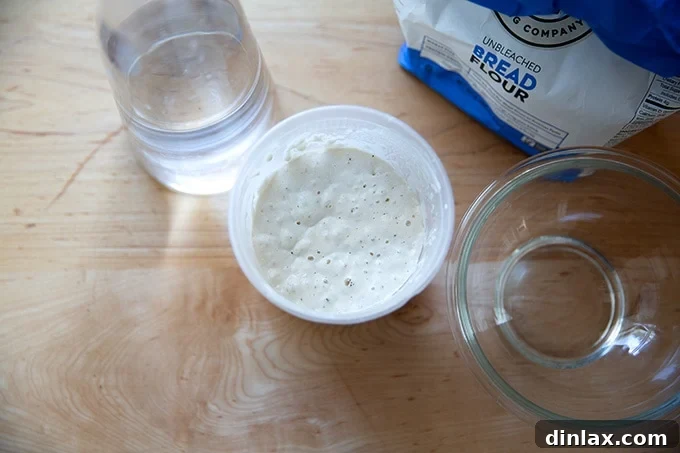
To begin the levain, you’ll need a precise measurement of your ingredients: 6 grams of active, ripe sourdough starter, and 56 grams each of high-protein flour and water. Accuracy here ensures the levain develops correctly.
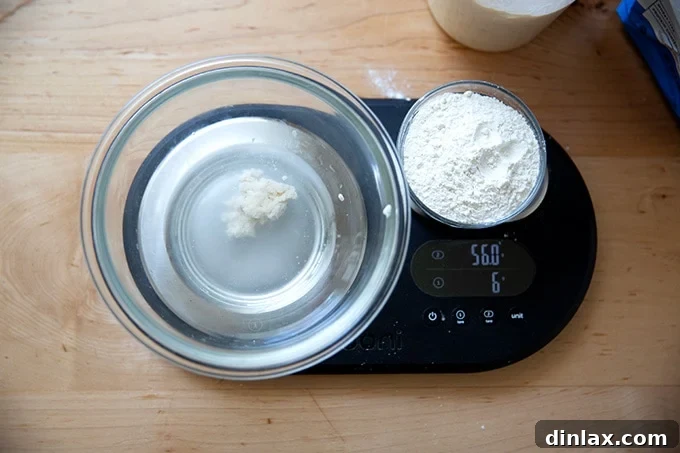
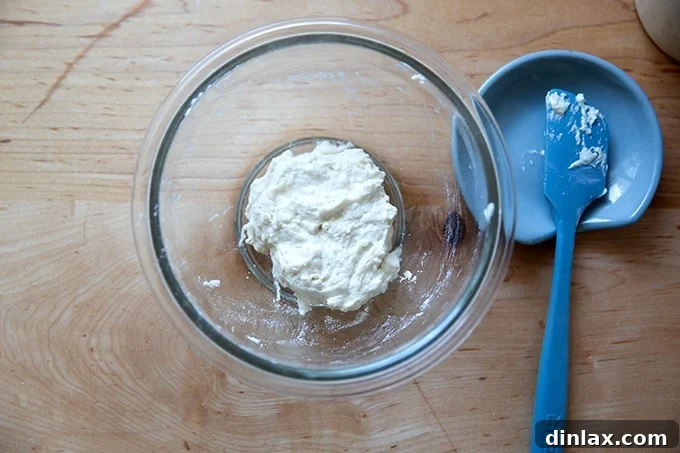
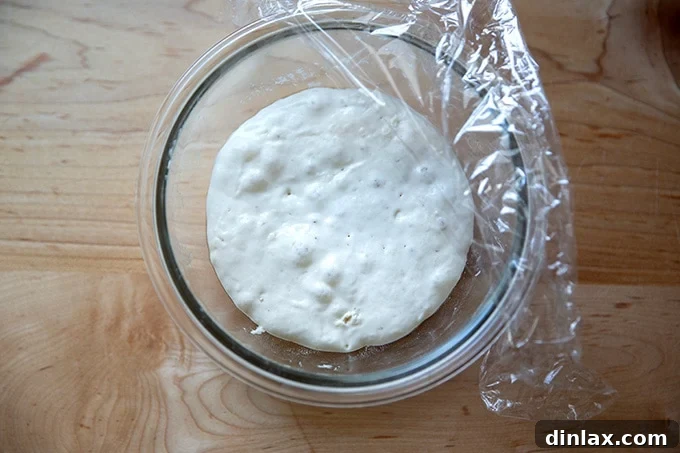
Combine the flour, water, and sourdough starter thoroughly in a bowl. Once well mixed, loosely cover the bowl to allow air circulation while preventing the levain from drying out. Let this mixture rest and ferment at room temperature for approximately 12 hours. This extended fermentation period is essential for the levain to fully mature and become potent.
After the resting period, your levain should exhibit clear signs of readiness and vitality. Look for abundant bubbly activity on the surface and sides, a noticeable increase in volume, and a distinctly sour, yet pleasant, aroma. These indicators confirm that your levain is active and ready to be incorporated into your English muffin dough.
Once your levain is prepared, assemble the remaining ingredients for the main dough. You’ll need water, milk (whole or 2% will work), fine sea salt, a touch of sugar, softened unsalted butter, and a combination of high-protein white flour and whole spelt flour. Having all your ingredients measured and ready, often referred to as “mise en place,” streamlines the dough mixing process.
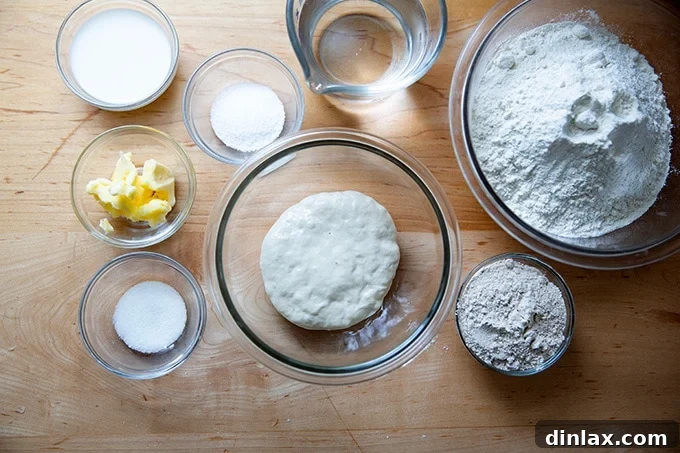
This English muffin dough can be mixed using a stand mixer, which offers convenience and consistency. However, if a stand mixer isn’t available, or if you prefer a more tactile experience, hand kneading is a perfectly viable alternative, yielding equally beautiful results (detailed instructions for hand kneading are provided in the full recipe). Begin by combining all the dough ingredients, except the butter, into the bowl of your stand mixer fitted with the dough hook attachment.
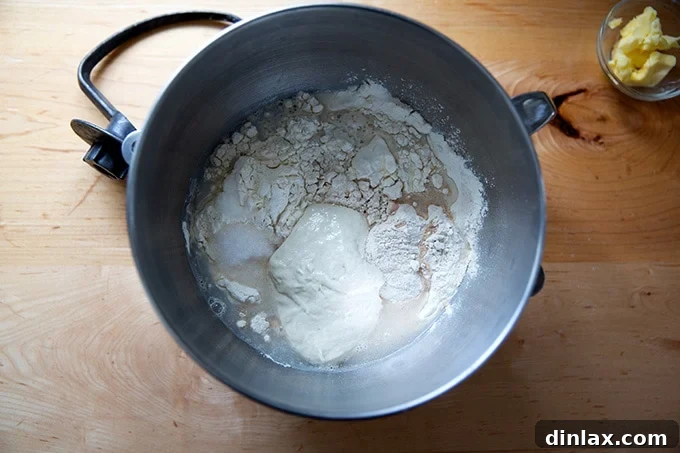
Mix on low speed for 1 to 2 minutes until the ingredients are just combined and form a shaggy dough. Increase the speed to medium and continue mixing for approximately 3 minutes. At this point, the dough should start to gather around the dough hook, indicating gluten development. Turn off the mixer and allow the dough to rest in the bowl for 10 minutes. This brief rest helps the flour fully hydrate and relaxes the gluten, making the subsequent mixing easier.
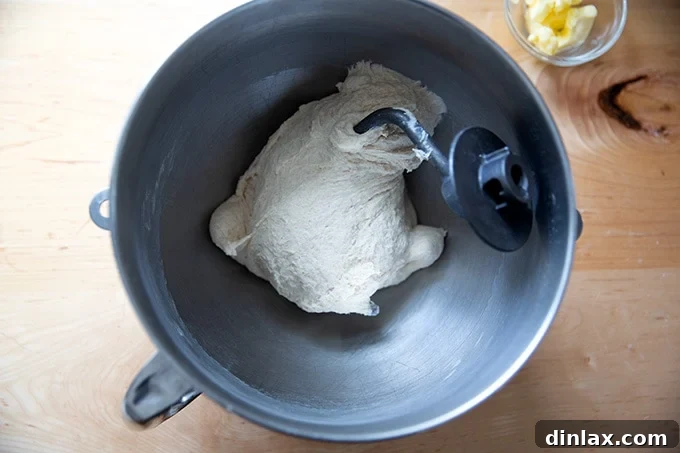
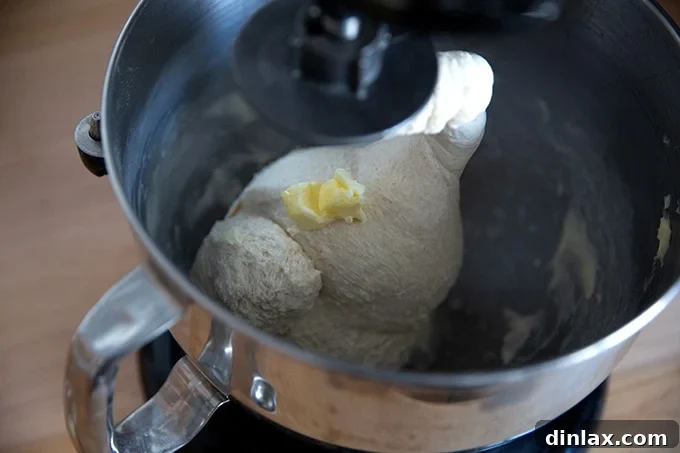
Next, gradually incorporate the softened butter into the dough. Add the butter one small pat at a time, allowing each addition to be fully absorbed before adding the next. This slow incorporation ensures even distribution and prevents the butter from interfering with gluten formation too early. Continue mixing on medium speed for an additional 1 to 2 minutes after all the butter has been added. The dough will transform into a smooth, glossy, and elastic mass that once again clings cleanly to the dough hook. This smooth, shiny appearance is a key indicator of proper gluten development.
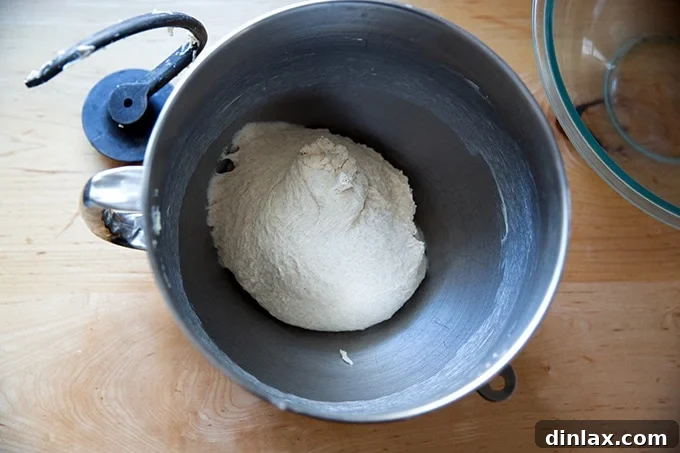
Following the initial mixing, the dough enters a critical phase called **bulk fermentation**, which includes a series of “stretch and folds.” First, let the dough rest, covered, for 30 minutes. This allows the gluten to relax before you begin the folding process.
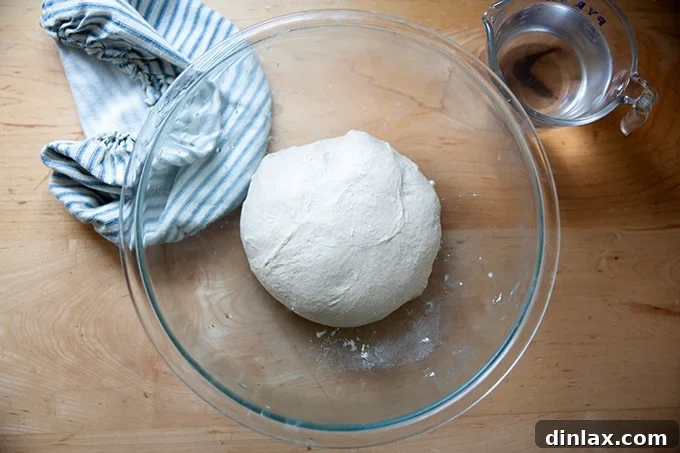
To perform a stretch and fold, moisten your hands to prevent sticking. Gently grab one side of the dough from underneath, stretch it upwards, and fold it over to the opposite side of the bowl. This action builds strength and structure in the dough.
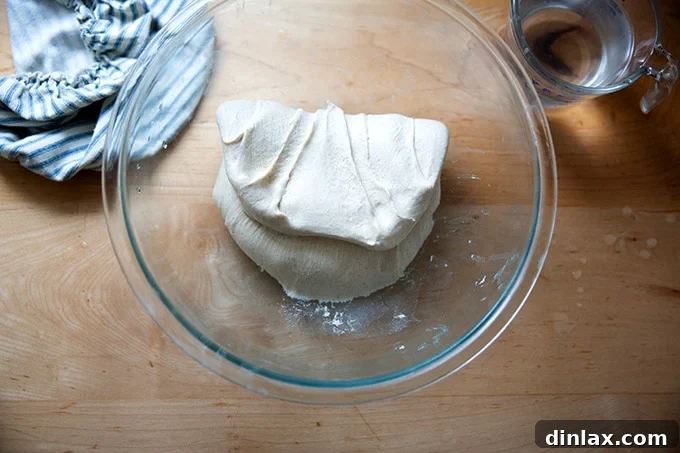
Rotate the bowl 180 degrees and repeat the stretch and fold action with the opposite side of the dough. This ensures even development across the entire mass.
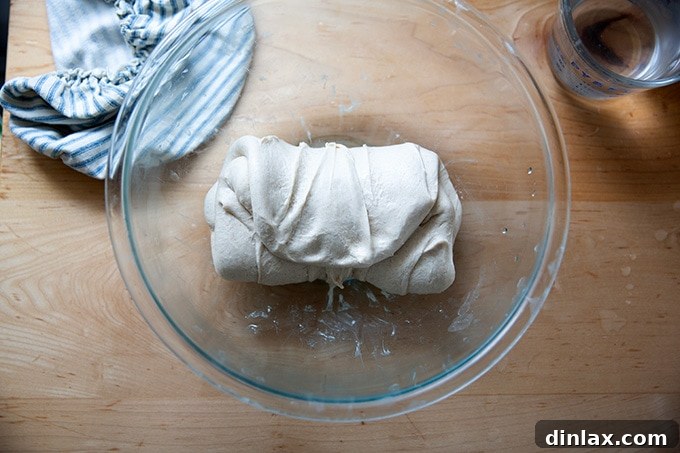
Next, rotate the bowl a quarter turn (90 degrees) and perform another stretch and fold on this new side.
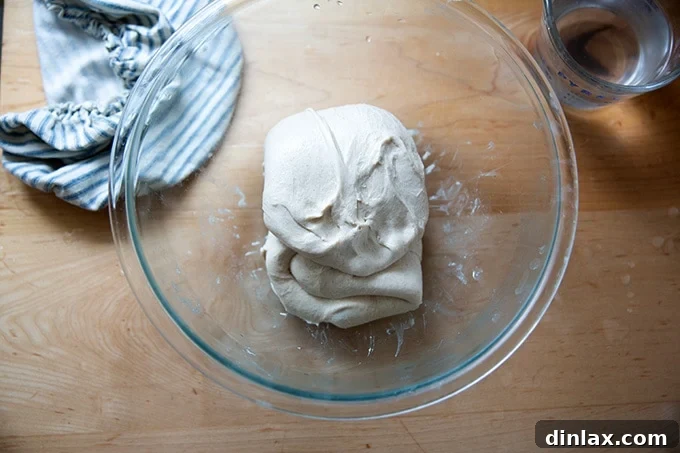
Finally, rotate the bowl 180 degrees once more and complete the set of folds with a stretch and fold on the last remaining side.
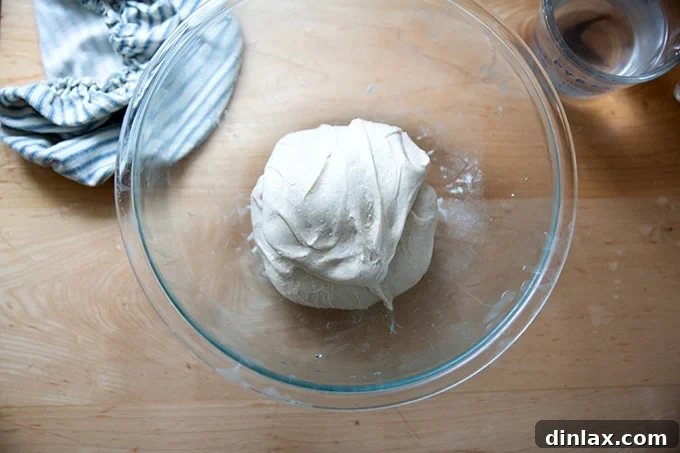
After completing one set of stretch and folds, the dough should appear neatly folded and somewhat tighter. Cover the vessel again. You will repeat these sets of stretch and folds every 30 minutes for a total of 3 sets. This methodical approach significantly improves the dough’s strength, elasticity, and overall texture, contributing to the airy crumb of the finished muffins.
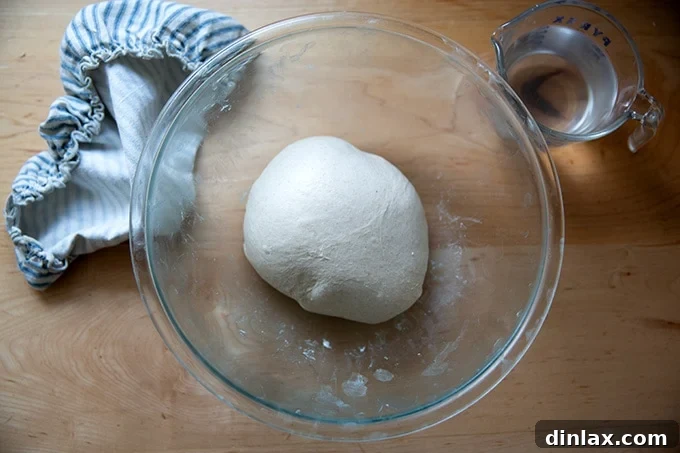
Once the three sets of stretch and folds are complete, cover the bowl and allow the dough to continue its bulk fermentation for the remaining time. This period typically lasts about 2 hours if your kitchen temperature is between 74ºF-76ºF, but it could be longer in a cooler environment. For easier monitoring of dough rise, I often transfer the dough to a straight-sided, clear vessel during this stage. This allows for a visual gauge of its volume increase.
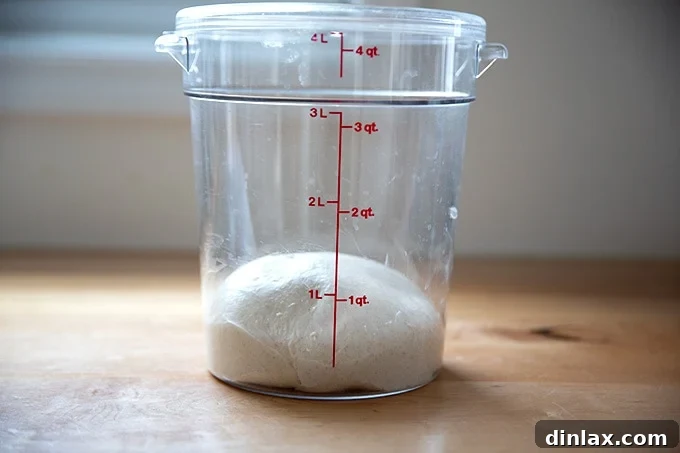
The bulk fermentation is complete when the dough has visibly risen and exhibits domed edges. As Maurizio Leo wisely advises, “The amount of rise is less important than the fact that it has risen and looks alive and well aerated.” This means the dough should feel lively, be visibly puffy, and have small air bubbles within. A 50-75% increase in volume is often a good indicator, but trust your senses: it should feel light and alive.
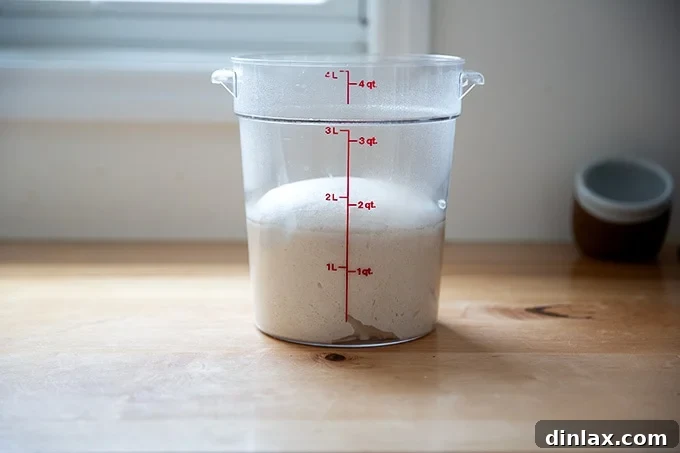
With bulk fermentation complete, gently turn the dough out onto a lightly floured work surface. Be careful not to deflate it too much, as you want to preserve the precious air pockets that have formed.
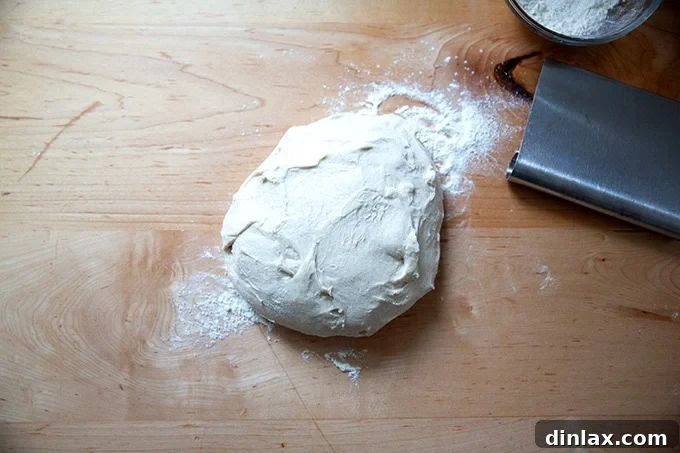
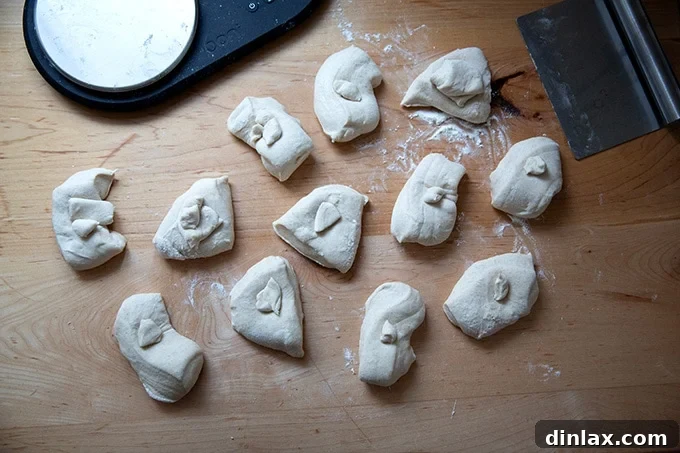
Using a bench scraper or knife, divide the dough into 12 equal portions. This recipe is designed to yield a dozen delicious English muffins.
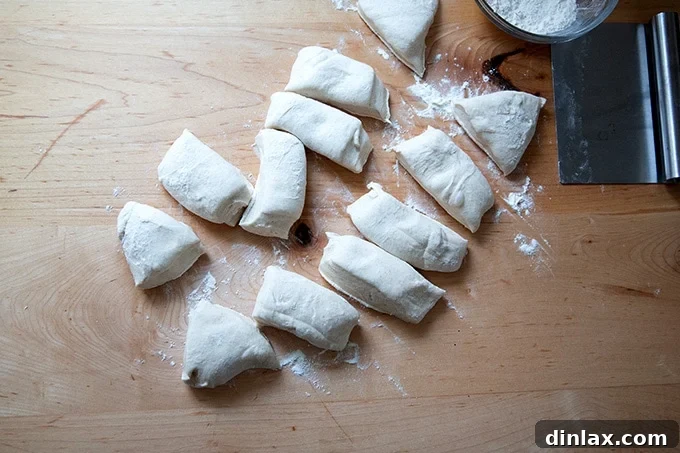
For consistent sizing, aim for each portion to weigh approximately 80 grams. A digital scale is invaluable for achieving this precision, ensuring all your English muffins cook evenly.
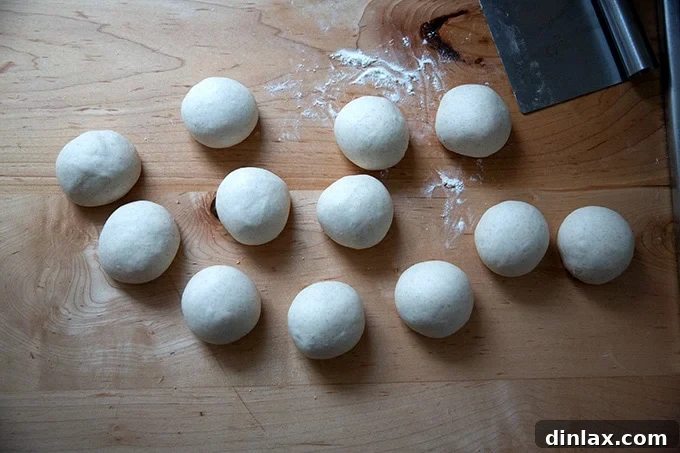
Gently shape each portion into a taut, round ball. This shaping creates surface tension, which helps the muffins hold their form and rise beautifully during proofing and cooking.
For the proofing stage, you’ll need a suitable vessel. I highly recommend lidded DoughMate proofing vessels, which are excellent for managing pizza dough and other fermented goods. If you don’t have one, a standard 13×18-inch sheet pan will work perfectly fine.
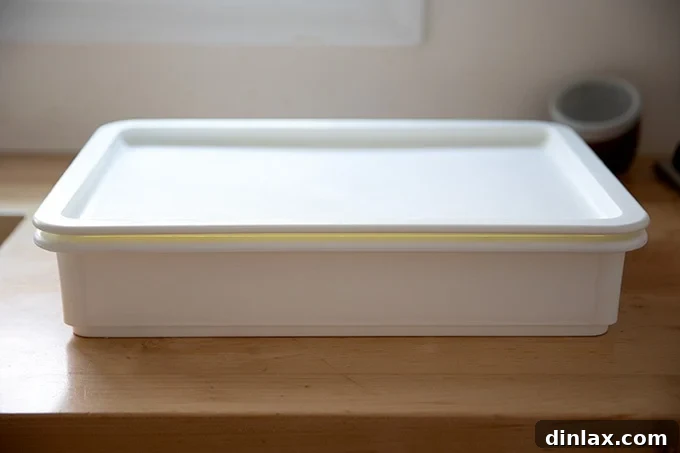
Liberally dust your chosen proofing vessel or sheet pan with semolina flour or fine cornmeal. This coating prevents sticking and creates a lovely crispy crust on the exterior of the muffins. Carefully transfer the shaped dough balls to the dusted pan, ensuring they have enough space between them to expand. Cover the pan (using its lid, plastic wrap, or a large plastic bag) and refrigerate overnight. This cold proof significantly deepens the sourdough flavor.

The following day, remove the proofing vessel from the refrigerator. Allow the dough balls to proof at room temperature for at least 3 hours, or until they feel incredibly light and puffy to the touch. This warm proof is crucial for the final rise and the development of a tender, open crumb. In cooler kitchens, this step might take 4-5 hours or even longer. The muffins are ready for cooking when they are extremely delicate and visibly expanded.

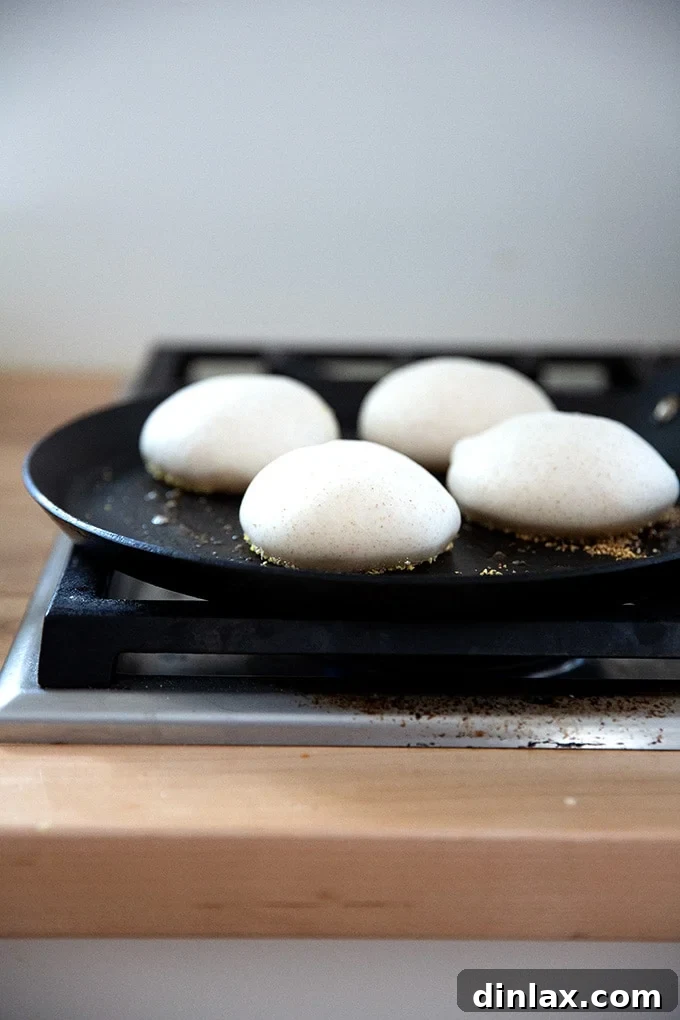
Cooking these sourdough English muffins involves a two-stage process. First, you’ll brown each side of the proofed dough balls in a skillet on the stovetop. This step creates that characteristic golden-brown crust and sets the structure.
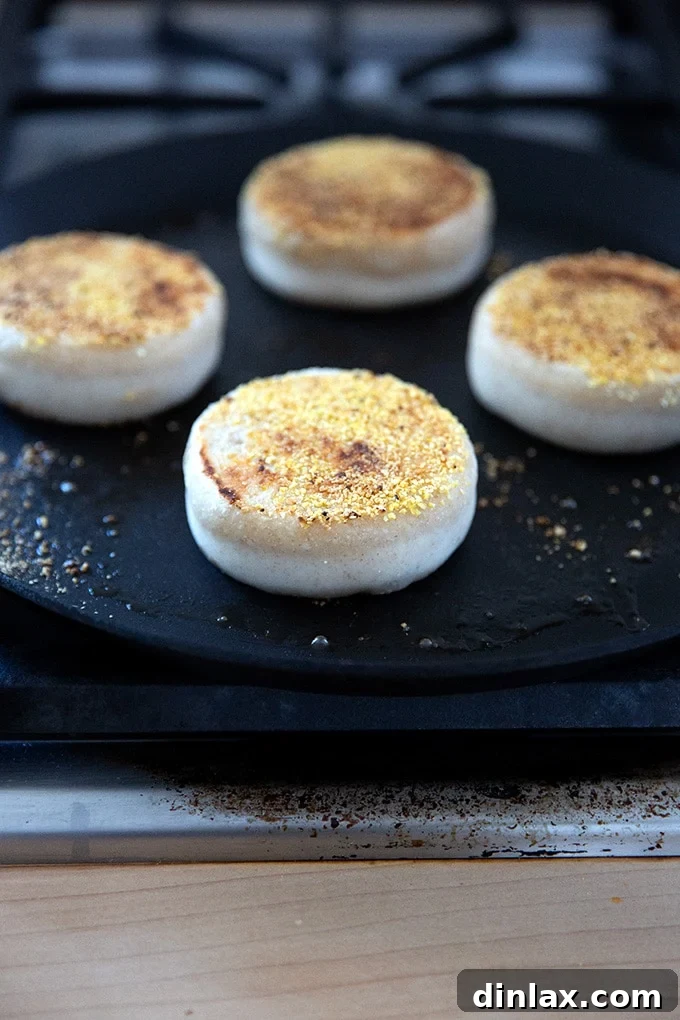
After browning, transfer the muffins to a baking sheet and finish them in the oven for about 15 minutes. This oven bake ensures they cook through evenly, achieving a perfectly fluffy interior while maintaining their delightful chew.
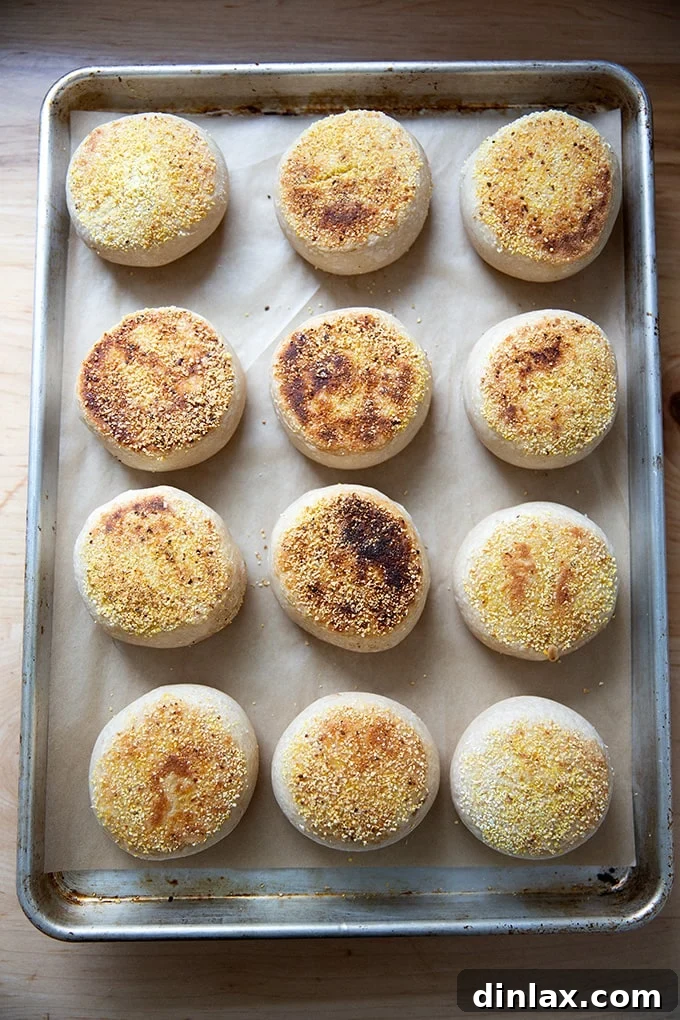


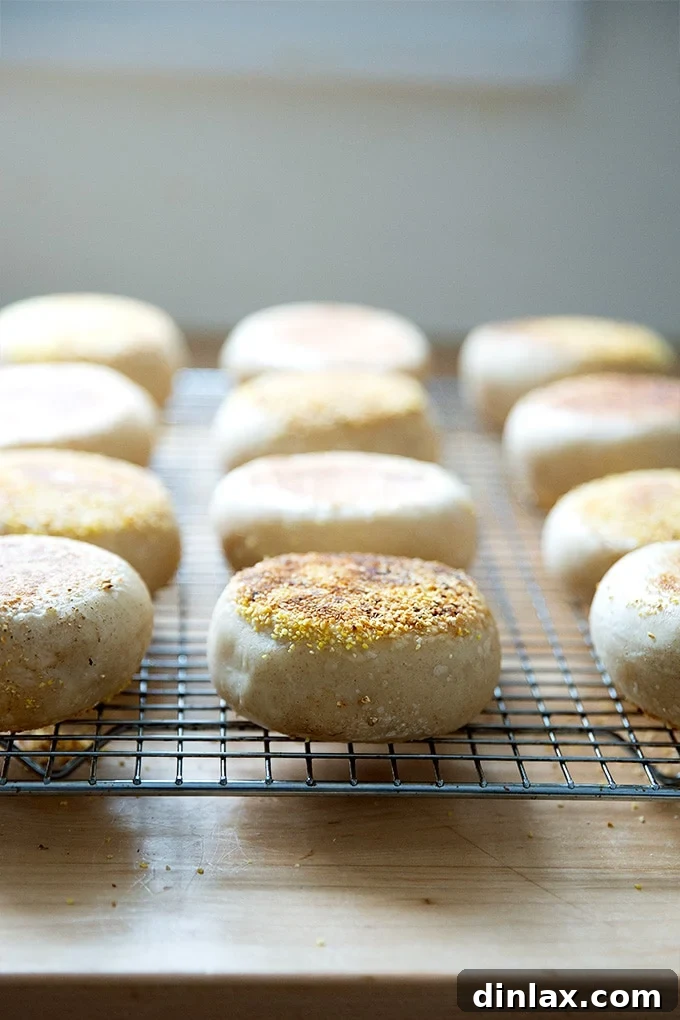
Once baked, allow your sourdough English muffins to cool on a wire rack for at least 30 minutes. This cooling period is crucial as it allows the internal structure to set and the flavors to fully develop. Then, they are ready to be halved – typically with a fork to maximize those coveted nooks and crannies – and devoured.
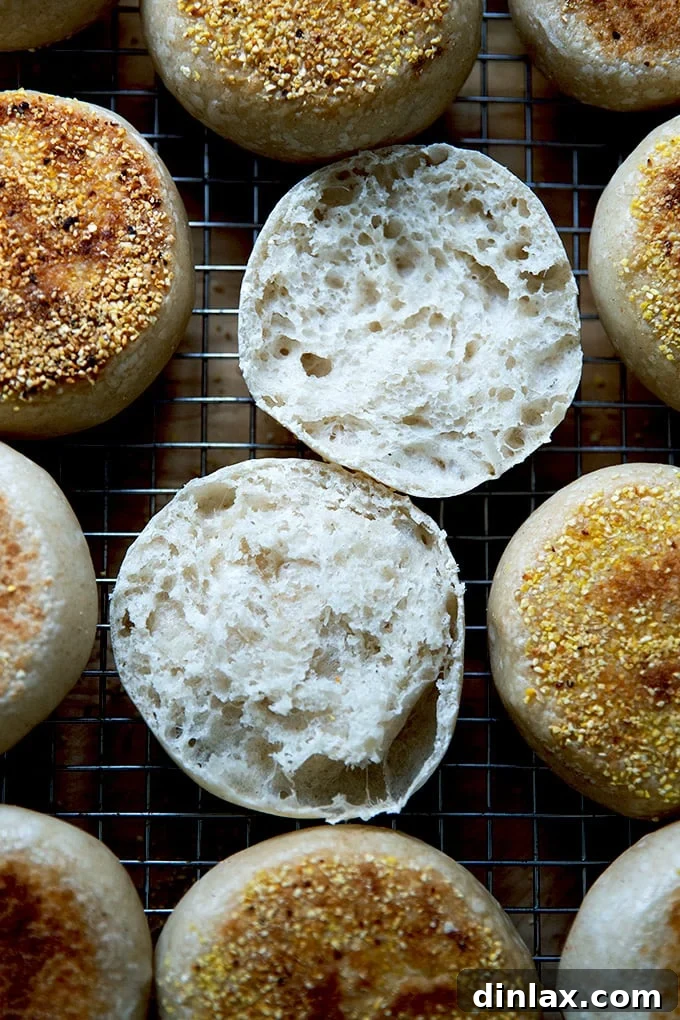
Or, if you possess the patience (which is often difficult with something this delicious!), take the extra step of toasting them to a golden perfection and generously slathering them with butter or your favorite jam. The texture and flavor of these homemade sourdough English muffins are truly unmatched.


Homemade Sourdough English Muffins
5 from 23 reviews
- Author: Alexandra Stafford
- Total Time: 48 hours 45 minutes
- Yield: 12 muffins
Description
Light and airy with the loveliest chew, these sourdough English muffins are surprisingly easy to make. They do not require an autolyse, nor do they require English muffin rings for cooking. They are irresistible toasted and slathered with butter or jam. Perfect for breakfast, brunch, or an anytime snack.
This recipe is adapted from Maurizio Leo’s acclaimed cookbook, The Perfect Loaf, known for its deep dive into sourdough baking.
Please note that this recipe relies on precise measurements by weight, so a digital scale is essential for accurate results.
Notes:
Water Temperature: Achieving the correct water temperature is crucial for proper dough fermentation in sourdough baking. Maurizio Leo emphasizes this to ensure your dough ferments effectively.
- For the levain, the ideal water temperature is around 78ºF (25.5ºC).
- For the main dough, the water temperature will depend on your kitchen’s ambient temperature. Maurizio’s book provides a calculation method and a helpful chart. As a general guide, if your kitchen is 68ºF (20ºC), you should aim for water around 98ºF (36.6ºC). Adjust accordingly based on your environment to hit the target dough temperature.
Ingredients
For the Levain:
- 56 grams high-protein white flour (12.7 to 14% protein)
- 56 grams water, approximately 78ºF (25.5ºC) – see notes above
- 6 grams ripe sourdough starter
For the English Muffins:
- 33 grams unsalted butter, softened and cut into ½-inch pats
- 437 grams high-protein white flour (12.7 to 14% protein), such as bread flour
- 55 grams whole spelt flour
- 55 grams whole or 2% milk
- 9 grams granulated sugar
- 283 grams water, approximately 98ºF (36.6ºC) – see notes above
- 10 grams fine sea salt or kosher salt
- 118 grams ripe levain (prepared above)
Instructions
- Prepare the Levain: In a medium jar or small bowl, combine the high-protein flour, 78ºF water, and ripe sourdough starter. Mix vigorously until all ingredients are well incorporated and the mixture is smooth but quite loose. Loosely cover the container to allow for air exchange without drying out the surface, and let it ferment at room temperature on the counter for 12 hours.
- Check Levain Readiness: After 12 hours, inspect your levain. It should be visibly aerated with numerous bubbles on the top and sides, have significantly risen, and emit a distinctly sour yet pleasant aroma. If these signs of activity are not evident, allow it to ferment for an additional hour and check again. A fully active levain is key for successful dough rise.
- Prepare Butter: Cut the unsalted butter into ½-inch thick pats. Arrange them on a plate and leave them on the counter to warm to room temperature. The butter should be soft enough to easily indent with a finger but not greasy or melted. If it’s too warm, chill it in the freezer for 5 minutes. If too firm, microwave for 5-10 seconds to soften slightly.
-
Mix the Main Dough (Stand Mixer Method): In the bowl of a stand mixer fitted with the dough hook attachment, combine both types of flour, milk, sugar, 98ºF water, salt, and the prepared ripe levain. Mix on low speed for 1 to 2 minutes until all ingredients are just combined into a shaggy dough. Increase the speed to medium and continue mixing for 3 minutes, or until the dough begins to gather and cling to the dough hook. Stop the mixer and let the dough rest in the bowl for 10 minutes to allow for hydration and gluten relaxation.
(Hand-Kneading Method): In a large mixing bowl, whisk together the flours, sugar, and salt. Add the water, milk, and levain. Stir with a sturdy spatula until a sticky, cohesive dough ball forms. Transfer the dough to a lightly floured work surface and knead by hand for 2 to 3 minutes until it comes together as a smooth, uniform ball that feels tacky but not overly sticky. Return the dough to the bowl and let it rest for 10 minutes.
-
Incorporate Butter: Resume mixing the dough on low speed. Add the room temperature butter pats one at a time, allowing each pat to be fully absorbed into the dough before adding the next. You may need to stop the mixer occasionally to scrape down the sides of the bowl and the dough hook. Continue this process for 2 to 3 minutes until all the butter is incorporated. Increase the mixer speed to medium and mix for another 1 to 2 minutes, until the dough becomes smooth, elastic, and shiny, once again cleanly clinging to the dough hook.
(Hand-Kneading Butter Incorporation): Turn the dough out onto a lightly floured work surface. Sprinkle the softened butter pats evenly over the dough. Knead the dough by hand for 2 to 3 minutes, using minimal additional flour only if necessary to prevent excessive sticking, until the butter is completely incorporated and the dough feels smooth and shiny.
- Bulk Fermentation & Stretch and Folds: Transfer the dough to a clean, lightly oiled container (a straight-sided container is helpful for monitoring rise). Let the dough rest, covered, for 30 minutes. Perform the first set of stretch and folds: with wet hands, gently grab one side of the dough from underneath, stretch it upwards, and fold it over to the opposite side. Rotate the bowl 180 degrees and repeat. Then, rotate the bowl a quarter turn (90 degrees) and perform another stretch and fold. Finally, rotate 180 degrees again and finish with a stretch and fold on the last side. The dough should now be neatly folded. Recover the vessel. Repeat these sets of stretch and folds every 30 minutes for a total of 3 sets.
- Complete Bulk Fermentation: After the third set of stretch and folds, cover the bowl again and let the dough rest for the remainder of the bulk fermentation. This will typically take about 2 hours in a warm kitchen (74ºF-76ºF / 23-24.5ºC), or 3 to 4 hours (or longer) if your kitchen is cooler. The bulk fermentation is complete when the dough has risen significantly, has a domed top, and looks well-aerated and lively. I generally aim for a 50-75% increase in volume.
- Prepare Proofing Pan: Liberally dust a 13 x 18-inch half-sheet pan (or a lidded DoughMate) with semolina flour or cornmeal (fine white flour can also be used). Set aside.
- Divide and Shape Dough: Uncover the dough container. Lightly dust the top of the dough and your work surface with flour. Gently scrape the dough out onto the floured surface. Using a bench knife or scraper, divide the dough into 12 equal pieces, each weighing approximately 80 grams for consistency.
- Ball and Arrange: Using a lightly floured hand and your bench scraper, gently shape each dough piece into a taut, round ball. Place the shaped balls onto the prepared sheet pan, ensuring enough space between them for expansion. Enclose the entire sheet pan inside a large, reusable plastic bag and seal, or wrap the pan tightly with plastic wrap to prevent drying.
- Cold Proof (Overnight): Place the covered sheet pan containing the dough balls into the refrigerator overnight (at least 8-12 hours). This cold proof slows down fermentation, allowing for deeper flavor development and easier handling.
- Warm Proof (Final Proof): The next day, remove the pan from the fridge. Let the dough balls proof at room temperature (ideally 74ºF to 76ºF / 23-24.5ºC) for at least 3 hours. In cooler kitchens (like 68ºF / 20ºC), this final warm proof may take longer, typically 4 to 5 hours. The dough is ready for cooking when the balls are very soft, significantly puffed up, and feel extremely delicate to the touch. It’s essential to give this dough ample time to proof fully for the lightest and most tender English muffins. If they still feel dense or firm, continue proofing for another 30 minutes and recheck.
- Preheat Oven & Prep Baking Sheet: While the muffins are completing their warm proof, position an oven rack in the middle of your oven and preheat the oven to 350ºF (175ºC). Line a clean 13 x 18-inch half-sheet pan with parchment paper and place it near your stovetop.
- Stovetop Browning: Place a heavy cast-iron skillet or another large, heavy-bottomed skillet (or preheat a griddle) over medium-low heat. Lightly grease the skillet with clarified butter (or regular butter). Using a flat spatula, very gently transfer 2 to 4 proofed dough rounds to the hot skillet, being careful not to deflate them. Cook until the bottoms are a deep, golden brown, approximately 2 to 3 minutes. Flip the muffins and cook for another 2 to 3 minutes, or until the other sides are also deep brown. Transfer the browned muffins to the prepared parchment-lined sheet pan. Repeat this process with the remaining dough rounds, wiping out and re-greasing the skillet with butter between each batch as needed.
- Oven Bake: Once all the English muffins have been browned on the stovetop and are on the parchment-lined sheet pan, transfer the pan to the preheated oven. Bake for 15 minutes. When done, the muffins will have deepened in color slightly at the edges, but they won’t be fully browned overall, maintaining their classic appearance.
- Cool and Store: Carefully remove the baked muffins from the oven and transfer them to a wire rack to cool for at least 30 minutes. This cooling period is vital for the internal structure to stabilize. These homemade sourdough English muffins will keep well for 3 to 4 days, covered, at room temperature. For longer storage, once completely cooled, transfer them to a zip-top plastic freezer bag and freeze for up to 3 months. When ready to enjoy, simply thaw and toast!
- Prep Time: 48 hours
- Cook Time: 45 minutes
- Category: Bread
- Method: Stovetop, Oven
- Cuisine: American