For any avid home cook or devoted cookbook collector, there’s a distinct thrill that accompanies the discovery of a truly exceptional culinary guide. It’s that moment when you flip through the pages, and your heart races with anticipation, a mix of excitement and delightful overwhelm as every single recipe calls out to you. You know that sneaking a peek at it before bed is a risky move, for the delicious dishes will surely dance in your dreams, keeping sleep at bay. This profound sensation is precisely what engulfs me every time I open Joshua McFadden’s remarkable cookbook, Six Seasons: A New Way with Vegetables.
While this culinary masterpiece first graced shelves in May, it wasn’t until Christmas Day that Santa, in his infinite wisdom, tucked it under our tree. Since then, I’ve spent countless joyous hours immersed in its pages, transforming its innovative concepts into delicious realities in my kitchen. To date, I’ve prepared five of its recipes, each proving utterly irresistible and vanishing in record time, a true testament to their exquisite flavor and McFadden’s brilliant approach to vegetables.
Unlocking Vegetable Potential: The Philosophy Behind Six Seasons
Joshua McFadden’s Six Seasons isn’t just another cookbook; it’s a paradigm shift in how we approach and appreciate vegetables. The title itself hints at his innovative philosophy: rather than adhering to the traditional four seasons, McFadden divides the year into six distinct periods, breaking down summer—a time of abundant produce—into early, mid, and late. This nuanced perspective on seasonality ensures that every dish is crafted around vegetables at their absolute peak, maximizing flavor and freshness.
The true genius of McFadden’s cooking lies in his unwavering commitment to flavor. As he eloquently states in the book’s introduction, “I make sure every dish has more than just balance—it must have tension, a dance between sweet, sour, spicy, salty, creamy, crunchy.” This philosophy is beautifully echoed by co-author Martha Holmberg, who notes McFadden’s goal for each dish to “taste like a potato chip,” meaning it should be “so tasty and savory that you can’t help but take one more bite…and then another.” This “potato chip effect” is a delightful reality in every recipe I’ve tried so far, creating dishes that are profoundly satisfying and utterly addictive.
My Culinary Adventures with Joshua McFadden’s Recipes
My journey through Six Seasons began shortly after Christmas, and I’ve found myself gravitating towards the fall and winter chapters, given the time of year. Each recipe has been a revelation, transforming humble vegetables into extraordinary culinary experiences.
- **The Irresistible Roasted Mushrooms:** One memorable evening, I prepared the roasted mushrooms, gremolata style. My intention was to serve them as a side dish for dinner, meant for four. However, their earthy aroma and perfectly roasted texture proved too tempting. I confess, I ate every. last. one. before they even made it to the dinner table. They were simply divine.
- **The Brussels Sprout Revelation:** I first delved into a raw shaved Brussels sprout salad. This vibrant dish involved dressing finely shaved sprouts with lemon, creating a savory paste of anchovies, garlic, and olive oil, and then combining it all with toasted walnuts, crispy breadcrumbs, and a generous sprinkle of Pecorino cheese. It was a fresh, zesty, and unexpected delight.
- **The Kale Salad Craze Creator:** Next, I tackled the famous “kale salad that started it all.” Did you know Joshua McFadden is widely credited with sparking the kale salad phenomenon? This recipe, refreshingly, requires no massaging of the kale. Instead, a very fine chop unlocks its tender texture, paired with a bright lemony-Pecorino dressing, a pinch of pepper flakes for a subtle kick, and crunchy breadcrumbs. It’s simple, elegant, and perfectly balanced.
- **Crunchy Crushed and Fried Potatoes:** Most recently, I prepared the “crushed and fried potatoes with crispy herbs.” These potatoes were everything you could wish for in a potato dish: tender on the inside, wonderfully crispy on the outside, and infused with aromatic herbs. Photos of all these delectable dishes can be found further below, showcasing the beauty and simplicity of McFadden’s creations.
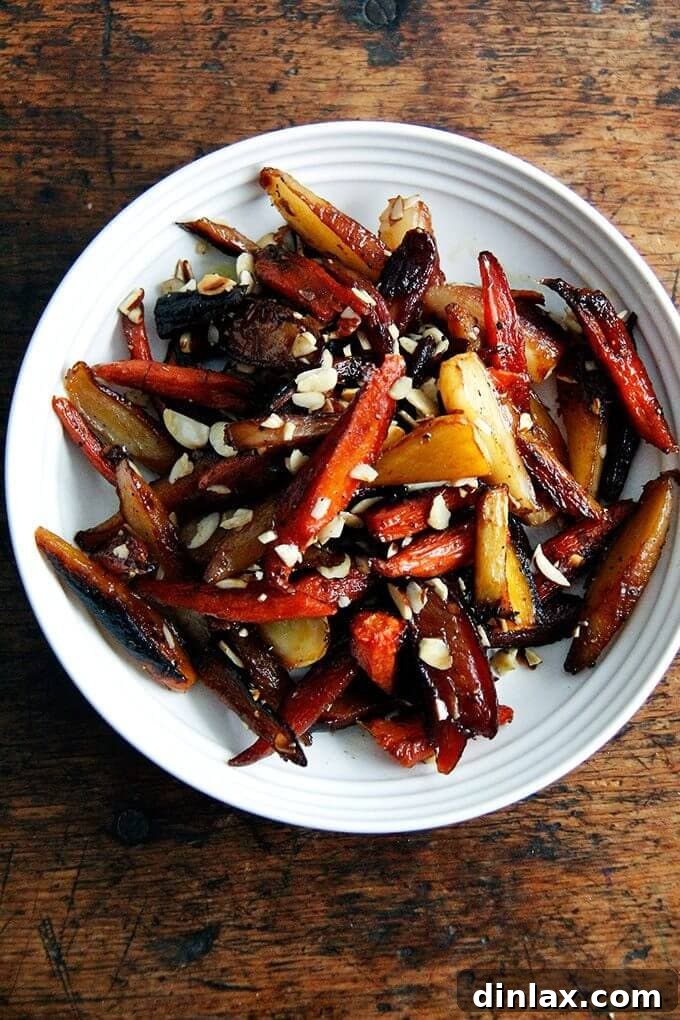
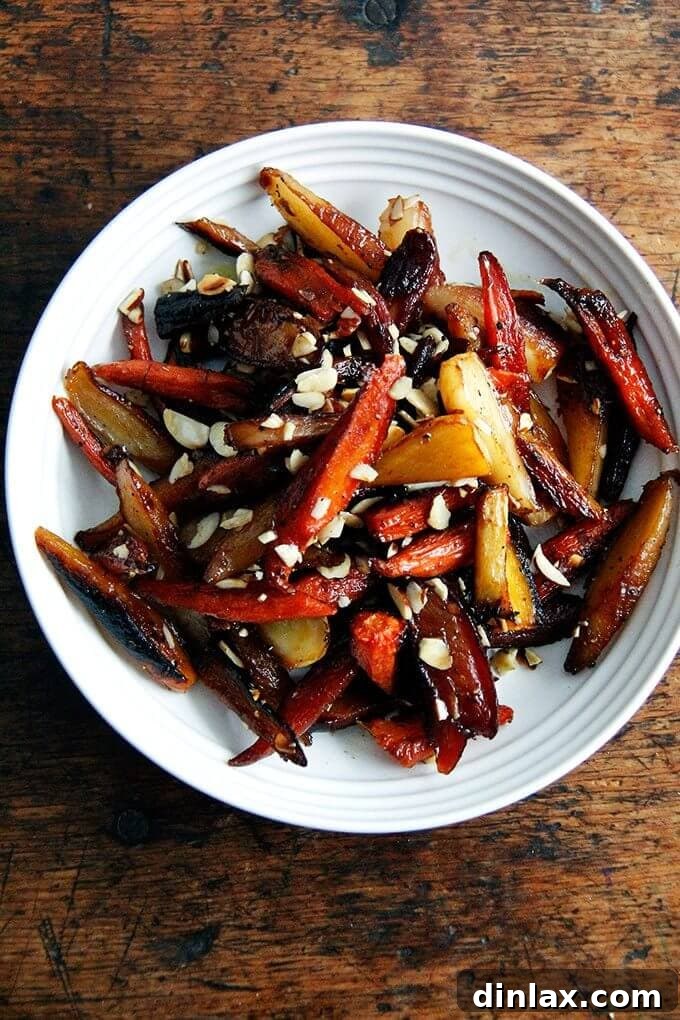
But the true star that solidified my adoration for this cookbook is the recipe for Twice-Roasted Carrots with Honey and Almonds, the very dish featured here today. These aren’t just any roasted carrots; they undergo a transformative process. After their initial roast in the oven, they bathe in a tangy vinegar dressing, then return for a second roast, generously coated in butter and honey. The results are utterly spectacular. I remember setting the finished dish on the kitchen table before heading out for errands. While I was out, I received a text from my husband that read: “I ate all of the carrots…sorry. They were so delicious.” This recipe, like the mushrooms, is also designed to serve four. His inability to resist them speaks volumes about their incredible flavor.
The Practical Magic of Seasonal Cooking
As someone who frequently finds her kitchen overflowing with a bounty of CSA carrots, potatoes, kale, turnips, radishes, and beets, I deeply appreciate a cookbook organized by season. Six Seasons has become an invaluable resource for me, providing creative and delicious ways to utilize whatever fresh produce arrives each week. If you too find yourself navigating the delightful challenge of a CSA box, or if you simply possess a profound love for cooking with fresh, seasonal ingredients, I cannot recommend this book enough.
Beyond the innovative recipes, McFadden’s “Words to Cook By” offer profound insights that empower home cooks. He advises, “Build layers into your dish, like you’re making nachos. Hide things on the bottom. Sprinkle things on top.” This encourages a thoughtful approach to texture and flavor, adding depth and surprise to every bite. Even more liberating is his encouragement not to be a “slave to a recipe,” but rather to “add different herbs, use a new spice, omit something you don’t like—you’re in charge.” This philosophy fosters confidence and creativity, transforming cooking from a task into an art form.
My journey with Six Seasons is far from over. I currently have over a dozen other recipes flagged, eager to explore them. These include the “best almonds ever”—brined and roasted to perfection, a vibrant beet slaw with pistachios and raisins, a comforting cauliflower ragu, a light and refreshing raw cauliflower “couscous” salad, and savory cauliflower steaks topped with provolone and pickled peppers. The possibilities seem endless, and my heart truly races at the thought of each new culinary adventure. But for now, let’s savor the magic of these incredible twice-roasted carrots.
Twice-Roasted Carrots: A Step-by-Step Culinary Journey
Here’s a visual play-by-play, guiding you through the creation of these unforgettable twice-roasted carrots, a dish that perfectly embodies Joshua McFadden’s philosophy of balancing flavors and textures to achieve that coveted “potato chip effect.”
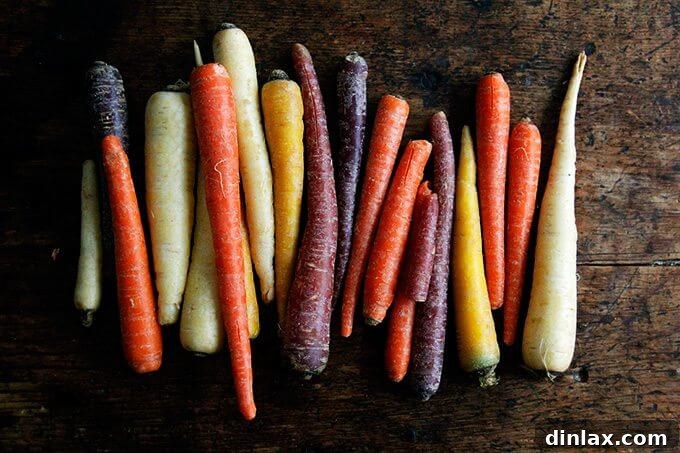
Begin by selecting 1½ to 2 pounds of fresh, vibrant carrots. Peel them thoroughly to remove the outer skin and trim both ends for a clean presentation. This ensures a consistent texture and allows the flavors to penetrate evenly.
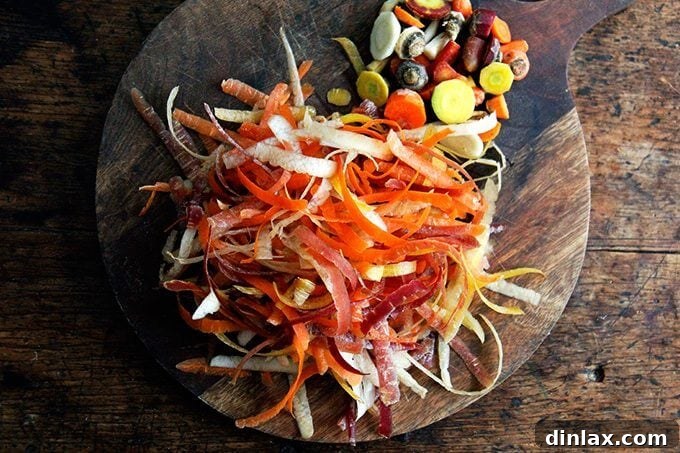
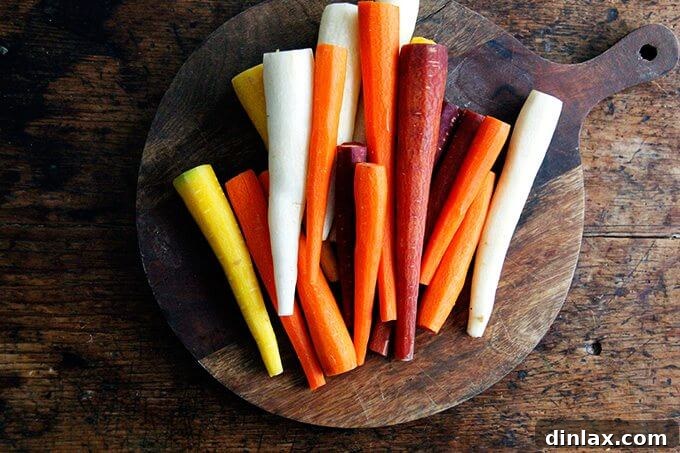
Once peeled and trimmed, gently rub the carrots with a generous drizzle of extra-virgin olive oil. This not only helps them achieve that beautiful char but also enhances their natural sweetness and prevents sticking to the baking sheet.
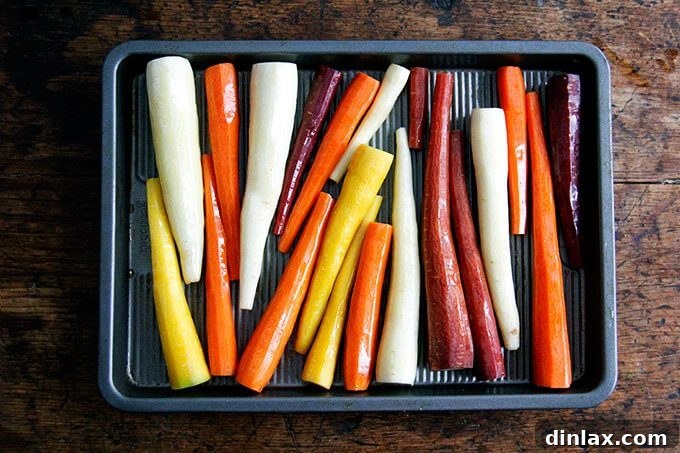
Spread the oiled carrots on a rimmed baking sheet. Roast them in a hot oven (475°F) until they are very dark brown, even slightly burnt around the edges. This initial high-heat roast is crucial for developing deep, complex flavors and a pleasing char, without making them fully tender yet. It’s this “burnt” aspect that adds incredible depth. (If your oven runs cooler, like mine sometimes does, this step might take a bit longer, so adjust cooking time until they achieve that perfect charred look on all surfaces).
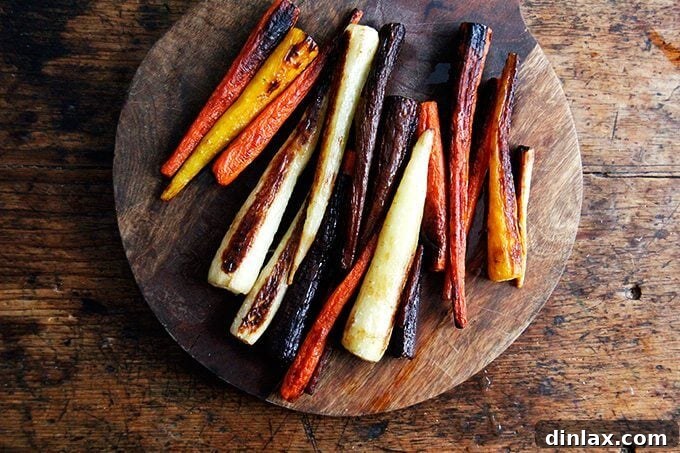
Allow the carrots to cool slightly until they are comfortable enough to handle. Then, using a sharp knife, slice them on a deep, sharp angle into ½-inch-thick pieces. This angled cut not only looks elegant but also creates more surface area for the next steps to absorb flavor.
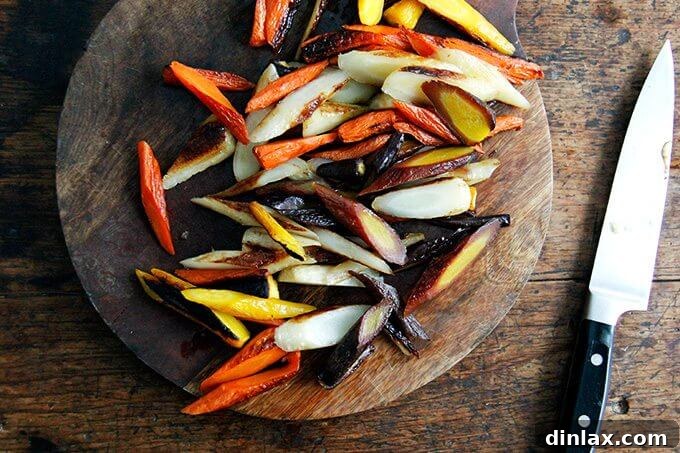
Transfer the sliced carrots to a large bowl and the secret weapon: vinegar. Add 2 tablespoons of white wine vinegar or white balsamic vinegar. This vinegar bath is pivotal, infusing the carrots with a bright tanginess that beautifully cuts through their sweetness and the richness of the butter and honey to come. Toss gently to ensure every piece is coated.
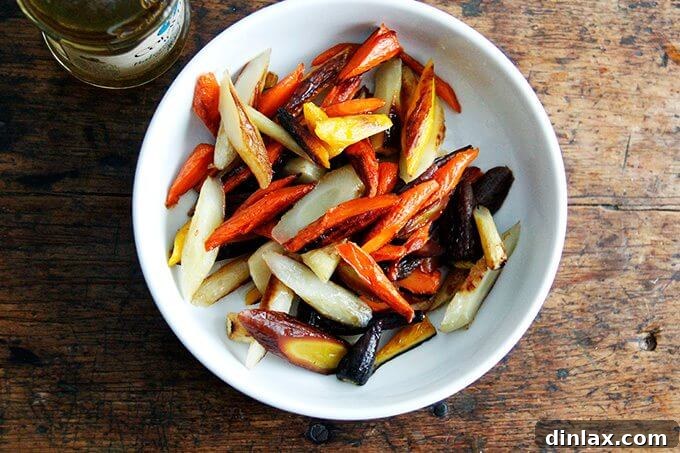
Season the carrots generously with kosher salt and, crucially, lots of freshly ground black pepper. The pepper adds a wonderful warmth and subtle bite that elevates the entire dish. Allow them to sit for about 5 minutes, giving the carrots ample time to absorb the acidic notes of the vinegar and the seasoning.

Spread the carrots back onto the baking sheet. Distribute 2 tablespoons of unsalted butter, cut into small pieces, evenly over them. Then, drizzle 2 tablespoons of honey or maple syrup (I often opt for maple syrup for its distinct flavor profile) over the entire batch. This creates a luscious, sweet, and savory glaze that will caramelize beautifully during the second roast.
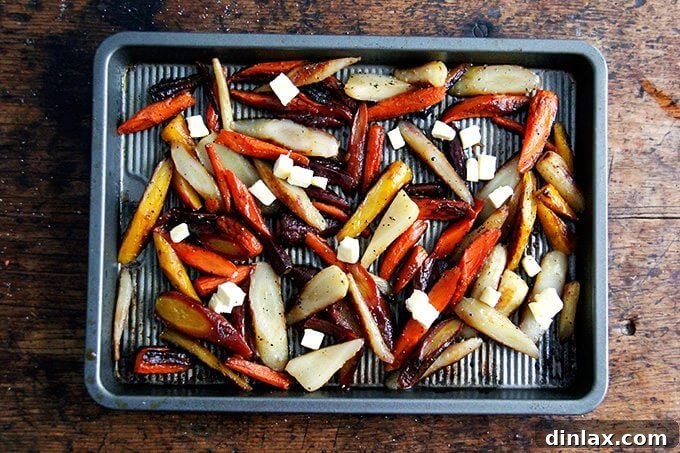
Return the baking sheet to the oven, reducing the temperature to 300°F. Roast again until the carrots are fully tender and the butter and honey have melted and caramelized into a “lovely mess,” as McFadden describes it. This typically takes 5 to 7 minutes, but keep an eye on them, as oven temperatures can vary. You’re looking for a rich, sticky glaze. (Again, for smaller ovens, this step might require a bit more time to achieve that perfect caramelization.)
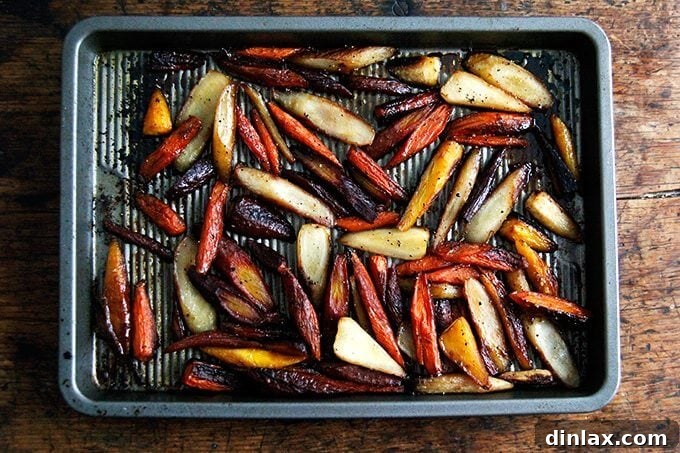
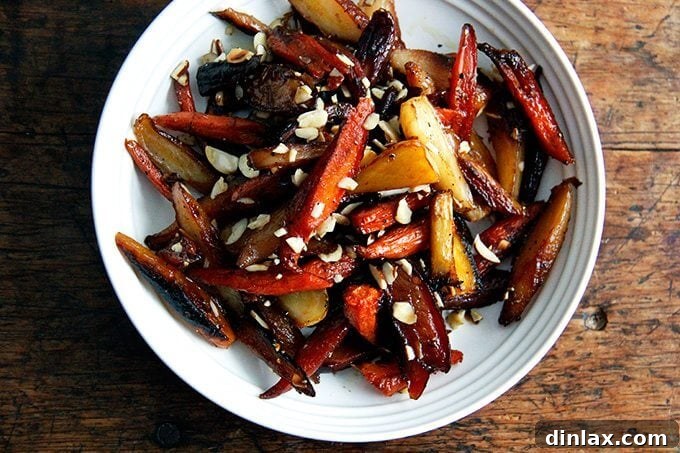
Once done, scrape all the delectable carrots, along with any caramelized bits from the pan, into a serving bowl. Taste and adjust the seasoning with a touch more vinegar, salt, or pepper if needed to hit that perfect balance. Finally, crown this glorious dish with ½ cup of toasted and chopped almonds. The almonds add a delightful crunch and nutty finish, completing McFadden’s signature “tension” of flavors and textures. Serve warm and watch them disappear!
Print
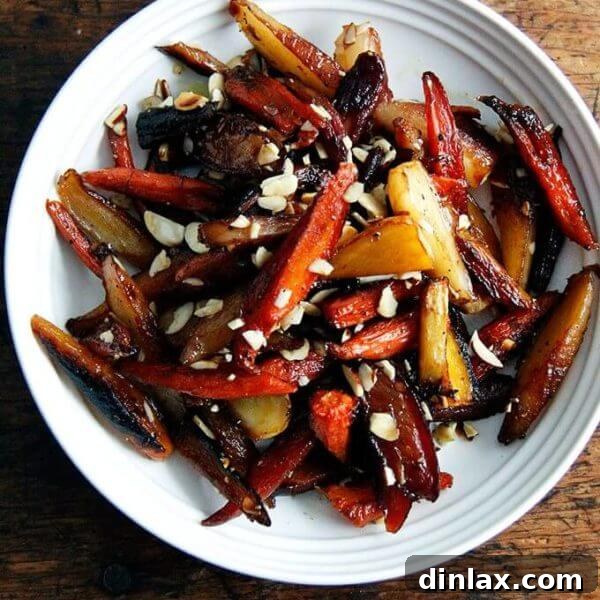
Twice-Roasted Carrots with Honey and Almonds: A Six Seasons Recipe
5 Stars 4 Stars 3 Stars 2 Stars 1 Star
4.8 from 8 reviews
Author: Alexandra Stafford
Total Time: 1 hour 15 minutes
Yield: 2 to 4 as a delicious side dish 1x
Description
This exquisite Twice-Roasted Carrots recipe, inspired by Joshua McFadden’s celebrated cookbook Six Seasons, transforms humble carrots into a sensational side dish. Perfect for any meal, these carrots are roasted to a beautiful char, then bathed in a tangy vinegar, and finally caramelized with butter and honey (or maple syrup). It’s a dish so good, it might just disappear before it hits the table! Ideal for seasonal cooking and maximizing vegetable flavor.
A note on carrots: Though I regrettably skipped my winter CSA this year, I’ve been delighting in using whole 2-lb bags of rainbow carrots for this recipe, often exceeding the suggested 1.5 pounds to ensure there’s enough to go around (or at least, enough for a second helping!).
Regarding almonds: If using pre-sliced almonds, you might find ½ cup to be a bit much; start with about ¼ cup and add more to your preference for texture and nuttiness. For an extra special touch, I’ve previously used roasted Marcona almonds, which add a wonderfully rich and buttery flavor profile to the finished dish.
For an added flavor boost: If you’ve previously made the homemade dukkah from my other recipes, a light sprinkling over these warm roasted carrots adds an incredibly aromatic and crunchy layer that perfectly complements their sweet and savory notes. It’s highly recommended!
Ingredients
- 1½ to 2 pounds carrots, thoroughly trimmed and peeled, kept whole for the first roast
- Extra-virgin olive oil, for coating
- 2 tablespoons white wine vinegar or white balsamic vinegar
- Kosher salt and an ample amount of freshly ground black pepper, to taste
- 2 tablespoons unsalted butter, cut into small, even pieces
- 2 tablespoons honey or pure maple syrup (my preferred alternative)
- ½ cup almonds, toasted and coarsely chopped (refer to notes for sliced almond adjustments)
Instructions
- Preheat your oven to a blazing 475°F (245°C) to ensure a strong initial char.
- On a large, rimmed baking sheet, arrange the whole, peeled carrots. Drizzle them with approximately one tablespoon of extra-virgin olive oil and roll them thoroughly to ensure each carrot is evenly coated. Roast the carrots in the preheated oven until they develop a very dark brown color, with some edges even appearing slightly charred, but they should not yet be fully tender. This typically takes between 10 to 12 minutes. Chef’s Note: For those with smaller or less powerful ovens (like my Waring oven, which rarely exceeds 400ºF/200°C), this initial roasting phase may extend to 30 to 45 minutes. The key is to roast until the carrots appear nearly charred on most surfaces, indicating deep flavor development. After this stage, leave your oven on but reduce its temperature to 300°F (150°C).
- Once the carrots are cool enough to safely handle, slice them on a sharp angle into ½-inch-thick pieces. Transfer these slices to a large mixing bowl. Add the white wine or white balsamic vinegar, season generously with kosher salt and a significant amount of freshly ground black pepper, then toss everything together to thoroughly coat the carrots. Allow the carrots to rest for 5 minutes, giving them time to fully absorb the bright, tangy notes of the vinegar.
- Spread the seasoned carrots back onto the baking sheet, ensuring they form an even layer. Evenly distribute the small pieces of unsalted butter over the carrots, then drizzle the honey or maple syrup over the entire sheet. Return to the oven and roast at 300°F (150°C) until the carrots are completely tender and the butter and honey have melted down to create a wonderfully sticky, caramelized glaze—a truly “lovely mess.” This second roast usually takes 5 to 7 minutes. Chef’s Note: Again, if you’re using a smaller or less powerful oven, this step may take longer. Continue cooking until you achieve that perfect, glistening caramelization. Carefully scrape all the carrots and the delicious pan drippings into a serving bowl. Taste and adjust the seasoning with additional vinegar, salt, or pepper as needed to perfect the flavor balance. Finally, top with the toasted and chopped almonds. Serve warm and enjoy!
- Prep Time: 15 minutes
- Cook Time: 1 hour
- Category: Side Dish, Vegetable
- Method: Oven Roasting, Caramelizing
- Cuisine: Modern American, Vegetable-Focused