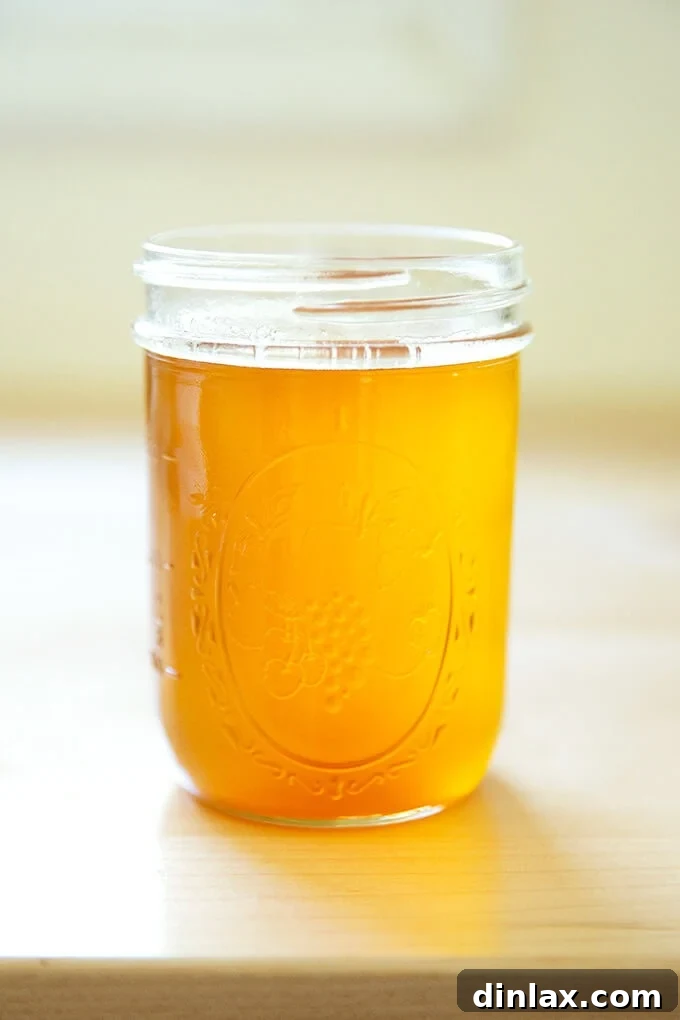
The Golden Elixir: Your Essential Guide to Homemade Ghee
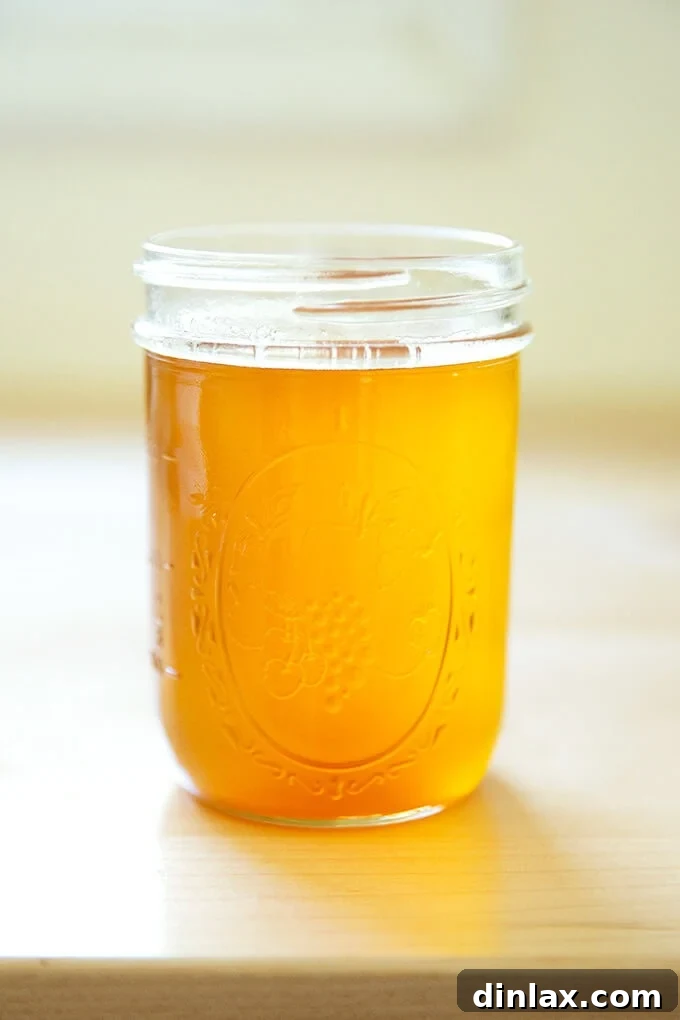
In the vibrant culinary landscape of India, few ingredients command as much reverence as ghee. Often referred to as “liquid gold,” this luxurious clarified butter is celebrated for its rich, nutty flavor and incredible versatility. As Priya Krishna eloquently states in her acclaimed cookbook, Indian-ish, when faced with the choice between ghee and olive oil for Indian dishes, “Ghee. Always ghee. There is nothing in the world that makes Indian food taste better than the rich, nutty flavor of ghee.” It’s a sentiment that resonates deeply with anyone who has experienced the transformative power of this ancient fat.
While Priya offers a delightful encouragement, suggesting one simply “melts a stick of butter, turns off the heat, skims the white stuff off the top, and you’ll be left with clear ghee,” the truth is, unlocking ghee’s full potential involves a slightly more nuanced process. However, fear not, for making authentic, flavorful ghee at home is remarkably simple and yields a product far superior to most store-bought varieties. This comprehensive guide will walk you through the essential steps, explaining the science, the benefits, and the sheer joy of crafting your own golden elixir.
Understanding Ghee: The Difference from Clarified Butter
Before diving into the “how-to,” it’s crucial to understand what truly makes ghee distinct from its close cousin, clarified butter. The process of clarifying butter involves heating butter to separate its components: water evaporates, and the milk solids (proteins and lactose) coagulate and are then skimmed or strained away. What remains is pure butterfat, known as clarified butter.
Ghee takes this process a significant step further. After the initial clarification, the butterfat continues to gently simmer. During this additional cooking stage, the remaining milk solids at the bottom of the pan begin to caramelize and brown. This subtle browning is the secret to ghee’s characteristic nutty, toasty flavor and rich aroma. It’s this carefully controlled caramelization that transforms simple butterfat into the complex, flavorful ingredient cherished in Indian and Middle Eastern cuisines. The result is a more intensely flavored, aromatic, and shelf-stable fat with a distinctly golden hue.
Why Ghee Deserves a Place in Your Kitchen: Culinary and Wellness Benefits
Ghee’s popularity has surged beyond traditional culinary circles, becoming a darling of the wellness world. This widespread appeal stems from a combination of its unique properties and numerous health advantages.
The Culinary Appeal: Elevating Your Cooking
For chefs and home cooks alike, ghee offers several compelling reasons to embrace it:
- High Smoke Point: One of ghee’s most significant culinary advantages is its exceptionally high smoke point, typically between 450-485°F (232-250°C). Because the milk solids and water have been removed, ghee can withstand much higher temperatures than regular butter (which smokes around 302-350°F or 150-177°C) without burning or breaking down. This makes it ideal for high-heat cooking methods such as sautéing, stir-frying, deep-frying, and roasting, imparting flavor without producing harmful free radicals.
- Rich, Nutty Flavor: The controlled browning of milk solids gives ghee a complex, toasted, and slightly sweet flavor profile that regular clarified butter lacks. This unique taste adds an incredible depth and richness to any dish, from simple scrambled eggs to elaborate curries. It’s not just for Indian food; ghee can enhance roasted vegetables, seared meats, popcorn, and even baked goods.
- Versatility: Ghee’s robust flavor and stability make it incredibly versatile. Use it as a cooking fat, a spread on toast, a drizzle over cooked grains, or a base for sauces. Its ability to marry with various flavor profiles makes it a staple for diverse culinary applications.
The Wellness Wave: Ghee’s Health Advantages
The wellness community has embraced ghee, particularly those following dairy-free, Paleo, or Whole30 diets, for its perceived health benefits:
- Lactose and Casein-Free: For many individuals with dairy sensitivities, regular butter can cause digestive discomfort due to its lactose (milk sugar) and casein (milk protein) content. The ghee-making process effectively removes these problematic milk solids, leaving behind almost pure butterfat. This means that many people who are lactose intolerant or sensitive to casein can enjoy ghee without adverse reactions, making it a great dairy-free fat alternative.
- Rich in Fat-Soluble Vitamins: Ghee is a natural source of fat-soluble vitamins, including Vitamin A, D, E, and K. These vitamins are crucial for various bodily functions, such as immune support, bone health, vision, and antioxidant protection. The concentration of these vitamins can be even higher in ghee made from grass-fed butter.
- Contains Butyrate: Ghee is a significant source of butyric acid (or butyrate), a short-chain fatty acid known for its anti-inflammatory properties and its role in supporting gut health. Butyrate is a primary energy source for the cells lining the colon, contributing to a healthy digestive tract.
- Healthy Fats: While primarily saturated fat, ghee also contains beneficial monounsaturated and polyunsaturated fats. When made from grass-fed butter, it can also contain Conjugated Linoleic Acid (CLA), which has been linked to potential health benefits like reducing inflammation and promoting fat loss.
- Ayurvedic Significance: In Ayurveda, the ancient Indian system of medicine, ghee is considered a sacred and medicinal food. It is believed to promote digestion, boost immunity, enhance memory, and even possess rejuvenating qualities. It’s often used in Ayurvedic cooking and traditional remedies to balance the body’s doshas.
With such a compelling list of benefits, it’s clear why ghee has become a culinary and wellness superstar. And the best part? Making it yourself is incredibly rewarding and ensures you control the quality of your ingredients.
How to Make Homemade Ghee: A Simple Step-by-Step Recipe
Making ghee is less about precise measurements and more about observation. With just one ingredient and a little patience, you’ll have a jar of golden goodness ready for your kitchen.
Homemade Ghee: Liquid Gold in Minutes
Transform ordinary butter into extraordinary ghee with this easy step-by-step guide. Perfect for high-heat cooking, enhancing flavors, and catering to dairy sensitivities.
- Author: Alexandra Stafford
- Prep Time: 1 minute
- Cook Time: 5 to 7 minutes
- Total Time: 10 minutes
- Yield: Approximately 2 cups (from 1 lb. butter)
- Category: Sauce, Staple, Condiment
- Method: Stovetop
- Cuisine: Indian, Global
This recipe provides a quick and efficient method for creating homemade ghee. By cooking butter over medium-high heat for a brief period, you achieve that desirable nutty flavor and clear liquid gold without extended simmering times. Ideal for enhancing the flavor of Indian dishes and versatile for various culinary uses.
Ingredients:
- 1 lb. (4 sticks) unsalted butter (high-quality, grass-fed butter is recommended for best flavor and nutritional profile)
- Cheesecloth (essential for straining)
- Fine-mesh sieve
- Heat-proof glass jar or container for storage
Instructions:
-
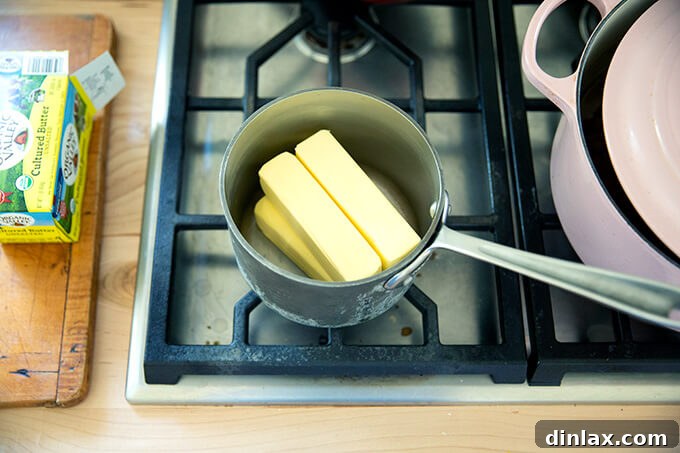
Prepare Your Butter: Begin by unwrapping your 1 pound of unsalted butter and placing it into a medium-sized, heavy-bottomed saucepan. The heavy bottom is crucial here as it helps distribute heat evenly and prevents the milk solids from scorching too quickly at the bottom of the pan. Unsalted butter is preferred as it gives you complete control over the final salt content of your dishes when you cook with the finished ghee.

-
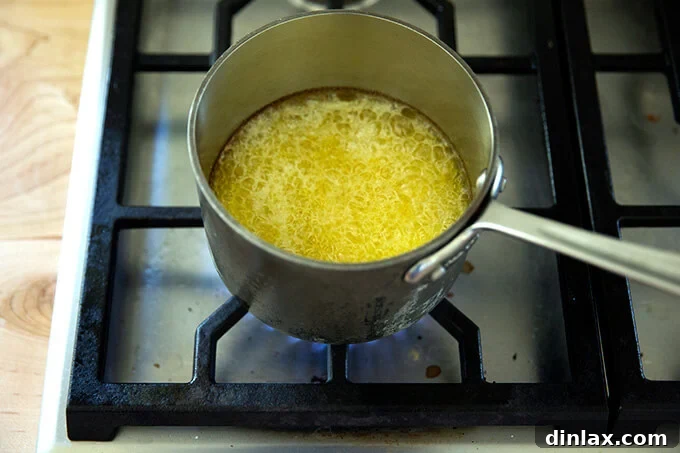
Melt and Simmer: Place the saucepan over medium to medium-high heat. Allow the butter to melt completely. As it melts, it will begin to foam and then bubble. Adjust the heat to maintain a steady, gentle simmer. You want the butter to bubble actively, but not so vigorously that it splatters excessively or risks burning too quickly. During this stage, the water content in the butter will evaporate, and the milk solids will begin to separate and settle at the bottom of the pan. Within approximately five minutes, you will start to see the butter clarify, with a yellowish liquid appearing beneath the white foam.
-
Watch for the Golden Hue and Nutty Aroma: Continue to gently simmer the butter. This is where ghee distinguishes itself. Within another two to three minutes (totaling 5 to 7 minutes of simmering time), you should observe a distinct brown rim forming around the top edges of the bubbling butter. More importantly, peek past the foam: the milk solids at the bottom of the pan will transform from white to a beautiful golden brown. Concurrently, a delightful, rich, nutty aroma will begin to fill your kitchen. This is your primary indicator that the ghee is just about done. The goal is golden brown, not dark brown or black, as burnt solids will impart a bitter taste. Remove the pan from the heat immediately at this point.
-
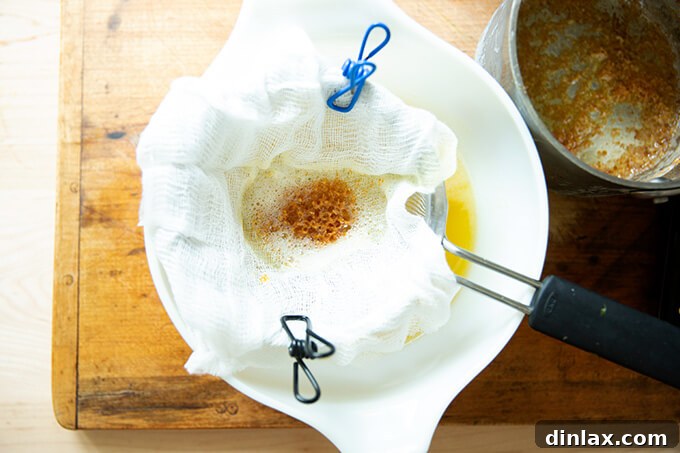
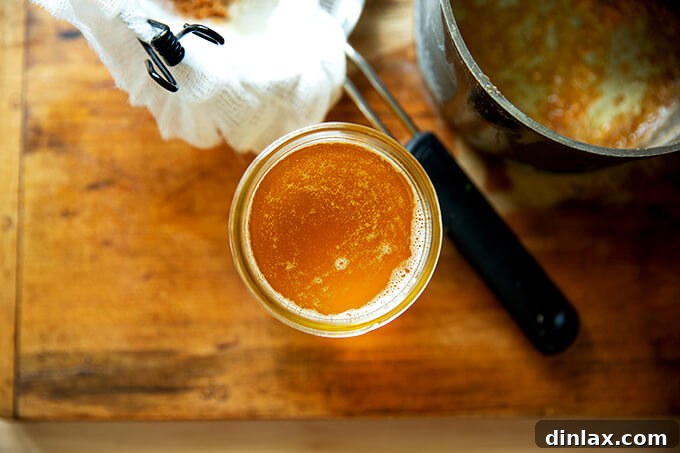
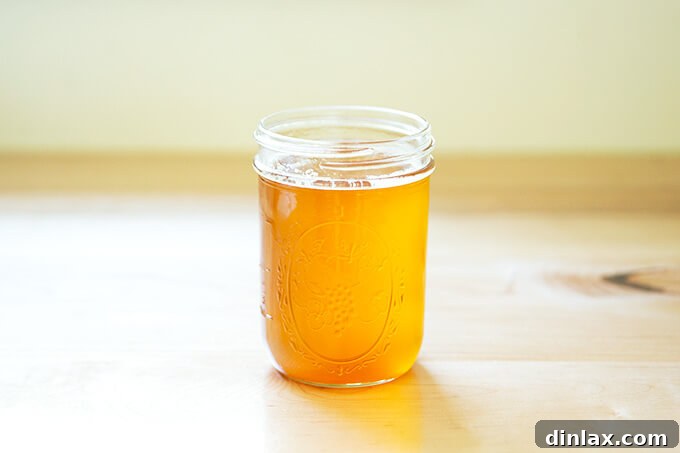
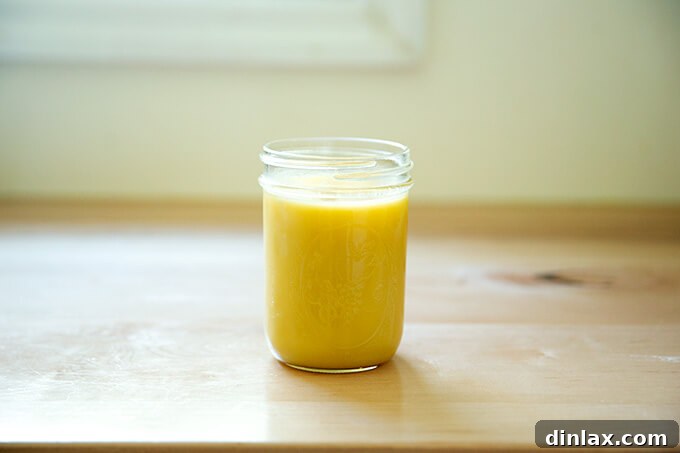
Strain the Liquid Gold: Carefully set up your straining station. Line a fine-mesh sieve with two or three layers of cheesecloth. Place the sieve over a clean, heat-proof glass jar or container. Slowly and carefully pour the hot ghee through the cheesecloth-lined sieve. The cheesecloth and sieve will capture all the browned milk solids, leaving you with perfectly clear, golden-hued ghee. Be mindful of the hot liquid.
-
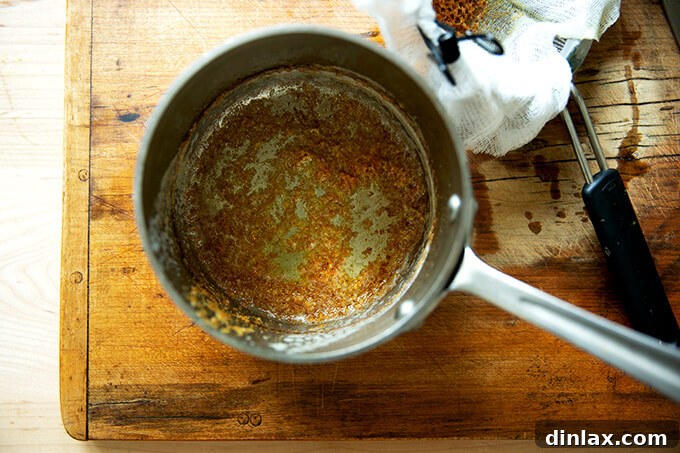
Discard Solids: The dark, browned bits collected in the cheesecloth and any residue clinging to the bottom of your saucepan are the milk solids. These have served their purpose in flavoring the ghee and should now be discarded. Do not include them in your finished ghee, as they can accelerate spoilage.
-
Cool and Store: Allow the newly made ghee to cool completely to room temperature in its glass jar. As it cools, it will naturally solidify into a beautiful, grainy, golden-yellow consistency, much like soft butter. Once fully cooled and solidified, cover the jar tightly. Thanks to the removal of moisture and milk solids, which are typically responsible for spoilage, homemade ghee has an impressive shelf life. It can be stored at room temperature in a cool, dark place for several months (up to 3-6 months) or refrigerated for up to a year, maintaining its freshness and flavor.
Tips for Perfect Ghee Every Time & Troubleshooting
While making ghee is straightforward, a few tips can help ensure your liquid gold turns out perfectly:
- Start with Quality Butter: The flavor of your ghee is only as good as the butter you start with. Opt for high-quality, unsalted butter, preferably grass-fed, for a richer taste and deeper color.
- Don’t Rush It, But Don’t Overcook It: The magic happens in those few minutes when the milk solids brown. While you want to maintain a steady simmer, resist the urge to crank up the heat too high. Conversely, be vigilant in the final stages; ghee can go from perfectly golden to burnt in a matter of seconds.
- Use a Heavy-Bottomed Pan: This ensures even heat distribution, preventing the milk solids at the bottom from scorching before the rest of the butter is ready.
- Proper Storage is Key: Always use a clean, dry spoon to scoop out ghee to prevent introducing moisture or contaminants, which can shorten its shelf life. Keep it in an airtight container.
- Troubleshooting – Too Dark/Burnt: If your ghee turns too dark or smells burnt, unfortunately, it’s best to discard it. Burnt milk solids impart a bitter flavor. Next time, reduce the heat slightly or remove it from the heat a little sooner.
- Troubleshooting – Not Nutty Enough: If your ghee is clear but lacks that distinctive nutty flavor, it means the milk solids didn’t brown sufficiently. Simmer it for another minute or two next time, keeping a close eye on it.
Beyond Indian Cuisine: The Versatility of Ghee
While ghee is synonymous with Indian cooking, its applications are incredibly diverse. Don’t limit its use to curries and dals; integrate it into your everyday cooking for an instant flavor upgrade:
- High-Heat Cooking: Its high smoke point makes it excellent for sautéing vegetables, searing meats (like steak or chicken), or even shallow-frying fish.
- Flavor Enhancer: Drizzle melted ghee over steamed vegetables, roasted potatoes, popcorn, or cooked rice and quinoa for an instant boost of rich flavor.
- Baking: Substitute ghee for butter or oil in certain baking recipes (especially savory ones) for a unique, slightly nutty undertone.
- Breakfast Booster: Stir a teaspoon into your morning coffee or tea for a creamy, energizing start (often called “bulletproof coffee”), or use it to scramble eggs.
- Spreading: While it has a different texture, ghee can be spread on toast or bread for a distinctive taste.
Conclusion: Embrace the Golden Goodness
Making ghee at home is a simple yet profoundly rewarding culinary endeavor. In less than 15 minutes, you can transform humble butter into a versatile, flavorful, and health-conscious fat that will revolutionize your cooking. From its ancient roots in Ayurvedic tradition to its modern-day status as a wellness superfood, ghee truly is a golden elixir. So, grab a pound of butter, set aside a few minutes, and prepare to embark on a delightful journey into the world of homemade ghee. Your taste buds and your kitchen will thank you.