The Ultimate Picnic Delight: Homemade Focaccia Sandwiches with Roasted Red Peppers and Herbed Goat Cheese
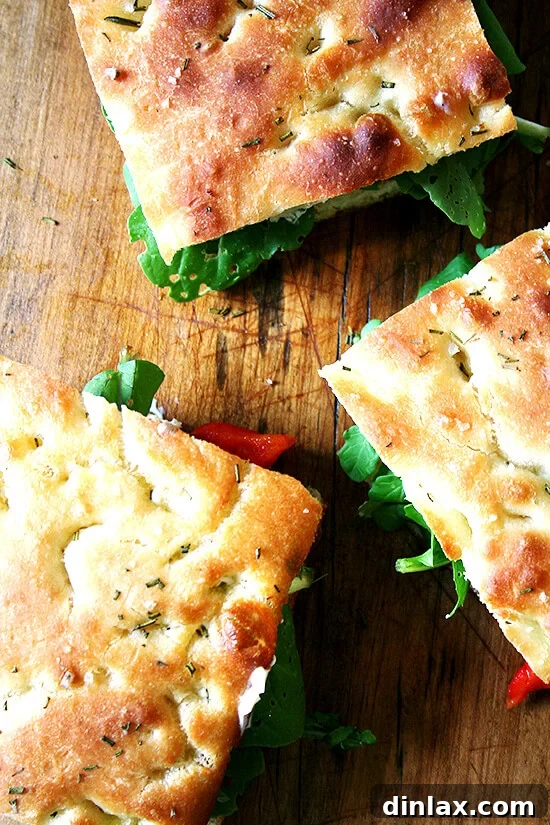
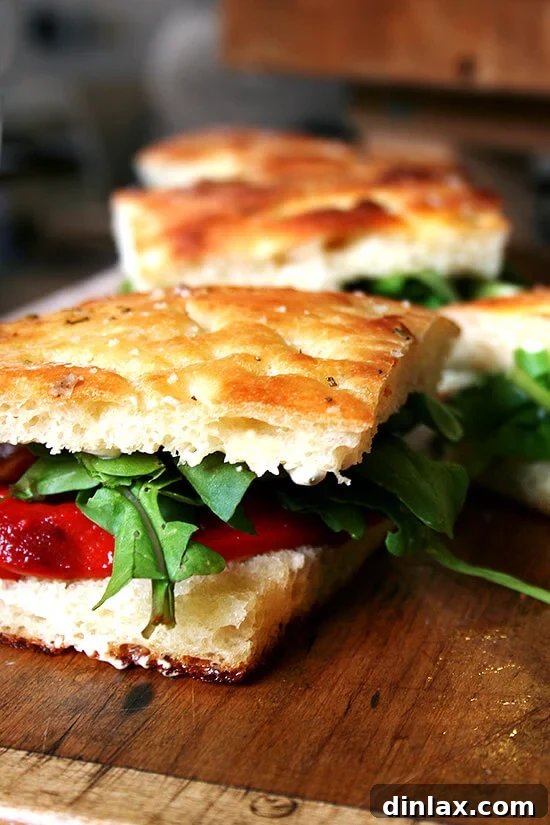
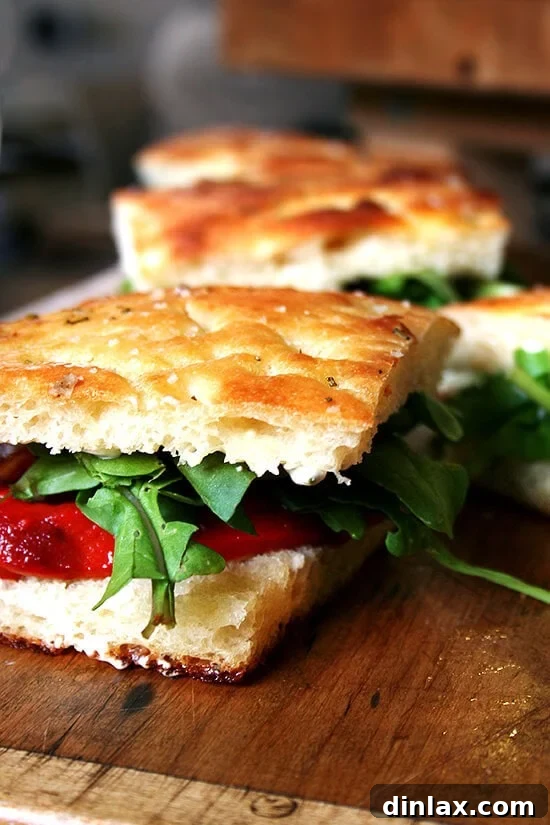
Imagine being the undeniable star of your next potluck picnic, all thanks to a simple yet exquisite sandwich. This isn’t just any sandwich; it’s a culinary masterpiece featuring fluffy, golden homemade focaccia bread generously layered with sweet, smoky roasted red peppers, vibrant peppery arugula, and a luscious herbed goat cheese spread. Preparing these delightful sandwiches is a surefire way to earn eternal love and admiration from your friends and family. This comprehensive guide will walk you through each meticulous step, from baking the perfect focaccia from scratch to crafting the ideal fillings, ensuring your sandwiches are an unforgettable hit that will leave everyone craving more.
While the combination of tender roasted red peppers, crisp fresh arugula, and a creamy herbed goat cheese creates a particularly harmonious and inviting flavor profile that’s perfect for springtime gatherings and warm weather, the inherent versatility of homemade focaccia truly shines throughout the entire year. As the seasons change and peak produce becomes available, you could effortlessly adapt this concept. For instance, later in the summer, when ripe, juicy tomatoes are at their absolute peak, you could easily transform this into a classic Caprese salad sandwich. Picture thick, sun-ripened slices of mozzarella, garden-fresh tomatoes, and fragrant basil leaves delicately nestled between two soft pieces of your homemade focaccia – a truly equally well-received and seasonally appropriate treat that’s guaranteed to impress.
Crafting the Perfect Base: An Ode to Homemade Focaccia
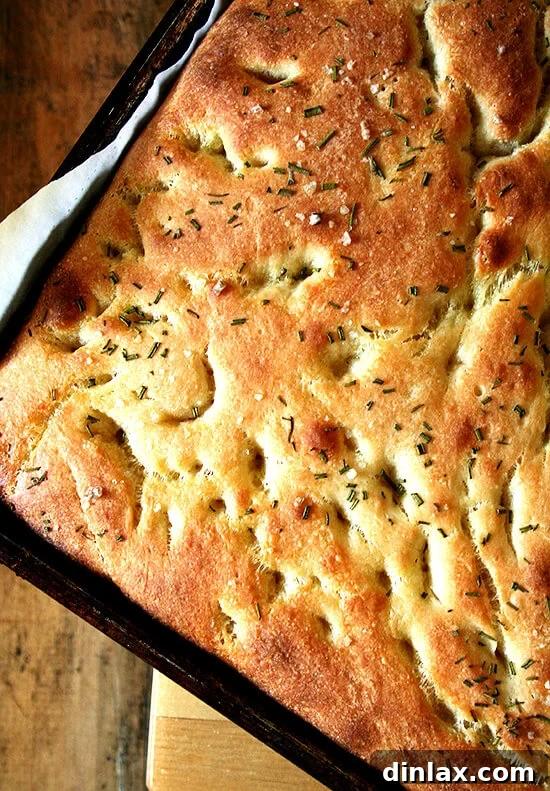
The very foundation of any truly great sandwich is, without a doubt, the bread. For these show-stopping culinary creations, nothing compares to the fresh, warm embrace of homemade focaccia. Its signature airy texture, infused with rich extra-virgin olive oil, and its delightfully crisp, dimpled crust provide the ideal canvas for a wide array of delicious fillings. This particular focaccia recipe has been a personal favorite and a staple in many kitchens for over six years, ever since it was first brilliantly featured in Fine Cooking magazine. It stands as a testament to its unwavering reliability and the consistently delicious, crowd-pleasing outcome it delivers every single time.
Why Homemade Focaccia Elevates Every Occasion
Beyond the immense satisfaction and therapeutic joy of baking your own bread, homemade focaccia offers unparalleled taste and a wonderfully unique texture that simply cannot be replicated by store-bought alternatives. When you bake at home, you have complete control over the quality of your ingredients, from selecting the finest extra-virgin olive oil that imparts its signature richness to choosing the perfect sea salt that gracefully sprinkles its surface, adding bursts of flavor. The irresistible aroma alone, as it slowly bakes to a golden-brown perfection, wafting through your kitchen, is often enough to convince anyone that the modest effort involved is not just worth it, but entirely fulfilling. It’s a comforting, rustic bread that effortlessly elevates any meal, transforming a casual picnic or family gathering into a truly special culinary event.
The Peter Reinhart Magic: A Reliable and Rewarding Recipe
This award-winning focaccia recipe is credited to the esteemed baker, Peter Reinhart, a name synonymous with precision and perfection in the world of baking. Like many of his renowned recipes, this focaccia guide is incredibly precise, offering clear, detailed instructions that ensure consistent and excellent results every time you bake. What truly sets this particular recipe apart from some of Reinhart’s more elaborate and often multi-day bread-making creations, which demand extensive fermentation, is its refreshing relative simplicity. It’s ingeniously designed as an “overnighter” recipe, requiring only minutes of active, hands-on preparation the day before baking. This overnight refrigeration period is crucial; it allows for a slow, cold fermentation that masterfully develops incredible depth of flavor and a superior, airy texture without demanding extensive hands-on time. This thoughtful design makes it remarkably accessible even for busy home bakers who might otherwise shy away from bread making. While having a stand mixer streamlines the initial mixing process significantly, Reinhart thoughtfully provides detailed, step-by-step instructions for mixing the dough entirely by hand, ensuring that this fantastic recipe is achievable for everyone, regardless of their kitchen equipment. Trust us, embarking on the journey to make this focaccia is a culinary decision you will absolutely not regret – it’s a guaranteed winner that will quickly become a cherished favorite.
Mastering the Focaccia Dough: A Step-by-Step Guide for Home Bakers
Baking focaccia, while its exquisite appearance might suggest complexity, is an incredibly rewarding experience that is more forgiving than many realize. The journey towards a perfect focaccia begins with combining a handful of simple, high-quality ingredients: unbleached bread flour, precisely measured cold water, a touch of granulated sugar, a measured amount of salt, and a packet of instant yeast. The deliberate use of cold water in this recipe is a clever technique; it is specifically designed to slow down the initial yeast activity during the mixing phase, allowing for a longer, more controlled, and ultimately more flavorful fermentation process overnight in the refrigerator. After the initial mixing, the dough undergoes a fascinating transformation, evolving from a shaggy mixture into a relatively smooth yet still delightfully sticky mass – a consistency often and aptly compared to that of melted mozzarella. This desirable stickiness is a direct indicator of good hydration, which is absolutely crucial for achieving the focaccia’s characteristic open, airy crumb structure.
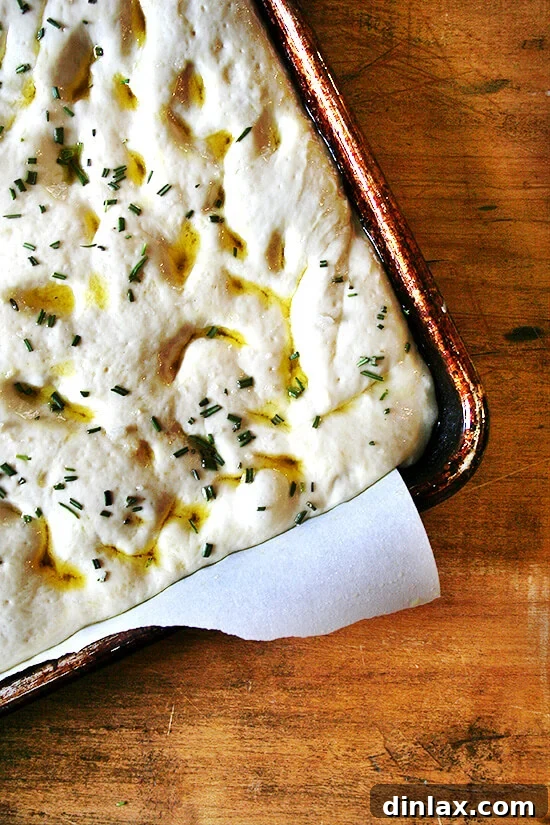
The “stretch-and-fold” technique is a cornerstone of this particular focaccia recipe, a gentle yet highly effective method for developing the vital gluten network within the dough. Unlike the aggressive, prolonged kneading typically associated with many other types of bread making, this technique involves gently stretching the dough and folding it over itself several times. This careful handling effectively builds strength and elasticity in the dough, directly translating into that wonderfully light, airy texture that defines great focaccia. Following its overnight rest in the refrigerator, the dough will have visibly expanded, nearly doubling in size, bubbling with the promise of a delicious, aromatic loaf. An essential step in preparing the baking sheet is to generously coat it with extra-virgin olive oil. This is not merely for preventing the dough from sticking; it actively works to infuse the bottom crust with a deeply golden, irresistibly crispy texture and a rich, fragrant flavor that complements the focaccia perfectly. The iconic dimpling process, where you gently press your fingertips into the dough, serves a dual purpose: it creates those characteristic little hollows that capture and hold pools of olive oil and salt, delivering concentrated bursts of flavor with every bite, and it helps to gently coax the dough into its final shape. Don’t be discouraged if the dough initially resists stretching to fill the pan; brief resting periods allow the gluten to relax, making it much easier to spread and shape. The final rise, where the dough swells majestically to the rim of the pan, is a beautiful and exciting sight, signaling its readiness for the hot oven and the delicious transformation that awaits.
The Versatility of Focaccia: Beyond Sandwiches
While this recipe focuses on creating the perfect sandwich base, the beauty of homemade focaccia lies in its incredible versatility. Enjoy it on its own, torn into pieces and dipped in your finest extra-virgin olive oil and balsamic vinegar. It makes an excellent accompaniment to soups and salads, absorbing flavors wonderfully. You can also use it as a rustic pizza base, topping it with your favorite sauce, cheese, and vegetables. Its robust structure and delightful flavor make it suitable for various culinary applications, proving that a little effort in baking can yield a multitude of delicious possibilities.
The Star Filling: Roasted Red Peppers with Arugula and Herbed Goat Cheese
While the homemade focaccia provides an absolutely perfect, pillowy foundation, the carefully crafted filling is what truly elevates these sandwiches to a gourmet status. The exquisite combination of smoky, subtly sweet roasted red peppers, the invigorating, peppery bite of fresh arugula, and a lusciously creamy, tangy goat cheese spread creates an unforgettable symphony of flavors and textures that dance gracefully on the palate with every single bite.
Unlocking Deep Flavor: The Art of Roasting Red Peppers
Roasting red peppers is a remarkably simple yet profoundly transformative technique that unlocks an incredible depth of flavor, converting ordinary bell peppers into sweet, smoky, and intensely flavorful gems. The process itself is straightforward: it involves carefully charring the peppers directly under a broiler until their skins are completely blackened and blistered. This intense, direct heat not only imparts a beautiful smoky flavor that enhances their natural sweetness but also creates a crucial effect by making the tough outer skin incredibly easy to remove. The essential next step is to immediately transfer these hot, charred peppers to a large bowl and cover it tightly with plastic wrap, allowing them to steam thoroughly. This steaming environment softens the peppers further and, most importantly, loosens their skins significantly, making the peeling process an absolute breeze. It’s a method that truly pays off, as struggling with hot, stubbornly clinging skins is a culinary frustration best avoided by anyone who loves cooking.
During a recent picnic preparation session, a particularly valuable lesson was strongly reinforced: patience truly is a virtue, especially when it comes to roasting and preparing peppers. While the initial steps of broiling and steaming are relatively quick and straightforward, the temptation to rush the subsequent peeling process can often lead to unfortunate charred fingertips, unnecessary frustration, and ultimately, less-than-perfectly peeled results. Instead of attempting to peel the peppers immediately after steaming, I opted for a different approach: I patiently waited until the following morning. This extended steaming and cooling period allowed the peppers to reach a completely cool state, and to my delight, the skins practically slipped off effortlessly with minimal effort. From this enlightening experience forward, planning to roast, steam, and peel peppers a full 24 hours in advance will unequivocally become my standard, go-to strategy. This simple pre-planning transforms a potentially messy and time-consuming task into a remarkably simple and stress-free one, allowing for perfectly prepared peppers every time. These beautifully roasted peppers are not only absolutely ideal for layering into our magnificent focaccia sandwiches but are also wonderfully versatile, capable of enhancing a wide array of other dishes such as vibrant salads, rich pasta dishes, fluffy omelets, savory dips, and so much more, adding a burst of flavor and color wherever they go.
Elevating the Spread: Homemade Herbed Goat Cheese
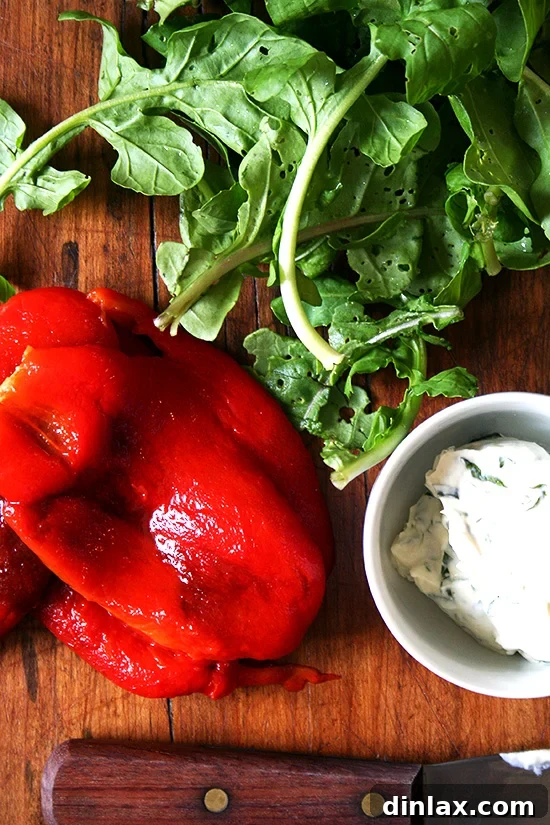
A simple, yet elegantly crafted herbed goat cheese spread adds an absolutely delightful creamy and tangy element that is crucial to the overall balance and deliciousness of these sandwiches. While many convenient store-bought options are available, the experience of crafting your own allows for fantastic customization, ensuring the freshest taste and the perfect texture. For a particularly delicious and slightly sweet version that complements the roasted peppers beautifully, I highly recommend starting with a honey-goat cheese log, such as those readily found at Trader Joe’s. Its inherent sweetness provides a wonderful counterpoint. To transform this firm cheese into an easily spreadable and intensely flavorful component for your sandwiches, simply whip the goat cheese with a selection of fresh herbs of your choice. Fresh basil is a perennially wonderful and classic choice, offering a bright, aromatic lift, but do consider exploring other delightful options like finely chopped chives, aromatic dill, fragrant thyme, or even a nuanced blend of Mediterranean herbs to create entirely new flavor dimensions. To achieve that perfect, lusciously creamy, and airy texture, incorporate about 1/4 cup of crème fraîche, a splash of milk, or a dollop of plain yogurt while you are whipping the cheese. This crucial addition works wonders, transforming the typically firm goat cheese into a smooth, luxurious spread that glides effortlessly onto the delicate surface of your homemade focaccia, ensuring a perfectly even distribution of flavor in every single bite. This delightful and customizable spread not only imparts a tangy, herbaceous kick but also provides a lovely creamy contrast to the other elements of the sandwich, harmoniously tying all the wonderful flavors together.
The Arugula Touch: A Burst of Freshness
Arugula, with its distinct peppery and slightly bitter notes, provides a crucial counterpoint to the richness of the focaccia and the creamy goat cheese, as well as the inherent sweetness of the roasted peppers. Its crisp, delicate texture adds another vital layer of sensory pleasure, making each bite dynamic, refreshing, and incredibly well-balanced. A generous layer of fresh arugula is therefore an essential component for balancing the myriad of flavors and adding a vibrant, appealing green hue to the sandwich, enhancing both taste and visual appeal.
Assembling Your Masterpiece: The Ultimate Sandwich Experience
With your golden, aromatic focaccia perfectly baked, your sweet red peppers expertly roasted and peeled, and your creamy herbed goat cheese lusciously whipped, the final, exciting step is to bring all these delicious components together to create the ultimate sandwich. The inherent beauty and exceptional deliciousness of these sandwiches truly lies in the perfect harmony of their diverse flavors and complementary textures: the tender, airy focaccia provides a comforting embrace, the sweet and smoky roasted peppers offer a burst of rich taste, the creamy and tangy herbed goat cheese delivers a luxurious mouthfeel, and the fresh, peppery bite of arugula adds a vibrant lift. Together, they create a symphony that dances delightfully on the palate.
Tips for Seamless Assembly and Elegant Serving
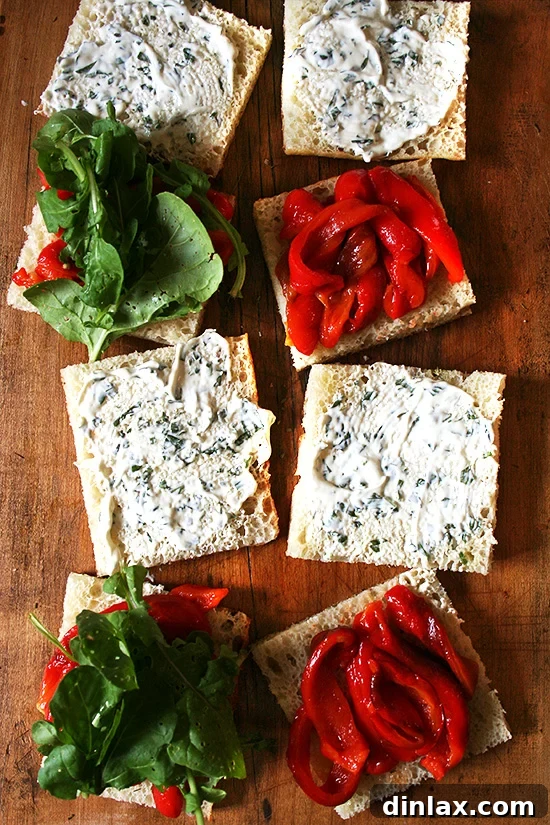
To begin the assembly process, once your magnificent focaccia has cooled completely, simply slice it horizontally into two large, even pieces. Then, depending on your desired serving size, you can cut these halves into individual sandwich portions or leave them larger for family-style serving. Generously spread the flavorful herbed goat cheese on the cut sides of both focaccia halves, ensuring every surface is richly coated. Next, arrange the beautifully roasted red peppers evenly over the bottom focaccia half, creating a vibrant layer. Top this with a generous handful of fresh, clean arugula leaves. Carefully place the top focaccia half over the arugula, pressing gently but firmly to secure all the fillings. Finally, slice the assembled masterpiece into manageable portions using a sharp, serrated knife. These impressive sandwiches are best enjoyed at room temperature, making them exceptionally ideal for potlucks, picnics, and other outdoor gatherings where immediate refrigeration might not be readily available. They are also incredibly versatile, pairing wonderfully with a light side salad, a bowl of fresh seasonal fruit, or even a refreshing gazpacho, elevating any casual meal into a truly special occasion.
Creative Variations and Seasonal Swaps
The inherent beauty and adaptability of homemade focaccia mean that the possibilities for sandwich fillings are truly endless. As previously mentioned, during the glorious peak of summer, consider making a delightful swap: replace the roasted red peppers and arugula with thick, juicy slices of heirloom tomatoes, creamy fresh mozzarella, and a fragrant sprinkle of fresh basil for an exquisite Caprese-inspired sandwich. As autumn arrives, you might experiment with grilled zucchini and tender eggplant slices, perhaps enhanced with a drizzle of balsamic glaze, for a fantastic and seasonal alternative. Don’t hesitate to unleash your culinary creativity and experiment with different types of cheeses, an assortment of seasonal vegetables, or even a flavorful drizzle of homemade pesto to fully customize your focaccia sandwiches to perfectly suit the season, your available ingredients, and your unique personal taste preferences. Each variation offers a new adventure for your palate.
Share the Love, One Delicious Sandwich at a Time
These homemade focaccia sandwiches, laden with sweet roasted red peppers, fresh peppery arugula, and a creamy herbed goat cheese, are far more than just a meal; they are an experience. They beautifully embody the sheer joy and immense satisfaction of homemade cooking, the genuine pleasure of sharing truly delicious food with loved ones, and the simple yet profound delight of impressing others with your newfound culinary skills. By diligently following these detailed recipes and helpful tips, you are now well on your way to creating a truly unforgettable dish that will have everyone not only asking for the recipe but also eagerly requesting them at every future gathering. So, the next time that inviting potluck invitation arrives in your inbox, enthusiastically volunteer to take charge of the sandwiches – and prepare to be absolutely adored forever by all who taste them. Happy cooking and even happier sharing!
Print Recipe
Homemade Focaccia
5 Stars
4 Stars
3 Stars
2 Stars
1 Star
No reviews
- Author: Alexandra Stafford at alexandracooks.com
- Total Time: 11 hours 24 minutes
- Yield: 1 sheetpan
Description
Source: Fine Cooking March 2004
Notes: This recipe for fluffy, airy focaccia bread comes from Peter Reinhart. If you don’t have a stand mixer, refer to the original source for detailed instructions on mixing the dough by hand.
Ingredients
- 1 lb. 9 oz. (5-1/2 cups) unbleached bread flour
- 2-1/2 cups cold water (about 55°F)
- 2 Tbs. plus 1 tsp. granulated sugar (1 oz.)
- 2 tsp. table salt or 3-1/2 tsp. kosher salt (1/2 oz.)
- 1 packet (1/4 oz.) instant yeast (also called quick-rise, rapid-rise, or fast-rising yeast)
- 10 Tbs. extra-virgin olive oil, divided
- Sea salt or kosher salt for sprinkling
Instructions
Mix the dough:
- Prepare the Dough (Day Before Baking): In the large bowl of a stand mixer (using the paddle attachment initially), combine the flour, cold water, sugar, salt, and instant yeast. Mix slowly for about 30 seconds until the ingredients form a shaggy ball around the paddle. Switch to the dough hook and mix on medium-low speed for another 3 minutes.
- Rest and Continue Mixing: Stop the mixer to scrape any dough off the hook. Allow the dough to rest in the bowl for 5 minutes. Then, resume mixing on medium-low for another 3 minutes, until the dough appears relatively smooth. At this stage, the dough will be very sticky, almost resembling melted mozzarella, and will barely hold together if stretched.
- First Oil Coating: Lightly coat a large bowl (one that can accommodate the dough doubling in size) with 1 tablespoon of the extra-virgin olive oil. Transfer the sticky dough to this bowl and rotate it gently to ensure it’s fully coated with the oil.
- Stretch and Fold Technique: Holding the bowl steady with one hand, wet your other hand with water. Grasp a section of the dough, gently stretch it upwards until it’s nearly twice its size, then fold the stretched section back over the rest of the dough. Rotate the bowl a quarter turn and repeat this stretch-and-fold technique. Continue this process two more times, completing a full 360-degree rotation and performing four stretch-and-folds in total. Drizzle another 1 tablespoon of olive oil over the dough and carefully flip it over. Cover the bowl tightly with plastic wrap and refrigerate overnight for at least 8 to 10 hours. This slow, cold fermentation develops complex flavors.
Shape the focaccia:
- Prepare for Shaping (3 Hours Before Baking): Remove the bowl of dough from the refrigerator approximately 3 hours before you plan to bake (adjust to 2 hours on a particularly warm day). The dough should have visibly increased in size, nearly doubling. Line a 13×18-inch rimmed baking sheet with parchment paper or a silicone baking mat, then generously coat the surface with 2 tablespoons of extra-virgin olive oil.
- Transfer the Dough: Gently slide a rubber spatula or dough scraper underneath the dough in the bowl and carefully guide it out onto the center of the prepared baking pan. The dough will naturally deflate slightly under its own weight, expelling some gas while retaining enough internal structure for a beautiful, airy crumb.
- Initial Oil Drizzle: Drizzle another 2 tablespoons of extra-virgin olive oil over the top of the dough. Don’t be concerned if some of the oil runs off onto the pan; it will eventually be absorbed by the focaccia during the rising and baking process.
- First Dimpling and Rest: Begin to gently dimple the entire surface of the dough with your fingertips, working from the center outwards towards the edges of the pan. Press your fingertips straight down to create characteristic hollows while simultaneously pushing the dough outward to spread it across the pan. Initially, you might only be able to cover about half to three-quarters of the pan. If the dough starts to resist, do not force it. Set it aside to rest for 20 minutes; the olive oil on top will prevent a skin from forming.
- Second Dimpling and Final Spread: After the 20-minute rest, drizzle yet another 2 tablespoons of olive oil over the dough’s surface and dimple it again. This time, the dough should be much more relaxed and cooperative, allowing you to push it to almost completely fill the entire 13×18-inch pan. Aim for a thickness of about 1/4 to 1/2 inch. If the dough doesn’t quite reach or stay in the corners, don’t worry; it will naturally expand and fill them as it continues to rise.
- Final Rise and Preheat: Loosely cover the dough with oiled plastic wrap. Place the pan on a wire rack to allow air to circulate evenly around it. Let the dough rise at room temperature until it is about 1-1/2 times its original size and visibly swells to the rim of the pan. This process typically takes 2 to 3 hours, depending on the ambient temperature of your kitchen. Thirty minutes before you plan to bake, preheat your oven to 475°F (245°C).
Bake the focaccia:
- Baking Preparation: Just before placing the focaccia in the oven, gently remove the plastic wrap. Sprinkle a few generous pinches of sea salt or kosher salt evenly over the dimpled surface of the dough.
- Initial Bake: Carefully place the pan in the middle rack of your preheated 475°F (245°C) oven. Immediately reduce the oven temperature to 450°F (230°C). Bake for 15 minutes.
- Rotate and Finish Baking: After 15 minutes, rotate the pan 180 degrees to ensure even baking and browning. Continue baking for another 7 minutes. Check the focaccia; it should be beautifully golden brown on top, and if you carefully lift a corner, the underside should also be golden. If it needs more time, return it to the oven for an additional 1 to 2 minutes and check again.
- Cooling and Serving: Once baked to perfection, remove the focaccia from the oven. Set a wire cooling rack over a sheet of aluminum foil or parchment paper to catch any excess olive oil drippings. Use a metal spatula to carefully release the edges of the dough from the sides of the pan. Slide the spatula under one end of the focaccia and gently wiggle it out of the pan onto the prepared cooling rack. If any olive oil remains in the baking pan, pour it evenly over the focaccia’s surface for extra richness. Carefully peel away and remove the parchment or silicone liner from beneath the focaccia. Allow the focaccia to cool for at least 20 minutes on the rack before slicing and serving. This cooling period is crucial for the internal structure to set.
- Prep Time: 30 minutes
- Cook Time: 9 minutes
Print Recipe
Roasted Red Peppers
5 Stars
4 Stars
3 Stars
2 Stars
1 Star
No reviews
- Author: Alexandra Stafford at alexandracooks.com
- Total Time: 8 hours 20 minutes
- Yield: However many you want (Estimate about 1 pepper for every 1 to 2 people)
Ingredients
- Red bell peppers, as many as desired
Instructions
- Prepare Peppers for Roasting: Preheat your oven’s broiler. Line a baking sheet with parchment paper for easy cleanup, or lightly grease it with a little olive oil. Wash the red bell peppers thoroughly. Cut each pepper in half lengthwise and carefully remove the stems and seeds.
- Broil the Peppers: Place the pepper halves, cut side down, on the prepared baking sheet. Broil them for approximately 15 to 20 minutes, or until the skins are evenly charred and blackened. Keep a close eye on them to prevent burning.
- Steam and Cool: Once charred, immediately transfer the hot peppers to a large bowl. Cover the bowl tightly with plastic wrap. Allow the peppers to steam and cool completely within the covered bowl. For the easiest peeling, it is ideal to let them steam and cool overnight. This extended cooling period allows the skins to loosen significantly.
- Peel and Use: Once completely cool, the skins should peel off effortlessly. Discard the skins. The roasted red peppers are now ready to be used in salads, sandwiches (like these focaccia masterpieces!), pasta salads, dips, and more. Store any unused roasted peppers in an airtight container in the refrigerator for up to a week.
- Prep Time: 5 minutes
- Cook Time: 15 minutes