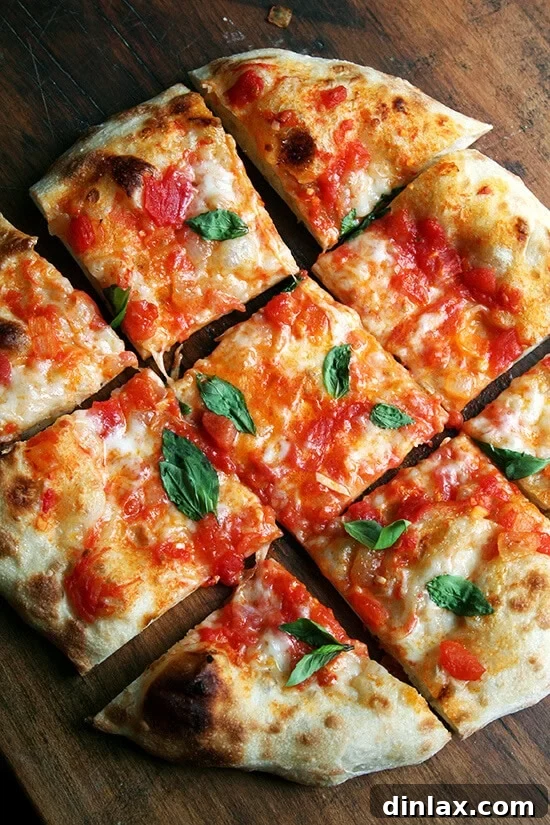
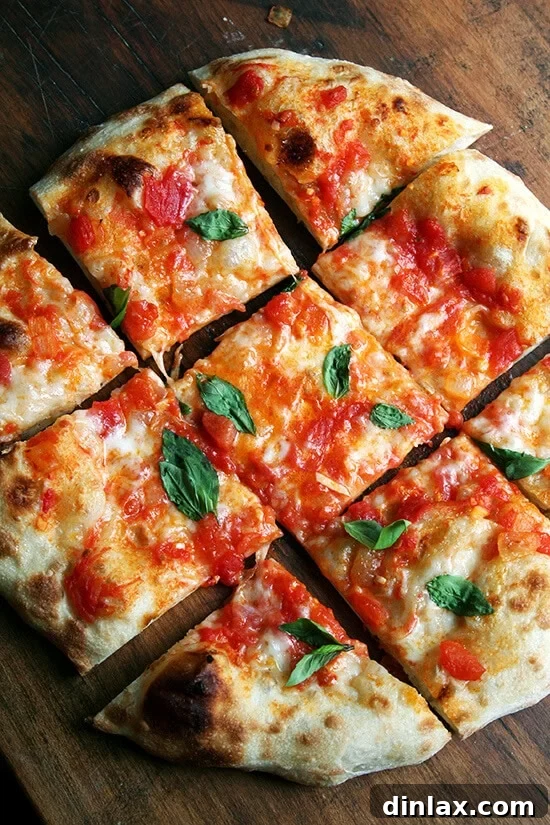
Achieving Pizzeria-Quality Pizza at Home: The Ultimate Guide to the Baking Steel and Perfect No-Knead Dough
For years, the dream of authentic, wood-fired pizza at home felt like an unattainable fantasy. My journey began with grand visions, sparked by the crispy, blistered crusts emerging from mud ovens at Slow Food Nation in 2008. I imagined building my own outdoor oven, a rustic monument to culinary ambition. I researched, bought books like How to Build Your Own Hearth Oven, and meticulously listed supplies. Yet, as weeks turned into years, and children joined the family, the demanding reality of constructing and maintaining a traditional wood-fired oven faded into the background, becoming another cherished but unrealized dream.
Many home cooks share this dilemma: a fervent desire for restaurant-grade pizza—thin, crisp, with that distinctive chewy, bubbly edge—but without the space, expense, or commitment required for a professional setup. Fortunately, the culinary world has a revolutionary answer that brings the pizzeria experience right into your kitchen. Enter the Baking Steel, a game-changing product that has transformed homemade pizza for countless enthusiasts, myself included.
The Baking Steel: Your Secret Weapon for Superior Homemade Pizza
My initial skepticism about yet another kitchen gadget quickly dissipated after encountering rave reviews for the Baking Steel in publications like the Wall Street Journal and Food and Wine, and a particularly convincing deep-dive on Serious Eats. The story behind this innovative product is as inspiring as its performance. It began with Andris Lagsdin, a passionate cook and owner of Stoughton Steel, a family-run steel company. Inspired by Nathan Myhrvold’s Modernist Cuisine, which highlighted the superior conductive properties of steel, Lagsdin started experimenting with baking pizzas on steel plates at home.
His discoveries were astounding: steel, being significantly more conductive than traditional pizza stones, cooked pizzas faster and more evenly at lower temperatures. The result? A remarkably thin, crispy crust with the coveted “oven spring”—that rapid puffing and blistering of the dough—that mimics a professional wood-fired oven. This revelation led Lagsdin to launch a successful Kickstarter campaign, bringing the Baking Steel to the masses. Kenji Lopez-Alt of Serious Eats famously declared it “the most impressive home pizza product [he’s] ever tested,” a sentiment echoed by countless home bakers who have experienced its magic.
Unlike fragile pizza stones prone to cracking, the Baking Steel is virtually indestructible. It’s also more efficient, retaining and transferring heat at a much faster rate, ensuring that the bottom of your pizza cooks quickly and develops a perfectly crisp, speckled “undercarriage” every time. This robust performance makes it an invaluable, long-lasting investment for anyone serious about elevating their homemade pizza game. For less than the cost of a high-end appliance, the Baking Steel delivers results that rival expensive outdoor ovens, freeing up your backyard and your budget for other pursuits.
The Foundation of Great Pizza: No-Knead, Slow-Rise Dough
While the Baking Steel provides the ideal cooking surface, truly exceptional pizza starts with exceptional dough. About a year before discovering the steel, I stumbled upon Jim Lahey’s no-knead pizza dough recipe, which, when paired with high-quality tipo 00 flour, yielded the best pizzas I had ever produced. This slow-rise method is transformative. It develops incredible flavor and a superior texture without the arduous kneading typically associated with pizza making. The extended fermentation allows gluten to develop naturally, creating a dough that is both pliable and elastic, crucial for achieving those desirable bubbles and a beautifully blistered edge characteristic of authentic Neapolitan pizzas.
Using tipo 00 flour is another critical step. This finely milled Italian flour has a lower protein content than many all-purpose flours, producing a delicate, tender crust that crisps wonderfully. While it might require a special order, the difference it makes is undeniable and well worth the effort. The Lahey dough recipe calls for a specific 18-hour room temperature rise, followed by an optional cold fermentation in the fridge. This cold rest further enhances the flavor and makes the dough even easier to handle. Typically, this recipe yields six dough balls, which can be stored in the refrigerator for up to three days, offering fresh, delicious pizza whenever the craving strikes.
Mastering the Art of Pizza Making with the Baking Steel
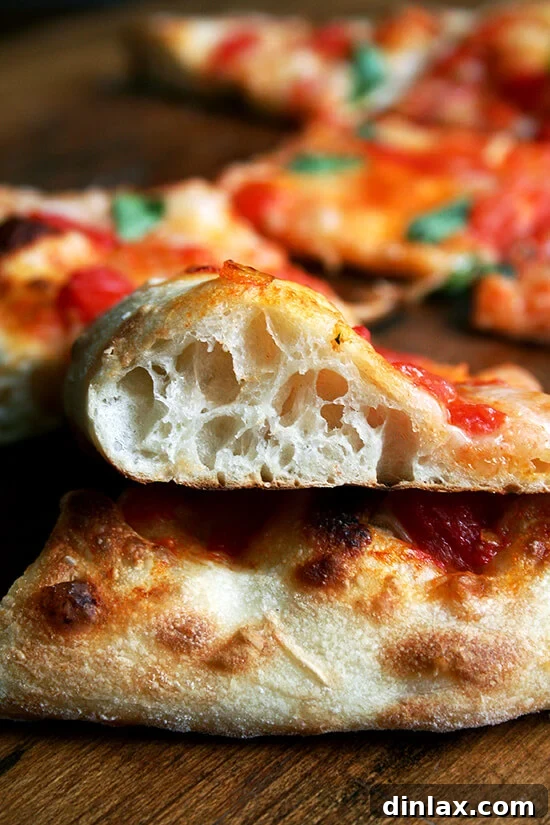
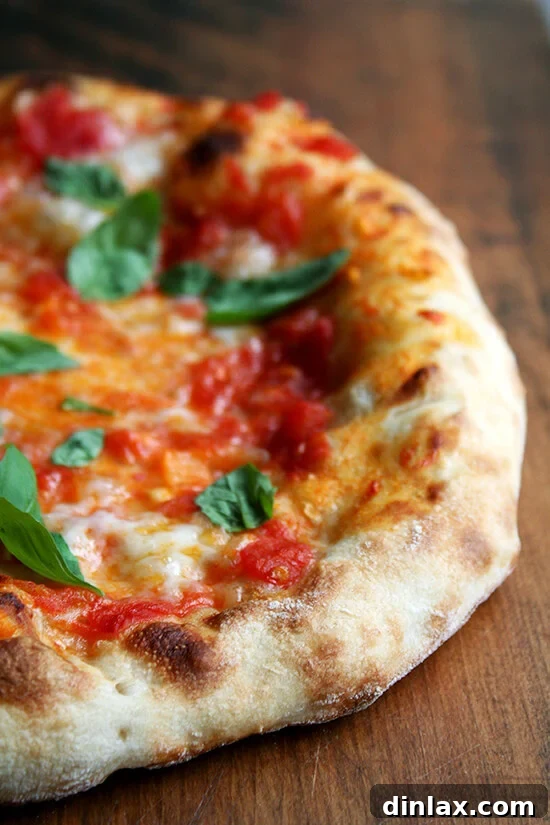
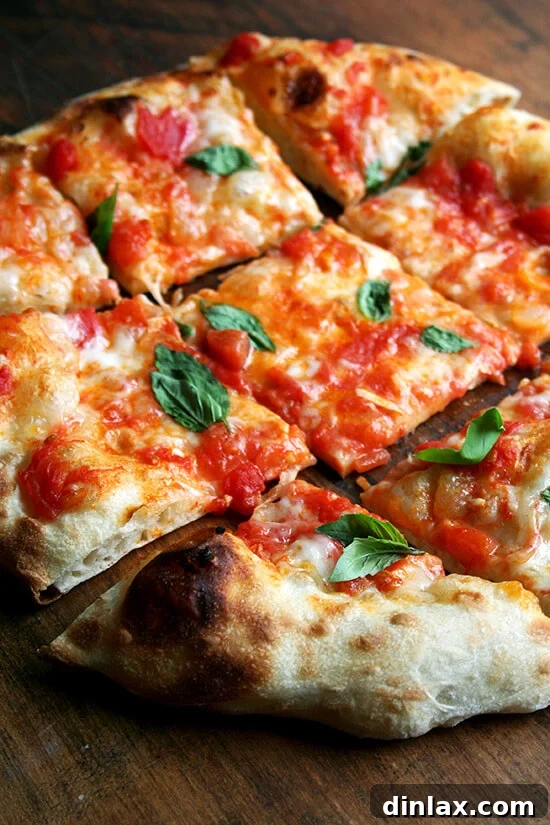
For the past month, I’ve been making pizza or flatbread almost daily, and the results have been consistently outstanding. The Baking Steel dramatically enhances two key elements: the “oven spring” and the crispy “undercarriage.” The intense, even heat transfer from the steel causes the dough to rapidly expand, creating those beautiful air pockets and a light, airy crust. The direct contact with the superheated steel also ensures the bottom of the pizza gets a perfect char and crispness, something often lacking in pizzas baked on conventional sheet pans.
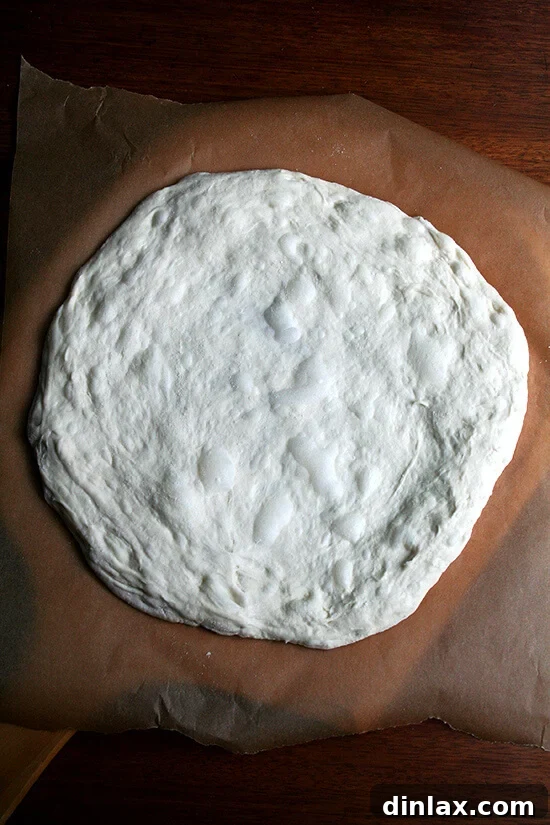
A crucial tip for home cooks, often debated by purists, is the use of parchment paper. While a perfectly floured or cornmeal-dusted pizza peel should ideally allow a pizza to slide gracefully onto a hot surface, reality often intervenes. Dough can stick, leading to toppings scattering, messy ovens, and general frustration. Furthermore, excess flour or cornmeal burning on a hot steel or stone can fill your kitchen with smoke and trigger fire alarms—a problem professional pizzerias mitigate with dedicated brooms to clear their large ovens. For the home kitchen, parchment paper is a simple, elegant solution. It allows the pizza-topped dough to effortlessly slide onto the preheated Baking Steel. The paper has no adverse effect on how the pizza cooks and can even be removed after a minute or two, if desired, to allow for direct contact with the steel. This technique eliminates stress and ensures a flawless launch every time.
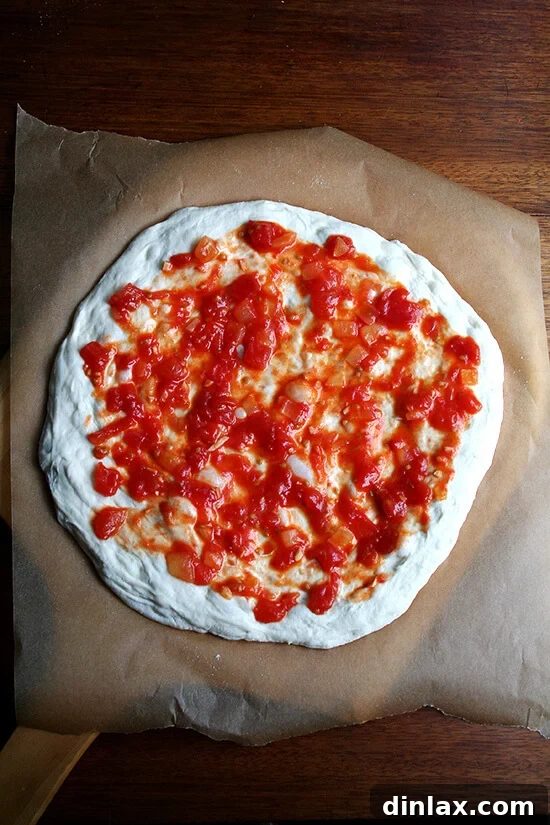
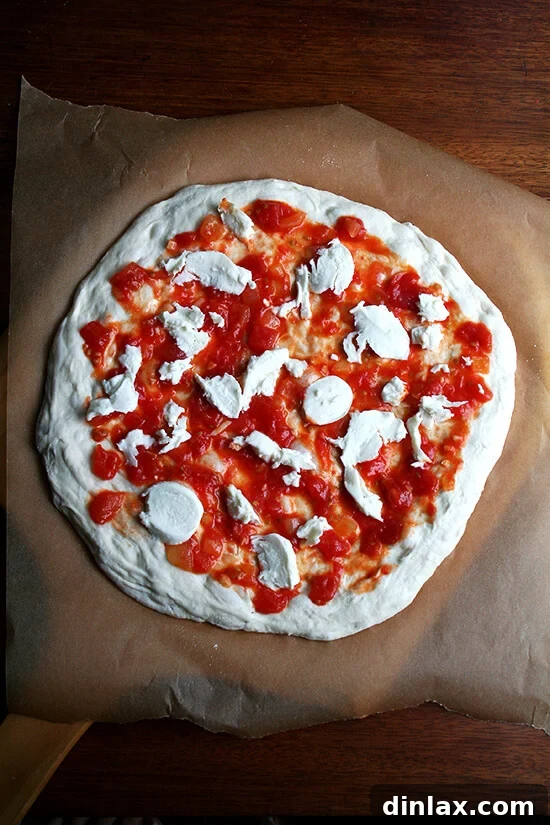
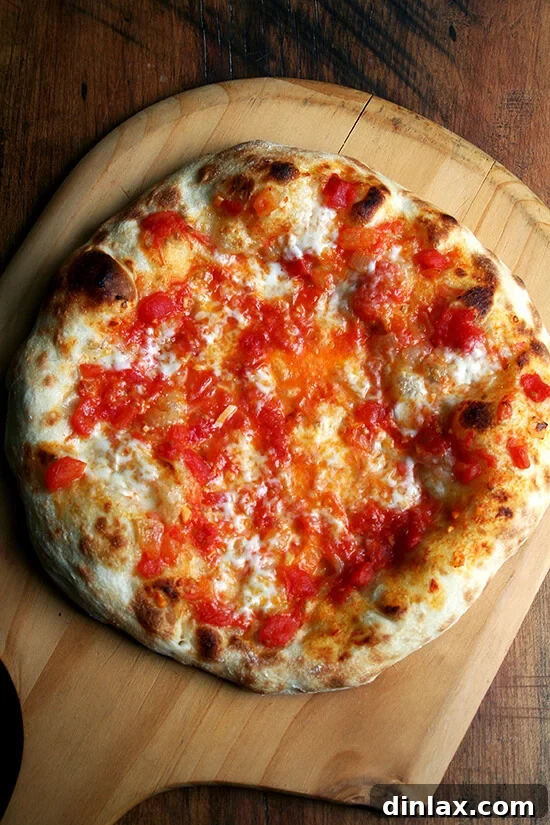
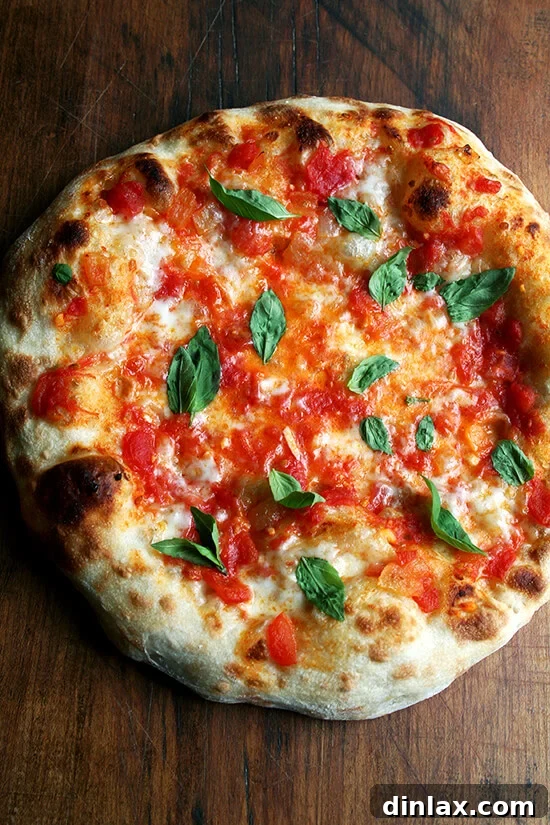
Parchment paper makes sliding pizza onto the hot steel effortless:
Featured Recipes: Margherita and Caramelized Onion & Burrata Pizzas
The Baking Steel elevates every pizza, but these two recipes stand out as true favorites, showcasing the versatility and delicious potential of this cooking method. Both rely on the same fantastic no-knead dough and the intense heat of the Baking Steel to create extraordinary results.
1. Classic Margherita Pizza: Simplicity Perfected
The Margherita is the quintessential pizza, a testament to the power of simple, high-quality ingredients. Our version features a barely cooked tomato sauce that allows the fresh, vibrant flavor of the tomatoes to shine, complemented by fresh mozzarella (buffalo if you can find it for extra creaminess) and fragrant basil. This pizza is all about balance and the purity of its components, made even more exquisite by the perfect crust from the Baking Steel.
Print Recipe
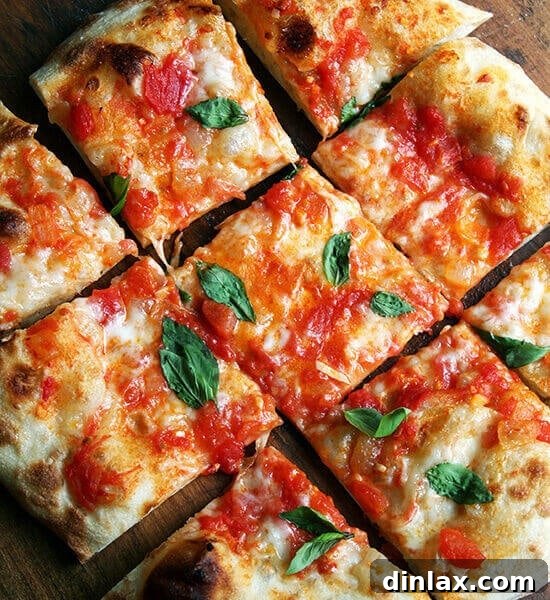
Baking Steel Margherita Pizza Recipe
5 Stars
4 Stars
3 Stars
2 Stars
1 Star
5 from 1 review
- Author: Alexandra Stafford
Total Time: 18 hours 5 minutes
Yield: 6 pizzas 1x
Description
This classic Margherita pizza recipe, adapted from Jim Lahey’s book, My Pizza, emphasizes fresh ingredients and the superior cooking power of the Baking Steel. For the best results, use Tipo 00 flour for the dough; a 1000g bag is perfectly sized for this recipe. Remember that the Lahey dough requires an 18-hour room temperature rise, followed by optional cold fermentation in the fridge, making it ideal for advance preparation. This recipe yields 6 pizza rounds that can be used over three days. Essential equipment includes your Baking Steel, a pizza peel, and optionally, parchment paper for easy transfer.
Ingredients
For the No-Knead Pizza Dough:
- 7 ½ cups (or 1000 grams) all-purpose flour, plus more for shaping (Tipo 00 recommended)
- 4 teaspoons fine sea salt
- ½ teaspoon active dry yeast
- 3 cups water, plus more if needed
For the Margherita Topping:
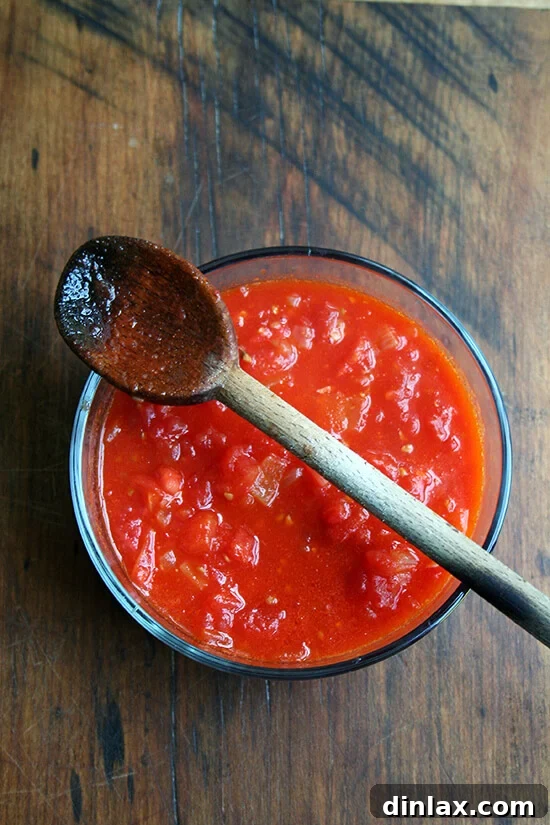
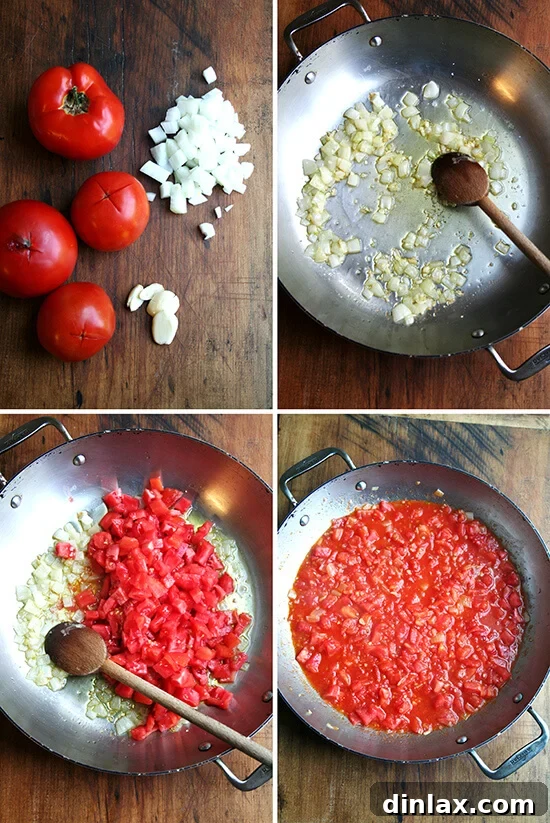
- Barely Cooked Tomato Sauce
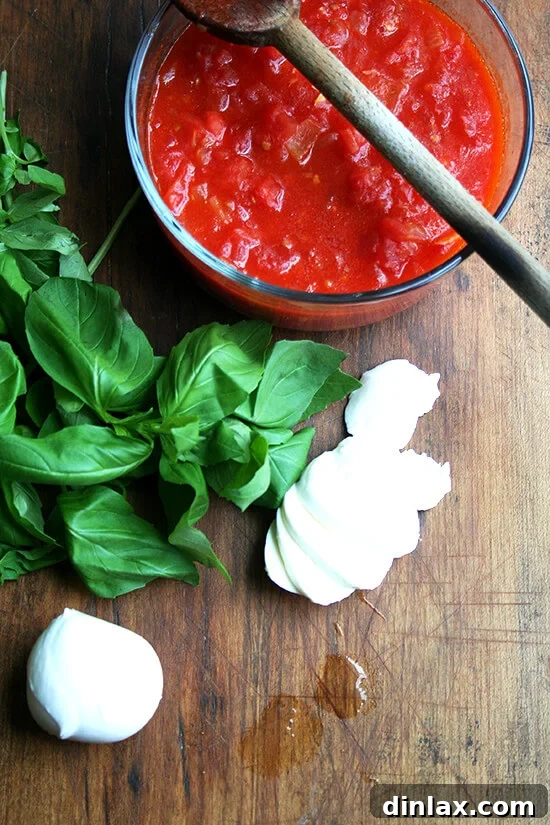
- Fresh mozzarella (ideally buffalo mozzarella), sliced or roughly torn
- Good quality olive oil
- Flaky sea salt (such as Maldon)
- Fresh basil leaves, for garnish
Instructions
- Prepare the Dough (18 Hours Ahead): In a large bowl, whisk together the flour, fine sea salt, and active dry yeast. Add 3 cups of water and stir until all the ingredients are well incorporated and no dry spots remain. If the dough seems too stiff, add a little more water, one tablespoon at a time, until it forms a shaggy, cohesive mass. Cover the bowl tightly with plastic wrap and let the dough rise at room temperature in a draft-free area. Allow it to ferment for approximately 18 hours, or until the surface is covered with tiny bubbles and the dough has more than doubled in size. The exact time may vary based on your room’s temperature.
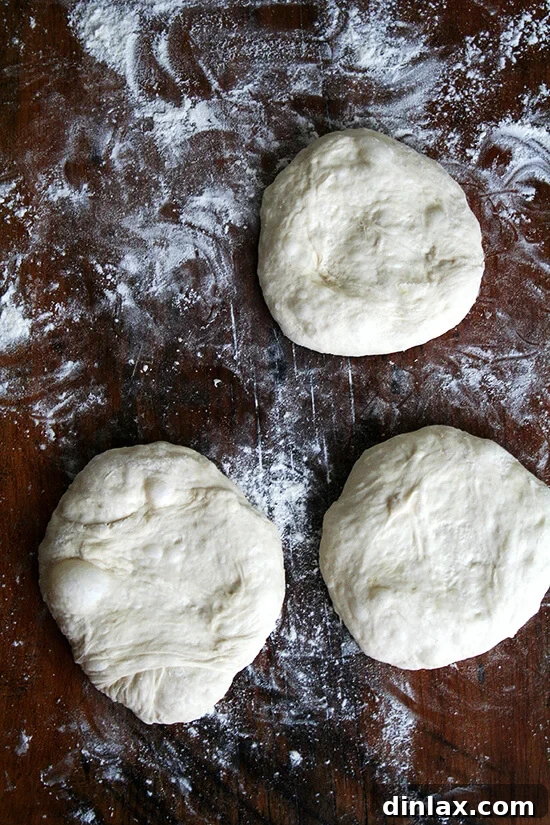
- Shape the Dough Balls: Transfer the risen dough to a lightly floured work surface. Gently shape it into a rough ball, being careful not to deflate it too much. Divide the dough into 6 equal portions. Work with one portion at a time, quickly shaping each into a smooth ball. Lightly dust each dough ball with flour and place them on a floured work surface or a floured baking sheet. Repeat with the remaining portions.
- Rest or Store the Dough: Cover the dough balls with plastic wrap or a damp kitchen towel and let them rest at room temperature for about 1 hour until they are soft and pliable. At this point, you can proceed with baking your pizzas, or for enhanced flavor and convenience, transfer each dough ball to individual plastic quart containers, cover them, and store them in the fridge. Alternatively, wrap each dough ball separately in plastic wrap before refrigerating. The refrigerated dough can be used over the course of three days.
- Preheat Oven and Prepare Pizza: Approximately one hour before you plan to bake, remove a pizza dough round from the fridge to allow it to come closer to room temperature. Dust the dough with flour and place it on a floured work surface. Place your Baking Steel (or pizza stone) in the top third of your oven. Preheat the oven to its hottest setting, typically 550°F (288°C). Gently stretch or shape the dough into a 10″–12″ disk, handling it as minimally as possible to preserve the air bubbles. Transfer the shaped dough disk to a pizza peel that has been lined with parchment paper.
- Top and Bake: Spoon a light, even layer of your barely cooked tomato sauce over the dough, leaving a small border for the crust. Distribute a light layer of sliced or torn fresh mozzarella cheese over the sauce. Drizzle with a touch of olive oil and sprinkle with flaky sea salt. Carefully slide the topped dough, parchment paper and all, onto the preheated Baking Steel in the oven.
- Serve: Bake the pizza for about 4-6 minutes, or until the crust is beautifully blistered and golden brown, and the cheese is melted and bubbly. Use your pizza peel to remove the pizza from the oven (tongs can assist if needed). Transfer the pizza to a cutting board. Immediately scatter fresh basil leaves over the hot pizza. Slice and serve your perfect homemade Margherita pizza immediately.
- Prep Time: 18 hours
- Cook Time: 5 minutes
- Category: Pizza
- Method: Oven, Baking Steel
- Cuisine: American, Italian
2. Gourmet Caramelized Onion & Burrata Pizza: A Symphony of Flavors
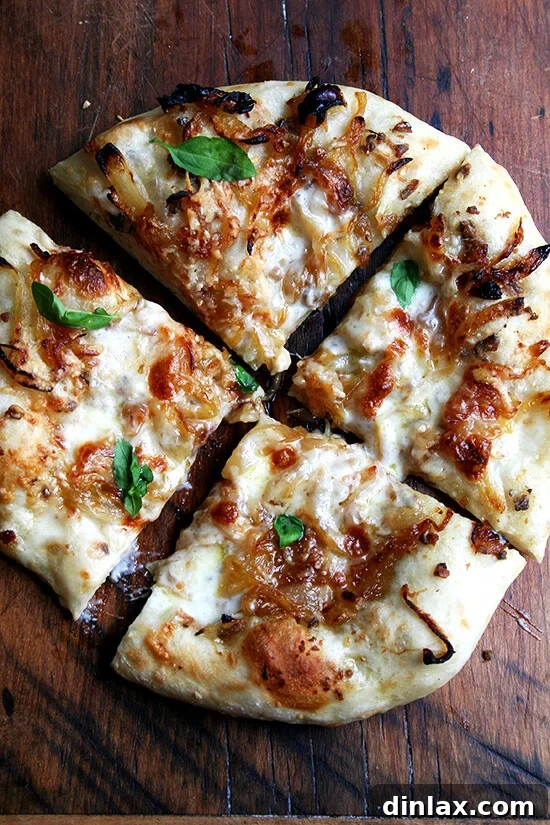
For those who love a richer, more complex pizza, the caramelized onion and burrata combination is pure indulgence. Sweet, deeply flavored caramelized onions pair exquisitely with the creamy, melt-in-your-mouth burrata cheese. A drizzle of olive oil, a sprinkle of sea salt, and a garnish of fresh basil (optional, but highly recommended) complete this gourmet experience, showcasing how the Baking Steel can handle diverse toppings while still delivering a phenomenal crust.
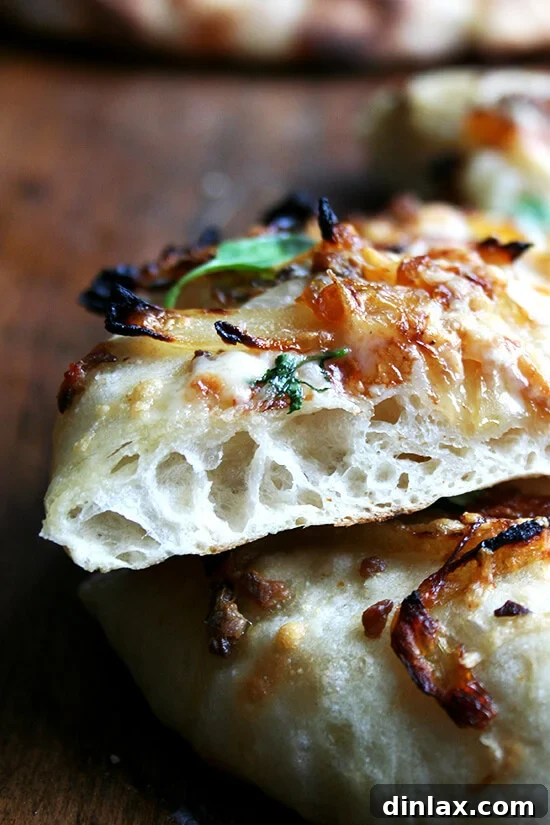
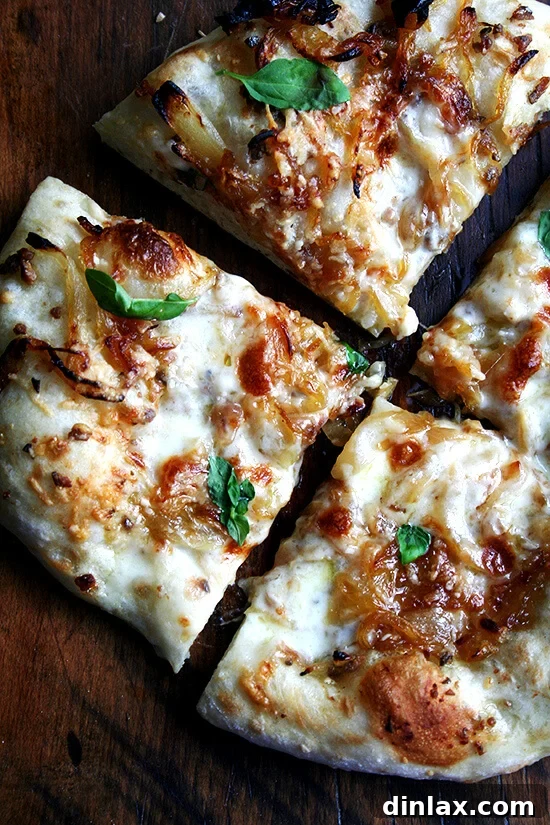
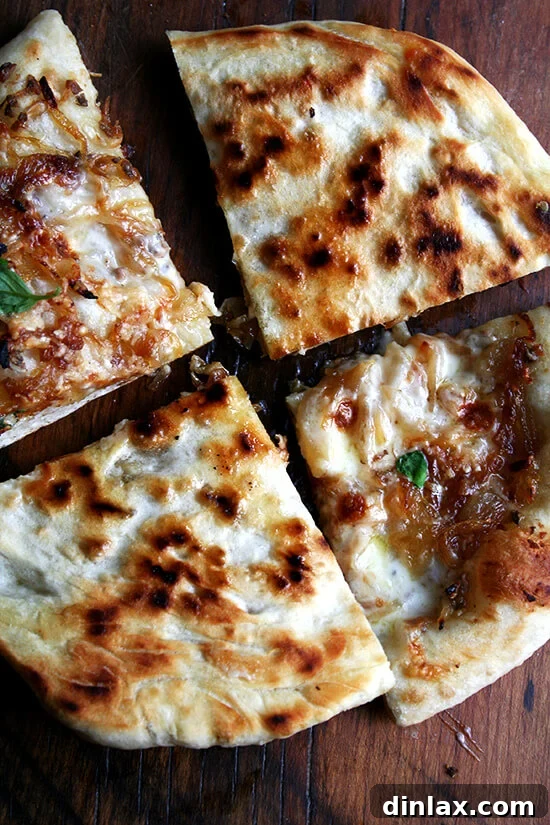
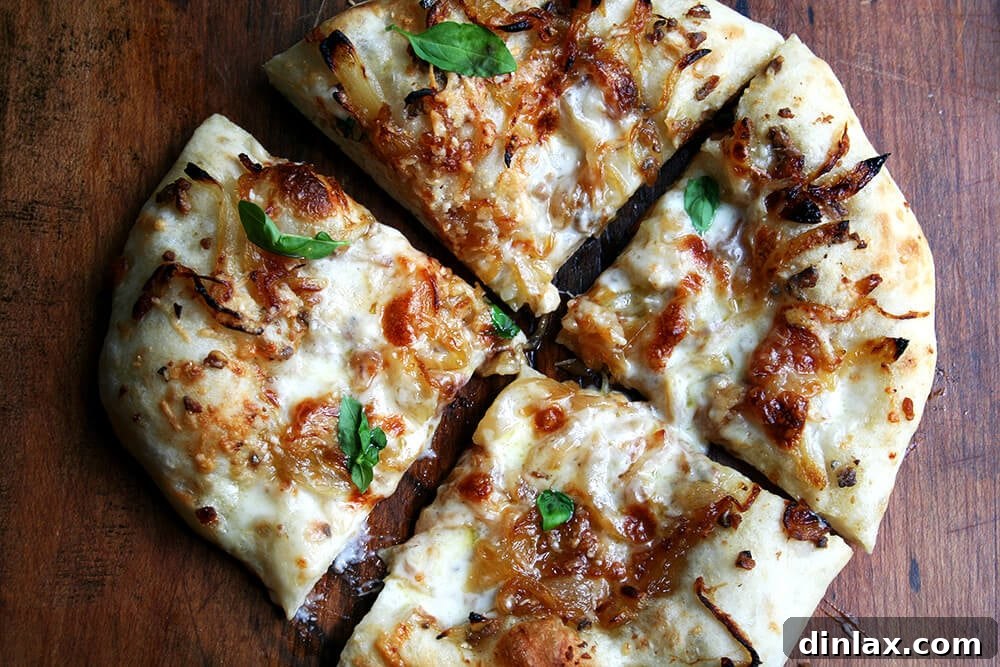
Print Recipe
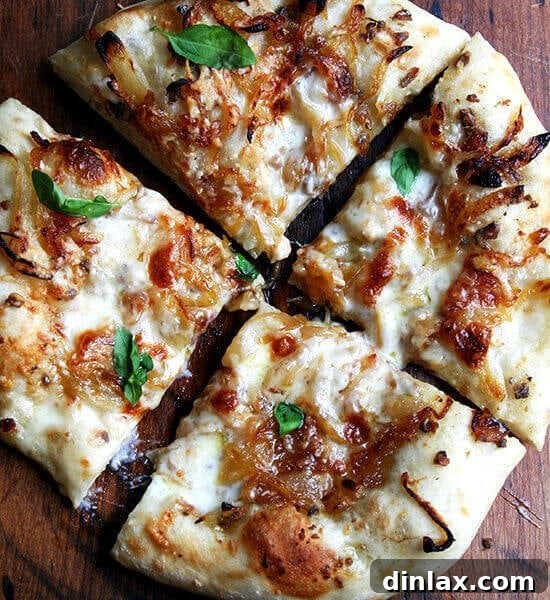
Baking Steel Caramelized Onion & Burrata Pizza Recipe
5 Stars
4 Stars
3 Stars
2 Stars
1 Star
5 from 1 review
- Author: Alexandra Stafford
Total Time: 18 hours 5 minutes
Yield: 6 pizzas 1x
Description
Elevate your homemade pizza with this decadent Caramelized Onion and Burrata Pizza. Using Jim Lahey’s renowned My Pizza dough recipe, this pizza achieves a perfect balance of sweet, savory, and creamy flavors, enhanced by the high-heat performance of the Baking Steel. This recipe also benefits from the slow-rise dough preparation (18 hours for maximum flavor). Equip yourself with a Baking Steel, a pizza peel, and optional parchment paper for effortless baking.
Ingredients
For the No-Knead Pizza Dough:
- 7 ½ cups (or 1000 grams) all-purpose flour, plus more for shaping dough
- 4 teaspoons fine sea salt
- ½ teaspoon active dry yeast
- 3 cups water, plus more if needed
For the Caramelized Onion & Burrata Topping:
- Caramelized onions (prepare ahead for best results)
- Fresh burrata cheese, torn or spread
- Good quality olive oil
- Flaky sea salt
- Fresh basil (optional), for garnish
Instructions
- Prepare the Dough (18 Hours Ahead): In a large bowl, whisk together the flour, fine sea salt, and active dry yeast. Add 3 cups of water and stir until all the ingredients are well incorporated and no dry spots remain. If the dough seems too stiff, add a little more water, one tablespoon at a time, until it forms a shaggy, cohesive mass. Cover the bowl tightly with plastic wrap and let the dough rise at room temperature in a draft-free area. Allow it to ferment for approximately 18 hours, or until the surface is covered with tiny bubbles and the dough has more than doubled in size. The exact time may vary based on your room’s temperature.
- Shape the Dough Balls: Transfer the risen dough to a lightly floured work surface. Gently shape it into a rough ball, being careful not to deflate it too much. Divide the dough into 6 equal portions. Work with one portion at a time, quickly shaping each into a smooth ball. Lightly dust each dough ball with flour and place them on a floured work surface or a floured baking sheet. Repeat with the remaining portions.
- Rest or Store the Dough: Cover the dough balls with plastic wrap or a damp kitchen towel and let them rest at room temperature for about 1 hour until they are soft and pliable. At this point, you can proceed with baking your pizzas, or for enhanced flavor and convenience, transfer each dough ball to individual plastic quart containers, cover them, and store them in the fridge. Alternatively, wrap each dough ball separately in plastic wrap before refrigerating. The refrigerated dough can be used over the course of three days.
- Preheat Oven and Prepare Pizza: Approximately one hour before you plan to bake, remove a pizza dough round from the fridge to allow it to come closer to room temperature. Dust the dough with flour and place it on a floured work surface. Place your Baking Steel (or pizza stone) in the top third of your oven. Preheat the oven to its hottest setting, typically 550°F (288°C). Gently stretch or shape the dough into a 10″–12″ disk, handling it as minimally as possible to preserve the air bubbles. Transfer the shaped dough disk to a pizza peel that has been lined with parchment paper. Evenly scatter a light layer of caramelized onions over the dough’s surface, then top with generous portions of torn or spread burrata cheese.
- Bake: Drizzle with a splash of olive oil and sprinkle with flaky sea salt. Carefully slide the topped dough, parchment paper and all, onto the preheated Baking Steel in the oven. Bake the pizza until the crust is beautifully blistered and golden brown, and the cheese is melted and bubbling, usually about 5 minutes.
- Serve: Use your pizza peel to remove the pizza from the oven. Transfer it to a cutting board. If desired, scatter fresh basil leaves over the hot pizza. Slice and serve your gourmet caramelized onion and burrata pizza immediately.
- Prep Time: 18 hours
- Cook Time: 5 minutes
- Category: Pizza
- Method: Oven, Baking Steel
- Cuisine: American, Italian
The Indispensable Investment for Pizza Lovers
So, should your next kitchen investment be a Baking Steel? Without a doubt, yes! While the initial cost might seem like an expense, consider the long-term value. With the Baking Steel as a permanent fixture in your oven, the costly and cumbersome idea of a backyard wood-fired oven becomes entirely unnecessary. In essence, this relatively small investment frees you from a much larger one, offering professional-grade pizza results from the comfort of your home kitchen. It’s a tool that pays for itself not just in delicious meals, but in saved effort, space, and money.
The quest for the perfect homemade pizza is a passionate one, and the Baking Steel is the most significant advancement for home cooks in this pursuit. It transforms an ordinary home oven into a high-performance pizza-making machine, delivering those elusive crispy crusts and delightful “oven spring” with remarkable consistency. Forget your dreams of mud ovens or expensive professional setups; the future of incredible homemade pizza is here, and it’s forged in steel. Go on, order that Baking Steel, gather your ingredients, and prepare to celebrate. Your pizza game is about to change forever.