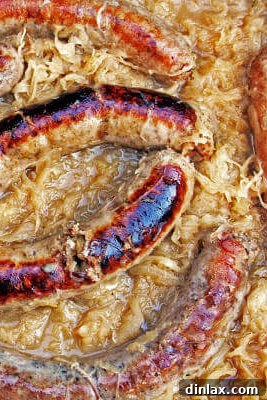
Savor the Spirit of Oktoberfest: A Bavarian Sausage & Sauerkraut Feast at Home
As the crisp autumn air ushers in the vibrant colors of fall, it also signals the commencement of one of the world’s most jubilant and time-honored traditions: Oktoberfest. Far more than just a beer festival, Oktoberfest stands as a grand celebration of Bavarian culture, rich culinary delights, and the sheer joy of communal gathering. While a spontaneous trip to Munich might remain a dream for many, the authentic essence of this renowned festival can effortlessly be recreated and savored right in your own kitchen with a hearty, exquisitely flavored dish. This comprehensive article will guide you through crafting an unforgettable Bavarian sausage and sauerkraut meal, offering perfect beer pairings for the season, and delving into the fascinating history and enduring traditions that bestow Oktoberfest with its truly unique charm.
Our delightful culinary journey to Bavaria commences, perhaps unexpectedly, amidst the lively thoroughfares of the Italian Market. Here, the quest for the ideal sausage for our traditional Bavarian preparation took an intriguing, yet ultimately rewarding, turn. From Cappuccio’s Meats, a trusted local butcher, a pound of apple and cinnamon pork sausages was acquired. Despite their unlikely resemblance to the savory links typically served in German bierhalles, the butcher’s assurance that they would not be overly sweet proved to be remarkably accurate. The subtle, warming notes of cinnamon within these sausages create an exquisite harmony with the delicate sweetness of grated apples and the aromatic, slightly piney essence of juniper berries infused into our braising liquid. This thoughtful combination culminates in a depth of flavor that is both profoundly comforting and undeniably evocative of autumn’s bounty, promising a unique twist on a classic.
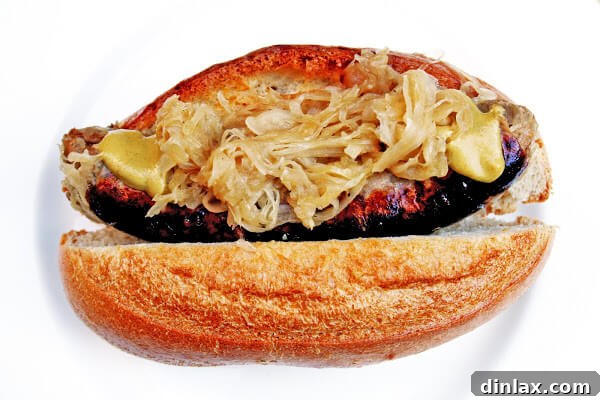
Crafting an Authentic Bavarian Sausage & Sauerkraut Braise
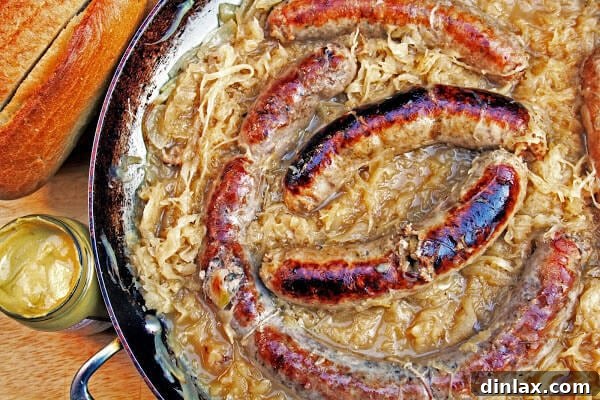
The true genius of this particular recipe lies in its elegant simplicity and the intricate interplay of its core ingredients. After a mere 30 minutes of gentle simmering, the humble sauerkraut undergoes a remarkable transformation. It morphs into a luscious, deeply flavor-infused condiment, eagerly absorbing all the rich, savory juices released by the apple and cinnamon pork sausages. Simultaneously, it soaks up the fragrant notes from the juniper berries and the delicate, earthy sweetness contributed by the grated apples. This culinary alchemy results in a dish that is not only profoundly satisfying but also incredibly versatile, making it the perfect centerpiece for any festive Oktoberfest gathering or a cozy fall dinner at home. The tender sausages nestled within the tangy, flavorful sauerkraut offer a delightful textural contrast and an explosion of taste with every bite.
The Perfect Pour: Pairing Your Bavarian Feast with Oktoberfest Beers
Indeed, no Oktoberfest celebration, regardless of its scale, can be considered truly complete without the thoughtful inclusion of its quintessential beer accompaniments. While the vast and delightful array of seasonal beers curated for this occasion has only just begun to be explored – starting, quite fittingly, with a classic Hofbräu, a revered staple of the Munich festival itself – it becomes immediately apparent that these brews are meticulously crafted to complement the robust, hearty flavors inherent in pork and other traditional Oktoberfest fare. Envision the sensory pleasure of savoring a generous bite of your homemade Bavarian hoagie, immediately followed by the crisp, refreshing embrace of a perfectly poured, expertly crafted fall beer. This harmonious pairing elevates the entire dining experience, whether the meal features savory roast ox tail, succulent rotisserie chicken, or the tender, pillowy spaetzle.
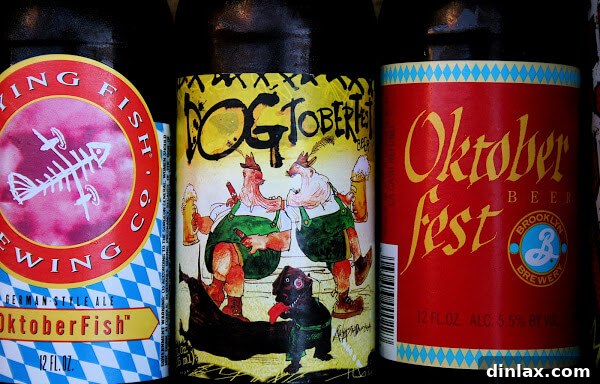
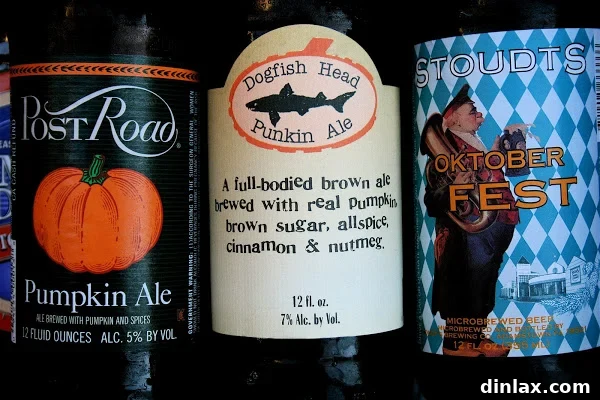
Take the Hofbräu, for example, which expertly navigates a delightful balance: possessing more body and character than a standard Pilsner, yet maintaining a lighter, more approachable profile than a heavy Bock. Its smooth, distinctively malty character renders it an exceptional selection for a cool autumn evening, tasting even more magnificent when enjoyed alongside our freshly prepared Bavarian hoagie. As the autumn leaves begin to fall and the days grow shorter, why not embrace the festive spirit by enjoying this braised sausage with sauerkraut? Pair it with a spirited seasonal craft brew such as Flying Dog Brewery’s aromatic, autumn-spiced Dogtoberfest, Dogfish Head Craft Brewery’s beloved pumpkin-infused Punkin Ale, or any of the myriad other joyfully crafted Oktoberfest-inspired beers now readily available. These special seasonal releases frequently incorporate warming spices like pumpkin, cinnamon, nutmeg, and cardamom, creating a truly immersive and multi-sensory experience that splendidly celebrates the abundant flavors of the harvest season, bringing a taste of Bavaria to your table.
Oktoberfest: A Deep Dive into History and Enduring Tradition
To fully appreciate the layers of flavor on your plate and the joy of the accompanying brew, it is invaluable to understand the magnificent, centuries-old tradition from which they spring. Oktoberfest, far from being just a local gathering, is an iconic global spectacle that annually draws millions of enthusiastic revelers from every corner of the world to its spiritual home in Munich, Germany. The festival is a vibrant, intricate tapestry woven with classic German culinary delights, animated traditional music, spirited folk dances, and a profound reverence for specially brewed, high-octane beers designed exclusively for the occasion. Imagine the iconic scene: the Lord Mayor of Munich, with great fanfare, ceremoniously tapping the very first keg before an eager crowd of thousands, officially inaugurating two weeks brimming with unparalleled joy and celebration. Visitors immerse themselves in an impressive and diverse array of culinary treasures, ranging from perfectly grilled sausages and zesty sauerkraut to exquisitely savory roasted ox tails and the comforting delight of spaetzle. Beyond the abundant food and drink, the festival captivates with varied entertainment, including thrilling legendary crossbow competitions, vibrant costume parades, and bustling carnival rides, all converging to create an utterly unforgettable experience for every attendee.
The Royal Origin: A Wedding Celebration That Sparked a World Festival
The very first Oktoberfest, a truly momentous event, commenced on October 12, 1810. Its initial purpose was not as a public beer festival, but rather as a grand, heartfelt celebration to commemorate the marriage of Bavaria’s beloved Crown Prince Ludwig to the esteemed Princess Therese of Saxony-Hildburghausen. The citizens of Munich were cordially invited to partake in a magnificent five-day feast, filled with joyous singing, lively dancing, and a spectacular horse race held on a picturesque meadow just outside the city gates. This inaugural event proved to be such an overwhelming success and brought so much joy to the populace that the townspeople, in a gesture of enduring honor, named the expansive field “Theresienwiese” after the radiant bride. This name, nearly two centuries later, continues to be affectionately shortened to “Wiesn” by locals and countless visitors alike. This royal wedding, steeped in tradition and public jubilation, inadvertently laid the foundational blueprint for what would eventually evolve into the world’s largest public festival, expanding far beyond its initial equestrian focus to become a global phenomenon.
Evolution and Unparalleled Grandeur: The World’s Largest People’s Fair
As the decades progressed, each subsequent Oktoberfest celebration grew notably in both duration and sheer splendor. The shrewd royal couple, keenly recognizing the immense popularity and widespread appeal of extended public festivities, made the judicious decision to shift the festival’s commencement date back into late September. This strategic move allowed them to fully capitalize on the consistently warmer, more agreeable weather conditions characteristic of that month, ensuring greater comfort and enjoyment for visitors. Nevertheless, in a poignant tribute to its foundational origins, Oktoberfest always culminates on a weekend within the month of October. Throughout its illustrious and multifaceted history, this magnificent annual occasion has rightfully earned its esteemed title as the “Largest People’s Fair in the World.” Spanning an impressive 100-acre expanse of the hallowed Theresienwiese, the festival grounds undergo a breathtaking transformation, evolving into a bustling, self-contained mini-village teeming with activity. At its heart stand fourteen colossal tents, some of which are astonishingly capacious enough to comfortably accommodate up to 10,000 enthusiastic revelers. Within these vibrant, temporary structures, a staggering workforce of 12,000 dedicated employees, including 1,600 tireless barmaids, work with remarkable efficiency and cheer. Annually, they serve an astounding volume of traditional Bavarian sustenance and beverages: over 200,000 pairs of savory sausages, 450,000 perfectly golden rotisserie chickens, 100 magnificently roasted oxen, and an almost unbelievable 6 million steins of specially brewed beer are consumed, creating an atmosphere of unparalleled festivity, camaraderie, and culinary indulgence.
The Iconic Brews of Oktoberfest: A Timeless Testament to Brewing Tradition
The global impact of Oktoberfest extends far beyond inspiring numerous cities worldwide to host their own unique versions of the festival. It has also profoundly influenced breweries across the globe, spurring them to craft special, celebratory concoctions that pay homage to the original, highly esteemed “Märzen-style” brew. The term “Märzen,” derived from the German word for “March,” holds significant historical context. Before the revolutionary advent of modern refrigeration, March marked the final month during which beer could be traditionally brewed before the onset of the dangerously warm summer months. Astute brewers would then carefully store these robust, amber-hued beers in cool, natural ice caves throughout the summer, patiently allowing them to mature until October. The release of these perfectly aged, rich brews providentially coincided with the joyous harvest season, igniting a wave of celebratory festivals – with the immortalized Bavarian royal wedding celebration standing out as one of the most prominent and enduring inspirations for this autumnal tradition. This meticulous brewing and storage process ensured a superior quality beer, ready to be celebrated as the cooler weather returned.
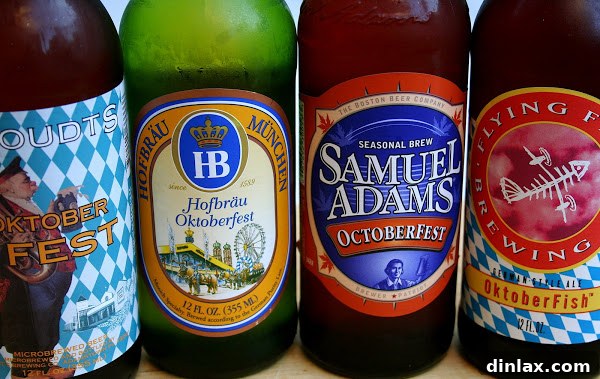
A pivotal moment in Oktoberfest brewing history occurred in 1872 when the esteemed Munich brewery Spaten proudly introduced the very first official Oktoberfest beer. To this day, an exclusive circle of only six revered local breweries holds the distinguished privilege of serving their seasonal brews within the hallowed grounds of Oktoberfest. These include Spaten, Augustiner, Paulaner, Hacker-Pschorr, Hofbräu, and Löwenbräu. Each of these storied companies steadfastly adheres to the rigorous principles of the “Reinheitsgebot,” or German Purity Law, a monumental decree first enacted in 1516. This venerable law meticulously stipulates that beer may be brewed using only four fundamental ingredients: malt, hops, water, and yeast. This centuries-old commitment to purity not only guarantees the unparalleled quality and authentic character of German beer but also represents a cherished tradition deeply ingrained in the nation’s cultural fabric and celebrated globally.
While the authentic Märzen style predominantly defines the brews served at the Munich festival, breweries across the globe, particularly a vibrant segment within the United States, have enthusiastically created their own unique interpretations in heartfelt tribute to Oktoberfest. These commemorative brews generally share several defining characteristics: they typically exhibit an inviting amber color, possess a medium to full body in terms of alcohol content, and are distinguished by a rich, pronounced malty taste. Many dedicated craft brewers painstakingly strive to emulate the authentic German experience, frequently sourcing and utilizing premium imported European ingredients such as specialty hops and select malts. Some go as far as to meticulously age their beers slowly, faithfully replicating the historical methods employed for the Munich festival’s original, traditional brews. Others embrace a spirit of seasonal innovation, artfully infusing their Oktoberfest-inspired ales with distinctive and evocative flavorings. For instance, the Weyerbacher Brewing Company of Easton masterfully incorporates pumpkin, cinnamon, nutmeg, cardamom, and cloves into its highly acclaimed Imperial Pumpkin Ale, while the inventive Dogfish Head Craft Brewery of Milton, Delaware, adds a delightful blend of pumpkin and brown sugar to its widely popular Punkin Ale. These diverse and creative approaches brilliantly showcase both the profound global influence of Oktoberfest and the innovative, boundary-pushing spirit of modern brewing, collectively offering a truly delightful and expansive spectrum of flavors for discerning autumn enthusiasts.
Recipe: Oktoberfest Sausage and Sauerkraut Braise
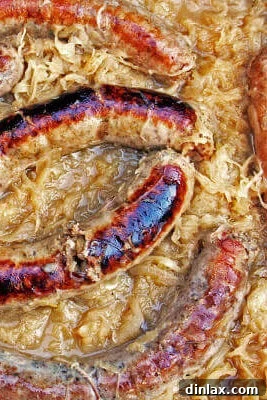
Sausage and Sauerkraut for Oktoberfest
5 Stars
4 Stars
3 Stars
2 Stars
1 Star
5 from 1 review
- Author: alexandra
Ingredients
- 1 tablespoon olive oil
- 4 fresh sausages*
- 1 onion, peeled and thinly sliced
- 10 whole juniper berries
- kosher salt and freshly ground black pepper
- 1¾ cups chicken stock
- 2 lbs. sauerkraut, rinsed and squeezed dry
- 2 apples, such as Granny Smith or Honey Crisp, peeled and grated
* For exceptional homemade sausages, consider local artisanal butchers. Cappuccio’s on the Italian Market (215.922.5792) is highly recommended. The Fair Food Farmstand also offers wonderful varieties from Country Time Farm and Jamison Farm.
Instructions
- Heat the olive oil in a large 12-inch skillet or Dutch oven over medium-high heat. Carefully add the fresh sausages and brown them thoroughly on all sides, ensuring a nice crust develops. Once browned, transfer the sausages to a plate and set aside.
- Reduce the heat to medium. Add the thinly sliced onion and whole juniper berries to the skillet. Sauté, stirring occasionally, until the onions become tender and translucent, which should take approximately five to seven minutes. Season lightly with kosher salt and freshly ground black pepper to taste.
- Pour in the chicken stock, then add the rinsed sauerkraut and grated apples. Stir the mixture well, making sure to scrape up any delicious browned bits from the bottom of the pan – these add immense flavor.
- Gently nestle the browned sausages back into the sauerkraut mixture. Bring the liquid to a gentle simmer, then reduce the heat to low, cover the skillet, and allow it to cook. Continue cooking until the sausages are thoroughly cooked through and a good portion of the liquid has evaporated, typically about 25 to 30 minutes.
- Serve the braised sausage and sauerkraut hot. For an authentic Bavarian touch, offer a selection of robust mustards (such as spicy brown or whole grain) and crusty hoagie rolls. Alternatively, for a more traditional presentation, serve alongside hearty rye bread, boiled new potatoes, or homemade spaetzle.